
Review · DELHI CITY TOURS
3-Days Private Golden Triangle Tour: Delhi, Agra & Jaipur by Car
Three days, three icons, zero logistics headaches. This private Golden Triangle tour strings together Delhi, Agra, and Jaipur with private, government-approved guides, and it keeps the moving parts simple, including the Taj Mahal battery van and an Old Delhi tuk-tuk ride.
I also like that your day-to-day rhythm is clear, pickup is offered between 7 AM and 11 AM, and you end each day where you can actually rest, not fight traffic.
The tradeoff: monument entrance fees and tips are extra, and a few major sights in Delhi are pass-by, not long-stay visits, so this is best for big highlights, not slow wandering.
Key Things That Make This Tour Work
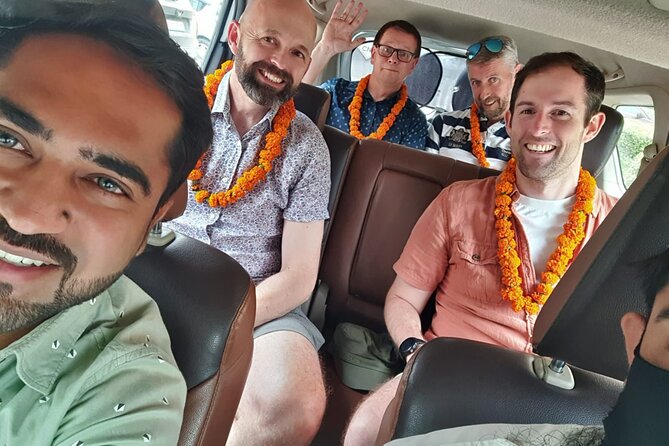
- Private car, professional chauffeur with bottled water during journeys
- Private government-approved guides to explain what you’re seeing, stop by stop
- Taj Mahal sunrise logistics plus the included battery van ride from parking to the gate
- Old Delhi added rides, including a tuk-tuk ride and quick market time in Chandni Chowk
- Hotel option for 2 nights plus an upgrade path to 3, 4, or 5-star stays
A Private Car Golden Triangle You Can Actually Plan Around
The Golden Triangle can be a headache if you try to DIY it. Distances are real, tickets can be time-sensitive, and you can burn hours on coordination. This format fixes that by pairing a private air-conditioned car with a chauffeur, then layering on guides for each day.
Your schedule is built around efficiency. You start with a Delhi morning pick-up window, then you move to Agra for two days of Mughal-era landmarks, and finally you wrap in Jaipur with forts and royal architecture. You do not spend time negotiating routes, and you do not spend time guessing what to prioritize.
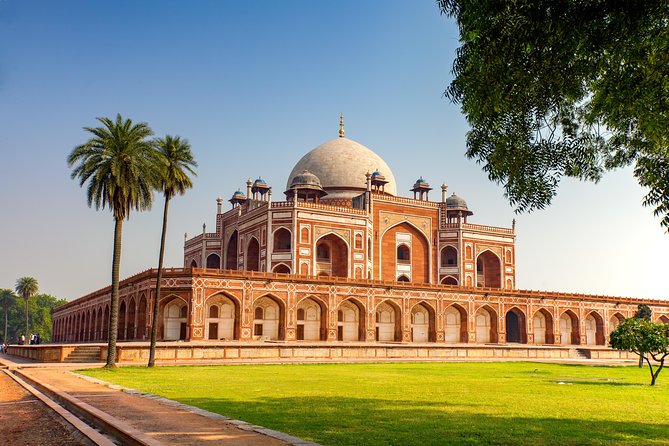
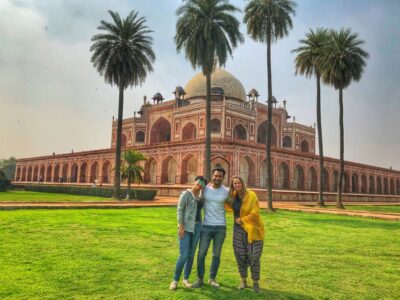
This is the sweet spot if you want the classics, plus a few smart detours. Qutub Minar and Humayun’s Tomb add UNESCO flavor in Delhi. Agra’s Taj Mahal is the headline, but you also get Agra Fort and the Itmad-ud-Daulah, often called the Baby Taj. In Jaipur, you get Hawa Mahal, City Palace, and Jantar Mantar.
You can also read our reviews of more private tours in New Delhi



Day 1 in Delhi: Qutub Minar, Lotus Temple, Humayun’s Tomb, and Old Delhi Markets
Day one is a whirlwind in the best way. You get picked up in Delhi, Noida, Gurugram, Ghaziabad, or Faridabad any time between 7 AM and 11 AM, then your guide starts you at major monuments and works toward Old Delhi.
Qutub Minar is where the morning takes off. This towering UNESCO World Heritage site was built in 1193 by Qutub-ud-din Aibak. Even if you’ve seen photos, it hits differently in person. The carvings and the sheer height are the kind of details you appreciate when someone points out what matters.
Next comes Lotus Temple, one of the easiest stops to love. It’s a Baháʼí House of Worship with flower-like architecture, finished in 1986, and it welcomes visitors of all faiths. It’s also a nice reset after Qutub Minar, because the space feels calmer and more open.
Then you transition into the Mughal and colonial power map of central Delhi. The tour passes by Red Fort, built by Shah Jahan between 1639 and 1648, and you also pass by the Tomb of the Unknown Soldier with names of 13,300 Indian army servicemen carved into the wall. You’ll also see the Parliament House from the outside, with its Lok Sabha and Rajya Sabha roles.
In practice, pass-by stops are there for context. You get orientation without losing the day to ticket lines or long walks. If you want deep time inside every monument, you’ll need a different style of trip. If you want to cover ground and still understand the story, this works.
The itinerary also includes a couple of Delhi curveballs. Agrasen Ki Baoli is an ancient stepwell with an eerie, urban-legend vibe, and it’s only about a half hour here, which is perfect. You’re not stuck forever, but you get the atmosphere.
After Humayun’s Tomb, you’ll do a lunch-style break in Connaught Place, where your guide can suggest restaurants and local food options. Then comes Old Delhi: Chandni Chowk, Jama Masjid, and Khari Baoli.
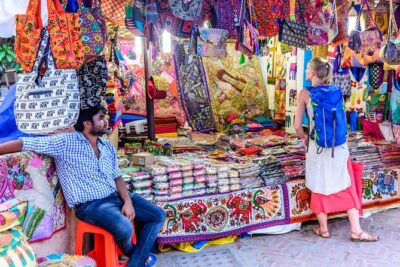
Chandni Chowk is where the city feels intensely real. Narrow lanes with spice, dry fruits, silver jewelry, and saris are exactly what people mean when they say markets are an experience. Jama Masjid is India’s largest mosque, built in 1656 with thousands of workers, and the courtyard scale is striking. Khari Baoli is the wholesale spice market, and it’s a sensory lesson in how Delhi sells flavor by the kilo.
Bonus for comfort: you also get a tuk-tuk ride in Old Delhi. That’s not just fun, it helps you keep moving when the lanes get too tight for a car.
At the end of day one, your driver takes you to Agra, with a comfortable drive and a hotel drop-off so you can recharge. The day is long, but it’s paced to end at the right place.
Day 2 in Agra: Taj Mahal Sunrise Plus Agra Fort and Baby Taj
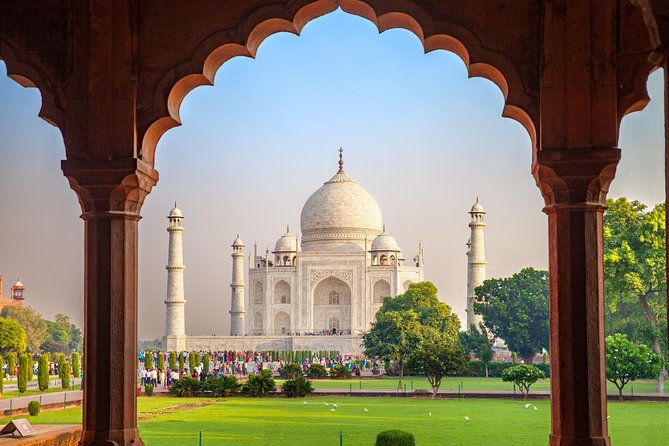
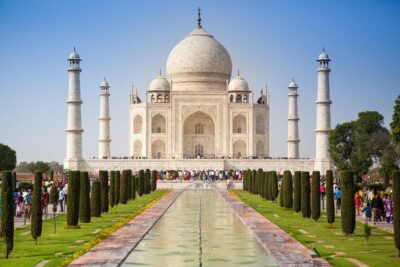
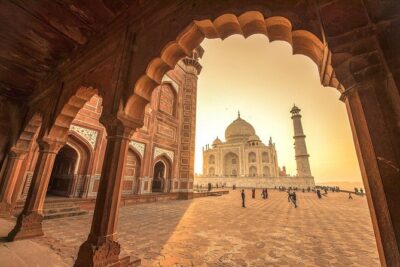
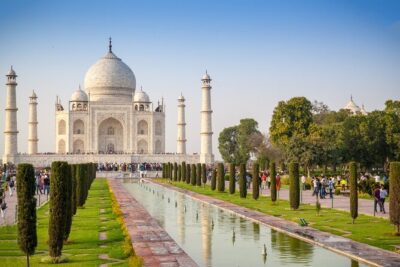
Day two is built around the Taj Mahal, and the big win here is timing. You start early for a sunrise visit to the Taj Mahal, the white marble mausoleum built by Shah Jahan in 1630 for Mumtaz Mahal. Sunrise matters because the light softens the marble and the crowds are often more manageable.
Your Taj Mahal ticket is not included, but the logistics you do get are helpful. The tour includes a battery van ride at Taj Mahal from the parking area to the gate. That small piece can save your legs and keep the morning from feeling like a long slog before you even see the main monument.
When you arrive, you’ll get private guide context on what you’re looking at, from the architecture to the symbolism. Guides like Maahi and Azzu are repeatedly highlighted for clear explanations and for helping manage the crowd rhythm so photos and questions feel possible, not chaotic.
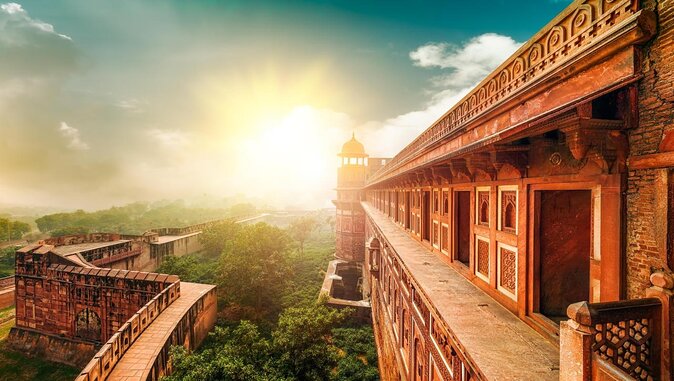
Next you move to Agra Fort, a UNESCO World Heritage site from the 17th century. Here the mix of Indian and Islamic architectural styles is the point. The fort courtyards and pavilions create a different view of Mughal power than the Taj does, and it’s a nice way to balance the day so you’re not only staring at one building.
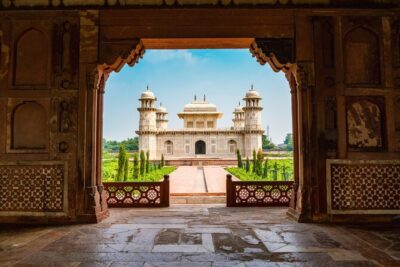
Then comes Itmad-ud-Daula, often called the Baby Taj. This is one of my favorite kinds of stops because it rewards you for paying attention. It’s described as the first Mughal monument built entirely from white marble, and it features intricate pietra dura inlay work. The short time slot also makes sense. You see the essentials without getting exhausted.
You’ll have time to pause for local cuisine in Agra, then you transfer to Jaipur for the overnight stay. The drive takes about four hours, and the goal is to land in Jaipur with enough energy to enjoy day three without feeling like you’re still on the road.
One more practical note: Taj Mahal is closed every Friday. So if your date is sensitive, plan accordingly, and be aware the operator states that if you start the tour on Thursday, day two will be in Jaipur, which can change the order.
Day 3 in Jaipur: Jaigarh Fort, Hawa Mahal, City Palace, Jal Mahal, and Jantar Mantar
Jaipur day is the royal-architecture circuit, with a fort start and a series of famous facades and landmark views.
Jaigarh Fort opens things up. Built in 1726 by Maharaja Sawai Jai Singh II, it’s perched on the Aravalli hills. A fort morning gives you elevation, air, and a sense of why Jaipur’s rulers needed strongholds.
Then you head to Hawa Mahal, the Palace of the Winds. It’s famous for its five stories and the 953 small windows, called jharokhas, designed so royal women could observe street life while staying protected. Even if you only take a short look, it’s worth seeing in person because the pattern is the whole idea.
City Palace is the next anchor in Jaipur’s old center. It’s the architectural and political hub of the former Maharaja of Jaipur, and you’ll move through beautifully designed courtyards, gardens, and buildings. The guide time here matters because it helps you understand what you’re seeing beyond the main postcard views.
You then visit Jal Mahal, a 17th-century palace sitting in the middle of Man Sagar Lake. The contrast is the trick. The palace looks like a mirage in the water, but it also shows how royal design used the landscape as part of the aesthetic.
You’ll pause again for Rajasthani food suggestions, then end your sightseeing with Jantar Mantar, a UNESCO World Heritage site and one of the best-preserved ancient observatories in India. It was built by Maharaja Sawai Jai Singh II. Even people who do not love science usually enjoy this stop, because it’s math made physical, and the shapes are hard to forget.
Finally, you’re driven back to Delhi, or you can opt for drop-off at Jaipur Airport if it fits your flight plans.
Price and Entrance Fees: Where the Real Cost Lands
The tour price is listed at $127.00 per person. For a private air-conditioned car, chauffeur, private government-approved guides, and two nights of accommodation when you choose the hotel option, that price can feel fair, especially if you’re trying to avoid the extra costs and delays that come with self-planning.
Here’s where you need to do your math. Entrance fees for monuments are not included, listed as $70.00 per person. Tips for guides and driver are also not included.
So your practical budget is:
- Tour price: $127 per person
- Entrance fees: $70 per person
- Plus tips (your choice)
If you upgrade hotels, the tour offers 3, 4, or 5-star stays. That can be worth it if you want recovery time after long road days and big sightseeing mornings.
One date consideration: December 24 and 31 are hotel blackout dates. During those dates, a mandatory gala dinner is required, and it costs USD 99 per person if you book accommodations then. It’s not something to ignore if your trip lands close to the holiday window.
Finally, bring valid photo ID for monument entry. The tour specifically notes carrying a valid photo ID in your mobile.



The Guide Factor: When Tours Feel Easy
The best parts of this kind of trip are not the landmarks, it’s how the day runs around them. Good guides help you pick photo spots, understand what each building means, and keep the crowd pressure from taking over your morning.
You’ll see guide names tied to strong experiences, including Saurabh in Agra, Maahi as a helpful communicator around Taj Mahal history, and Arham and Brajesh on the Jaipur and Agra portions. Nasir comes up again and again in Taj and Agra context, often described as helping guests get through quickly and confidently.
There’s also a practical advantage when guides are focused on timing. Azzu is specifically noted for communicating about winter fog and adjusting the plan to find the best time window at the Taj Mahal. That kind of flexibility can matter in North India, where weather can change quickly near sunrise.
If you care about photos, this tour’s structure supports that. The included battery van at Taj Mahal reduces stress, and the private guide attention helps you find angles before things get overwhelming.
And yes, comfort matters here too. Bottled mineral water during journeys is included, and the private car means you are not stuck waiting around for other groups while you’re trying to enjoy the day.
Breaks, Food Stops, and How to Keep Energy High
This tour does not pretend you can do everything without breaks. You get marked pauses in central areas like Connaught Place in Delhi and in Agra and Jaipur for local cuisine recommendations.
My advice is simple: use these breaks to reset, not to overplan. The guide can suggest where to go, but your best move is to eat something that won’t upset your stomach after long travel hours. If you’re the type who always wants a big meal, go smaller. You’ll walk more than you think.
Also, in Old Delhi, you might find the markets a lot more intense than the monuments. They’re fun, but they also come with crowds and tight lanes. The included tuk-tuk ride helps you move without losing the feeling of being in the middle of the action.
Should You Book This Delhi, Agra, and Jaipur by Car Tour?
Book it if you want a private Golden Triangle experience that handles the logistics and prioritizes the headline sights with real guide context. It’s especially a good fit if you value sunrise at the Taj Mahal, want Old Delhi market time, and you’d rather spend your mental energy learning and photographing than planning routes.
Don’t book it if you want slow, museum-style pacing or long deep visits inside every monument. A few Delhi landmarks are pass-by, and entrance fees are extra. This tour is designed for momentum.
My final take: if you can handle a packed three days and you want your first Golden Triangle to feel organized, this is one of the smarter ways to do it by car.
FAQ
What’s included in the tour price?
The tour includes a private air-conditioned car with chauffeur, hotel or airport pick-up and drop-off in Delhi, Agra, and Jaipur, sightseeing with private government-approved local guides, tuk-tuk ride in Old Delhi, battery van ride at Taj Mahal from parking to the gate, bottled mineral water during journeys, all parking fees, tolls, fuel, and taxes and service charges, and breakfast for 2 mornings (when the hotel option is booked).
Are entrance fees to monuments included?
No. Entrance fees to monuments are listed as $70.00 per person, and you’ll also want to budget for gratuities/tips for the guides and driver.
What time can pickup happen in Delhi?
Pickup is offered from anywhere in Delhi, Noida, Gurugram, Ghaziabad, or Faridabad, and you can choose any pick-up time between 7 AM and 11 AM.
Is Taj Mahal included, and is it affected by closures?
You get an early morning sunrise visit to the Taj Mahal, but the Taj Mahal entrance ticket is not included. The tour information also states that Taj Mahal is closed every Friday.
Is this a private tour?
Yes. It is a private tour or activity, and only your group participates.
Do I need photo ID for monument entry?
Yes. The tour notes that you should carry all travelers valid photo ID in your mobile for monument entry.
Can I cancel for free?
Yes. You can cancel up to 24 hours in advance for a full refund. If you cancel less than 24 hours before the experience start time, the amount you paid is not refunded.
More Private Tours in New Delhi



More Tours in New Delhi



More Tour Reviews in New Delhi
Not for you? Here's more nearby things to do in New Delhi we have reviewed








More Delhi City Tours to consider.
 ★ 5.0Old & New Delhi City Tour – Half or Full Day Options AvailableTickets from $384,811 traveller reviews
 ★ 5.0Same Day Taj Mahal, Agra Fort & Baby Taj Tour from Delhi by CarTickets from $624,304 traveller reviews
 ★ 5.0Taj Mahal Day Tour from Delhi by Superfast Train – TOP RATED TOURTickets from $1004,166 traveller reviews
 ★ 4.9Old and New Delhi Private Full or Half-Day TourTickets from $23,776 traveller reviews
 ★ 5.0Full Day Taj Mahal, Agra Fort & Baby Taj Tour from Delhi by CarTickets from $623,647 traveller reviews
 ★ 4.9From Delhi: Taj Mahal & Agra Private Day Trip with TransfersTickets from $43,181 traveller reviews
 ★ 5.0Taj Mahal Tour from Delhi by Express Train (Viator Award Winner)Tickets from $752,849 traveller reviews
 ★ 5.0All Inclusive Private Taj Mahal Luxury Tour from Delhi by CarTickets from $622,564 traveller reviews
More useful Delhi routes