
Review · DELHI CITY TOURS
4-Day Ranthambore Tiger Safari Tour to Agra and Jaipur from Delhi
Four days, three cities, and a real tiger quest. This tight loop is built for people who want big-name sights without micromanaging, from sunrise Taj Mahal to Ranthambore tiger safaris. I like that you get private sightseeing and a set transport plan, not a bunch of hopping around with unclear timing.
I also like the practical safety net built into the format. You travel in air-conditioned private vehicles between cities, and meals plus key entry fees are already handled, so your budget stays predictable. The main drawback to plan around is that tigers are never guaranteed, and Ranthambore has seasonal closures (July 1 to Sept 30), plus Taj Mahal sunrise depends on weather and it is closed on Fridays.
Key highlights that matter
- Sunrise Taj Mahal included, with a golf cart ride to and from the monument area
- Two jungle safaris in Ranthambore by shared jeep or shared canter, with a naturalist
- Private city guiding in Delhi, Agra, and Jaipur, plus air-conditioned transfers
- Major monuments covered: Qutub Minar, Amber Fort, City Palace, Agra Fort, and more
- Family-friendly pacing for a short trip, with breakfast and lunch included most days
The real value: a first-timer-friendly India sprint

This tour works because it removes the hardest part of a first trip: deciding what to do each day and lining up transport that actually shows up. You get picked up in Delhi (including airport, Noida, or Gurugram), then the route handles the big geography jumps for you. That matters in India, where distances are real and traffic can be chaotic.
You also get a smart mix of experiences. Delhi gives you iconic monuments fast. Agra delivers the Taj Mahal focus. Jaipur adds royal architecture and craft shopping. Ranthambore is the wild card, the reason many people book in the first place.
For money, the value is strongest when you compare what is included. You are not only paying for driving and guiding. Monument entrance fees, at least two full sightseeing blocks, and most meals are handled. On top of that, you get the park entry and the naturalist during safari. Drinks and gratuities sit outside the package, but those are normal extras on any tour.
More New Delhi tours and experiences for the shortlist



Delhi morning: Qutub Minar, India Gate, and Parliament views
Your day starts with an early pick-up and a half-day city tour style that is made for jet lag and limited time. You first reach Qutub Minar, a UNESCO World Heritage Site and one of the best proof points that Delhi is not just modern buildings. This 11th-century tower was built by Qutub-ud-din Aibek of the Slave Dynasty, after he took possession of Delhi in 1206. Even if you are not a history nerd, the scale hits quickly.
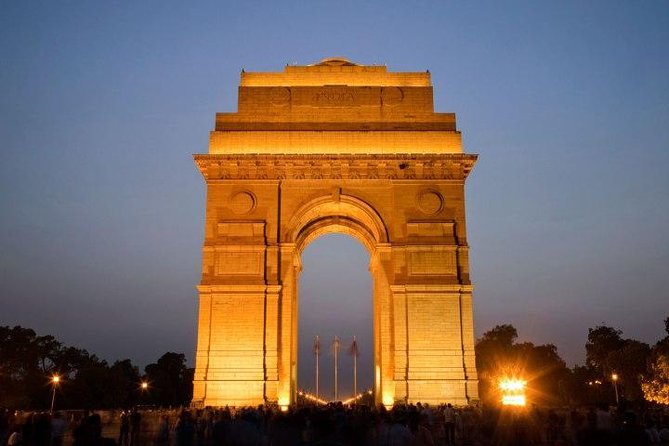
Then you roll to India Gate for a shorter stop. It is a memorial for roughly 90,000 Indian army soldiers who died in World War I, plus those from later frontier conflicts. It is not a long visit, but it gives you context and a sense of the country’s story beyond tourist facades.
The final Delhi segment includes a drive past major government buildings, including Parliament House and the President’s House area. You are not stuck waiting in lines all morning. The pacing keeps the trip from feeling like a checklist marathon.
Practical note: this is a morning-heavy day. If you dislike early starts, you should still consider it because it sets you up to get moving toward Agra.
The Agra jump and why timing matters
After Delhi sightseeing, you drive toward Agra. That long transfer is where a lot of tours either fall apart or become exhausting. Here, the format helps because you have a private, air-conditioned vehicle and a planned flow into the next day’s most important moment.
If you are traveling with kids, seniors, or anyone who gets cranky in transit, this kind of scheduling is a plus. It is not about sightseeing volume. It is about reducing decision fatigue.
Sunrise Taj Mahal: the best plan, with a few real-world rules

Agra is built around one thing: the Taj Mahal. The tour includes a very early pick-up and a sunrise visit, with the note that it is closed on Fridays. It is also subject to weather conditions, which is exactly how it should be. Sunrise Taj is one of those experiences where the light can make or break your photos.
What I like about this arrangement is the golf cart ride to and from the Taj Mahal area. Walking is possible, but the cart reduces fatigue before and after you stand in the main marble zones. If you want to enjoy the experience instead of just surviving it, this small inclusion helps a lot.
Here is also a smart photo strategy from experience I’ve seen shared for this site: do not assume you need to pay a photographer. Ask your guide to take your pictures, and keep your money for later. You will get more natural shots if you are not rushed by strangers timing you.
One more thing to know: if you are a Friday traveler, the closure means your sunrise slot would not work. The tour flags this ahead of time, so you can adjust expectations and build flexibility into your schedule.
Agra Fort and the shopping stop you should use carefully
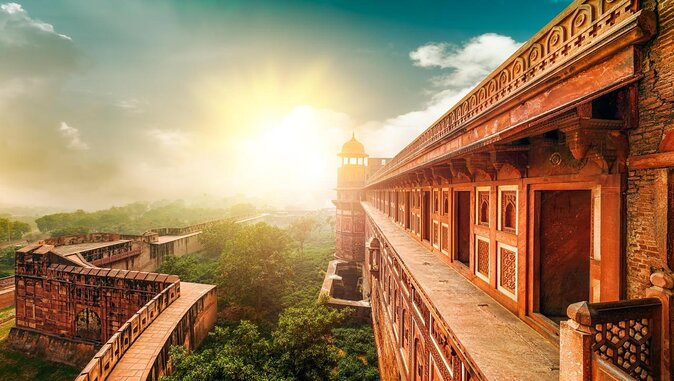
After the Taj Mahal, the day shifts to Agra Fort. It is a powerful red sandstone fortress with a walled enclosure holding palaces and imperial-era spaces, including parts associated with Mughal rulers. You get about an hour here, which is enough to appreciate the layout and mood without feeling stuck for half the day.
Then you have a shopping stop described around fine local crafts. Think marble inlay work, carpets, Zari and embroidery, and leather goods. The upside of including a stop like this is that you can see what the region is known for while you are already in the city and with a guide to interpret what you are looking at.
The caution: shopping stops can be a trap if you feel pressured or if you do not know your budget. Use it as a browsing window. If you want one quality souvenir, decide on it calmly, and compare feel and materials rather than rushing to buy because you are on a schedule.
More New Delhi tours and experiences for the shortlist





Ranthambore National Park: two chances in tiger country
Now we get to the part most people book for: Ranthambore. The park is closed every year from July 1 to Sept 30, so the season check is essential. If you are traveling outside those months, the tour sets up two safari departures, morning and afternoon.
You go on tiger-reserve safaris in shared jeeps or shared canters. That means you are not in a private vehicle for the wildlife part, even though the overall tour provides private sightseeing and transport between cities. Shared vehicles are normal for park capacity. The good side is that you usually get more eyes and more excitement around the same stretch of forest.
A naturalist is included during the safari, and that matters more than people think. You are not only watching trees and tracks. You are learning how sightings are made, what animals show you, and how to read the environment. When you have a guide who explains what to look for, your safari turns from luck-based waiting into active wildlife spotting.
Real talk: tigers are never guaranteed. But two safaris are better than one. If you want your best odds, treat both rides as equally important. Bring patience, keep your camera ready, and follow the naturalist instructions closely because timing and positioning affect what you can see.
The drive to Jaipur after safari, and how the vibe changes
After the afternoon safari, you drive to Jaipur. This transition is one reason the tour is popular for short trips: it keeps the days from feeling like dead time. You go from forest silence and scan-and-wait wildlife mode to Jaipur’s architecture and street-level energy.
You will arrive in time for a full day of royal-style sights, without losing the day to travel delays.
Jaipur icons: Amber Fort, Hawa Mahal views, and City Palace
Jaipur day is packed, but it is also built around logical order.
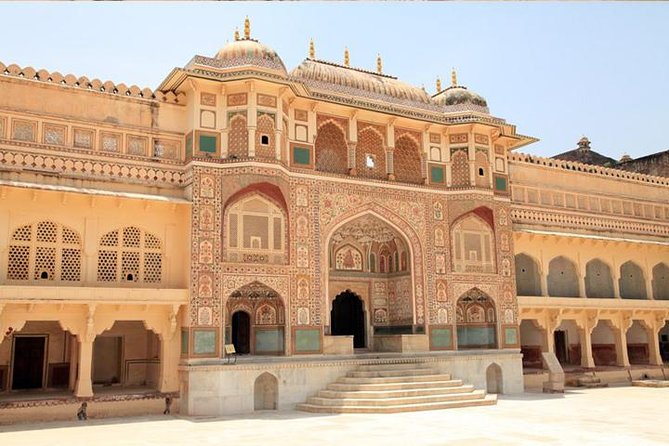
You start with Amber Fort, visited after breakfast, and the tour connects it to the Kachhwaha clan era, before Jaipur became the official capital in 1727. Amber is not just a pretty fort. It is a statement of how power looked in stone and planning, and you feel that the moment you enter the complex.
Next is Hawa Mahal, the Palace of Wind. You get a short stop on the way back, roughly half an hour. This one works well as a viewpoint experience. The façade is what you remember, especially the windows and screen-like architecture associated with royal women and the old palace style.
Then it is City Palace and its museum portion, plus Jantar Mantar. You get about two hours for this segment. City Palace gives you the official royal residence feel and a real sense of how administration and display overlapped. Jantar Mantar is a stone observatory built in the 18th century, so you are not only seeing beauty. You are seeing how people measured the sky before modern technology.
If you want to make this time work, give yourself permission to move at a steady pace rather than trying to photograph every corner. It is easy to burn time in Jaipur if you treat every doorway like a separate attraction.
Carpet and textile house stop: a practical look at craft
Time permitting, you also visit a carpet and textile-focused cottage industry stop. You can see how silk carpets are made by hand, and you can watch the work behind what you might otherwise just see in a shop window.
This stop can be great if you enjoy crafts and want context. It can feel like a sales-heavy environment if you only want sightseeing. My advice is simple: go in with one goal, either learn how the process works or just appreciate the quality and move on.
If you do plan to buy, do not buy on impulse. Decide later, after you compare what you like with what fits your budget.
What is actually included, and what you should budget for
Here is the practical inclusion picture: you get a mix of breakfasts, lunches, and dinner, plus water bottles throughout the tour. Monument entrance fees are included for the listed key sights. You also get the naturalist for safari and the park entry.
The package includes:
- Breakfasts (3)
- Lunches (4)
- Dinner (1)
- Monument entrance fees
- Two Ranthambore safaris (shared jeep or shared canter), with naturalist
- Air-conditioned private vehicle transfers between Delhi, Agra, Jaipur, and Ranthambore
- Golf cart rides for the Taj Mahal experience
- Pickup from Delhi-area locations
What is not included:
- Drinks
- Gratuities, which are recommended
Dress code is smart casual. That is helpful. It means you do not need to pack formal outfits, but you should still avoid anything too sloppy for fort and palace days. Also, if you eat vegetarian, you can request that in advance.
Transport and pacing: private vehicle, shared safaris
One of the most valuable parts of this tour is the balance of privacy and realism.
You have private transport for city-to-city movement and for sightseeing tours in Delhi, Agra, and Jaipur. That gives you a predictable day rhythm and easier bathroom breaks. You also have a professional private live tour guide for those monuments, which improves the experience because you get explanations while you walk, not after.
But the tiger safari itself is shared. That is because park logistics require it. The benefit is that you still get a naturalist and organized drives, and your safari experience stays efficient instead of turning into a complicated private arrangement that is hard to coordinate.
If you hate crowds, this is the only place you will feel shared conditions. For most people, it is worth it because it is part of how Ranthambore operates.
Price and logistics: is $261 a good deal?
At around $261 for a 4-day loop, the value is in the bundled structure. You are getting:
- Multi-city movement by air-conditioned private vehicle
- Private guiding for major monuments
- Entrance fees for the key sites listed
- Three nights on a twin-sharing basis if the hotel-inclusive option is chosen
- Two safari rides plus park entry
- Multiple meals plus water bottles
The cost only feels high if you compare it to “winging it” with taxis and buying tickets yourself. But if you compare it to the real costs of entry fees, guided tours, park logistics, and accommodation over three nights, it starts to look sensible.
Also, the route is built to reduce wasted time. You are not spending your trip bargaining over transport in every city. You are paying for less friction.
The one thing to watch: transfers are approximate, and traffic can shift the actual timing. You should keep your day flexible, especially if you are photogenic and like slow walking.
Who should book this tour, and who should skip it
This tour is a strong fit for:
- First-timers who want India highlights without heavy planning
- Families who need structure, especially with younger kids or older parents
- People who want a short window into wildlife, not a long multi-week safari plan
- Travelers who like private guiding for monuments and architecture
You might reconsider if:
- You only want private safari vehicles at every moment
- You are not comfortable with early starts, sunrise timing, and weather dependence
- You are traveling during Ranthambore’s closure months (July 1 to Sept 30)
Should you book this 4-day Delhi Jaipur Ranthambore Agra tour?
If you want a compact, organized route that hits the big India markers, I would say yes, with open eyes. The best part is the way it reduces decision stress: pickup, guides, private vehicle transfers, entry fees, and most meals already handled. That lets you focus on the experiences themselves.
The most important call is to match your expectations to the nature of Ranthambore. You are buying access to two safaris with a naturalist, not a promise of a tiger sighting. If you are okay with that, this is a smart value way to see Delhi, Jaipur, and Agra plus real wildlife time.
FAQ
What is included in the Ranthambore tiger safaris?
The tour includes 2-time jungle safaris at Ranthambore National Park in a shared jeep or shared canter, plus the park entry fee and a naturalist during the safari.
Are meals included?
Yes. The tour includes breakfast (3), lunch (4), and dinner (1), based on the meals specified in the itinerary. Drinks are not included.
Is the Taj Mahal sunrise visit always available?
It is included as a sunrise visit, but it is subject to weather conditions. Also, the Taj Mahal is closed on Friday, which can affect the sunrise schedule.
When is Ranthambore National Park closed?
Ranthambore National Park is not open from July 1 to Sept 30 every year.
Where are pick-ups available, and where does the tour end?
You can get picked up from your hotel or anywhere in Delhi, or from the airport, and also from Noida or Gurugram. The tour ends back at the meeting point with drop-off at your hotel or airport in Delhi.
What if I need to cancel?
You can cancel for a full refund if you cancel at least 24 hours in advance of the experience start time. If you cancel less than 24 hours before, the amount paid is not refunded.
More Safari Adventures in New Delhi



More Tours in New Delhi






More Tour Reviews in New Delhi

Not for you? Here's more nearby things to do in New Delhi we have reviewed










More Delhi City Tours to consider.
 ★ 5.0Old & New Delhi City Tour – Half or Full Day Options AvailableTickets from $384,811 traveller reviews
 ★ 5.0Same Day Taj Mahal, Agra Fort & Baby Taj Tour from Delhi by CarTickets from $624,304 traveller reviews
 ★ 5.0Taj Mahal Day Tour from Delhi by Superfast Train – TOP RATED TOURTickets from $1004,166 traveller reviews
 ★ 4.9Old and New Delhi Private Full or Half-Day TourTickets from $23,776 traveller reviews
 ★ 5.0Full Day Taj Mahal, Agra Fort & Baby Taj Tour from Delhi by CarTickets from $623,647 traveller reviews
 ★ 4.9From Delhi: Taj Mahal & Agra Private Day Trip with TransfersTickets from $43,181 traveller reviews
 ★ 5.0Taj Mahal Tour from Delhi by Express Train (Viator Award Winner)Tickets from $752,849 traveller reviews
 ★ 5.0All Inclusive Private Taj Mahal Luxury Tour from Delhi by CarTickets from $622,564 traveller reviews
More useful Delhi routes