

Review · DELHI CITY TOURS
4 Days Golden Triangle Tour India From Delhi
Golden Triangle in four days, no guesswork. This private route links Agra’s Mughal highlights with Jaipur’s signature sights, with pickup and a driver to handle the road plan. I also like that it starts at 9:00 am, but keep one consideration in mind: entrance tickets are not included, so you’ll want to budget ahead.
I really like how Day 1 eases you into Mughal artistry with Itmad-ud-Daula, often called the Baby Taj, then adds Mehtab Bagh across the Yamuna for those classic viewpoint vibes. That order helps the Taj Mahal hit harder, because you already understand the style.
Key Things I’d Prioritize Before You Go
- A private setup that stays flexible: you’ll travel as your group, not mixed with random strangers.
- Big-name sights with smart sequencing: Mughal sites in Agra first, then Jaipur’s main landmarks.
- A driver-led experience, not a bus-and-hope day: the service focus is on safe driving and practical help.
- 3 breakfasts included: small detail, but it matters on a fast 4-day schedule.
- Entrance tickets are your extra cost: plan for Taj Mahal and other paid sites.
Price and Logistics for a 4-Day Delhi to Agra and Jaipur Route
At $190.00 per person for an approximately 4-day private Golden Triangle style trip, the value comes from what you are not paying for separately. Your package covers tolls, parking, driver expenses, and fuel, plus local and interstate taxes. You also get pickup, and that can save real time in a city like Delhi where traffic and meeting points can be a headache.
What you should mentally budget for is the parts that are not included: entrance tickets, personal expenses, and optional add-ons. Entrance tickets can change the total cost faster than you expect, especially once you start adding paid sites like the Taj Mahal. This is one of those tours where the sticker price looks simple, but the final bill depends on how you handle tickets on the day.
The other logistics angle is comfort. This is a driver-based experience, and the reviews you provided highlight punctual service and careful driving. That matters here because you are moving between cities and through major tourist areas.
More New Delhi tours and experiences for the shortlist



Your Driver and Pickup: The Real Comfort Factor
Pickup is included, and the start time is 9:00 am. You should expect the day to revolve around road movement and scheduled sightseeing windows, so arriving on time at the start matters.
The strongest, most repeated theme in the feedback is the driver. Names like Tabul come up, described as careful, confident, and focused on passenger safety, plus always ready to offer advice on what to see and how to fit it into the time you have. Another name that appears is Sumit, tied to professional, punctual service with well-maintained hotels.
That driver role is more than just driving. In practice, it means you spend less energy figuring out directions, and more time deciding where to stand, what angle to use, and how to keep the day flowing. If you’re visiting India for the first time, this is the kind of support that makes the difference between a stressful trip and a smooth one.
Day 1 in Agra: Itmad-ud-Daula and Mehtab Bagh Before the Big Finale
Day 1 starts with Itmad-ud-Daula for about 1 hour, and then you head to Mehtab Bagh for around 30 minutes. This is a strong opening day because it’s Mughal royalty without jumping straight into the heaviest crowd magnet.
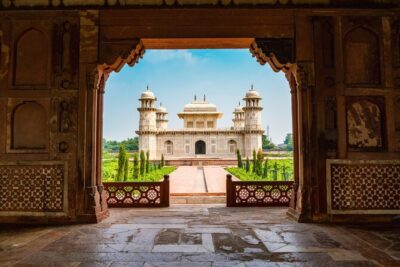
Itmad-ud-Daula (often called the Baby Taj) is a Mughal mausoleum built between 1622 and 1628 by Nur Jahan for her father, Mirza Ghiyas Beg. It has that jewel-box look that people associate with Taj Mahal style details, even if it’s smaller. If you pay attention here, you’ll notice how the Mughal aesthetic keeps showing up across the complex: symmetry, refined decoration, and a sense of carefully planned beauty.
Then comes Mehtab Bagh, a charbagh garden across the Yamuna River. It’s popular as a sunset viewpoint for Taj Mahal. Even if you don’t get the exact lighting you dreamed of, the garden setting helps you understand why the Taj Mahal’s placement became so legendary. You’re not just checking a monument, you’re seeing the landscape logic behind it.
One practical note: since entrance tickets are listed as not included for these stops, you should plan what you’ll purchase at the gate or as directed by your guide. Bring a little extra cash and keep your tickets organized.
Day 2 Mughal Hits: Taj Mahal, Agra Fort, and Fatehpur Sikri
Day 2 is the headline day in Agra. You’ll spend about 2 hours at the Taj Mahal, plus about 1 hour at Agra Fort, and then around 1 hour at Fatehpur Sikri.
Taj Mahal: The 1653 Love Story in White Marble
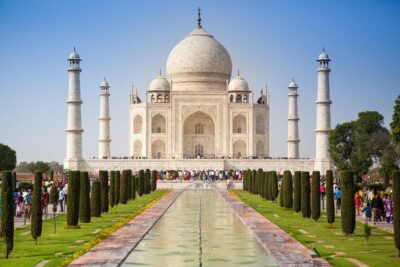
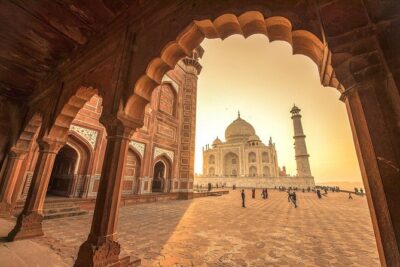
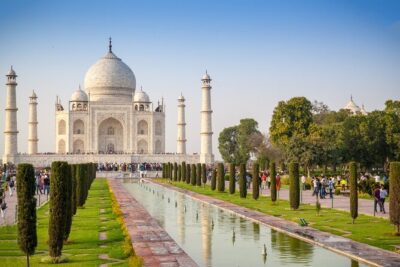
The Taj Mahal is described as Shah Jahan’s memorial built in 1653 for his wife. It’s part of a larger complex and is known for well-maintained grounds and the sheer visual impact when you first arrive. The key for enjoying it is pacing yourself. Don’t only chase the main viewpoint. Allow time to take in the layout of the complex, because the experience is designed as a sequence.
Also, because tickets are not included, you should budget extra for entry. This is one of the biggest cost drivers on a Golden Triangle trip, and it’s better to accept that early than to be surprised mid-day.





Agra Fort: Power, Control, and UNESCO Gravitas
Next up is Agra Fort, about 1 hour. This 16th-century Mughal residence complex was used by the Mughal dynasty and is UNESCO listed. It’s also tied to Shah Jahan’s late life, including his deposing and restriction by his son.
This is a great contrast after the Taj Mahal. The Taj feels like romance and light. Agra Fort feels like rule, strategy, and architecture built for defense and residence. If you like monuments with stories baked into the stone, this stop delivers.
Fatehpur Sikri: A Short-Lived Capital That Still Feels Big
Finally, you’ll go to Fatehpur Sikri for about 1 hour. It’s described as the non-guided tour of the Mughal empire’s short-lived capital between 1572 and 1585 under Emperor Akbar, with red sandstone buildings grouped in the city center. That “short-lived capital” detail matters because it helps you understand why the place feels like a dramatic snapshot of ambition rather than a slowly grown city.
Fatehpur Sikri is listed as free for this stop, which is a real value win on a day that includes a major paid site. If you enjoy exploring at your own pace, non-guided time can actually work in your favor here.
Day 3 Jaipur First Look: Jal Mahal, Hawa Mahal, Jantar Mantar, City Palace
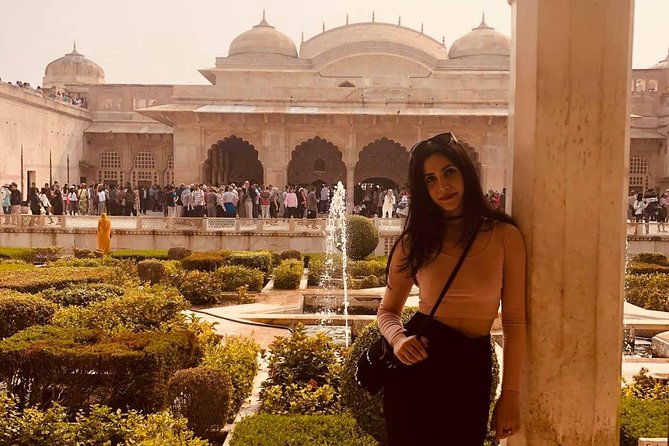
Day 3 shifts from Agra to Jaipur. The schedule is tight but varied, with quick stops and then longer landmark time.
Jal Mahal: A Flash of Palace Beauty in the Middle of Man Sagar Lake
Jal Mahal is a short stop, about 10 minutes, and it’s listed as free. It’s a palace in the middle of Man Sagar Lake, built in 1799 by Sawai Pratap Singh. Even with limited time, Jal Mahal is a good visual reset. It’s calmer than the fort-and-marble days, and it gives you a sense of Jaipur’s water and palace relationship.
Hawa Mahal: The Pink Facade With 953 Windows
Next is Hawa Mahal, the Palace of Breeze, for about 30 minutes. This five-storey honeycombed pink sandstone building has 953 small windows called jharokhas. It was connected to the women’s chambers of the royal family.
If you only look from one angle, you’ll miss how the facade pattern works. Try to walk slowly and check the window grid. It’s the kind of architecture that turns a quick stop into a memorable one because the details are the point.
Entrance tickets are listed as not included here, so plan for that too.
Jantar Mantar: When Jaipur Measured the Sky
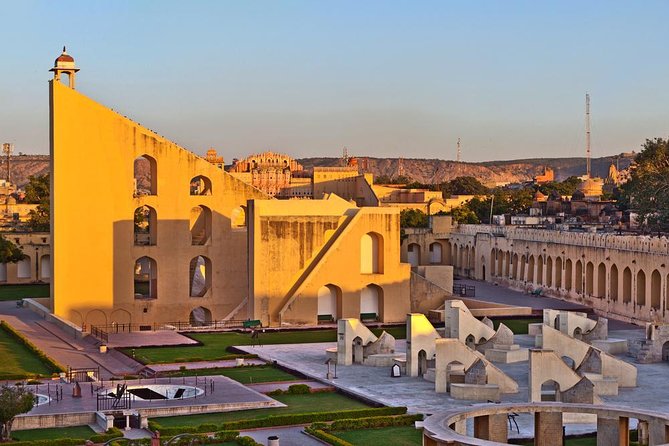
Then comes Jantar Mantar, about 1 hour. This astronomical instrument site was built in 1734 by Rajput king Sawai Jai Singh II and includes the world’s largest stone sundial.
This stop is a great break from forts and palaces because it shows how science and power were connected. If you like photography, you’ll also find easy angles because the instruments are arranged in a way that makes it simple to frame the shapes.
City Palace: Courtyards and Galleries in a Big Complex
You end with the City Palace for about 1 hour. This palace complex includes courtyards, gardens, and art and craft galleries. The value here is that it feels lived-in, not just decorative. You get a chance to connect the royal aesthetic to everyday arts and displays.
Entrance tickets are listed as not included, so again, this is where your ticket budget matters.
Day 4 in Delhi: Departure Transfer Without Stress
Day 4 is all about the Delhi handoff. You arrive back in Delhi and then get a departure transfer to the Delhi airport or railway station, or to another location within Delhi based on your request.
This kind of ending is underrated. After days of sightseeing and road time, you want a plan that does not involve last-minute guessing. Since the transfer is included, you avoid the risk of being stuck negotiating transport right when your energy is lowest.
If you have a flight or train at a specific time, you’ll want to share that with your provider early so your pickup and drop-off match your schedule.
What You Pay For vs. What You Must Budget Separately
Your package includes a lot of the “hidden” trip costs that usually add up. You have coverage for tolls, parking, driver expenses, fuel cost, and both local and interstate taxes. Breakfast is included for three days, which helps keep mornings simple.
What is not included is also clearly defined. Personal expenses and driver or guide tips are not included. Alcoholic and non-alcoholic beverages, minibar items, and other hotel services are also not included.
The biggest practical gap for first-timers is entrance tickets. For multiple major stops, tickets are listed as not included. That means your total cost depends on what you actually pay at the gates.
Quick tip: keep some flexibility in your day. If you’re short on time or tickets, you may need to make choices. This tour gives you landmark coverage, but not everything is free, so decide how you want to spend your money.
How to Get the Best Day From Each Stop
Because this is a fast-moving private-style route, how you handle your time matters.
For the Taj Mahal and Agra Fort day, wear comfortable walking shoes and plan to spend more time than you think at the viewpoints. Taj Mahal is a complex, and Agra Fort has multiple layers, so the “time on paper” can feel different once you’re there.
For Jaipur day, focus on matching the stop to your mood. Hawa Mahal is built for detail. Jantar Mantar is built for curious looking. City Palace is built for slow wandering. If you try to treat every stop the same way, you’ll end up rushing the ones that reward patience.
Also, the fact that Fatehpur Sikri is listed as non guided can be good for you if you enjoy walking and reading on your own. Just make sure your energy matches that style. If you prefer a constant guide narrative, you might find short self-paced time less satisfying than guided hours.
Who This Tour Is Best For
This works well for you if:
- You want a 4-day Golden Triangle without spending extra time arranging transfers.
- You like a private group experience with a driver who can help manage the schedule.
- You’re seeing Agra and Jaipur for the first time and want the top landmarks in a logical flow.
It may not be ideal if:
- You dislike paying separate entrance fees at major attractions.
- You want every stop fully guided with no self-paced sections.
Should You Book This 4-Day Golden Triangle Tour?
If you’re looking for a solid, no-drama route that handles road logistics and landmark coverage, this is a strong choice. The best reason to book is the service feel tied to the driver experience. Names like Tabul and the professional support associated with Sumit point to a style that prioritizes safety, punctuality, and helpful guidance. That matters more than most people expect on a trip this size.
My caution is simple: entrance tickets and personal extras can raise your total. If you plan for that and keep expectations realistic about time at each site, you’ll likely feel satisfied with what you get for $190.00 per person.
If your priority is maximum sightseeing, minimal coordination stress, and a driver who helps you make smart decisions on the ground, then yes, book it. If you want a budget trip where everything is included, you may want to compare other options first.
FAQ
What is the duration of this 4 Days Golden Triangle Tour?
The tour is approximately 4 days.
Where does the tour start and what time?
It starts in New Delhi with a 9:00 am start time.
Does the tour include pickup?
Yes, pickup is offered.
Is this a private tour?
Yes, it’s listed as a private tour/activity, with only your group participating.
What meals are included?
Breakfast is included for 3 days.
Are entrance tickets included in the price?
No. The tour lists admission tickets as not included for several stops.
Are any stops free?
Yes. Fatehpur Sikri is listed as free, and Jal Mahal is also listed as free.
Does the tour include transfers on the last day?
Yes. On arrival back in Delhi, you get a departure transfer to the airport, railway station, or another location within Delhi based on your requirement.
What costs are included besides sightseeing?
Toll taxes, parking fees, driver expenses, fuel cost, and local and interstate taxes are included.
Is cancellation free?
Yes, you can cancel up to 24 hours in advance for a full refund.
More 4-Day Experiences in New Delhi



More Tours in New Delhi



More Tour Reviews in New Delhi
Not for you? Here's more nearby things to do in New Delhi we have reviewed








More Delhi City Tours to consider.
 ★ 5.0Old & New Delhi City Tour – Half or Full Day Options AvailableTickets from $384,811 traveller reviews
 ★ 5.0Same Day Taj Mahal, Agra Fort & Baby Taj Tour from Delhi by CarTickets from $624,304 traveller reviews
 ★ 5.0Taj Mahal Day Tour from Delhi by Superfast Train – TOP RATED TOURTickets from $1004,166 traveller reviews
 ★ 4.9Old and New Delhi Private Full or Half-Day TourTickets from $23,776 traveller reviews
 ★ 5.0Full Day Taj Mahal, Agra Fort & Baby Taj Tour from Delhi by CarTickets from $623,647 traveller reviews
 ★ 4.9From Delhi: Taj Mahal & Agra Private Day Trip with TransfersTickets from $43,181 traveller reviews
 ★ 5.0Taj Mahal Tour from Delhi by Express Train (Viator Award Winner)Tickets from $752,849 traveller reviews
 ★ 5.0All Inclusive Private Taj Mahal Luxury Tour from Delhi by CarTickets from $622,564 traveller reviews
More useful Delhi routes