
Review · DELHI CITY TOURS
4 Days Private Golden Triange Tour to Agra and Jaipur from Delhi
Delhi to Jaipur in four days sounds fast. The fun part is that this route mixes big-ticket icons with quieter, more thoughtful stops, all with a private driver and guided context for key monuments. You get the classic Golden Triangle loop, plus a timed sunrise Taj Mahal morning that helps you beat the crowds and see the marble at its most dramatic.
What I like most is the structure. You’re not just hopping between landmarks, you’re getting a licensed guide for the major heritage stops, including the “why” behind what you see, not only the “what.” The other big win is practical comfort: clean, air-conditioned car transfers, mineral water, and small snacks during intercity travel, which keeps the days from feeling like a nonstop sprint.
One consideration: monument tickets are not included. The tour lists an entrance budget of about USD 45 per person for all sites. If you’re traveling on a tight budget, that extra line item matters, and it’s smart to budget for it early.
Key highlights worth centering your time on

- Sunrise Taj Mahal meet around 05:00, when the light and atmosphere are at their best
- 8 UNESCO World Heritage sites across Delhi, Agra, and Jaipur
- Licensed guiding for insight at each major monument, not just a driver and a map
- Private car by group size, from a 4-seater sedan to larger vans
- Office representative support in Delhi, Agra, and Jaipur for personal attention and smooth handoffs
Private Golden Triangle by car: what you gain, what to plan
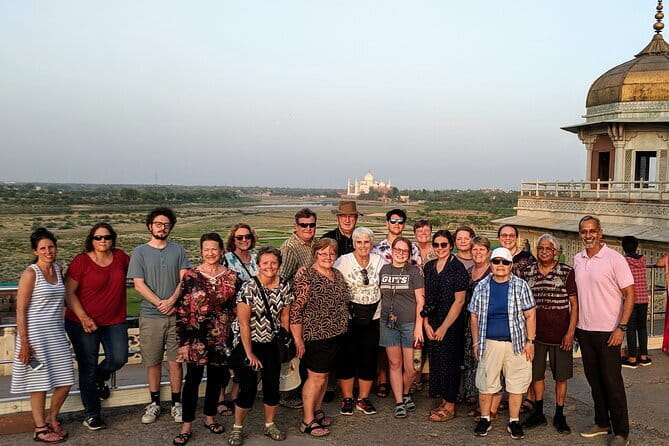
This is a true private tour format, so your schedule stays tied to your group, not to a large bus timetable. That matters on the Golden Triangle circuit because timing is everything. You’ll spend less time negotiating transport on your own and more time arriving at sights with a plan.
You also get car choices that match your group size: a 4-seater sedan for 1 to 2 people, an Innova 6-seater for 3 to 4, and an 11-seater Tempo Traveller or van for 5 to 10. In plain terms, that reduces the annoying problem of squeezing into the wrong vehicle or losing time waiting for the “right” car later.
Comfort details are included too, and they add up over four days. There’s an air-conditioned private car, parking fees, fuel surcharge, GST, and water in the car. You’ll also get seasonal fruits plus biscuits or cookies during intercity travel. It’s not a luxury vacation, but it is the kind of support that keeps you from feeling wrecked before the sightseeing even starts.
The other planning piece: the itinerary front-loads major sites. Expect long walking and steady schedules on the heritage days. If you’re sensitive to early mornings or heat, you’ll want to bring practical protection, since this circuit is about daytime classics plus at least one very early start.
You can also read our reviews of more private tours in New Delhi


Day 1 in Delhi: India Gate, Qutub Minar, and the calmer side of government buildings
Delhi day one is a smart mix of monuments that show different layers of the city. You start at India Gate, a war memorial near Rajpath. It’s quick (about 30 minutes) but meaningful because it grounds the day in modern history and the idea of sacrifice, not only ancient empires.
From there you head to Qutub Minar, a UNESCO site and a 73-meter tall, five-storey tower connected to the early Delhi Sultanate. Built in 1193 by Qutub-ud-din Aibak, it’s the kind of place where the details matter. Even when you only have about an hour, a guide helps you notice the construction logic and the evolution of styles rather than treating it like a tall photo backdrop. Ticket cost is not included here, so factor that into your entrance budget.
Next comes Lotus Temple, famous for its flower-like design and for being one of the most visited spots in Delhi. The building dates to 1986 and has won architectural awards. This is a nice pause in the day, because it tends to feel orderly and calming compared with some of the older, tighter monuments.
You also visit Sansad Bhawan, the Parliament House area. It was built in 1927 and designed by British architects Sir Edwin Lutyens and Sir Herbert Baker, with lush gardens around it. Even if you are not a politics buff, it’s a good stop for understanding how British-era planning shaped what you see in New Delhi today.
Then you step into the spiritual and cultural campus of Swaminarayan Akshardham. The itinerary gives you about an hour there, and it’s framed as a Hindu temple and spiritual-cultural complex, showing both traditional and modern elements. If you like architecture that is both ceremonial and instructional, this is one of the better “energy shifts” on the first day.
Finally, you end at Raj Ghat, the memorial for Mahatma Gandhi. It’s a simple marble platform and a short visit (about 30 minutes). This is the kind of stop that slows you down, and it can work well after a schedule full of tall structures and big public spaces.
Practical drawback: Delhi can be busy, and a full first day means you should keep your expectations realistic. If you prefer slow, lingering museum time, you may wish you had more breaks. On the other hand, the day is paced with short and focused segments, which makes it easier to stay on track.
Day 2: Taj Mahal sunrise, Agra Fort, Itmad-ud-Daula, and Fatehpur Sikri
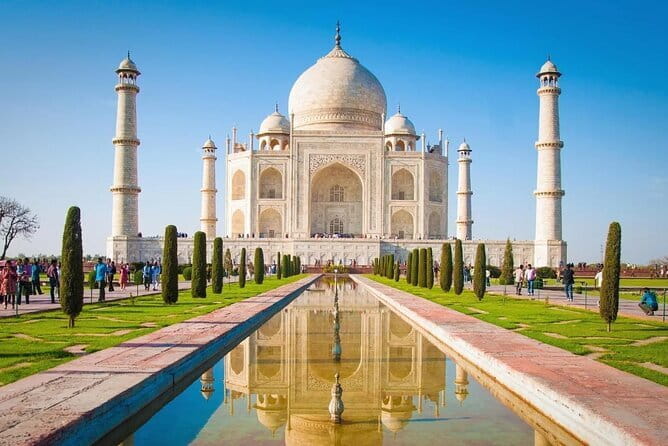
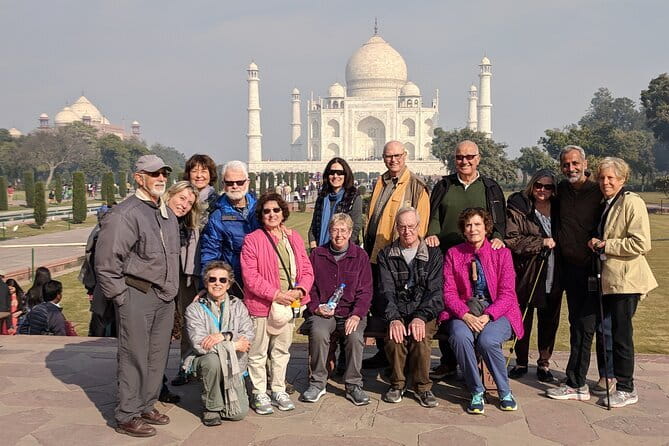
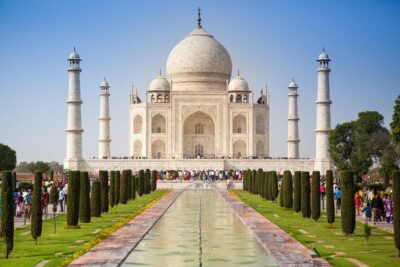
Day two is the headline day. The tour heads to the Taj Mahal at around 05:00 for sunrise, where a guide meets you. The scheduled time on site is about two hours, and since entry tickets are not included, you’ll want to budget for that separately. Sunrise here is not only about the view, it’s about reducing the sensory chaos that comes later in the morning.
A good guide matters at the Taj. You’re there to understand design choices, materials, symmetry, and symbolism, not just to stare at the marble. The tour’s guided approach is what turns the Taj into a story you can follow.
After the Taj, you move to Agra Fort, another UNESCO World Heritage site. Plan for about two hours. This fort is tied to Mughal power and includes historical references like where Humayun was crowned. Ticket cost is not included, so again, consider your entrance budget.
Next up is Itmad-ud-Daula, often nicknamed Baby Taj. It’s about an hour and is described as a jewel box style Mughal mausoleum. It’s also frequently considered a draft or precursor to the Taj Mahal concept. If you loved the Taj but want to see the earlier, more intimate version of the design language, this is a great contrast stop.
Then the tour takes you to Fatehpur Sikri, with about 1 hour 30 minutes allotted. It was founded as Akbar’s Mughal capital in 1571 and served as the seat of power until 1585, when Akbar shifted campaigns, and the site was later abandoned in 1610. Admission is listed as free in the itinerary notes, which can save a bit against your entrance total. This stop is valuable because it changes the scale. You get a whole “city of history” feeling, not just one monument.
The main consideration for this day is energy management. Going Taj sunrise plus three more heritage stops is ambitious. You’ll want to start hydrated and pace your shopping and photo breaks. If you come hungry, you may feel rushed at transitions, since the schedule is tight and the stops are time-bound.
Day 3 in Jaipur: City Palace, Hawa Mahal, Jantar Mantar, and the Water Palace pause
Jaipur day three leans into architectural identity. You begin at City Palace, located inside the walled city and conceived and built by Maharaja Sawai Jai Singh II. The palace complex mixes Mughal and Rajput styles, and you get about two hours there. Ticket cost is not included, so you’ll likely use the same entrance allowance planning you started earlier.
From there, you visit Hawa Mahal, the Palace of Breeze. It’s a five-storey façade and is described as the tallest building built without a foundation. The itinerary notes its curved architecture with a pyramidal shape and an 87-degree angle. The visit is short, about 30 minutes, so it’s best used for quick orientation and photos from the most workable angles. Don’t expect deep interior time if you are short on it, because the schedule suggests an exterior-first experience.
Next is Jantar Mantar, an observatory with 13 architectural instruments. You’ll have about an hour. The site is tied to Maharaja Jai Singh II of Jaipur, and the name translates as instruments for measuring harmony of the heavens. Even if you do not read the science, a guide can help you see how the shapes link to what astronomers needed to track. This stop is one of the reasons the Golden Triangle feels more than just forts and tombs.
Then comes a photography breather at Jal Mahal, also called the Water Palace. It’s listed as a free admission stop and your time is about 30 minutes. The key is expectations: it’s especially about views rather than long exploration.
You finish at Albert Hall Museum, with about one hour scheduled. The tour lists a wide set of collections, including paintings, jewelry, carpets, ivory, stone and metal sculptures, and works in crystal. It also mentions coins from the Gupta, Kushan, Delhi Sultanate, and Mughal periods. This is a useful final stop if you want to connect the monuments you saw to the objects people used, owned, and valued.
A likely drawback: Jaipur day three includes both fast and slow stops, and the day can feel like you are moving between different “modes” every few hours. If you prefer fewer transitions, you may want to ask your guide to recommend which photos are highest priority for your group.
Day 4: getting to the airport without the last-minute stress
Day four is not a sightseeing marathon. After breakfast, the schedule is built around departure. You depart to Delhi international airport with a driver drop-off, and the time block is listed as about 5 hours.
This matters because many Golden Triangle trips end with a scramble. Here, the plan is straightforward and reduces the risk of timing problems that often happen with independent travel. Breakfast is included (the itinerary lists three breakfasts total across the tour), and you start the day with enough buffer to handle airport check-in calmly.
One practical tip: treat this day as logistics day, not photo day. If you arrive late for the airport route, you lose the benefit of having planned a private driver in the first place.
More New Delhi tours and experiences for the shortlist





Price and ticket math: is this worth USD 226.66 per person?

At USD 226.66 per person, the headline price is for the private driving structure, guide support for major sites, and core inclusions like water, parking, fuel surcharge, GST, and morning support. If you choose a hotel option, it also includes three nights accommodation.
The tour’s strongest value argument is that you get private transport plus licensed guiding for multiple UNESCO stops, without the usual hassle of coordinating tickets, meeting points, and route logic yourself. Even if entrance fees are separate, the day-to-day effort is reduced. You are also given personal attention through an office representative in Delhi, Agra, and Jaipur, which typically means smoother handoffs between cities.
Entrance tickets are not included, with an approximate total of USD 45 per person for all monuments. That means your real all-in heritage cost will land closer to the price plus that entrance budget. Still, for a four-day loop with multiple UNESCO sites, guided time, and private vehicles, it usually stays in the “reasonable” range compared with piecing everything together.
If you are a couple or a small family, the private car is where you feel the value. If you are a larger group, the vehicle sizes scale up appropriately, which can help keep the per-person cost under control while still staying private.
Practical tips to make the most of this four-day circuit

I’d plan around three themes: timing, pacing, and entrance budgeting.
Timing: Sunrise Taj Mahal is scheduled around 05:00, so treat bedtime and morning readiness as part of the itinerary. You will feel better if you keep your night light and your morning routine consistent.
Pacing: Each day has multiple “anchor” stops plus shorter segments. If you are photo-heavy, pick a few must-shots before you leave, so you do not burn time chasing every angle.
Tickets: Since entrance fees are separate, use the tour’s stated entrance estimate as your baseline. If you want to avoid surprises, keep a bit of extra buffer in cash or card for ticket lines that may vary by site.
Also, pack for comfort in India’s heat cycles even in cooler months. The tour includes water and small snacks, but you will still want your own essentials, like hats, sunscreen, and comfortable shoes, because walking is part of the deal on forts, palaces, and observatories.
Should you book this 4-day private Golden Triangle tour?
I think it’s a strong fit if you want the Golden Triangle experience but with fewer friction points. You’ll like it most if you value guided context at major monuments, prefer a private driver and clean car, and can appreciate a structured day plan that hits Delhi, Agra, and Jaipur on schedule.
I would hesitate if your top priority is slow travel, long unplanned museum time, or you are trying to keep every cost ultra-low. The entrance fees are separate, and the days are full enough that you will want good energy management.
If your travel style is “see the big icons, but understand them,” this itinerary is well matched. The sunrise Taj Mahal timing, the UNESCO-heavy route, and the personal support across Delhi, Agra, and Jaipur are the reasons I’d seriously consider booking.
FAQ
What is the duration of the 4 Days Private Golden Triangle Tour?
The tour is listed as approximately 4 days.
Is pickup included for this tour starting from New Delhi?
Yes, the inclusions mention hotel or airport pick-up and drop-off.
What is the price per person for this experience?
The price is listed as USD 226.66 per person.
Are monument entrance fees included in the price?
No. Entrance fees are listed as not included, with an approximate total of USD 45 per person for all monuments.
What time does the tour plan for the Taj Mahal sunrise?
The tour takes you to the Taj Mahal at around 05:00 am for sunrise, with a guided tour meeting at that time.
How many UNESCO World Heritage sites are included?
The tour overview states you will explore 8 UNESCO World Heritage sites.
Is accommodation included?
Accommodation for 3 nights is included only if the tour is booked with an option including hotels.
What is the cancellation policy?
You can cancel up to 6 days in advance for a full refund, 2 to 6 days before for a 50% refund, and within 2 days for no refund.
More Private Tours in New Delhi



More Tours in New Delhi





More Tour Reviews in New Delhi
Not for you? Here's more nearby things to do in New Delhi we have reviewed








More Delhi City Tours to consider.
 ★ 5.0Old & New Delhi City Tour – Half or Full Day Options AvailableTickets from $384,811 traveller reviews
 ★ 5.0Same Day Taj Mahal, Agra Fort & Baby Taj Tour from Delhi by CarTickets from $624,304 traveller reviews
 ★ 5.0Taj Mahal Day Tour from Delhi by Superfast Train – TOP RATED TOURTickets from $1004,166 traveller reviews
 ★ 4.9Old and New Delhi Private Full or Half-Day TourTickets from $23,776 traveller reviews
 ★ 5.0Full Day Taj Mahal, Agra Fort & Baby Taj Tour from Delhi by CarTickets from $623,647 traveller reviews
 ★ 4.9From Delhi: Taj Mahal & Agra Private Day Trip with TransfersTickets from $43,181 traveller reviews
 ★ 5.0Taj Mahal Tour from Delhi by Express Train (Viator Award Winner)Tickets from $752,849 traveller reviews
 ★ 5.0All Inclusive Private Taj Mahal Luxury Tour from Delhi by CarTickets from $622,564 traveller reviews
More useful Delhi routes