
Review · DELHI CITY TOURS
4-Days Private Golden Triangle Tour: Delhi, Agra & Jaipur by Car
Four days, three cities, one smooth ride. What makes this Golden Triangle tour work is the private car pace, plus the small, practical extras like a tuk-tuk ride in Old Delhi and a battery van at the Taj Mahal. You get a guided route through iconic sights in Delhi, then a sunrise-focused Agra day, and finally a full Jaipur day without constantly negotiating taxis or timing.
My favorite part is how much is packed into each day without it feeling random: you’re not just seeing monuments, you’re getting the why behind them from your guide. The main drawback to plan around is cost creep at the gates, since monument entrance fees are listed as an extra charge (and Taj Mahal has a weekly closure).
Key things I’d plan for
- Pickup window is flexible: you can choose a start time between 7 AM and 11 AM.
- Private means real control: it’s just your party in your vehicle, with the guide adjusting as needed.
- Your “included” extras are practical: Old Delhi tuk-tuk ride and a battery van from parking to the Taj Mahal gate.
- Entrance fees are the surprise line item: monument entry is not included, listed at about $70 per person.
- Taj Mahal timing matters: it’s a sunrise-style visit and it’s closed every Friday.
- Bring photo ID for entry: you need a valid photo ID, even as a mobile copy, for monument entry.
Private Golden Triangle by car: what you gain (and what you give up)
This tour’s value is the way it removes friction between Delhi, Agra, and Jaipur. You’re not spending your days bargaining for rides, and you’re not stuck asking strangers for directions when you’d rather be looking at the next stop. For many people, that is the difference between a stressful whirlwind and an actually enjoyable route.
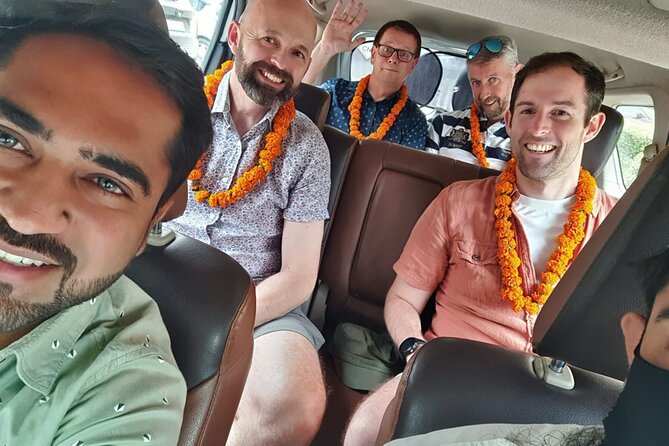
You also get a chauffeur-driven setup that fits different group sizes, from a 4-seater sedan for 1 to 2 people up to a 9-seater van for 6 to 9 people. That matters because your time is limited, and getting in and out of the car smoothly helps keep each day moving.
The tradeoff is simple: you are still doing a lot in 4 days. Distances between cities are real, and Delhi alone has enough sights that you’ll feel like you’re sprinting between eras, even when the schedule is organized.
You can also read our reviews of more private tours in New Delhi



Day 1 in Delhi: Qutub Minar, Lotus Temple, and the jump into Old Delhi
Day 1 is built like a storyline. You start in New Delhi with UNESCO-level architecture, then you pivot into Old Delhi markets where the sights and smells go straight to your senses.
Qutub Minar is a strong first anchor. It’s a UNESCO World Heritage site tied to the late 1100s, and the minaret’s height and carvings make it an instant “wow” stop. Even if you only have an hour, it’s the kind of place where you’ll keep looking up after you thought you were done.
Next, the Lotus Temple brings a different mood. It’s a Baháʼí House of Worship with a flower-like design, and it’s finished in 1986. If you’re tired of stone-for-stone monuments, this is a helpful breather, and it’s free.
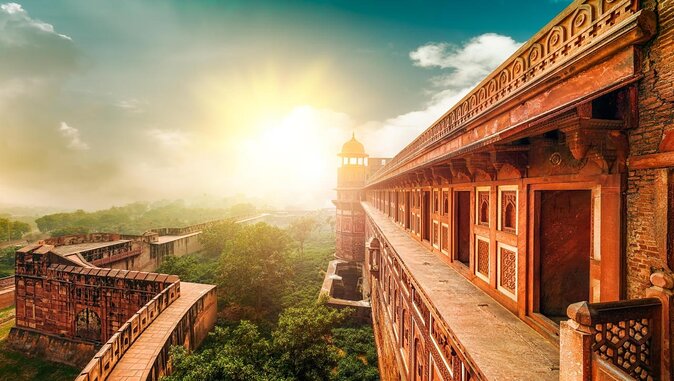
From there, you’ll pass by major Mughal-era landmarks like Red Fort (you’re viewing it as you move through, not doing a full entrance visit) and get a sense of New Delhi’s planned layout with famous architects credited in the area. You’ll also pass the Tomb of the Unknown Soldier memorial that lists names of Indian servicemen who died in World War I, which is a sobering contrast to the sightseeing theme.
Then comes a Delhi stop I really like for its atmosphere: Agrasen ki Baoli, an ancient stepwell. It’s short on time but big on vibe, with that slightly eerie feel people associate with stepwells and local legends. If you’re into texture, shadows, and odd little corners, this is one of those “pause for a minute” moments.
Finally, Old Delhi takes over. Your route includes Chandni Chowk, then Jama Masjid near it, plus Khari Baoli, famous as Asia’s largest wholesale spice market. This is where the tuk-tuk ride helps because it breaks up what would otherwise be a long, tiring stretch of lanes and sidewalks.
Day 1 also includes Humayun’s Tomb and an Old Delhi strategy
In between the big market energy, you’ll visit Humayun’s Tomb, a UNESCO World Heritage site and often described as India’s first garden tomb. It’s the kind of monument that rewards a slower pace, so your hour there is well spent, especially if your guide keeps the focus on how the gardens and the architecture work together.
At some point, you’ll also hit a classic Delhi break at Connaught Place where your guide recommends places to eat. The value here is that your guide can steer you toward food options that make sense for time, taste, and comfort. You can keep lunch simple and avoid wasting the middle of your day hunting for something that feels safe and convenient.
One practical note: you’ll be moving between very different Delhi neighborhoods. That means you should plan for a dress code that works for temples and mosques, and for footwear that can handle uneven ground in crowded lanes. The tour does not spell out clothing rules, so it’s smart to travel prepared.
By the end of Day 1, you drive to Agra and are dropped at your hotel. The route time is listed at about 3 hours. In practice, that means you’re likely to arrive ready to eat and sleep, not ready for more wandering.
Day 2 in Agra: sunrise Taj Mahal, Agra Fort, and the Baby Taj
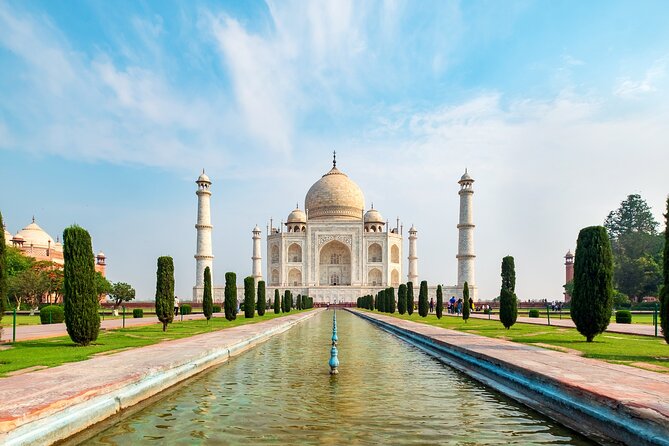
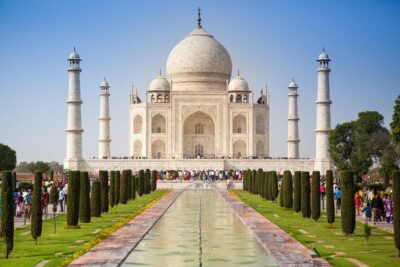
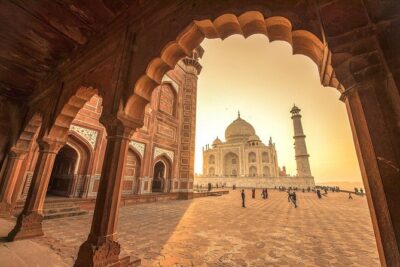
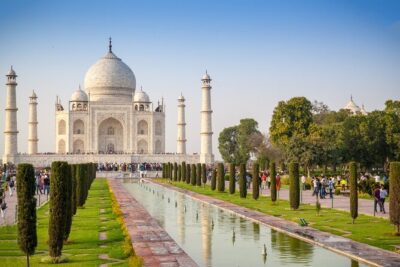
Day 2 is the Taj Mahal day, and it’s set up with the timing you want. You start early for a sunrise visit to the Taj Mahal, the white marble mausoleum built by Shah Jahan in the 1630s for Mumtaz Mahal. Sunrise is a huge deal here because light changes the marble and the mood of the site in a way that midday visits often miss.
Important reality check: Taj Mahal is closed every Friday. So if your trip overlaps a Friday, you’ll need to rely on your guide’s plan adjustment or accept a different arrangement.
After the Taj, you’ll see Agra Fort, another UNESCO World Heritage site. It’s a 17th-century complex with courtyards and palaces that blend Indian and Islamic design elements. This stop is great if you like structure and power symbols, because it shifts your attention from a single iconic monument to a whole fortified system.
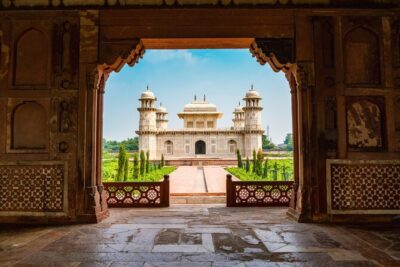
Next is Itmad-ud-Daula, the so-called Baby Taj. It’s known for white marble and intricate pietra dura inlay work. The “baby” label is a little misleading, because this is still a serious, detailed work of Mughal design. With only about a half hour, you’ll benefit most if your guide tells you what to look for as you walk, rather than treating it as a quick photo stop.
Your Day 2 also includes time for Agra lunch with guide recommendations. Then you transfer to Jaipur (about 3 hours) and drop at your hotel for the night.
Day 3 in Jaipur: Jaigarh Fort views, City Palace, Jal Mahal, Hawa Mahal, and Jantar Mantar

Jaipur day is where you get the mix of dramatic architecture and scenic stops that makes the city feel like a different world from Delhi. You start after breakfast with Jaigarh Fort, built in 1726 by Maharaja Sawai Jai Singh II and perched on the Aravalli hills. Even if you only spend about 2 hours, it’s a strong viewpoint stop because forts are built for control, not comfort.
Then you move into City Palace, located in the heart of Jaipur. It’s centered around courtyards, gardens, and palace buildings that reflect the Maharaja of Jaipur’s seat of power. This is a good time to get oriented, because once you understand where the palace sits in the city’s story, other landmarks make more sense.
You’ll also stop at Jal Mahal, the 17th-century palace in the middle of Man Sagar Lake. This one is mostly about views. If you’re hoping for an interior visit, the tour data here doesn’t promise that, so think of it as a scenic pause that breaks up the heavier palace-and-fort rhythm.
Next is Hawa Mahal, the Palace of Wind. You’ll see the five-storey pyramid shape built from red and pink sandstone in 1799. Even with only about 30 minutes, it’s one of those Jaipur silhouettes you recognize from postcards, but the real value is how your guide explains the design logic.
After that, you get a lunch break suggestion again with local cuisine recommendations. Then the day ends at Jantar Mantar, a UNESCO World Heritage site and one of India’s best-preserved ancient observatories. The time slot is around 45 minutes, and it’s enough if your guide points out what each structure is measuring or symbolizing.



Day 4 in Delhi: finishing strong, and the option to end in Jaipur
Day 4 is mostly a transfer day. You drive back to New Delhi after sightseeing and aim for about 4 hours of road time.
There’s also a helpful option if your flight plan makes it easier: you can choose drop-off at Jaipur Airport instead of returning to Delhi. That can be a big time saver if your onward journey is already routed through Jaipur.
If you start the tour on a Thursday, the schedule shifts so that your second day is in Jaipur. That’s worth noting because it changes which city gets the most daylight and early-morning attention.
Guides and the small details that make the days feel smooth
The biggest quality signal in this kind of private route is your guide. In past experiences with this tour style, names like Maahi in Agra and Sadiq for Taj Mahal hosting come up with a consistent theme: they explain what you’re seeing and they help you get good photos. Arhan is another guide name that people associate with story-driven explanations, and Amaan is often mentioned for taking guests to photo spots while answering questions.
What I like about that pattern is it turns monuments into something you can actually remember, not just something you pass through. A good guide will tell you where the best angles are and what details to notice, like how the Taj Mahal’s marble work changes in different light, or what the “Baby Taj” inlays mean.
Also, some guides are known for pacing choices that help with crowds. Sadiq is specifically praised for helping avoid crowds and timing the sights so the day feels manageable, not crushed.
If your group includes women and you value comfort and a relaxed tone, a female guide like Maahi has been highlighted for patience, humor, and clear explanations in all-female settings. Even if you do not request anything in advance, it’s reassuring to know the tour can work well for different group needs.
Finally, the included bottled water and parking, tolls, fuel, and taxes matter more than people think. Those charges can eat into your daily budget and attention when you are traveling independently. Here, you’re paying for the smoother logistics upfront.
Price and what you should budget for
The price shown is $171 per person for this 4-day private Golden Triangle by car, with a booking timeline that suggests many people lock it in well ahead (often around 81 days). That early booking can be useful if you want a specific hotel category upgrade.
What’s included versus what’s extra matters:
- Included: private air-conditioned car with chauffeur, hotel or airport pick-up and drop-off in Delhi, Agra, and Jaipur, and breakfast for 3 days when you choose the hotel option. You also get sightseeing with private local guides, plus the tuk-tuk in Old Delhi and battery van at the Taj.
- Not included: monument entrance fees, listed as about $70 per person, and gratuities for guides and the driver.
So the real budget is your base price plus monument entries. If you’re the type of traveler who hates paying surprise amounts at the door, you should mentally add that entrance fee number before you commit.
On accommodations: the tour offers upgrades into 3-, 4-, or 5-star hotels with breakfast, for 3 nights. Rooms are usually twin-sharing. If you book three people, rooms are generally triple-sharing by default unless you pay extra to split into two rooms. During December 24 and 31, hotel blackouts apply, and a mandatory gala dinner cost of $99 per person may be required if you travel those dates.
Who this tour is for (and who might want a different plan)
This works best for you if you want a classic Golden Triangle route with minimal stress between cities and you like having a guide explain what you’re seeing. It’s also a strong fit for families or mixed-age groups because the car and chauffeur handle most of the moving parts.
It might be less ideal if you want lots of free time to wander completely on your own. The schedule is full, and even when the tour can be customized, it’s still designed as an efficient run through Delhi, Agra, and Jaipur.
If you are very budget-driven, you should account for monument entrance fees. The added cost is not huge compared with many private tours, but it is significant enough that you should plan for it.
Should you book this private Golden Triangle by car?
My take: this is a solid booking if you want a smooth, guided route and you care about not wasting your trip time on logistics. The included extras (tuk-tuk in Old Delhi, battery van at the Taj) are exactly the kind of small help that makes a big difference when you’re tired.
I’d book it when you:
- want private transportation and local guides rather than piecing together routes
- like photography help and clear explanations, a pattern you’ll see with guides such as Maahi, Sadiq, Nasir, Arhan, and Amaan
- can budget for monument entrances on top of the base price
I would hesitate if:
- you travel on a Friday and cannot adjust, since the Taj Mahal is closed then
- you want a lighter schedule with lots of downtime, because this plan is packed
FAQ
What cities does this Golden Triangle tour include?
It covers Delhi, Agra, and Jaipur over 4 days.
Is this tour private or shared?
It’s a private tour/activity, meaning only your group participates.
What time can I choose for pickup on Day 1?
You can choose a pickup time between 7 AM and 11 AM from Delhi, Noida, Gurugram, Ghaziabad, or Faridabad.
Are hotel stays included?
Three nights of accommodation are included if you choose the hotel option. The upgrade options include 3-, 4-, or 5-star hotels with breakfast.
Are monument entrance fees included?
Monument entrance fees are not included. The tour lists an additional $70 per person for monument entrance fees.
What if my trip includes a Friday?
Taj Mahal is closed every Friday, so the tour will need to account for that in your plans.
Do I need photo ID for entrance to monuments?
Yes. You should carry all travelers’ valid photo ID (in your mobile) for monument entry.
Can I cancel and get a full refund?
Yes. You can cancel up to 24 hours in advance for a full refund.
Can I end in Jaipur instead of returning to Delhi on Day 4?
Yes. On Day 4, you can opt for a convenient drop-off at Jaipur Airport instead of returning to Delhi.
More Private Tours in New Delhi



More Tours in New Delhi



More Tour Reviews in New Delhi
Not for you? Here's more nearby things to do in New Delhi we have reviewed








More Delhi City Tours to consider.
 ★ 5.0Old & New Delhi City Tour – Half or Full Day Options AvailableTickets from $384,811 traveller reviews
 ★ 5.0Same Day Taj Mahal, Agra Fort & Baby Taj Tour from Delhi by CarTickets from $624,304 traveller reviews
 ★ 5.0Taj Mahal Day Tour from Delhi by Superfast Train – TOP RATED TOURTickets from $1004,166 traveller reviews
 ★ 4.9Old and New Delhi Private Full or Half-Day TourTickets from $23,776 traveller reviews
 ★ 5.0Full Day Taj Mahal, Agra Fort & Baby Taj Tour from Delhi by CarTickets from $623,647 traveller reviews
 ★ 4.9From Delhi: Taj Mahal & Agra Private Day Trip with TransfersTickets from $43,181 traveller reviews
 ★ 5.0Taj Mahal Tour from Delhi by Express Train (Viator Award Winner)Tickets from $752,849 traveller reviews
 ★ 5.0All Inclusive Private Taj Mahal Luxury Tour from Delhi by CarTickets from $622,564 traveller reviews
More useful Delhi routes