
Review · DELHI CITY TOURS
5-Day Golden Triangle Tour: Explore Delhi, Agra, and Jaipur
Delhi to Jaipur, in five days, feels like speed dating with history.
This 5-day Golden Triangle tour is built around one simple idea: take the strain off travel days with a private A/C vehicle and driver, while you still get guided sightseeing across Delhi, Agra, and Jaipur. I like that the route mixes big-name icons with quieter stops, like a stepwell detour and a rickshaw ride through Old Delhi lanes.
Two things I especially like: first, you are not forced into public transport chaos, because you have your own car and you keep moving on a schedule. Second, the Taj Mahal day includes a battery bus ride to and from the parking area, which is a small detail that saves energy when you want to enjoy the monument, not just reach it.
One possible drawback to plan for: entrance fees and camera fees are not included (budget around $60 per person), so your total cost will rise once you add monument entry tickets and any extras like lunch and snacks.
Key Highlights You’ll Actually Feel on the Trip
- Private, chauffeur-driven A/C vehicle keeps road time comfortable, especially in heat and traffic.
- Old Delhi rickshaw experience plus spice-market stops gives you the flavor without the map stress.
- Taj Mahal battery bus ride cuts down the long slog from parking to monument.
- Less touristy-feeling stops like stepwells (Agrasen Ki Baoli, Panna Meena ka Kund, Chand Baori) break up the big-ticket sights.
- Drivers praised for safe driving in chaotic city traffic (names like Ashok Yadav, Arjun, Dinesh Chauhan, Nawal, and Lucky show up in real experiences).
- Operator follow-through is a recurring theme, with Mr Raj described as organized and responsive.
The Golden Triangle Shape That Makes Sense in 5 Days
The Golden Triangle route is famous because it works geographically, and because each city has a different personality.
Delhi is your history buffet, with Mughal-era monuments, grand government buildings, and spiritual stops. Agra is the art of one big moment, centered on the Taj Mahal, plus forts and refined tomb architecture. Jaipur is color, palaces, and forts, but also the more unusual architecture you might miss if you only chase the headline sights.
What makes this tour feel practical is the pacing. You are not just “looking at places.” You are moving city to city with a driver and vehicle, then concentrating sightseeing inside each day. That matters because north India road travel can be slow. When you do it on your own, you spend hours sorting transport, timing, and confusion. Here, your driver is waiting, and your day keeps its rhythm.
You should also like that the itinerary includes guided history in a live format. Even if you skim, you will catch the stories that explain why these buildings look the way they do, not just how they look in photos.
More New Delhi tours and experiences for the shortlist


Day 1 Delhi: Old Delhi Rhythm, Stepwell Quiet, and Qutub Minar
Day 1 is the classic Delhi mix: start in Old Delhi, then glide toward New Delhi for monuments and viewpoints. It’s a long day, but the stops are varied enough that it does not feel like one endless line.
Jama Masjid to Chandni Chowk
You start at Jama Masjid in the heart of Old Delhi, a Mughal masterpiece known for its marble detailing and strong symmetry. It’s also a working place of worship, so you get a real sense of a city that still lives in these spaces.
From there, you take a rickshaw ride through Old Delhi. This is one of the most useful “value adds” in the whole plan. A vehicle can’t show you lanes the same way, and walking alone can turn into a side-quest of wrong turns. The rickshaw keeps you moving through the busy commercial streets while you still experience the atmosphere.
Then comes Chandni Chowk, the well-known narrow-street market area. The shopping is part of the fun, but your real win is seeing how the city is structured around bazaars and old trade routes.
Khari Baoli and a break from the crowds
You shift to Khari Baoli, famous for spice-market energy. It’s a good stop for your senses: spices, herbs, nuts, and everyday food items you will recognize from Indian cooking. You will also likely appreciate the contrast. After mosque architecture and market density, step by step, you get a sense of Delhi’s daily life.
Red Fort from the road, then Agrasen Ki Baoli
You pass by the Red Fort on the drive to the next set of sights. Even without entry, the scale is a strong visual anchor. The itinerary notes it has stood for 380 years, which helps you understand why the building carries weight in the city’s identity.
Then you visit Agrasen Ki Baoli, described as a centuries-old stepwell. Stepwells can be easy to overlook in a quick itinerary, but this one is exactly the kind of stop that makes a Golden Triangle trip feel less repetitive. You descend into a cooler, calmer pocket of architecture, and you get something that is not just “another palace photo.”






Gurudwara Bangla Sahib, India Gate, and the New Delhi overview
Gurudwara Bangla Sahib adds a different tone. You can feel the serenity in the space, and the guided context helps you understand why kirtan and the big holy pond matter here.
After that, India Gate gives you a wide-open pause with lawns. It’s also practical, because you can sit, people-watch, and reset before more monuments.
You then pass Rashtrapati Bhavan and Parliament House. You will not go inside, but the exterior views and photos are still worth it, especially on a first Delhi day when you need orientation.
National Museum and Gandhi Smriti
National Museum is included as a stop, but it says entrance is not included. That’s a reminder to plan for ticket costs on your own day.
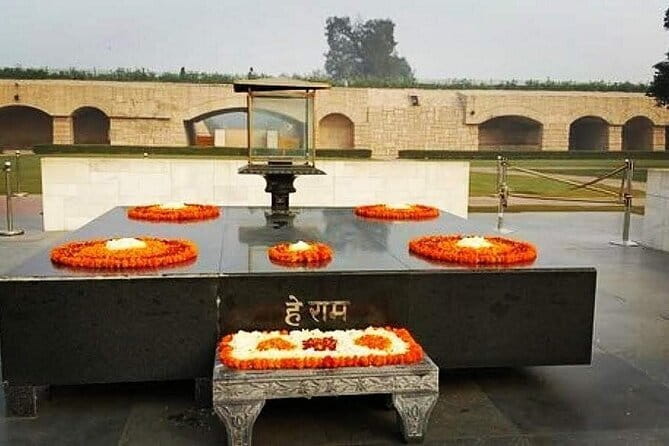
Gandhi Smriti is a memorial at the house where Gandhi spent his last days. Even with limited time, it tends to land emotionally because it is personal, not just monumental.
Lotus Temple and Qutub Minar close the day
Lotus Temple is a great late-day choice because it is calmer than markets and forts. It’s also architecturally distinctive with a lotus-like design.
Finally, Qutub Minar, a UNESCO-listed complex and a 12th-century tower described as 73 meters tall. This is one of those “stand here and look up” moments. You get the sense of early stone-building mastery, and the complex includes multiple ancient structures, so you are not trapped looking at only one tower.
What to watch for on Day 1
This day is dense. Start hydrated, wear shoes you can stand in, and keep your expectations realistic: you will not have time for slow shopping in every market stop. Instead, use markets for browsing and photos, then shift your attention back to architecture and storytelling.
Day 2 Delhi to Agra: Taj Mahal Viewpoint and the Baby Taj Moment
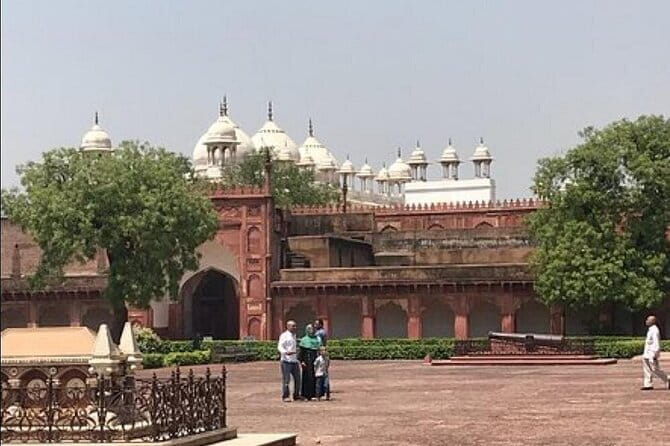
Day 2 is mostly a transfer plus the first Agra highlights. You drive toward Agra in about four hours, then you begin with the Taj Mahal View Point.
Taj Mahal View Point
The itinerary calls it a calm spot where you can enjoy a view of the Taj Mahal without large crowds. That means you are getting the monument’s silhouette and mood before you go inside for the big visit later.
This is a good pacing trick. It lowers stress. You see the shape first, you understand where it sits, and then the next day’s Taj visit feels more focused.
Itimad-ud-Daulah, also called Baby Taj
After that, you visit Itmad-ud-Daulah, also known as the Baby Taj. It’s a tranquil Mughal tomb known for detailed inlay work and carvings, built in 1628.
This is one of my favorite types of stops for travelers who love architecture. The Taj Mahal is the headline, but Itimad-ud-Daulah is where you can slow down mentally and notice craftsmanship. Even if your time is limited, the guided explanation helps you understand how tomb design reflects wealth, taste, and political meaning.
Evening free time
Then you get dropped at your desired location in Agra for rest. That is the right move. Road days add fatigue fast, and you want energy for Day 3’s longer monument schedule.
Day 3 Agra and Chand Baori, Then Into Jaipur

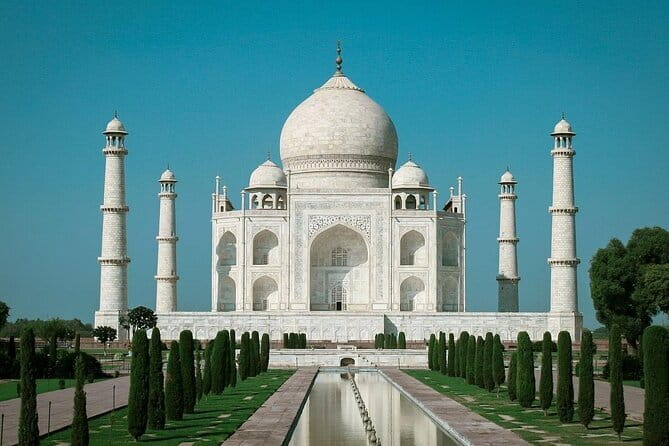
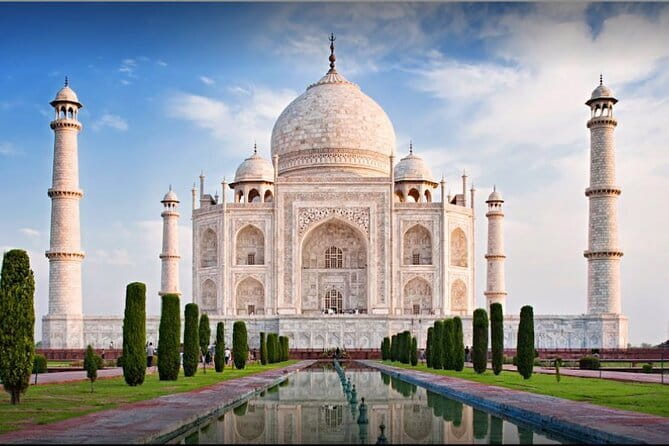
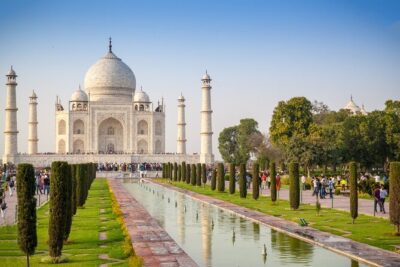
Day 3 starts with the Taj Mahal itself. This is the heart of Agra on any Golden Triangle itinerary.
Taj Mahal in the morning
You get picked up and taken to the Taj Mahal, described as the biggest highlight. The itinerary schedules about three hours.
I like doing the Taj with a plan, not as a random wandering loop. You can focus your time on the areas you care about most, and you do not burn energy trying to figure out logistics on your own.
Agra Fort
Next is Agra Fort, linked to Mughal Emperor Akbar, with a grand red-stone look. You get another three hours here.
Fort stops are where you often learn how power worked in daily life, not only in royal gardens. The guided context is helpful because these walls and layouts can seem confusing if you arrive with no framework.
Chand Baori near Abhaneri, stepwell breaks
Then you go to Chand Baori, a very old stepwell in the village of Abhaneri. It was built to store water and help during hot, dry seasons.
Stepwells are more than odd architecture trivia. They show how engineering solved daily survival issues. That makes the stop feel meaningful, not just scenic.
You also get about one hour here, which is long enough to look around and take photos, without turning it into a time sink.
The long road toward Jaipur
After Agra, the itinerary says it takes around six hours to reach Pushkar, and then you will be dropped at your desired accommodation. The wording is unusual, but the practical takeaway is simple: expect a long drive day and plan for dinner and rest in Jaipur when you arrive.
If you are the type who hates arriving late, set your expectations now. You are trading comfort for speed, and this day is all about getting you to Jaipur for the next full sightseeing block.
Day 4 Jaipur: Hawa Mahal, Amer Fort, and the Stepwell-Palace Mix
Jaipur on this tour is a blend of iconic landmarks and architecture that rewards close looking. You start early and you keep going, but the stops have variety.
Hawa Mahal, the Palace of Wind
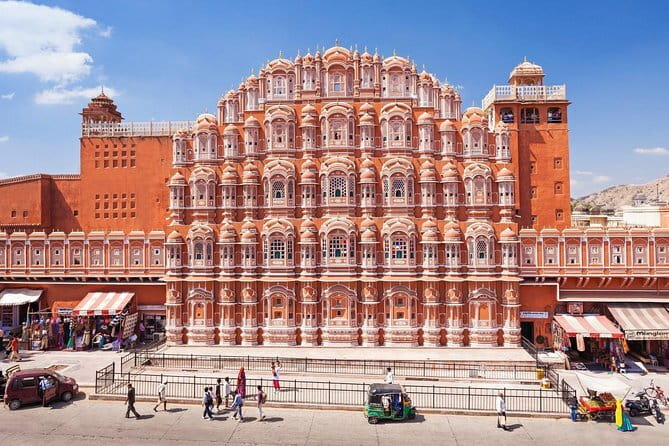
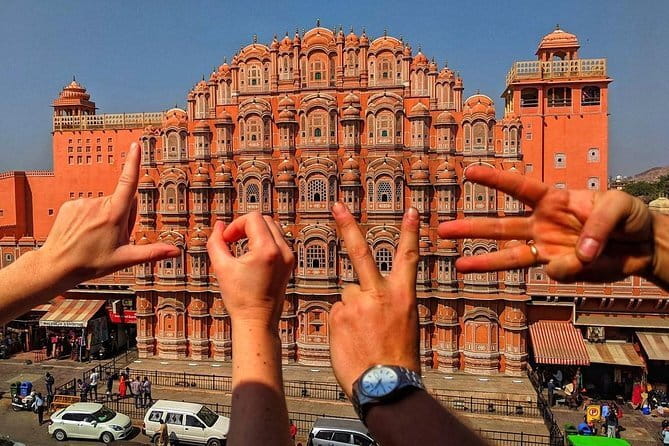
You visit Hawa Mahal, also called the Palace of Wind. It’s described as a five-story palace with 953 small windows.
This is one of those places where the exterior view does most of the work. The windows create a lace-like façade that looks even better in good light. Even with a short stop, it gives you an instant sense of Jaipur’s design style.
Amer Palace
Amer, the Amer Palace, is one of the most famous forts in Jaipur, built by Rajput kings and known for a mix of Hindu and Mughal architecture. The tour gives you about two hours.
Amer Fort is also a good place for slow attention. You can see how fort design and palace living fit together. If you like forts, this is where you should spend your best walking time.
Panna Meena ka Kund and a fast photo-friendly stop
Panna Meena ka Kund is a 16th-century historic stepwell with a crisscross design and symmetrical staircase. The itinerary gives it about 15 minutes.
Fifteen minutes can sound short, but stepwells tend to be very contained. You should be able to get photos and walk the edges for a quick architectural look without rushing through a huge complex.
Jal Mahal
Jal Mahal, the water palace, is another Jaipur highlight. It’s described as stunning and located as a palace that appears in the water.
This is a more visual stop than a museum stop. You get the idea quickly, and it breaks the day up after fort time.
Gaitore Ki Chhatriyan
Gaitore Ki Chhatriyan is a quiet place away from the city buzz, the royal cremation ground of Jaipur’s rulers with carved stone memorials. You get about 30 minutes.
This is a good palate cleanser. After loud markets and big forts, it’s easier to slow down and absorb details here.
City Palace
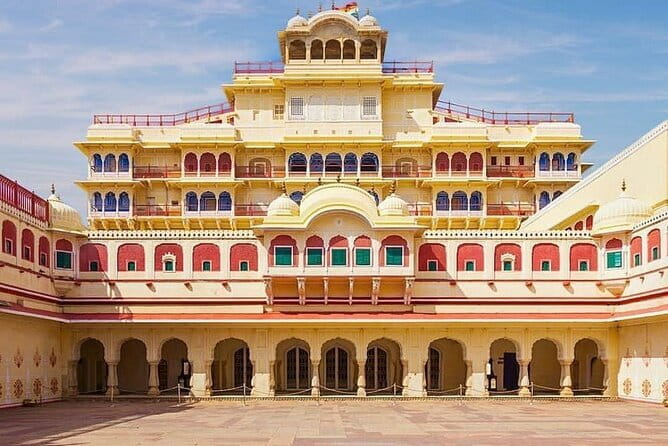
City Palace is next, about two hours. It is located in the heart of Jaipur and still home to the royal family. The complex includes palaces, courtyards, museums, and gardens.
Entrance is not included, so budget for tickets. But this is also where the tour’s “history with context” approach pays off, because you are not just looking at rooms, you are seeing how power, taste, and lifestyle are reflected in palace life.
Jantar Mantar, UNESCO astronomy time
Finally you visit Jantar Mantar, a UNESCO World Heritage Site. The itinerary notes it has the world’s largest sundials and other astronomical instruments.
This stop can surprise people. Even if you are not a science fan, you get a feeling of what measuring the sky meant in a pre-digital world. It pairs well with the architecture day you already had, because it shows design as function, not decoration alone.
Day 5 Return to Delhi With a Practical Morning
Day 5 is a straightforward send-off. After breakfast, you take an approximately five-hour journey back to Delhi, or you are dropped at any desired location in Jaipur.
This is exactly how a good tour wrap-up should feel. It gives you morning stability, rather than pretending you can squeeze in one more major fort or palace. On a Golden Triangle trip, you need that final breather.
If you want flexibility, plan a buffer meal and easy last purchases near your hotel on the night before. You do not want to race the clock on departure day.
Price and Logistics: What $16.86 Buys, and What You Must Budget For
The listed price shown here is $16.86 per person, and you should treat it as a base tour rate tied to the services included. The big reality check is that entrance fees are not included.
You should budget about $60 per person for monuments entrance fees and camera fees. Some stops on the itinerary show admission as free, and others show not included. Either way, the tour is clear that monument entry costs are your responsibility.
So what are you really buying for that base price?
- Private A/C vehicle with a driver across multiple city legs.
- Hotel nights with breakfast for four nights, at the 3-star level by default, with 4-star and 5-star options if you select them.
- Airport, rail, or hotel pickup and drop.
- Tuk-tuk ride in Old Delhi (tied to the rickshaw experience in the day plan).
- Battery bus ride related to Taj Mahal parking logistics.
- Bottled water during car journeys.
- Taxes and service charges, including applicable hotel taxes.
- Personal care and attention.
When you compare this to piecing it together yourself, the value often comes from reducing headaches: transport coordination, driver hunting, and timing stress. On a trip where you cover Delhi, Agra, and Jaipur in a short window, that convenience is worth money.
One more practical note: hotel check-in is generally 3:00 PM and check-out is 12:00 PM. Early check-in before 14:00 is not always guaranteed. If you reach early, you might store luggage and start sightseeing.
Drivers, Guides, and the Safety Factor You Feel in the Cities
North India road travel can be intense, especially in Delhi traffic. That is where this kind of private tour earns its keep.
In real experiences, drivers were praised for safe, relaxed driving, even in chaotic city traffic. Names that came up include Ashok Yadav, Arjun, Dinesh Chauhan, Nawal, and Lucky. That matters because you are not just sitting in comfort. You are trusting someone to handle traffic and timing for a packed schedule.
The tour also includes a live tour guide for history. That is important on monuments because the buildings have layered meanings. A guide helps you connect the shapes to the people who built them.
My practical advice: choose your priorities before you go. If you care most about architecture, focus your questions on design and symbolism. If you care most about photo moments, ask your guide when the best angles are during your time window.
Hotels and Food: Comfortable Base, With One Big Limitation
The tour includes accommodation for four nights in a 3-star hotel with breakfast, with upgrades possible for 4-star or 5-star if that option is selected. The hotels are also described as heritage properties when available, which fits the spirit of the Golden Triangle.
Breakfast is included, and it gives you a predictable start each day. Alcohol is not included, and the itinerary does not include lunch or dinner, so you should plan meals separately.
This matters for budgeting more than you think. If you only look at the base tour price, you might forget meals. Build in a daily food budget for lunch and dinner, plus water, snacks, and any drinks you want.
Should You Book This Golden Triangle Tour?
Book it if you want a clean way to hit Delhi, Agra, and Jaipur without turning the trip into a transport puzzle. The combination of private A/C driving, guided history, and smart logistics like the Taj Mahal battery bus is the kind of value that shows up day after day.
Skip it, or rethink if you hate packed schedules. Day 1 and Day 4 are active. You will be moving from stop to stop with short sightseeing windows, and you may want more time to linger in one place instead of keeping pace.
My quick checklist before you decide:
- You are okay paying about $60 per person for entrances and camera fees.
- You want a private driver and you value safety and comfort in traffic.
- You like a mix of major monuments and unusual stops like stepwells.
- You are fine with hotel check-in at 3:00 PM and check-out at 12:00 PM.
If that sounds like your style, this is a solid, no-drama way to experience the Golden Triangle. You get comfort on the road, memorable architecture on the ground, and enough variety that the trip feels like more than three photo stops.
FAQ
Is pickup and drop included for this tour?
Yes. The tour includes pick-up and drop from your hotel, airport, or railway station.
Do I get a private vehicle and driver during sightseeing?
Yes. You have a chauffeur-driven, air-conditioned private vehicle with a driver for sightseeing.
Are hotel nights included?
Yes. The tour includes four nights of accommodation with breakfast (3-star by default, with options for 4-star or 5-star if selected).
What about entrance fees for monuments and camera fees?
Entrance fees and camera fees are not included. The information provided estimates about $60 per person for these.
Is the Taj Mahal battery bus ride included?
Yes. The tour includes a battery bus ride to and from the Taj Mahal parking lot up to the Taj Mahal monument.
What rides are included in Delhi?
You get a Tuk-tuk ride in Old Delhi as part of the included experiences.
What are the hotel check-in and check-out times?
Standard check-in time is 3:00 PM and check-out time is 12:00 PM. Early check-in before 2:00 PM is not always guaranteed.
Can I cancel and get a full refund?
Yes. You can cancel up to 24 hours in advance for a full refund. Changes made less than 24 hours before the start time are not accepted.
More 5-Day Experiences in New Delhi


More Tours in New Delhi



More Tour Reviews in New Delhi
Not for you? Here's more nearby things to do in New Delhi we have reviewed








More Delhi City Tours to consider.
 ★ 5.0Old & New Delhi City Tour – Half or Full Day Options AvailableTickets from $384,811 traveller reviews
 ★ 5.0Same Day Taj Mahal, Agra Fort & Baby Taj Tour from Delhi by CarTickets from $624,304 traveller reviews
 ★ 5.0Taj Mahal Day Tour from Delhi by Superfast Train – TOP RATED TOURTickets from $1004,166 traveller reviews
 ★ 4.9Old and New Delhi Private Full or Half-Day TourTickets from $23,776 traveller reviews
 ★ 5.0Full Day Taj Mahal, Agra Fort & Baby Taj Tour from Delhi by CarTickets from $623,647 traveller reviews
 ★ 4.9From Delhi: Taj Mahal & Agra Private Day Trip with TransfersTickets from $43,181 traveller reviews
 ★ 5.0Taj Mahal Tour from Delhi by Express Train (Viator Award Winner)Tickets from $752,849 traveller reviews
 ★ 5.0All Inclusive Private Taj Mahal Luxury Tour from Delhi by CarTickets from $622,564 traveller reviews
More useful Delhi routes