
Review · DELHI CITY TOURS
Five Days Private Golden Triangle Tour To Agra Jaipur From Delhi
First, this route is made for people who hate logistics. You get private transport and a smooth start, with an airport meet that helps you reach your hotel without stress. I also like how the itinerary mixes headline monuments with calmer stops like Humayun’s Tomb, Lotus Temple, and Raj Ghat, so the days feel full without feeling random. One thing to watch: entrance fees are not included for many sites, so you’ll want a little cash plan in advance.
Over about 6 days, you’ll connect three cities that each have their own pace and style. You’ll see the big signatures like the Taj Mahal and the Mughal-era Delhi landmarks, then shift gears into Jaipur with Amer, City Palace, Jantar Mantar, and Hawa Mahal. The potential drawback is that this is a lot of monuments in a row, so if you’re sensitive to long driving days or heat, you’ll want to pace yourself and protect your energy.
Key things that make this private Golden Triangle work
- Airport welcome plus help to your hotel means you can land and relax instead of hunting for transport.
- Private, group-only touring gives you control over timing with just your party.
- Major sights across all three cities (Taj Mahal, Qutub Minar, Jantar Mantar, Hawa Mahal) with realistic time blocks.
- A smart mix of paid and free stops, including places marked free like Lotus Temple and Raj Ghat.
- Day trips that fit on the route, like Fatehpur Sikri and Chand Baori on the way to Jaipur.
- A return drop in Delhi after Jaipur keeps the whole loop tidy.
Private Golden Triangle Layout: how the route flows

This is the classic Delhi, Agra, Jaipur circuit, but the “private” part matters more than most people think. When you’re doing three cities, the real pain is not the sightseeing. It’s getting from one place to the next without losing hours to confusion, slow rides, or trying to coordinate public transport across long distances.
Here, you’re matched with private transportation for the trip, and it stays with you through the major city connections. That means you’re not scrambling between monuments, and you can keep your energy for the sights that actually matter to you. The best version of this kind of tour is simple: you show up, get where you need to be, and spend your time looking, not planning.
The overall duration is listed at about 6 days even though it’s marketed as a “five days” tour. In practice, that’s common for Golden Triangle routes because day 1 is tied to your arrival timing and day 6 is tied to your return day. If you’re booking around flight schedules, treat it as “roughly a week,” then confirm exact pickup and dropoff times for your travel day.
You can also read our reviews of more private tours in New Delhi



Delhi Highlights in one stretch: Jama Masjid, Red Fort area, Humayun’s Tomb, and Qutub Minar
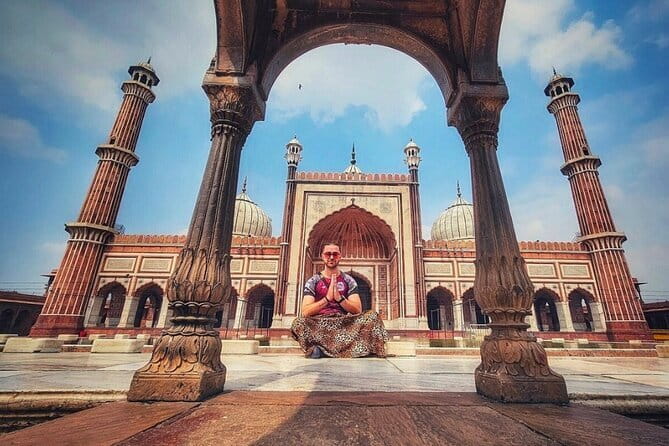
Day 2 is where Delhi starts to feel cinematic, especially if you like Old Delhi energy. You begin with Jama Masjid, built in 1644 with red sandstone and marble, commissioned by Shahjahan. This is one of those places where you don’t just look at architecture, you also feel the history of how people gather and move through a major Mughal-era site.
Next comes the Old Delhi market zone, described as busy with people and full of street stalls selling colorful items. Even if you do only light browsing, this kind of stop helps you understand the neighborhood beyond the monument photo. It’s also practical. If you plan to buy water, snacks, or anything small for the rest of your trip, this is an easy moment to handle it.
Then you move through the Red Fort area and toward landmarks like India Gate, the war memorial with Amar Jawan Jyoti. You get a short visit here (around 30 minutes), which is plenty for photos and orientation. After that, the route continues past Rashtrapati Bhavan and the Parliament House. These stops are less about going inside and more about seeing how the city’s official core sits against the older quarters you visited earlier.
From there, you shift to the Mughal garden tomb vibe with Humayun’s Tomb. The garden layout matters, because it breaks the “city rush” feeling. The structure is noted as built in 1570, and it’s a good contrast stop before you hit more architectural showstoppers.
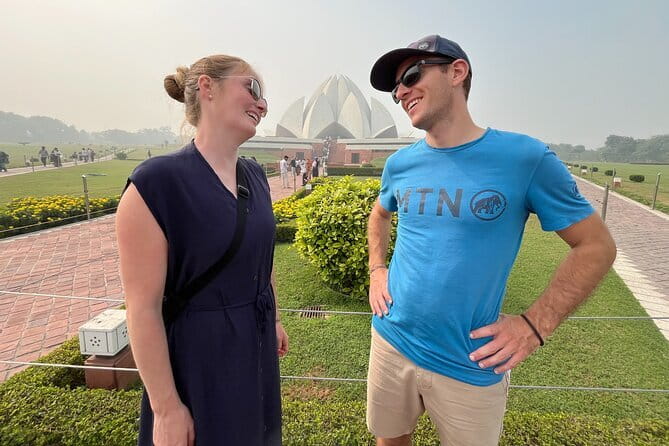
Then it’s a calm reset at Lotus Temple. It’s a Baha’i temple designed to look like a half-open lotus, with pools and gardens around it. This is one of the rare moments on the Delhi days where you can slow down, take a breath, and let the city noise fade. It’s also marked as free in the plan, which makes it a nice value stop.
Finally, you end with Qutub Minar in the Qutub Complex. The minaret is listed as 72.5 meters tall, rising from the Lal Kot ground where an earlier fortified city existed. If you like detailed stonework and big-scale design, Qutub Minar is a strong closer for Delhi day, especially because the site gives you a “zoom out” perspective after hours of walking through dense areas.
A practical Delhi tip you’ll appreciate
Since Delhi includes mosques and religious sites, dress matters. You’ll feel better if you bring light layers you can adjust, and keep footwear rules in mind once you get there. Also, protect yourself from sun and dust, especially on days that mix Old Delhi and open-air monuments.
Day 1 and Day 6: the real value of airport help and a tidy return
Day 1 is built around your arrival into New Delhi. You get a warm welcome from a tour representative and help getting to your hotel smoothly. The big advantage here is psychological. You land, you’re tired, and you don’t want to turn travel recovery into a scavenger hunt. You also get the option to relax once you’re settled.
On Day 6, the tour loops back to Delhi after breakfast in Jaipur. You check out, you transfer back, and you’re driven into Delhi for your onward plans. That kind of “no loose ends” structure is part of why private Golden Triangle tours feel worth it. Without it, you can lose time to planning on your return day.
One detail to confirm before you go: the listing shows a 7:00 pm start time. That doesn’t contradict the airport meet concept, but it means you should double-check exactly how your pickup time is scheduled based on your arrival. If your flight lands early, you don’t want to assume the tour always starts at night.
Taj Mahal and Agra Fort: a focused day where timing counts
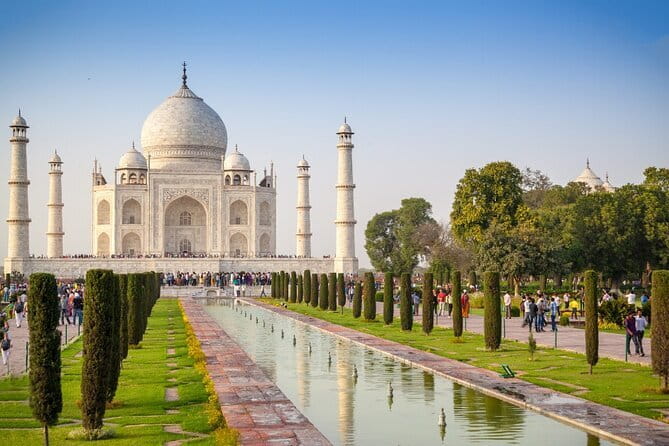
Agra’s Day 3 is centered on three big stops, and the order is logical: you start with the Taj Mahal, then move to Agra Fort, and finish with Itmad-ud-Daula (often called the Baby Taj).
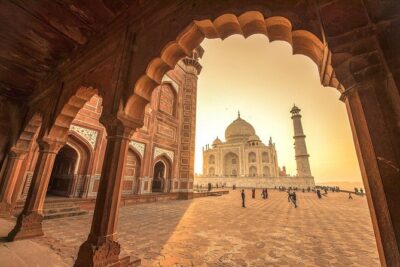
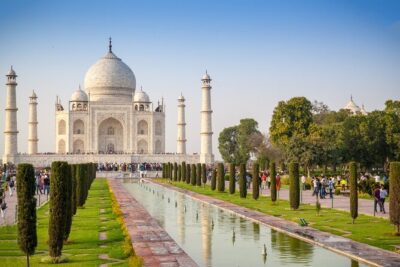
The Taj Mahal is described as a world-famous mausoleum made of ivory white marble, constructed by Shah Jahan in 1632 over about 17 hectares near the Yamuna. That’s the headline, but here’s why this stop is so valuable in a private format. You get enough time to actually look at details instead of only doing the quick “postcard circuit.”
Then you head to Agra Fort, listed as a UNESCO World Heritage site. It’s compared to Delhi’s Red Fort in spirit, and that comparison is useful: both are massive fort complexes tied to Mughal power. If you like defensive architecture, gates, walls, and the way the fort sits in its city context, Agra Fort delivers.
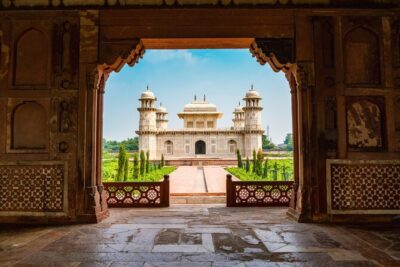
Lastly, you visit Itmad-ud-Daula, described as a mausoleum with impressive craftsmanship and intricate design, even nicknamed the Jewel Box. For a lot of people, this is the most underrated stop of the Agra day. The Taj Mahal can be overwhelming, but Itmad-ud-Daula is smaller in scale and closer to the “look closely” style of sightseeing.
More New Delhi tours and experiences for the shortlist





Where this day can feel tiring
Agra is intense because the monuments are famous and people show up in large numbers. A private guide or driver won’t magically erase crowds, but the flow can reduce how much time you spend standing around. Still, plan for walking and sun, especially at the Taj Mahal.
Fatehpur Sikri and Chand Baori: the best “in-between” day trip on the route
Day 4 transitions from Agra to Jaipur, but it’s not a straight drive with nothing to see. You get a chance to visit Fatehpur Sikri before reaching Jaipur.
Fatehpur Sikri is described as built by Akbar in the late 1500s and an important Mughal capital for about 10 years. Even if you’re not a deep history nerd, you’ll notice the scale. This place has that “whole city as a statement” feeling. It’s also marked as free in the plan, which makes it one of the strongest value stops on the route.
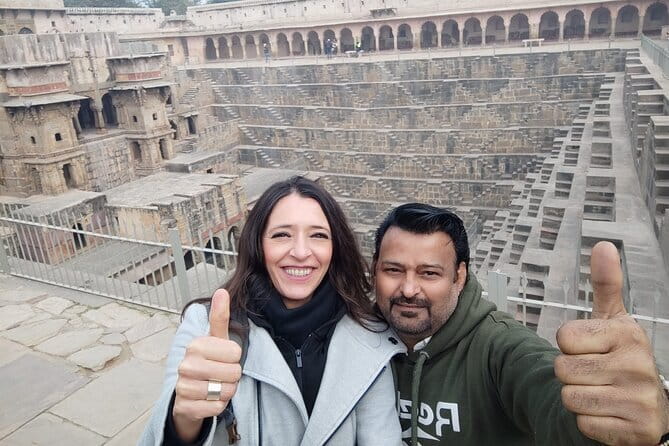
Then you go to Chand Baori in Abhaneri, a stepwell (baori) about 30 meters below ground. The description notes it as one of the largest and centers on the dramatic drop and stepped geometry. This is the kind of place where photos can’t fully explain what it feels like to stand above a structure designed to collect and store water. It gives you a break from tomb-and-palace sightseeing by focusing on engineering and everyday water needs turned into impressive architecture.
Day 4 is listed as a 6-hour block, plus travel. That means you’ll likely spend a good chunk of the day on the move. If you’re prone to getting travel headaches, bring sunglasses and water, and take the pauses seriously.
Jaipur essentials in one itinerary: Amer, Jal Mahal, City Palace, Jantar Mantar, Hawa Mahal

Jaipur on Day 5 is the “big daytime hits” day. You start with Amer outside Jaipur city. Amer was Rajasthan’s capital before Jaipur became the capital, and that fact matters because the architecture and layout reflect status. You get about 2 hours here, which is enough time to see the main ideas without rushing every corner.
Then you stop at Jal Mahal, described as a palace in water located in Man Sagar Lake, built in 1699 and renovated over time. This stop is shorter, about 30 minutes, which makes sense. You’re mainly enjoying the setting and the view angles rather than doing a full deep tour. It’s a good “pause and reset” moment in the middle of a busy day.
Next comes Royal Gaitor Tumbas, cenotaphs of the Kacchhawa rulers. The plan says the Kacchhawa ruled Jaipur from 1727 to 1947 AD, and the tumbas are protected and preserved. If you like quieter historical sites, this stop can be surprisingly meaningful. It shifts the day from palace spectacle toward commemoration and royal memory.
After that, you move into the heart of Jaipur with City Palace. It’s connected to Maharaja Sawai Jai Singh II, and it blends Mughal-style with Rajput design. The plan also notes the royal family still lives there, which adds a different energy than a pure museum setting. You get about 2 hours, enough time to understand the palace complex as a living symbol.
Then it’s Jantar Mantar, an astronomical observatory. The plan says it ranks first as the oldest astronomical observatory globally and gives you about 1 hour here. This is one of those Jaipur stops that can surprise people. It’s not only about buildings. It’s about how the structures map the sky and time.
From there you visit Hawa Mahal, the Palace of Wind. It’s described as having five storeys and as being constructed without a foundation, with maximum height claims tied to the design. Even if you approach this stop as mostly a photo and exterior experience, it’s worth it. The façade is designed to let breezes flow and also to create a striking screen-like look.
You end with Albert Hall Museum, built in 1887 by Maharaja Sawai Ram Singh II. The plan says it was named after the Prince of Wales, who visited Jaipur in 1876. Museums can feel hit-or-miss, but as a final stop, Albert Hall helps you connect Jaipur to the colonial-era British architectural influence and the way rulers shaped public culture.
Tickets, pace, and comfort: what the plan really means for your budget
A big value question is price versus what you’ll still pay on top. The tour is listed at $239 per person, which can be a strong deal if you’re avoiding the chaos of matching drivers, transfers, and timing across multiple cities. Private transportation alone can cost a lot, especially for a multi-city route like this.
But entrance tickets are mixed. In the plan, many monuments are marked as not included. Others are marked as free, including Lotus Temple, Raj Ghat, Amer, and Fatehpur Sikri. That means your on-the-ground spending could be lower than a tour where every single ticket is paid, but you should still assume you’ll have additional costs for the paid sights.
How to handle the “not included” reality without losing time
Before you go, I’d plan your budget by separating:
- Free sites that are already handled in the plan (you don’t need to buy tickets for those)
- Paid sites where you’ll need to cover entrance fees onsite
Also, keep your schedule practical. This itinerary includes lots of walking and multiple major monuments in each day. If you don’t want to feel rushed, ask for clear timing and leave room for restroom breaks and water stops. Private tours work best when you treat them as “structured flexibility,” not “clockwork robot mode.”
So who is this private Delhi-Agra-Jaipur tour best for?

This is a good fit if you want:
- A straightforward Golden Triangle loop with private transport and minimal planning stress
- A mix of iconic sites and a few calmer, more reflective stops like Humayun’s Tomb and Raj Ghat
- A family-friendly pacing style where you can keep things comfortable without dealing with public transport transfers
It may be less ideal if:
- You want a very relaxed, low-walking trip. This is sightseeing-heavy, with multiple major stops per city.
- You hate planning for entrance fees. Since many sites are not included, you’ll need to budget or pay as you go.
If you’re traveling as a couple or small group, private formats also tend to feel more natural. You can keep your own pace through photo stops and slower areas, and the day doesn’t depend on anyone else’s schedule.
Should you book this Golden Triangle tour?
If your goal is to see Delhi, Agra, and Jaipur without turning the trip into a logistics project, I’d say this is worth serious consideration. The strongest selling points are the airport welcome on the front end, the private transportation that keeps you moving efficiently, and the way the route balances major monuments with a few restorative breaks.
Book it if you’re comfortable handling some entrance fees onsite and you can handle a packed schedule across a week. If you’re the type who gets grumpy when the day is crowded, you’ll still have a great time, but I’d plan to slow down during the calmer sites and protect your energy on the longer driving segments.
In short: it’s a practical private way to do the Golden Triangle, with enough structure to keep you relaxed and enough flexibility to enjoy the monuments instead of wrestling with logistics.
FAQ
Is this a private tour or shared with other groups?
It’s a private tour, so only your group participates.
Does the tour include pickup or help when I arrive in Delhi?
Yes. There is pickup offered, and when your flight arrives in New Delhi you’ll receive a warm welcome from a tour representative who helps you reach the hotel smoothly.
How long is the Golden Triangle tour?
The duration is listed as about 6 days.
Is the entrance ticket cost included for all attractions?
No. Some stops are marked as free, such as Lotus Temple, Raj Ghat, Amer, and Fatehpur Sikri. Many other sights are marked as admission ticket not included.
What does the tour price include?
The included item listed is private transportation. A mobile ticket is also mentioned.
What is the cancellation policy?
Free cancellation is available up to 24 hours in advance for a full refund. If you cancel less than 24 hours before the experience start time, the amount paid is not refunded.
More Private Tours in New Delhi



More Tours in New Delhi





More Tour Reviews in New Delhi
Not for you? Here's more nearby things to do in New Delhi we have reviewed










More Delhi City Tours to consider.
 ★ 5.0Old & New Delhi City Tour – Half or Full Day Options AvailableTickets from $384,811 traveller reviews
 ★ 5.0Same Day Taj Mahal, Agra Fort & Baby Taj Tour from Delhi by CarTickets from $624,304 traveller reviews
 ★ 5.0Taj Mahal Day Tour from Delhi by Superfast Train – TOP RATED TOURTickets from $1004,166 traveller reviews
 ★ 4.9Old and New Delhi Private Full or Half-Day TourTickets from $23,776 traveller reviews
 ★ 5.0Full Day Taj Mahal, Agra Fort & Baby Taj Tour from Delhi by CarTickets from $623,647 traveller reviews
 ★ 4.9From Delhi: Taj Mahal & Agra Private Day Trip with TransfersTickets from $43,181 traveller reviews
 ★ 5.0Taj Mahal Tour from Delhi by Express Train (Viator Award Winner)Tickets from $752,849 traveller reviews
 ★ 5.0All Inclusive Private Taj Mahal Luxury Tour from Delhi by CarTickets from $622,564 traveller reviews
More useful Delhi routes