
Review · DELHI CITY TOURS
7-Day Golden Triangle & Ranthambore Tiger Safari from Delhi
A first-timer friendly route through North India. This 7-day Golden Triangle tour packages Delhi, Jaipur, Agra, and Ranthambore with tight driving times and big-name sights, including the Taj Mahal at sunrise. You get organized pickup at Delhi’s airport, six nights in a shared room setup, and daily breakfasts that make mornings easier to manage.
I also like the way this tour stays structured without feeling like a checklist. You’ll have local guides for key days in Jaipur and Agra, plus a private-group format that keeps things calmer than open-ended sightseeing. The only real downside to plan for is pacing, you will have early starts and plenty of walking around forts and monuments.
Key highlights worth your attention

- Private-group touring with personalized handling
- Sunrise safari rhythm for better tiger-spotting odds and nicer light
- Six nights with breakfast included so you do not have to hunt for meals daily
- Local guides in Jaipur and Agra for context where it matters most
- A compact Golden Triangle route with Delhi, Jaipur, and Agra in one week
- Mobile ticket and pickup support to reduce first-day stress
A week that hits Delhi, Jaipur, Agra, and Ranthambore

This tour is built for a very specific goal: first-time visitors want the Golden Triangle highlights fast, but they also want one meaningful wildlife experience. In one week, you move by car between New Delhi, Jaipur, Agra, and Sawai Madhopur area for Ranthambore National Park.
What you’re really buying is time and coordination. Transportation includes tolls, parking, fuel, and the driver allowance, and you’re not expected to figure out intercity logistics on your own. That matters because India travel can be smooth, or stressful, depending on how much decision-making you try to do yourself.
The itinerary also uses timing cleverly. The Taj Mahal visit is scheduled early morning before breakfast at sunrise, which typically means fewer crowds and better photo light than a mid-day visit. Same idea on the safari side: Ranthambore activities are built around morning departures, and morning is when animals are often most active.
One more practical plus: most of the day-by-day schedule is grouped by geography. Jaipur sightseeing clusters days 2 and 3, Agra anchors days 5 and 6, and Delhi sightseeing is handled on day 1’s arrival transfer and day 7’s full city sweep.
More New Delhi tours and experiences for the shortlist



Delhi first and last: monuments you can pair with morning light
Delhi is two things on this trip: a quick arrival transfer day, and a bigger finishing day. After you arrive at Indira Gandhi International Airport, the tour meets you and transfers you to the hotel. That first handoff matters more than it sounds. You avoid the “what bus, which taxi, where do we go” scramble after a flight.
On day 7, you get a well-chosen mix of Old Delhi and New Delhi landmarks, with stops that cover Mughal-era power and 20th-century memory. You visit Jama Masjid, one of Delhi’s largest mosques, then move to Red Fort, the Mughal imperial residence for nearly two centuries. After that, the tour pauses at Raj Ghat, Gandhi’s memorial, which shifts the tone from empire to modern history.
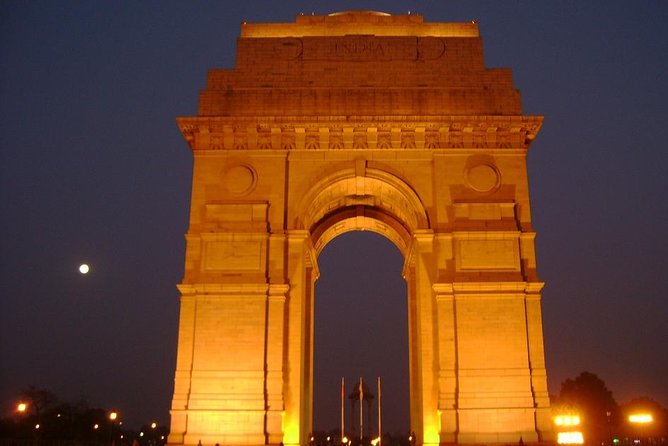
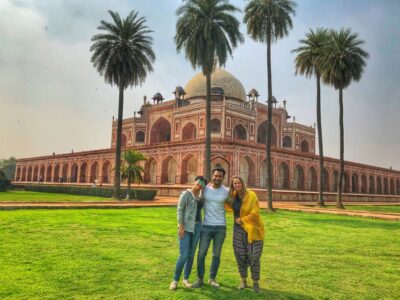
Then you swing to the quieter, open-air moments: India Gate sits on Rajpath, and you get the chance to reset your pace for 30 minutes. The schedule also includes Humayun’s Tomb, a major Mughal mausoleum, and Lotus Temple, known for its flower-like shape. Finally, you end with Qutb Minar, part of the UNESCO Qutb complex.
The practical consideration here is walking and changing neighborhoods. These sites are spread across the city, and Delhi traffic can stretch travel time. The tradeoff is variety. You get a big “map in your head” effect before you leave.
Jaipur day tours: City Palace, Jantar Mantar, Hawa Mahal, plus Amer and Nahargarh
Jaipur is your first full sightseeing base, and it is scheduled in a way that makes sense for first-time visitors. Day 2 begins with the drive in from Delhi, check-in, and then a “Pink City” tour later. That sets a mood, you arrive, settle, and then start seeing the city’s signature color and architecture without the pressure of starting at dawn.
On the sightseeing list, you hit Jaipur’s most recognizable visual icons:
- City Palace (not included entry) and its royal compound setting
- Jantar Mantar (not included entry), the astronomy instruments complex
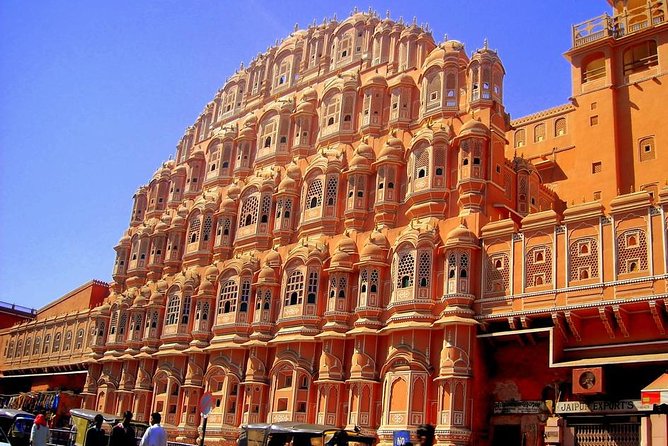
- Hawa Mahal, the Palace of Winds, with its iconic façade and window geometry (not included entry)
These aren’t just pretty backdrops. If you take a moment at each stop, you’ll see how royal planning, religion, and science all share physical space in Jaipur. Jantar Mantar especially rewards slowing down, it’s one of those places where you can watch people look up at the instruments and suddenly “get” what the shapes were meant to measure.
Day 3 pushes into the forts and big views with Amer Fort (Amer Fort is where you spend a longer block), then Nahargarh Fort for the hilltop outlook. Between forts, the tour includes Jal Mahal, the Water Palace on Man Sagar Lake. Even if you only see it from the right angles near the roadside, it’s a classic Jaipur scene: palatial form, water context, and a landscape that makes the fort architecture feel even more dramatic.
The downside to Jaipur is that day 3 can feel intense. Forts mean stairs, uneven ground, and more time outside in the sun. You’ll want comfortable walking shoes, and you’ll appreciate carrying a water bottle and planning for heat.
Ranthambore tiger safari: canter rides and the value of going at sunrise
Ranthambore is the centerpiece if you care about wildlife, and the tour treats it with the right amount of focus. You spend time at Ranthambore National Park on day 4 and again on day 5.
Here’s the key detail: the tour includes national park fees and safari rides, but the number of canter safaris depends on the hotel category you book. If you choose the 3-star option, you get 1 canter safari. If you choose the 4-star option, you get 2 canter safaris.
That difference is worth thinking about. Two safari chances improve your odds of seeing more than one animal encounter, and it spreads the excitement across more than one outing. Also, you are not only paying for the vehicle. You’re paying for access to the park system on the correct schedule, which is something you cannot easily DIY if this is your first time in the region.
The itinerary also highlights a sunrise outing on day 5, which is smart. Wildlife viewing is all about timing, and morning usually means cooler temperatures and more animal movement. One of the strongest moments people described in experiences like this is exactly that sunrise safari feeling, when the day is still new and everyone is watching the same scrubby lines of habitat.
The practical reality: you are still in a tiger park. Tigers are not guaranteed. What you can control is getting your schedule right, being alert, and dressing for early cold-to-warm transitions.
Also note a seasonal catch you should not ignore. Ranthambore is closed from July 1 to September 30, and reopening depends on weather conditions. If your travel window falls inside those dates, confirm operations close to departure.
Agra after the road trip: Taj Mahal early, forts after
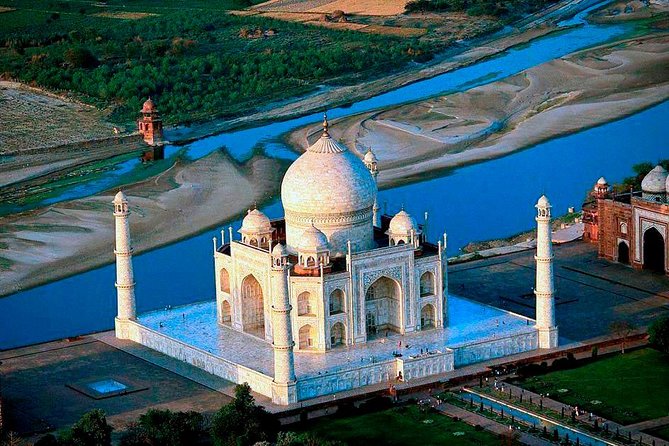
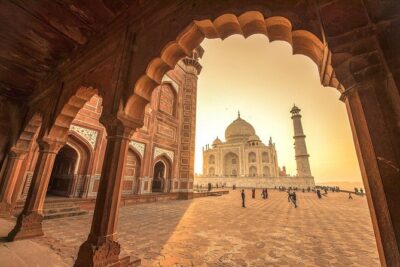
Agra is where the “Golden Triangle payoff” happens, and this tour schedules it with maximum impact. Day 6 includes sightseeing time in Agra, then the signature move: Taj Mahal at sunrise, before breakfast. The Taj Mahal is listed as not included for admission, so you should budget that ticket separately.
Even if you have seen photos of the Taj Mahal a thousand times, sunrise changes how you experience it. Light makes the marble look different by the minute, and the atmosphere tends to feel quieter than later in the day.
After the Taj, you continue with Agra Fort (not included entry). Agra Fort is another UNESCO stop, and it adds a different angle to the Mughal story. Where the Taj is romantic and personal, the fort is power and defense. That contrast helps your brain connect the dots.
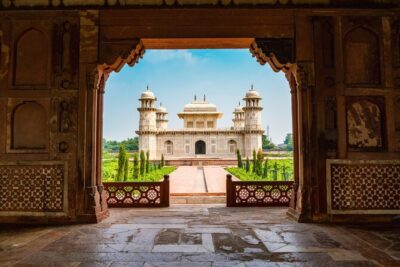
The day also includes Itmad-ud-Daulah, often described as a sort of earlier style reference point to the Taj, plus time at the Agra Bazaar for handicrafts, including marble and soft-stone inlay work. This is one of the few parts of India travel where you can switch from monument mode to craft mode in a single afternoon.
The tradeoff is that Agra is a full day, and you’ll move fairly quickly between sites. If you hate crowds or slow wandering, you may still find Agra busy. But if you like a clear itinerary and want to see the big three without extra planning, Agra is where this tour earns its value.
More New Delhi tours and experiences for the shortlist





Price and inclusions: what you pay for, what you budget extra for
At $550 per person for about 7 days, the value depends on two things: whether you like pre-planned days, and how much you want to avoid logistics work.
What’s clearly included:
- Six nights accommodation on double/twin and triple sharing
- Breakfast for 7 days
- Transportation with tolls, parking, fuel, and driver allowances
- Local taxes
- National Park fees for canter safari rides (with the 1 vs 2 safari option depending on 3-star vs 4-star)
- Local guides in Agra and Jaipur only
What is not included:
- Food and drinks unless specified
- Travel insurance
- Tips, laundry, phone calls
- All personal expenses
- Many monument admission tickets, including major ones like Taj Mahal (and others listed as not included)
A practical tip for budgeting: treat entry fees as “likely extra” for most iconic sites. Some stops are marked as free, like India Gate and Lotus Temple in Delhi, and Fatehpur Sikri is listed as admission ticket free. But places like City Palace, Jantar Mantar, Hawa Mahal, Taj Mahal, Agra Fort, and Itmad-ud-Daula are marked as not included.
So this tour is best for you if you prefer paying once for transport and hotels, then handling entry tickets as needed. If you want a single all-in price for every ticket, you’ll need to plan that separately.
Practical stuff that makes or breaks this tour
A smooth Golden Triangle week is mostly about pacing and preparation. This tour recommends comfortable walking shoes, and I agree. Forts and monument grounds are uneven in places, and you will spend real time on your feet.
Sun and early starts are another factor. Sunrise Taj Mahal and sunrise safari schedules mean your day starts before you feel fully awake. If you hate mornings, consider that before booking. If you can handle early, these timings are one of the best reasons to choose this format.
You’ll also want to understand the “private tour” style. The tour is described as a private activity with only your group participating. That usually means fewer coordination headaches and less waiting for strangers. At the same time, this kind of private-group setup can have minimum number requirements, so there is a chance of cancellation if there are not enough passengers to operate.
Finally, Ranthambore season matters. If you plan to travel between July 1 and September 30, check operations because the park closes for a period and reopening depends on weather.
Should you book this 7-day Golden Triangle and Ranthambore safari?
Book this tour if you want a well-organized first-timer Golden Triangle plan, plus a serious Ranthambore tiger safari component. The package makes sense if you like having your days structured, especially since you get hotel nights, daily breakfasts, and intercity transport handled.
Skip it, or at least rethink the dates, if you are traveling in Ranthambore’s closure window (July 1 to September 30) or if you hate early starts and heavy walking days. Also budget extra for admission tickets, because many of the big-name stops list entry as not included.
If you match those conditions, you’ll likely appreciate the balance here: monuments that represent Delhi, Jaipur, and Agra at their most recognizable, plus the one wildlife window that turns this from a sightseeing trip into a memory you talk about later.
FAQ
How long is the 7-Day Golden Triangle & Ranthambore Tiger Safari from Delhi?
The tour is listed as approximately 7 days, covering Delhi, Jaipur, Agra, and Ranthambore.
Do you get pickup from Delhi airport?
Yes. The start point is Indira Gandhi International Airport in New Delhi, and you will be met and transferred to your hotel on arrival.
How many nights of accommodation are included?
The tour includes six nights of accommodation in a double/twin or triple sharing setup.
Is breakfast included?
Yes. Breakfast is included for 7 days.
How many Ranthambore safaris do I get?
The tour includes national park fees for 1 canter safari if you book the 3-star option, and 2 canter safaris if you book the 4-star option.
Are monument entry tickets included?
Not for all sights. Some attractions are listed as having admission ticket free, while many major sites are listed as not included (for example, Taj Mahal, City Palace, Jantar Mantar, Hawa Mahal, Agra Fort, and Itmad-ud-Daula).
Is this tour refundable if I cancel?
No. This experience is non-refundable and cannot be changed for any reason.
More 7-Day Experiences in New Delhi
More Safari Adventures in New Delhi



More Tour Reviews in New Delhi






Not for you? Here's more nearby things to do in New Delhi we have reviewed










More Delhi City Tours to consider.
 ★ 5.0Old & New Delhi City Tour – Half or Full Day Options AvailableTickets from $384,811 traveller reviews
 ★ 5.0Same Day Taj Mahal, Agra Fort & Baby Taj Tour from Delhi by CarTickets from $624,304 traveller reviews
 ★ 5.0Taj Mahal Day Tour from Delhi by Superfast Train – TOP RATED TOURTickets from $1004,166 traveller reviews
 ★ 4.9Old and New Delhi Private Full or Half-Day TourTickets from $23,776 traveller reviews
 ★ 5.0Full Day Taj Mahal, Agra Fort & Baby Taj Tour from Delhi by CarTickets from $623,647 traveller reviews
 ★ 4.9From Delhi: Taj Mahal & Agra Private Day Trip with TransfersTickets from $43,181 traveller reviews
 ★ 5.0Taj Mahal Tour from Delhi by Express Train (Viator Award Winner)Tickets from $752,849 traveller reviews
 ★ 5.0All Inclusive Private Taj Mahal Luxury Tour from Delhi by CarTickets from $622,564 traveller reviews
More useful Delhi routes