
Review · DELHI CITY TOURS
Delhi: Old and New Delhi Guided Full or Half-Day Tour
Delhi moves fast, and this tour keeps up. I love the private group setup and the tuk-tuk ride that threads you into Chandni Chowk’s action. You also get round-trip transfers from Delhi-NCR, plus a live guide to connect the big monuments to what you actually see outside the gates.
Here’s the one drawback to plan for: monument fees can add up. The price doesn’t automatically include monument tickets, even though several stops are marked as admission included depending on the option you choose at booking, and the time at each site is tight if you want extra wandering.
Key takeaways before you go
- Private group, real guide time: You do not get herded with strangers.
- Chandni Chowk by tuk-tuk: It is a shortcut into a maze of lanes, not just a drive-by.
- Old and New Delhi in one pass: Jama Masjid plus UNESCO sites like Humayun’s Tomb and Qutub Minar.
- Drive-by landmarks for context: India Gate and Parliament House are viewed from the road for photo time.
- Optional add-ons: Street-food sampling can be added, and Raj Ghat is optional.
- Flexible half-day or full-day: Your route length can stretch based on what you want to pack in.
Why this Old and New Delhi combo makes sense
Delhi has two faces that feel like different cities. Old Delhi is crowded, loud, and built for walking between markets. New Delhi is broader and calmer, with garden-tomb and monument architecture that rewards a slower look.
This tour works because it connects those two worlds without making you do the hard logistics. You start with landmark anchors, like Jama Masjid and Chandni Chowk, then you shift toward the UNESCO trail and the major memorials. You still get the iconic skyline moments too, like India Gate from the road.
The other big win is your guide. You can ask questions while you move, and you are not stuck translating signs while navigating traffic. I also like that the pace is adjustable, so if your day runs long or you want to linger at one stop, you have a framework to reshape the timing.
You can also read our reviews of more guided tours in New Delhi



Pickup in Delhi-NCR, AC car, and why it matters
If you have only a limited day, getting stuck at the start is the worst outcome. This tour handles pickup and drop-off from multiple areas across Delhi-NCR, including Delhi, Noida, Gurugram, Ghaziabad, and Faridabad.
You can also pick a start time window between 8 AM and 12 PM. That flexibility is not just convenient, it helps you avoid the most brutal crowd peaks at some monuments. Once you are moving, the transport is an air-conditioned car with a dressed driver, plus bottled water during the trip.
One practical tip: build a little buffer into your own timing. Even with a car, Delhi traffic can change the feel of the day, and a few reviews highlight that the team stayed flexible when schedules got thrown off. If you treat this as a guided day with travel time included, you will enjoy it more.
Jama Masjid: your first big stop and the fast culture shock
Jama Masjid is the kind of place that instantly tells you you are in Delhi. It is India’s grandest mosque, built in 1656 by labor attributed to 5000 workers, and it sits next to the Red Fort area. The first wow-factor is the red sandstone courtyard and the scale of the complex.
You are there for about an hour, and admission is part of the plan at this stop. The value of starting here is emotional, not just architectural. You get oriented early, so later market streets at Chandni Chowk feel connected instead of random.
A heads-up for your expectations: this is a walk-through stop. If you want hours of slow photo time, you will need more than this guided pace. But if you want a strong anchor to understand Old Delhi’s layout, it is a smart first move.
Chandni Chowk and the tuk-tuk ride through tight lanes
Chandni Chowk is what you came for. The market lanes are busy, the air carries spice and food smells, and every turn feels like a different mini-world. The tour sets you up to meet your guide at Sunheri Masjid, then you head into the bazaar zone.
You get about an hour at Chandni Chowk, plus a tuk-tuk or rickshaw ride experience. That matters because it saves you from getting stuck in the worst of the foot-only congestion. You also get a guided thread through the chaos, with your guide explaining how the markets work and what to look for.
One of the more memorable parts is the spice-market focus. You will explore stalls selling Indian spices and learn how different spices are used. This is where the guide help really pays off. Without context, it is easy to just smell things and buy the first pretty bag. With context, you start asking better questions about intensity, use in cooking, and even sweetness versus heat traits.
If you add the optional street-food sampling, this can turn from sightseeing into a full sensory loop. Just pace yourself. Markets are thrilling, but they are also hot, crowded, and easy to overdo if you plan to eat at every stop.
Red Fort from outside: the photo stop that still does the job
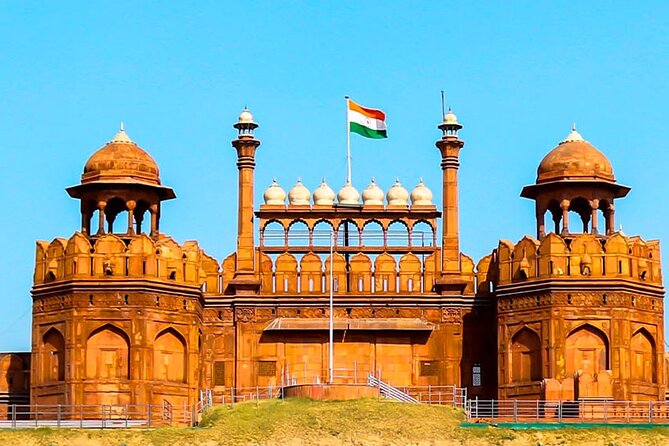
You do not go inside the Red Fort on this run. Instead, you explore it from outside for a short window, about 30 minutes, with free admission indicated for that approach.
So what do you get for the time? You get the famous red fort silhouette and the photo angle that ties Old Delhi together visually. You also get the quick historical framing that makes the place feel real rather than like a postcard. The tour notes that a large portion of the fort is acquired by the Indian Army, which is part of why the plan stays outside and focuses on what you can see.
If you are a hardcore fort person who wants to spend half a day inside galleries, you may feel this is too short. But for most first-time visitors on a time budget, it is a useful checkpoint between the market zone and the UNESCO circuit.
More New Delhi tours and experiences for the shortlist




Humayun’s Tomb: New Delhi’s UNESCO turning point
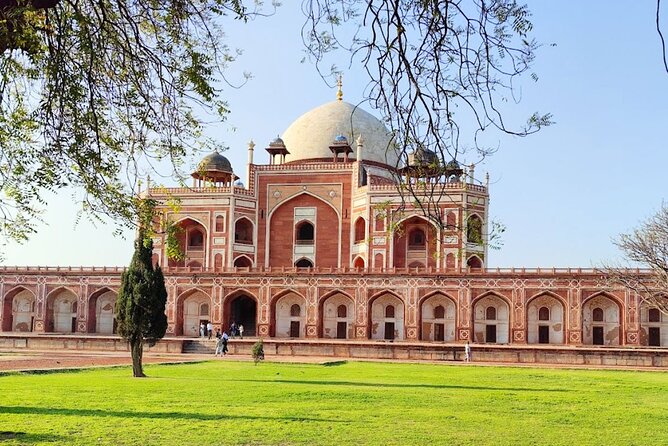
After Old Delhi, the day shifts gears toward New Delhi’s monuments. Humayun’s Tomb is next on the schedule, and it is a UNESCO World Heritage Site and described as the first Garden Tomb of India.
You spend about an hour here, with admission indicated for this stop. The value is the contrast. Old Delhi gives you dense street life, while Humayun’s Tomb is all about symmetry, gardens, and a sense of planned space.
This is also where your guide helps you connect the dots. Humayun’s Tomb is built after the death of Humayun, with the purpose tied to his wife building it. That story gives you something to hold onto as you walk the grounds, so the architecture does not become just shapes and dates.
India Gate and Parliament House from the road, plus why it works
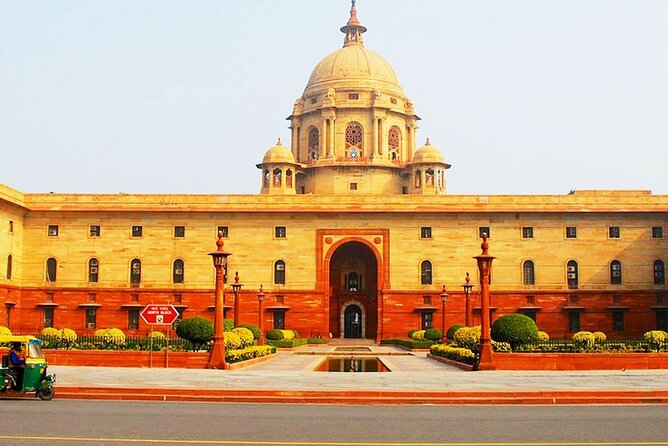
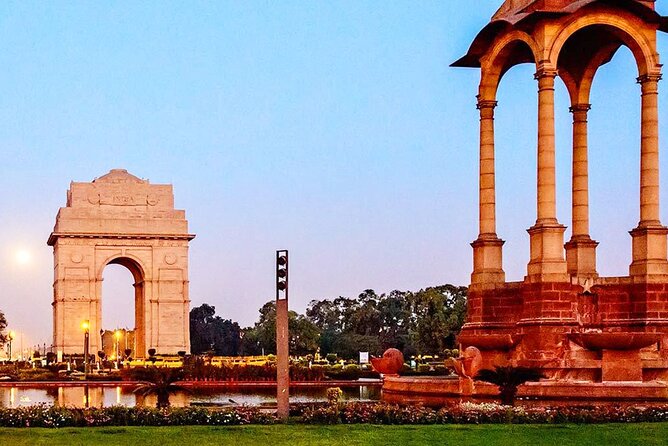
Between major tomb and minaret stops, the tour includes a drive-past for India Gate. You get picture time while your guide explains the background, then you also pass by Parliament House for more photos.
This kind of stop is often skipped on DIY days because traffic and navigation make it annoying. Here, it is handled for you. You still get the landmark context without losing the day to transit stress.
Keep your expectations realistic: you are not entering buildings. You are collecting key visuals, and the guide gives you the story behind why these structures matter in modern Delhi. It’s the kind of context that helps your next stop feel connected to the bigger city timeline.
Qutub Minar: the minaret stop that feels instantly iconic

Qutub Minar is one of those monuments you recognize even in photos, and being there in person makes it even more impressive. The tour includes about an hour here, and it is part of the Qutb complex, also UNESCO listed.
This is where the day moves deeper into medieval-era architecture. A tall minaret like this is not just about height, it is about how the complex sits in a wider historic setting.
Again, the guide matters. If you just look, you get a tall tower. If you listen, you get a sense of the complex’s significance, and you start noticing details you might otherwise miss.
If you have limited time, this hour is a practical amount. It is enough to see the monument and understand what you are looking at without turning your whole day into one long line.
Lotus Temple: the calm reset after the stone history
After Qutub Minar, the tour goes to the Lotus Temple. This Bahá’í House of Worship is designed in a lotus shape and was consecrated in December 1986. You get about an hour here, with admission indicated for the stop.
The reason this works inside a busy city schedule is simple: it resets your mood. After stone architecture and dense market textures, Lotus Temple gives you a softer rhythm. Even if you are not religiously focused, the design message of unity and peace is easy to feel in the space.
I also like that it is a different kind of Delhi landmark. Old Delhi and UNESCO sites can feel like the same style of awe if you pack too many similar monuments back-to-back. Lotus Temple breaks that pattern, so your day ends with a distinct memory.
Optional Raj Ghat and where it fits
Raj Ghat is an optional stop. You get a shorter visit window, about 30 minutes, with admission indicated.
This memorial is dedicated to Mahatma Gandhi in Delhi. The tour notes it ties back to a historic ghat name in Old Delhi, which is a useful detail because it connects modern memorial geography to the city’s older water-and-bathing traditions.
If you want your day to end on reflection rather than sights, add it. If you are tired, skip it and keep your energy for your drop-off.
Street food sampling: how to add it without derailing the day
Street food sampling is offered as an optional add-on. This is your chance to turn sightseeing into eating, with your guide helping you navigate what to try and when.
Two things to watch. First, food slows you down, even when it is quick. Second, your best results come from choosing a small number of bites rather than trying to eat a full meal between monuments.
If you have never done Indian street food before, this is a good way to try it with a guide. You also get a built-in reason to stop, instead of hunting for food on your own in an unfamiliar neighborhood.
From the experiences shared with this tour, some guides also like adding small cultural breaks like masala chai tea along the way. If that’s your style, ask your guide what they recommend for a calm pause, then get back on schedule.
Price and value: what $20 really buys you, and what can cost extra
The headline price is $20 per person, and you get a lot for that amount. The package includes hotel or airport pickup and drop-off, a round trip air-conditioned car, a personalized live tour guide, tuk-tuk or rickshaw ride in Chandni Chowk, and mineral water bottles.
Now the part you should treat seriously: monument tickets. The tour lists monument tickets at $20 per person, and it also says you can choose to pay monument fees as an option at booking. That means the true cost depends on what you pick when you book and which entries you end up paying for.
For value, here is the math I use: if you want guided context plus transport plus a mix of Old Delhi and UNESCO sights in one day, paying for tickets at your own pace is normal. But if you are planning to do most entries yourself anyway, the value drops.
Still, for many people, the real cost savings is time saved. Delhi traffic and navigation can eat an entire day. Having the plan built around key sights, with a driver and a guide, is what makes the price feel fair.
Guides you might ask for: Aamir, Kabeer, Ali, and Riyaz
One of the strongest signals from past experiences is how consistently the guides balance information with energy. Names that show up often include Aamir (praised for engaging kids and keeping people comfortable), Kabeer (noted for care and attention, including support for elderly guests), Ali (highlighted for friendly, practical storytelling), and Riyaz (mentioned for adding off-the-beaten-track sights like a step well and keeping the pace comfortable).
You should not assume every guide will match every detail, but when multiple people highlight the same strengths, it gives you a reliable bet. If your booking option lets you request or choose a guide, those names are worth considering.
Also note: multiple experiences mention drivers staying punctual and careful in traffic. A good guide plus a careful driver is what keeps the day from turning stressful.
Practical expectations so the day feels smooth
This tour is designed to fit a lot in one outing, so you should plan to move steadily. The stops are grouped in a way that minimizes backtracking, but you still need to accept that Delhi travel time is part of the package.
What I recommend you bring or plan around:
- Comfortable shoes for market lanes and monument walking
- Sunscreen and water planning, since you will spend time outdoors
- An open mind for switching between Old Delhi energy and New Delhi calm
- A budget for monument tickets if you do not prepay at booking
If it rains, do not panic. Multiple experiences mention flexibility when weather disrupted the schedule, with the guide and driver adjusting timing. Keep your expectations flexible too, and you will get a better day out of it.
Should you book this Old and New Delhi tour?
Book it if you want a guided introduction that hits the big Old Delhi landmarks and then continues into New Delhi’s major UNESCO stops. It is a great choice for first-timers who want context and transport handled, and it is especially good if you like markets but do not want to figure out everything on your own.
Skip or modify if you want to spend long hours inside the Red Fort or if you are building a monument-heavy day where you prefer full self-guided control of entry timing. Also factor in that monument tickets can add to the total, so check what you are paying for at booking.
If you are deciding between half-day and full-day, pick half-day if you want the highlights fast. Choose full-day if you know you will want more time at Chandni Chowk, spice shops, and the UNESCO sites.
FAQ
What areas do you get pickup from?
Pickup is offered from Delhi and Delhi-NCR areas including Noida, Gurugram, Ghaziabad, and Faridabad. You can choose a pickup time between 8 AM and 12 PM.
How long is the tour?
The tour runs about 4 to 8 hours, and you can customize it to last around a half-day or up to a full-day.
Is this tour private?
Yes, it is a private tour/activity, meaning only your group participates.
Does the tour include monument tickets?
Monument tickets are listed as $20 per person and are not included by default. You can also choose to pay monument fees as an option at booking.
What is included in the price?
Included items are hotel or airport pickup and drop-off, round-trip air-conditioned car with a dressed driver, a personalized live tour guide, tuk-tuk or rickshaw ride in Chandni Chowk, and mineral water bottles.
Is street food sampling available?
Yes, you can add a street-food sampling option if you like.
Is lunch included?
No, lunch is not included.
What is the cancellation policy?
You can cancel for free up to 24 hours in advance for a full refund. If you cancel within 24 hours of the start time, the amount paid is not refunded.
What sights are part of the route?
Key stops include Jama Masjid, Chandni Chowk (with spice-market time), Red Fort from outside, Humayun’s Tomb, Qutub Minar, Lotus Temple, and optional Raj Ghat. India Gate and Parliament House are included as photo stops from the road.
More Guided Tours in New Delhi



More Tours in New Delhi





More Tour Reviews in New Delhi

Not for you? Here's more nearby things to do in New Delhi we have reviewed










More Delhi City Tours to consider.
 ★ 5.0Old & New Delhi City Tour – Half or Full Day Options AvailableTickets from $384,811 traveller reviews
 ★ 5.0Same Day Taj Mahal, Agra Fort & Baby Taj Tour from Delhi by CarTickets from $624,304 traveller reviews
 ★ 5.0Taj Mahal Day Tour from Delhi by Superfast Train – TOP RATED TOURTickets from $1004,166 traveller reviews
 ★ 4.9Old and New Delhi Private Full or Half-Day TourTickets from $23,776 traveller reviews
 ★ 5.0Full Day Taj Mahal, Agra Fort & Baby Taj Tour from Delhi by CarTickets from $623,647 traveller reviews
 ★ 4.9From Delhi: Taj Mahal & Agra Private Day Trip with TransfersTickets from $43,181 traveller reviews
 ★ 5.0Taj Mahal Tour from Delhi by Express Train (Viator Award Winner)Tickets from $752,849 traveller reviews
 ★ 5.0All Inclusive Private Taj Mahal Luxury Tour from Delhi by CarTickets from $622,564 traveller reviews