

Review · DELHI CITY TOURS
Private Guided Tour of Old and New Delhi
Delhi can feel overwhelming at first. This private full-day tour helps you get oriented fast, with a private guide just for your group and an air-conditioned vehicle that starts and ends at your hotel. It’s built for first-time visitors who want the big names of Old and New Delhi without getting lost in traffic and crowds.
I like that the route mixes monuments, markets, and memorial spaces, so you see Delhi in more than one mood. You’ll also get the comfort factor of a dedicated driver and a guided flow that makes the day feel manageable.
One consideration: the schedule is packed, and several sights do not include admission tickets, so you should budget for extra entry costs and expect some days to run differently depending on closures. For example, Gandhi Smriti is closed on Monday.
Key Highlights You’ll Feel in the Day
- Hotel pickup and drop-off so you avoid wasting hours getting to and from central sights
- Private, English-speaking driver plus tour guide for a smoother, less chaotic experience
- Rickshaw time through Chandni Chowk’s narrow lanes plus a spice market stop
- A mix of Old Delhi and New Delhi icons, from Jama Masjid to Qutub Minar and India Gate
- Free admission at several stops, like Jama Masjid, Raj Ghat, Lotus Temple, and Swaminarayan Akshardham
- A route that works even with limited time, since it’s designed as a 7 to 8 hour overview day
Why This Old-and-New Delhi Route Works So Well
Delhi is not one city. It is several cities running on top of each other, and that can be confusing on your first day. This private tour is useful because it compresses a lot of the essentials into one focused day, with a guide helping you connect what you’re seeing to what it means.
You get a front-row seat to Delhi’s layers. Old Delhi brings you to grand Mughal-era architecture and the classic maze of bazaars. New Delhi adds planned avenues, memorials, and landmark buildings that look more formal and monumental. That contrast is the point, and it’s why this day feels like a real orientation rather than a list of photos.
I also like the human side of it. The operator’s service has been praised for professionalism and calm driving, including English-speaking drivers such as Vijay Kumar, plus coordination attributed to Mr Amit in feedback you can use as a clue about service quality. The guide side has also been highlighted, with names like Naveen showing up in the mix. You cannot count on any specific person, but it signals that they take communication and timing seriously.
You can also read our reviews of more guided tours in New Delhi



Starting at 8:30 and Moving in Real Comfort
You start around 8:30 am, and the total day runs about 7 to 8 hours. That timing matters because Delhi’s traffic and light can change the feel of the sights. Morning often gives you a more comfortable pace for big outdoor stops, and it gives you breathing room before the day gets heavier.
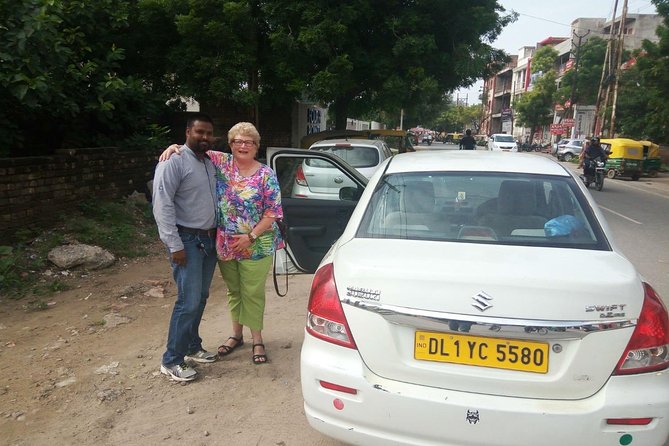
Transport is part of the value here: you’re in a private, air-conditioned vehicle with an English-speaking driver, plus a tour guide. The included fuel, parking charges, and toll taxes help remove annoying surprises. Practically, it means you’re not negotiating transit logistics while you’re trying to learn a new city.
You’ll also have pickup and drop-off at your hotel in Delhi. If you’re staying close to central areas, this can be the difference between a relaxing day and a long one that starts late. Even if your hotel is not in the center, the built-in pickup is still a time-saver.
Jama Masjid: Three Massive Gates and a Huge Prayer Hall
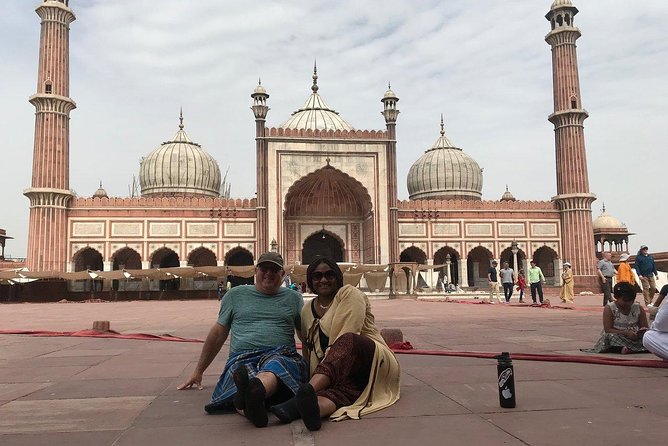
Your first major stop is Jama Masjid, one of Delhi’s best-known mosques. It’s described as a grand complex with three massive gates and a big prayer hall, and it’s a natural starting point because it frames the scale of Old Delhi right away.
Admission is listed as free for this stop. That’s a small but real value boost, and it helps you spend time on what matters, not on counting costs too early in the day.
At this kind of religious site, you should plan for respectful behavior and slower movement. Expect security and crowd flow to affect timing, especially around peak visiting windows. A guide helps here by giving you a sense of where to go and what you’re looking at, rather than wandering.
Red Fort’s Walls, Mughal Power, and What You Can See From Outside
Next comes Red Fort, built between 1639 and 1648. It served as the main residence of the Mughal Dynasty emperors, and the fort’s outside look is made more dramatic by its two-kilometer-long wall.
Admission is noted as not included for Red Fort. So you have a choice: either pay for entry and go deeper inside, or keep it more of an exterior orientation. Either way, the fort is one of those places where even the outside views tell you a lot about the era.
If you’re trying to get your bearings fast, the guide’s role matters. You’ll want context for why the fort looks the way it does and how it fits into the wider Old Delhi story. This stop also sets you up emotionally for the rest of the day, because it’s a reminder that Delhi’s greatest landmarks were once tied to power, movement, and governance.
Chandni Chowk by Rickshaw: Narrow Lanes and Spice Market Smells

Now you shift from monuments to everyday Delhi life. Your stop is Chandni Chowk, one of Old Delhi’s oldest and busiest market areas. This is where the city’s energy becomes visible, and it’s also where you’ll feel why a guide and driver are such a relief.
You’ll ride by rickshaw through the narrow streets of Chandni Chowk Bazaar. Then you’ll have time to visit the spice market. Admission is listed as free for this segment, which makes it a strong value component of the day.
Here’s the practical part: crowded lanes move slower than open roads. You cannot rush these streets, and trying to do so usually makes you stressed. The upside is the senses hit you fast: the smells, the colors, the constant motion. With your guide steering the flow, you can focus on the experience instead of the logistics.
Also, plan your comfort. Wear shoes that handle uneven surfaces. Keep your phone and small essentials secure. This is the kind of stop where you’ll remember Delhi not just for landmarks, but for atmosphere.
You can also read our reviews of more private tours in New Delhi





Raj Ghat and Gandhi Smriti: Two Stops, Two Different Kinds of Quiet
After the market bustle, the day turns reflective. You’ll visit Raj Ghat, a memorial dedicated to Mahatma Gandhi, located in Old Delhi. Admission is listed as free and the visit time is about 30 minutes.
Raj Ghat works well after Chandni Chowk because it gives you a pause. It’s not about crowds or shopping. It’s about stillness and context, and it helps you understand that Delhi’s landmarks are not only architectural.
Then you go to Gandhi Smriti, which marks the area where Gandhi spent much of his life and where he was assassinated. The place originally was the house of the Birla family. This stop is listed as not included for admission, and it’s also important that Gandhi Smriti is closed on Monday.
That closure matters for your planning. If you’re traveling on a Monday and this is your planned day, you’ll want to confirm how your guide handles substitutions or timing. The tour format is private, so flexibility can be better than with larger group tours.
Humayun’s Tomb: The First Garden-Tomb in India
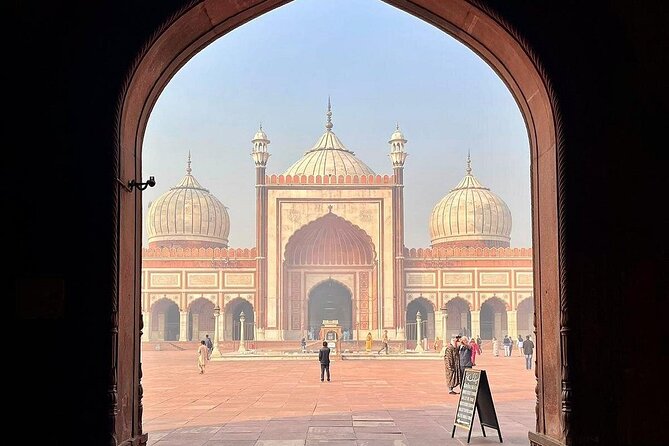
Next is Humayun’s Tomb, built in 1570. This site is described as the first garden-tomb in India, and it credits a Persian architect behind the design concept. Even if you are not a “tombs person,” it’s a fascinating stop because the whole layout supports contemplation.
The visit time is 45 minutes, and admission is listed as not included. That means this is one of the places where you might decide whether paying entry is worth it based on your interests.
Humayun’s Tomb is also a helpful bridge between the Mughal power stops and the later New Delhi landmarks. It visually communicates how gardens, symmetry, and monumentality were combined to create a specific kind of political and spiritual message.
If you’re short on energy, the gardens and pathways still give you plenty to look at. Your guide can help point out what to notice so you’re not just walking and hoping for meaning.
Lotus Temple: A Flowerlike Shape That Feels Like a Reset

Then you shift into a very different kind of monument: the Lotus Temple. It’s a Bahá’í House of Worship, dedicated in December 1986, and it’s known for its flowerlike shape.
Admission is listed as free, and the stop is about 30 minutes. This is a strong choice during a packed day because it tends to slow your pace naturally. The building’s form draws your eyes upward and outward, and it’s easier to enjoy than a stop where you’re constantly navigating lineups.
If you’re someone who gets overwhelmed by sensory overload, this can be your reset button. You can step back from the older mosque and fort atmosphere and experience a more modern religious architecture with a calmer feeling.
Qutub Minar’s 73 Meters and India Gate at 42 Meters
Your New Delhi landmarks add height and perspective.
First is Qutub Minar, described as a 73 m-high tower of victory. It was built in 1193 by Qutab-ud-din Aibak, and it’s linked to the period after the defeat of Delhi’s last Hindu kingdom. The description notes five distinct stories, which is exactly what makes it worth looking at in stages as you absorb the tower.
Admission is listed as not included for this stop, and the visit time is 45 minutes. If you pay entry, you usually have a better chance to get close and understand the structure. Either way, it’s the sort of sight where a guide helps you focus on the right details instead of just staring upward.
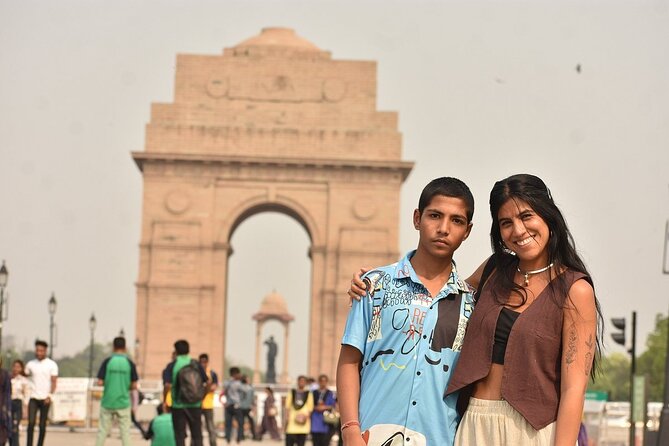
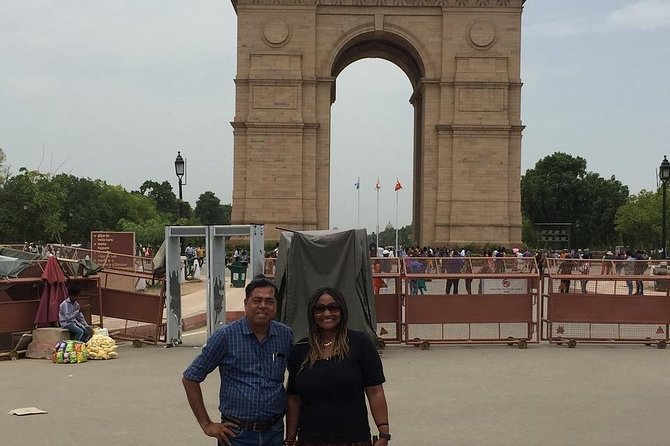
Next is India Gate, a war memorial at the center of New Delhi. The gate is 42 m tall and bears the names of 70,000 Indian soldiers who lost their lives while fighting for the British army during World War. This stop doesn’t list an admission ticket in the provided details, but it’s primarily a view and orientation stop.
India Gate gives you a different kind of context: Delhi isn’t only ancient and Mughal. It also carries modern layers of memory that shaped the country’s narrative in the 20th century.
Swaminarayan Akshardham and Rashtrapati Bhavan: Big Cultural and Government Landmarks
The day also includes two major New Delhi complexes that show different kinds of ambition.
First is Swaminarayan Akshardham, described as a Hindu temple and spiritual-cultural campus. Admission is listed as free here, with about 30 minutes allocated. This stop is valuable because it adds a present-day cultural dimension rather than treating Delhi as only a museum city.
Then comes Rashtrapati Bhavan, the President’s House. It’s described as 330 acres of architecture built in 1929, with construction credited to Sir Edwin Lutyens and Herbert Baker. The description also notes they were responsible for constructing almost the whole of New Delhi.
Admission is listed as not included for this stop, and your time is 30 minutes. Even if you cannot go deep inside, the scale and the planning feel different from Old Delhi. It’s a useful reminder that New Delhi was designed to project power, order, and nationhood.
If you’re a photo person, these are great anchor points. They also help you mentally separate Delhi’s “old lanes” from “new plans.”
What You’re Paying For: Value Breakdown of $60.52 Per Group
The price is $60.52 per group, for up to 3 people, for 7 to 8 hours. That pricing structure is a major part of the value story.
If you go as two people, you’re splitting the cost. If you go as three, your cost per person drops a lot compared to hiring separate transport or trying to cobble together guided access yourself. Since the tour is private, you’re paying for time, not just for a handful of photos.
What’s included is also clear and helpful:
- Private air-conditioned vehicle
- English-speaking driver
- Pickup and drop-off at your hotel
- Fuel, parking, tolls
- Tour guide
- Mobile ticket
What is not included can affect your total spend:
- Camera fees (where applicable)
- Meals
- Personal expenses
- Monument admission is not included for several key sites, including Red Fort, Gandhi Smriti, Humayun’s Tomb, Qutub Minar, and Rashtrapati Bhavan.
So the value equation is simple: if you want a guided day with transportation handled and you don’t mind paying a few site entries along the way, this is a good deal. If you strictly want every entrance fee included, you’ll want to plan for added costs.
Practical Planning Tips for a Long, Full Day
This is a full day, and Delhi can be unpredictable. A few smart moves will make the experience smoother.
- Wear comfortable shoes. Chandni Chowk’s lanes and the mosque and tomb areas all require practical footing.
- Bring a light layer for air-conditioning, especially in the car. The vehicle is comfort-focused, but you may swing between hot outdoor air and cool indoor spaces.
- Plan your expectations for ticketed sites. Since some entries are not included, decide early what matters most to you, like Red Fort or Humayun’s Tomb.
- If you’re traveling on Monday, treat Gandhi Smriti as a planning detail. It is listed as closed on Monday, so your guide may need to adjust how the day flows.
Also, consider weather. The experience notes that it requires good weather. If conditions are poor, you should expect rescheduling or a full refund option.
Should You Book This Private Guided Old and New Delhi Tour?
If you want a first-day or first-week Delhi orientation that actually feels organized, this tour is a solid choice. The best match is:
- First-time visitors who want Old Delhi and New Delhi in one day
- Small groups of up to three who want privacy
- Anyone who would rather have a guide handle navigation while you focus on the sights
I’d skip it or at least re-check your priorities if you want a slow, unstructured day or if you hate the idea of paying extra for several monuments. But for most people, the combination of hotel pickup, air-conditioned transport, and a private guide makes the day feel efficient and worth it.
If you book, go in with two priorities. Pick the top two monuments you most want to understand, like Qutub Minar and Humayun’s Tomb, and then treat the market and memorial stops as your emotional and sensory balance. That mindset will make the packed schedule feel like a satisfying overview rather than a sprint.
FAQ
How long is the Private Guided Tour of Old and New Delhi?
It runs about 7 to 8 hours, with a start time listed at 8:30 am.
How many people is the tour priced for?
The price is $60.52 per group, up to 3 people. It is a private tour, so only your group participates.
Is hotel pickup and drop-off included?
Yes. Pickup and drop-off from your hotel in Delhi are included.
Does the tour include entrance tickets to all monuments?
No. Some stops list admission ticket free, while others list admission ticket not included, including Red Fort, Gandhi Smriti, Humayun’s Tomb, Qutub Minar, and Rashtrapati Bhavan.
Is Gandhi Smriti open every day?
No. Gandhi Smriti is closed on Monday.
What transportation is included?
You get a private, air-conditioned vehicle with an English-speaking driver.
What happens if weather is bad or I cancel?
The experience requires good weather. If it is canceled due to poor weather, you are offered a different date or a full refund. You can cancel for a full refund up to 24 hours before the experience starts.
More Guided Tours in New Delhi



More Tours in New Delhi





More Tour Reviews in New Delhi
Not for you? Here's more nearby things to do in New Delhi we have reviewed









More Delhi City Tours to consider.
 ★ 5.0Old & New Delhi City Tour – Half or Full Day Options AvailableTickets from $384,811 traveller reviews
 ★ 5.0Same Day Taj Mahal, Agra Fort & Baby Taj Tour from Delhi by CarTickets from $624,304 traveller reviews
 ★ 5.0Taj Mahal Day Tour from Delhi by Superfast Train – TOP RATED TOURTickets from $1004,166 traveller reviews
 ★ 4.9Old and New Delhi Private Full or Half-Day TourTickets from $23,776 traveller reviews
 ★ 5.0Full Day Taj Mahal, Agra Fort & Baby Taj Tour from Delhi by CarTickets from $623,647 traveller reviews
 ★ 4.9From Delhi: Taj Mahal & Agra Private Day Trip with TransfersTickets from $43,181 traveller reviews
 ★ 5.0Taj Mahal Tour from Delhi by Express Train (Viator Award Winner)Tickets from $752,849 traveller reviews
 ★ 5.0All Inclusive Private Taj Mahal Luxury Tour from Delhi by CarTickets from $622,564 traveller reviews