
Review · DELHI CITY TOURS
Delhi: Old And New Delhi Private Full Or Half-Day Tour
Delhi spirituality comes in fast, guided bursts. What makes this one click is the balance of sacred stops and major landmarks, all handled by a professional English-speaking local expert who can explain what you are seeing in real terms. I also like that guides such as Sam and Harsh are described as organized and willing to adjust the route to your interests, like focusing more on New Delhi when that fits your schedule. One consideration: depending on the option you book, you may be limited to Old Delhi and pickup may not be included.
In practical terms, you get about 3 hours of sightseeing, with key moments built around places that feel like Delhi at different speeds, from old bazaars and major mosques to New Delhi’s formal monuments. You get bottled water, and if you choose the tickets option, tickets are provided, which helps reduce on-the-ground admin. Still, go in knowing meals are not included and luggage or large bags are not allowed.
You will start with a meet-up plan (either at a designated point, with the specific option here showing pickup not included), then move through a tight loop of sites that are mostly pass-by, with a few deeper visits depending on your chosen temple option. The tour is also explicitly not suitable for pregnant women, so if that applies, skip this one and look for a gentler plan.
Key things that make this tour worth your time
- Private guide, real explanations focused on what each place means for daily life and belief.
- Old Delhi energy by design, including a tuk-tuk ride for the old sights if you select that ticket option.
- Major monuments, not just one neighborhood, with New Delhi highlights like India Gate and the Lotus Temple.
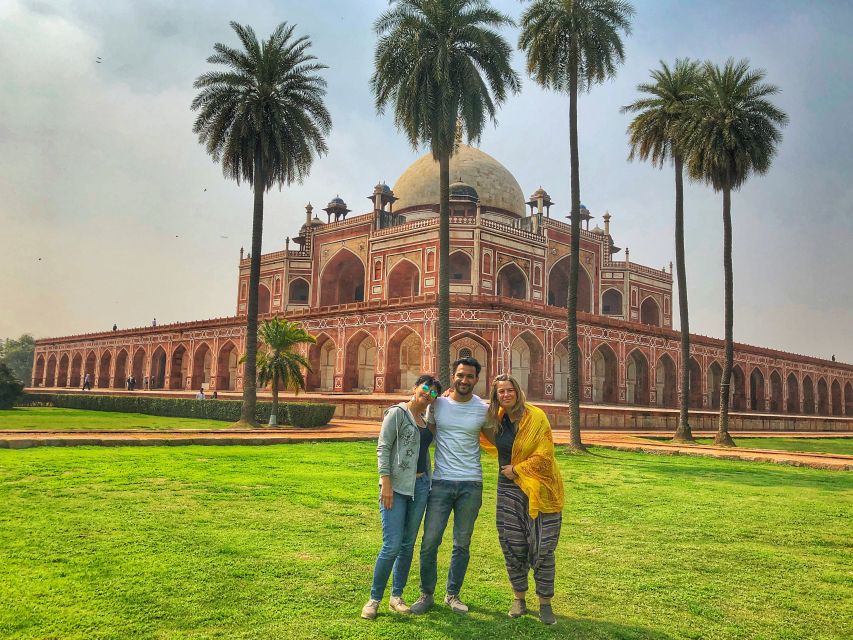
- Choose your spiritual stop between Humayun Tomb and Laxmi Narayan Temple, depending on the option selected.
- Stops are mostly pass-by where it matters, so you keep momentum instead of waiting all day.
How a half-day spiritual loop works in practice
This is the kind of tour that respects your time. Instead of spreading sights across a full day, it packs a spiritual spine through Delhi, then adds major landmarks around it. You will spend your time looking at places that people actually use and visit, and your guide is there to connect the dots, not just read from a card.
For you, the practical win is pace. A 3-hour tour is long enough to feel you actually learned something, but short enough to avoid turning into a tired blur of traffic and entrances. And because it is private, you can ask small questions that make the monuments click. That flexibility shows up in how guides like Sam and Harsh are described, with extra information and comfort built into the pacing.
The route also matters. Old Delhi and New Delhi can feel like different cities. This tour intentionally bridges them, so you get context for why Delhi has both crowded religious squares and grand government-era landmarks sitting side by side.
You can also read our reviews of more private tours in New Delhi



Price and value: what $2.55 per person really means
At a listed price of about $2.55 per person, you should treat this as a strong value for the core service, not as a magic trick that covers everything. Here is what is clearly included: a professional English-speaking local expert, bottled water, parking fees, tolls, fuel, and taxes. If you book the option that includes tickets, tickets are provided too.
What is not included matters for your budget math. Meals are not included, and the local tuk-tuk ride is listed as not included. That means the final cost can move depending on which ticket option you select and whether you want tuk-tuk for the Old Delhi portion.
Still, even with those extras, you are paying mostly for guided time plus local logistics, not for a big buffet of included meals. If you are traveling light and already planned to grab snacks on your own, the value can be excellent. If you were hoping for a meal plan and a fully included transport ride across both neighborhoods, check the specific option details before you commit.
Meeting up in Delhi without losing your morning
The tour setup is designed to start cleanly, but do read the meeting details carefully. In the option described here, pickup services are not included, and the guide is exclusively available for the Old Delhi tour. The tour starts at the meeting point in the Old Delhi loop, and then you move from there with your guide.
That affects you in two ways. First, you need to plan your own way to the start point. Second, your day will feel more like a guided walk-and-ride experience from the old city center rather than a door-to-door hotel pickup.
Your practical prep is simple: bring a passport or ID card, since that is specifically listed as required. Also plan on traveling with minimal luggage, because luggage or large bags are not allowed.
From Sunheri Masjid to Chandni Chowk on the Old Delhi route
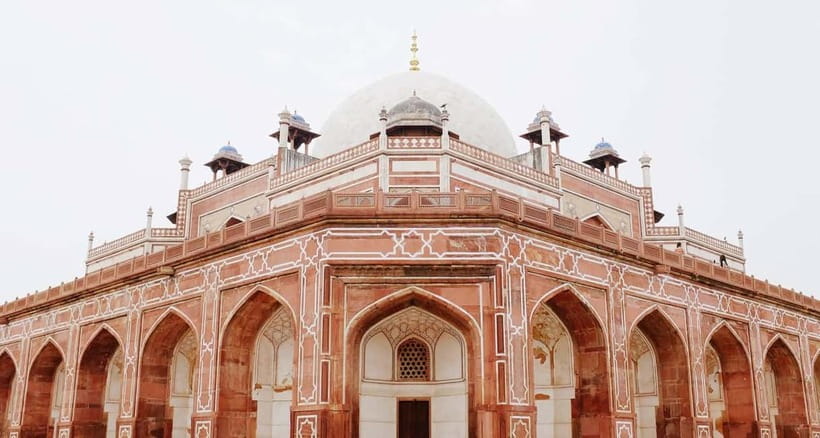
Old Delhi begins with a spot that makes sense. The tour meets at Sunheri Masjid, then you head into the Chandni Chowk area. If you selected the tuk-tuk ticket option, you will sit in the tuk-tuk for the Old Delhi ride and let the guide steer the story while you pass the markets.
Chandni Chowk itself is a pass-by moment, but that is actually part of the point. Instead of trying to cover every narrow street on foot, you get a guided snapshot of how the bazaars function for locals. Your guide explains the important role they play, so you are not just seeing shops, you are understanding what people come for and why.
One tip for you: when the tour is pass-by heavy, your best questions are practical. Ask what to look for in the shops you pass, and how people use the spice and tea trade day to day. A good guide will answer in plain language.
Jama Masjid: what the scale and timing really signal
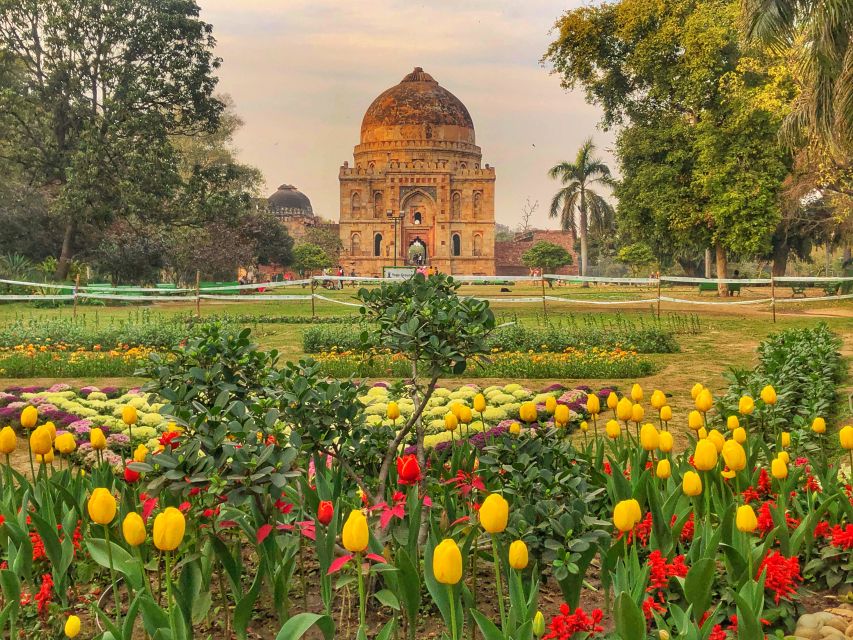
Next comes Friday Mosque, Jama Masjid, described as India’s largest mosque. The tour framing includes a clear timeline: it started in 1650 and was completed in 1656, with construction taking about six years.
What you can do with that information is simple. When you look at a mosque of this size, you are not just seeing architecture. You are seeing how a city organized effort, labor, and planning around faith. The guide’s explanations help you connect the building to the larger story of Delhi as a long-running spiritual center.
This stop is also a good pause for photos. People often focus on the building itself, but your guide will usually point you toward details that help you read the space. If you are the kind of person who asks for photo angles, there is a strong chance you will end up with better shots than you would solo, since Sam is specifically described as taking great photos.
More New Delhi tours and experiences for the shortlist




Khari Baoli spices market: a pass-by that can still teach you
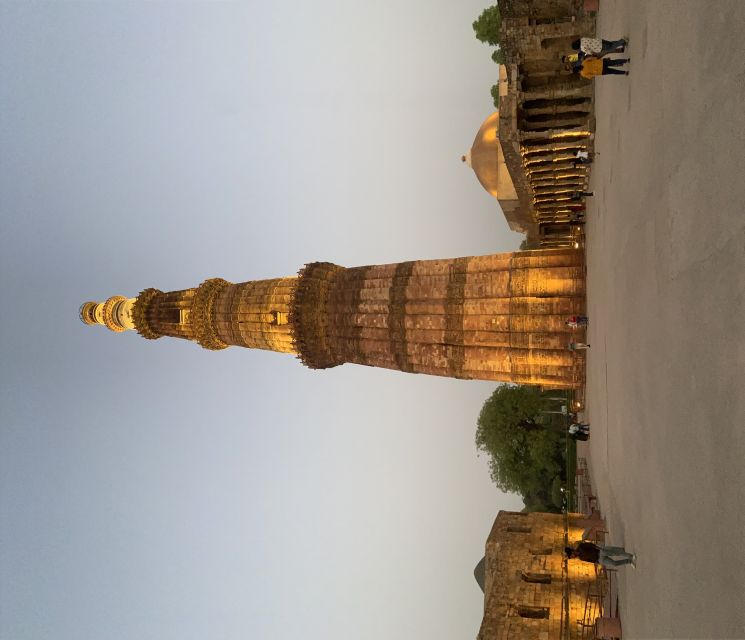
After Jama Masjid, the tour includes Khari Baoli as a pass-by stop. The tour notes that it is the Asia bigget spices market and that many items are on fixed price, plus it is known for spices and tea.
Even if you are not going deep into the lanes, this is one of the stops that helps you understand Old Delhi’s everyday economy. Spices and tea are not just souvenirs here. They connect directly to cooking, daily routines, and local tastes.
For you, it is worth deciding before you arrive if you want to buy. If you do, plan small. If you do not, still look closely. Fixed-price markets tend to feel more straightforward than chaotic stalls, so you can watch how people choose and pay without getting overwhelmed.
Red Fort pass-by: UNESCO and the power of a single viewpoint
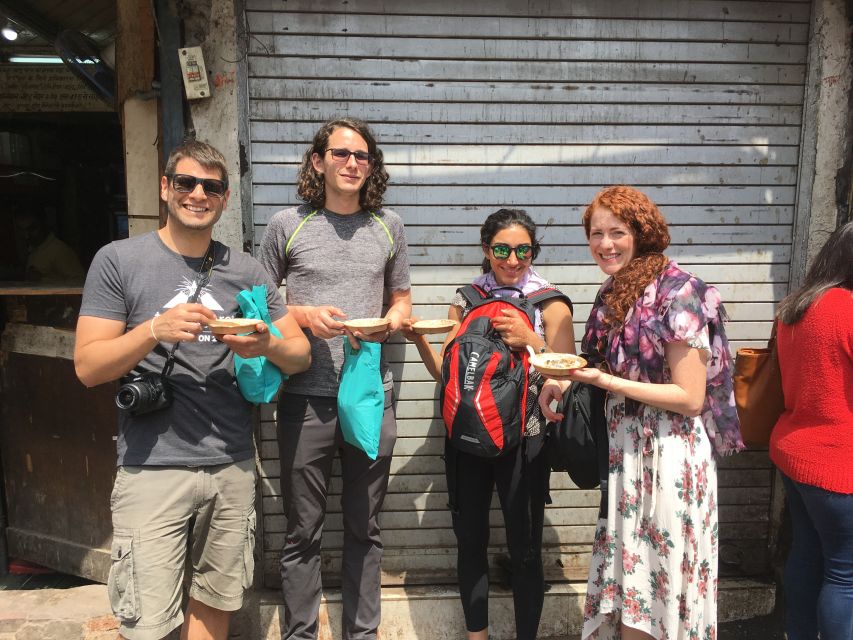
Then you get the Red Fort as a pass-by highlight. It is noted as a UNESCO World Heritage Site and an iconic symbol of India’s history. Since it is pass-by, the goal is recognition and context, not a full museum-style visit.
The value here is learning how to look. When you stand at the right approach angle, you can start seeing the logic behind the fort’s grand architecture and how it signals authority. With a guide, you are more likely to notice the cues that make forts feel more like political statements than just buildings.
If you want deeper time at Red Fort, this tour may not be your only stop. But as a timed spiritual loop, it does what it needs to do: it puts you in the right mental frame before you move toward the religious sites and the New Delhi monuments.
Laxmi Narayan Temple versus Humayun Tomb: pick the mood you want
One of the most useful flex points in this tour is the option to choose between Humayun Tomb and Laxmi Narayan Temple. If you choose Laxmi Narayan Temple, the tour describes it as a modern architectural masterpiece dedicated to Vishnu and Lakshmi, with intricately carved walls and exhibits that give a glimpse into Indian culture and spirituality.
This choice matters because the feeling is different. Humayun Tomb tends to give you a historic monument mood, while Laxmi Narayan Temple is described here in a contemporary devotional style. Your guide can help you decide based on what you want your 3-hour day to emphasize.
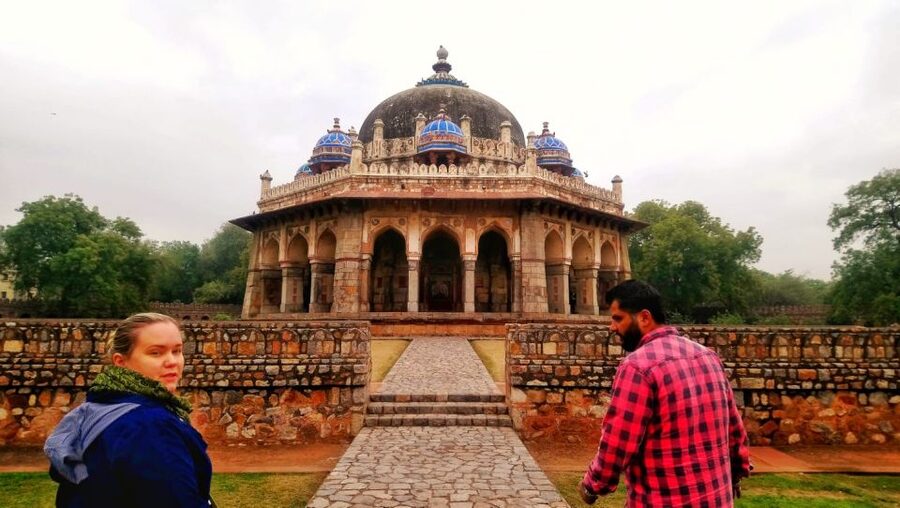
What I like about having a choice is that it lets you match the tour to your current interests. If you are craving spiritual symbolism and carved detail, go Laxmi Narayan Temple. If you want more of a historic tomb atmosphere, go Humayun Tomb. In either case, you stay within the same overall loop.
Gurudwara Bangla Sahib: gold inside, faith front and center
A key spiritual stop is Gurudawra Bangla Sahib. The tour describes it as Delhi’s biggest Gurudawra, dedicated to the eighth guru, identified here as Guru Har Krishan Ji. The description notes that inside, everything is made by gold and that the site is from the 17th century.
Even if you are not staying long, this stop can anchor the entire trip. It shifts the focus from monuments as history objects to monuments as active places of belief. For you, the practical takeaway is that this is the kind of stop where you will likely slow down and actually look at how the space feels, not just what it looks like.
This is also a good point to ask your guide one question that keeps the whole day coherent: how does a site like this fit into daily life in Delhi? A guide who does the job well will connect the spiritual purpose to what you can see around you.
New Delhi monuments: India Gate, Parliament area, and Lotus Temple
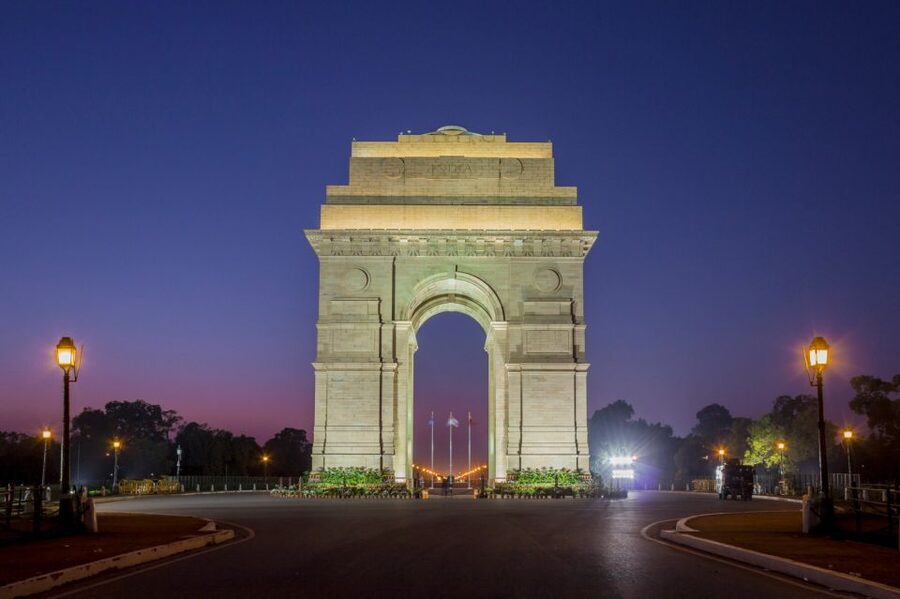
After the core Old Delhi spiritual sequence, the tour brings in New Delhi highlights. You pass India Gate, described as a war memorial made for the First World War against Germany and linked to the Indo-British army. The tour description also calls out that you can see soldiers’ names return on the wall.
Then you pass Rashtrapati Bhavan and the Parliament House, framed as significant symbols of India’s democracy. Even though these are pass-by moments, you still get something useful: a sense of how Delhi lays out power and public space in a more formal style than Old Delhi.
Finally comes the Lotus Temple, which is described as a Bahai house of worship built in 1869. The look is compared to the Sydney Opera House, and the description includes specific details about petal counts: 27 petals outside and 9 inside. The tour also describes it as a meditation center where people meditate according to their religion, with the main attraction from the outside only and an empty hall inside.
This is the kind of stop where you get better if you switch your mode from sightseeing to observation. Look at the shape, the symmetry, and the way it reads from different approach points. Then take the outside-only access detail as a cue: this temple is designed to be seen from outside as a statement, not as a long indoor route.
The tuk-tuk detail: when it helps and when it does not
The local tuk-tuk ride is specifically listed as for the Old Delhi tour only, and only if you select the option for tickets. It is also listed as not included by default, so you should treat it as an optional add-on.
When the tuk-tuk is included, it can be a big quality-of-life improvement. Old Delhi streets can be intense, and sitting in a small vehicle lets you keep your focus on the guide’s explanations while still moving through the crowd and narrow lanes.
When it is not included, the tour can still work because key stops are still set up as guided pass-by or short visits. Just plan that you might spend more time on foot, so wear comfortable shoes and keep water in mind. Bottled water is included, which helps.
Photos, comfort, and how to get more out of your guide
One theme in the provided info is that guides bring more than logistics. Sam is described as giving a lot of extra information and taking great photos. Harsh is described as informative, organized, and flexible.
That means you should use your guide actively. Ask for one photo angle at each main landmark. Ask for one story that ties the stop to something you already recognize, like how a war memorial fits into a city’s identity, or how spice markets connect to daily life.
Also remember the tour can adjust to you. There is an example of someone adapting the schedule so the tour focused solely on New Delhi at the end. That kind of flexibility is a practical win if your energy runs out or if you want more time on the New Delhi side.
Who this tour fits best, and who should skip it
This tour is a strong fit if you want a private guide and you like mixing spiritual sites with big-picture Delhi landmarks. It is also a good option if you are short on time and want a structured 3-hour loop rather than a self-made sprint across multiple neighborhoods.
It is less suitable if you want meals included, because meals are not included. It is also not suitable for pregnant women, as explicitly stated. And if you travel with large luggage, note that luggage or large bags are not allowed.
Should you book this Delhi Old and New spiritual tour?
Book it if you want a guided, time-efficient way to see both Old Delhi spiritual highlights and New Delhi monuments, especially if you like the idea of a flexible guide who can add context and help with photos. The included bottled water plus guidance and local transport costs covered by the tour can make the day feel simpler than piecing everything together yourself.
Skip it if you need a meal plan, need pickup door-to-door in the specific option you are considering, or you are traveling with luggage that would count as large. Also take the option rules seriously: if the option you pick restricts you to Old Delhi, make sure you actually want that outcome before you commit.
If you do want Old and New Delhi together, double-check the option you select so you do not end up with fewer neighborhoods than you expected. Done right, this is one of those Delhi plans that feels focused, not frantic, and that helps you understand what you are seeing while you are still fresh enough to enjoy it.
FAQ
How long is the Delhi Old and New tour?
The estimated duration is approximately 3 hours.
Do I get picked up from my hotel?
For this option, pickup services are not included. The guide is exclusively available for the Old Delhi tour. (Some versions offer pickup from Delhi, Noida, Gurugram, Ghaziabad, and Faridabad, but this specific option states pickup is not included.)
What areas will I see?
You’ll visit Old Delhi monuments and New Delhi monuments, depending on the option you select. Key listed stops include Chandni Chowk (pass by), Jama Masjid (Friday Mosque), Khari Baoli (pass by), Red Fort (pass by), and New Delhi sights like India Gate, Rashtrapati Bhavan and Parliament House (pass by), and the Lotus Temple.
Is the tuk-tuk ride included?
A local tuk-tuk ride is for the Old Delhi tour only, but only if you select the option for tickets. Local tuk-tuk ride is listed as not included.
Will I be able to choose between Humayun Tomb and Laxmi Narayan Temple?
Yes, the tour information says you have the option to choose between Humayun Tomb and Laxmi Narayan Temple.
Are tickets included?
Tickets are provided only if you book the tickets tour option.
What is included in the price?
Included items are a professional English-speaking local expert, bottled water, and all parking fees, tolls, fuel, and taxes. Tickets are included only if you select the tickets option.
What is not included?
Meals are not included, and the local tuk-tuk ride is listed as not included.
What should I bring, and is luggage allowed?
Bring a passport or ID card. Luggage or large bags are not allowed.
Is the tour suitable for everyone?
It is not suitable for pregnant women. The tour is also limited based on the option you choose, such as guide-only being limited to Old Delhi.
What languages are available?
Languages include English, Italian, Russian, Spanish, and Japanese.
More Private Tours in New Delhi



More Tours in New Delhi





More Tour Reviews in New Delhi
Not for you? Here's more nearby things to do in New Delhi we have reviewed










More Delhi City Tours to consider.
 ★ 5.0Old & New Delhi City Tour – Half or Full Day Options AvailableTickets from $384,811 traveller reviews
 ★ 5.0Same Day Taj Mahal, Agra Fort & Baby Taj Tour from Delhi by CarTickets from $624,304 traveller reviews
 ★ 5.0Taj Mahal Day Tour from Delhi by Superfast Train – TOP RATED TOURTickets from $1004,166 traveller reviews
 ★ 4.9Old and New Delhi Private Full or Half-Day TourTickets from $23,776 traveller reviews
 ★ 5.0Full Day Taj Mahal, Agra Fort & Baby Taj Tour from Delhi by CarTickets from $623,647 traveller reviews
 ★ 4.9From Delhi: Taj Mahal & Agra Private Day Trip with TransfersTickets from $43,181 traveller reviews
 ★ 5.0Taj Mahal Tour from Delhi by Express Train (Viator Award Winner)Tickets from $752,849 traveller reviews
 ★ 5.0All Inclusive Private Taj Mahal Luxury Tour from Delhi by CarTickets from $622,564 traveller reviews