
Review · DELHI CITY TOURS
Golden Triangle Tour – Delhi Agra Jaipur
Golden Triangle tours can feel like a sprint, but this one keeps it smart. Priority queue access and small-group pacing make Delhi, Agra, and Jaipur easier to enjoy, not just survive. I also like the practical comfort setup, with an air-conditioned vehicle, water, snacks, and onboard first-aid so long days do not turn miserable.
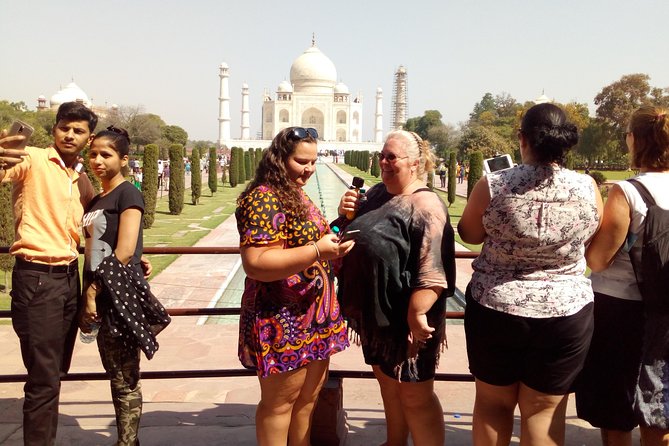
My favorite part is how the itinerary treats the big-ticket moments like the Taj Mahal. You get a sunrise-style visit and a guided walk that helps you understand what you are seeing instead of just posing for photos. The guide focus plus real-time coordination tools like WhatsApp updates mean you spend less time guessing and more time looking.
One thing to plan for: monument entry fees are not included for many stops, so your final spend depends on which sites you enter that day. If you want to keep costs tight, I suggest budgeting for Taj Mahal and other major sites upfront.
Key highlights worth aiming for

- Priority queue access to reduce line time at major sights
- Sunrise Taj Mahal timing so you see the mood shift before the biggest crush
- Onboard comfort with AC, water, snacks, and first-aid support
- Tight-but-not-rushed day flow across Delhi, Agra, and Jaipur
- On-the-spot flexibility if you want more time at the Taj or want to skip something
- Local lunch approach at family restaurants, not tourist-trap style stops
Why this Golden Triangle tour feels different in the real world
Golden Triangle means the classics, Delhi plus the Mughal masterpieces in Agra, then Jaipur’s royal architecture. What makes this tour work is the rhythm. You are not just jumping between landmarks, you are also getting context so the monuments connect into one story.
You also feel the difference in how logistics are handled. Pickup is built in, your guide speaks English, and you travel in an AC vehicle with comfort support onboard. That sounds basic, but on a 4-day loop through three big cities, it is the difference between enjoying each stop and counting the minutes until you can sit down again.
Finally, the tour is private. That matters. You are not stuck moving at a group pace that was set for someone else’s day.
You can also read our reviews of more tours and experiences in New Delhi.



Pickup, AC comfort, WiFi, and priority queue access
Let’s talk about the stuff that decides whether you have a good trip or a frustrating one. You start with pickup, then move city-to-city in an air-conditioned vehicle. Add onboard conveniences like WiFi, free water, and snacks, plus first-aid support, and you have the right setup for India travel where weather, traffic, and heat can hit hard.
The tour also leans on priority queue access. Translation: you spend less time standing still. In Delhi and at the Taj Mahal, that time you save does not just feel good, it gives you a better tour experience because the guide can keep the schedule moving.
One more practical win is communication. You receive WhatsApp updates and your guide can handle multilingual needs. Even if your day starts early, you are not left guessing where to go next.
Delhi day one: Qutub Minar, Lotus Temple, India Gate, Jama Masjid, and Old Delhi
Delhi is spread out in a way that can drain you if you try to do it solo. This day one plan strings together major sites with short transitions, so you keep momentum without feeling like you are sprinting every hour.
Qutub Minar, the 73-meter icon
Qutub Minar is Delhi’s tall monument, a UNESCO World Heritage tower tied to the start of the Delhi Sultanate era. At about an hour, you get time to take in the five-story structure and understand why it became such a reference point for later Islamic architecture in India.
Drawback to know: entry fees are not included here, so expect to pay. It is also popular, so dress smart and bring water for the walk and viewing time.
Lotus Temple: free, calm, and respectful
Then you shift from tower power to the Lotus Temple. It opened in 1986 and it is shaped like a lotus flower, built as a Baháʼí House of Worship that welcomes visitors of all faiths. With only about 30 minutes, you are not getting a long sit-down, but it is enough to understand the layout and take in the calm contrast to nearby traffic and crowds.
Good news: admission is free on this itinerary. Also, keep your behavior respectful. Even though you are touring, this is an active worship space.






India Gate, a war memorial that doubles as a hangout
India Gate is a classic stop for a reason. It honors soldiers of British India who died in various conflicts, and it also functions as a meeting point for families. The tour gives about 30 minutes, which is enough to see it, walk around the area, and get a feel for how locals use the space.
Admission is included here. That small detail matters because it trims what you need to budget for.
Parliament House quick look
Next is Parliament House, known as Sansad Bhavan. The itinerary keeps this stop short, about 5 minutes, which makes sense. You are mostly getting exterior views and the sense of the building’s design, plus the gardens around it.
Admission is not included. If this is not a priority for you, you can treat it as a quick photo and move on.
Jama Masjid: big Mughal scale, plan for time and attire
Jama Masjid is one of the largest mosques in India, built by Shah Jahan between 1650 and 1656. The guided hour helps you appreciate the Mughal architectural style and the sheer scale. This is one of those sites where your guide’s storytelling helps you connect details you would otherwise miss.
Admission is not included here. Also, plan your clothing. Even if you are only inside briefly, modest attire will make the experience smoother.
Agrasen Ki Baoli: a quieter stepwell break
After the big-sky monuments, you get a more atmospheric stop at Agrasen Ki Baoli, a long historic stepwell protected by India’s Archaeological Survey. The tour gives about 15 minutes, which is short, but stepwells reward quick attention because you can spot how the structure was used to capture and manage water.
Admission is not included. If you only have a few minutes, focus on the geometry and the conservation logic, not only photos.
Humayun’s Tomb: Mughal precursor vibes
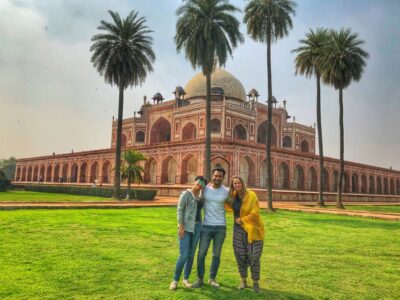
Humayun’s Tomb takes you back into UNESCO territory and Mughal family drama. Commissioned in 1558 by Empress Bega Begum, it is often called a precursor to the Taj Mahal. At about an hour, you can see how the gardens and tomb layout set the stage for later masterpieces.
Admission is not included here, but the time is worth it. This is a strong stop for understanding how Mughal royal architecture evolved.
Chandni Chowk: Old Delhi markets without losing your bearings
Finally, you land in Chandni Chowk. This is old Delhi in motion: narrow lanes, spice vendors, jewelry shops, and sweet sellers. The tour gives about an hour, and admission is free on this itinerary.
Do not try to shop like you have all day. Instead, treat it like a sensory map. Buy a small snack, notice what locals are actually buying, then let your guide help you pick a safe, efficient route.
The Agra transition: lunch and the run-up to sunrise
Agra comes after a modern drive. You eat lunch at a selected local restaurant before departing Delhi via the Yamuna Expressway Link Road for a comfortable drive of about 3 hours to your Agra hotel.
The value here is you avoid the usual trap of random food stops. This plan is designed around authentic Mughlai lunch at local family restaurants, not the kind of place built for quick tourist group turnover.
You check into your hotel and get the evening at your own pace. That matters because Agra days can be intense. Having downtime lets you recover before the big morning.
Taj Mahal at sunrise: what the timing does for your eyes
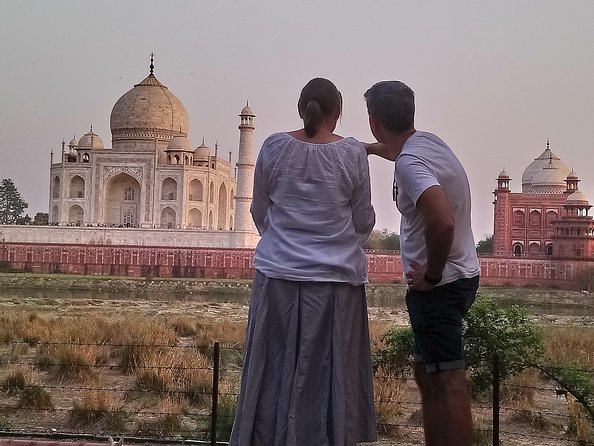
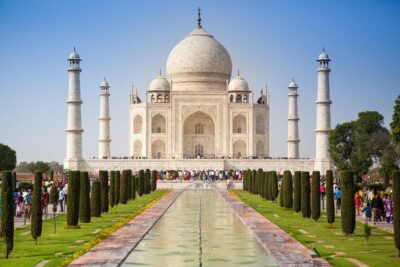
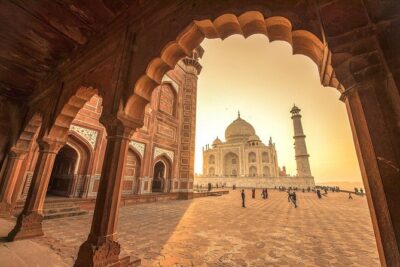
The Taj Mahal is the obvious star, but sunrise changes the experience. The plan is built around watching the sunrise paint the marble before the main crowds arrive. Your guide then leads a detailed about 2-hour tour inside.
That 2-hour inside visit is where the tour earns its keep. You are not just looking at the Taj as a postcard, you are walking through the details with someone who helps you understand why it looks the way it does and what the story behind it means.
Admission for the Taj Mahal is not included on this itinerary. So budget for it.
Practical tip for the sunrise style start: keep your layers light. Early mornings can be cool at first, then warm quickly. Comfortable shoes help too, since you will be walking.
Agra Fort and Itmad-ud-Daula: the Taj story continues
After the Taj, you shift from the iconic white marble mood to the fortified power side of the Mughal world.
Agra Fort is a UNESCO site with royal palaces, ornate balconies, and Mughal gardens. The guided visit is about an hour. This is where you learn that Mughal rule was not only about monuments, it was also about daily governance and court life, all built into those walls.
Admission is not included. Still, this is a great companion to the Taj because it adds context.
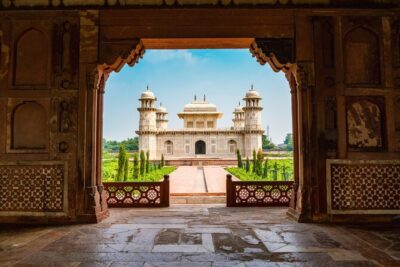
Then you visit Itmad-ud-Daula, often called the Baby Taj. Built between 1622 and 1628, it shows an architectural transition that later inspired the Taj Mahal, including the red sandstone to white marble shift. The tour gives about 30 minutes, which is enough time if your guide keeps you focused on the details.
Admission is not included. If you want a faster day, you can treat this as your breather stop after longer Taj and fort viewing.
Chand Baori in Abhaneri: stepwell engineering that surprises people
Before Jaipur, you stop at Chand Baori in Abhaneri. This is a massive stepwell from the 8th-9th century with an impressive 3,500 steps descending to the bottom water area.
The itinerary keeps it to about 30 minutes, which makes sense because you can get the key visual effect quickly. The value is that you are not only touring royal structures. You are seeing ancient water conservation engineering, a huge part of how people survived in dry seasons.
Admission is not included. If it is hot, wear breathable clothes and bring a hat.
Jaipur day two: Amber Fort, Jal Mahal photos, City Palace, Jantar Mantar, and Hawa Mahal
Jaipur is where this trip turns from Mughal grandeur to Rajput royal design. The day balances large forts, palaces, and UNESCO science architecture.
Amber Fort: the big one, with real time to see it
Amber Fort is the main draw, former capital of Rajasthan until 1728. Built by Raja Man Singh I, it offers Rajput architecture with artistic palaces, courtyards, and intricate details on a hilltop.
The tour gives about 2 hours, and admission is free on this itinerary. That combination is a real value win.
Practical note: you will be walking. Wear good shoes because you can cover a surprising amount of ground even if the stop feels short on paper.
Jal Mahal: a quick lake-side photo moment
Then comes Jal Mahal, the palace that appears to float on Man Sagar Lake. It is a photo stop, about 30 minutes, with admission not included.
This is one of those stops that can be either great or wasted depending on your expectations. If you treat it as a scenic pause and picture break, it works.
City Palace: the palace complex that explains Jaipur’s role
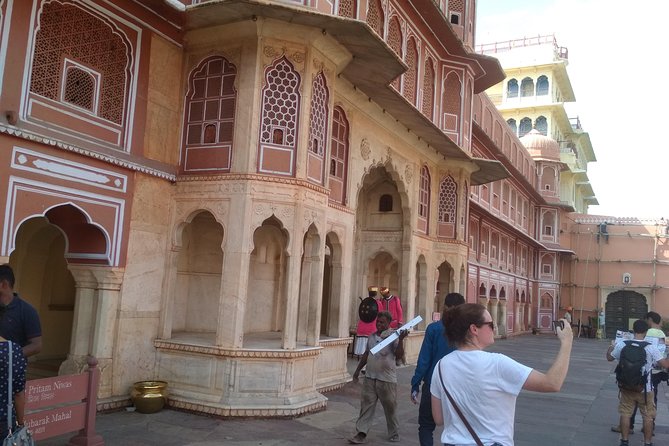
City Palace is where you get the administrative and ceremonial side of Jaipur’s Maharajas. The complex was built in 1721, and the tour gives about an hour.
Admission is not included. With the right guide, City Palace helps you connect why Jaipur’s rulers invested in both public architecture and cultural ceremony.
Jantar Mantar: UNESCO astronomy you can actually look at
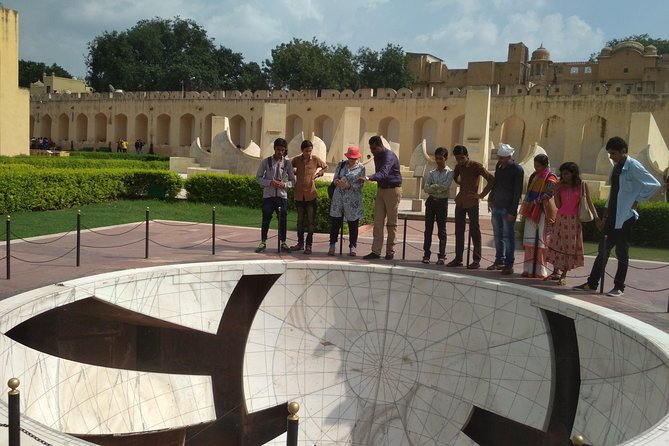
Jantar Mantar in Jaipur is UNESCO, built in 1734 by Sawai Jai Singh II. It contains nineteen massive astronomical instruments designed for naked-eye observation.
The tour gives about an hour and that is enough to understand the concept, even if you do not memorize the math. Admission is not included.
Hawa Mahal: quick but iconic
Hawa Mahal, the Palace of Wind, is Jaipur’s most recognizable landmark. Built in 1799 by Sawai Pratap Singh, it is a five-story pyramidal structure made from red and pink sandstone, famous for how it was designed for airflow and street-side viewing.
The itinerary keeps it about 15 minutes, admission not included. Think of it as a quick snapshot and orientation point, not your whole Jaipur experience.
How much time you get at each stop, and how to use it
This tour is designed around fixed time blocks. For you, that means the best strategy is to set expectations before you arrive.
If you care about the Taj Mahal and want more time, you can customize on the spot, including adjusting how long you stay. If you want fewer stops and more time in one place, the guide can help you shape the day.
Where the time blocks help most is when you travel with a guide who keeps the story moving. Without that, Delhi and Agra can turn into a blur of monuments. With it, each site becomes a chapter.
A small drawback: places with not-included admission still take effort to enter and manage payment on the day. If you hate handling tickets and want everything pre-paid, you might feel the friction. On the other hand, you can plan for it, budget for it, and keep the pace.
Price and value: what $250 covers, and what you should budget extra
At $250 per person, the big question is whether this is good value for the time you get. Here is the honest math from the tour’s setup.
Your core costs covered include:
- An air-conditioned vehicle
- Breakfast with accommodation (so your overnight needs are handled)
- An English-speaking local guide
- State tax, toll, parking, fuel, and driver services
What is typically extra is:
- Entry fees and other monument charges, since admission is listed as not included for many stops
Some stops are free or admission included, like Lotus Temple and Chandni Chowk being free, and India Gate being included. Amber Fort is also listed as free. But the major ticket items, especially Taj Mahal, are not included.
So you should treat $250 as your transportation plus guiding plus overnight support cost, not a full all-in ticket bundle. When you budget for monument entry fees separately, the total experience usually feels more fair, especially because you gain priority queue access and guided tours that help you understand what you are paying to see.
Who this tour fits best, and who might want a different style
I think this tour is a strong fit if you want a classic Golden Triangle route but with smoother handling. If you like clear scheduling, early timing at the Taj, and you want a guide to connect history and architecture, this works well.
It is also a good pick for couples and families who do not want to manage transit between multiple cities. The private setup means your group pace sets the tone, not a random crowd.
If you are the kind of traveler who prefers long, unscheduled wandering time in each city, this route might feel structured. You do have on-the-spot flexibility, but the foundation is still a planned itinerary.
One service detail that shows up in positive feedback is the care factor. Guides and drivers have been praised for being warm and professional, with examples like Satish being named as a trip guide, and drivers such as Rahman and Raja being noted for comfort and staying on top of needs like water and getting you safely through transfer points.
Should you book this Golden Triangle Tour?
Book it if you want the Golden Triangle highlights with priority queue access, an early-style Taj visit, and a guide who turns monuments into something you actually understand. The combination of AC comfort, small-group private pacing, and practical updates makes it easier to enjoy big sights without constant logistics stress.
Skip or adjust expectations if you want fully pre-paid monument tickets, since many admissions are not included. If you are okay budgeting for entry fees and you enjoy guided time, this tour is a solid value way to cover Delhi, Agra, and Jaipur in about 4 days.
FAQ
How much does the Golden Triangle Tour cost?
The price is $250.00 per person.
How long is the tour?
The tour duration is listed as 4 days (approximately).
Is pickup included?
Yes, pickup is offered.
Is this tour private?
Yes. It is a private tour/activity, and only your group participates.
Is a mobile ticket provided?
Yes, mobile ticket is included.
What’s included in the price?
Included items are an air-conditioned vehicle, breakfast with accommodation, an English speaking local guide, and state tax, toll, parking, fuel, and driver services.
Are monument entry fees included?
Not generally. Entry fees at monuments are listed as not included. Some stops are free or listed as included on the itinerary, such as Lotus Temple and Chandni Chowk (free), and India Gate (admission included).
Can the schedule be changed during the tour?
Yes. The tour notes that you can customize on the spot, including getting more time at the Taj Mahal or skipping something.
Do I need good weather for the tour?
Yes. The experience requires good weather. If it is canceled due to poor weather, you are offered a different date or a full refund.
Is there a typical booking lead time?
On average, this tour is booked about 28 days in advance.
More Tours in New Delhi
More Tour Reviews in New Delhi
Not for you? Here's more nearby things to do in New Delhi we have reviewed










More Delhi City Tours to consider.
 ★ 5.0Old & New Delhi City Tour – Half or Full Day Options AvailableTickets from $384,811 traveller reviews
 ★ 5.0Same Day Taj Mahal, Agra Fort & Baby Taj Tour from Delhi by CarTickets from $624,304 traveller reviews
 ★ 5.0Taj Mahal Day Tour from Delhi by Superfast Train – TOP RATED TOURTickets from $1004,166 traveller reviews
 ★ 4.9Old and New Delhi Private Full or Half-Day TourTickets from $23,776 traveller reviews
 ★ 5.0Full Day Taj Mahal, Agra Fort & Baby Taj Tour from Delhi by CarTickets from $623,647 traveller reviews
 ★ 4.9From Delhi: Taj Mahal & Agra Private Day Trip with TransfersTickets from $43,181 traveller reviews
 ★ 5.0Taj Mahal Tour from Delhi by Express Train (Viator Award Winner)Tickets from $752,849 traveller reviews
 ★ 5.0All Inclusive Private Taj Mahal Luxury Tour from Delhi by CarTickets from $622,564 traveller reviews
More useful Delhi routes