
Review · DELHI CITY TOURS
Old and New Delhi City Tour – Half or Full Day Options Available
Old Delhi and New Delhi in one smooth plan. I like the private air-conditioned car for door-to-door comfort, and I really like the tuk-tuk style ride through Old Delhi bazaars with a guide talking you through what you are seeing. One thing to plan for is that monument entrance fees are not included, listed as $25 per person.
This is built for people who feel Delhi is too big to self-tour. You choose your pickup time and get collected from Delhi, Noida, Gurugram, Ghaziabad, or Faridabad, then you move stop to stop without working out routes on your own.
Half-day or full-day options (about 4 to 8 hours) keep it flexible. And on top of the sights, the guide experience matters a lot, with names like Aman, Javed Khan, Faez, and Javid showing up in the feedback for clear explanations and practical help like picture-taking.
Key highlights before you go

- Door-to-door pickup in Delhi and NCR with pickup time you choose
- Old Delhi rickshaw or tuk-tuk ride (if you pick that option) starting near Sunheri Masjid
- A tight Old to New Delhi mix so you see both Mughal-era landmarks and modern power centers
- Multiple free-entry stops like Khari Baoli, Gurudwara Bangla Sahib, Connaught Place, Agrasen ki Baoli, and Lotus Temple areas
- Guide support across every stop, plus mineral water and all taxes included
- Monday routing change if Lotus Temple is closed, you will go to Qutub Minar instead
Delhi without the stress: how this Old and New Delhi mix works

Delhi works best when you plan it by clusters. Old Delhi and New Delhi feel like different cities, with different vibes and different traffic patterns. This tour stitches them together in one run so you spend less time figuring out logistics and more time seeing.
Your day starts with pickup flexibility. You can be collected from basically anywhere in Delhi and also from the nearby NCR cities listed, and you can decide the pickup time based on what you need. That matters because Delhi mornings can run on a schedule that changes with your hotel, your energy, and your line of sight to traffic.
Then you ride in a private, air-conditioned vehicle with a driver. That is a big deal in a city where the distance between stops can eat your day fast. The guide stays with you at the places you are visiting, not just at the start.
Half-day or full-day planning is also useful. If you only have a short window, you can still hit major landmarks without trying to stack too much.
You can also read our reviews of more city tours in New Delhi


Price and real value: what the $1.96 rate means for your budget
The headline price shown is $1.96 per person. That low number is only part of the story, because the tour does not include monument entrance fees.
The tour lists monument entrance fees as $25 per person. So your likely total budget is the tour price plus that entrance-fee line item, assuming you visit the paid monuments on the route. The itinerary also includes several stops labeled as free admission, so not every stop necessarily costs extra.
This is where the value comes from. The tour price covers the heavy stuff that is hard to self-plan: pickup and drop, a private air-conditioned car, a live guide service at the stops, mineral water bottles, and all taxes, fuel charges, tolls, and GST. In practical terms, you are paying for time saved and for not having to negotiate each leg of the day.
Food is not included. That means you should budget for meals and drinks separately. In return, you get a guide who can point you toward options during the Connaught Place segment, including vegetarian and dietary-specific choices.
Pickup and comfort: door-to-door timing in an air-conditioned car
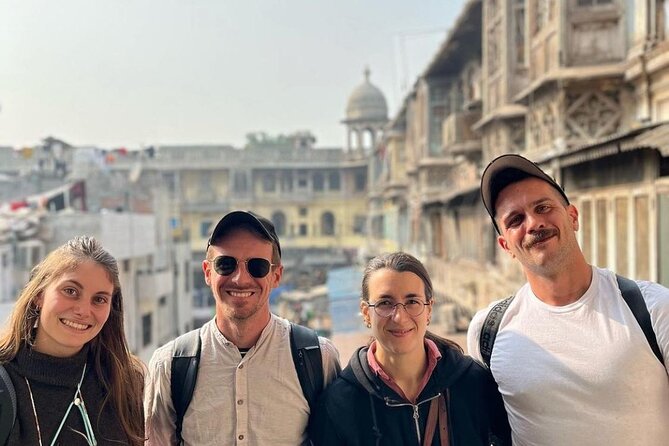
This tour is private, meaning only your group participates. Vehicle size is matched to group size: a four-seater sedan for one to two people, a six-seater wagon for three to five people, and a twelve-seater van for six to twelve people, with a bus for larger groups sized to the number of adults.
That matters because Delhi driving can be tiring. A comfortable ride helps, especially on longer full-day schedules when you are moving across both Old Delhi and New Delhi.
You also get the option of pickup from multiple areas: Delhi, Noida, Gurugram, Ghaziabad, and Faridabad. You can be picked up from any location you choose within those areas, and you set the pickup time you want. If you are flying in and your arrival time varies, this is the kind of flexibility you care about.
At the end, you also get a free ride back to where you want to go within the same areas. The idea is simple: the day ends the way it started, with you not stuck figuring out transport.
Old Delhi first stop: Jama Masjid and the Sunheri Masjid tuk-tuk ride
Old Delhi is the part of Delhi where you feel the city’s layers. The tour starts with Jama Masjid, the large Mughal-era mosque in Old Delhi.
Jama Masjid gets about one hour on the itinerary, and monument admission is not included for this stop. Still, you are not just parking and walking alone. You go with a guide who helps you understand what you are seeing, including the fact that Jama Masjid was built in 1656 by Shah Jahan.
Right alongside this mosque visit, the experience adds a local transport moment. You meet your guide at Sunheri Masjid, then hop into your tuk-tuk style ride past the colourful, busy bazaars of Old Delhi. The point here is not the ride itself, it is the explanation. A guide can connect the bazaars to how locals use them, which makes the streets feel like a system instead of just a photo backdrop.
Possible drawback to note: you will be doing a lot of walking around major landmarks plus a ride through crowded streets. If you are sensitive to dense areas or prefer slower pacing, you might want to plan the half-day option.
Khari Baoli spice market: the sensory stop you will remember

Next up is Khari Baoli, listed around 30 minutes, and admission is free. This is the famous spice market in the Chandni Chowk area.
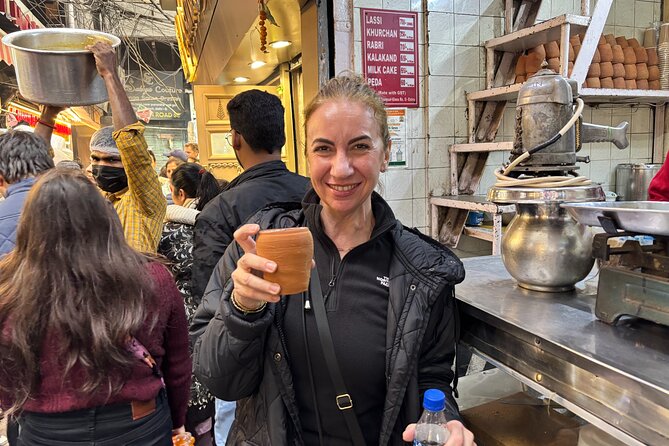
What makes Khari Baoli special is that it hits your senses immediately. The itinerary is very direct about it: let the Indian spices hit your nose and your eyes, and learn some interesting facts and uses of spices. Even if you are not planning to shop heavily, it is a fast way to understand why people come here.
Because the market stop is short, it is manageable in a busy day. If you pick up some spices or small gifts, you will have the guide nearby to help you navigate what is what. Just remember that food and drinks are not included elsewhere on the day, so you may want water in your bag if you know you get thirsty.
More New Delhi tours and experiences for the shortlist






Gurudwara Bangla Sahib: a calmer reset in the middle of the route
After the spice market, the tour heads to Gurudwara Bangla Sahib. This is about one hour and admission is free.
This stop is a welcome change of pace because you shift from commercial chaos into a temple setting. The itinerary notes it is a prominent Sikh temple built in the 18th century with immense spiritual significance. That mix of spirituality and architecture gives your day balance.
The practical value is that it breaks up the day nicely. If you are doing the full-day option, this is where you can slow your pace and recharge before the more political and monument-heavy stretches.
Red Fort and the power belt: seeing the city’s governance landmarks
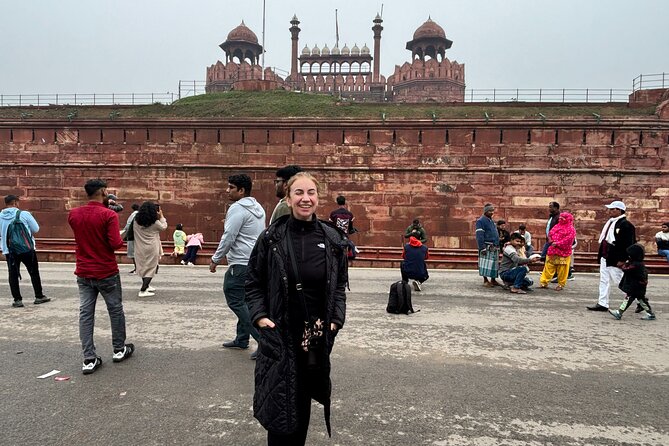
After Old Delhi landmarks and the calm of Gurudwara Bangla Sahib, the route turns toward New Delhi’s big institutions.
You will pass by and also stop around major symbols like the Red Fort, Parliament House, and the President House. The itinerary specifically frames the Red Fort as being built by Shah Jahan between 1639 and 1648, serving as the main Mughal residence for nearly 200 years.
It also includes a fascinating memorial detail: the 1921 Tomb of the Unknown Soldier area, with names of 13,300 Indian army servicemen carved on the wall who died during the First World War. Even if you only view it as a quick stop, it adds weight to the day beyond architecture.
Then you reach Parliament House, where the Lok Sabha and Rajya Sabha sit, and President House, which started life as the Viceroy’s House and later became Rashtrapati Bhavan. These are important stops because they show how Delhi is not only temples and forts, it is also the working heart of India’s government.
The time at some of these stops is not fully spelled out in your plan, but the sequence is clear. Expect photo opportunities and short guided context rather than long museum-style visits.
Connaught Place break: a smart pause with food guidance

Connaught Place gets about 45 minutes, and admission is free. This is one of the places where your guide can shape your day in a practical way.
The itinerary notes that your guide will recommend restaurants in Delhi, including authentic Mughlai cuisine and international dishes. It also points out that vegetarian and dietary-specific options are available.
This is a good time to reset because you are between the heavier historical moments. If you plan a full-day tour, this is also where you can choose your meal strategy. You have a guide, you have location context, and you have a central area that is easier for you to get food nearby without extra planning.
Because food and drinks are not included, treating this segment as your meal window is the easiest way to make the day work.
Humayun’s Tomb and Agrasen Ki Baoli: two very different stories
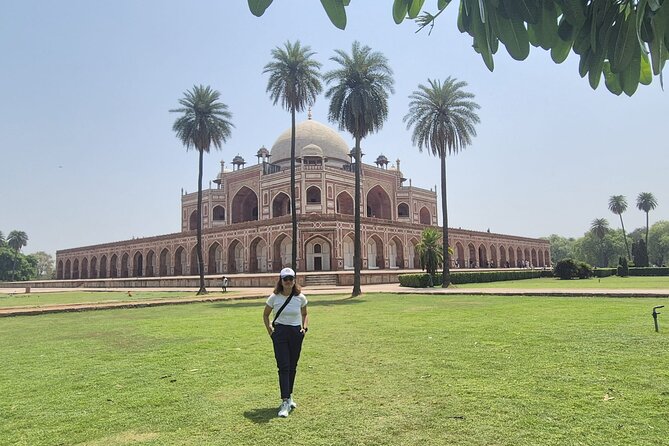
Humayun’s Tomb is next, with about one hour on the itinerary. Admission ticket is not included.
The tour frames it as the first garden tomb of India, and it notes that it later inspired the Taj Mahal. That one fact helps you see it with more meaning than just a beautiful structure. It is a landmark for the evolution of Indian Mughal tomb garden design, at least as far as the itinerary explains.
Then the route continues to Agrasen Ki Baoli, about 30 minutes, with free admission listed. Here the itinerary takes a more local, folklore angle. Agrasen ki Baoli is famous for urban legends of hauntings and incidents, with many people believing it is haunted.
That makes it a fun contrast after Humayun’s Tomb. One stop is formal imperial architecture tied to a lineage of style. The next stop is an old stepwell-like structure surrounded by stories and supernatural chatter. Even if you are not into ghost lore, it gives you a snapshot of how people narrate places in Delhi.
Lotus Temple (or Qutub Minar on Mondays): modern design and a backup plan
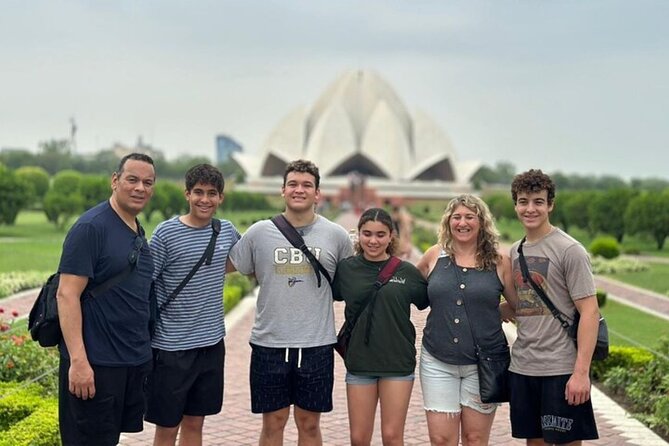
Lotus Temple is listed for about 30 minutes with free admission. The itinerary describes it as the Bahai House of Worship, designed in the shape of a lotus, built in 1986 by Fariborz Sahba, and created as a place where people can pray.
This stop is valuable because it gives you the modern Delhi perspective. By the time you reach Lotus Temple, you have already seen a cluster of older religious and political sites, and this one shows a different architectural language.
Important scheduling note: Lotus Temple is closed on Monday. If your day falls on a Monday, the tour takes you to Qutub Minar instead. That is one of the better planning details here, because it avoids wasting your time with a shut door.
Half-day vs full-day: how to choose your best length
You can select half-day or full-day options, with the total duration listed as about 4 to 8 hours.
If you want the most efficient taste of the essentials, half-day often makes sense. You can focus on a shorter selection of the main sites, especially Old Delhi highlights plus one New Delhi anchor.
If you want a more relaxed pacing and room for the mid-day break at Connaught Place, go full-day. The full run gives you the jump between clusters: Jama Masjid, Khari Baoli, Gurudwara Bangla Sahib, the government monuments, Connaught Place, Humayun’s Tomb, Agrasen Ki Baoli, and Lotus Temple or Qutub Minar.
The real deciding factor is how much travel time you want to spend in the car and how much walking you are okay with. Delhi is manageable if you pick the right time window for your energy.
Guides who make it click: what to expect from the human side
A tour can only be as good as the guide. In the feedback, names like Aman, Javed Khan, Faez, and Javid come up for a reason: they help with explanation and they help with logistics in small ways that matter.
You can expect your guide to handle the storytelling at each stop, including historical context at major landmarks and practical context around markets and local areas. You can also expect picture support and help communicating, which sounds small until you realize how often language barriers slow down a day.
If you care about understanding why a place matters, this guide-led approach is part of the value. You are not just collecting landmarks. You are getting the threads that connect them.
Things to plan for: IDs, entrance fees, and food
Before you go, remember the tour requires all travelers to carry valid photo ID, in your mobile, for monument entry. Bring it, even if you normally travel light.
Entrance fees are also the big financial detail. Monument entrance tickets are listed as $25 per person, and the stops marked as admission not included are the ones likely to trigger those fees. Several other stops are labeled free admission, so you may not pay for every stop, but you should budget for the monument fee line item.
Finally, food and drinks are not included. That makes the Connaught Place segment more important, because it is when the guide recommends where to eat. If you have specific dietary needs, lean on the guide at that point since the tour notes vegetarian and dietary-specific options.
Cancellation is free, as long as you cancel up to 24 hours in advance of the experience start time. If your schedule might shift, this gives you a safety net.
Should you book this Old and New Delhi tour?
If your priority is seeing the key landmarks of both Old Delhi and New Delhi without the stress of organizing transport between far-apart areas, I think this tour is a strong pick. The private, air-conditioned vehicle plus door-to-door pickup is exactly what you want when Delhi traffic is not the day you want to experiment.
I would especially recommend it if you want a guided experience that includes both big architecture and smaller human-scale stops like Khari Baoli and the stepwell stories at Agrasen Ki Baoli. The guide-led tuk-tuk style ride through Old Delhi bazaars is also the kind of moment that makes the whole day feel connected.
Skip it or consider the half-day version if you dislike crowds or you want a slower, more independent pace. Also budget for monument entrance fees, because that is the only major add-on cost clearly stated.
For most people trying to get oriented fast, this tour does the job. It gives you a practical path across the city, with enough guidance to make each stop make sense.
More City Tours in New Delhi


More Tours in New Delhi




More Tour Reviews in New Delhi

Not for you? Here's more nearby things to do in New Delhi we have reviewed










More Delhi City Tours to consider.
 ★ 5.0Old & New Delhi City Tour – Half or Full Day Options AvailableTickets from $384,811 traveller reviews
 ★ 5.0Same Day Taj Mahal, Agra Fort & Baby Taj Tour from Delhi by CarTickets from $624,304 traveller reviews
 ★ 5.0Taj Mahal Day Tour from Delhi by Superfast Train – TOP RATED TOURTickets from $1004,166 traveller reviews
 ★ 4.9Old and New Delhi Private Full or Half-Day TourTickets from $23,776 traveller reviews
 ★ 5.0Full Day Taj Mahal, Agra Fort & Baby Taj Tour from Delhi by CarTickets from $623,647 traveller reviews
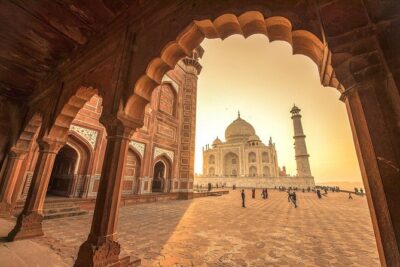 ★ 4.9From Delhi: Taj Mahal & Agra Private Day Trip with TransfersTickets from $43,181 traveller reviews
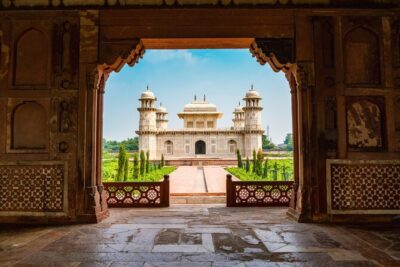 ★ 5.0Taj Mahal Tour from Delhi by Express Train (Viator Award Winner)Tickets from $752,849 traveller reviews
 ★ 5.0All Inclusive Private Taj Mahal Luxury Tour from Delhi by CarTickets from $622,564 traveller reviews
More useful Delhi routes