
Review · DELHI CITY TOURS
Private Old and New Delhi Full or Half-Day Guided Tour by Car
Old Delhi hits you fast, then slows just enough to make sense. What makes this tour special is the private air-conditioned car plus a guide who connects the dots between Mughal-era sites and New Delhi’s grand landmarks. I like the tight, top-sights route that moves efficiently between Old and New Delhi, and I like the comfort of round-trip pickup and drop-off. One thing to keep in mind is that you will spend time in busy areas like Chandni Chowk, so you may want comfortable shoes and a patient attitude.
What really stands out is the guide experience. In recent reviews, guides like Ashok Dhakrey and Nikhil were praised for being informative and keeping the day relaxed, not rushed. The main drawback is simple: it is an 8-hour day, so if you hate long sightseeing stretches, you may prefer a shorter half-day option.
Key highlights you’ll feel on the ground
- Door-to-door pickup from Delhi, Noida, Gurugram, Ghaziabad, and Faridabad, with drop-off at your choice.
- Private vehicle by group size, from a sedan for 1 to 2 people up to a mini van for 6 to 8, or a larger van for bigger groups.
- A guide who explains what you’re seeing, not just where to stand for photos.
- Old Delhi basics done well, including Jama Masjid and Chandni Chowk, plus a market ride in a tuk-tuk style.
- Big-ticket monuments like Humayun’s Tomb and Qutub Minar included on the route.
- Temple and mosque dress code matters, especially at Lotus Temple and Jama Masjid.
Price and logistics: how this tour stacks up
This tour is priced around $17.11 per person, which is a big part of the appeal if you’re trying to cover a lot of Delhi in one day without dealing with separate tickets, separate vehicles, or confusing transfers. The value is strongest when you actually use what is included: round-trip pickup and drop-off, transport in an air-conditioned private car, and a private guide.
That said, the fine print matters. Monument entrance fees are included only if you pick the option for monument tickets, while lunch is included only if you select the lunch option. Even when the tour covers many site entries, it is still smart to plan for small extras like drinks with lunch and optional tips.
The duration is about 8 hours, so you get a full-sight day, not a quick hit-and-run. The pacing is built around visiting major Old Delhi and New Delhi highlights in a single circuit. For many people, that is exactly what you want in Delhi, where distances can be deceptive and traffic can turn plans upside down.
You can also read our reviews of more guided tours in New Delhi



The route that links Old Delhi and New Delhi in one day
You start with pickup anywhere in the Delhi region that covers Delhi, Noida, Gurugram, Ghaziabad, and Faridabad. Then the day moves through the two faces of the city, with Mughal landmarks and busy bazaars in Old Delhi, then open, planned monuments in New Delhi.
Your stops follow a logical chain:
- Jama Masjid
- A Mughal emperors residential palace built by Shah Jahan (the listing describes it but does not name it)
- Chandni Chowk (including a short tuk-tuk style market ride)
- Agrasen Ki Baoli
- Humayun’s Tomb
- Qutub Minar
- India Gate
- Government-landmark area including Old Parliament Building and Rashtrapati Bhavan (both tied to Edwin Lutyens in the tour description)
- Lotus Temple (with a Monday swap to Gurudwara Bangla Sahib)
This is a great format for first-time visitors who want the highlights without needing to build a mini itinerary. It is also private, meaning you only share the experience with your own group.
Jama Masjid: the mega mosque moment (and what to expect)
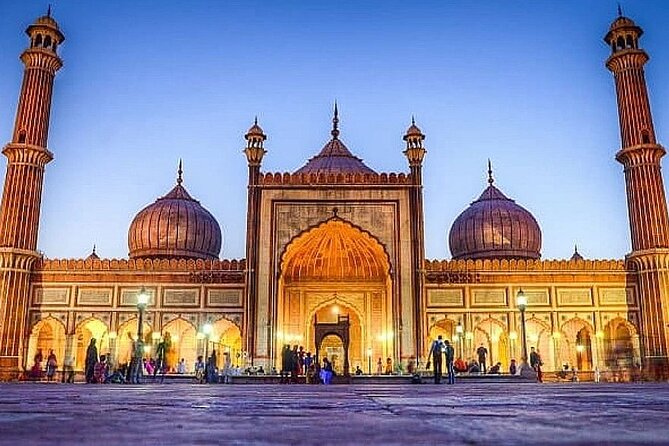
The tour begins at Jama Masjid, described as one of India’s most beautiful and largest mosques, built in the 17th century by Shah Jahan. The scale is the point here. The mosque complex can accommodate a huge number of people for prayer, and when you’re standing there, it becomes obvious why this is a headline sight.
Plan for the practical side. Mosques are active religious spaces, so you will want to follow the tour’s stated dress code: upper clothing should cover shoulders, chest, navel, and upper arms, and lower clothing should be below knee length. Also carry a valid photo identity because monuments may require checks.
Time is about 30 minutes. That’s enough to see the architecture, soak in the atmosphere, and understand the site with your guide’s commentary without feeling like you’re stuck in one spot all day.
The Mughal palace stop: why the quick glance still matters
Next is a Mughal emperors residential palace built by Shah Jahan in the 17th century. The itinerary text focuses on the builder and era, so you should think of this stop as a chance to connect the dots between Shah Jahan’s projects and the visual language of Mughal power.
This is one of those stops that can be brief and still useful, because your guide’s explanation is what makes it click. Even if you only get a short look, you’ll likely walk away with a clearer sense of what Old Delhi was built to represent.
Chandni Chowk and the market ride: sensory overload, but controlled
Then you hit Chandni Chowk, labeled as the oldest and busiest market in Old Delhi. This is where Delhi changes texture. You trade stone monuments for color, sound, and constant movement.
The tour includes a comfortable tuk-tuk style ride through the bazaars and spice markets, plus an approximately 1-hour slot at the market. That matters because trying to navigate Chandni Chowk on your own can be a lot, fast. With a guide and a vehicle, you can focus on the experience instead of dodging traffic and figuring out the best way through.
Admission here is free on the itinerary. Still, keep your expectations realistic: markets are not museum quiet. If you like to browse, you’ll have time. If you prefer structured sightseeing, you can use your hour to pick a few key stalls and then let the guide steer you.
You can also read our reviews of more private tours in New Delhi





Agrasen Ki Baoli: the spooky folklore stop
Agrasen Ki Baoli is next, with about 30 minutes on the schedule. This step is more than a photo stop because it comes with local folklore. The itinerary notes urban legends of haunted events and supernatural activity tied to the baoli.
In practice, this stop is a breather between big, crowded monuments. Even if you’re not trying to chase ghost stories, the site itself is an urban stepwell concept, and you’ll likely enjoy it more if you listen to what your guide tells you about why these legends stick around.
Humayun’s Tomb: where architecture earns its time
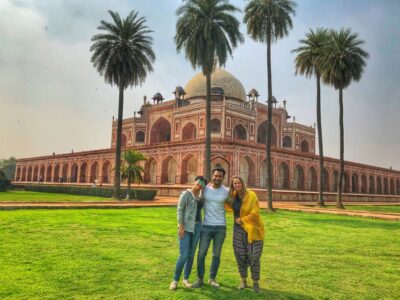
Next comes Humayun’s Tomb, a ticketed stop with about 1 hour. This is one of those monuments that makes the city feel more than just busy streets. Your guide can explain the importance of the site, including the key detail that it was built in the 16th century by Humayun’s wife, Haji Begum, and it is tied to what the itinerary calls the first Mughal architecture.
One hour is a good amount of time. You get enough pacing to move around, spot details, and take in the setting without rushing. If you are tired from market time, this stop gives you structured, sit-and-look time.
Qutub Minar: India’s tallest minaret, in plain sight
Then you reach Qutub Minar, listed as India’s tallest minaret. The itinerary states that construction began by Qutubuddin Aibak to commemorate victory, which is why it’s sometimes called the Victory Tower.
Plan for about 1 hour here. This is a great “big architecture” stop. Even if you don’t know much about the period, you can appreciate the vertical drama quickly. Your guide’s job is to turn that first impression into understanding, like how the site fits into the broader Delhi story.
Admission is listed as included. Still, bring your photo identity since the tour notes checks at monuments.
India Gate and the Lutyens-style government district
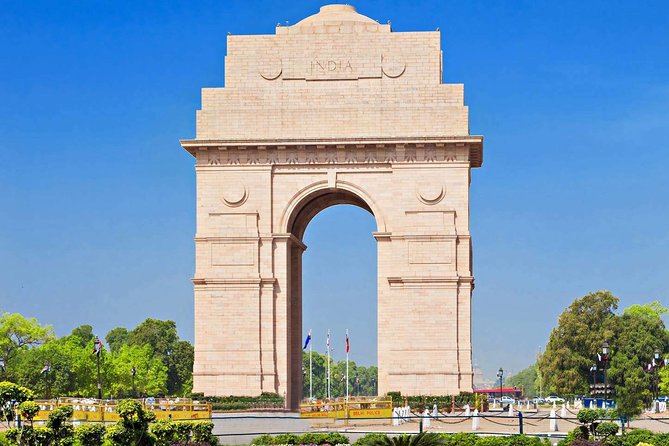
After the Mughal-era highlights, the tour shifts to New Delhi’s major landmarks. India Gate comes first, with around 15 minutes on the schedule. It is described as inspired by the Arc de Triomphe in Paris, built in 1931, and originally known as the All India War Memorial for 90,000 Indian soldiers.
Then you move into the government area for the Old Parliament Building and Rashtrapati Bhavan. The itinerary notes that Delhi became capital in 1911, and architects Edwin Lutyens and Herbert Baker were responsible for settling Delhi’s administration core. For Rashtrapati Bhavan, it specifically points to Edwin Lutyens.
These stops are shorter, but they are useful. If this is your first visit, they help you see the planning side of the city, not just the older quarters. If you have limited time, it is smart to get them in while the route is already arranged.
Lotus Temple: your calm finale, with a key Monday rule
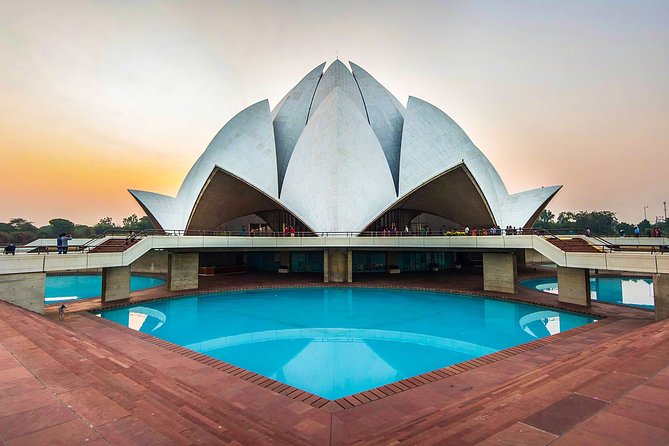
The last listed stop is the Lotus Temple, a Baha’i place of worship near New Delhi. The itinerary emphasizes that there are no idols and no religious rituals in the way you might expect. What you can take from this stop is that it is a different kind of spiritual space, and the architecture is the headline.
Time is about 30 minutes, and admission is listed as included. One important rule: the tour notes that Lotus Temple is closed every Monday, so on Mondays you visit Gurdwara Bangla Sahib instead. Before you go, check what day of the week it is for your tour date, because this affects the final stop.
Dress code again matters here. Follow the shoulder and lower-body coverage rules, and you’ll avoid stress at entry.
Comfort details that actually help on an 8-hour day
This is a private tour by design, so you get a vehicle that matches your group size:
- 1 to 2 people: four-seater sedan car
- 3 to 5 people: six-seater car
- 6 to 8 people: ten-seater mini van
- 9 to 12 people: fifteen-seater van
That matters because it keeps the day comfortable and avoids the squeeze factor that can happen with shared transportation. The vehicle is air-conditioned, and the itinerary also notes all tolls, fuel, parking, and taxes are covered.
You also get complementary mineral water bottles, which is a small inclusion that helps more than it sounds like. Delhi heat can be real, and even in mild weather, having water ready is the difference between powering through and feeling cranky.
Guide quality: why Nikhil and Ashok Dhakrey get name checks
The reviews attached to this experience highlight a consistent theme: guides are friendly and informative, and they keep the day relaxed. Specific names came up, including Nikhil, praised for being super informative and relaxed, and Ashok Dhakrey, praised for a great overall experience and for capturing the city’s history and energy.
For you, that means the tour is not just a checklist. A good guide helps you understand why a place matters, what to notice, and how to move efficiently. And in Delhi, efficiency is peace of mind. When you know what you’re looking at, it’s easier to enjoy every stop instead of feeling like you’re hustling from one landmark to the next.
Packing and arrival checklist (so you do not lose time)
Here’s what you should plan for based on the tour rules and how monument entry usually works:
- Bring a valid photo identity for checks at monuments.
- Wear clothing that follows the temple and mosque dress code: shoulders covered, chest and upper arms covered, and lower wear at least below knee.
- Carry modest layers if you tend to get cold in air-conditioned vehicles, but keep it easy to adjust quickly for entries.
- Wear comfortable shoes for time spent in Old Delhi market areas.
Also, you might see Gurudwara Bangla Sahib instead of Lotus Temple if your visit is Monday. If you are the type who likes to plan photos and expectations, check the day before you pack.
Who this private Old and New Delhi tour fits best
This tour is ideal if you want:
- A first-time Delhi highlights circuit
- A private experience with pickup and drop-off
- A guide to explain Old Delhi and New Delhi contrasts in one day
- Comfortable transportation, especially in warm weather
It may be less ideal if you prefer an unstructured day, or if you dislike spending a full 8 hours touring. Also, if you’re allergic to crowded areas, remember Chandni Chowk is part of the plan.
For many people, the best strategy is to book this as your “get oriented” day, then use remaining time to return to favorite neighborhoods or monuments on your own.
Should you book it or not?
I’d book this if you want the smart, efficient way to see Old Delhi big-name monuments and then finish with New Delhi’s iconic government landmarks and the Lotus Temple. The price feels especially reasonable when you value private guide time, air-conditioned transport, and door-to-door pickup.
Skip or adjust it if you’re sensitive to crowd energy in market areas, or if you want a slower pace than an 8-hour circuit allows. Also, if your travel day includes Monday and Lotus Temple is a must for you, plan for the swap to Gurudwara Bangla Sahib.
If you match what the tour is built for, this is the kind of day that helps you understand Delhi fast, without fighting logistics.
FAQ
How long is the Old and New Delhi guided tour?
The tour runs for about 8 hours.
Where does pickup and drop-off happen?
Pickup and drop-off are available from anywhere in Delhi, Noida, Faridabad, and Ghaziabad. You can also choose the drop-off location within those areas.
Is the tour private?
Yes. It is a private tour/activity with only your group participating.
Does the tour include monument entrance fees and tickets?
Entrance fees are included if you choose the option for monument tickets. The itinerary also lists certain stops with admission tickets included.
Is lunch included?
Lunch is included only if you select the lunch option. Drinks with lunch are not included.
What vehicle will we use?
The vehicle depends on your group size, ranging from a four-seater sedan for 1 to 2 people up to a fifteen-seater van for 9 to 12 people.
What should I do about the Lotus Temple closure?
Lotus Temple is closed every Monday. On Mondays, the tour visits Gurudwara Bangla Sahib instead.
More Guided Tours in New Delhi



More Tours in New Delhi





More Tour Reviews in New Delhi
Not for you? Here's more nearby things to do in New Delhi we have reviewed










More Delhi City Tours to consider.
 ★ 5.0Old & New Delhi City Tour – Half or Full Day Options AvailableTickets from $384,811 traveller reviews
 ★ 5.0Same Day Taj Mahal, Agra Fort & Baby Taj Tour from Delhi by CarTickets from $624,304 traveller reviews
 ★ 5.0Taj Mahal Day Tour from Delhi by Superfast Train – TOP RATED TOURTickets from $1004,166 traveller reviews
 ★ 4.9Old and New Delhi Private Full or Half-Day TourTickets from $23,776 traveller reviews
 ★ 5.0Full Day Taj Mahal, Agra Fort & Baby Taj Tour from Delhi by CarTickets from $623,647 traveller reviews
 ★ 4.9From Delhi: Taj Mahal & Agra Private Day Trip with TransfersTickets from $43,181 traveller reviews
 ★ 5.0Taj Mahal Tour from Delhi by Express Train (Viator Award Winner)Tickets from $752,849 traveller reviews
 ★ 5.0All Inclusive Private Taj Mahal Luxury Tour from Delhi by CarTickets from $622,564 traveller reviews