
Review · DELHI CITY TOURS
Delhi: Private Old & New Delhi Guided Full or Half Day Tour
Delhi in one day, Old and New. This private tour strings together Old Delhi icons like Jama Masjid and Chandni Chowk, then pivots to New Delhi landmarks including Lotus Temple and Qutub Minar, all with an English-speaking guide and air-conditioned comfort. I also really like the Gurudwara Bangla Sahib community kitchen, because you see a major part of Sikh daily life up close. The main drawback is that if you pick the half-day option, you’ll have less time to slow down at each site, and a couple of New Delhi highlights are drive-by photo stops rather than long visits.
You can start when it suits you between 6:30 AM and 4:00 PM, and pickup is offered not just in Delhi, but also from Gurugram, Noida, Ghaziabad, or Faridabad. That flexibility matters, because Delhi traffic can be moody, and you want a plan that adapts to your day, not the other way around.
Key highlights at a glance
- Private, door-to-door pickup across Delhi NCR so you spend less time figuring out routes
- Old Delhi rickshaw ride through historic streets near Chandni Chowk
- Jama Masjid and Qutub Minar with skip-the-line entry (where that option is selected)
- Gurudwara Bangla Sahib kitchen serving free meals daily to over 50,000 people
- New Delhi classics in a logical loop that ends at Agrasen ki Baoli
- Monday swap for Lotus Temple (Raj Ghat instead)
How this Old and New Delhi mix saves you time
Delhi is big, and trying to do Old Delhi plus New Delhi on your own can turn into a logistics project. What I like about this private format is that you get a single route that does two very different sides of the city in one go, without you having to piece it together block by block.
Old Delhi is where you’ll feel the city’s commercial and religious energy. You’ll go inside Jama Masjid and then head into the lanes near Chandni Chowk, where the spice market is part smell, part color, and part people-watching. New Delhi is the contrast section, with calmer spaces like Lotus Temple and big, iconic monuments that are easier to visit with a guided explanation.
The other value point is that you can choose a half-day or full-day window. A half-day can work if you’re efficient and want the main hits. A full-day gives you breathing room, especially if you like to stop for photos, ask questions, and take a little time to look around before moving on.
You can also read our reviews of more guided tours in New Delhi



Private car comfort, and why pickup timing matters in Delhi
This tour runs with air-conditioned transportation, plus pickup and drop-off from your hotel or airport. It’s designed as a true private group, meaning it’s only your group in the vehicle. That matters when Delhi traffic makes you rethink schedules, because your guide can adjust pacing while still keeping the route efficient.
Start times are flexible between 6:30 AM and 4:00 PM. If you’re a morning person, you’ll often get more comfortable weather for walking and fewer crowds. If you prefer later, you still get a full structure, just with a slightly different feel as daylight changes.
You’ll also get practical extras like bottled water and umbrellas. That’s not a luxury, it’s a real Delhi survival tool, especially during hot sun or sudden showers. Wear comfortable shoes. Even if you’re not doing long walking stretches, you’ll be on foot in temple areas and market lanes where standing still isn’t really an option.
Finally, the tour is wheelchair accessible, which is important if mobility is a concern. Just remember that some monument areas can have uneven surfaces, so you’ll want to follow your guide’s directions on where to go and how to move safely.
Old Delhi: Jama Masjid, what to notice beyond the photos
Jama Masjid is one of those places where the first look is impressive, but the second look is where it gets interesting. Going inside is a major part of the experience, not just a view from outside. Your guide will share stories and facts about the architecture and history, which is what turns a landmark into something you can actually understand.
When you visit, pay attention to proportions and layout. Big mosques like this have a strong sense of rhythm, and your eyes start tracking the space in a way that feels natural once you’re there. Also, be ready for a respectful environment where you’ll want to move calmly and follow instructions.
Practical note: dress codes and entry rules can be strict at religious sites. The tour includes entry tickets if you choose that option, and the route is set up so you can use a separate entrance to skip the busiest lines. Still, arrive with a plan for layers and modest clothing.
If you’re short on time, Jama Masjid is a great anchor stop because it’s both visually striking and deeply meaningful. It’s one of the best ways to understand why Old Delhi feels the way it does.
Chandni Chowk spice market and the rickshaw ride
After Jama Masjid, you’ll head into Chandni Chowk, known for its massive spice market and tightly packed lanes. This is where Delhi stops feeling like a postcard and starts feeling like a living city. The rickshaw ride through the historic streets is a key highlight, and it’s not just for fun. It helps you cover ground quickly while still getting that street-level view.
What I’d suggest: treat the ride as an orientation. Look left and right. Pay attention to how the market is layered, where the busiest corners are, and how goods are displayed. Even if you’re not buying anything, you’ll learn a lot just by watching how people move and how merchants work.
Also, don’t plan to browse with total freedom during peak flow. It’s crowded, it’s active, and it can move fast. Your guide can help you choose the moments to stop for photos or quick looks, which is a big part of why a guide makes this feel smoother than self-guided wandering.
One more thing. If you’re prone to motion sickness, the rickshaw ride is still generally straightforward, but you’ll be in close quarters and moving through busy streets. Consider bringing a little patience, and focus on the experience rather than trying to control every second.
Red Fort photo stop, why outside views can work
The Red Fort stop is described as an outside view with a photo opportunity. That might sound like a downgrade if you love long indoor museum time, but it can actually be a smart use of time.
From the outside, you still get the monument’s scale and color, and you get the chance to place it on your mental map of Old Delhi. When time is limited, an outside stop keeps you from rushing through a major site while still giving you something essential.
If you’re the type who wants to enter every major attraction, you might feel a bit unfinished. But in this combined Old and New Delhi plan, the Red Fort outside view is a reasonable compromise that keeps the day moving.
You can also read our reviews of more private tours in New Delhi





Gurudwara Bangla Sahib and the community kitchen experience
Gurudwara Bangla Sahib is one of the most powerful stops on the route. It’s an important Sikh temple, and you’ll learn about Sikh beliefs from your guide. The standout, though, is seeing the community kitchen, which serves free food daily to more than 50,000 people.
This is not just sightseeing. It’s a glimpse into how faith shows up in everyday action: meal service, community participation, and a system designed to feed people without charge. Even if you’re not deeply familiar with Sikhism, your guide will help you connect the dots.
What to do here is simple: observe quietly, follow staff instructions, and ask your guide questions if you get the chance. You’ll likely come away with a different sense of Delhi than you had when you started the day.
This is also a strong “balance stop.” After the intensity of Old Delhi markets and crowded streets, the atmosphere here tends to feel more structured and calmer, even with the steady flow of people.
New Delhi: Lotus Temple’s quiet design, and Monday changes
Lotus Temple is known for its peaceful environment and its distinctive lotus-like design. The value of visiting with a guide is that you get context, so you’re not just looking at a shape. You can understand why the building feels the way it does, and why people often treat it like a reset button in the middle of a busy city day.
You’ll visit Lotus Temple first on the New Delhi side of the tour. There’s also an important scheduling detail. The Lotus Temple is closed on Mondays, so on that day you’ll visit Raj Ghat instead. That means your overall route stays meaningful even if the main temple stop isn’t possible.
If you like a slower pace, this is one of the places where you can do it. Don’t rush through photos. Take a few minutes to just look, and let the quiet register. It’s a nice counterweight to the earlier Old Delhi energy.
Humayun’s Tomb and the UNESCO connection to the Taj Mahal
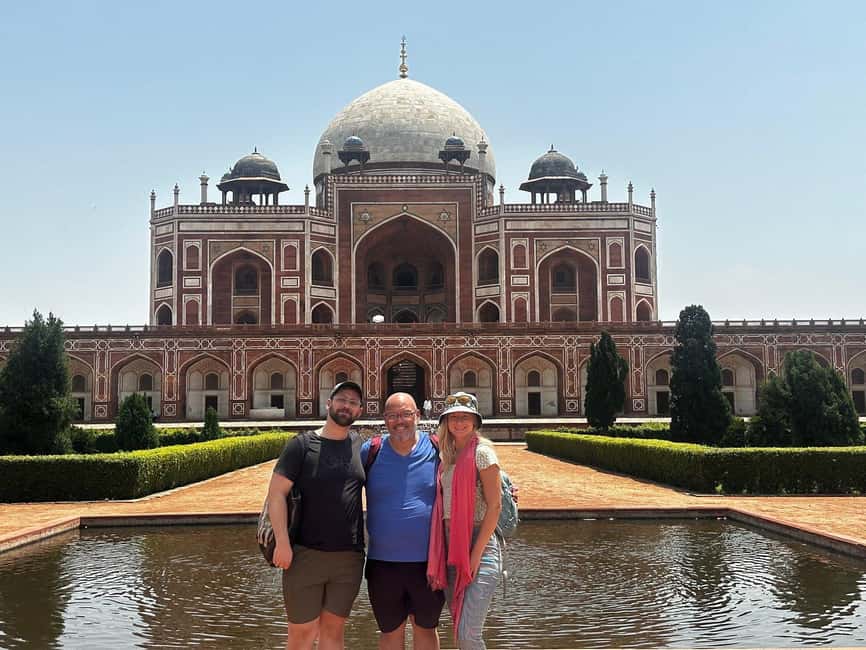
Humayun’s Tomb is a UNESCO World Heritage Site and a major reason people come to New Delhi. It’s also especially useful for understanding why later architecture in India developed the way it did.
Your guide will explain that Humayun’s Tomb influenced the design of the Taj Mahal. That kind of comparison makes monuments much more interesting, because you can start seeing patterns across centuries rather than treating each site as a standalone attraction.
In practical terms, aim to look at the symmetry and the way the complex is set up. Even if you don’t consider yourself a history person, a guide-led tour helps you catch the design choices that matter.
This stop often provides a good “breather” before the bigger zoom of Qutub Minar and the drive-by photo sequence later. It’s one of the better places to slow down a touch and absorb details.
India Gate, Parliament, and the photo-stop drive-by strategy
On the New Delhi portion, you’ll drive past major landmarks including India Gate, the Presidential Residence, and Parliament House. Expect commentary from your guide, plus photo stops.
This is ideal if you want context without spending the whole afternoon in transit or queue lines. The trade-off is that photo stops mean less time on your feet at each location.
If you’re someone who loves architecture and politics, the drive-by approach still works because the guide can explain what you’re looking at. If you’re hoping for a long wander time at each site, you might find this part a bit short.
Still, it’s a smart fit for an itinerary that also includes walking and visiting major monuments like Qutub Minar and Agrasen ki Baoli.
Qutub Minar: the 12th-century monument you’ll remember
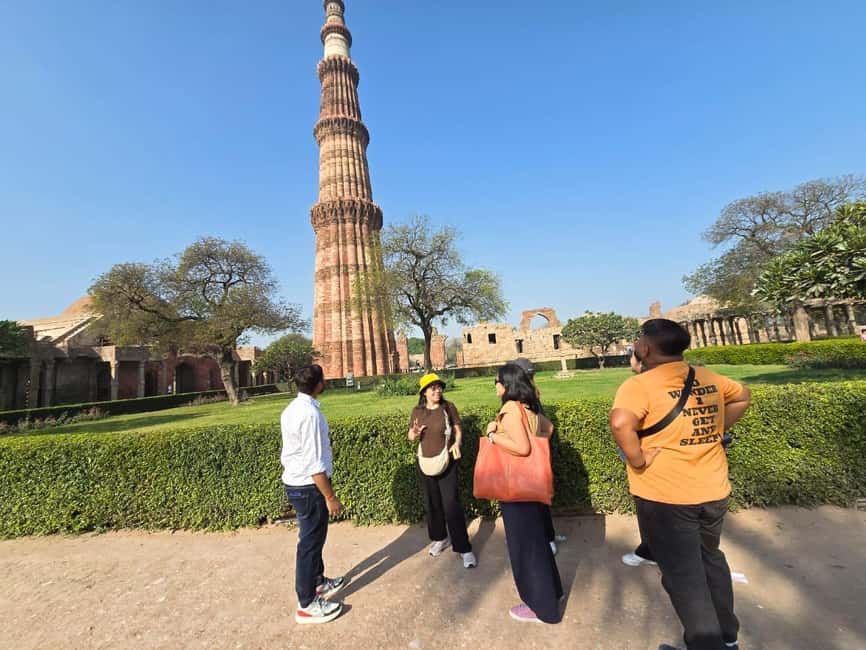
Qutub Minar is one of Delhi’s top attractions, and it’s hard to forget once you see it in person. The tour includes a visit to the famous minaret, described as soaring and dating back to the 12th century.
What makes a stop like this rewarding with a guide is the ability to place it in a bigger story. You’re not just seeing a tall structure. You’re understanding why it matters, how it fits the city’s historical development, and what architectural elements make it significant.
From a practical standpoint, you’ll want to plan time for photos from different angles. Tall monuments look different depending on where you stand and how the light falls.
Also, keep an eye on your schedule. This is a major anchor stop, so build your attention here, not just on the next destination.
Agrasen ki Baoli: the less-touristed stepwell stop
Agrasen ki Baoli is the wrap-up stop, and it’s a historic stepwell located in the heart of the city. It’s often not the first name people think of when they plan Delhi, which makes it a good final note at the end of a busy day.
Stepwells are special because they show how communities managed water, built shared spaces, and created structures that were both functional and architectural. Even if you don’t go deep into engineering, you’ll likely find yourself looking down and noticing the levels and design.
This final stop can feel like a palate cleanser after the bigger monuments. It’s also a good ending point because it doesn’t require the same kind of long queue time that some major attractions can involve.
Then your driver drops you back at your chosen location, which keeps the day feeling complete instead of turning into another round of finding transit.
Price and value: what $18 gets you in real terms
At about $18 per person, the value here is strongest when you compare what’s included. You get hotel or airport pickup and drop-off, air-conditioned transportation, a live English guide, bottled water and umbrellas, and parking fees and taxes.
You also get the rickshaw ride in Old Delhi, which is not nothing. And if you select the monument entry ticket option, entry tickets are included, plus skip-the-line access using a separate entrance.
Food isn’t included, so you’ll need to plan meals yourself. That’s a fair trade, and it also gives you control over what you eat and when.
The biggest value lever is the private format. Instead of being stuck in a fixed group pace, you have a guide who can explain what you’re seeing and keep the route aligned with your timing, within the half-day or full-day window.
If you’re traveling with family or want to move at your own rhythm, a private guided day in Delhi often pays off fast. For solo travelers, it can still be worth it because the guide handles logistics and site flow, which reduces decision fatigue.
Who this tour fits best, and who should consider alternatives
This tour is a strong match if you want a guided overview of both Old and New Delhi without spending your day navigating. It’s also good if you like history but prefer it explained in plain language, not just listed facts.
It’s especially suitable if you:
- want a mix of religious sites, architecture, and markets
- appreciate an organized route with minimal friction
- want an option that can start any time between 6:30 AM and 4:00 PM
It may be less ideal if you:
- want long, unhurried time at every single site
- hate drive-by segments and photo stops
- are hoping for food included in the price
If you’re the type who loves asking questions and getting photo-friendly angles, the guide component is the real engine of this tour. One English guide named Shalini is specifically mentioned as passionate, clear, and helpful with making the trip fun and smooth, including taking great photos.
Should you book this Old and New Delhi guided tour?
If you’re planning a Delhi visit where time is limited, I’d book it. The route gives you the key emotional contrasts of the city, Old Delhi’s street energy and New Delhi’s iconic landmarks, without turning your day into transportation math.
Choose the full-day option if you want more breathing room, especially for the stops that feel meaningful, like Jama Masjid and Gurudwara Bangla Sahib. Choose the half-day if you want the highlights and you’re comfortable with photo stops and a tighter pace.
One last piece of advice. Bring an ID or passport, wear modest clothing for religious sites, and keep your energy for the first big walking segments in Old Delhi. Do that, and this tour becomes one of the most efficient ways to get a real feel for Delhi in a single day.
FAQ
What is the duration of this Delhi Old and New guided tour?
The tour duration is 4 to 8 hours, depending on whether you choose a half-day or full-day option.
What time can I start the tour?
You can start at any time between 6:30 AM and 4:00 PM, based on availability.
Where will I be picked up from, and where will I be dropped off?
Pickup is available from your hotel, the airport, or any location in Delhi, Gurugram, Noida, Ghaziabad, or Faridabad. After the tour, your driver drops you off at your chosen location in Delhi or nearby cities.
Is the rickshaw ride included?
Yes, the rickshaw ride in Old Delhi is included.
What is included in the price, and what is not included?
Included are hotel or airport pickup and drop-off, air-conditioned transportation, a live English guide, bottled water and umbrellas, parking fees and taxes, and monument entry tickets if you select that option. Food and drinks are not included.
What happens if the tour starts on a Monday?
Lotus Temple is closed on Mondays, so the tour visits Raj Ghat instead on that day.
More Guided Tours in New Delhi



More Tours in New Delhi





More Tour Reviews in New Delhi
Not for you? Here's more nearby things to do in New Delhi we have reviewed










More Delhi City Tours to consider.
 ★ 5.0Old & New Delhi City Tour – Half or Full Day Options AvailableTickets from $384,811 traveller reviews
 ★ 5.0Same Day Taj Mahal, Agra Fort & Baby Taj Tour from Delhi by CarTickets from $624,304 traveller reviews
 ★ 5.0Taj Mahal Day Tour from Delhi by Superfast Train – TOP RATED TOURTickets from $1004,166 traveller reviews
 ★ 4.9Old and New Delhi Private Full or Half-Day TourTickets from $23,776 traveller reviews
 ★ 5.0Full Day Taj Mahal, Agra Fort & Baby Taj Tour from Delhi by CarTickets from $623,647 traveller reviews
 ★ 4.9From Delhi: Taj Mahal & Agra Private Day Trip with TransfersTickets from $43,181 traveller reviews
 ★ 5.0Taj Mahal Tour from Delhi by Express Train (Viator Award Winner)Tickets from $752,849 traveller reviews
 ★ 5.0All Inclusive Private Taj Mahal Luxury Tour from Delhi by CarTickets from $622,564 traveller reviews