

Review · DELHI CITY TOURS
Private Golden Triangle Tour 5 Days Delhi Agra Jaipur
Five days across India’s three showpiece cities. It is a fast, well-paced introduction to Delhi, Agra, and Jaipur, built around major monuments and a private car.
I like the way this itinerary mixes big-name sights with practical stops in between, so you get context without feeling lost. I also like that you travel in a private group setup (your party only) with an English-speaking guide to translate the why behind the what.
One clear consideration: monument entry tickets are not included, and the package notes you’ll pay about $95 per person on the spot for admissions.
Key things to know before you go
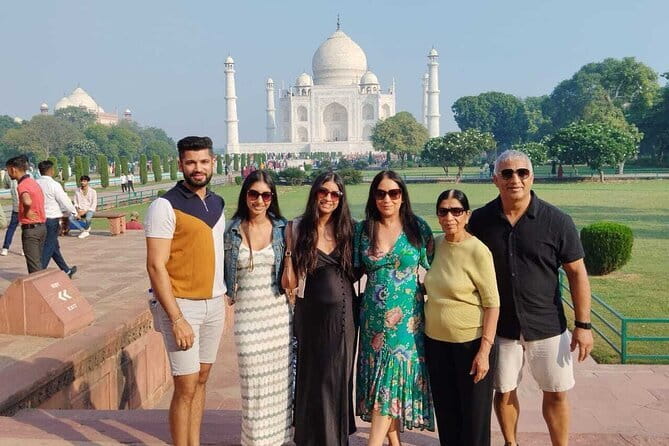
- Private transportation with tolls, parking, interstate taxes, and fuel covered
- Live English-speaking guide at all destinations
- 4 breakfasts included and hotel stays on single, double, or twin sharing
- Monument admissions not included, with about $95 per person to pay on arrival/day-of
- Airport start and drop tied to Indira Gandhi International Airport in Delhi, plus a traditional welcome representative
- Frequent UNESCO and Mughal highlights, plus Jaipur’s observatory and royal sites
Golden Triangle in 5 Days: What You’re Really Buying
The Private Golden Triangle Tour in Delhi, Agra, and Jaipur is built for people who want India’s headline monuments without juggling trains, loose connections, or confusing ticket timing. You get a single routing plan, a private car, and a guide who can explain what you’re looking at while you move from city to city.
At $982 per person for about 5 days, the value depends on what you hate most: planning, language hassles, or long travel days. This package targets those pain points with private transport and an English-speaking guide. You still pay monument entry fees separately, but the rest of the trip rhythm is handled, including hotel nights and the driving logistics between destinations.
A tour like this also has a “payoff” feature. When you see the Mughal buildings in Delhi (like Humayun’s Tomb and Qutub Minar), it makes the next day in Agra hit harder. Then Jaipur gives you the other side of the story, shifting from Mughal grandeur to Rajput design and court life.
You can also read our reviews of more private tours in New Delhi



Day 1 in Delhi: Old Delhi Meets National Icons

Day 1 is the kind of day that shows you two Delhi personalities fast. You start in Old Delhi with Mughal-era religious and imperial landmarks, then you slide into New Delhi’s formal monuments.
Jama Masjid: A scale-check for Old Delhi
Jama Masjid is one of the largest and most iconic mosques in India, built in the 17th century under Emperor Shah Jahan. Even if you’ve only seen photos, standing near the complex helps you understand the Mughal talent for making space feel grand and intentional. Expect around a short visit window (about 30 minutes), so you’re not doing a slow museum tour. You’re doing the “see it, understand it, move on” version.
Tip for your comfort: dress respectfully and plan for mosque courtyards that can feel crowded. It is normal to feel a bit rushed here because so many people come for the same big views.
Red Fort: Mughal power, up close
Next up is the Red Fort, a UNESCO World Heritage Site and a long-time symbol of Mughal power. Your time estimate is about 1 hour, which is enough to walk the key areas and absorb the massive red sandstone presence. The fort is also the kind of place where a guide makes a difference, because it’s not just walls and gates. It’s a statement about authority, architecture, and time.
Chandni Chowk: Fast taste of the market maze
Chandni Chowk is famous for old lanes and market energy. Your stop is listed as about 30 minutes, and it’s the right length for a quick sensory hit: street food smells, shop colors, and lots of moving people.
If you don’t love crowds, keep expectations realistic. This is not a slow wander with photos at every corner. It’s a quick orientation into how Delhi commercial life feels.
More New Delhi tours and experiences for the shortlist





Raj Ghat, India Gate, Rashtrapati Bhavan: New Delhi’s calmer tone
After Old Delhi, the itinerary turns more reflective and monumental.
- Raj Ghat is Gandhi’s memorial at the cremation site, with a simple black marble platform. Your time here is about 30 minutes, and it works well as a break from the market intensity.
- India Gate is a World War I memorial, designed by Sir Edwin Lutyens. You’ll get about 30 minutes here, long enough for a look and a photo set.
- Rashtrapati Bhavan is the President’s residence, with a short stop time of about 15 minutes. Think quick exterior viewing and architectural appreciation, not an inside visit.
This part of the day is where you start linking architecture to politics, empire, and national identity. If you like seeing how cities change their messages from one neighborhood to another, this section does a good job.
Humayun’s Tomb and Qutub Minar: UNESCO makes it stick
You finish Day 1 with two UNESCO heavy-hitters.
- Humayun’s Tomb (about 1 hour) is a major Mughal tomb complex. The design and landscaping help you see why this style influenced later architecture.
- Qutub Minar (about 1 hour) is the tall brick minaret, listed at 73 meters. Even if the minaret is the star, the surrounding complex helps fill in the story of early Indo-Islamic architecture.
These two stops are a strong reason to choose a tour with a guide. Without interpretation, you can still enjoy the sites, but you’ll get less of the “how this led to that” feeling.
Day 2 in Agra: Fort, the Baby Taj, and a View Across the Yamuna
Day 2 is where the Golden Triangle starts delivering the payoff images. You stay on Mughal ground, but the itinerary includes more than just the Taj Mahal.
Agra Fort: The fortress behind the fame
Agra Fort is a UNESCO site built under Emperor Akbar in the 16th century. Your stop is around 2 hours, long enough to walk and understand its role as a main Mughal military and administrative center.
What I like about including a fort on this route is simple: it gives you the “where power worked” perspective before you rush to the romance monument. Forts are busy with architecture details, and a good guide can point out why the layout matters.
Itmad-ud-Daula: The Baby Taj effect
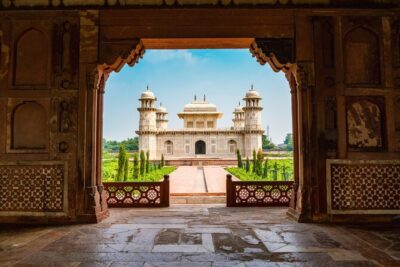
Next is Itmad-ud-Daula, often called the Baby Taj. It’s a marble mausoleum built in the 17th century by Empress Nur Jahan for her father. You get about 1 hour.
This stop can feel smaller than the big headline sites, which is a positive if you enjoy fine detail. Marble work, symmetry, and the way the building frames a tomb space all make this an architectural breather.
Mehtab Bagh: A Taj view with a garden pace
Finally, Mehtab Bagh is across the Yamuna River from the Taj Mahal. It is listed as about 1 hour and is known for views of the Taj, especially near sunset.
This is where you can shift into slower mode. Even if your Taj visit is later, Mehtab Bagh gives you a “preview” and helps you time your expectations. Your guide can also help you decide when to visit for the light, but the key is that this stop is built for sightlines and stillness.
Day 3 in Agra and Beyond: Taj Mahal Day and Fatehpur Sikri
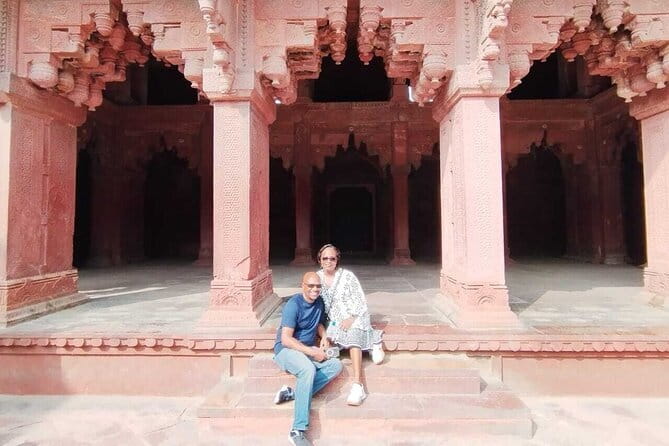
Day 3 is the big one. The itinerary starts with the Taj Mahal and then adds Fatehpur Sikri, giving you a full day of history.
Taj Mahal: You’re not just seeing white marble
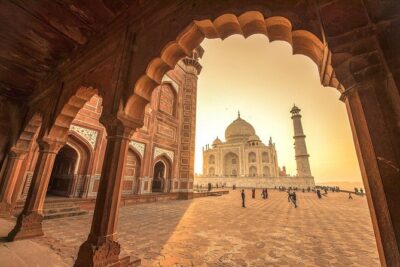
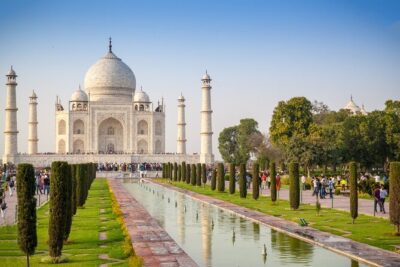
The Taj Mahal is a UNESCO World Heritage Site built by Emperor Shah Jahan in the 17th century as a tribute to Mumtaz Mahal. Your visit time is about 3 hours, which is enough to see it from multiple angles, move through the main areas, and actually notice the design logic.
Here’s the practical truth: this place is popular, and the flow of visitors can shape your experience. That is exactly why having an English-speaking guide matters. You can avoid dead ends, understand what you’re seeing, and spend time where the details are.
Also, remember that this is not only an image stop. It is a complete monument system, with gardens, symmetry, and intentional sightlines. A guide helps you see the structure as a whole.
Fatehpur Sikri: Akbar’s grand city ruins
After Taj, you go to Fatehpur Sikri, a UNESCO World Heritage Site built by Emperor Akbar in the late 16th century. The itinerary lists about 2 hours, and it also notes the admission is free for this stop on the plan.
This is where you get more than one era at once. You’ll be looking at a historic city layout and key structures that mix Persian, Mughal, and Indian architectural styles. It can feel like a time machine. And because the Taj is so iconic, Fatehpur Sikri is a good balance, shifting from romance to empire administration and religious-political ambitions.
Day 4 in Jaipur: City Palace, Jantar Mantar, Hawa Mahal, and the Museum

Day 4 gives you a different kind of spectacle: Rajput royal spaces and Jaipur’s science-meets-design personality.
City Palace: A royal complex with usable context
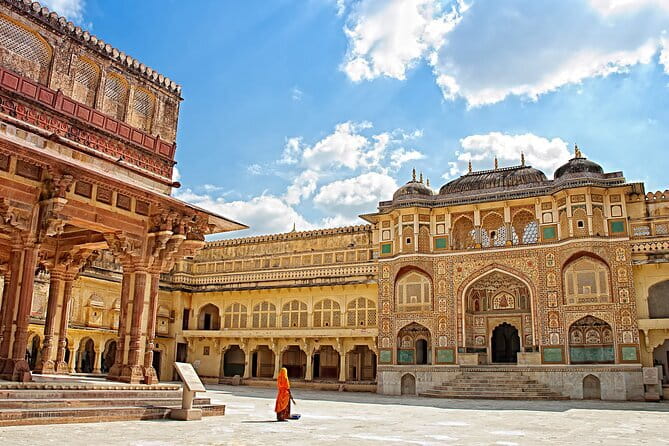
The City Palace is a blend of Rajput and Mughal architecture built by Maharaja Sawai Jai Singh II in the 18th century. You’ll have about 3 hours.
This stop tends to work well because it connects the city’s identity to how rulers lived and displayed power. Museums and courtyards can slow you down in a good way, and you can see how design, display, and status connect.
Jantar Mantar: Jaipur’s giant measuring tools
Next is Jantar Mantar, an 18th-century astronomical observatory built by Maharaja Jai Singh II. It’s about 1 hour.
If you think of this as a science stop, you’ll enjoy it more. The site includes massive instruments designed for measuring time, predicting eclipses, and tracking celestial events. It’s not just random stone shapes, it is designed measurement. The guide’s job here is to make sense of the scale.
Hawa Mahal: The Palace of Wind, built for crowds
Then you hit Hawa Mahal, the Palace of Winds, built in 1799 with a façade featuring 953 small windows called jharokhas. Your listed time is about 30 minutes and admission is free on this plan.
This is a quick-hit photo stop, but also a meaningful one. Even in a short visit window, you can understand why the windows matter: design for airflow and observation.
Albert Hall Museum: An indoor breather
Finally on Day 4 is Albert Hall Museum, about 1 hour. Admission is not included in the plan. This museum is described as the state’s oldest, built in 1887 in an Indo-Saracenic style.
If you want a break from outdoor monuments, this is a good way to end the day. Museums can also help you connect dots between what you’ve seen across the route.
Pricing and Logistics: Is $982 a Good Deal?

Let’s talk about money in a straight line.
You’re paying $982 per person for a private, 5-day Golden Triangle route that includes:
- Private transportation
- Toll, parking, interstate taxes, and fuel charges
- Hotel accommodation (with single, double, or twin sharing)
- A live English-speaking tour guide
- Mineral water bottles in the vehicle
- Traditional airport welcome in Delhi
- 4 breakfasts
What is not included:
- Monument admission fees. The package notes an estimated $95 per person to pay on the spot.
- Tipping for driver, porter, guide, or representative
- Personal expenses
So is it good value? For me, it is if you want a guided route with fewer planning headaches. If you prefer to self-plan and can handle ticket logistics and city navigation, you might find cheaper options. But if you want the “get picked up, get explained, get driven” comfort, this price can look reasonable once you factor in private transport and guide time across multiple cities.
Here’s the budget-minded trick: assume you’ll pay the admissions fee on top, and keep some cash or card ready for day-of tickets.
What Makes the Experience Feel Better: Guides and Drivers in Practice
A private tour is only as smooth as the humans running it. The notes from past experiences are consistent: the guides and drivers have a real impact on how easy the day feels.
For example, one Agra guide named Dr. Gopal Verma is praised for clear explanations and flexibility. Another Taj Mahal day comes with a guide named Mr. Jain, plus a driver Mr. Sanjeev, described as careful and safe. In other north-and-west India routes, drivers Sher and Mukesh get credit for friendliness, safety, and even humor.
What you should take from that, even if your guide is different: you want someone who can adjust when your energy changes. This itinerary is structured, but flexibility still matters, especially in crowded monument areas.
Also, because this is private, you avoid the “watch everyone disappear” problem. Your guide can pace your group and help you keep momentum between stops.
Practical Tips for Your 5-Day Route (So You Don’t Waste Time)

You can make this tour feel smooth with a few choices on your side.
First, plan your pace for heavy sight days. Day 1 includes a mix of Old Delhi and New Delhi landmarks with multiple short stops. That can be mentally tiring even if you are only walking a little. Build a mindset of quick wins, not slow wandering.
Second, for monument visits where you pay tickets on the spot, treat ticket time as part of the schedule. If you show up with minimal planning, the experience can feel slower than it looks on paper.
Third, dress for comfort and respect. You’ll be entering religious sites like Jama Masjid, plus you’ll walk at major complexes like Humayun’s Tomb and Qutub Minar. Comfortable shoes matter more than you think.
Fourth, bring a small hydration routine. The package provides bottled water in the vehicle, but you still want your own plan for when you’re outside.
Who This Tour Fits Best
This Private Golden Triangle Tour is a strong match for:
- First-timers who want the big names in Delhi, Agra, and Jaipur with an English guide
- Solo travelers who prefer not to figure out connections and ticket lines alone
- People who value safe, punctual driving and a clear daily route
- Anyone who wants a guided explanation of Mughal and Rajput architecture instead of only photo stops
If you are the type who hates structured days, you might find it a bit intense. But even then, it can work if you treat it as a curated highlights route.
Should You Book This Private Golden Triangle Tour?
Book it if you want a guided, private Golden Triangle that covers the major monuments in a logical order, with English support and private transport doing the hard parts. The guide quality, especially in Agra and during Taj Mahal time, is a recurring strength in the shared experience details you provided.
Skip or compare if you’re trying to travel ultra-budget. Between the $982 base and the added monument admissions (about $95 per person), the total cost climbs. Also, expect a packed schedule. This is not a slow travel itinerary.
If your goal is to see Delhi’s Mughal-era landmarks, Agra’s world-famous monuments, and Jaipur’s royal and scientific sites with minimal friction, this tour is built for you.
FAQ
Which cities are included in the Private Golden Triangle Tour?
The tour covers New Delhi, Agra, and Jaipur.
How long is the tour?
The duration is listed as 5 days (approx.).
Where does the tour start and end?
The meeting point is Indira Gandhi International Airport, New Delhi, Delhi 110037, India, and the tour ends back at the same meeting point.
What is included with the transportation and guide?
The package includes private transportation, all toll and fuel charges, and a live English-speaking tour guide at all destinations. It also includes package mineral water in the vehicle.
Are monument admission fees included?
No. The package states that monument admission fees are not included, and you have to pay on the spot. It lists $95.00 per person for admissions.
How many breakfasts are included?
The package includes breakfast (4).
Do I need to tip during the tour?
Tipping for the driver, porter, tour guide, and representative is listed as not included.
Is there free cancellation?
Yes. Free cancellation is offered, and you can cancel up to 24 hours in advance for a full refund.
More Private Tours in New Delhi



More Tours in New Delhi





More Tour Reviews in New Delhi
Not for you? Here's more nearby things to do in New Delhi we have reviewed








More Delhi City Tours to consider.
 ★ 5.0Old & New Delhi City Tour – Half or Full Day Options AvailableTickets from $384,811 traveller reviews
 ★ 5.0Same Day Taj Mahal, Agra Fort & Baby Taj Tour from Delhi by CarTickets from $624,304 traveller reviews
 ★ 5.0Taj Mahal Day Tour from Delhi by Superfast Train – TOP RATED TOURTickets from $1004,166 traveller reviews
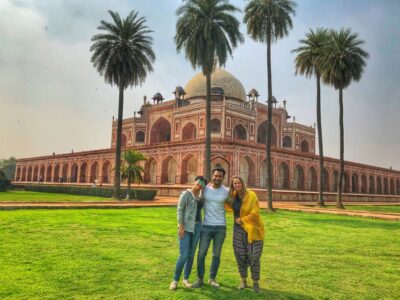 ★ 4.9Old and New Delhi Private Full or Half-Day TourTickets from $23,776 traveller reviews
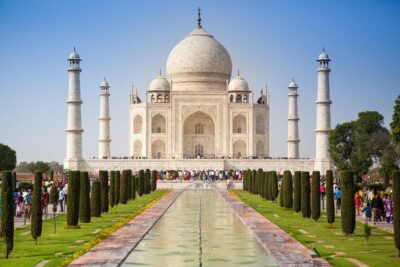 ★ 5.0Full Day Taj Mahal, Agra Fort & Baby Taj Tour from Delhi by CarTickets from $623,647 traveller reviews
 ★ 4.9From Delhi: Taj Mahal & Agra Private Day Trip with TransfersTickets from $43,181 traveller reviews
 ★ 5.0Taj Mahal Tour from Delhi by Express Train (Viator Award Winner)Tickets from $752,849 traveller reviews
 ★ 5.0All Inclusive Private Taj Mahal Luxury Tour from Delhi by CarTickets from $622,564 traveller reviews
More useful Delhi routes