
Review · DELHI CITY TOURS
Private Golden Triangle Tour Delhi Agra Jaipur ( Top Rated )
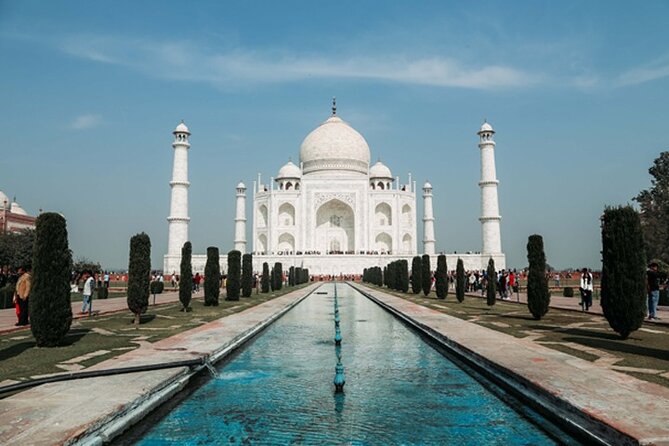
Golden Triangle in three days, but with the timing handled for you. This private tour strings together Delhi, Agra, and Jaipur with air-conditioned door-to-door transfers, then puts you at the Taj Mahal at the hour when it looks its best. You also get a personal guide for the sites, so the stops feel connected instead of like random sightseeing boxes.
I love the sunrise Taj Mahal plan, because you get dramatic light without having to hustle for position. I also love the personal guide angle, with real explanations and on-the-spot tips that help you see more than you would on your own. It’s built for short time, not for slow travel.
One thing to plan for: several major monuments have admission tickets that are not included, so you’ll want to budget for entry fees on top of the tour price. Also, sunrise means an early morning, so bring patience and an extra layer.
Key highlights to know before you go
- Sunrise timing at the Taj Mahal: you’ll be there early enough to catch the site at its most photogenic.
- A personal guide with a sense of humor: guides like Kevin, Azeem, Basant, Azam, Nasir, and Maahi are praised for making history feel understandable.
- Air-conditioned door-to-door transfers: fewer logistics headaches between Delhi, Agra, and Jaipur.
- Old Delhi spice market stop at Khari Baoli: a free, sensory pause that adds local color to the big monuments.
- UNESCO stops plus the Mughal and Jaipur “why”: Qutub Minar, Jantar Mantar, and the Mughal sights get explained, not just photographed.
- Hotel and breakfast are optional: if you choose the hotel upgrade, breakfast is included for days 2 and 3.
Why this 3-day Golden Triangle tour feels easier than planning it yourself
The Golden Triangle is famous for a reason. But in real life, it can turn into a planning mess: train times, long drives, ticket lines, and figuring out how to get from one must-see to the next without wasting your whole trip on transit.
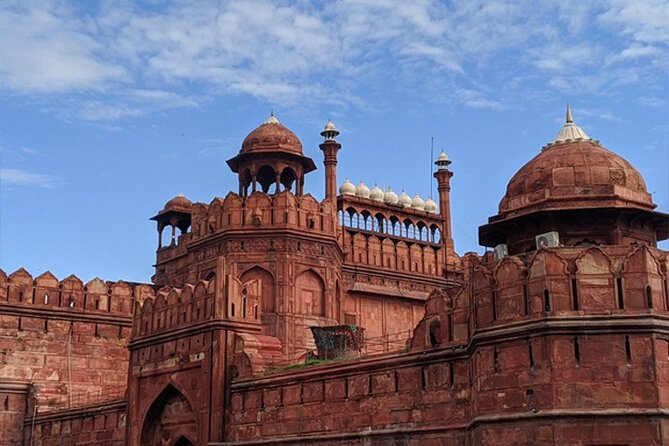
This private format helps because it’s built around the big “connections” you actually care about. You start in Old Delhi, and then you move to Agra for the Taj Mahal sunrise, and then onward to Jaipur for the Rajasthan highlights. With air-conditioned vehicle transfers between cities, you spend your energy on the monuments, not on route math.
It’s also a smart fit for couples and first-timers. In the feedback I’ve seen for this operator, people often mention honeymoon trips and photography help, and that tracks with what you’re buying here: someone else handles the choreography, you get to enjoy the moments.
You can also read our reviews of more private tours in New Delhi



Delhi day: Qutub Minar first, then Lotus Temple and Khari Baoli
Your Delhi day mixes the “wow” towers with places that feel local and lived-in. The rhythm works because it alternates between big-ticket monuments and texture-rich neighborhood stops.
Qutub Minar: the 73-meter tower you can actually wrap your mind around
Qutub Minar is UNESCO-listed and towers at about 73 meters, built in 1193 by Qutub-ud-din Aibak. It’s described as a 5 storey minaret, and that vertical layering is part of what makes it memorable. If you go in with zero context, it’s still impressive, but a guide helps you notice what you’re looking at instead of just staring.
Admission ticket is not included here, so if you are trying to travel light on cash, set aside a little for entry fees.
Lotus Temple: free, calm, and open to everyone
Lotus Temple (built in 1986) is a completely different vibe. It’s known for its flower-like shape and for being open to people of all religions. Admission is free and the site is a good pause after Qutub Minar.
You’ll likely find it easier to enjoy when you treat it as a reset, not another “one more photo” stop.
Khari Baoli spice market: your senses get a workout, and it’s free
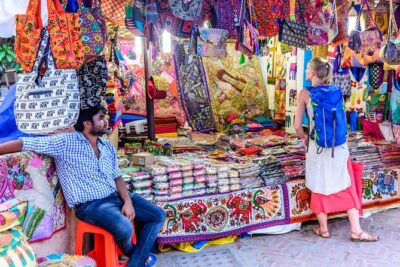
Then comes Khari Baoli, Old Delhi’s historic spice market. It’s described as one of Asia’s oldest and largest spice markets, and it’s free to visit. Even if you do not buy anything, it’s one of those places where the smells, colors, and hustle make Delhi feel real.
Practical tip: if shopping tempts you, go slow. If you’re not sure what to buy, ask your guide what’s used locally. That small interaction is often where the best souvenirs come from, not the shop sign.



Jama Masjid, India Gate, and the government buildings, quick stops with real meaning
Delhi can feel overwhelming. This tour helps by keeping some of the major sights short, but still worth it.
Jama Masjid: big mosque courtyard, Shah Jahan era
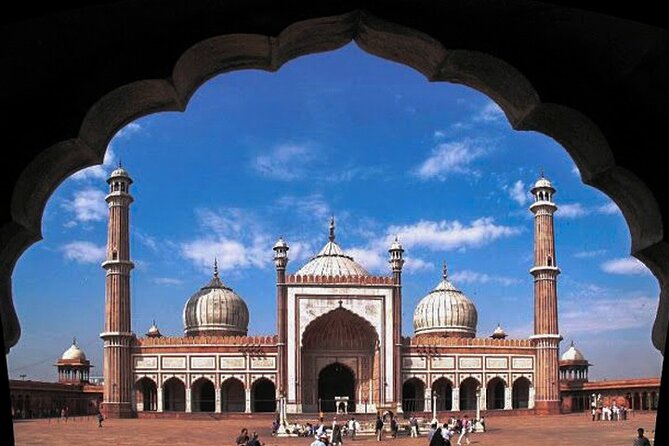
Jama Masjid was commissioned by Emperor Shah Jahan in 1656. The highlight is the architecture and the grand courtyard. Admission ticket is not included, so again, keep entry fees in mind.
Also, for places like this, dress matters. Even when tickets are not the issue, being respectful of religious sites is.
India Gate: a war memorial with an easy photo viewpoint
India Gate is a famous memorial in New Delhi, built as a tribute to soldiers who died in World War I and the Third Anglo-Afghan War. It’s around 42 meters tall and designed by Sir Edwin Lutyens. Admission is free, and the time you spend here is often enough to grab photos and learn what the monument is actually honoring.
Parliament House and Rashtrapati Bhavan: the architecture sweep
You also get quick looks at Parliament House (circular design with a central dome) and Rashtrapati Bhavan, the President’s residence. Both are free to visit as part of the stop, with brief time built in.
These are good stops if you like architecture and context. If you want a deep museum day, you might wish you had more time. But for a 3-day route, the goal is balance, and these work as context anchors for a city that otherwise can blur together.
Sunrise at the Taj Mahal: why this tour’s timing is the whole deal
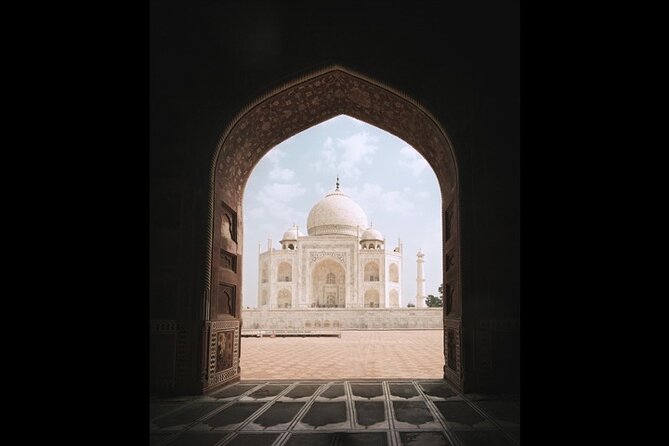
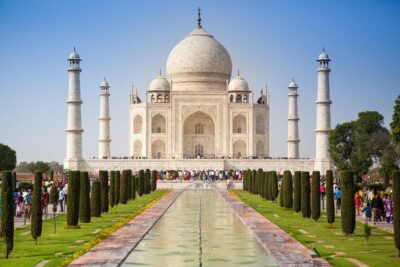
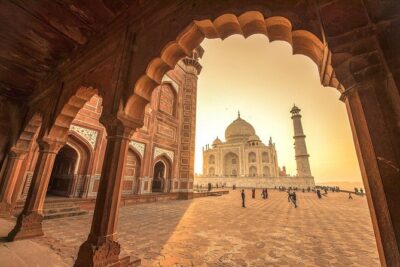
The Taj Mahal is hard to beat. But sunrise changes the experience. Light is softer, crowds can be thinner, and the monument often looks less like a postcard and more like a real building made of stone and intention.
The tour includes a private guided visit focused on the sunrise experience, followed by time to explore inside the monument. Taj Mahal admission ticket is not included. Plan for that extra cost so it does not catch you off guard.
The guide makes the Taj Mahal make sense
A common theme in the feedback I’ve seen is that guides are praised for storytelling style, not just facts. People mention humor and clear explanations, plus strong photo help. Names that come up include Kevin, Azeem, Azam, and Maahi.
That matters because the Taj Mahal can overwhelm you with scale. A good guide helps you notice details like the symmetry and craftsmanship and explains why different parts matter. You see it faster because you understand it as you walk, not after you leave.
Breakfast after the early morning
After the sunrise and guided time at the Taj, there’s traditional breakfast at a local cafe. This part is a relief because you are already awake and you need real food, not just snacks. If you pick the hotel option, you may also have breakfasts on days 2 and 3, which helps keep your mornings calmer.
Practical tip: wear layers. Mornings can feel cool even when the day warms up fast. Bring a small bottle of water too, even if you think you will not need it.
Agra Fort and Itmad-ud-Daula: the Mughal stops that add depth
After the Taj, the route moves to Agra Fort and then to Itmad-ud-Daula, often called the Baby Taj. This is a smart move. The Taj is the headline. But Agra is where you get the supporting cast that explains the world that produced it.
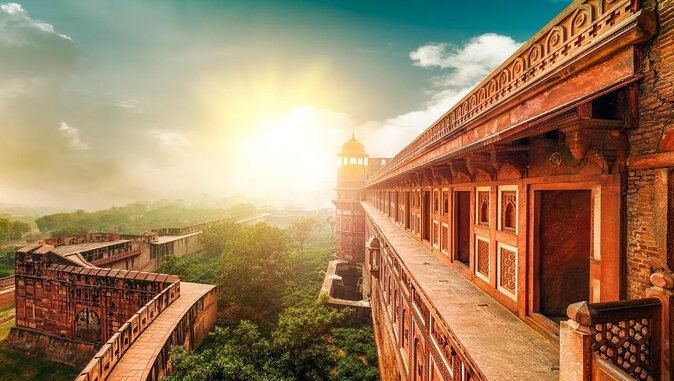
Agra Fort: palaces, balconies, and defensive walls
Agra Fort is a major site with palaces, balconies, and gardens, tied to India’s historical story. Admission ticket is not included here. You spend about 1 hour in this segment, which is enough time to focus on a few key areas without feeling rushed.
A guide helps you read the fort, not just walk it. You’ll understand how power worked here and why the architecture looks the way it does.
Itmad-ud-Daula: the “jewel box” effect of Baby Taj
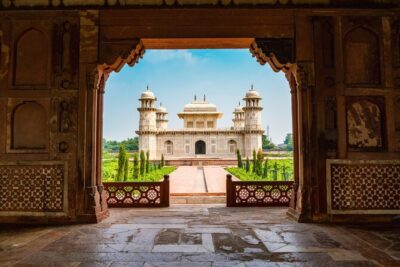
Itmad-ud-Daula is described as a Mughal mausoleum, often called the Baby Taj. The name “jewel box” fits because of the decorative approach that feels smaller than the Taj but still detailed. Admission ticket is not included here, and the visit time is around 2 hours.
If the Taj Mahal left you wanting more marble-and-inlay attention, this is the stop that satisfies that urge without repeating the same experience. Think of it as the training wheels for Taj-level detail, with a different mood.
Jaipur day: Panna Meena ka Kund, Jal Mahal, and a slower look at the city
Jaipur is where the route turns more varied. You get stepwell architecture, a palace sitting on a lake, and then the big-city ceremonial sights.
Panna Meena ka Kund: a step well worth pausing for
Panna Meena ka Kund is a stepwell and the visit is free. It’s an easy stop to love because it feels physical and strange in a good way. You are looking at how water storage and design worked in a hot climate, and that practical purpose gives the structure meaning.
This is a good moment to slow down. Let your guide explain what you are seeing. Then take a few photos from angles that show the steps and the structure, not just the surface.
Jal Mahal: the lake palace that looks like it floats
Jal Mahal is a palace seemingly poised on Man Sagar Lake. Admission is free, and the time here is around 2 hours. Even if you do not spend forever taking photos, the approach to the viewpoint makes it feel like a travel moment, not just a roadside stop.
Jaipur tip that matters: you will walk more than you expect
Even when a schedule lists time blocks, Jaipur sights often mean short walking bits between viewpoints. Wear comfortable shoes. Bring sunscreen. Your “I can do this” mindset will need help from good footwear.
City Palace, Jantar Mantar, and Hawa Mahal: the Pink City highlights that still have rules
Jaipur’s big names are famous for a reason, but they can also be crowded and easy to misunderstand if you rush. This tour keeps the pace moving, but with a personal guide, you can still enjoy the details.
City Palace: where power met ceremony
City Palace is the Maharaja’s administrative and ceremonial seat, described as an opulent place. Admission ticket is not included here, and the stop is about 1.5 hours.
The best way to enjoy City Palace is to treat it like a living layout. Ask your guide what each section used to do. Without that, palace buildings can blur together into “pretty rooms.”
Jantar Mantar: the UNESCO observatory built in 1734
Jantar Mantar is UNESCO-listed and connected to celestial measurement. It was constructed in 1734. Admission ticket is not included here, and you spend about 1 hour.
This is one of those sites where the shapes are what you need to understand. A guide helps you interpret why the instruments look the way they do and what problem they were designed to solve. If you like science or design, you’ll enjoy it more than you expect.
Hawa Mahal: the Palace of Breeze, and what to look for
Hawa Mahal is known as the Palace of Breeze. It’s a standout facade and a classic Jaipur photo stop. Admission ticket is not included, and the tour time is around 1 hour. It’s also located near Tripolia Bazaar areas, which can be lively around the edges.
A practical move: spend your time both outside and at the approaches where you can see the facade as part of the streetscape. If you only take one quick front shot, you miss the best “why” of the building.
Price and value: what the $148 covers, and what you should budget separately
The listed price is $148 per person for about 3 days. For this route, you are paying for the big-ticket convenience: private door-to-door air-conditioned transfers and the structure that keeps the itinerary moving without you handling logistics.
What’s included is fairly clear:
- Parking fees
- Breakfast on days 2 and 3 if you select the hotel option
What’s not included often shows up at the monuments:
- Several key admission tickets are marked as not included, including Qutub Minar, Taj Mahal, Agra Fort, Itmad-ud-Daula, City Palace, Jantar Mantar, and Hawa Mahal. Jama Masjid is also marked as not included.
So the real value question is this: do you want to pay extra to have someone manage routes, timing, and a guide, while you handle entrance fees separately? If yes, the price can feel fair fast, because the sunrise Taj Mahal is a major highlight and the transfers between cities would be a hassle to coordinate on your own.
One more practical note: the tour is described as top rated and is often booked about 20 days in advance. If you have fixed travel dates, plan ahead.
What a private guide changes, and how to get the best out of it
With a private tour, you can control the “quality of your minutes.” Your guide can slow down for questions, nudge you to the best viewpoints, and help you avoid time sinks.
In feedback tied to this company, guides are praised for:
- Blending history with humor, so explanations do not drag
- Helping with photography, including capturing special moments on trips like honeymoons
- Being upbeat and energetic, with one guide described as Azeem being a real hype man in Agra
- Keeping the experience safe and easy, with drivers named such as Bilal, Vijay, and Ramesh mentioned for punctual help
How you can use this:
- Ask what you should look for in each monument before you enter
- Tell your guide what you care about most, architecture, religion, science, or just great photos
- If you want shopping time, mention it early, since Khari Baoli can turn into a spontaneous stop
This is also where the private format is worth it. You can lean into the sites that match your curiosity and skip the ones that do not.
Who should book this Golden Triangle tour, and who might want a different pace
This tour fits best if you:
- Have limited time and want Delhi, Agra, and Jaipur in 3 days
- Prefer a private format where you are not squeezed into a big group schedule
- Want the sunrise Taj Mahal experience without figuring out early logistics
- Like having context, especially around Mughal and Jaipur sites
It may be less ideal if you:
- Want a slow, museum-heavy trip with long, unhurried time in each place
- Hate early mornings, because sunrise at the Taj is the anchor of the whole experience
- Have a tight budget for entrance fees, since many major monuments have tickets not included
Should you book the Private Golden Triangle Tour (Top Rated)?
If your priority is seeing the big Golden Triangle highlights with minimal planning stress, I’d book this. The combination of sunrise Taj Mahal, a personal guide, and air-conditioned door-to-door transfers is exactly the kind of structure that turns a stressful route into a smooth trip.
Do it with eyes open: you should budget for monument entrance tickets since many are not included. And you should be ready for early morning energy swings. If that fits your travel style, this is a strong value play for a short, high-impact India route.
FAQ
What cities does this tour cover?
It covers New Delhi, Agra, and Jaipur as part of a private three-day Golden Triangle experience.
How long is the tour?
The duration is listed as approximately 3 days.
What is the price per person?
The price is listed as $148.00 per person.
Is pickup offered?
Yes, pickup is offered, and the tour starts at Sunehri Masjid in Old Delhi.
Where does the tour start and end?
It starts at Sunehri Masjid, Nishad Raj Marg, Lal Qila, Old Delhi, New Delhi, Delhi, 110006, India. The tour ends back at the meeting point.
Is the tour private?
Yes. It is a private tour, meaning only your group participates.
Are entrance tickets included?
Admission tickets are not included for several monuments, including Qutub Minar, Taj Mahal, Agra Fort, and others marked as not included. Some stops are free, like Lotus Temple and Khari Baoli.
Is breakfast included?
Breakfast is included only if you select the hotel option, and it is provided for the 2nd and 3rd day.
Does the tour include the Taj Mahal at sunrise?
Yes, the tour includes visiting the Taj Mahal during sunrise.
What is the cancellation policy?
Free cancellation is available. You can cancel up to 24 hours in advance for a full refund.
How far in advance is this tour commonly booked?
It is described as being booked about 20 days in advance on average.
More Private Tours in New Delhi



More Tours in New Delhi



More Tour Reviews in New Delhi
Not for you? Here's more nearby things to do in New Delhi we have reviewed










More Delhi City Tours to consider.
 ★ 5.0Old & New Delhi City Tour – Half or Full Day Options AvailableTickets from $384,811 traveller reviews
 ★ 5.0Same Day Taj Mahal, Agra Fort & Baby Taj Tour from Delhi by CarTickets from $624,304 traveller reviews
 ★ 5.0Taj Mahal Day Tour from Delhi by Superfast Train – TOP RATED TOURTickets from $1004,166 traveller reviews
 ★ 4.9Old and New Delhi Private Full or Half-Day TourTickets from $23,776 traveller reviews
 ★ 5.0Full Day Taj Mahal, Agra Fort & Baby Taj Tour from Delhi by CarTickets from $623,647 traveller reviews
 ★ 4.9From Delhi: Taj Mahal & Agra Private Day Trip with TransfersTickets from $43,181 traveller reviews
 ★ 5.0Taj Mahal Tour from Delhi by Express Train (Viator Award Winner)Tickets from $752,849 traveller reviews
 ★ 5.0All Inclusive Private Taj Mahal Luxury Tour from Delhi by CarTickets from $622,564 traveller reviews
More useful Delhi routes