
Review · DELHI CITY TOURS
Delhi: Textile Trail Tour with Artisan Interaction
One busy market later, fabric stories make sense. This Delhi Textile Trail Tour connects you with artisan techniques and hands-on market time without wasting hours guessing. Two things I’d focus on: you get guided Old Delhi market navigation with a pro keeping you together, and you can shop and plan purchases with real craft know-how. One thing to consider is the pace and crowd factor, since some streets get tight and walking is constant.
I also like that the tour mixes craft demonstrations with practical shopping. You’ll see how textiles move from fiber to finished pieces, and you’ll get help understanding what you’re buying. Guides such as RK and Shehla have stood out for staying attentive and making the experience feel manageable, even when Delhi traffic and narrow lanes want to scatter you.
Key Highlights to Mark on Your Map
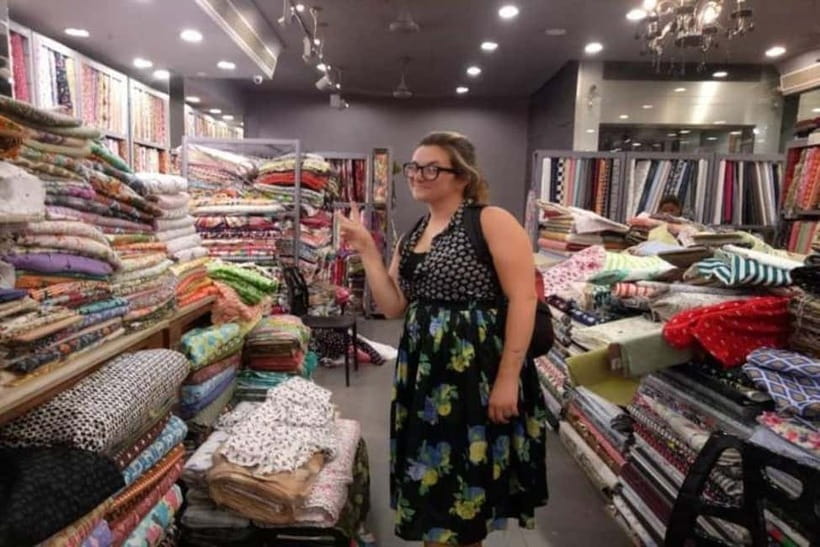
- Old Delhi guided market time in Chandni Chowk with help staying close in crowds
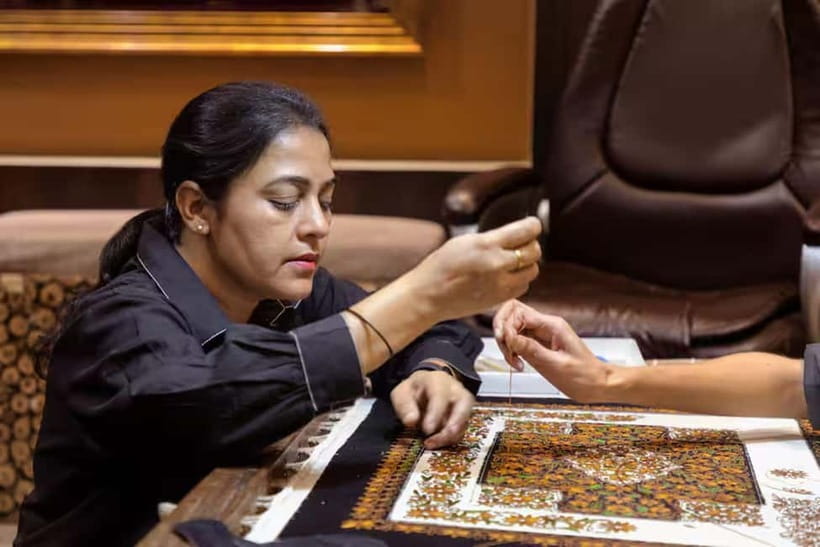
- Artisan interactions tied to real processes like weaving, block printing, and embroidery
- Block printing, zari embroidery, and natural dyeing mentioned as live techniques you can observe
- Multiple fabric stops including Shankar Market, Dilli Haat, INA Market, Shahpur Jat, and Hauz Khas
- Optional tailoring support with delivery to your hotel within 4 to 6 hours (confirm specifics)
- Cycle rickshaw ride cost included for part of the Old Delhi market route
Why Delhi Fabric Feels Personal (Not Like Random Shopping)
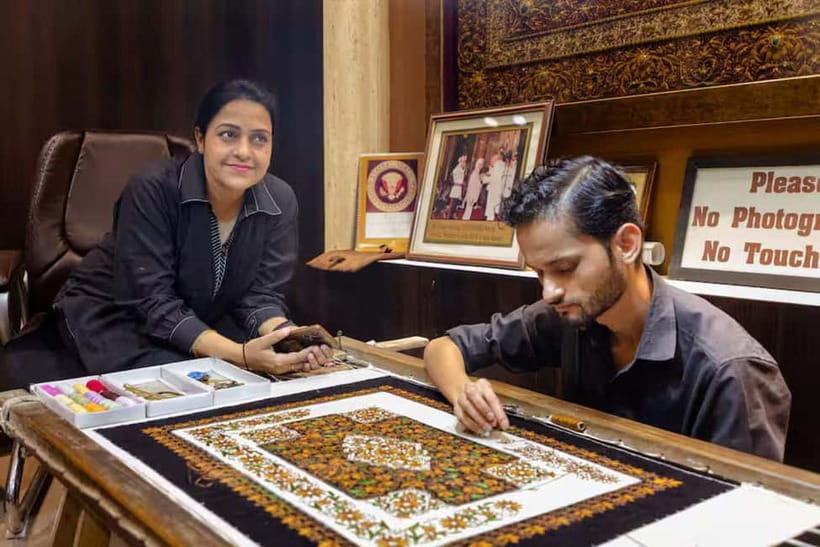
Delhi textiles are a full system, not a single product aisle. The tour’s value is that it keeps the focus on how things get made, from spinning and dyeing to printing and stitching. When you understand the steps, the shopping gets easier, and you can tell quality with fewer regrets.
This also helps you avoid the most common tourist mistake in big markets, buying based on looks alone. Here, you’re given a framework. Even if you only buy one scarf or a small piece, you learn what to look for in materials like silk, cotton, linen, wool, velvet, and more.
The “private group” format matters too. You move faster, stop when questions come up, and you do not get stuck waiting for a big bus tour pace.
You can also read our reviews of more tours and experiences in New Delhi.


Old Delhi Meets Real-Life Crowds in Chandni Chowk
Chandni Chowk is the kind of place where your body learns the route before your brain does. The tour includes a guided visit there for about two hours, so you’re not just wandering and hoping your bearings hold.
What makes this stop special is the way guidance helps you function in tight spaces. In real Delhi market conditions, you can lose people quickly, especially when vehicle flow and foot traffic overlap. That’s where a careful guide earns their fee. I love how the tour approach keeps you close, so you can actually look at fabrics instead of spending energy on “Where did everyone go?”
One practical tip: wear comfortable shoes and expect dust, noise, and constant motion. You’ll be grateful you brought the right footwear because you’re there to look at shops, not just take photos from a corner.
Shankar Market for Shopping Variety in a Short Hour
After Chandni Chowk, Shankar Market gets you a focused one-hour guided visit. This is a good “reset stop” because it’s shorter, so you can target what you want: fabrics, trims, accessories, and related textile finds.
I like that this hour is designed to keep momentum. With only one hour, you’re less likely to drift into decision paralysis. You can also compare options across markets later, because you’ve already collected a baseline sense of pricing and styles.
If you’re the type who hates overspending, Shankar Market can help you test your instincts. You’ll get a sense of what’s common, what’s special, and what looks like a repeat in multiple shops.
Dilli Haat and the Art Market Brain-Training Session
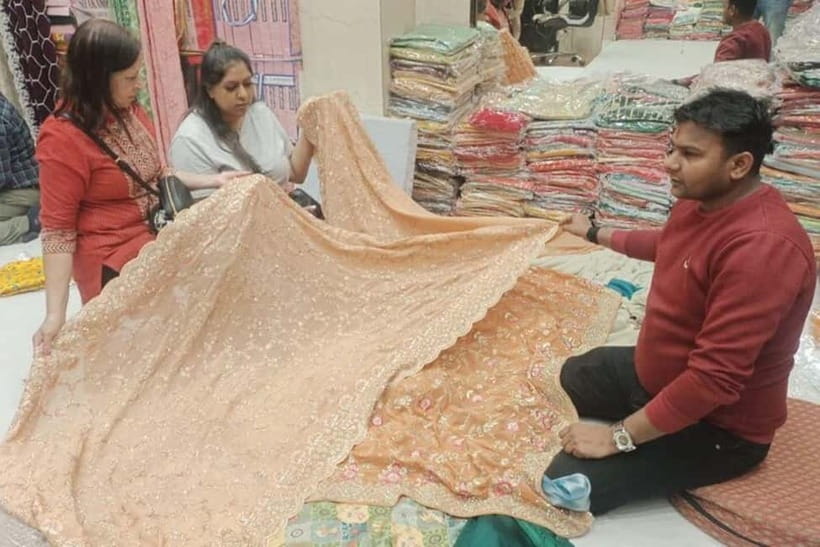
Dilli Haat is included for about two hours, and it’s a strong place for textiles in a more organized setting than the chaos of older bazaar lanes. This is where you can slow down a bit, compare pieces, and talk through choices without feeling like you’re speed-walking.
Two things make this stop work for me:
1) you’re in a textile shopping environment, so your guide can keep the conversation on craft and materials
2) it supports ethical, direct purchasing by connecting you to the makers or craft-related sellers tied to the tour’s theme
You might also find quick food stops added depending on what your guide includes, with spice-row-style experiences and local bites mentioned in guide approaches. If that interests you, keep a small appetite and energy buffer for this stretch.
INA Market and More Fabric Browsing Time
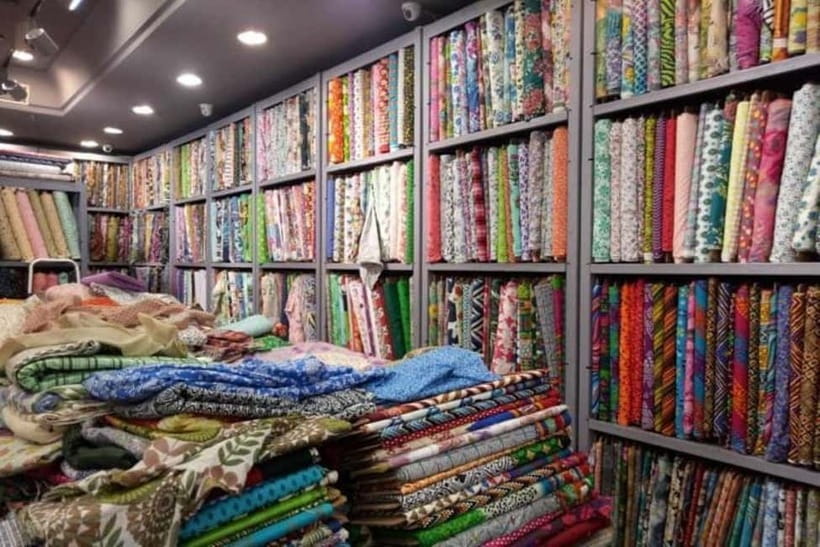
INA Market gets about two hours in the plan. It’s a useful mid-to-late day stop because it gives you another window to inspect different fabric types and related items.
This part of the tour is where I recommend you shift from “What’s pretty?” to “What can I use?” Think scarf versus yardage, or a piece of embroidered work versus a fabric you’ll cut yourself. The more you decide based on how you’ll wear or display it, the less you’ll end up with souvenirs that just sit in your suitcase.
Also, if tailoring is on your radar, this is a good point to ask questions about what’s realistic for delivery timing. More on tailoring later.






Shahpur Jat for the More Stylish Side of Textiles
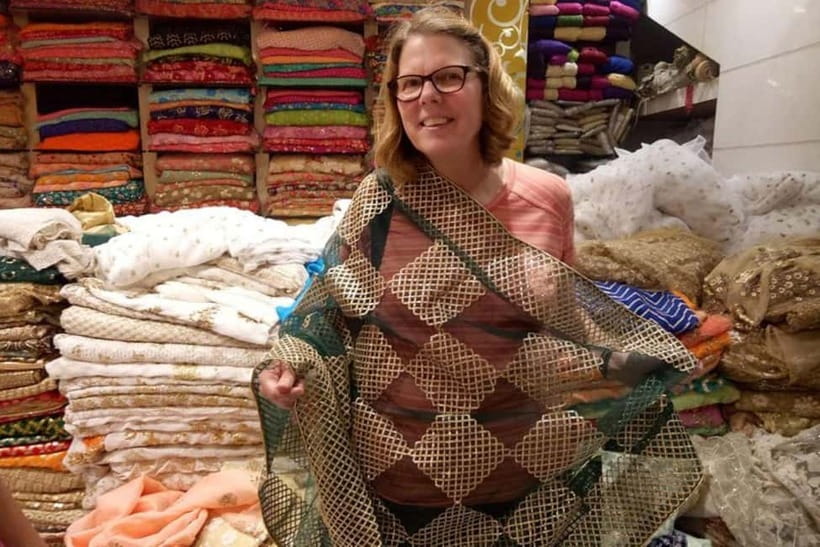
Shahpur Jat is included for about two hours. This stop tends to attract shoppers who care about design as much as material. It’s also a place where you can look beyond basic scarves and see more “fashion textile” energy in the mix.
If you’re shopping with an outfit plan, Shahpur Jat can help you build a theme. For example, you might look for embroidered trims, embellished accessories, or cloth options that complement what you already packed.
One more angle: if you’re interested in stitching and embroidery styles, this stop gives you time to notice patterns and finishing details that are harder to spot when you’re rushing through more crowded streets.
Hauz Khas as a Short Finale
Hauz Khas gets about one hour. That makes it a great final market pass because you can do quick comparisons and pick up smaller items you decided you needed after seeing everything else.
This is also a smart place to buy if you’ve been thinking about texture. Often you only notice what you really love after your first two markets. A one-hour closing stop is long enough to choose one or two strong pieces and short enough to avoid the end-of-day shopping blur.
How the Tour Explains the Real Craft: From Fiber to Finished Cloth
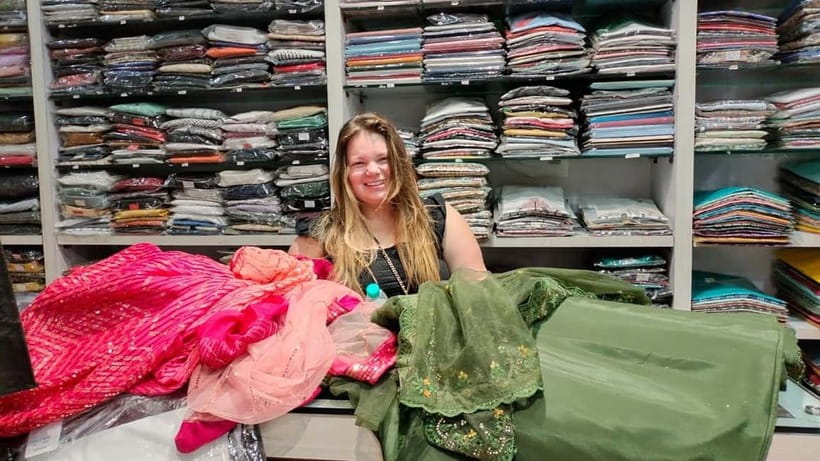
A big reason this tour makes sense for art and design-minded travelers is that it does not treat textiles like magic. It frames them as processes.
Here are the techniques explicitly part of what you can expect to see or discuss:
- Weaving for items like rugs and carpets, and also Pashmina scarfs
- Block printing as a pattern-making process
- Handloom weaving as a technique to preserve
- Zari embroidery and embroidery traditions
- Natural dyeing, paired with spinning and dyeing steps
- Printing and stitching as the final assembly chain
Even if you cannot watch every step in real time, the tour structure helps you connect steps. It’s easier to understand why some fabrics cost more when you know whether the value is coming from handwork, dyes, fiber type, or the complexity of patterning.
And if your interest is more practical than academic, you still benefit. When a guide explains the meaning behind materials and symbols, you can buy with confidence, not just impulse.
Artisan Interactions and Why They Matter for Your Shopping
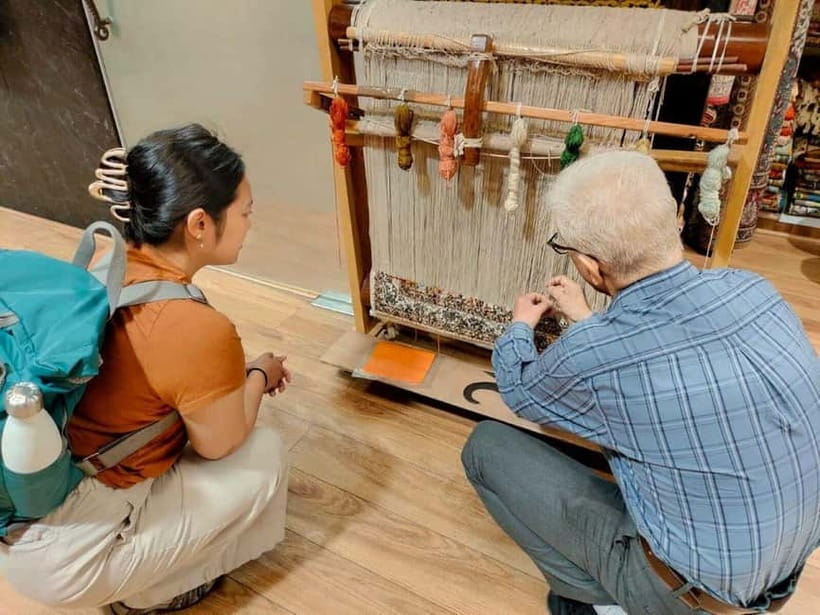
The tour is built around interacting with local artisans and craft centers. That matters because you get context directly from people close to the work.
Two strong benefits of artisan interaction:
- You learn which questions to ask, like how materials are handled or what makes a piece different
- You reduce the chance of buying something that looks similar but differs in quality or technique
From the guide experiences shared by recent visitors, guides like RK focus on keeping you together and guiding your choices through high-stress market traffic. Shehla is noted for being friendly and accommodating, with help from colleagues like Sahil sharing information tied to landmarks and Indian history.
You should take that as a hint: choose questions. Ask about materials, care, and how to spot quality. A good guide will steer you toward better choices and away from confusing jargon.
Tailoring Help: What You Can Order and When
This tour also offers support for tailoring. The information provided says you can get stitching and tailoring for men’s business suits and women’s formal wear, with delivery to your hotel within 4 to 6 hours.
Here’s how I’d treat this practically:
- Think of it as an option if you have time pressure but want a tailored solution
- Plan your measurements and expectations before you commit
- Confirm what’s included in the service when the tailor is involved, since the tour coverage does not spell out tailoring pricing
One review story also mentions bespoke clothes made for the next day, which suggests some flexibility depending on timing and what you request. Still, follow the stated delivery window if you need something fast.
If you’re only looking for a casual scarf or fabric purchase, no worries. You can keep tailoring as a side option and let the markets do the heavy lifting.
Price and Timing: Does $53 Deliver Real Value?
At $53 per person, this is not a “museum-only” day. You’re paying for guided market navigation, transport, artisan-facing experiences, and multiple textile-focused stops over 4 to 8 hours.
That time window is important. If you have a short Delhi visit, 4 to 8 hours lets you pack real textile learning and real shopping without needing a full day. The private group setup and air-conditioned transport also helps you avoid the typical Delhi energy drain of figuring out logistics mid-day.
What you should watch for is the split between included versus personal spending. Meals are not included, and personal shopping is on you. Mineral water is included, but you’ll still want to plan your own food strategy.
If you want a low-cost day, you’ll still find value from the craft explanations and market education even if you buy little. If you want to shop, bring a budget mindset. Negotiation is part of market life, and a guide can help you manage that process without turning it into a full-time job.
Shop Smart in Delhi Textiles, Especially If It’s Your First Time
Delhi markets can overwhelm your eyes fast. My best advice is to shop in layers:
1) Start with fibers and materials you understand or can name
2) Move to patterns and finishing details
3) End with what you’ll actually use soon
The tour is set up to help you do that because it rotates across different market types. You see raw fabrics in open air markets, including items like linen, silk, cotton, chiffon, denim, velvet, crepe, georgette, and wool. Then you see finished pieces and related craft items in more shop-focused zones.
If you want to buy ethically, lean into the tour’s maker-connected approach. Whenever possible, purchase directly from sellers linked to craft work and talk through the story of the item before you pay.
Also, plan for negotiation. One of the most repeated practical notes from recent guide experiences is to negotiate, especially in markets where pricing can shift based on who you are and how confident you seem.
What to Bring, What Not to Do, and Weather Reality
For this tour, keep it simple:
- Comfortable shoes
- A camera
- Be ready for varying weather conditions
Flash photography is not allowed. That’s a normal respect rule, but it can affect how you photograph delicate craft work. If you care about photos, turn off flash early and rely on ambient light.
Pets are not allowed. That one’s straightforward.
Also, the tour is not suitable for people with mobility impairments or wheelchair users. The markets and walking routes involve stairs, tight passages, and continuous movement.
Who Should Book This Tour, and Who Might Skip It
This is a great fit if you:
- like design, fashion, or craft processes
- want guided shopping so you can focus on textiles instead of navigation
- plan to buy fabric, scarves, embroidered pieces, or possibly tailored formalwear
- enjoy meeting artisans and asking real questions
You might want to skip or choose another option if:
- you need a low-walking experience
- you dislike crowds and market pressure
- you only want sightseeing and do not care about textiles
If you’re traveling with someone who has accessibility needs, ask your guide about options early. One recent account highlights a guide hiring a pedal cab to help someone navigate narrow streets, which suggests flexibility when it’s needed.
Should You Book the Delhi Textile Trail Tour?
If your goal is to learn how textiles are made and buy with context, this tour is strong value at $53. The best part is the combination: market time plus artisan-led explanations plus the option to consider tailoring.
Book it if you’re ready to walk, look closely, and ask questions. Skip it if you want a quiet, low-energy day or if mobility is a big concern. For the right traveler, this is one of those Delhi experiences where you leave with more than purchases, you leave with a better sense of what the cloth is really worth.
FAQ
How long is the Delhi Textile Trail Tour?
The duration is listed as 4 to 8 hours, depending on starting times and availability.
Where can the tour pick me up?
Pickup is available from Aerocity, Delhi, Faridabad, Noida, and Gurugram. You can also be picked up from any hotel in Delhi, Gurugram, Noida, and Faridabad.
What’s included in the price?
The tour includes a guided textile trail, interactions with local artisans, visits to various textile markets, hotel or airport pickup and drop-off, transportation to attractions, mineral water, and the cost of a tuk tuk (cycle rickshaw) ride for Old Delhi markets.
Are meals included?
No. Meals and beverages are not included.
Is flash photography allowed?
No. Flash photography is not allowed.
Is the tour suitable for wheelchair users or people with mobility impairments?
No. It is not suitable for people with mobility impairments or wheelchair users.
More Tours in New Delhi
More Tour Reviews in New Delhi
Not for you? Here's more nearby things to do in New Delhi we have reviewed











More Delhi City Tours to consider.
 ★ 5.0Old & New Delhi City Tour – Half or Full Day Options AvailableTickets from $384,811 traveller reviews
 ★ 5.0Same Day Taj Mahal, Agra Fort & Baby Taj Tour from Delhi by CarTickets from $624,304 traveller reviews
 ★ 5.0Taj Mahal Day Tour from Delhi by Superfast Train – TOP RATED TOURTickets from $1004,166 traveller reviews
 ★ 4.9Old and New Delhi Private Full or Half-Day TourTickets from $23,776 traveller reviews
 ★ 5.0Full Day Taj Mahal, Agra Fort & Baby Taj Tour from Delhi by CarTickets from $623,647 traveller reviews
 ★ 4.9From Delhi: Taj Mahal & Agra Private Day Trip with TransfersTickets from $43,181 traveller reviews
 ★ 5.0Taj Mahal Tour from Delhi by Express Train (Viator Award Winner)Tickets from $752,849 traveller reviews
 ★ 5.0All Inclusive Private Taj Mahal Luxury Tour from Delhi by CarTickets from $622,564 traveller reviews