
Review · DELHI CITY TOURS
Golden Triangle India: 5-Day Delhi, Agra, Jaipur & Pushkar Tour
Golden Triangle meets Pushkar spirituality in five days. I like how this route strings together Taj Mahal-level Mughal sights with classic forts, tombs, and viewpoints, and I also like the private group setup with pickup and on-the-ground guidance. One watch-out: several Jaipur stops list admission as not included, so you should budget for a few extra tickets.
I’ve found the strongest value in the people part of this tour, with drivers and guides named like Raj, Dinesh, Mukesh, Ali, Kamal, Arjun, and Balvir showing up in the kind of feedback that matters most: punctual starts, clear explanations, and cars kept clean. And then there’s Pushkar, where the day finally slows down around Pushkar Lake, with a mix of temple-focused calm and everyday bazaar energy.
Key highlights at a glance
- Private-group pace with pickup support and a dedicated guide for the day’s sights
- Mughal power in Agra, including Taj Mahal, Agra Fort, and the closely related Itmad-ud-Daulah
- Pushkar break from the road, centered on Pushkar Lake and the Brahma Temple area
- Jaipur classics in tight blocks, with Amber Fort plus City Palace, plus quick hits at Hawa Mahal and Jal Mahal
- Photo-worthy contrasts, from lattice windows at Hawa Mahal to stepwell geometry at Panna Meena ka Kund
- Time-friendly touring, with several stops marked free admission and only a handful marked not included
The Big Picture: Golden Triangle Plus Pushkar, One Road Trip Feel
This is a classic India starter route, built around the Golden Triangle cities, then extended into Pushkar for a more spiritual, slower ending. You start in New Delhi, then swing to Agra for Mughal monuments, continue to Jaipur for the Pink City forts and palaces, and finish with Pushkar’s sacred-lake atmosphere.
What makes the plan appealing for your trip, instead of just being a checklist of famous names, is how it mixes sight types. You get tomb architecture in Agra, fortified power in Agra Fort and Amber Fort, palace and city layout in Jaipur, and then a religious center in Pushkar that feels more lived-in than “museum-like.”
It’s also designed for day-to-day clarity. Each stop is time-boxed, with admission noted as free for many highlights, and not included for a few Jaipur icons. That matters because it helps you avoid the classic problem of arriving and suddenly realizing tickets or rules will add friction to your day.
More New Delhi tours and experiences for the shortlist



New Delhi Day: Humayun’s Tomb and Qutub Minar Without the Guesswork
Your New Delhi portion focuses on two landmark-level experiences: Humayun’s Tomb and Qutub Minar, plus time to get your bearings around Old and New Delhi. Humayun’s Tomb is a key Mughal-era reference point, and Qutub Minar is one of those sites where the scale hits you immediately. Even if you’ve seen photos, being there makes it easier to understand why these places became models for later architecture.
I like that the day is scheduled as about 8 hours, long enough to cover major sights without feeling like you’re sprinting from one gate to the next. Also, the admission ticket is marked free for this stop, which helps you keep your budget predictable.
Practical note for your comfort: this part of Delhi can involve walking and uneven surfaces. Wear shoes you trust and plan for sun and shade, especially if you’re touring midday. If you’re sensitive to heat, you’ll probably want to ask your guide for the most comfortable order of sights once you’re on the ground.
Agra Begins at Taj Mahal: What to Prioritize in a 3-Hour Visit
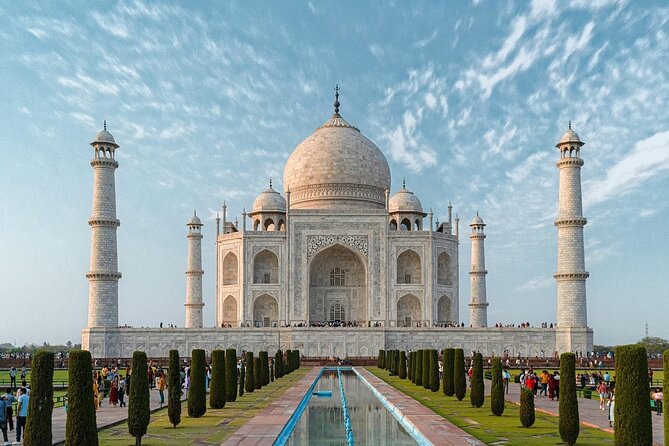
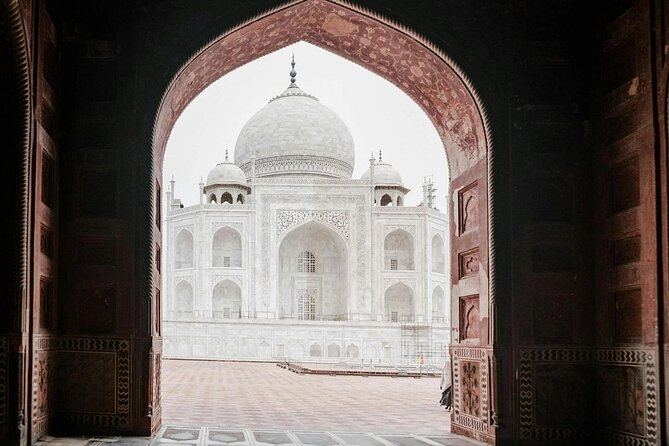
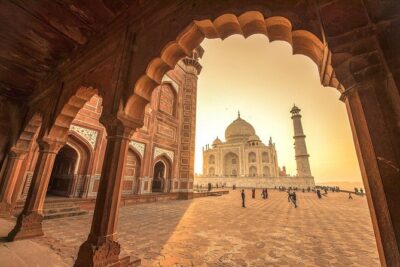
When the schedule hits Taj Mahal, you’re given about 3 hours, which is a smart amount of time for a site this famous. Shah Jahan’s white-marble monument is described as a monument symbolizing love for Mumtaz Mahal, and your guide’s job is to connect what you see to why it was built.
Here’s what I recommend you prioritize during your time there:
- The overall symmetry first. Get your eyes adjusted by taking in the full composition before zooming into details.
- Inlay and carving work second. The closer you go, the more you’ll appreciate how the decorative elements create that shimmering effect in different light.
- Photo pacing third. You’ll want a few clean angles, but rushing tends to create blurry photos and missed details.
Admission is marked free for this stop, so you’re paying your time, not an entrance fee. Still, plan energy. Taj Mahal can be visually overwhelming in the best way, and after a while your feet will start negotiating.
Agra Fort After Taj: The View That Changes How You Read the City
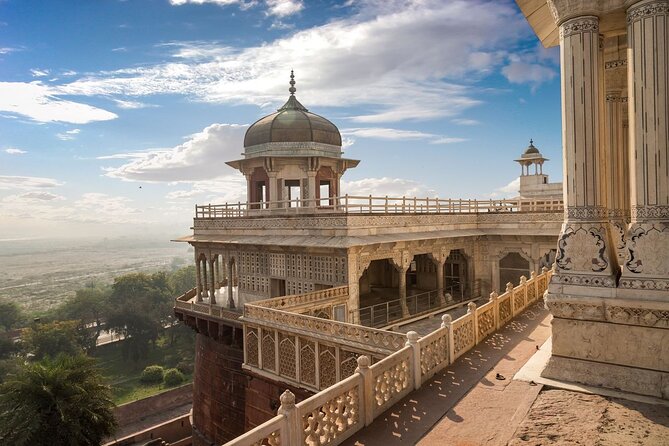
Right after Taj Mahal, you move to Agra Fort, described as a massive red stone structure built under the Great Mughal Emperor Akbar. This stop is shorter, about 1 hour, but it’s a good match after Taj because it shifts your focus from romance and white marble to power and fortification.
I like this sequencing for you because it teaches contrast. Taj Mahal helps you read “dynasty as emotion.” Agra Fort helps you read “dynasty as strategy.” Even in a one-hour window, you can usually spot how the fort’s architecture shapes movement and sightlines.
Admission is also marked free here. Still, keep an eye on steps and ramp angles. Fort sites often involve stairs and uneven areas, even when the tour time is short.
Itmad-ud-Daula, the Baby Taj: Why This Stop Is Worth Your Time
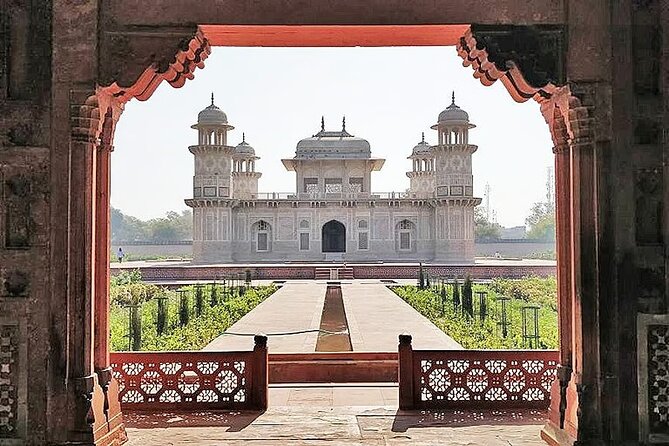
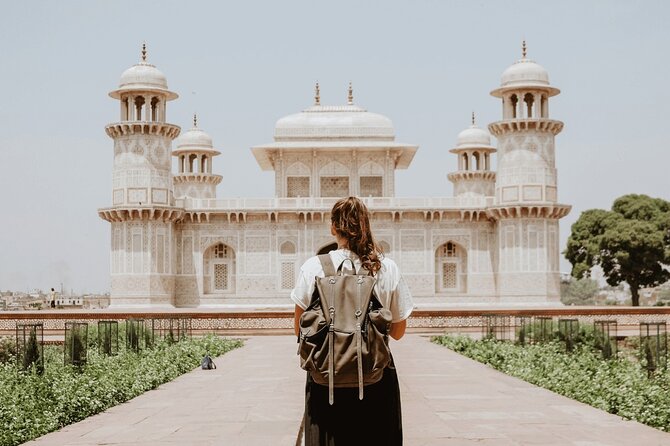
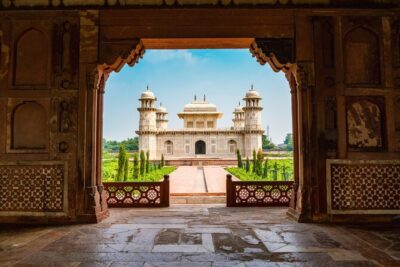
Itmad-ud-Daulah, often called the Baby Taj, gets about 1 hour and is labeled as a Mughal tomb known for intricate inlay work and delicate carvings. It was built in 1628 and is celebrated as a precursor to the Taj Mahal.
I’m glad this is included because it changes how you understand the Taj. If Taj feels like a masterpiece you admire from afar, Itmad-ud-Daulah helps you notice the craftsmanship and design steps that likely influenced what came later. Think of it as the detail-heavy cousin that rewards slower looking.
Admission is marked free for this stop, so you can keep your budget calm. Just don’t plan to “power walk” through it. The carvings are the point.






Pushkar After the Big Monuments: Pushkar Lake and Brahma Temple Energy
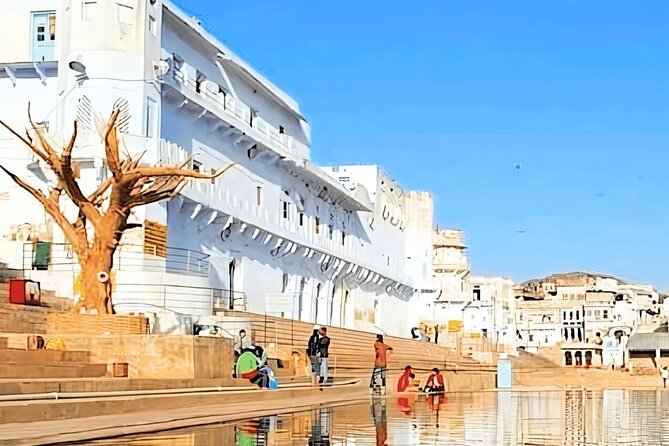
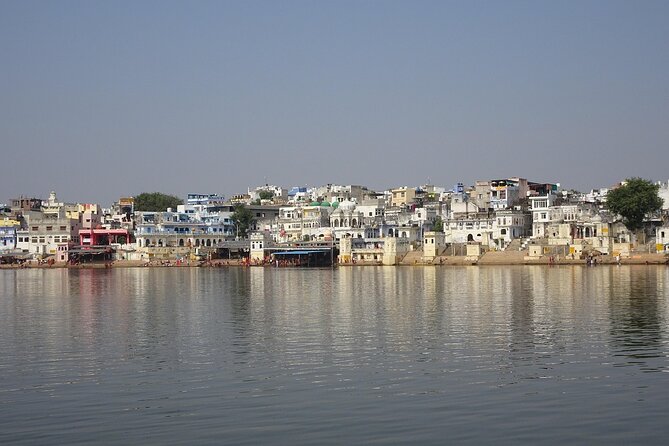
Pushkar is where your tour shifts gears. You’re set for about 6 hours, and the description leans into Pushkar as a serene desert oasis and a spiritual retreat. Pushkar Lake is the core, and the Brahma Temple is highlighted as a rare, distinctive stop.
The value here is rhythm. After days of Mughal architecture and fort walls, Pushkar gives you a chance to see how religion shows up in everyday life. You’ll also have time around bazaars, which means you’re not only seeing temples, you’re seeing how people live between them.
Admission is marked free for the Pushkar stop. That’s nice, but don’t assume it’s a light day. Six hours in a town around a sacred lake can include walking and crowds at peak times.
If you want the most satisfying experience, treat Pushkar like a place to watch people, not just a place to photograph monuments. A calm loop around Pushkar Lake plus temple time often feels more rewarding than trying to tick off every shop.
Jaipur Starts Strong at Amber Fort and City Palace
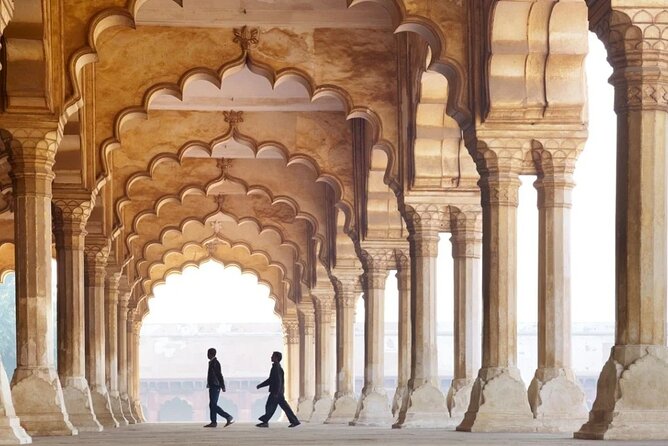
In Jaipur, the tour includes Amber fort and the City Palace, with Amber fort described as a majestic fort with spectacular views and rich Mughal history. The City Palace is described as a blend of Rajasthani and Mughal architecture, and the combined time here is about 1 hour, with admission marked included.
This is a key value move. Amber Fort is the kind of place where your photos will never fully capture the scale, and the views can make the city’s geography click. Even with a shorter time window, Amber’s fort walls and palace structures usually create a strong “wow” baseline for the day.
Practical note: Amber Fort areas can involve stairs and walking uphill. If you’re traveling with knee issues, you might want to tell your guide what pace you can handle so they can adjust where you spend your time inside.
Hawa Mahal, Jantar Mantar, and Quick Hits: Jaipur in Bite-Sized Blocks
After Amber and City Palace, Jaipur continues with iconic stops that are mostly short:
- Hawa Mahal, the Palace of Wind, about 30 minutes with admission not included
- Jantar Mantar, an observatory with the world’s largest stone sundial, about 1 minute with admission not included
- Panna Meena ka Kund, a 16th-century stepwell, about 30 minutes with admission not included
- Jal Mahal, the Water Palace in Man Sagar Lake, about 15 minutes, admission marked free
This is where your expectations matter. Jaipur’s big sights can sprawl, and the schedule keeps them efficient. Hawa Mahal deserves more time than 30 minutes if you love details, but 30 minutes can work well for a classic lattice-window moment and a few angles from different sides. Just go in ready to treat it as a quick architecture stop.
Jantar Mantar’s scheduled time is extremely short at about a minute. You’ll likely get a snapshot of the giant stone instruments and the basic idea of how they function, but you won’t get a long lesson. If you’re a science nerd or want depth, you may want to ask your guide for the 1 or 2 concepts that make the shapes meaningful, then move on.
Panna Meena ka Kund is worth leaning into during those 30 minutes. Stepwells can look like simple architecture in photos, but on site you understand how design solves water and community needs. Even with limited time, you can usually appreciate the structure and proportions.
Jal Mahal is a short pause at Jal Mahal on Man Sagar Lake. Because the admission is marked free and the time is brief, it works as a reset between heavier forts and observatories. It also offers a different visual mood, since the palace appears to float on water, at least from certain angles.
How the Private Setup Impacts Your Day, Safety, and Stress Level
This tour is labeled as private, meaning only your group participates. That sounds like a marketing line, but in practice it changes how smoothly your days tend to run. Private touring reduces the “where is everyone” problem and makes it easier for a guide to adjust pacing if you need a bathroom break or want an extra moment at a photo spot.
The feedback around drivers and guides emphasizes punctuality, English clarity, and safety. Names like Ali, Kamal, Mukesh, Dinesh, and Arjun come up in a way that points to reliable driving and helpful guidance. That’s not a small deal. In India, your day can fall apart if transport timing gets sloppy, and a steady driver helps you stay in rhythm with each monument stop.
Also, the mention of a clean car, even described as fragrant, is the kind of practical comfort that makes long road segments feel easier. When you’re doing multiple city changes, the small things matter more than they do on a short trip.
Admission Notes and the Real Cost: What’s Free and What Might Add Up
Many stops in this plan show admission ticket as free: New Delhi, Taj Mahal, Agra Fort, Itmad-ud-Daula, Pushkar, Amber area time is included, and Jal Mahal is marked free. Others are not included: Hawa Mahal, Jantar Mantar, and Panna Meena ka Kund.
So your actual cash cost may depend on which Jaipur sites you personally want to spend extra time in. If you’re the type who loves architectural details, you might end up paying for all the not-included stops to fully enjoy them. If you’re mostly after the headline photos, you may keep time tight and control costs.
Now the price itself is listed as $6.96 per person, which is surprisingly low compared to a multi-city tour. It might be a promotional or data-specific placeholder number, so I’d treat it as a starting point and confirm what it includes in your exact booking: transportation, guide time, and whether hotels in Agra and Jaipur are included. One booking example in the available info talks about transport and hotel options in Agra and Jaipur, but you should still verify details for your dates.
Who This Tour Fits Best (And Who Might Feel Rushed)
This route is a strong match if you want a first serious intro to North India without planning yourself. It also works well if you like a guided explanation, because so many stops become more meaningful when someone can connect what you see to who built it and why.
It’s also a good fit for small groups and couples, since private pacing helps you avoid the herd feeling that comes with larger tours.
You might feel rushed if you strongly prefer deep, unhurried time inside every monument. The Jaipur portion, especially the short stops at Jantar Mantar and Hawa Mahal, is built for efficiency. If you want more time, you may prefer to plan a longer stay in Jaipur separately.
Should You Book It? My Practical Take
If you want a well-structured road-trip sampler, this is a sensible choice. The big wins are the mix of Mughal architecture in Agra, the fort and palace foundation in Jaipur, and then the Pushkar slowdown that adds spirituality and local color beyond the Golden Triangle template. The other big win is the private-group setup, paired with the kind of dependable drivers and guides named in the feedback, including people like Ali, Kamal, Dinesh, and Mukesh.
My advice before you book is simple:
- Confirm what your price includes beyond admission tickets, especially hotels in Agra and Jaipur and any optional site costs.
- Plan for walking and stairs at forts and temple areas.
- In Jaipur, decide whether you’re willing to pay for the not-included icons like Hawa Mahal, Jantar Mantar, and Panna Meena ka Kund based on how much detail you want.
If that all sounds good, you’re likely to come away with a trip that feels full, not chaotic.
FAQ
How long is the Golden Triangle India and Pushkar tour?
The tour is described as 5 days covering Delhi, Agra, Jaipur, and Pushkar. The duration is also listed as approximately 1 day 16 hours.
Where does the tour start?
It starts in New Delhi, India.
Is pickup offered?
Yes, pickup is offered.
Is this tour private?
Yes, it is private, meaning only your group will participate.
Are entrance tickets included?
Some stops are marked admission ticket free (like Taj Mahal and Agra Fort). Others are marked admission ticket not included (like Hawa Mahal, Jantar Mantar, and Panna Meena ka Kund). City Palace in Jaipur is marked included.
Do I get a mobile ticket?
Yes, the tour includes a mobile ticket.
Can I get a full refund if I cancel?
Free cancellation is offered. You can cancel up to 24 hours in advance for a full refund, and cancellations within 24 hours are not refundable.
How many cities are covered?
You visit four key areas in this route: Delhi, Agra, Jaipur, and Pushkar.
More 5-Day Experiences in New Delhi


More Tours in New Delhi



More Tour Reviews in New Delhi
Not for you? Here's more nearby things to do in New Delhi we have reviewed









More Delhi City Tours to consider.
 ★ 5.0Old & New Delhi City Tour – Half or Full Day Options AvailableTickets from $384,811 traveller reviews
 ★ 5.0Same Day Taj Mahal, Agra Fort & Baby Taj Tour from Delhi by CarTickets from $624,304 traveller reviews
 ★ 5.0Taj Mahal Day Tour from Delhi by Superfast Train – TOP RATED TOURTickets from $1004,166 traveller reviews
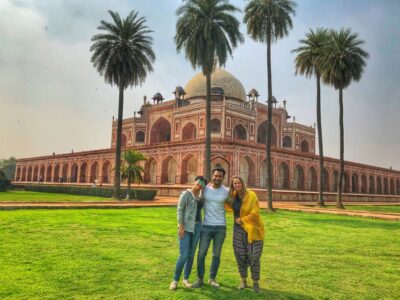 ★ 4.9Old and New Delhi Private Full or Half-Day TourTickets from $23,776 traveller reviews
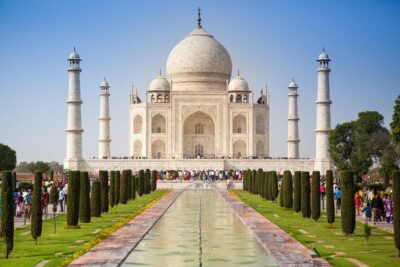 ★ 5.0Full Day Taj Mahal, Agra Fort & Baby Taj Tour from Delhi by CarTickets from $623,647 traveller reviews
 ★ 4.9From Delhi: Taj Mahal & Agra Private Day Trip with TransfersTickets from $43,181 traveller reviews
 ★ 5.0Taj Mahal Tour from Delhi by Express Train (Viator Award Winner)Tickets from $752,849 traveller reviews
 ★ 5.0All Inclusive Private Taj Mahal Luxury Tour from Delhi by CarTickets from $622,564 traveller reviews
More useful Delhi routes