
Review · DELHI CITY TOURS
From Delhi: Day-Trip to Jaipur with Hotel Pickup
A sunrise-to-Jaipur day can work wonders. I love the hotel pickup and drop-off that removes the logistics headache, and I also love having a private guide to translate what you are seeing, not just where to stand for photos. The main catch is the 5:00 am start, so you will want to be ready for a long day, even though it is still lighter than driving yourself.
This is a small group tour, capped at 10 people, with an air-conditioned vehicle and bottled water. You also get a guided route that hits the big-name sights you came for: Amber Fort, City Palace, Jantar Mantar, and Hawa Mahal, plus a couple of well-timed photo stops. Do note the tour does not include lunch, and your day can feel a bit time-pressured depending on traffic and photo stops.
Key things to know before you go

- 5:00 am departure from Delhi means an early wake-up, but it maximizes sightseeing time in Jaipur
- Local guide included to help you understand Amber Fort, the palace complex, and the astronomy instruments
- Skip-the-ticket-line style advantage is part of the experience plan
- Entry fees may be included if you choose the all-inclusive private tour option
- No lunch included, so plan your food strategy before the day starts
The 5:00 am Delhi start, and why you should embrace it
This trip is built around an early departure, starting at 05:00 am from Delhi. Yes, it is early. But that timing matters because Jaipur is far enough that sleeping in often turns a day tour into a late-arriving scramble.
If you are staying in New Delhi, Noida, or Gurgaon, you meet your driver at your accommodation (or at the Delhi airport if you picked that option). From there, you are in an air-conditioned vehicle, which makes the long transfer far more manageable than DIY travel in a hired car with stop-and-go decisions.
I also like that there is a midday rhythm, with a refresh stop on the way back. It is the kind of practical detail that keeps the day from feeling like one continuous grind.
You can also read our reviews of more tours and experiences in New Delhi.



Delhi to Jaipur by private air-conditioned vehicle
The vehicle part is simple, which is exactly what you want on a day trip. You get private transportation and bottled water, so you are not hunting for basics or fighting over where to meet.
You have multiple pickup locations available: Jaipur, New Delhi, and Jaipur International Airport. That is a little unusual for a day trip that explicitly starts from Delhi at 05:00 am, so I strongly suggest you double-check your exact pickup time based on where you selected. When timing matters, clarity beats guessing.
This transfer setup is especially valuable if you are not in the mood for planning. Driving yourself means you are mapping, parking, and dealing with your own itinerary. Here, you are basically along for the ride, with a guide handling the flow.
Amber Fort, the first big stop that sets the tone
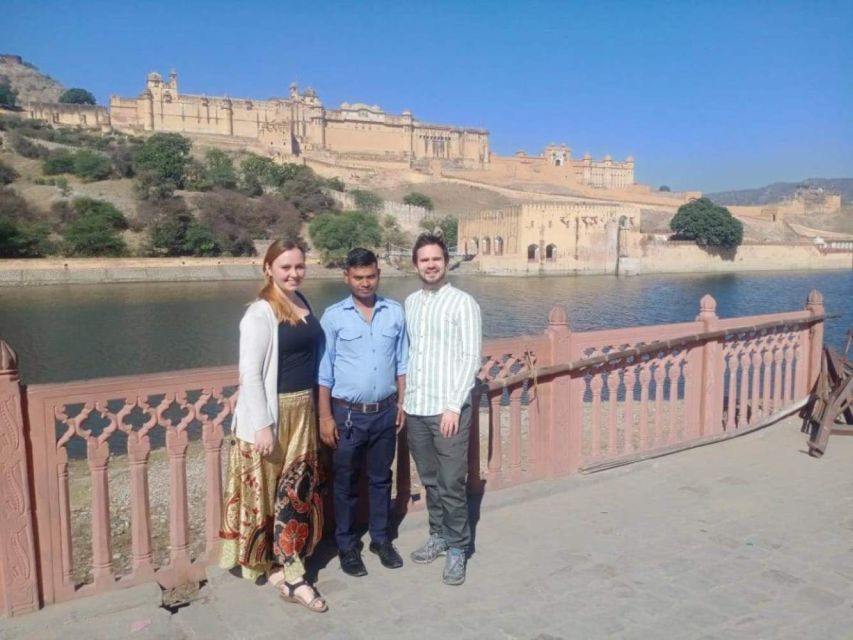
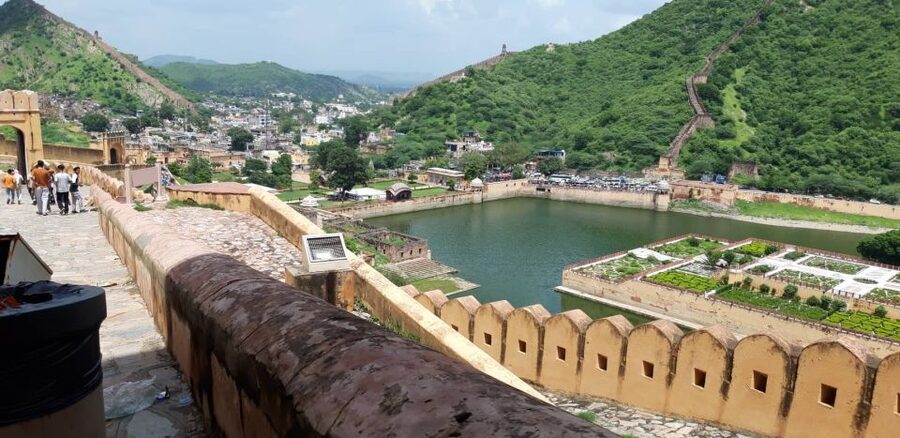
Your day starts in Jaipur with Amber Fort, a fort-palace complex perched above the city in the Aravalli Hills area. It is about 11 km from Jaipur, and the setting is part of the effect, because the fort looks like it belongs to the hill it crowns.
Amber Fort was built around 1600 by Raja Man Singh, who served as commander-in-chief of the Mughal army during Akbar’s reign. That Mughal Rajput connection is a key theme you will see across Jaipur, so this stop gives you a foundation.
One fun historical detail to keep in mind as you walk around: the fort complex made headlines after Independence, because it was considered a likely hiding place of the Kuchwahas’ famous lost treasure. Even if you do not chase the full story, hearing that kind of legend makes the space feel more alive than a list of walls and courtyards.
Practical note: come ready for walking on uneven surfaces. Comfortable shoes are not optional here. Also, if you are sensitive to heat or crowds, your early start helps, but wear breathable clothes.
Jal Mahal photo stop and the road into pink Jaipur
After Amber Fort, you get a short Jal Mahal photo stop. This is not an in-and-out museum visit. It is a quick pause for pictures and then you are back on the move.
Jal Mahal sits as a visual landmark that helps you understand Jaipur’s geography, and it also breaks up the day. That matters because day trips can become one long sequence of monuments. A photo stop resets your attention.
Then you drive through parts of Jaipur, including the pink rose residential and business areas. You will also drive past Hawa Mahal during the routing. I like this “drive-through context” because it helps you get your bearings fast, without adding extra stops.
If you like street-level Jaipur, pay attention out the window on the way between sights. You are not just going from one ticket to the next, you are seeing how the city looks as a living place.
City Palace: where Rajasthani and Mughal style meet
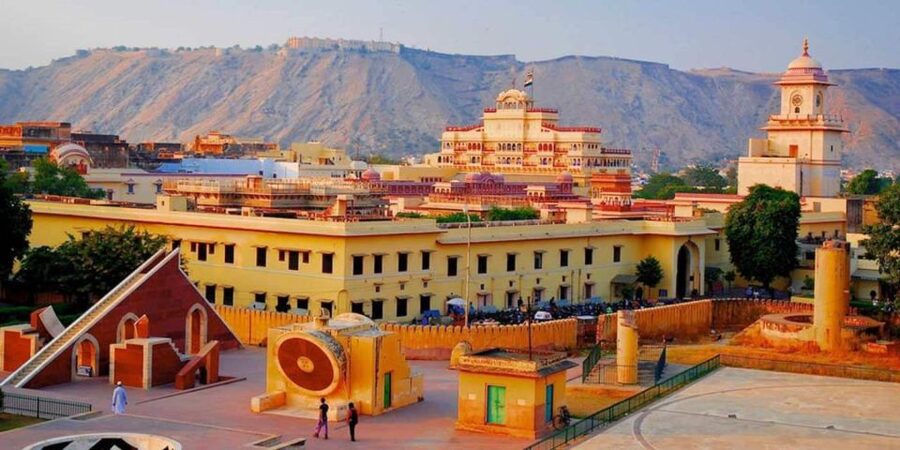
City Palace is where the day becomes more than just iconic views. It is a palace complex with a blend of Rajasthani and Mughal architecture, and it includes buildings, courtyards, gateways, and temples.
This is also where you can understand how Jaipur’s rulers shaped the city in a practical way. The architecture is not only decorative, it is designed for how power was expressed, managed, and displayed.
Inside the complex, you will focus on key elements such as the Chandra Mahal, the palace facade described as a 7-story structure, plus the marble Mubarak Mahal. The guide also connects you to the civic spaces, including the Diwan-e-Aam and Diwan-e-Khas, the halls associated with public and private audiences. And there is a living element too: Chandra Mahal is still connected to the present royal family.
One thing I would suggest for your expectations: City Palace can feel like “lots of parts” rather than one single highlight. Go slow, let your guide explain what you are seeing, and prioritize the spaces that match your interests. If you only rush for photos, you might miss the details that make the palace feel coherent.






Jantar Mantar: Jaipur’s science in stone
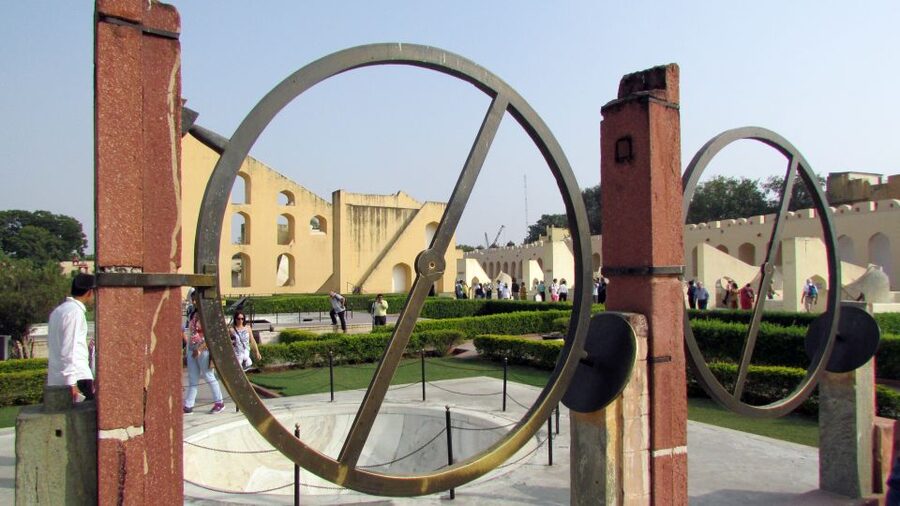
Next comes Jantar Mantar, the UNESCO World Heritage site made up of 19 architectural astronomical instruments, completed in 1734. This stop is valuable because it balances the visual drama of forts and palaces with a completely different kind of achievement.
The guide can help you understand how the instruments were designed to measure time and sky positions. The site is especially famous for the world’s largest stone sundial, and it is one of those places where it helps to know what you are looking at.
Because this is astronomy in built form, it is not only about scale. It is about precision and intention. Even if you are not a science person, you can still appreciate the logic of a city that treated observation as a serious tool.
If you prefer quieter moments, pay attention to pacing. This stop is near City Palace and Hawa Mahal in the overall layout, so you can feel the daylight shift and the foot traffic pattern changes.
Hawa Mahal and the logic of a palace façade
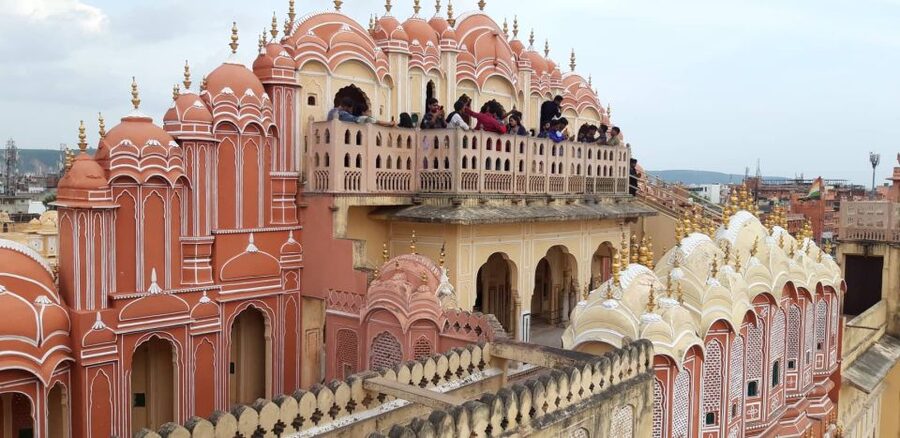
Hawa Mahal, the Palace of Winds, is one of Jaipur’s most recognizable structures. It is built from red and pink sandstone and sits on the edge of City Palace, stretching toward the zenana, the women’s chambers.
The construction date is 1799, ordered by Maharaja Sawai Pratap Singh. That detail helps because the façade is not random beauty, it is connected to a specific time and purpose.
What I like about Hawa Mahal on a day tour is that you can understand it quickly. The shape is instantly striking, and your guide can explain how the façade design works for light and ventilation, and why it looks the way it does.
This is also where the day can feel photo-heavy. The good news is that you will get photo time. The trade-off is that you might want to keep your priorities tight. Take your shots, then listen to the guide as you move, so the building becomes more than a background.
Timing, rest breaks, and the shopping pressure question
Even with a planned route, a day trip depends on the real world: traffic, crowds, and time spent at each stop. You get a rest break on the way back, with opportunities like washroom access and a chance to refresh.
Now, a practical reality check. One past experience with this kind of format included being taken to sales-focused stops, along with reminders about tipping and paid add-ons at lunch or rest areas. I cannot guarantee every day will go the same way, but it is smart to plan for that possibility.
Here is what I recommend:
- Ask your guide in the morning if there are any shopping stops built into the schedule.
- If you do not want to buy anything, be clear and stick to your preference.
- Keep small cash for occasional extras, since lunch is not included and water or snacks at rest areas can cost more.
Tipping expectations can be culture-specific and tour-specific, so if you like the guide’s work, have a plan for how you want to handle it. It is better to decide before you arrive at a moment where you feel pressured.
Price and value: what about $30 really covers
This tour is listed around $30 per person, with a duration of 8 to 14 hours. That range is wide, which usually means your real time depends on traffic and how long each stop takes.
What makes the value feel real is that you are not only buying entry into sights. You are paying for:
- Hotel pickup and drop-off
- Private transportation
- A local guide
- Bottled water
- A skip-the-ticket-line advantage
- Entry fees if you choose the all-inclusive private tour option
Lunch is not included. So for $30 to feel like a good deal, you need to either budget for lunch separately or bring your own snack strategy (within what is allowed). If you like having a day that runs on rails, the missing lunch can be the main downside.
Also remember the tour is capped at 10 participants. That can make a difference in how quickly you move and how much your guide can tailor explanations.
What to bring, what to watch out for
You have a short packing checklist, and it makes sense for a long day:
- Passport or ID card (you must carry valid ID proof during the tour)
- Comfortable shoes
- Towel
- Comfortable clothes
The tour also lists rules on what is not allowed: drones, alcohol and drugs, and chewing gum. If you travel with anything that might be considered a problem, leave it at the hotel.
Health and suitability matter too. The tour is not suitable for pregnant women, people under 120 cm, or anyone with altitude sickness. Jaipur is not the Himalayas, but this is still a clear rule from the operator, so take it seriously.
Good news on comfort: it is listed as wheelchair accessible. If you use a mobility device, double-check details with the provider before you go so the route is realistic for your needs.
Best fit: who will enjoy this Jaipur day trip most
This experience is a strong match if you want Jaipur highlights without the stress of arranging your own transportation. You will especially like it if:
- You only have one day in the Delhi area
- You prefer a structured route with a guide explaining what you are looking at
- You want to avoid car hire planning and timing headaches
It might feel less ideal if you dislike early mornings, or if you hate any chance of shopping add-ons. If you are the type who wants freedom to linger in one place and skip another, a fixed itinerary might feel strict. On the flip side, day trips like this are built to keep you moving so you see the core sights.
Should you book this Delhi to Jaipur day trip?
I think you should book it if your priority is efficiency plus guidance. Hotel pickup, private transportation, and a guide who can connect the dots between Amber Fort, City Palace, and the astronomy at Jantar Mantar are real advantages for a one-day visit.
You should pause and ask extra questions if you dislike any shopping stops or you are sensitive to extra charges beyond the listed inclusions. Since lunch is not included, plan your food budget ahead of time and bring what you need for comfort.
If you can handle a 05:00 am start, this is one of those trips that saves you planning energy while still delivering Jaipur’s headline sights in a single day.
FAQ
What time does the tour start?
The tour is scheduled to start at 05:00 am from Delhi.
How long is the day trip?
The duration is listed as 8 to 14 hours. Exact timing depends on availability and the day’s schedule.
Where can I be picked up?
Pickup options include Jaipur, New Delhi, and Jaipur International Airport. If you are in Delhi, pickup is also described as meeting your driver at your accommodation in Delhi, Noida, or Gurgaon, or at the Delhi Airport.
What is included in the price?
Included items are an air-conditioned vehicle, private transportation, hotel pickup and drop-off, a local guide, bottled water, and entry fee if the all-inclusive private tour option is selected.
Is lunch included?
No, lunch is not included.
Which sights are part of the itinerary?
The itinerary includes Amber Fort, City Palace, a Jal Mahal photo stop, Hawa Mahal, and Jantar Mantar.
What should I bring, and are drones allowed?
Bring a passport or ID card, comfortable shoes, a towel, and comfortable clothes. Drones are not allowed.
More Tour Reviews in New Delhi
Not for you? Here's more nearby things to do in New Delhi we have reviewed










More Delhi City Tours to consider.
 ★ 5.0Old & New Delhi City Tour – Half or Full Day Options AvailableTickets from $384,811 traveller reviews
 ★ 5.0Same Day Taj Mahal, Agra Fort & Baby Taj Tour from Delhi by CarTickets from $624,304 traveller reviews
 ★ 5.0Taj Mahal Day Tour from Delhi by Superfast Train – TOP RATED TOURTickets from $1004,166 traveller reviews
 ★ 4.9Old and New Delhi Private Full or Half-Day TourTickets from $23,776 traveller reviews
 ★ 5.0Full Day Taj Mahal, Agra Fort & Baby Taj Tour from Delhi by CarTickets from $623,647 traveller reviews
 ★ 4.9From Delhi: Taj Mahal & Agra Private Day Trip with TransfersTickets from $43,181 traveller reviews
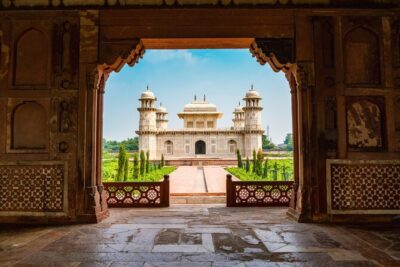 ★ 5.0Taj Mahal Tour from Delhi by Express Train (Viator Award Winner)Tickets from $752,849 traveller reviews
 ★ 5.0All Inclusive Private Taj Mahal Luxury Tour from Delhi by CarTickets from $622,564 traveller reviews
More useful Delhi routes