
Review · DELHI CITY TOURS
Delhi Agra Jaipur 4 Days Tour – Golden Triangle India
Four days can feel like three lifetimes. This Delhi, Agra, Jaipur Golden Triangle route packs the headline sights you actually came for, with a smooth pace and a big finale built around Taj Mahal at sunrise. I like that you travel with a private, air-conditioned car and a licensed driver, so you spend less time stuck in logistics and more time looking at the details. I also like how the plan links major landmarks back-to-back, so you build a clear sense of how Mughal and Rajput eras shaped the region.
One consideration, though: the trip includes several free stops and some admissions are marked included, but the overall tour terms say entrance tickets for the mentioned monuments may not be included. I’d treat that as a confirm-before-you-go item, along with meals since lunch and dinner are not included.
Key highlights worth planning for

- Taj Mahal at sunrise as the big Agra closer, timed for that first-light magic
- Private transport with an experienced licensed driver, so your day runs on your group’s schedule
- Delhi classics in one day, including Humayun’s Tomb and Qutub Minar with their included admission notes
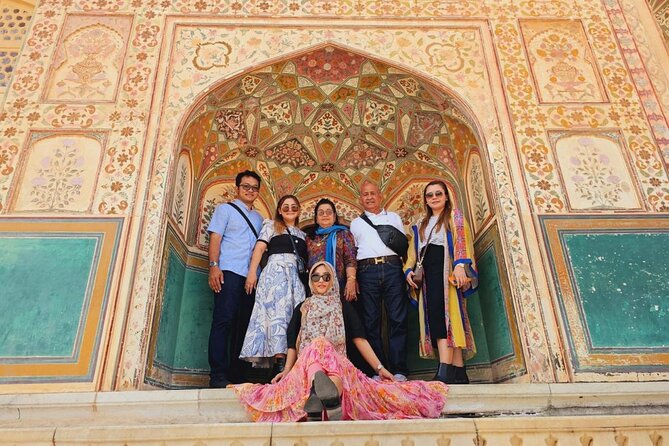
- Jaipur essentials across multiple styles, from Amber Fort to Jantar Mantar and City Palace
- Agra depth beyond the Taj, adding Agra Fort and Itmad-ud-Daula, often skipped on rushed tours
- Stepwells and Mughal capital leftovers, mixing Chand Baori with Fatehpur Sikri
Value and what $170.21 really buys you

At about $170.21 per person for a 4-day Golden Triangle, the headline value is that you are not just buying sightseeing, you’re buying fewer moving parts. You get private air-conditioned car transport, an experienced licensed driver, and a professional live guide. There are also unlimited water bottles during travel and sightseeing, which matters in Delhi, Rajasthan, and Agra when you’re walking more than you planned.
The “watch out” value note is that the tour does not include lunch and dinner, and drinks at meals are also not included. The same pattern can apply to entrances too. The route includes several stops listed as free (like India Gate and Rashtrapati Bhavan), but you’ll want clarity on which monument entrances are handled for your specific booking.
If you pick the accommodation option, you’ll stay in 3, 4, or 5-star hotels depending on what you selected. That’s a big deal for a 4-day sprint, because getting your sleep situation right helps you enjoy the early starts and longer walking days.
More New Delhi tours and experiences for the shortlist



How the “private tour” changes your whole day
This is a private tour/activity, meaning it’s your group only. That matters more than it sounds. In India, the biggest time-wasters are waiting around, traffic surprises, and unclear meeting points. A dedicated car plus a licensed driver reduces that stress, and your guide can keep the flow tight since the group is predictable.
You also get a mobile ticket, which is handy if you want to keep things in your phone and move faster at check-in points.
From the guide feedback in the information you provided, a consistent theme is that guides keep things friendly and handle small problems with a calm approach. Names like Amir Khan, Amet, and Ahmed come up for being caring and attentive, including moments where the guide helped solve issues and kept people at ease. Even if you don’t have the exact same guide, that tone is a useful indicator of what the service is aiming for.
Day 1 in Delhi: from Rashtrapati Bhavan to Qutub Minar
Day 1 is your Delhi “greatest hits” day, designed to give you landmarks you can immediately recognize, plus two sites that explain why UNESCO-like monuments are treated like big deals.
Rashtrapati Bhavan
You start at Rashtrapati Bhavan, completed in 1929 and originally built as the Viceroy’s House. After independence, it became the President’s residence. Even if you only spend about 30 minutes, you get a clear visual timeline of political power shifting from colonial rule to independent India.
This is also one of the listed free admission stops, so it helps you keep early costs down.
India Gate
Next is India Gate, built in 1931 as a war memorial honoring Indian soldiers who died in World War I. It’s the kind of monument that makes you pause because it’s not just architecture, it’s remembrance. You’ll also get another listed 30-minute stop with free admission.
If you’re coming from a time zone shift, this kind of open, easy-to-walk landmark is a good “warm-up” before the more time-and-step-heavy tomb and minaret sites.






Humayun’s Tomb
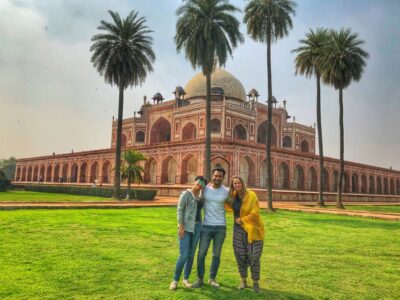
Humayun’s Tomb is where Delhi starts feeling like the Mughal era you’ve heard about in books. It was built in 1570 and commissioned by Empress Bega Begum in memory of her husband, Mughal Emperor Humayun. You’re scheduled for about 1 hour, and the admission note says it’s included.
This is a strong stop for understanding the evolution of Mughal tomb design. You’ll see why later monuments, including the Taj Mahal, get compared so often.
Qutub Minar
You finish at Qutub Minar, a towering monument reaching 73 meters and built beginning in 1193 by Qutb-ud-Din Aibak. It’s known for intricate carvings and its status as a world-famous tall brick minaret.
The plan gives you about 1 hour here with admission marked included. The drawback is simple: by this point you’ll have walked a lot, and you’ll want comfy shoes. If you hate walking, bring that up early so your guide can manage pacing.
Day 2 in Jaipur: Amber Fort, Hawa Mahal, Jantar Mantar, City Palace
Day 2 turns Jaipur from a name on a map into a place with layers. You get fort drama, a signature palace façade, astronomy instruments, and a royal complex.
Amber Fort (with the best “wow per minute” feeling)
Amber Fort is built in the 16th century by Maharaja Man Singh and tied to Emperor Akbar through alliance connections. You’re scheduled for about 2 hours with admission marked included.
Amber Fort is usually the kind of stop where you can’t rush it. The architecture and scale take a moment to land. If you can handle a full walking session, this is the day’s anchor experience.
Practical note: forts mean stairs, uneven ground, and sun exposure. Plan for that and you’ll enjoy it more.
Hawa Mahal, the Palace of Wind
Hawa Mahal is the famous pink façade with 953 intricately designed windows. It was built in 1799 by Maharaja Sawai Pratap Singh. The schedule gives you about 15 minutes, and the admission note says free.
This is the stop you do quickly, then remember later. It’s not that it takes forever to see, it’s that it’s photogenic in a way that sticks with you.
If you’re the type who hates crowds and lines, a shorter timed stop can be a win.
Jantar Mantar
Next is Jantar Mantar, an astronomical observatory built in 1734 by Maharaja Jai Singh II. You’ll have about 30 minutes with admission marked included.
What I like about this stop is that it breaks the pattern. You’re not only looking at royal buildings. You’re looking at scientific design in stone, including massive instruments like the Samrat Yantra (a giant sundial).
If you prefer hands-on experiences, you might wish there were more time here to read and slow down. But 30 minutes is enough to get the idea.
City Palace of Jaipur
You end at City Palace, built in the 18th century by Maharaja Sawai Jai Singh II. It mixes Rajput, Mughal, and European architectural styles. You’re scheduled for about 45 minutes, and admission is marked included.
City Palace is where Jaipur feels like a living museum. The main drawback is pacing. If you’re tempted to take every photo from every angle, this is where your time can evaporate. Keep your priorities and you’ll finish satisfied rather than rushed.
Day 3 beyond Jaipur: Chand Baori and Fatehpur Sikri

Day 3 is the day of the “wait, this is real?” moments. You’re leaving the obvious city comforts for two sites that feel like they belong to older worlds.
Chand Baori, Abhaneri stepwell
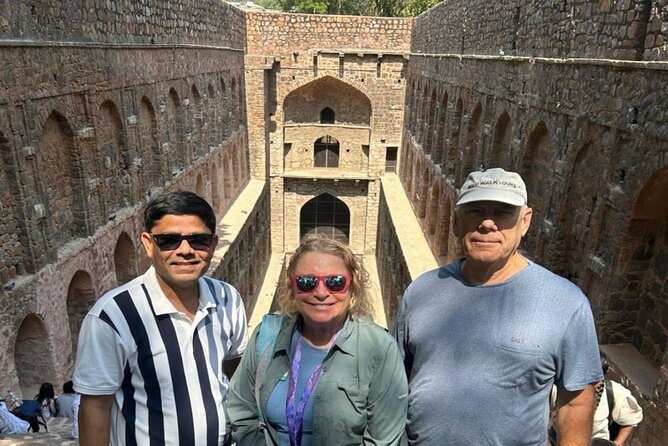
Chand Baori in Abhaneri is one of the deepest and largest stepwells, built around the 9th century by King Chanda. The structure features about 3,500 narrow steps arranged in a pattern.
Your time here is about 30 minutes, and admission is marked included. This stop hits differently than palaces and tombs. It’s a functional structure that became spectacular, and it gives you a strong sense of how people engineered water access long ago.
If you’re short on mobility or hate lots of stair steps, this is the one day you should think carefully. The experience is mostly about the steps.
Fatehpur Sikri and the Panch Mahal
Next is Fatehpur Sikri, built by Emperor Akbar in the 16th century as a former capital city. It’s known for grand architecture like the Buland Darwaza and Jama Masjid. The stop also mentions Panch Mahal.
You get about 1 hour 9 minutes, with admission marked included. This time window is tight but workable if your expectations are set. You’ll get to understand the overall site and see the major features without turning the day into a marathon.
The practical challenge is heat and walking across large outdoor spaces. If you travel in warmer months, keep water in mind even with the included bottles.
Day 4 in Agra: Taj Mahal, Agra Fort, and Itmad-ud-Daula

Day 4 is the big finish. You’re hitting the Taj Mahal, then adding two Agra stops that help you see the city as more than a one-building checklist.
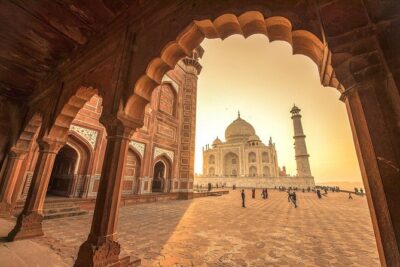
Taj Mahal at sunrise
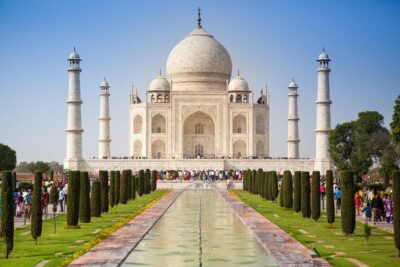
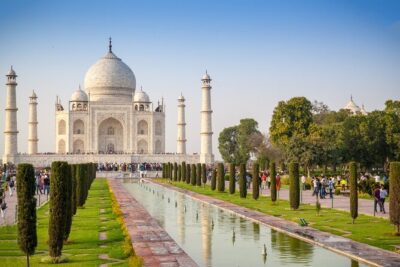
The tour description highlights the Taj Mahal at sunrise, which is exactly the moment you want for softer light and that early-day calmer feeling. The Taj Mahal is built by Shah Jahan in the 17th century in memory of Mumtaz Mahal.
You’re scheduled for about 2 hours, and admission is marked included. Two hours is enough to take in the symmetry, walk your path slowly, and still have time for photos without feeling like you’re doing speed tourism.
Bring patience. This is one of the world’s most famous sights, so you’ll spend some energy navigating people and timing.
Agra Fort
Next is Agra Fort, built by Akbar in 1565, located about 2.5 km from the Taj Mahal. It began as a military stronghold and later became the center of Mughal power. You have about 1 hour, with admission marked included.
Agra Fort helps you understand the city’s power base. It’s less “instant awe” than the Taj, but it often feels more satisfying if you like stepping into the logic of empire and defense.
Itmad-ud-Daula, the Baby Taj
Finally, you visit Itmad-ud-Daula, built in the 1620s by Empress Noor Jahan for her father Mirza Ghiyas Beg, often called the Baby Taj. The schedule lists about 39 minutes, with admission marked included.
This is a great last stop when you want something calmer after the biggest crowds. It also rounds out your Mughal tomb experience with a slightly different mood and scale.
Tickets, meals, and timing: how to avoid surprise costs
Here’s the one thing that can throw off the math, and it’s worth getting straight early.
- The “Not Included” terms say entrance tickets for the mentioned monuments are not included.
- The stop details label some sites as Free and others as Admission Ticket Included.
- Meal costs are clearly not included, including lunches and dinners and any drinks served with those meals.
So what do you do? When you book, confirm exactly which monuments have admission handled for your selected package level, and whether hotel category affects anything tied to entrances. This one question can save you from paying for tickets twice or getting stuck mid-day without the right cash.
For meals, plan an easy strategy. Since lunch and dinner are not included, you’ll want either a budget for daily meals or a simple plan to eat near the route. Keep in mind that you’ll likely want quick, reliable food that won’t require long detours.
Who this tour is best for (and who should choose a different format)
This 4-day Golden Triangle tour is a strong match if you want big, recognizable monuments without spending your vacation decoding transportation. You’ll like it if you prefer a set route with a professional live guide and you want your time in each city to feel purposeful.
It’s also a good fit for first-time India trips, especially if you appreciate a guide who can keep things running smoothly. The service tone described by named guides includes caring attention and staying upbeat.
But if you’re the type who wants long free time in each location to wander at your own speed, this might feel packed. The stops do have scheduled durations, and you’ll be moving from site to site across three cities plus Abhaneri and Fatehpur Sikri.
Should you book this 4-day Delhi Agra Jaipur Golden Triangle?
I’d book it if your goal is a well-paced checklist of Delhi landmarks, Jaipur royal sights, and Agra’s top tomb experiences, wrapped in private transport and a live guide. The value is especially strong if you want someone handling the flow so you can focus on seeing.
Hold off or confirm details first if entrance tickets are a big part of your budget and you don’t want surprises. Also, if you hate walking, pay close attention to stops like Amber Fort and Chand Baori, which naturally involve more movement than a quick city drive-by.
If you can handle a full 4 days and plan meals separately, this is the kind of Golden Triangle sprint that makes you feel like you got the essentials and still had room to enjoy them.
FAQ
How long is the Delhi Agra Jaipur Golden Triangle tour?
It runs for about 4 days (approx.), covering Delhi, Jaipur, Agra, plus stops in Abhaneri and Fatehpur Sikri.
What is the price per person?
The listed price is $170.21 per person.
Does the tour include pickup?
Pickup is offered.
Is the tour private?
Yes, it’s a private tour/activity, and only your group will participate.
What transportation is included?
Transport by a private air-conditioned car is included, along with an experienced licensed driver.
Is a live guide included?
Yes, the tour includes a professional live tour guide.
Are meals included?
No. Lunch and dinner are not included.
Are drinks included with meals?
No. Drinks served with lunch, dinner, or breakfast are not included.
Are monument entrance tickets included?
The tour includes some sites that are marked free, and some stops are marked as having admission included in the day breakdown. However, the tour terms also list entrance tickets of all mentioned monuments as not included, so you should confirm what your booking includes.
Does the tour include hotel stays?
Accommodation in 3, 4, or 5-star hotels is included if you select that option.
What is the cancellation policy?
Free cancellation is offered. You can cancel up to 24 hours in advance for a full refund, and changes within 24 hours are not accepted.
More 4-Day Experiences in New Delhi



More Tours in New Delhi



More Tour Reviews in New Delhi
Not for you? Here's more nearby things to do in New Delhi we have reviewed








More Delhi City Tours to consider.
 ★ 5.0Old & New Delhi City Tour – Half or Full Day Options AvailableTickets from $384,811 traveller reviews
 ★ 5.0Same Day Taj Mahal, Agra Fort & Baby Taj Tour from Delhi by CarTickets from $624,304 traveller reviews
 ★ 5.0Taj Mahal Day Tour from Delhi by Superfast Train – TOP RATED TOURTickets from $1004,166 traveller reviews
 ★ 4.9Old and New Delhi Private Full or Half-Day TourTickets from $23,776 traveller reviews
 ★ 5.0Full Day Taj Mahal, Agra Fort & Baby Taj Tour from Delhi by CarTickets from $623,647 traveller reviews
 ★ 4.9From Delhi: Taj Mahal & Agra Private Day Trip with TransfersTickets from $43,181 traveller reviews
 ★ 5.0Taj Mahal Tour from Delhi by Express Train (Viator Award Winner)Tickets from $752,849 traveller reviews
 ★ 5.0All Inclusive Private Taj Mahal Luxury Tour from Delhi by CarTickets from $622,564 traveller reviews
More useful Delhi routes