
Review · DELHI CITY TOURS
Delhi Agra Jaipur Udaipur Rajasthan 9 Days Tour From New Delhi
Golden Triangle, minus the rush, plus Udaipur. This 9-day private tour strings together Delhi, Agra, Jaipur, Jodhpur, and Udaipur at a relaxed pace, with major UNESCO stops like the Taj Mahal built into real, guided sightseeing days. You also get a local-guide take on culture, not just a bus-window checklist.
What I like most is the way the day-by-day flow stays practical: AC chauffeur transfers, door-to-door pickup and drop-off, and enough structure to see a lot without feeling frantic. I also appreciate the built-in logistics help, like skip-the-line style monument entry and a battery rickshaw option to make the Taj area less exhausting.
One thing to watch before you book: the price covers a lot of the running parts, but monument entrance fees and accommodations are not included, and the guide experience can vary. Some past groups noted being taken to shops and being reminded to tip, so you’ll want to set expectations early.
Key highlights worth putting on your shortlist
- Private driver and local city guides to keep context clear as you move between centuries.
- Door-to-door transfers in an air-conditioned car, with tolls, parking, and fuel handled.
- Taj Mahal area logistics, including skip-the-line style entry support and a battery rickshaw from the parking area.
- Lots of UNESCO time across cities, not just one big-ticket stop.
- Included free stops plus paid monuments, so you’ll want to budget entrance fees and your hotel costs separately.
- Driver consistency can make or break the vibe, with some groups praising guides by name and others flagging pushy shopping.
Golden Triangle, plus the Rajasthan detour that actually feels worth it
This is built for first-timers who want North India’s headline sights, but without the sprinting. You cover the classic triangle routes, then continue into Rajasthan with Jodhpur and Udaipur, which is where the trip starts to feel more personal and less postcard-only.
Because it is a private tour, the pace and route can work around your preferences. If you have older family members, or you just do not want to wrestle with timing on your own, this format makes a big difference. It also means fewer surprises with transport, since the plan includes hotel pickup and drop-off by private car.
You can also read our reviews of more tours and experiences in New Delhi.



Delhi city tour: Jama Masjid, Chandni Chowk, Humayun’s Tomb, and the UNESCO hits
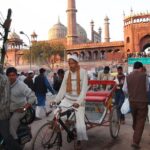
Delhi is where you decide what kind of traveler you want to be. The tour starts in Old Delhi with Jama Masjid, the huge Friday Mosque, then moves to Chandni Chowk, famous for spices and shopping energy. You even get time for a tuk-tuk ride there, which is a quick way to feel the market’s rhythm without walking the whole maze.
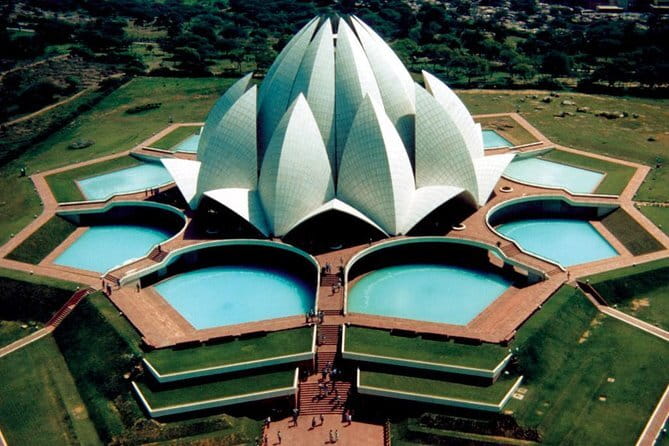
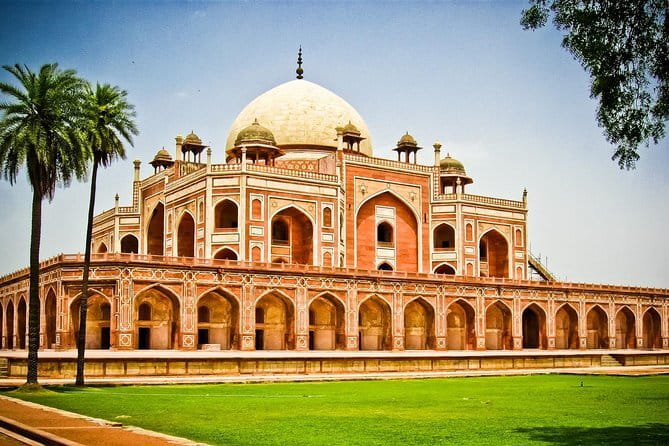
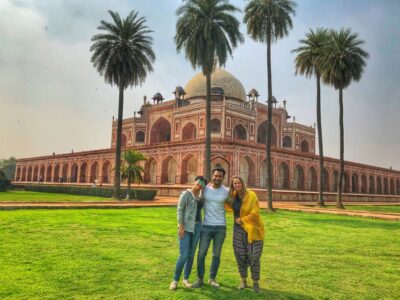
From there, you transition to Delhi’s Mughal and imperial landmarks. Humayun’s Tomb gives you a UNESCO stop that is easier to savor than the more crowded big names, and it sets up the Mughal story that later pays off in Agra. Then comes the calm change of mood at the Lotus Temple, followed by the vertical drama of Qutub Minar, another UNESCO standout.
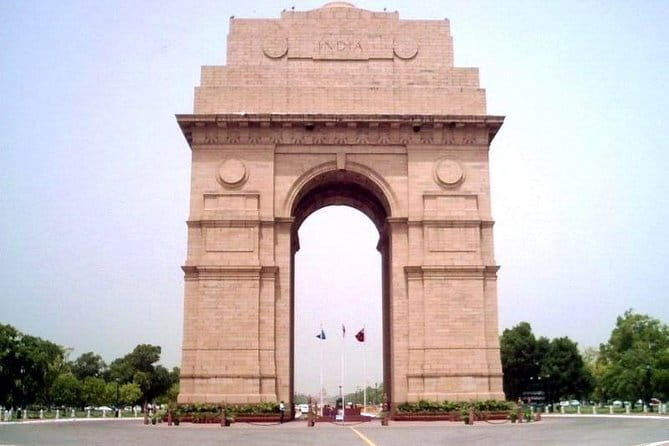
The day ends with the more modern monuments and the imperial-style government architecture: India Gate for the WWI memorial, and a quick Rashtrapati Bhawan peek. Even if some of these are short visits, having them slotted with a guide helps you read what you are looking at instead of just taking photos.
Practical note: entrance fees are listed as not included for several major sites in Delhi, so plan to pay for the paid ones separately. The free stops are still worth it, especially the ones that show Delhi’s contrast, old markets and grand monuments side by side.
Agra without the stress: Taj Mahal logistics, Agra Fort, and Itmad-ud-Daula
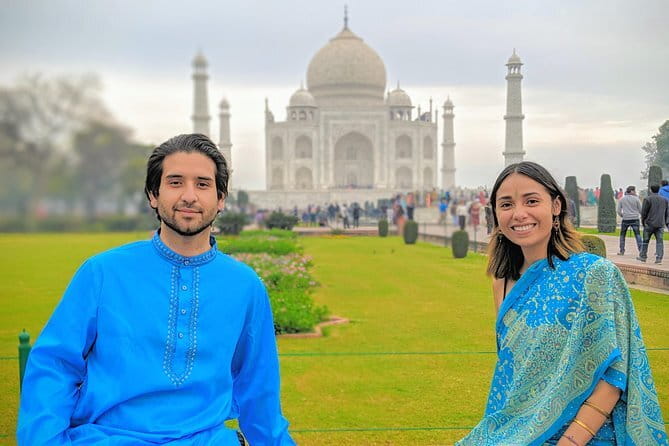
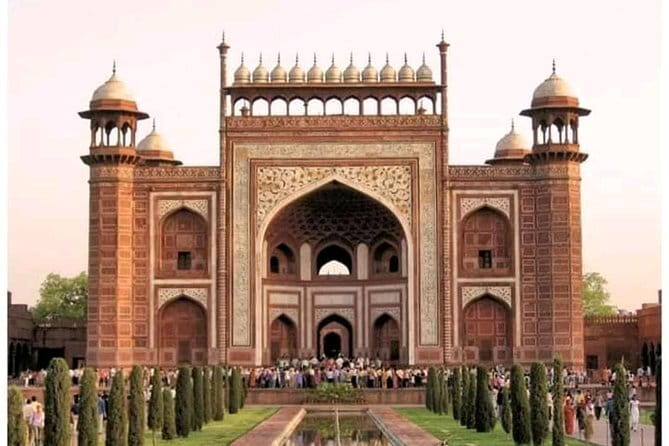
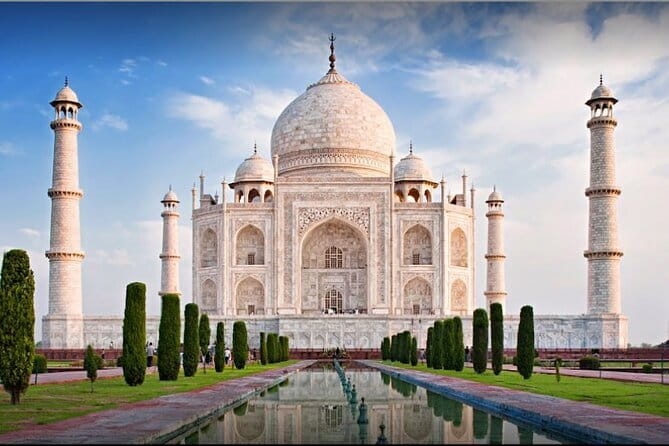
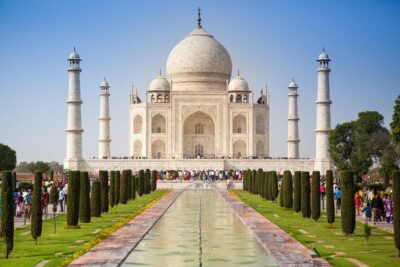
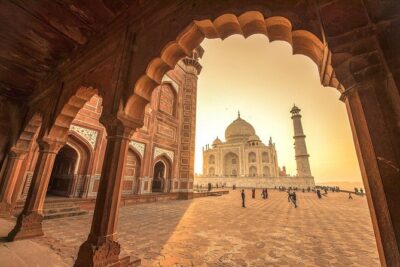
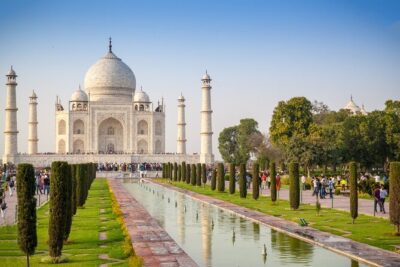
Agra is where the tour’s value becomes obvious. You drive in, then hit Taj Mahal with enough time to see it properly. The Taj is an ivory-white marble mausoleum on the Yamuna River, commissioned in 1631 by Shah Jahan for his wife. It is the kind of place where the details matter, and a guide helps you notice the design choices instead of just staring.
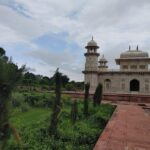
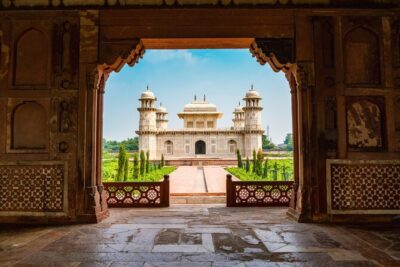
After the Taj, you shift to history you can walk through at your own pace. Agra Fort is tied to Mughal rule and major events, and it offers a different feel than the Taj’s smooth romance. Then the tour often includes Itmad-ud-Daula, commonly called the Baby Taj, which is a strong follow-up if you want to understand the design evolution leading to the main masterpiece.
A small but real comfort: the plan includes battery rickshaw/cycle rickshaw rides whenever needed, and it also specifically notes a battery bus ride from the parking lot to the Taj Mahal area. That matters because the Taj approach can be a lot of standing and walking. You get to focus on the sight instead of your feet.
Road-trip day to Jaipur: Fatehpur Sikri, Chand Baori, and Monkey Temple
This is the day that turns a simple transfer into a proper sightseeing break. First, you visit Fatehpur Sikri, a Mughal city built around the 16th century, with red sandstone buildings centered around major monuments like the Buland Darwaza gate.
Then you head to Abhaneri Stepwell, also called Chand Baori. This one is not just pretty, it is functional history. It was built to conserve water, and it is one of the largest stepwells in the world, built by the Nikumbha Dynasty in the 9th century AD. If you like architecture that people used for daily survival, this stop hits the sweet spot.
Finally, there’s Galtaji Monkey Temple, an ancient Hindu pilgrimage site near Jaipur with temples set into rocky hills. You get temples plus the chance to observe how the site fits into local religious routines. Just be mindful in any place where monkeys are part of the landscape.
This day is also a reminder of a key travel reality in India: longer drives mean you should plan your comfort. Wear good shoes, keep water handy, and know you are building in rest only through your hotel stops and car comfort.
Jaipur highlights: Amber, Jal Mahal, Hawa Mahal, City Palace, Jantar Mantar
Jaipur is the city where the tour has a lot of “big name” sights, but the real win is how they connect visually. Morning sightseeing includes Amber Fort, the classic fortress visit that frames the rest of the city’s royal story.
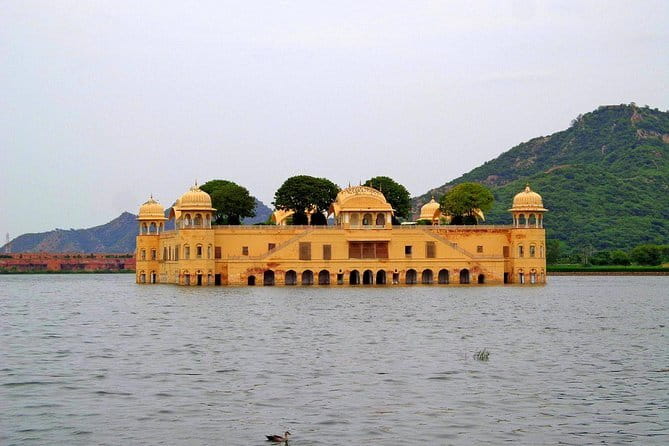
You also get Jal Mahal, the palace on the water. Even if you view it mostly from outside due to how these sites work, it gives you the Jaipur signature look: strong royal forms paired with water-and-sky scenery. Next up is Hawa Mahal, the Palace of Breeze, built in 1799 and famous for its many jharokhas, with the tour description noting 953 windows.
Then comes the civic side of royalty at City Palace. This complex was developed over time by the Rajput court, and seeing it with a guide helps you understand why Jaipur’s palaces feel both defensive and ceremonial.
The tour also includes Jantar Mantar, the astronomical observatory built by Sawai Jai Singh in 1734. It is best when you slow down a bit and look at how the sundials and instruments are laid out, especially the claim about the world’s largest sundial. Even if you are not a science person, it is a fascinating look at how measurement and power intertwined.
There are also extra Jaipur stops in the flow, including Panna Meena ka Kund, another stepwell built in the 16th century, described as a water reservoir pool. It is the kind of site that helps you understand Jaipur beyond palaces.
One more small bonus: the plan includes time for shopping in Jaipur, which can be helpful if you want textiles or small crafts. If you dislike shopping stops, treat the shopping time as optional and stay clear about what you want.




Jodhpur: Mehrangarh Fort views and the quieter history at Jaswant Thada
Jodhpur is a good pivot from the Jaipur palace vibe. You travel in, then start with Mehrangarh Fort, described as one of the largest forts in India. This is where you feel the scale of Rajasthan’s fort culture. From the fort, the city’s layout becomes easier to read, and the fortress walls do a lot of storytelling even before you enter museums.
After that, you get Jaswant Thada, a cenotaph built in 1899 in memory of Maharaja Jaswant Singh. Cenotaphs can feel repetitive in any itinerary, but this one works because it sits in a calmer mood and gives a reflective contrast to fort walls and gates.
There’s also Umaid Bhawan Museum, tied to the early 20th century, with the palace built between 1928 and 1943. The tour frames it as part of the shift toward a newer Jodhpur. You also get Clock Tower Market, a quick taste of everyday city life in the area around the clock tower.
If you care about photography, Jodhpur tends to deliver, but you will still want to watch timing. Fort-light can change quickly, so try not to rush the fort entrances.
Udaipur with lakes and palaces: Ranakpur, City Palace, Jagdish Temple, and Saheliyon Ki Bari
Udaipur is the easiest place to fall for. The tour starts travel toward Udaipur, then includes Ranakpur Jain Temple on the route.
Ranakpur is a Svetambara Jain temple called Chaturmukha Dharna Vihara, dedicated to Rishabhanatha. The most interesting detail here is the temple’s design concept, the four-faced approach implied by the name. A guide helps you make sense of why the architecture feels so complex even though it is still one unified sacred space.
Then you reach Udaipur and check in. The sightseeing continues with the City Palace, a palace complex built over nearly 400 years by rulers of the Mewar Dynasty. That “over time” part matters, because it explains why the buildings feel layered rather than one single style.
Next is Jagdish Temple, built in the 17th century, described as following Vastu Shastra architectural principles. Then you head to Saheliyon Ki Bari, the gardens built as a royal retreat, with lawns and architectural beauty highlighted in the tour description.
Finally, there is Lake Pichola, an artificial lake inside Udaipur that gives you classic city-lake views. Even if you do not spend hours on the water, the lake is what ties the day together visually, palaces above and reflections below.
What this tour costs you beyond the quoted price
The listed price is $316.67 per person, but it does not include your hotels or most monument entrance fees. In practice, that means you should budget for three categories:
- Your accommodation each night, since hotel stays are not included.
- Monument entrance fees for sites marked as not included, including big-ticket stops like the Taj Mahal.
- Food, since meals and breakfasts are not included, even though the schedule assumes you will have breakfast each morning at your hotel.
What you do get that helps you justify the price is the operational side. You receive an AC car with chauffeur, live government approved city guides, hotel pickup and drop-off, and toll, fuel, and parking charges are covered. You also get complimentary mineral water bottles, which sounds small until you are in heat and traffic and do not want to think about it.
Also look at the comfort logistics: skip-the-line style entry support is included, and the Taj approach includes a battery bus transfer. Those details reduce the stress factor, which is worth money when you are on a tight schedule.
The practical stuff: how to make it feel smooth in real life
Here are the habits that keep this kind of tour enjoyable.
First, set expectations with your guide early. Some groups flagged that guides were pushy about shops and that tipping came up often. You can avoid friction by saying clearly what you do not want, and by deciding your tipping style based on your comfort level.
Second, carry cash for monument entrances and for any extras that are not covered. Entrance fees are explicitly not included, so even if you get efficient entry support, you still need to pay.
Third, pack for walking. Even when rides are included, you still cover multiple sites across each city. Comfortable shoes are non-negotiable in forts and old-city steps. If you want to be extra prepared, bring sunglasses and a hat, especially for open courtyards and fort walls.
Finally, if you have older family members, treat the private format as a feature, not a guarantee. Use the driver and guide to take breaks, and keep the schedule realistic. The plan’s relaxed structure helps, but your comfort comes first.
Should you book this Delhi-Agra-Jaipur-Jodhpur-Udaipur private tour?
I would book this if you want a guided, car-based way to see major UNESCO sites and classic Rajasthan without constant map work. It is a strong match for first-timers, for families who want an easier pace, and for anyone who prefers a clear plan with local context.
I would think twice if you hate shopping stops or do not want tipping reminders built into the rhythm of the day. Since monument entrances and hotels are extra, you also need to like the idea of budgeting for those separate costs, not assuming the quoted price covers everything.
If you are the type who likes to understand what you are seeing, this trip’s structure works well. You get city-by-city guides, practical transport, and built-in helps like Taj area transfers, so you spend your energy on the sights, not the logistics.
More Tours in New Delhi
More Tour Reviews in New Delhi
Not for you? Here's more nearby things to do in New Delhi we have reviewed







More Delhi City Tours to consider.
 ★ 5.0Old & New Delhi City Tour – Half or Full Day Options AvailableTickets from $384,811 traveller reviews
 ★ 5.0Same Day Taj Mahal, Agra Fort & Baby Taj Tour from Delhi by CarTickets from $624,304 traveller reviews
 ★ 5.0Taj Mahal Day Tour from Delhi by Superfast Train – TOP RATED TOURTickets from $1004,166 traveller reviews
 ★ 4.9Old and New Delhi Private Full or Half-Day TourTickets from $23,776 traveller reviews
 ★ 5.0Full Day Taj Mahal, Agra Fort & Baby Taj Tour from Delhi by CarTickets from $623,647 traveller reviews
 ★ 4.9From Delhi: Taj Mahal & Agra Private Day Trip with TransfersTickets from $43,181 traveller reviews
 ★ 5.0Taj Mahal Tour from Delhi by Express Train (Viator Award Winner)Tickets from $752,849 traveller reviews
 ★ 5.0All Inclusive Private Taj Mahal Luxury Tour from Delhi by CarTickets from $622,564 traveller reviews
More useful Delhi routes