
Review · DELHI CITY TOURS
Five days Golden Triangle India Tour From Delhi
Golden Triangle in five days beats guesswork. This tour is interesting because it strings together Delhi, Agra, and Jaipur with one professional guide and one comfortable vehicle, so you spend less time planning and more time seeing. I especially like the sunrise Taj Mahal timing and the hands-on help that makes entry lines and tickets feel manageable. One drawback to plan for, monument entrance fees are not included, so you should budget extra.
You’ll also get practical extras like pickup offered, group discounts, and a mobile ticket. It’s a private style setup too, meaning only your group participates. If you’re booking for specific dates, double-check things like the Swaminarayan Akshardham Temple closure, since it’s listed as Monday closed.
Key highlights worth marking on your mental map
- Sunrise Taj Mahal: early entry for better light and that first sight hit.
- Old Delhi to New Delhi in one day: Qutub Minar, Jama Masjid, then Parliament, Rashtrapati Bhavan, and India Gate.
- Taj Mahal sunset view point: a calmer angle across the river on day 2.
- Chand Baori stepwell stop in Abhaneri: a Rainwater-era “wow” you will not get in most city-only tours.
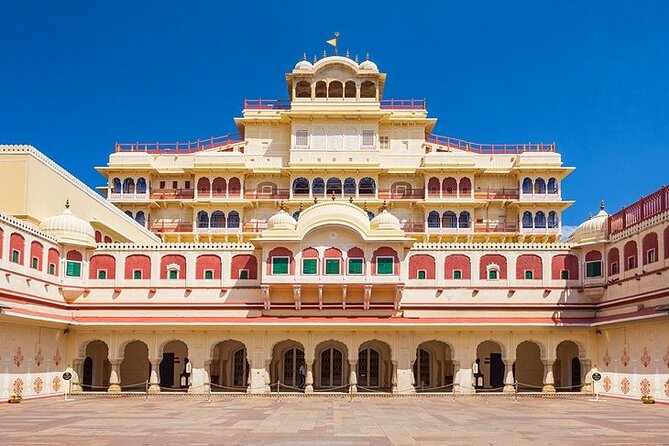
- Amber Fort and City Palace combo: two of Jaipur’s biggest hitters with a full day schedule.
- Entry fees are extra: some stops are listed as free, but the big monuments generally require tickets.
Delhi in a single packed day: Qutub Minar to India Gate
Day 1 is the classic Delhi starter circuit, and it’s laid out for first-timers who want context fast. You start at Qutub Minar, part of the Qutub complex in Mehrauli. It’s a tall five-storey minaret, 73 meters high, and it’s one of those monuments where you can look up for ages and still notice new details. If you like architecture, this is a strong warm-up before you head into the thicker layers of Old Delhi.
Next up is Jama Masjid in Old Delhi. It’s the kind of place where scale matters: the mosque sits on a raised area and can hold up to about 25,000 people. The building mixes marble and red sandstone, and the schedule frames it as Shah Jahan’s final architectural triumph (built between 1644 and 1658). This stop is less about a quick photo and more about taking in how the mosque dominates the surrounding lanes.
After the crowd intensity of Old Delhi, the tour shifts gears to the Lotus Temple, a Bahá’í House of Worship dedicated in December 1986. It’s free entry and open to everyone, which makes it a great breather. The lotus-like design gives you a visual reset, and it feels calmer than the earlier stops, even if you still stay in the city center.
Then you slow down briefly at Raj Ghat, the well-kept park area marking Mahatma Gandhi’s cremation spot on the Yamuna River. The black marble platform is simple, but the setting works. It’s a good pause point before you move into the official-government district.
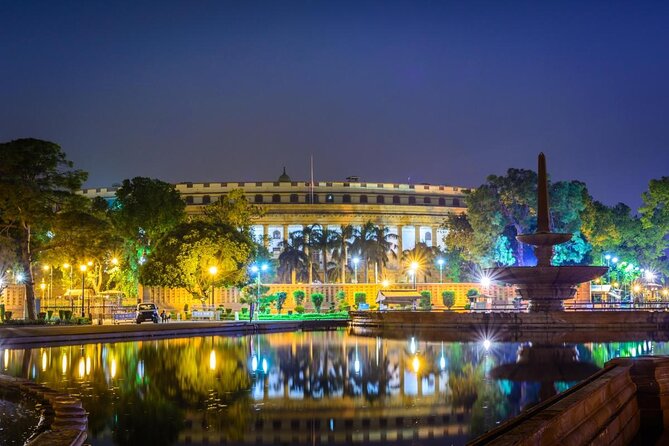
The rest of day 1 is a shift to ceremonial, government, and memorial Delhi. You get time at Rashtrapati Bhavan (the President of India’s official residence, formerly the British Viceroy’s House). The scale is impressive on paper, 340 rooms and about 2.5 km of corridors, and even a quick look helps you understand why this area feels so formal. From there you pass Parliament House, the circular, colonnaded building designed by Edwin Lutyens and Herbert Baker, where power shifted in 1947 and where Parliament still meets. Your route also includes India Gate, a 42 m-high memorial arch designed in 1921, honoring Indian soldiers from World War I era conflicts.
Finally, you visit Swaminarayan Akshardham Temple. It’s listed as free entry but Monday closed, so if your schedule lands on a Monday, you may need a different plan. The description on the tour route emphasizes its carved stonework and gold statue centerpiece. Even when you’re not a temple person, the craftsmanship and layout tend to win people over because you can keep spotting layers of details.
More New Delhi tours and experiences for the shortlist



What I like about this Delhi day
This day has a smart rhythm: monument height at Qutub Minar, big scale at Jama Masjid, a reset at Lotus Temple, then remembrance and government landmarks. That order helps you avoid jumping from one extreme to another without transition.
One consideration
It’s a lot of stops in a single day. If you hate early mornings or you’re sensitive to crowds, you might want to treat this first day as your “big orientation” day and plan a slower pace later in the trip.
The drive to Agra: using the road time well
Day 2 starts with a transfer from Delhi to Agra. The route uses the Yamuna Expressway Master Plan, and the drive is listed as about 3 hours to reach the Taj Mahal city. That matters because the Golden Triangle is mostly about transportation time. A smoother, planned transfer makes the sights feel less rushed.
When you arrive, you check into your pre-booked hotel and get the rest of the day’s sightseeing. Next is Tomb of Itimad-ud-Daulah, also called the Baby Taj, described as a Mughal mausoleum and often seen as a draft version of the Taj concept. This stop is short, about 45 minutes in the schedule, but it’s strategically placed after your arrival. It gives you Mughal refinement before you hit the main event.
Then you go to the Taj Mahal sunset view point. This is one of the tour’s best ideas because it gives you a second chance to see the Taj without the same morning pressure. The schedule frames it as one of the best places to view Taj Mahal across the river during sunset, away from the biggest crowd intensity. Expect this to be more photo-focused and slower-paced than the sunrise run later.
Value check
Agra is where most first-time Golden Triangle tours can become pure rush. Here, day 2 gives you a taste, a quieter viewpoint, and a gentle lead-in to sunrise day 3.






Sunrise at the Taj Mahal, then Agra Fort and onward
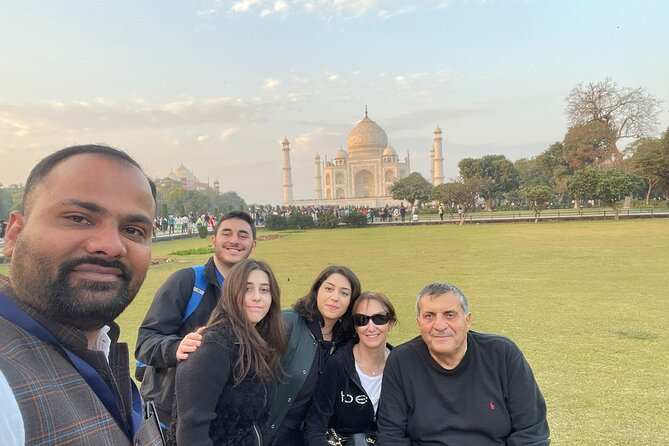
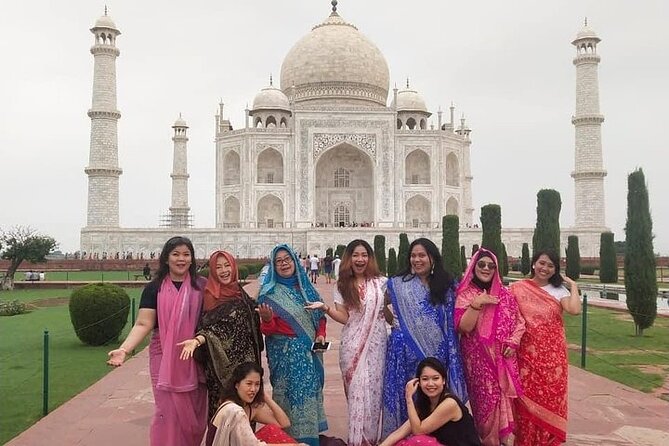
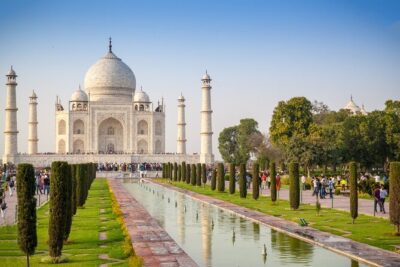
Day 3 is built around the big classic: Taj Mahal at sunrise. The schedule explicitly calls out sunrise timing, and that’s the right choice for a few practical reasons. Light is softer, the crowds can be more manageable than later in the day, and the white marble often looks more alive in early hours.
The tour context here is clear: Taj Mahal was built by Shah Jahan as a memorial for Mumtaz Mahal, who died in 1631. The main point for your trip is the pacing. After your visit (about 2 hours), you return to your hotel for breakfast. Then you check out and start the next leg.
Next is Agra Fort, another UNESCO World Heritage Site and a former Mughal residence. The description emphasizes palaces, balconies, and gardens. Even if you only spend about 45 minutes, you’ll walk away with a stronger understanding that the Taj is only one chapter of Mughal power in Agra.
After Agra, you drive toward Jaipur but with a stop that turns the transfer into something memorable: Abhaneri and Chand Baori. The schedule frames Chand Baori as one of Rajasthan’s most spectacular step wells, with the unique invention of natives for harvesting rainwater. It’s described as one of India’s deepest and largest step wells, with delicate carvings and a huge tank. The time is about 1 hour. This stop is not just a break, it’s one of those rare sights that gives you a different side of Rajasthan architecture beyond forts and palaces. You also pass through the Harshat Mata Temple area per the tour description.
Then you reach Jaipur and check into your hotel, with time to rest. The schedule gives about 1 hour for arrival and hotel check-in.
Who day 3 suits best
If you want to see the Taj and not just survive a ticket line, sunrise is the move. The Fort pairing works well if you like learning the bigger story of Mughal life, not just the famous white monument.
A small planning note
Sunrise means you’ll be up early. If you are sensitive to mornings, consider packing a light breakfast plan for yourself, and choose sleep early at the Agra hotel the night before.
Jaipur in one full day: Amber Palace, City Palace, Jantar Mantar, Hawa Mahal
Day 4 is your main Jaipur sightseeing day, with a lineup that hits both royal architecture and science-in-stone.
First is Amber Palace, an Amer fort located about 11 km from Jaipur. The fort sits high on a hill, so it naturally gives you the “wow” view effect. The schedule gives about 2 hours. At Amber, you’re not just looking at one building, you’re seeing a complex built for defense and comfort, with layers you can notice as you walk.
Then you head to the City Palace of Jaipur, described as the seat of the Maharaja of Jaipur and including Chandra Mahal and Mubarak Mahal palaces. The schedule gives about 2 hours, and this stop is good for people who want variety inside one ticket. The palace complex helps you understand how Jaipur’s rulers lived, governed, and displayed power.
For photo time, there’s Jal Mahal, the palace floating on Man Sagar Lake. The tour lists it as a photo opportunity with about 30 minutes. You usually won’t feel you are “touring” the place for long, but it’s a strong visual contrast to Amber and City Palace. If you want one scenic postcard moment, this is it.
Next is Jantar Mantar, a UNESCO World Heritage Site built in 1734. The schedule notes it is a set of nineteen architectural astronomical instruments made by Sawai Jai Singh II for observing astronomical positions with the naked eye. This is the stop that often surprises people. It’s not a museum in the modern sense, but it feels like a working outdoor lab from a different time.
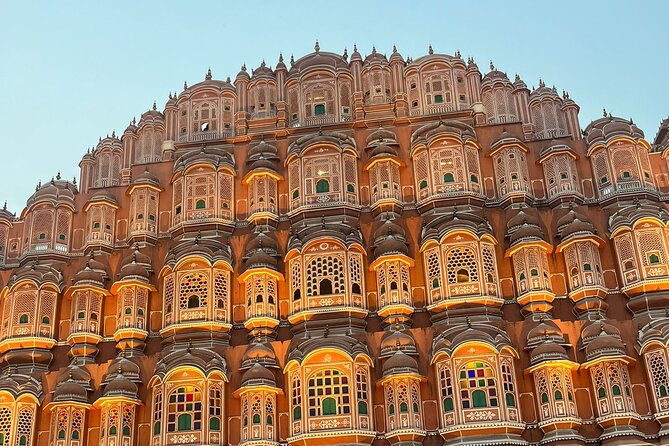
Then comes Hawa Mahal, the Palace of Wind. The schedule describes the five-storey pyramidal shape, built in 1799 by Sawai Pratap Singh, made with red and pink sandstone. It’s one of Jaipur’s most recognizable silhouettes. The tour gives about 1 hour here, plus time for lunch at a local restaurant after the full day sightseeing. The lunch plan is one of those practical touches. After a day like this, you want a meal that fits the schedule rather than a last-minute scramble.
What makes this Jaipur day worth it
The sequence does not feel random. Amber sets the royal fortress tone. City Palace continues the royal story. Jal Mahal adds a scenic reset. Jantar Mantar gives Jaipur its thinking side. Hawa Mahal finishes with the most iconic face of the Pink City.
One consideration
This is a full day with multiple major sites. If you’re traveling with older family members, pace yourself, use shade when you can, and be ready for walking inside fort complexes. The schedule includes breaks by time blocks, but it still adds up.
Money, tickets, and transport: what the $210 buys you
Let’s talk value, because $210 per person for a 5-day Golden Triangle can feel either like a deal or a question mark depending on what you expect.
From the tour features and inclusions, this price covers:
- A professional English-speaking city tour guide
- An air-conditioned vehicle throughout
- Four nights accommodation
- Breakfast for 4 days
- All tolls and taxes
- Pickup offered and a mobile ticket
- Group discounts (when applicable)
- A private setup where only your group participates
What it does not cover:
- Monument entrances, listed as not included
So the “real” cost depends on what you personally want to pay in entry fees. On the Delhi side, some stops are listed as free entry in the schedule, including Lotus Temple, Raj Ghat, Rashtrapati Bhavan, Parliament House, India Gate, and Swaminarayan Akshardham (noting Monday closure). But several major sights like Qutub Minar, Jama Masjid, Taj Mahal, Agra Fort, Amber Palace, City Palace, Jantar Mantar, and Hawa Mahal are marked as admission ticket not included.
My practical advice: treat the ticket budget as part of the trip math. The guide and transportation value helps you make good use of the time you paid for. But you should still plan for monument fees so you do not hit the first big gate feeling surprised.
Transport timing is the hidden value
The drives are laid out like this:
- Delhi to Agra is about 3 hours
- Jaipur to Delhi on day 5 is about 5 hours
That is a lot of road time in total, so having AC and a planned schedule matters more than people think. This tour also includes drop-off at Delhi Airport or your location on the last day.
The choice you are making: who should book and who should skip
This 5-day Golden Triangle tour is a strong fit if:
- You want a first-time, structured route across Delhi, Agra, and Jaipur
- You prefer an English guide and want help managing popular sites
- You care about seeing the Taj Mahal at sunrise
- You want a comfortable, scheduled plan, not the stress of coordinating trains and taxis
If you should consider another option, it’s usually because of one mismatch:
- You dislike early mornings or long, packed sightseeing days
- You want total freedom to linger at one monument for hours without a tight schedule
- You expect the price to include every single monument entry fee, without any extra budgeting
One more thing I like to emphasize for this route: Golden Triangle sites are not just attractions, they are crowd magnets. Guides who know how to handle entry times and how to get you to good angles can make your experience feel smoother. On past trips with this operator, guides such as Praveen and others have been noted for managing tickets and keeping the visit organized, including photo help and pacing adjustments. If you care about photos and not losing time to line chaos, that kind of support is worth its weight in polite patience.
FAQ
What is included in the 5-day Golden Triangle tour price?
The tour includes a professional English-speaking city tour guide, an air-conditioned vehicle throughout, four nights accommodation, breakfast for 4 days, and all tolls and taxes.
Are monument entrance tickets included?
No. Monument entrances are not included. Some specific stops in the schedule are listed as free entry, but the main monuments are marked as admission ticket not included.
When do you visit the Taj Mahal?
You visit the Taj Mahal at sunrise on day 3. You also have a Taj Mahal sunset view point on day 2.
Is Swaminarayan Akshardham Temple open every day?
Swaminarayan Akshardham is listed as Monday closed, so your date matters.
How long is the drive from Jaipur back to Delhi on the last day?
The drive from Jaipur to Delhi on day 5 is listed as approximately 5 hours, with drop-off at Delhi Airport or your location.
Do I need a passport to take this tour?
Yes, a current valid passport is required on the day of travel.
If you want, tell me your travel month and whether you prefer sunrise or a later start, and I can suggest how to time your day around the biggest crowds.
More 5-Day Experiences in New Delhi


More Tours in New Delhi



More Tour Reviews in New Delhi
Not for you? Here's more nearby things to do in New Delhi we have reviewed








More Delhi City Tours to consider.
 ★ 5.0Old & New Delhi City Tour – Half or Full Day Options AvailableTickets from $384,811 traveller reviews
 ★ 5.0Same Day Taj Mahal, Agra Fort & Baby Taj Tour from Delhi by CarTickets from $624,304 traveller reviews
 ★ 5.0Taj Mahal Day Tour from Delhi by Superfast Train – TOP RATED TOURTickets from $1004,166 traveller reviews
 ★ 4.9Old and New Delhi Private Full or Half-Day TourTickets from $23,776 traveller reviews
 ★ 5.0Full Day Taj Mahal, Agra Fort & Baby Taj Tour from Delhi by CarTickets from $623,647 traveller reviews
 ★ 4.9From Delhi: Taj Mahal & Agra Private Day Trip with TransfersTickets from $43,181 traveller reviews
 ★ 5.0Taj Mahal Tour from Delhi by Express Train (Viator Award Winner)Tickets from $752,849 traveller reviews
 ★ 5.0All Inclusive Private Taj Mahal Luxury Tour from Delhi by CarTickets from $622,564 traveller reviews
More useful Delhi routes