

Review · DELHI CITY TOURS
From Delhi: 3-Days Private Golden Triangle Tour with Hotel
A Golden Triangle that actually feels organized. This 3-day private route from Delhi strings together Old Delhi classics, the sunrise Taj Mahal, and top sights in Jaipur, with hotel nights included and a live guide to keep everything understandable.
I especially like the way the days are timed around the big monuments, not random sightseeing. The 6:30 AM Taj Mahal visit means you start early, and the rest of the day flows with stops like Agra Fort and a Fatehpur Sikri break.
One thing to consider is the pace. You’ll be up early, doing lots of walking in major sites, and spending real time in the car between cities, so it helps to be comfortable with a tight schedule. Also, shorts are not allowed.
Key highlights before you go
- Private group with a live guide who speaks English and other major languages, so you’re not stuck guessing at what you’re seeing
- Taj Mahal sunrise timing (6:30 AM) to kick off Agra the right way
- Skip-the-line entry via a separate entrance, which saves time where it matters most
- Old Delhi and market time, including a Chandni Chowk rickshaw experience tucked into the day
- Clear focus each day, Delhi to Agra to Jaipur, with hotel check-ins handled for you
Why this private Golden Triangle route works (especially from Delhi)
If you want the Golden Triangle, you usually face a choice: either plan everything yourself and hope timing works out, or trust a tour that handles the hard parts. This one leans hard into the second option, and that’s the value.
You’re not just hopping from one postcard to another. Your guide ties the places together, from Delhi’s Mughal-era architecture to the royal storytelling of Jaipur and the sheer scale of Agra’s most famous monument. And because it’s a private group, you get a smoother rhythm. You’re not sharing every decision with strangers, and the guide can answer your specific questions as you go.
You also get hotel nights included, which matters more than it sounds. With a 3-day itinerary, booking lodging separately can quietly turn into a second job. Here, your in-between time is accounted for, and your driver keeps the logistics moving so you can focus on the sights.
You can also read our reviews of more private tours in New Delhi



Day 1 in Delhi: Jama Masjid to Humayun’s Tomb to Qutub Minar
Your day starts with a pickup at 9:00 AM from your Delhi hotel area. That early start is practical. It gives you daylight for Old Delhi and enough time later for New Delhi landmarks without rushing everything into the last hour.
Old Delhi landmarks that set the tone
The plan takes you into Old Delhi for a classic hit list:
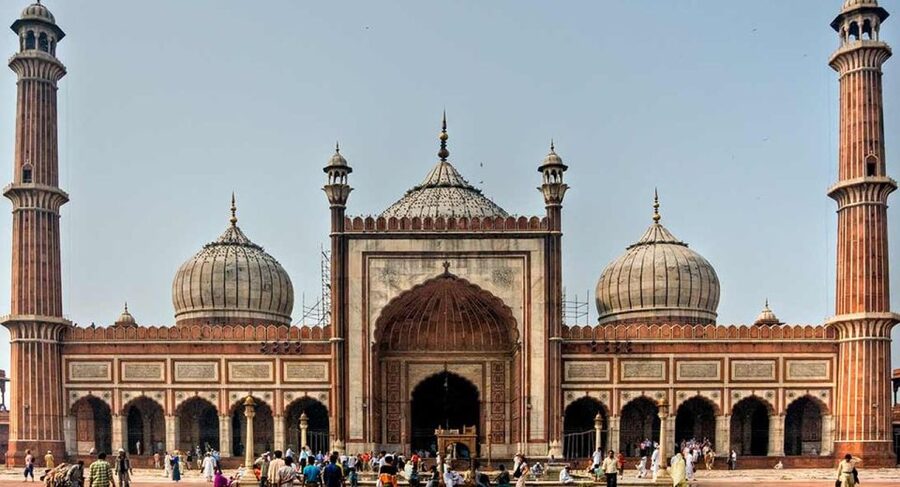
- Jama Masjid, noted as India’s largest mosque
- Red Fort viewed from the outside
- Chandni Chowk, the market lanes full of everyday food and street life
Jama Masjid can feel like the whole city is lit up around you, with scale that’s hard to measure until you’re standing there. Red Fort outside views still give you the fortress feel and the Mughal-era grandeur, even if you’re not going deep inside on this route. And Chandni Chowk is where you get context. You see how people live, shop, and move, not just how monuments look in photos.
A neat detail: the experience can include a rickshaw ride through the narrow lanes of Chandni Chowk, which is exactly the kind of contrast that makes a Golden Triangle trip feel more real.
New Delhi stops: India Gate, Rashtrapati Bhawan, and Mughal architecture
After lunch at a local restaurant, the afternoon shifts into New Delhi. You’ll see:
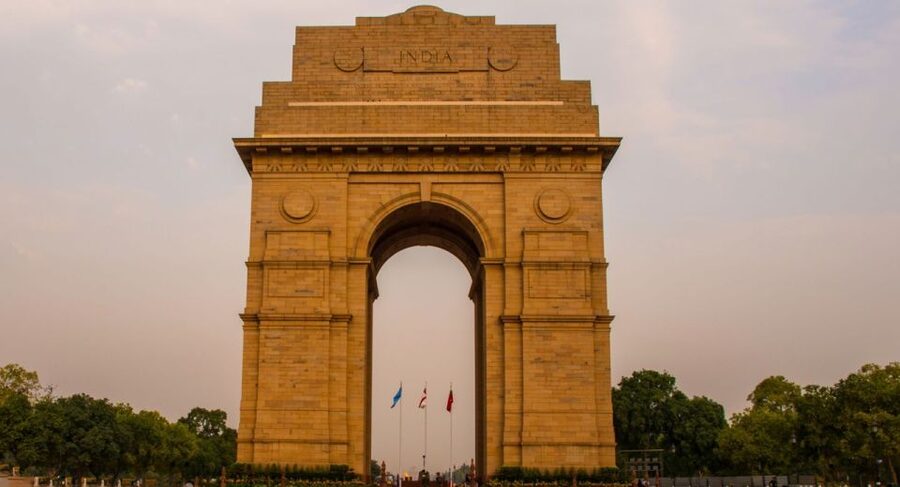
- India Gate
- Rashtrapati Bhawan (from outside)
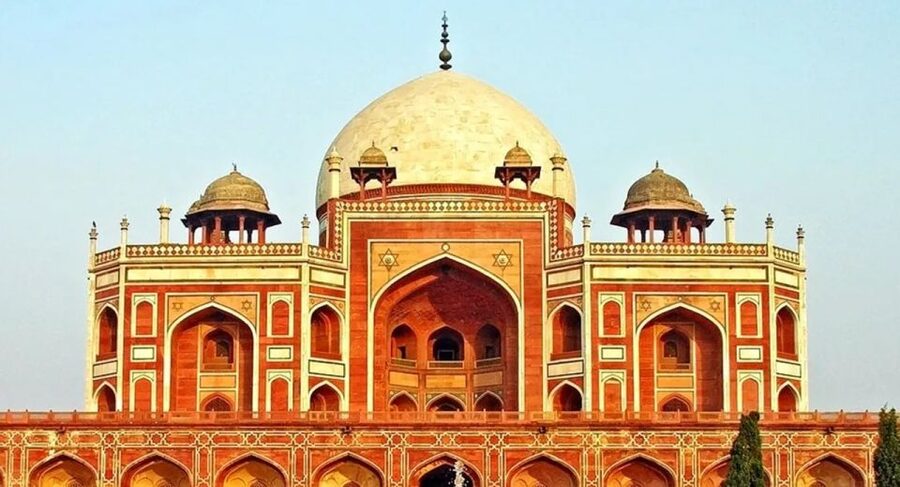
- Humayun’s Tomb
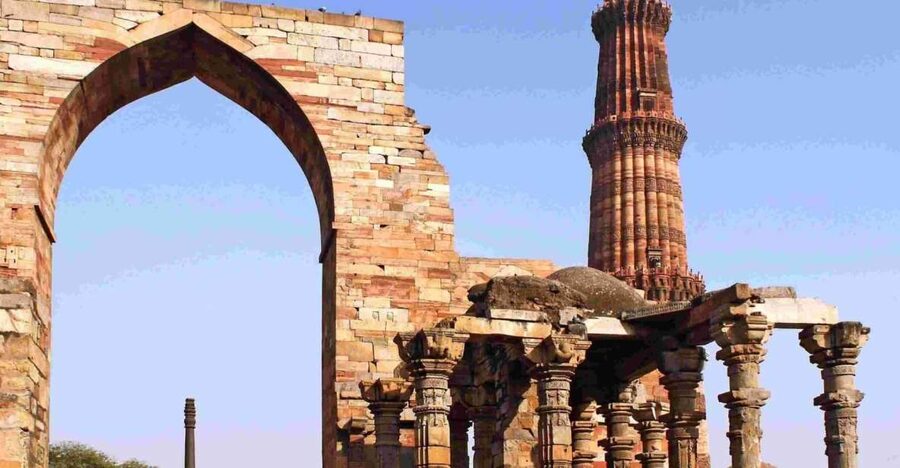
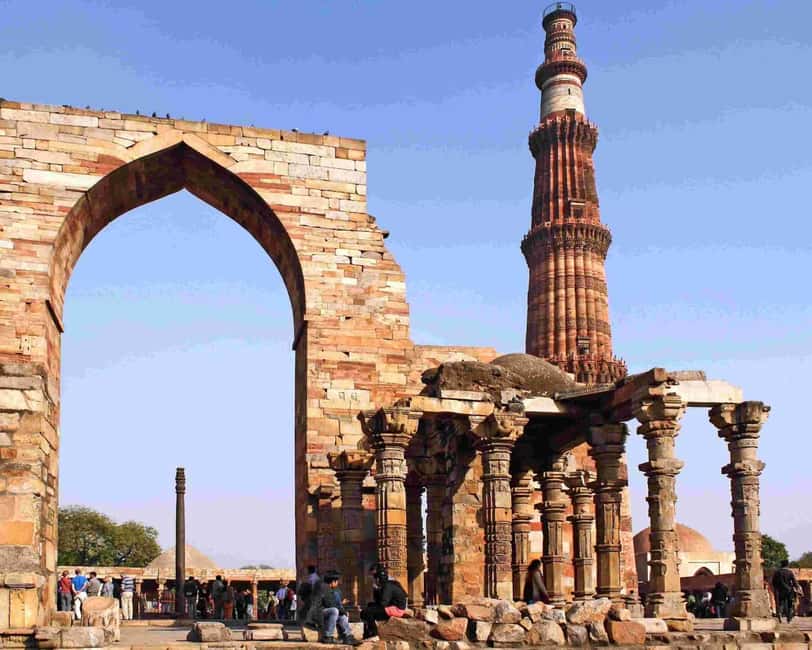
- Qutub Minar, described as the world’s tallest brick minaret
This is a smart combo. India Gate anchors the city’s modern identity and war memorial story. Rashtrapati Bhawan is a quick visual reminder of how power and government sit in the same capital that also holds ancient sites. Then Humayun’s Tomb and Qutub Minar bring you back to the Mughal and early Delhi Sultanate eras, with architectural details you can actually understand when someone explains what to look for.
A practical evening drive to Agra
By evening, you drive to Agra and check into your hotel. That matters because Day 2 is early, and you want your sleep lined up. The tour keeps you from trying to squeeze too much into the first day. You do Old Delhi and key New Delhi landmarks first, then you move toward your next base.



Day 2: the 6:30 AM Taj Mahal and Agra Fort before Jaipur

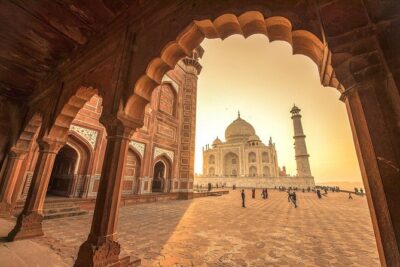
This is the heart of the whole trip. The day begins with a sunrise Taj Mahal visit at 6:30 AM. If you’re the type who likes to photograph without the day already feeling hot and chaotic, this timing helps.
A sunrise start also changes the feel of the monument. Instead of arriving when tour groups are already at full volume, you get to see the Taj Mahal with calmer energy around it. Even if you don’t plan to take a thousand photos, it’s easier to appreciate the symmetry and marble glow when you’re not fighting the crowd.
Taj Mahal: what makes it more than a photo stop
You’re looking at a mausoleum built with an obsession for detail, and the guide’s job is to point you toward what matters:
- the overall layout and symmetry
- the way the marble surfaces catch light
- why the Taj Mahal became the symbol people know worldwide
Then you head back for breakfast at the hotel and a short rest, which is a good move. Tours that go hard from dawn to night often burn people out. Here, you’re given a break so you can still enjoy the second half of the day.
Agra Fort and the next leg toward Jaipur
After checkout, you visit Agra Fort, a massive red sandstone fortress. Agra Fort can feel like a different world from the Taj Mahal. Where the Taj is all about love story symbolism and marble beauty, Agra Fort is about power, defense, and daily life behind thick walls.
Then you drive to Jaipur. The itinerary includes an en route stop at Fatehpur Sikri, described as an abandoned Mughal capital. Even if you’ve never heard of it before, it’s one of those places that teaches you something quickly: empires can build fast, thrive for a while, and vanish from daily use when political realities shift.
Arriving in Jaipur and checking into your hotel
When you reach Jaipur, you check in and unwind overnight. This is the right kind of downtime. Jaipur’s big sights are spread out, and you’ll want your energy for the next day’s fort, palace, and observatory mix.
Day 3 in Jaipur: Amber Fort, Hawa Mahal, Jantar Mantar, and the stepwell
Day 3 is where Jaipur earns its reputation for being more than one famous façade. After breakfast and checkout, you go straight into a full city tour.
Amber Fort: a hilltop fortress with a big view
Amber Fort is on the list for a reason. You get a fort complex that feels elevated and theatrical, not just defensive. The guide can help you understand what you’re looking at so the experience becomes more than walking through courtyards.
If you like places with stories behind the stones, Amber Fort delivers.
Jal Mahal and Hawa Mahal: two icons with different moods
Next comes a visual contrast:
- Jal Mahal, a palace on water
- Hawa Mahal, the Palace of Winds
Jal Mahal is the kind of scene that can look almost unreal from certain angles, especially if the water reflects the building nicely. Hawa Mahal is the opposite vibe, all about façade detail and how the architecture worked for ventilation and daily life. Together, they show how Jaipur’s royal style wasn’t one-note. It was practical, decorative, and built for how people actually moved and lived.
City Palace: royal residence energy
You also visit City Palace, a grand royal residence. This is where you shift from individual postcard views to the feel of a living center of power. You start to see how Jaipur connected court life, culture, and planning.
Jantar Mantar: ancient astronomy you can actually grasp
Jantar Mantar is the payoff if you love smart design. It’s an ancient astronomical observatory, and it’s much easier to appreciate when you have a guide explaining how the instruments were meant to measure time and sky patterns.
It’s one of the stops that reminds you the Golden Triangle isn’t only about empire monuments. It’s also about engineering and observation.
Panna Meena Ka Kund: the stepwell stop most people skip
Finally, you see Panna Meena Ka Kund, a historic stepwell. Stepwells are practical architecture, built to manage water access in a way that also becomes part of the cultural space. This stop adds variety, and it breaks up the day between forts and palaces.
Souvenir time, then back to Delhi
After the sightseeing, you can do some souvenir shopping in Jaipur’s local markets, then have lunch. After lunch, you start the return drive to Delhi, dropping you at your hotel or the Delhi airport.
That drop-off choice is genuinely useful. It means you can align the end of your tour with your flight timing or your next lodging without extra planning.
How the logistics are handled, and what that means for your comfort
This is a private tour, so your comfort depends on how well the basics are covered. Here’s what’s clearly built in.
Driver + pickup from your hotel
Pickup is included, and you meet your guide in the lobby of your hotel. Then a driver handles the travel between Delhi, Agra, and Jaipur. With a schedule like this, transport quality matters, because those road hours add up.
The standout from an actual solo traveler was that the car was neat and clean, and the overall setup made it easy to manage as a one-person trip. That’s the kind of practical reassurance you want.
Skip-the-line with a separate entrance
You also get skip the line access through a separate entrance. That is often the difference between enjoying a site and feeling stuck while everyone else funnels through the same path. In a tight 3-day itinerary, saving even small amounts of time lets you spend more of your attention on the monuments.
A real guide, not just a driver with a map
The tour includes a live tour guide, and languages listed include English, Spanish, German, Russian, and French. Having a guide who can explain what you’re seeing is the difference between collecting images and understanding meaning.
One guide name that came up was Gautam Grover, praised for helping a solo traveler stay confident and connected during the day.
Price and value: what you’re really paying for
At $157 per person for a 3-day private tour with hotel stays, the best way to judge value is to count what you avoid doing yourself.
You’re paying for:
- private, door-to-door style pickup and drop-off in Delhi
- a dedicated guide for multiple major monuments
- hotel nights included across the two overnights
- intercity driving between Delhi, Agra, and Jaipur
- skip-the-line access through a separate entrance
- entry to key sites listed across the three days
If you try to replicate this independently, you’ll often spend time coordinating drivers, entrances, and timing while also handling lodging. Money is part of it, but stress is the bigger cost. This tour spends your time more efficiently, so the $157 can feel fair when you want the Golden Triangle without the planning headaches.
Who should book this, and who should think twice
This tour is a good fit if:
- you want a structured Golden Triangle with minimal planning
- you prefer a guide to explain architecture and historical context
- you’re comfortable with early starts, especially the Taj Mahal sunrise
- you travel solo or in a small private group and want flexibility without crowds
It may not be ideal if:
- you’re pregnant, since the tour specifically notes it is not suitable for pregnant women
- you dislike long drives between cities
- you need strict accessible routes at every stop, since the itinerary is listed as wheelchair accessible but the exact site-level conditions aren’t described in the info provided
Also, pack smart: comfortable shoes and sunglasses are practical, and shorts are not allowed. You’ll be glad you dressed for conservative dress and lots of walking.
Should you book this Delhi to Golden Triangle tour?

I’d book it if you want the classic Delhi, Agra, Jaipur storyline, but you don’t want to spend your vacation micromanaging transport, entrances, and timing. The big wins are the private guide setup, the sunrise Taj Mahal, and the chance to see both Mughal highlights and Jaipur’s royal and scientific side in just 3 days.
Book it with confidence if you like early mornings and you’re okay with a packed itinerary. If you’d rather move slowly, linger, and skip the early start, you might want a longer trip instead.
If your priority is maximum major sights with less hassle, this is a strong choice for your Golden Triangle from Delhi.
More Private Tours in New Delhi



More Tours in New Delhi



More Tour Reviews in New Delhi
Not for you? Here's more nearby things to do in New Delhi we have reviewed










More Delhi City Tours to consider.
 ★ 5.0Old & New Delhi City Tour – Half or Full Day Options AvailableTickets from $384,811 traveller reviews
 ★ 5.0Same Day Taj Mahal, Agra Fort & Baby Taj Tour from Delhi by CarTickets from $624,304 traveller reviews
 ★ 5.0Taj Mahal Day Tour from Delhi by Superfast Train – TOP RATED TOURTickets from $1004,166 traveller reviews
 ★ 4.9Old and New Delhi Private Full or Half-Day TourTickets from $23,776 traveller reviews
 ★ 5.0Full Day Taj Mahal, Agra Fort & Baby Taj Tour from Delhi by CarTickets from $623,647 traveller reviews
 ★ 4.9From Delhi: Taj Mahal & Agra Private Day Trip with TransfersTickets from $43,181 traveller reviews
 ★ 5.0Taj Mahal Tour from Delhi by Express Train (Viator Award Winner)Tickets from $752,849 traveller reviews
 ★ 5.0All Inclusive Private Taj Mahal Luxury Tour from Delhi by CarTickets from $622,564 traveller reviews
More useful Delhi routes