
Review · DELHI CITY TOURS
Golden Triangle Tour Delhi-Agra-Jaipur
Three cities, one steady pace. This Golden Triangle tour strings together Delhi, Agra, and Jaipur with AC transport and city guides, starting at 8:00 am. I especially like the sunrise Taj Mahal plan and the way Day 3 stacks Jaipur’s signature sights without wasting time. The main catch is simple: monument entry fees and your hotel and meals are not included, so you’ll want to budget for them.
I also like that the itinerary gives you a real sense of how India’s power centers shifted over time. Delhi’s Qutb Minar sets the stage, Agra shows Mughal grandeur, and Jaipur brings in Rajput science, palace life, and everyday court culture. If you’re prone to rushing photos, build in extra slow moments, because this tour moves fast by design.
There’s one more practical consideration. You’ll spend serious hours in the car each leg, about 4 to 6 hours of driving at a time, so this is best for travelers who don’t mind road time in exchange for seeing the big three.
Key highlights to plan around
- Sunrise Taj Mahal timing, designed to beat crowds and get that marble glow
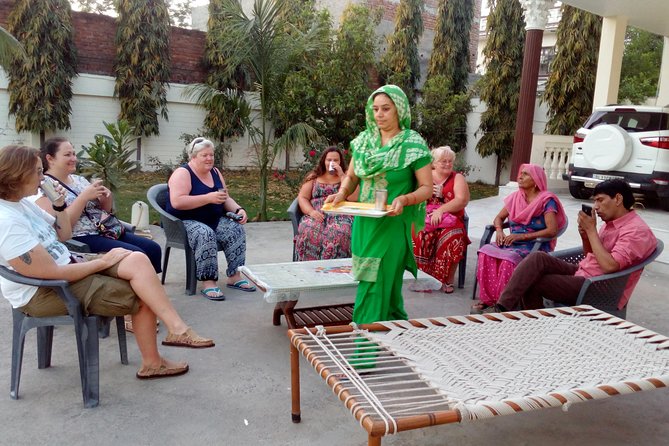
- Guides in each city, so you’re not piecing it together alone
- A full Delhi orientation with Qutb Minar, Lotus Temple, India Gate, and the grand government axis
- A packed Jaipur day that hits Hawa Mahal, Amber, stepwell architecture, City Palace, and Jantar Mantar
- Private group experience, only your group travels together
- Mobile ticket and pickup support, which makes meeting up less stressful
Why the Golden Triangle works in just 4 days
The Golden Triangle is called that for a reason. Delhi, Agra, and Jaipur form a triangle on the map, and the route between them is straightforward if you use an organized plan. You get three very different flavors of North India without the hassle of coordinating trains or separate tours.
What makes this setup attractive for short trips is balance. You are not just driving past cities. You get a morning in Delhi, the Mughal headline in Agra, and a long Jaipur day that feels like you’re walking through multiple layers of Rajput life. Even with the travel days, the rhythm is pretty efficient.
One more value point: the itinerary is built around landmarks that are easy to recognize from afar, like Taj Mahal, Hawa Mahal, and the Jantar Mantar. That matters when you’re dealing with jet lag or a tight schedule.
You can also read our reviews of more tours and experiences in New Delhi.



Price and what you get for $283.32 per person
At $283.32 per person for a roughly 4-day experience, the headline price can look a bit steep at first. But it includes more than just sightseeing stops.
You’re getting:
- An air-conditioned vehicle
- Tour guides for 1 day in each city
- Pickup offered
- Group discounts (if your booking fits that structure)
- A mobile ticket
Now the important tradeoff. Hotel accommodation, food and beverage, and monument entry fees are not included. So the real cost depends on how you handle meals and how many sites you decide to pay for on top of what’s covered by timing.
If you’re splitting the total cost across transport plus three guided days (Delhi, Agra, Jaipur), this starts to make more sense. It’s especially good if you want someone to manage the schedule while you focus on enjoying the sites.
The road schedule: AC comfort, long legs, and smart pacing
This tour is designed around road travel. The circuit is about 720 km by road, with each leg taking about 4 to 6 hours of driving.
That’s long enough that it can either feel smooth or feel like a grind, depending on how you travel. The good part here is the AC vehicle, which helps a lot with comfort. The other good part is that you have structured stops, guides, and set timing, so you are not wasting time figuring out what to do next.
My practical advice: treat the first day and the third day as your big walking days. Day 1 includes multiple city landmarks, and Day 3 stacks several major Jaipur sights close enough to stay efficient. If you try to out-run the schedule, you’ll feel stressed instead of impressed.
A note from the tone of real-world feedback: people can get tempted to rush ahead for extra photos. Don’t. Leave breathing room. Taj Mahal in particular rewards a slower pace, and Jaipur’s forts and palace zones are best when you pause to look closely.
Day 1 in Delhi: Qutb Minar, Lotus Temple, and the ceremonial axis
Day 1 starts with Qutub Minar, part of the Qutb complex in the Mehrauli area and a UNESCO site. This is not just a tall landmark. It’s a historical anchor for Delhi. The minaret is described as 73 meters tall, and the fifth section was added later after 1369. That layered timeline is part of the fascination. When you look up, you’re looking at centuries of construction and influence.
Next comes Lotus Temple. This one is refreshing because it’s open to all, regardless of religion. Even if you treat it as architecture first, the flowerlike shape makes it instantly memorable. It’s also a good reset after a strong historic monument, because it’s calm and straightforward.
Then you shift to central Delhi’s big, symbolic landmarks:
- India Gate, the memorial to 70,000 soldiers, sitting on Rajpath
- Parliament House, built by British architects Sir Edwin Lutyens and Sir Herbert Baker as part of the new administrative capital plan
- Rashtrapati Bhavan, the Presidential Palace at the western end of Rajpath, formerly the Viceroy’s House
These stops are short on paper, but they give you orientation. You learn where Delhi’s power geography is laid out, and it makes everything else feel easier once you’re in the city.
The day ends with the drive toward Agra. You proceed for lunch and then continue through the Yamuna Expressway. That’s a key detail because it helps explain why the itinerary can fit so much sightseeing on Day 1 and still reach Agra.
Day 2 in Agra: sunrise Taj Mahal and Agra Fort
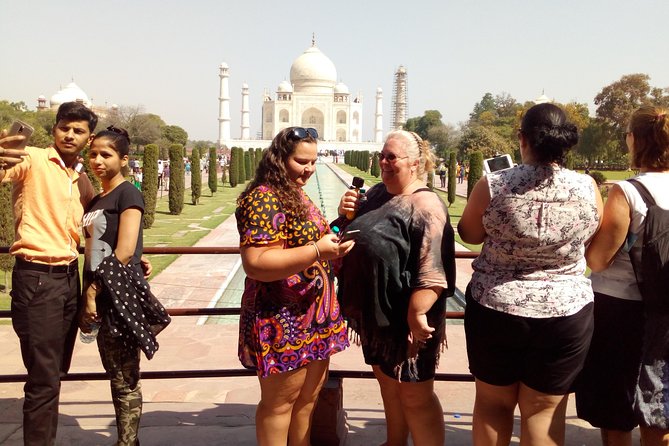
Day 2 is the one you plan your entire trip around. It starts with Taj Mahal at sunrise. The Taj is an ivory-white marble mausoleum on the southern bank of the Yamuna, commissioned in 1632 by Mughal emperor Shah Jahan. Even without the biography, the setting and the marble effect at early light are the main show. Sunrise also tends to feel more peaceful, and you get a better chance of enjoying the space rather than fighting the strongest crowds.
After Taj, you visit Agra Fort. This fort was the main residence of Mughal emperors until the capital shifted to Delhi in 1638. It’s also noted as a site that later fell under British capture before that. What I like about combining Taj Mahal and Agra Fort is contrast. Taj is about monumental beauty and ceremony. Agra Fort is about the fortress reality of power.
A simple strategy for you: wear comfortable shoes and keep your expectations realistic. The sites are iconic, but the experience is also about endurance and light. If you show up in a rush, you’ll miss the details that make these places feel alive.
Also remember: monument entry fees are not included, so plan for those costs upfront rather than hoping they will be covered.






Day 3 in Jaipur: Hawa Mahal to Jantar Mantar, with Amber and the stepwell
Day 3 is long in a good way. You start with Hawa Mahal, the Palace of Breeze. It’s made of red and pink sandstone and sits on the edge of City Palace, stretching toward the women’s chambers. The name makes sense when you stand near it and imagine airflow and privacy in the old palace layout. Even a quick stop here gives you a strong Jaipur silhouette.
Then you move to Amber Palace (Amer), about 11 km from Jaipur. Amber is tied to Meenas and later to the Rajput story, and the fort setting helps you understand why royalty wanted to build where they did. Plan on at least 1 hour 30 minutes, because you’ll want time for viewpoints and structure.
Next is Panna Meena ka Kund, a square-shaped stepwell with stairs on all four sides and an additional room on the northern wall, believed to have been used for religious ceremonies. This is one of those stops that often gets skipped when people rush. Don’t skip it. Stepwell architecture shows how everyday survival and ritual blended into the same spaces.
After that, you briefly see Jal Mahal, the palace in the middle of Man Sagar Lake. The palace and lake were renovated and enlarged in the 18th century by Maharaja Jai Singh, according to the description. Even if you do not go for a deep photo session, it’s a useful pause point in the day. It reminds you Jaipur is not only fort walls and courtyards.
Then you hit the heart of royal history with City Palace. It was established when Jaipur was founded, by Maharaja Sawai Jai Singh II, who moved his court to Jaipur from Amber in 1727. Spend the time here. City Palace is where the city’s identity connects the fort heritage to the administrative life of the capital.
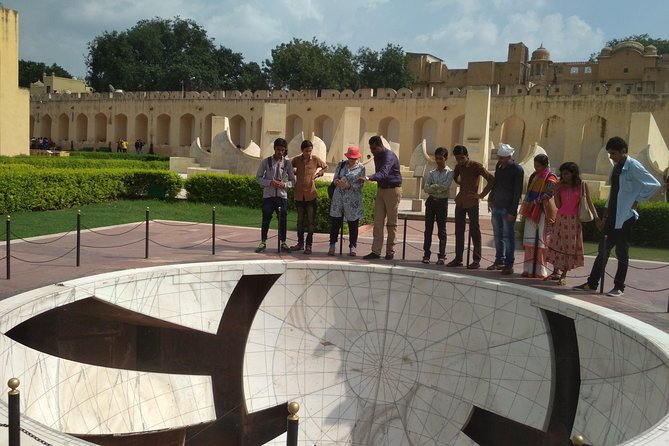
Finally, there’s Jantar Mantar. This complex contains nineteen architectural astronomical instruments built by Sawai Jai Singh II and completed in 1734. If you usually think of Rajasthan as only forts and palaces, this stop changes that. It shows a scientific mindset expressed in stone.
My advice for you: keep your watch eye on the schedule but let your feet decide the pace. Jaipur rewards curiosity, not speed. You’ll enjoy it more if you slow down in Amber and then recover with shorter stops like Jal Mahal and Hawa Mahal.
Day 4: back to Delhi or drop-off at Jaipur airport
Day 4 is travel-focused. After breakfast, you make the approximately 5-hour journey back to Delhi or you can be dropped off at Jaipur airport.
This is where you decide how you want to end your trip. If you have a flight from Jaipur, ask for the airport drop option early so it matches your timing. If you are going back to Delhi, use the ride as a reset. By this point you will likely have photographed enough to last a week, but you’ll still appreciate the chance to decompress.
How to get the best experience without feeling rushed
Here’s how to make this tour feel worth it, not just efficient.
First, protect your mornings. Sunrise Taj Mahal is built into the plan, so you’ll want to be ready early and not treat the day like a late-start race. The same goes for Delhi’s morning sequence.
Second, pace your walking. Day 1 is a cluster of landmark visits. Day 3 is where your feet really get tested. If you plan extra time for photos, stick to small detours inside each stop window, not long additions.
Third, budget for the missing costs early. Hotel, meals, and monument entry fees are not included. You’ll feel calmer if you’ve already decided how you’ll handle meals near meeting points and how many paid entries you expect across Taj Mahal, Agra Fort, and the Jaipur monuments.
And finally, take advantage of the guide days. With a guide for 1 day in each city, you’re paying for context, not just transportation. Ask simple questions like what to look for first, and which areas are worth slowing down for. That’s how you turn a “see the sites” tour into a “understand the place” day.
Should you book the Golden Triangle with Royal Majestic Tour?
If you want to see Delhi, Agra, and Jaipur on a short schedule, this tour makes a lot of sense. The big advantages are clear: AC transport, guided days in each city, and a plan that includes the standout highlight of the region, Taj Mahal at sunrise.
You should seriously consider a different option if you:
- hate long road days and need minimal driving
- want hotels and meals included in the price
- prefer to set your own timing instead of following a fixed itinerary
For most first-timers, this is a solid value because it combines transport plus guided sightseeing in a tight loop, without forcing you to manage logistics yourself. If you go in with the right expectations and leave space to slow down at the big moments, you’ll come away feeling like you truly covered the Golden Triangle, not just passed through it.
FAQ
What time does the tour start?
The meeting start time is 8:00 am.
Is pickup included?
Yes, pickup is offered.
How long is the Golden Triangle Tour?
The tour duration is approximately 4 days.
What is included in the price?
It includes an air-conditioned vehicle and tour guides for 1 day in each city.
Are hotel and meals included?
No. Hotel accommodation and food and beverage are not included.
Are monument entry fees included?
No. Monument entry fees are not included.
Is it a private tour?
Yes. It is described as private, meaning only your group participates.
Can I get a full refund if I cancel?
You can cancel up to 3 days in advance for a full refund. If you cancel less than 3 full days before the experience’s start time, the amount you paid will not be refunded.
More Tours in New Delhi
More Tour Reviews in New Delhi
Not for you? Here's more nearby things to do in New Delhi we have reviewed








More Delhi City Tours to consider.
 ★ 5.0Old & New Delhi City Tour – Half or Full Day Options AvailableTickets from $384,811 traveller reviews
 ★ 5.0Same Day Taj Mahal, Agra Fort & Baby Taj Tour from Delhi by CarTickets from $624,304 traveller reviews
 ★ 5.0Taj Mahal Day Tour from Delhi by Superfast Train – TOP RATED TOURTickets from $1004,166 traveller reviews
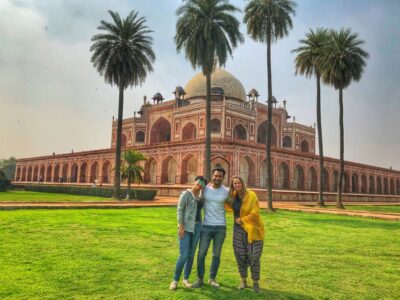 ★ 4.9Old and New Delhi Private Full or Half-Day TourTickets from $23,776 traveller reviews
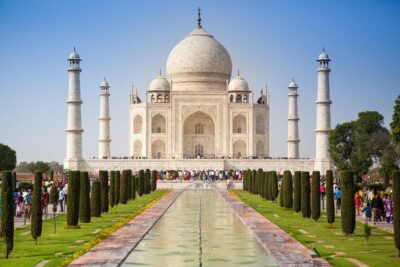 ★ 5.0Full Day Taj Mahal, Agra Fort & Baby Taj Tour from Delhi by CarTickets from $623,647 traveller reviews
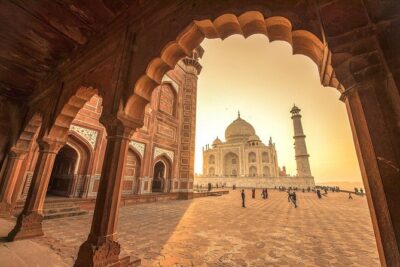 ★ 4.9From Delhi: Taj Mahal & Agra Private Day Trip with TransfersTickets from $43,181 traveller reviews
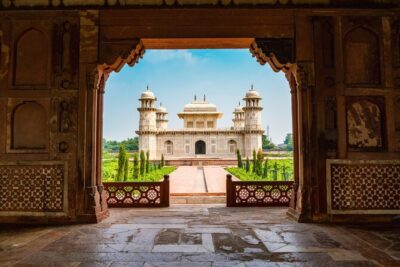 ★ 5.0Taj Mahal Tour from Delhi by Express Train (Viator Award Winner)Tickets from $752,849 traveller reviews
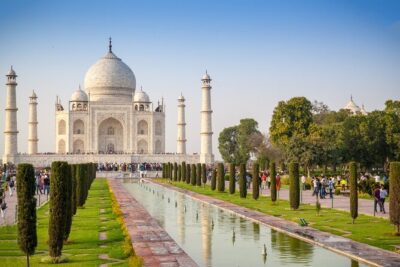 ★ 5.0All Inclusive Private Taj Mahal Luxury Tour from Delhi by CarTickets from $622,564 traveller reviews
More useful Delhi routes