

Review · DELHI CITY TOURS
National Crafts Museum with Lunch in Delhi
Delhi has a craft museum with built-in village magic. The National Crafts Museum takes you into an Indian village setting, where stone and wood details, plus folk art, are treated like everyday conversation, not distant display. I especially love the craft demonstrations that bring makers into the spotlight, and the museum’s stone and wood carvings you can study at eye level.
Two things really worked for me. First, the whole museum design is built around that village idea, so different crafts sit side by side instead of feeling like separate collections. Second, the building itself is full of examples, with carvings on doors, windows, lintels, and posts, plus folk and tribal paintings placed along the passage walls.
One thing to keep in mind is that a local guide is not included, so you’ll get the experience mainly through the museum setting and the optional guidance offered with your booking setup. Also, drinks with lunch are not included, so you may want to budget a bit extra if you plan to order something beyond water.
Key highlights at a glance
- Village-style layout that lets different crafts feel connected, not boxed off
- Stone and wood carvings on doors, windows, lintels, and posts you can look at closely
- Folk and tribal paintings along passages, adding color and context to the building itself
- Crafts Demonstration Program where you can see dozens of craft professionals through the month’s schedule
- Hotel pickup in a private vehicle that makes the morning easy
- Lunch included, but drinks are on you
Inside the National Crafts Museum’s village workshop vibe
The museum is designed like an Indian village world, where crafts that might seem unrelated in everyday life end up sharing the same space. That approach changes how you look at things. Instead of hunting for one category you already know, you start noticing patterns, shared techniques, and how materials get reused across traditions.
As you walk through the building, you’ll see the museum doesn’t only display crafts, it also applies craftsmanship to its own architecture. The message is simple: making things matters, and it belongs in daily life. That’s a great mood shift in Delhi, where so much tourism is built around speed and checklists.
If you like museums where you can take your time, this style helps. You can stop, look at a carved element, then glance at a painting nearby and make your own links. It is a visit that rewards curiosity more than fast reading.
You can also read our reviews of more museum experiences in New Delhi
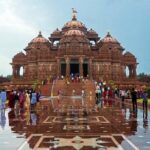

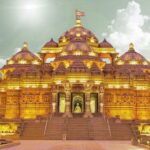
Carvings on doors and windows, plus paintings on the walls
One of the most satisfying parts is how much of the craftsmanship is built into the building. The museum includes rare displays of stone and wood carvings on elements like doors and windows, and also on lintels and posts. Those are the exact places your eyes naturally travel to, so the details feel personal instead of distant.
Here’s how to get more out of it. When you see a carved panel, take a few extra seconds and track the edges and borders. Many decorative styles hide “rules” in the frame details, and you can see how the maker planned the whole piece, not just one motif. If you’re the type who likes photos, this is also where close shots can actually teach you something.
Then the mood shifts through the passages, where folk and tribal paintings spread across the wall canvas. They are not thrown in like filler. They help connect the carvings to the wider visual language of Indian village life, so the museum feels like a real environment rather than an indoor gallery.
Crafts Demonstration Program: where the makers take the stage
The participatory highlight is the Crafts Demonstration Program. This is the part that turns a standard museum visit into a more human experience. Instead of only looking at finished objects, you get to see craft professionals working and explaining through demonstration.
The program is structured around a rotating mix of makers, with 50 crafts persons featured every month from different parts of India. Even if the exact people on your day are not the same as next month, the idea stays consistent: you’re not just consuming a history lesson, you’re watching the living process of making.
What I like about this for your trip is the pacing. Museums can sometimes feel like you’re moving from one sign to another. Demonstrations break that rhythm. You can ask questions in your own way through conversation and observation, and you end up remembering craft techniques more clearly because you saw them happen.
If you’re traveling with kids or friends who get restless, this part can be the anchor. It gives the day a “there is something happening now” feeling.
The morning flow: pickup, 8:00 am start, and a 3 to 6 hour window
Your day starts early at 8:00 am. Pickup is offered from your Delhi hotel, and transport is by private vehicle, so you avoid that common hassle of figuring out routes and timing on your own.
The duration is listed as 3 to 6 hours. That matters, because it tells you this is not a quick 60-minute stop. It’s built as a half-day outing with enough room to see the main museum highlights and still finish with lunch without feeling rushed.
Included basics help the morning go smoother. Bottled water is provided, which is a small thing but a real comfort when you are walking around indoor spaces that still feel warm. You’ll also have a mobile ticket, so you can keep things simple with your phone.
Dress code is smart casual. That’s good news because it gives you flexibility. Comfortable layers and shoes you can stand in will make the carvings and passage walking much easier.
Lunch after the museum: a satisfying finish, with drinks not included
The experience finishes with lunch at a famous local restaurant. That pairing makes sense. Craft museums can pull you into a slow, detail-focused mindset, and food gives you a clean reset.
One practical note: drinks are not included. Water is provided earlier, but at lunch you should plan for the possibility that sodas, juices, or alcohol will be extra. If you like to control your budget, stick to water or check the menu before you order.
Lunch timing also affects how you remember the museum. When you eat after you’ve toured, the visuals and textures you saw in carvings and paintings tend to connect in your brain. It feels like a complete arc rather than “museum now, lunch later, different memory.”
More New Delhi tours and experiences for the shortlist



Price and value: what $79 covers in Delhi
At $79.00 per person, the value comes from what’s bundled, and what isn’t. Included items are bottled water and transport by private vehicle. Admission is also included as part of the ticketing.
If lunch is part of the experience as promised by the tour description, that adds real value too, since food in Delhi can vary widely depending on where you go. The biggest cost lever you control is the optional portion that is not included: drinks and a local guide.
Think of it this way. If you would have paid admission and transport anyway, and you also wanted a structured morning with pickup, you’re paying for convenience and a guided flow through the museum experience. If you’re a confident self-explorer who enjoys reading signage and doesn’t care much about commentary, you might wonder if a local guide would add much. But even without a guide, the museum’s built-in details do a lot of the work for you.
Also, the tour includes group discounts, so if you’re traveling with friends or family, the overall budget can get friendlier.
What it feels like as a museum visit, not just a stop
I like that this museum experience gives you multiple entry points. You can focus on the architecture carvings first, switch to the passage paintings next, and then finish with the demonstration when you want something active. That variety helps you stay engaged even if one part is not your main interest.
It also tends to be a better choice than a generic craft market stop when you want context. A market can be great for shopping, but it doesn’t always help you understand why one tradition uses a certain material or how designs travel across regions. Here, the setting keeps the focus on craft objects and craft thinking.
And a small detail I appreciated from the feedback I saw is that someone wished there was a book store related to the craft focus. That’s a useful expectation setter. If you want guides, catalogs, or craft reference books, plan to pick them up elsewhere during your trip or bring your own reading notes. Don’t assume there will be a shop on site selling museum-specific literature.
Who should book this experience
This is a strong fit if you want culture that’s hands-on, not just “look and move on.” If you enjoy craft traditions, architectural details, or folk art, you’ll likely feel satisfied because there is enough variety to keep your attention.
It’s also a good match if you want a structured morning in New Delhi without complicated navigation. Pickup, private vehicle transport, and a set start time make it easier, especially if you’re juggling other plans that day.
Most travelers can participate, and the private tour setup means it’s tailored to your group instead of a large mixed crowd. If you’re traveling with friends, or want a calmer paced museum visit rather than a sprint through major attractions, this setup can be a good bet.
Should you book? My practical take
Book it if you want a craft-focused morning that feels like it has multiple layers: architectural carvings, folk and tribal art in the passages, and the chance to see crafts people in action through the demonstration program. The fact that it includes museum time plus lunch makes it easier to build a smooth day.
Skip it or think twice if you only want shopping or if you expect a full-time local guide to narrate everything. Since a local guide is not included, you may rely more on your own curiosity and whatever explanations are offered during the demonstration or museum visit.
One more small planning tip: if you like to remember details, bring a notebook. The carvings and passage paintings are visual, and writing a few notes right after you see something helps you keep it straight later, especially on busy Delhi days.
FAQ
FAQ
What time does the tour start?
It starts at 8:00 am.
How long does the National Crafts Museum with Lunch experience take?
The duration is approximately 3 to 6 hours.
Is hotel pickup included?
Yes, pickup is offered from your hotel in Delhi.
What’s included with the price?
The experience includes bottled water and transport by private vehicle. Admission is included as part of the ticketing.
Is lunch included?
The experience is designed to end with lunch at a famous local restaurant.
Are drinks included with lunch?
No, drinks are not included.
Can I cancel for a full refund?
Yes. You can cancel for a full refund up to 24 hours in advance of the experience’s start time.
More Lunch Experiences in New Delhi
More Museum Experiences in New Delhi

More Tour Reviews in New Delhi



Not for you? Here's more nearby things to do in New Delhi we have reviewed








More Delhi City Tours to consider.
 ★ 5.0Old & New Delhi City Tour – Half or Full Day Options AvailableTickets from $384,811 traveller reviews
 ★ 5.0Same Day Taj Mahal, Agra Fort & Baby Taj Tour from Delhi by CarTickets from $624,304 traveller reviews
 ★ 5.0Taj Mahal Day Tour from Delhi by Superfast Train – TOP RATED TOURTickets from $1004,166 traveller reviews
 ★ 4.9Old and New Delhi Private Full or Half-Day TourTickets from $23,776 traveller reviews
 ★ 5.0Full Day Taj Mahal, Agra Fort & Baby Taj Tour from Delhi by CarTickets from $623,647 traveller reviews
 ★ 4.9From Delhi: Taj Mahal & Agra Private Day Trip with TransfersTickets from $43,181 traveller reviews
 ★ 5.0Taj Mahal Tour from Delhi by Express Train (Viator Award Winner)Tickets from $752,849 traveller reviews
 ★ 5.0All Inclusive Private Taj Mahal Luxury Tour from Delhi by CarTickets from $622,564 traveller reviews
More useful Delhi routes