
Review · DELHI CITY TOURS
Old & New Delhi City Tour-Half Or Full Day with Options Available
Delhi hits all senses in one packed day. This private tour makes it doable, with door-to-door pickup and an air-conditioned vehicle that keeps you comfortable while you hop between Old Delhi and the New Delhi monuments. I especially like how it pairs iconic landmarks with food-and-faith street scenes, but one thing to consider is that Delhi traffic can shift timing, so the optional guide upgrade is worth it if you want the stories behind what you’re seeing.
You can choose half-day or full-day timing (about 4 to 8 hours), and the flow is designed for a first visit: big mosque, spice market, temples, then the grand planning of New Delhi. You’ll also get bottled water, and you can upgrade to a vegetarian lunch if you want a break that stays simple and stress-free.
If your goal is to get your bearings fast, this works. Just remember that a couple of major sites close on Mondays, so the tour swaps in alternatives like Lodhi Tomb and Birla Temple.
Key highlights to look for before you book

- Door-to-door pickup and drop-off around Delhi, Noida, and Gurugram so you do less logistics work
- Air-conditioned car matched to your group size (sedan for 1 to 2, MPV for 3 to 5)
- Real Old Delhi texture with a rickshaw ride plus spice shopping at Khari Baoli
- Iconic monuments with ticket coverage at places like Jama Masjid, Qutub Minar, and Humayun’s Tomb
- Faith-focused stops that feel human, especially Gurudwara Bangla Sahib and its community kitchen
Why this Old and New Delhi combo tour works for first-timers
Delhi is two cities in one. Old Delhi gives you crowded lanes, Mughal-era architecture, and sensory overload in the best way. New Delhi is a planned, wide-boulevard grid with grand government buildings and big monuments. The clever part here is that you don’t have to decide between them.
The vehicle part matters. You’re not making this trip on your feet or on a guessing game with transit. You’re in an air-conditioned car, and you get bottled water. For a long day with heat and traffic, that alone can make the difference between a “great day” and a “why did I do this.”
The tour also avoids a common first-timer trap: trying to do too much alone. Even when the route is straightforward on paper, Delhi traffic is not. A driver who handles that is not a nice-to-have. It’s the backbone of the experience.
And if you care about context, choose the option with a private professional guide. Several recent guides named in the feedback (including Mr Singh and Mr Naresh) are praised for making the sites feel clear, not random.
You can also read our reviews of more city tours in New Delhi


Starting with pickup, then switching mindsets from Old to New Delhi
Your day begins with pickup from your hotel, airport, railway station, or another chosen location in Delhi, Noida, or Gurugram. That flexibility is practical, especially if you’re arriving on a late flight or you’re traveling with family and don’t want to wrestle with taxis.
Once you’re moving, the plan naturally shifts your mindset. You start in Old Delhi territory, where sites are close together but the streets are not calm. Then, later, you switch to New Delhi, where the experience becomes about scale and design.
This matters more than it sounds. In Old Delhi, you’re trying to understand how communities lived and how empires built. In New Delhi, you’re trying to understand how modern India shaped public space and monumental architecture. With a single day, you get both viewpoints.
Jama Masjid: a huge mosque and a quick win for understanding Mughal Delhi
Jama Masjid is one of those places that makes the city feel real fast. It’s built from red sandstone and can hold around 25,000 people at a time. Your visit is about an hour, and admission is included.
What I like about this stop is that it’s not just a pretty landmark. It gives you a sense of how central the mosque is to daily life and religious rhythm in Old Delhi. When you’re surrounded by scale like this, you stop thinking of Delhi as just streets and start thinking of it as lived-in history.
Practical tip: dress modestly and expect crowds. Even if you’re not there for a service, the atmosphere is part of the experience.
The Old Delhi rickshaw ride: street life at slower speed
After Jama Masjid, you switch to a rickshaw ride for about an hour. This is where Old Delhi gets playful. You’ll pass famous Halwai shops such as Ghantewala and Jalebiwala, noted as established in 1884. You’ll also see Gurudwara Shish Ganj along the route.
This is a smart pacing choice. Walking in Old Delhi can be exhausting quickly, especially if you’re dealing with heat or crowds. A rickshaw ride lets you see storefront energy without feeling like you’re sprinting between attractions.
One thing to keep in mind: markets and religious areas can be busy. You’ll want to keep your phone and valuables secure, and stay flexible if the route changes slightly due to crowd flow.
Khari Baoli spice market: Asia’s biggest spice market in real life
Khari Baoli is a classic Delhi stop for a reason. It’s an old spice market, around 17th century in origin, and it’s often described as Asia’s biggest spice market. You’ll spend about 30 minutes here.
Think of this as sensory travel without needing a big shopping spree. Even if you just watch, it’s a lesson in how Delhi trades were organized. You’ll see hundreds of shops selling spices and related goods.
Practical tip: if you plan to buy spices, ask the price per weight before you commit. And if you’re carrying items back to your hotel, plan for packaging since you’ll likely have other sightseeing later.
More New Delhi tours and experiences for the shortlist






A UNESCO-listed Mughal-era sandstone fort: big walls, Islamic arches, and scale
Next comes a major fort tied to Mughal rule for nearly two centuries. It’s listed by UNESCO as a world heritage site and described as a colossial sandstone structure with excellent Islamic architecture. Your time here is not specified in detail, but it’s positioned as a key Old Delhi monument stop.
Even without getting lost in a name, this kind of fort visit is useful. Forts are a shortcut to understanding power: who built, what they protected, and how architecture signaled authority. In Old Delhi, the fort gives you a more grounded view after the intense street scenes.
Practical consideration: fort layouts can involve uneven surfaces. If you have mobility limits, tell your driver early so you can decide how long you want to stay inside before moving on.
Gurudwara Bangla Sahib: community feeding, not just sightseeing
Then you shift religions and mood at Gurudwara Bangla Sahib, a historic Sikh temple. It’s about an hour, and admission is free.
The most memorable detail here is practical and human: the gurudwara has a big pond and a large kitchen that serves the community. It’s the kind of place that shows religion as action, not only architecture.
If you want a calm moment in your day, this works. It’s also a great counterbalance after the noise of marketplaces and the grand scale of mosques and forts.
Dress modestly and be ready to follow on-site rules. If there’s a moment when you can watch the kitchen activity, it adds real meaning to the visit.
India Gate and the planned heart of New Delhi
When you move into New Delhi, you’ll hit India Gate, the 42-meter-high stone memorial designed by Edwin Lutyens in 1921. It honors around 90,000 Indian Army soldiers. Your stop is short, about 15 minutes.
Then the route includes major government landmark architecture like Parliament House (Sansad Bhavan) and the President House. These are big buildings with colonial-era planning influences, and even brief viewing helps you understand how New Delhi’s streets were meant to project power and order.
Here’s the practical side of this: after hours in crowds, you get a breather. Wider roads and iconic monuments mean you can pause, look up, and reset.
Qutub Minar: the one ticketed monument you should not rush
From there, the tour heads to Qutub Minar, with admission included. It’s described as a 73-meter-high minaret with five stories.
This is the stop where you should slow down mentally. Minarets are meant to be seen from far away, and the height is the point. In photos it looks dramatic, but in person you notice proportions and the way the structure dominates the surrounding area.
Plan to spend meaningful time looking up. If you only glance at the base, you miss why people remember this one.
Lotus Temple: calm geometry for when Delhi feels loud
Next is Lotus Temple (30 minutes, admission free). It’s shaped like a lotus flower and described as the Bahai House of Worship.
It’s an easy win for many people because it offers quiet contrast. After India’s busy street energy, the setting is designed to feel still, even while the city keeps moving outside.
Important note: Lotus Temple closes every Monday. If your day falls on a Monday, the tour swaps to Lodhi Tomb and Birla Temple instead (so you still get major sights, just different ones).
Swaminarayan Akshardham: a spiritual and cultural complex with big visual impact
You’ll also visit Swaminarayan Akshardham for about an hour. Admission is listed as free for this tour, and it’s described as a Hindu temple and spiritual cultural complex showing traditions and modern Indian culture with striking architecture.
This is another reason the tour works well for a first visit: it’s not only about one era. You get Mughal-era Delhi in Old Delhi, then British-era and modern governance symbolism in New Delhi, and then a very current spiritual monument in the middle of it all.
If you prefer simpler, quieter viewing, give yourself enough time to walk and watch. Complexes like this can feel like they need shortcuts, but taking a little time improves the experience.
Humayun’s Tomb: where the gardens and symmetry make sense
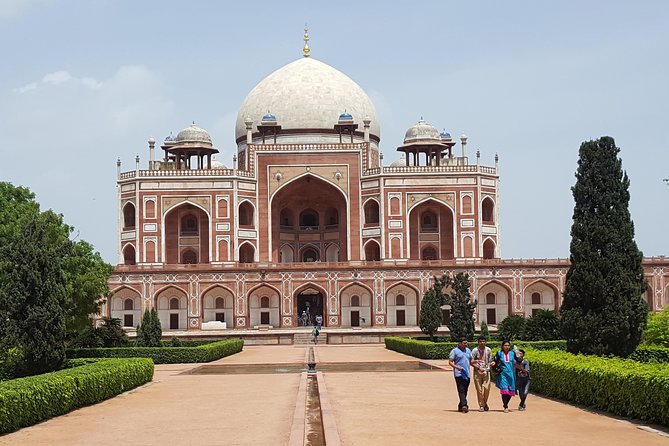
The day often ends (or one of the late stops) at Humayun’s Tomb. It’s admission included, and the visit is about an hour.
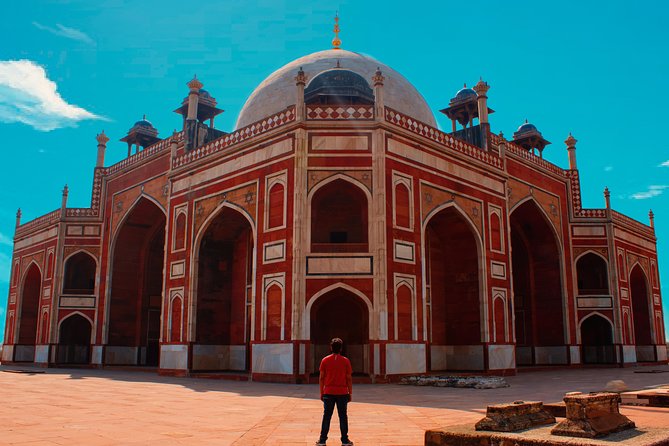
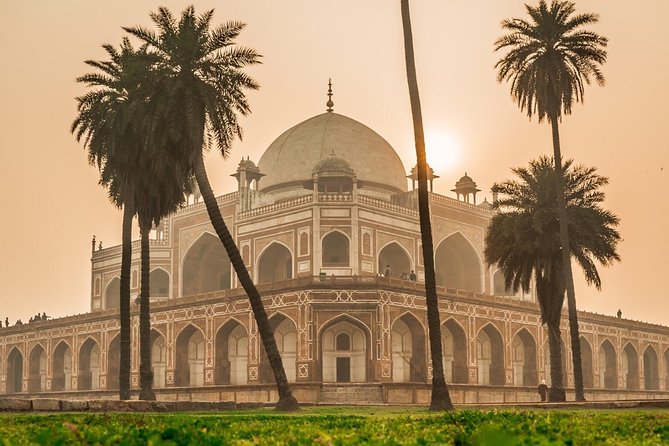
The description you get here is key: it’s world famous, built for Emperor Humayon by his wife, with a symmetrical garden and arched facades in Persian and Mughal style. Even if you’re not a formal architecture fan, the symmetry is a relief after the hustle.
This stop helps tie the day together. You’ve seen mosques, forts, and minarets, but Humayun’s Tomb adds “soft power.” Gardens and tomb architecture are about creating a space that feels permanent.
Lunch and the optional private guide upgrade: how to make the day meaningful
There’s a vegetarian lunch upgrade option. Non-vegetarian food and alcohol are not included. If you’re sensitive to dietary restrictions, the vegetarian lunch upgrade helps keep the day smooth.
Now, about guides. The tour includes a private local professional guide only if you choose that option. When you do, you’re not just getting directions. You get the narrative spine: why certain places were built, what each ruler emphasized, and how religious life shaped the city.
Based on the feedback, the best experiences tend to be tied to guide performance. Some named guides like Mr Singh and Ajay are described as able to answer questions about politics, religion, and the economy, not only architecture trivia. Even if you think you don’t need stories, one good guide turns the day from “I saw places” into “I understand what I saw.”
Getting value for $28 per person: what you really pay for
At $28 per person, the value is strongest if you’re thinking about the whole package, not individual monuments.
You’re paying for:
- Private exclusive tour with door-to-door pickup and drop-off
- Air-conditioned vehicle sized for your group (1 to 2 in a sedan, 3 to 5 in an MPV)
- Bottled water
- All taxes, parking fee, and GST
- Admission tickets that are marked included for specific monuments like Jama Masjid, Qutub Minar, and Humayun’s Tomb
- A vegetarian lunch option if you want it
If you’re traveling as a small group, a private vehicle can feel especially efficient. You’re not splitting taxis or negotiating rides between stops.
One more value detail: you get a mobile ticket, which usually means fewer hassles when entering sites. The tour also includes substitutions when major sites are closed, which saves you from a wasted day of “we missed that one.”
When to go, and what to expect weather-wise
This experience requires good weather. If weather disrupts the plan, you’re offered a different date or a full refund. In Delhi, that matters because walking areas and monument courtyards can become unpleasant when it’s too hot or conditions are bad.
If you can choose, aim for a day when you can comfortably handle time outdoors, and keep a light layer for temple and monument visits where you might stand still for a while.
Who should book this tour
This tour is a great fit if:
- It’s your first time in Delhi and you want Old Delhi plus New Delhi in one organized day
- You want a calm logistics setup with pickup and drop-off
- You travel with family and want air-conditioned transport between sights
- You like mixing big landmarks with religious sites and everyday market life
It may be less ideal if:
- You’re the type who hates crowds and prefers only quiet, off-the-map places
- You want a slow, unhurried travel style, because the day is built around covering many major points
- You’re only interested in ticketed monuments, since some stops are more about viewpoints and atmosphere
Should you book this Old and New Delhi City Tour?
Yes, if your priority is a strong introduction to Delhi with minimal stress. The combination of door-to-door pickup, air-conditioned comfort, and major sights across both Old and New Delhi gives you good returns on a limited time budget.
I’d especially book it if you’re choosing the private guide option. The strongest moments in the feedback tie to guides who can explain what you’re looking at, not only where you’re standing. And if your visit falls on a Monday, don’t worry, the itinerary is designed to swap Lotus Temple and Akshardham for Lodhi Tomb and Birla Temple, so you still get a full slate of monuments.
If you’re ready to see Delhi as both street life and grand planning, this is one of the cleanest ways to do it in a single day.
FAQ
How long is the Old and New Delhi city tour?
It runs about 4 to 8 hours, depending on the option you select.
Does the tour include hotel or airport pickup?
Yes. Pickup and drop-off are included from hotels, airports, railway stations, or other selected locations in Delhi, Noida, or Gurugram.
What vehicle will I ride in?
For 1 to 2 people, you travel in an air-conditioned four-seater sedan. For 3 to 5 people, you’ll ride in an air-conditioned six-seater MPV.
Is bottled water included?
Yes, bottled water is provided.
Is a guide included?
A private professional guide is included only if you choose the guide option. Otherwise, you still have the private tour and transport.
Are tickets included for the main monuments?
Admission is included for some stops such as Jama Masjid, Qutub Minar, and Humayun’s Tomb. Other stops are listed as admission free.
Is lunch included?
Lunch is included only if you upgrade to the vegetarian lunch option. Non-vegetarian food and alcoholic beverages are not included.
What happens if my tour is on a Monday?
Lotus Temple and Swaminarayan Akshardham are closed on Mondays. In that case, the tour takes you to Lodhi Tomb and Birla Temple instead.
What is the refund policy if weather is bad?
This experience requires good weather. If it’s canceled due to poor weather, you’ll be offered a different date or a full refund.
More City Tours in New Delhi


More Tours in New Delhi




More Tour Reviews in New Delhi

Not for you? Here's more nearby things to do in New Delhi we have reviewed










More Delhi City Tours to consider.
 ★ 5.0Old & New Delhi City Tour – Half or Full Day Options AvailableTickets from $384,811 traveller reviews
 ★ 5.0Same Day Taj Mahal, Agra Fort & Baby Taj Tour from Delhi by CarTickets from $624,304 traveller reviews
 ★ 5.0Taj Mahal Day Tour from Delhi by Superfast Train – TOP RATED TOURTickets from $1004,166 traveller reviews
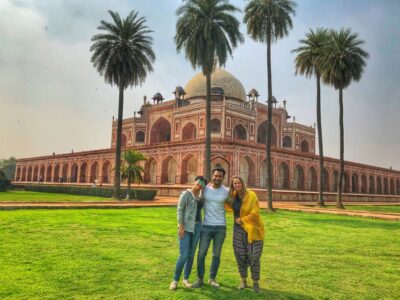 ★ 4.9Old and New Delhi Private Full or Half-Day TourTickets from $23,776 traveller reviews
 ★ 5.0Full Day Taj Mahal, Agra Fort & Baby Taj Tour from Delhi by CarTickets from $623,647 traveller reviews
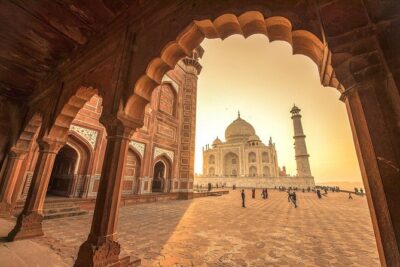 ★ 4.9From Delhi: Taj Mahal & Agra Private Day Trip with TransfersTickets from $43,181 traveller reviews
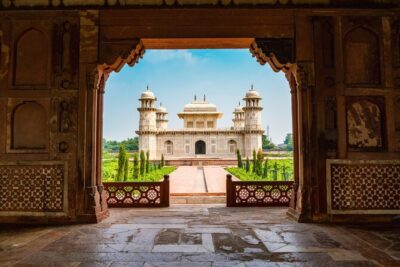 ★ 5.0Taj Mahal Tour from Delhi by Express Train (Viator Award Winner)Tickets from $752,849 traveller reviews
 ★ 5.0All Inclusive Private Taj Mahal Luxury Tour from Delhi by CarTickets from $622,564 traveller reviews
More useful Delhi routes