
Review · DELHI CITY TOURS
Old & New Delhi Full or Half Day Sightseeing Tour
Delhi hits fast, in four to eight hours. This private tour lets you pick Old Delhi or New Delhi, or do both in one full day, with a guide, comfortable transport, and major landmarks like Jama Masjid, Humayun’s Tomb, and Qutub Minar.
I really like the practical setup. You get a pickup from across Delhi NCR areas, and you travel in an air-conditioned car (when selected) instead of wrestling taxis between monuments. I also like the pacing flexibility built into a private format, so you can spend more time where you care most.
One thing to watch: entrance fees are optional. If you do not select the upgrade for monument tickets, you’ll want extra money ready for entries at the sites that charge.
Key highlights at a glance

- Private only for your group, not a mixed crowd shuffle
- Half-day or full-day options covering Old Delhi or New Delhi, or both
- Pickup and drop-off from Delhi NCR areas, with you choosing the start time
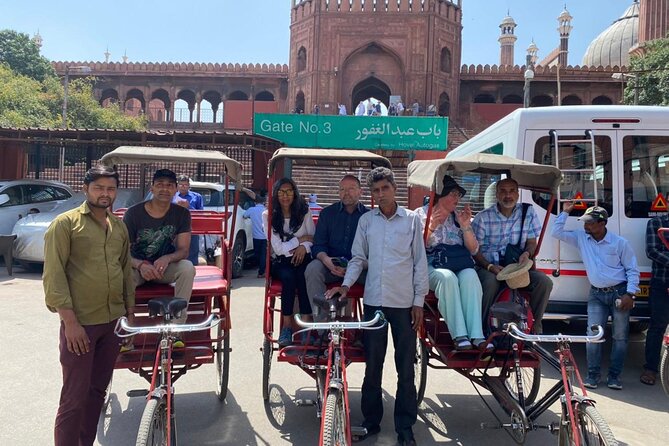
- AC car plus local rides in Old Delhi (including a rickshaw stop and tuk tuk if selected)
- Smart monument coverage like Jama Masjid, Humayun’s Tomb, Lotus Temple, and Qutub Minar
- Water bottles and umbrellas included for comfort during long, hot walks
Price and logistics that actually matter in Delhi
At $24.55 per person, this tour is aimed at first-timers and returnees who want the headlines without spending half the day figuring out transport. The duration is listed as 4 to 8 hours, so your cost ends up looking like a day’s worth of guided coordination, not just a route through streets.
Here’s the value logic I’d use. Delhi landmarks are spread out. Even when they are in the same general zone, traffic and walking time can wreck your schedule. A private driver plus a guide helps you save those hours and avoid dead-end detours. That matters more than it sounds.
Also note the tour is designed to be plug-and-play. You can choose your pickup time and get collected from a long list of areas including Delhi, Noida, Gurugram, Ghaziabad, and Faridabad. That reduces the all-too-common problem where you have to get yourself to some starting point across town first.
Your price can shift slightly depending on whether you select the entry ticket upgrade. With that option, entry tickets to monuments are included. Without it, you may pay at some sites yourself.
You can also read our reviews of more tours and experiences in New Delhi.



Pickup to drop-off, with the driver handling Delhi traffic
You’re picked up from essentially wherever you are inside a wide Delhi NCR radius. Then you ride in an air-conditioned car with a driver when that option is selected. You also get parking, tolls, fuel, and taxes taken care of, plus free water bottles and umbrellas.
This is the part that keeps the day from turning into stress. Delhi traffic is chaotic. When you have a driver who already knows how to move through the routes, you spend your energy on photos, questions, and the actual sights.
The tour is private in the sense that only your group participates. That means fewer interruptions. It also tends to make it easier to ask for small adjustments, like skipping one photo stop or changing the order if you’re dealing with heat or timing.
You also get dropped back to your chosen location within Delhi NCR at the end of the day. That last-mile return is a big deal when you are planning a full day, because you do not want to add another round of bargaining and transit.
Old Delhi start: Jama Masjid and the red-sandstone courtyard walk
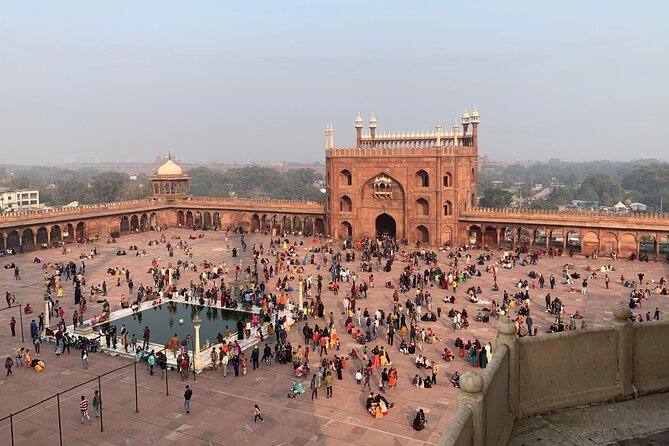
Old Delhi begins with Jama Masjid, described as the biggest mosque in India, constructed in 1656. The tour’s plan here is straightforward: arrive, take in the scale, and do the courtyard walk on red sandstone.
This is a landmark that can feel overwhelming if you just show up and wander. The guide’s job is to help you understand what you are seeing, where to stand for the best views, and how to handle the respectful behavior that these spaces require.
The itinerary also schedules about one hour here, with the admission ticket included in the option shown for this stop. That timing is useful. Jama Masjid is not a two-minute photo wall. You want enough time to look up, look around, and still have time for the next leg.
Practical tip: wear shoes that are easy to manage, because religious sites often come with rules about where shoes go and how you move through the space. The tour will guide you, but your comfort level depends on what you brought.
Chandni Chowk by rickshaw: markets, wedding lanes, and spice street energy
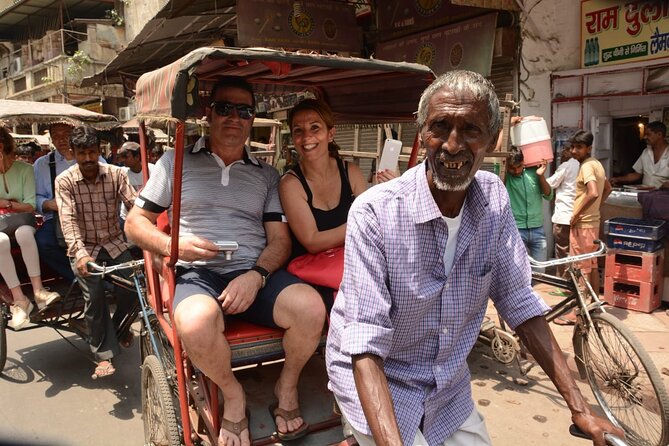
After Jama Masjid, the tour hops by rickshaw to explore the Chandni Chowk market area. You get about 30 minutes for this part, and the plan includes named shopping lanes.
Two places are called out:
- Cham Cham Gali, known for wedding-related shopping
- Parathe Vali Gali, associated with parathas
This is one of those Delhi moments where the details matter. Chandni Chowk is sensory. It is also easy to get turned around in minutes if you do this on your own. The tour keeps it focused, so you can browse without losing your entire afternoon.
One caution: shopping areas like this can come with persistent sales pressure, especially around spices and rugs. If that is not your style, you can treat the market as a look-only stop. Take photos, soak in the atmosphere, and spend your money intentionally, not reactively.
If you want to buy tea, spices, or small gifts, you’ll likely enjoy this stop. If you want quiet sightseeing, you may prefer to spend more time at the religious sites and monuments than in the market lanes.
Red Fort and Gurudwara Bangla Sahib: power and peace in the same day
The tour route groups two very different Delhi experiences back to back.
First comes the Red Fort, described as a major Mughal-era complex built by Shah Jahan between 1639 and 1648. It’s where important Mughal emperors lived. Architecturally, it’s described as mixing Indian-Islamic and Mughal styles. This is the kind of place where context changes everything. Without it, it’s just a big structure. With it, you start noticing the symbolism and why it mattered.
Next is Gurudwara Bangla Sahib, set up for around one hour. This stop is free in terms of admission on the schedule. What makes it special in the tour plan is that it is not only about architecture and spirituality. You can also visit the Langar kitchen, where visitors can learn about the serving tradition.
I like this pairing because it balances the day. Old Delhi landmarks can lean intense. Gurudwara Bangla Sahib adds a calmer rhythm, and the Langar connection gives you something real to understand about community life, not just impressive buildings.
There’s also a practical side. A spiritual stop like this often works well as a mid-day reset. Even if you are not religious, it gives your brain a break between markets and monuments.






New Delhi monuments: India Gate, Rashtrapati Bhavan, and Parliament House from the right perspective
The New Delhi portion moves into 20th-century planning and monumental government spaces.
You’ll typically see:
- India Gate, described as a large arch-like monument, designed by Edwin Lutyens in 1921, and honoring about 90,000 Indian Army soldiers who died in World War I
- Rashtrapati Bhavan (the President’s House), described with details like 340 rooms and the Durbar Hall
- Parliament House (Sansad Bhavan), linked to 1947 and the moment Britain granted India freedom, with a note that people cannot enter freely
Even when you are not going inside, this part is worth doing because it shows how Delhi’s identity expanded beyond Mughal-era history. The buildings are designed to be seen, and they also act like a time machine, moving you from old empires to modern governance.
Practical approach: focus on angles and sightlines. These places can look similar from street level. A guide helps you get the best viewpoints without wasting time circling.
One thing I’d keep in mind is that entrances can be limited, especially for government buildings and during national events. So treat these as exterior and context stops, not a promise of inside access.
Humayun’s Tomb, Lotus Temple, and Qutub Minar: three different styles of awe
This is where the tour becomes a true monument checklist, and it does it efficiently.
Humayun’s Tomb, the garden tomb idea
You’ll visit Humayun’s Tomb for about one hour, and the admission ticket is listed as included on the schedule for this stop. The description highlights that it’s UNESCO-recognized and called the first Garden Tomb of India. It also notes the tomb was commissioned by Humayun’s wife after his death.
If you are the type who cares about why gardens matter, this stop is great. The layout is part of the story, not just decoration.
Lotus Temple, calm on purpose
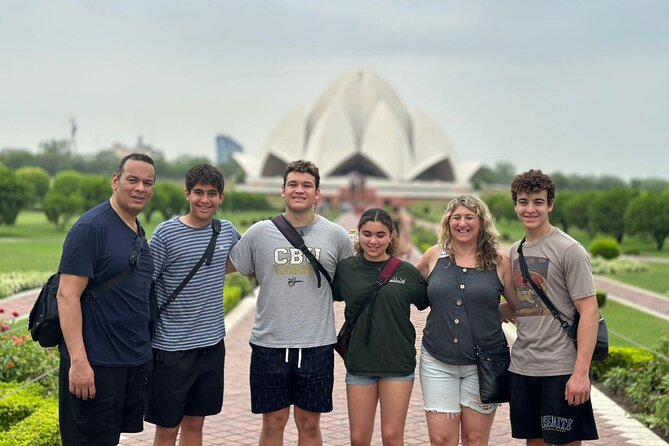
Next is the Lotus Temple, described as the Bahai House of Worship. It is designed to look like a lotus flower and was made in 1986 by architect Fariborz Sahba. Admission is free on the schedule, with about 30 minutes allocated.
This stop works as a mental breather. It’s a different kind of architecture lesson, one that feels more about harmony and form than palace power.
Qutub Minar, the tall tower you can’t ignore
Finally is Qutub Minar, with about one hour and admission listed as included on the schedule for this stop. The description notes it’s designed by Sultan Qutb-ud-din, meant to show authority, and it has five parts. It’s also described as looking like towers you might see in Afghanistan, which is an interesting comparison to keep in mind as you look up.
Qutub Minar is one of those monuments that can steal your time if you let it. Give it the full hour. Look at the details, not just the height.
Old Delhi versus New Delhi: how to choose your half-day plan
This tour offers two main styles:
- Half-day options: Old Delhi OR New Delhi
- Full day: both Old Delhi and New Delhi
If it’s your first time in Delhi, I usually recommend a full day if your energy level is decent, because you get the contrast. Old Delhi gives you the Mughal-and-market feel, Jama Masjid and the Mughal story. New Delhi gives you the planned capital side: India Gate, Rashtrapati Bhavan context, and iconic 20th-century religious and historic monuments.
If you only have a morning or afternoon, pick based on your mood:
- Want religion, markets, and classic Mughal-era scale? Choose the Old Delhi half-day.
- Want the city’s planned monuments and major landmark architecture? Choose the New Delhi half-day.
Guides, pacing, and why private tours feel different here
One of the strongest themes is how guides run the day. Names that show up in strong feedback include Ali, Tabrej, Suhail, Mayank, Raj and Saji, Jiten, and Prithivi, plus others. The consistent idea is that the guides explain what you’re seeing, keep you safe on busy roads, and try to balance your time so you are not rushed through everything.
I also like the “flexibility inside structure” approach. A private tour can still be efficient, but it gives you room to linger where it clicks for you. One person even described feeling they were not rushed and could enjoy the tour at their own pace.
There’s also a practical comfort angle. People traveling solo also highlighted feeling safe during traffic and tours. That matters in Delhi, where road chaos can wear you out fast.
If language matters for you, one review mentioned a guide, Manesh, speaking Spanish. If that’s important, it’s worth asking the provider directly when booking. The tour data here does not promise specific languages, but the real-world results suggest some flexibility.
Entrance fee upgrade: when it’s worth paying in advance
The tour explicitly offers an upgrade to include entry tickets to monuments for a smoother day out. Some stops on the schedule list admission included, while others are free.
So here is the money question you should ask yourself:
- If you want less hassle and fewer small cash moments, choose the entrance-fee upgrade.
- If you prefer to manage tickets yourself, you can skip it, but then be ready for additional payments during the day.
This becomes even more important when your time is limited. With a ticket included option, you spend less time negotiating or searching for entry counters. With a non-ticket option, you spend more time handling on-site payment steps.
Who should book this Old and New Delhi tour
This tour is a strong fit if:
- It’s your first trip to Delhi and you want the big landmarks in one organized plan
- You do not want to spend your limited energy on transport between far-flung sights
- You like a guide who can explain what you are seeing, not just point from one building to the next
- You want the choice of half-day or full-day depending on your schedule
It also suits solo travelers and small groups. The private setup means you are not stuck listening to random group conversations while you’re trying to understand history and architecture.
If you dislike shopping pressure, you can still enjoy Old Delhi by treating Chandni Chowk as a short browsing stop and focusing more on Jama Masjid, Red Fort context, and Gurudwara Bangla Sahib.
Should you book this Old & New Delhi tour?
If you want an efficient, well-paced overview of Delhi, I’d say yes, especially for a first visit. The value is strongest when you take advantage of the pickup convenience, the private guide, and (if you hate hassle) the entrance-ticket upgrade.
Book it if you care about hitting major sites like Jama Masjid, Humayun’s Tomb, Lotus Temple, and Qutub Minar without turning your day into a logistics puzzle. Skip or adjust your expectations if you want pure downtime, because this is built to cover a lot of ground in a short window.
FAQ
How long is the Old and New Delhi sightseeing tour?
The tour runs about 4 to 8 hours, depending on whether you choose a half-day plan or a full-day plan covering both areas.
What are the Old Delhi sights included?
Old Delhi includes stops such as Jama Masjid, the Chandni Chowk market area (explored by rickshaw), the Red Fort, and Gurudwara Bangla Sahib.
What are the New Delhi sights included?
New Delhi includes India Gate, Rashtrapati Bhavan (President’s House), Parliament House, Humayun’s Tomb, Lotus Temple, and Qutub Minar.
Where can pickup happen and can I choose the time?
Pickup is available from any location in Delhi, Noida, Gurugram, Ghaziabad, or Faridabad. You can decide what time you want to be picked up based on your needs.
Is this tour private?
Yes. It is a private tour/activity, and only your group participates.
Are monument entrance tickets included?
Entrance tickets are included if you select the option that includes entry fees. Otherwise, the tour description indicates entry tickets may not be included.
What comforts are included during the tour?
You get an air-conditioned car with a driver if that option is selected, plus a personal tour guide. The tour also includes free water bottles and umbrellas, along with parking, tolls, fuel, or taxes. Drinks and food are not included.
More Tours in New Delhi
More Tour Reviews in New Delhi
Not for you? Here's more nearby things to do in New Delhi we have reviewed









More Delhi City Tours to consider.
 ★ 5.0Old & New Delhi City Tour – Half or Full Day Options AvailableTickets from $384,811 traveller reviews
 ★ 5.0Same Day Taj Mahal, Agra Fort & Baby Taj Tour from Delhi by CarTickets from $624,304 traveller reviews
 ★ 5.0Taj Mahal Day Tour from Delhi by Superfast Train – TOP RATED TOURTickets from $1004,166 traveller reviews
 ★ 4.9Old and New Delhi Private Full or Half-Day TourTickets from $23,776 traveller reviews
 ★ 5.0Full Day Taj Mahal, Agra Fort & Baby Taj Tour from Delhi by CarTickets from $623,647 traveller reviews
 ★ 4.9From Delhi: Taj Mahal & Agra Private Day Trip with TransfersTickets from $43,181 traveller reviews
 ★ 5.0Taj Mahal Tour from Delhi by Express Train (Viator Award Winner)Tickets from $752,849 traveller reviews
 ★ 5.0All Inclusive Private Taj Mahal Luxury Tour from Delhi by CarTickets from $622,564 traveller reviews