
Review · DELHI CITY TOURS
Private 6-Night Golden Triangle and Nepal Tour from Delhi
Delhi gets your trip moving fast. You cover major Mughal and Rajput icons in one sweep, then swap gears for Kathmandu’s temples and mountain air. I like the way this tour blends premium hotel comfort with daily breakfasts and smooth private transport, so you are not constantly rebuilding your day. One big upside is the private setup, and the guides I heard praised most are Mahesh, Ashok, and Bishnu, with drivers Bittu and Manoj, plus KK Sharma being singled out for being both steady and respectful of personal space.
Still, this is a time-packed route. You should expect long drives between cities, and you will also need to plan the Delhi to Kathmandu flight yourself since it is not included. If you have your sights set on Taj Mahal sunrise, clear weather matters.
What Makes This Trip Work So Well
- Private, small-group feel that avoids the large-tour herding problem.
- Hotels with daily breakfasts plus one included dinner in Nagarkot, so you start each day fed.
- Pro local guidance you can actually learn from, including noted guides Mahesh, Ashok, Bishnu and drivers like Bittu, Manoj, and KK Sharma.
- UNESCO-heavy days across India and Nepal, not just a few quick photo stops.
- Practical extras like unlimited bottled water and a battery bus return ride from Taj Mahal parking.
- A true finale in the hills, with Nagarkot sunrise views and eight Himalayan ranges listed when skies cooperate.
Delhi First, With Mughal Majesty and Big-City Bearings
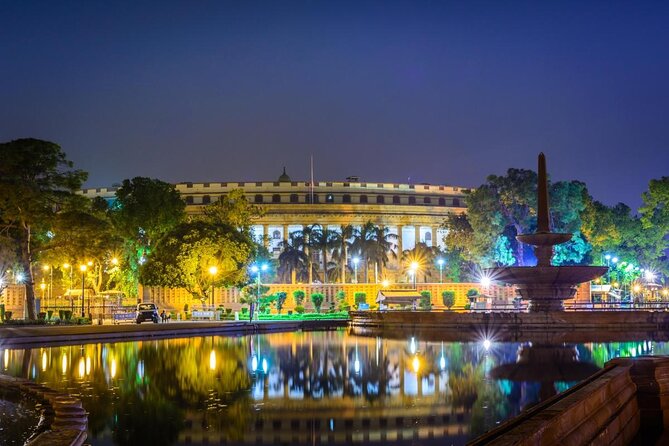
Your tour starts in Delhi with a pick-up around 9am from your chosen area in Delhi, Gurugram, or Noida. Right away, the plan is built to help you understand how the city layers time on top of itself: imperial monuments, British-era architecture, and modern-day landmarks all within a compact window.
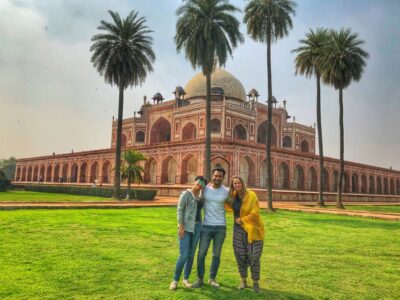
You begin at Humayun’s Tomb, a UNESCO site tied to the Mughal world. What I like about starting here is that it sets the visual language for the rest of the trip. After that, you head to Qutub Minar, another UNESCO highlight. It is one of those sights where photos barely prepare you for how tall and precise it feels on the ground.
Then comes a change of mood at Lotus Temple. It is free to enter and designed like a lotus with white marble petals. One practical note: it is closed on Mondays, so if your dates land on Monday you might see a different mix of stops. After that, you get the ceremonial scale of India Gate, plus a look at the official complex where the 1947 handover of power took place and Parliament still meets.
A drawback to keep in mind: this first day is full, but it is not the kind of day where you can slow down for long café breaks. It is designed for efficient sightseeing, so wear comfortable shoes and keep water handy.
You can also read our reviews of more private tours in New Delhi
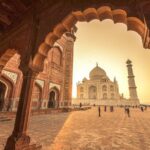
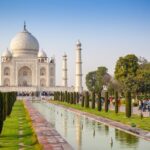
The Taj Mahal Morning, Plus Agra Fort’s Living Walls
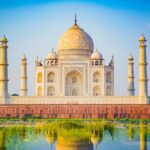
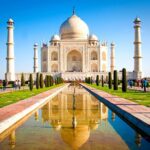
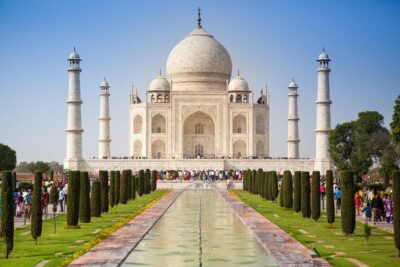
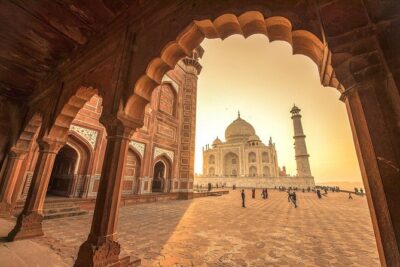
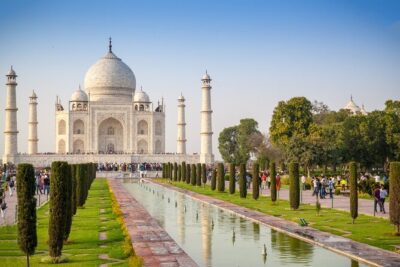
After Delhi, you drive toward Agra and check in, then the next morning is devoted to the Taj Mahal at sunrise. This is the kind of entry that pays off if you like atmosphere: softer light, fewer crowds, and the calm that usually comes before the city fully wakes up. The tour notes that sunrise is subject to clear weather, which is the only fair way to say it. If fog or rain rolls in, you are not getting a miracle forecast.
Inside the Taj Mahal visit, you also get included help for arrival logistics. There is a battery bus or golf cart return ride from Taj Mahal parking, which saves time and reduces the hassle of footwork in the heat.
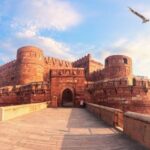
Afterward, you move to Agra Fort, another UNESCO site. This place feels different from the Taj. The Taj is about romance and symmetry; Agra Fort is about power and control, with palatial spaces wrapped in defensive walls along the Yamuna River. Even if you are not a history superfan, you will probably find it easier to picture the Mughal court life here than from outside viewpoints alone.
One more value point: entrance fees for the sights mentioned are included, so you are less likely to get stuck at ticket counters with unclear rules.
Jaipur’s Palaces, Fort Views, and the Photo-Stop Reality Check
From Agra, the ride takes you to Jaipur, the Pink City. You check in to your hotel, then the sightseeing day builds a classic mix: fort, viewpoints, and the royal complexes people come for.
You start with Amber Palace, a standout honey-hued fort up on a rocky rise. This is the kind of place where the architecture does the storytelling for you, with big courtyards and dramatic elevation. The tour also mentions a jeep ride at Amber Palace, with a note that it applies for 5 and above travelers, listed at $3.00 per person. For your comfort planning, keep in mind that not every visit to Amber is the same depending on group size and whether that optional ride is used.
You then get a quick look at Jal Mahal, the Water Palace. It is a photo stop, so do not expect a long linger inside. Hawa Mahal is also handled as a photo stop. That matters because it tells you how the day is structured: the tour compresses Jaipur’s icons into an efficient rhythm so you still have time for longer stops like City Palace and Jantar Mantar.
City Palace gives you a real sense of the royal residence as an ongoing complex. Jantar Mantar rounds it out with UNESCO-listed geometric instruments meant to track stars and planets. If you like learning, this is one of the more interesting stops in Jaipur because it is part science, part empire, and the visuals are distinctive.
Possible drawback: if you are hoping for long museum-style pacing at every stop, this day may feel brisk. You can still shop in Jaipur during free time, but the structure prioritizes “see the musts” over “slow travel.”
Flying to Kathmandu, Then Landing in a UNESCO Web
Once you finish the North India portion, you head back to Delhi for your flight to Kathmandu. The tour makes it clear that the commercial flight from Delhi to Kathmandu is not included, so you need to book that yourself and coordinate timing.
When you arrive in Kathmandu, a representative meets you and transfers you to your hotel. Then you have some time in Thamel, Kathmandu’s tourist hub, where you can reset after travel and grab anything you forgot (snacks, a spare layer, or simple supplies for temple visits).
The next days are built around Kathmandu Valley’s UNESCO sites and the religious mix that makes the city feel alive even on quiet streets.
Boudhanath, Pashupatinath, and Swayambhunath: Two Religions, One City Feeling
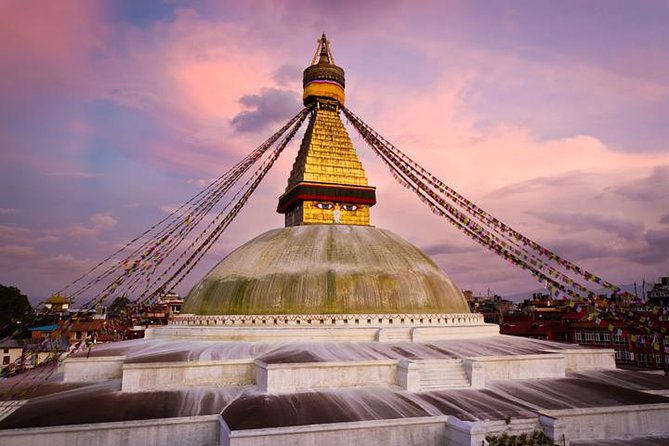
Boudhanath Stupa is the first major UNESCO stop, and it is described as the largest stupa in Nepal and one of the holiest Tibetan Buddhist temples outside Tibet. Around stupa sites like this, you often see the culture in small motions: people pausing, praying, and walking with purpose. Even if you do not share the religion, you tend to feel the rhythm.
Then you visit Pashupatinath Temple, dedicated to Lord Shiva, with its gold roof and silver door. The tour notes it as an important UNESCO site first established in the 5th century. This is a place where the architecture and the atmosphere both pull your attention forward.
Next up is Swayambhunath, an older Buddhist shrine on a hill with views across the Kathmandu valley. This is one of those spots where the climb is part of the experience, even if you take it slow. After, you move to Kathmandu Durbar Square, with palace courtyards and temples including Hanuman Dhoka Palace and Kumari Ghar, the abode of the Living Goddess.
Practical consideration: entrances and dress code rules matter here. The tour states that you must cover knees and shoulders for places of worship and selected museums. Plan for that or you might risk being refused entry.
You can also read our reviews of more evening experiences in New Delhi


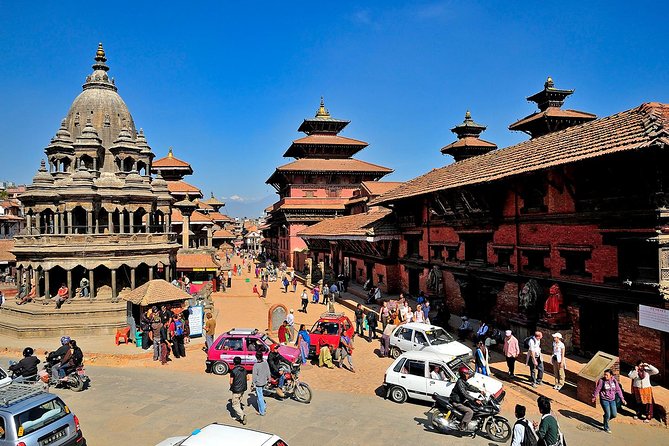
Patan and Bhaktapur: A More Sculpted Side of the Valley
The next day shifts from central Kathmandu to two other Durbar Squares, and this is where the trip changes flavor again.
Patan Durbar Square is noted for Buddhist monuments and Hindu temples plus fine bronze gateways and carving work. If you like visual details, Patan often feels like a calmer, craft-focused cousin to Kathmandu’s main sites.
Bhaktapur Durbar Square is another UNESCO stop and sits at 1401m above sea level. It is listed as the royal palace plaza of the old Bhaktapur Kingdom. What I like about including two Durbar Squares is that it helps you compare styles and street-level vibe. The names are similar, but the feel on the ground is not.
After Bhaktapur, you drive about one hour to Nagarkot, a hill station known for Himalayan views including Mount Everest to the northeast. This is also where the included day’s structure turns more relaxing, because you are transitioning from city sightseeing to an outlook day.
Nagarkot Sunrise Views and the Joy of Timing
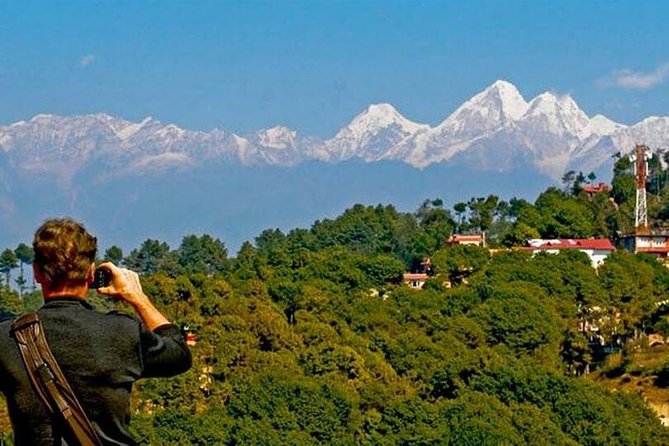
Your final day centers on Nagarkot View Tower. The tour notes sunrise with eight mountain ranges visible when conditions allow: Annapurna, Manaslu, Ganesh Himal, Langtang, Jugal, Rolwaling, Everest, and Numbur.
A sunrise day is only worth it if you are ready for the reality of weather. The tour already mentions earlier that Taj sunrise depends on clear weather, and Nagarkot is the same story in a different setting. If clouds roll in, you may get partial views. If they break open, you will get one of those “I can’t believe that is the horizon” moments.
The tour includes 1 dinner at the hotel in Nagarkot, which is a small detail that matters. When you are done, fed, and warm, you can focus on the view instead of hunting for a last meal.
Value for Money: What You’re Really Paying For
At $1,220 per person, the headline number is not small. But in practice, you are paying for a bundle of things that would take time to stitch together on your own: private air-conditioned transport in both countries, professional local private tour guides, entrance fees for listed sights, daily breakfasts in premium hotels, and a private, efficient route.
The big “watch this” item is the Delhi to Kathmandu flight being extra. If you shop your airfare smartly and match your flight times to the tour schedule, the total value can still look strong. If you book a pricey last-minute flight, the value shrinks.
Also, this price is tied to the private setup. If you are traveling solo, or your group wants to move at a shared pace, that privacy is part of what you are buying. The reviews I saw also stress driver and guide quality. The best praise includes professional, knowledgeable guiding and drivers who were both helpful and respectful. KK Sharma gets a shout-out for giving space but guiding when needed, which is exactly what you want in a busy, fast-moving trip.
The Pace and Logistics You Should Plan Around
This is a 7-day, action-packed route with big-city monuments, travel days between cities, and a cross-border flight. You will likely spend more time moving than you do sitting, especially on the India days between Delhi, Agra, and Jaipur.
A few details help you set expectations:
- Temple and museum dress code is required, with knees and shoulders covered.
- Some stops are listed as free or optional in practice, such as photo stops at Hawa Mahal and Jal Mahal. So your time there is shorter than major monument interiors.
- A few items are not included, like the jeep ride at Amber Palace for 5+ travelers, priced at $3.00 per person.
- Taj Mahal sunrise is tied to clear weather.
- Lotus Temple is closed on Mondays.
If you are the type who needs a slow morning or a long lunch daily, you might find the schedule tight. If you want the highlights without DIY headaches, it fits well.
Who This Tour Fits Best
This tour is ideal if:
- you want the Golden Triangle plus Nepal but you have limited time,
- you prefer private guiding over large-group mayhem,
- you care about UNESCO sites and want expert context,
- you like comfort, since hotels with breakfast are part of the package.
It may not be ideal if:
- you dislike early starts, since sunrise visits are part of the design,
- you hate travel days and long drives,
- you want unhurried wandering at every stop.
Should You Book It?
Yes, if you want a well-run highlight circuit with expert local guidance and you are comfortable with a full schedule. The most repeated win in the feedback is the quality of the team, with guides like Mahesh, Ashok, and Bishnu, and drivers like Bittu and Manoj, plus KK Sharma being praised for how he balanced guidance with letting people breathe. That kind of “they handle it” confidence matters on a trip that crosses two countries and packs major sights.
If you are bargain-hunting only, you can DIY parts of this route. But DIY rarely includes entrance fees, private transfers, and the kind of day-by-day flow that keeps you on track. The included breakfasts and the Nagarkot dinner also reduce decision fatigue.
FAQ
Is the Delhi to Kathmandu flight included?
No. The commercial flight from Delhi to Kathmandu is not included.
How many nights are included in the hotels?
The tour includes hotel accommodation for 6 nights on twin sharing, including breakfast.
What meals are included?
Breakfast is included (6 breakfasts), and there is dinner included, including 1 dinner at the hotel in Nagarkot.
Is pickup included for the tour?
Pickup is offered from your desired place in Delhi, Gurugram (Gurgaon), or Noida, with a start time of 9:00am.
What major sights are included in India?
You visit Humayun’s Tomb, Qutub Minar, Lotus Temple, India Gate, and the UNESCO sites Taj Mahal and Agra Fort, plus Jaipur highlights like Amber Palace, City Palace, and Jantar Mantar.
What UNESCO sites are included in Nepal?
You visit several UNESCO sites in the Kathmandu Valley, including Boudhanath Stupa, Pashupatinath Temple, Swayambhunath, Kathmandu Durbar Square, Patan Durbar Square, and Bhaktapur Durbar Square.
Are entrance fees included?
Yes, entrance fees of the sights mentioned are included.
Is the Taj Mahal sunrise visit guaranteed?
It is subject to clear weather conditions.
What dress code is required?
For places of worship and selected museums, knees and shoulders must be covered for both men and women. Shorts or sleeveless tops are not allowed.
How do visas work for India and Nepal?
You must confirm and obtain any India visa requirements before border crossing. Nepal visa is available on arrival at Kathmandu airport by providing 2 passport size photos and paying the visa fee.
More Private Tours in New Delhi


More Tours in New Delhi



More Tour Reviews in New Delhi
Not for you? Here's more nearby things to do in New Delhi we have reviewed



More Delhi City Tours to consider.
 ★ 5.0Old & New Delhi City Tour – Half or Full Day Options AvailableTickets from $384,811 traveller reviews
 ★ 5.0Same Day Taj Mahal, Agra Fort & Baby Taj Tour from Delhi by CarTickets from $624,304 traveller reviews
 ★ 5.0Taj Mahal Day Tour from Delhi by Superfast Train – TOP RATED TOURTickets from $1004,166 traveller reviews
 ★ 4.9Old and New Delhi Private Full or Half-Day TourTickets from $23,776 traveller reviews
 ★ 5.0Full Day Taj Mahal, Agra Fort & Baby Taj Tour from Delhi by CarTickets from $623,647 traveller reviews
 ★ 4.9From Delhi: Taj Mahal & Agra Private Day Trip with TransfersTickets from $43,181 traveller reviews
 ★ 5.0Taj Mahal Tour from Delhi by Express Train (Viator Award Winner)Tickets from $752,849 traveller reviews
 ★ 5.0All Inclusive Private Taj Mahal Luxury Tour from Delhi by CarTickets from $622,564 traveller reviews
More useful Delhi routes