
Review · DELHI CITY TOURS
Private Delhi Agra Jaipur Multi Day Tour
Tiger dreams start in Delhi.
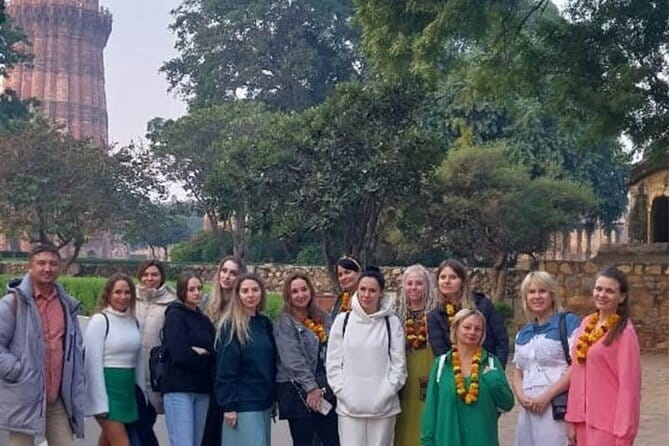
This is a private, guided way to see the Golden Triangle plus Ranthambore, with a comfortable private AC car and a live tour guide doing the heavy lifting. I like that you get both the big-ticket icons and the in-between moments, from Qutub Minar and Humayun’s Tomb to Delhi’s Old City markets. You should know the pace includes real travel time, including several long road days, and the tour is tight enough that you will feel it if you hate early mornings.
What I especially like is the way the day structure keeps you moving without feeling chaotic: you arrive in Delhi, you get a full Delhi monuments and market day, then you road-trip to Agra for the Taj Mahal and Agra Fort, then you continue to Ranthambore with a Fatehpur Sikri stop. Another big plus is that the guide experience is praised for making history feel practical, not like a lecture, with a name you may hear in guidance feedback, Riyaz. The one drawback to watch for is that no extra drinks are included, so plan on buying water and soft drinks yourself, especially on hot days.
Key Highlights You Can Plan Around

- Private group, live guide: Only your group participates, with a guide on hand for the major sights.
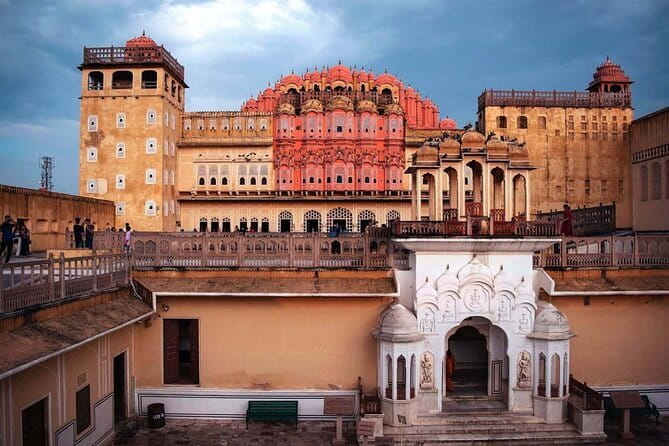
- Golden Triangle anchor stops: Qutub Minar, Humayun’s Tomb, Jama Masjid, Taj Mahal, Agra Fort, plus Jaipur highlights like Hawa Mahal.
- Ranthambore safari day: A morning wildlife safari focused on seeing tigers and other species.
- Fatehpur Sikri on the way: A meaningful historical stop during the Agra to Ranthambore road day.
- Clear inclusions: Lunch, private AC car, toll and parking, and a guide throughout the scheduled sightseeing.
- Guide strengths called out: Past guidance feedback mentions Riyaz for walking Old Delhi markets and connecting stories to what you see.
Why This Delhi, Agra, Jaipur and Ranthambore Combo Makes Sense
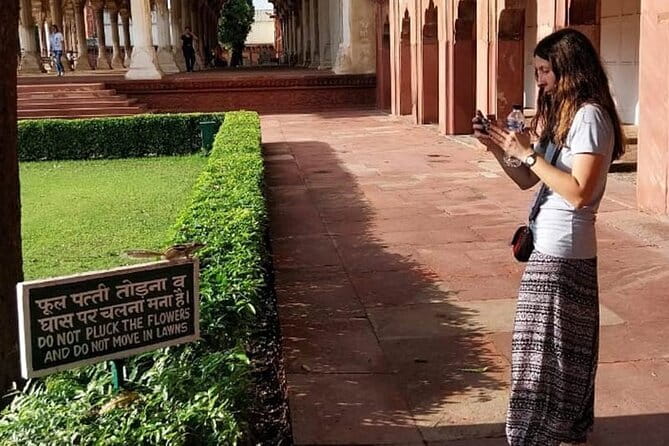
This trip works because it chains three powerful travel styles together: major monuments, market-and-mosque city walking, and a nature day where you stop looking at stone and start scanning for movement.
In Delhi, you do sweeping sights and tight lanes in the same day. Qutub Minar and Humayun’s Tomb give you Mughal and Delhi Sultanate context in stone, then Chandni Chowk and Jama Masjid switch the mood to a living city rhythm, full of spices, sweets, and shopping energy. That contrast is not an accident, it is what makes the day feel like India, not like a museum circuit.
Then you shift to Agra, where the Taj Mahal is your main event. After that, Ranthambore changes your brain mode. Instead of reading facades and inscriptions, you are listening for sounds in the park and looking for that one orange shape moving through the greenery.
The value part is that you are not left alone in transit. A private AC car, toll and parking handled, and a live guide mean you spend your time sightseeing, not figuring out how to get from one ticket line to another.
You can also read our reviews of more private tours in New Delhi

Price and Value of a Private AC Car Tour
At $459 for about 8 days, the cost is less about luxury and more about structure. You are paying for coordination: pickup or transfer help, private transportation, and daily guide time, plus lunch.
Here is what you know is included:
- Lunch
- Private AC car
- Live tour guide
- Toll and parking
Not included:
- No extra drinks
And entrance tickets vary by stop. Some key sites are marked as included (Qutub Minar, Humayun’s Tomb, Jama Masjid, Taj Mahal, Agra Fort), while several other stops are listed as free. That mix matters because it helps you understand how your sightseeing day actually costs out. If you budget for water, snacks, and any optional extras, you will feel in control rather than surprised.
If you are the type who hates shared vans and wants your own pacing, this private format is where the money goes. If you are a hardcore budget traveler who just needs a hotel and a train timetable, you might find cheaper options, but you would lose the guide support that makes the monuments easier to read and the days smoother.
Day 1 in Delhi: Arrival, Transfer, and a No-Stress Start
Day one is designed to keep you from arriving and then immediately sprinting. You get greeted by the tour consultant after you land and then taken to your accommodation. Once you check in, you have the rest of the day to settle.
This matters more than it sounds. Delhi can feel loud and complicated at first, especially if you arrive tired. Having the transfer handled and check-in time respected helps you avoid that classic mistake, wandering out hungry and lost on day one.
A small note: the schedule marks this day with a few hours and doesn’t load it with monument time. That is good. Use the time to do basics: get local cash squared away, buy water, and take a short walk near your hotel so you know where you are when the full sightseeing day starts.
Delhi on a Guided Walk: Qutub Minar, Humayun’s Tomb, Markets, and Jama Masjid
Delhi day is the one that teaches you how the city works. It starts with the big monuments and then moves into Old Delhi so you are not just looking at history, you are seeing the living street culture that surrounds it.
Qutub Minar is the first stop. It is described as the world’s tallest brick minaret, and the timeline matters. Work began in 1199 AD under Qutub-ud-din Aibak, then construction continued under Iltutmish. When you stand there, the structure stops being just a photo subject and starts becoming a story about power shifting in early Delhi.
Next is Humayun’s Tomb, the Mughal emperor’s tomb for Mirza Nasir al-Din Muhammad, known as Humayun. This is one of the best places on a short list to understand Mughal influence and the idea of garden-meets-mausoleum planning.
Then you jump to a spiritual and visual change with Birla Mandir Temple (Lakshmi Narayan). It’s built by J.K. Birla in 1939 and is located west of Connaught Place. Even if you do not think of yourself as a temple person, this stop breaks up the heavy monument feel with something more like a local landmark.
India Gate is next, a war memorial near Kartavya path on the ceremonial axis of New Delhi. It is quick, but it adds a modern national scale to the day.
The day turns into real city energy at Chandni Chowk. This is where your guide help is practical. You will see markets known for spices, dried fruit, silver jewelry, vivid saris, and side streets with tiny shops selling essential oils, stationery, and traditional sweets. The win here is that you can let the senses drive you, because your guide can help you navigate what is worth stopping for.
Finally, Jama Masjid closes the loop on religion, architecture, and crowd-scale. It is described as the biggest mosque in India, built in 1656 by Shah Jahan, able to hold roughly 25,000 people. White marble domes and a prayer hall supported by 260 pillars are the kinds of facts that make the building click faster than a standard history talk.
A practical consideration: you will do a lot of walking, and you will be switching contexts constantly. Wear shoes you can handle on uneven surfaces and bring sunglasses or a hat.
Road to Agra: The Taj Mahal Day and Why Timing Still Matters

After breakfast, you move from Delhi to Agra by road for about 4 hours. Then you get your main sights: Taj Mahal and Agra Fort.
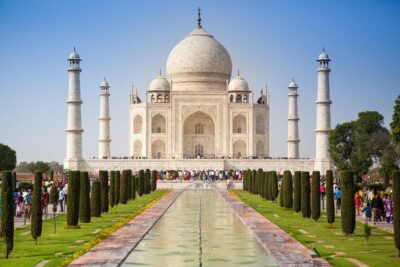
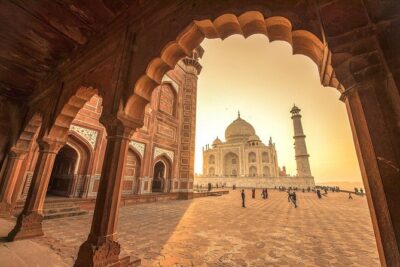
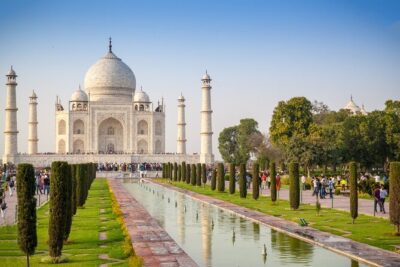
The Taj Mahal stop is scheduled with a long block of time, and that helps. It is an ivory-white marble mausoleum on the Yamuna’s right bank, commissioned in 1631 by Shah Jahan to house the tomb of Mumtaz Mahal. Knowing that relationship in advance changes how you look at it. You start spotting symmetry and design choices as emotional decisions, not just engineering.
For Agra Fort, you get about 2 hours. It is described as the main residence of Mughal emperors until 1638. That detail matters because it reframes the fort from being a defensive pile to being a living seat of power during a specific period.
Even with a guide, the Taj Mahal is a place where you can rush without meaning to. If you want value, slow down for a few short segments rather than doing it all at speed. Look up, then look across, then look for the edges where the building meets the site.
And do plan for heat and crowds in season. The tour gives you structured time, but you still control your pace inside it.

Fatehpur Sikri En Route: Breaking Up a Long Agra to Ranthambore Day
On the next morning, you check out, eat breakfast, and travel about 6 hours from Agra to Ranthambore. The schedule includes a stop at Fatehpur Sikri, which gives you a chance to break up the road.
This is not just a quick photo stop. Fatehpur Sikri is described with specific sites you can look for, including:
- Tomb of Salim Chishti
- Buland Darwaza
- Panch Mahal
- Birbal’s Palace
When you see those names on a day like this, it helps you focus during the ride. You are not waiting for an attraction to start, you are already thinking about what the site contains, so your brain stays engaged through transit.
The catch is the day can feel long. The pace is packed, and you are still traveling to reach Ranthambore, so you will want to keep your energy steady. Bring water, pace your snacks, and keep your camera ready but not frantic.
Ranthambore Safari Day: Tiger-Chance Excitement and Real Expectations
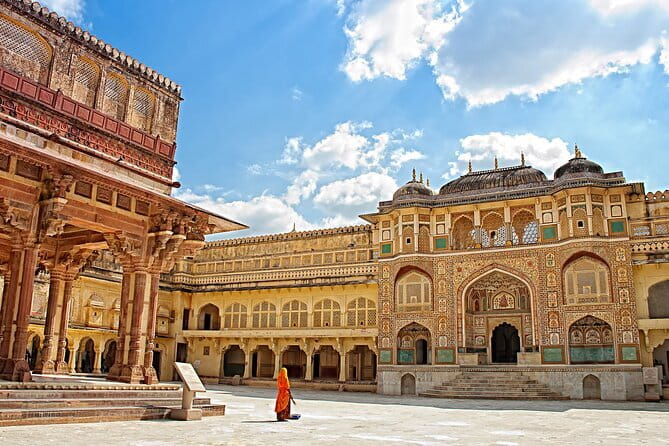
This is the big swing day. In the morning, you go on a wildlife safari at Ranthambore National Park.
The promise is not that you will see a tiger, but that the experience is built around the possibility, with an explicit thrill if you spot a Royal Bengal Tiger. The tour also frames the park as habitat for a range of plant and animal species, which is a good reminder. Even when tiger sightings are not guaranteed, you can still get something meaningful by paying attention to the variety of life in the park.
What I think you should take seriously is the rhythm of safari thinking:
- You need patience for scanning and waiting.
- You need to stay calm and quiet enough to let wildlife show itself.
- You need to be flexible because what you see is the schedule driver, not your wish list.
The schedule lists the Ranthambore experience time as a full day. That helps you avoid the mistake of thinking it is a quick half-hour activity. A full safari block gives you time to adjust to the way sightings happen, and to take in the park beyond one moment.
If you hate uncertainty, this is still the right style of day, just go in with the mindset that your payoff is the experience of looking, not just a single animal photo.
Jaipur Sightseeing: Sheesh Mahal, Hawa Mahal, and the Feeling of Craft
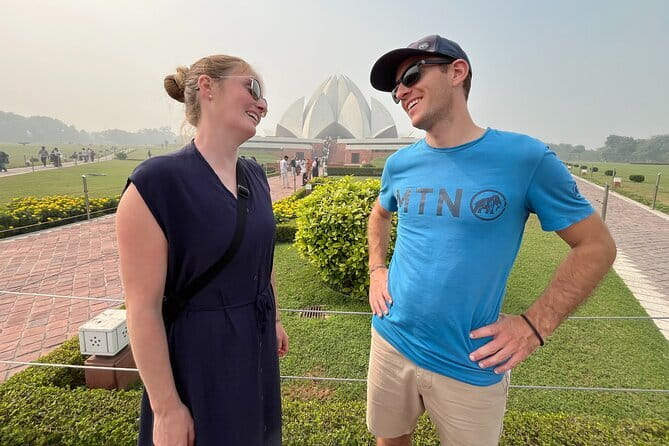
After Ranthambore, you head to Jaipur. You check in and then have the remainder of the day at leisure. That buffer is smart. It gives you a chance to reset after safari timing.
Then comes Jaipur sightseeing, split into a structured sightseeing day with key landmarks.
Sheesh Mahal is called out for its exquisite carvings and mirror work. This is the kind of stop where details matter. Even if you do not read design explanations, the visual effect of mirrors and carved surfaces usually makes you slow down naturally.
Next is Hawa Mahal, a five-story structure famous for its 953 windows, also known as the Palace of Winds. The key value here is that the structure is not just pretty. It is designed for a specific purpose, letting airflow and adding a unique visual pattern to the facade.
If you like photos, this is one of your best days. If you like history, use the mirrors and windows as a prompt to ask: why would a palace want air and controlled viewing? Your guide can help connect the dots using what you are seeing in front of you.
A practical note: Jaipur can be bright and hot. Plan sunglasses and a hat. Your eyes will thank you.
Heading Back to Delhi: A Clean Finish and Easy Travel Links
On the final day, you eat breakfast, check out, and drive back to Delhi for about 5.5 hours. From there, you can take a flight or train to return home.
I like this kind of ending. It avoids a last-minute scramble for transport and lets you depart with your trip fully packed into your memory rather than half forgotten because you were rushing at the end.
Use the last morning to do small closure things: verify you have souvenirs, check your photos, and write down anything you do not want to lose, especially safari moments and the first Taj Mahal look.
Who This Tour Fits Best (and Who Might Want Something Else)
This private Delhi, Agra, Jaipur and Ranthambore tour is ideal if you:
- Want a private AC car and a live guide
- Like seeing the major Golden Triangle sights without building an itinerary yourself
- Are excited by the idea of a safari day where you might see a tiger
- Prefer structure, including lunch and planned sightseeing blocks
You might consider a different style if you:
- Hate long road transfers, especially the day that combines Fatehpur Sikri with the Agra to Ranthambore drive
- Want lots of free time for spontaneous wandering every day
- Do not want to manage extra costs like water and soft drinks, since those are not included
Should You Book This Tour?
If you want an organized Golden Triangle route plus a Ranthambore safari day, this is a solid choice. The biggest reasons to book are practical: private transport, live guiding, lunch included, and a schedule that hits both famous monuments and the wildlife experience that makes the trip feel different from a standard Delhi-Agra-Jaipur loop.
I would book especially if you care about getting more out of each site with an expert guide, and if you are open to the realistic rhythm of wildlife searching. If you go in with patience for the safari and comfort with a packed itinerary, you are likely to feel like your money bought smooth days, good context, and the right kind of memorable.
FAQ
Is pickup included on this tour?
The tour offers pickup. It also includes a transfer arrangement to your accommodation after arrival.
What is included in the tour price?
Lunch is included, along with a private AC car, a live tour guide, and toll and parking.
Are admission tickets included?
Some admission tickets are marked as included for specific stops such as Qutub Minar, Humayun’s Tomb, Jama Masjid, Taj Mahal, and Agra Fort. Other stops are marked as free, and Ranthambore National Park is also listed as free on the schedule.
What cities does the itinerary cover?
The tour visits New Delhi, Agra, and Jaipur, with Ranthambore National Park as the wildlife destination in between.
How is group size handled?
This is a private tour/activity, so only your group participates.
What meals are included besides lunch?
The only meal explicitly listed as included is lunch. There is no extra drinks included.
Can the tour accommodate dietary restrictions?
Yes. The tour states they can accommodate dietary restrictions such as vegetarian, vegan, and gluten-free if you indicate them when booking.
Where does the tour end?
It ends in New Delhi, after driving about 5.5 hours from the final sightseeing day.
What is the cancellation policy?
Free cancellation is available. You can cancel up to 24 hours in advance for a full refund, and within 24 hours there is no refund.
More Private Tours in New Delhi



More Tours in New Delhi



More Tour Reviews in New Delhi
Not for you? Here's more nearby things to do in New Delhi we have reviewed








More Delhi City Tours to consider.
 ★ 5.0Old & New Delhi City Tour – Half or Full Day Options AvailableTickets from $384,811 traveller reviews
 ★ 5.0Same Day Taj Mahal, Agra Fort & Baby Taj Tour from Delhi by CarTickets from $624,304 traveller reviews
 ★ 5.0Taj Mahal Day Tour from Delhi by Superfast Train – TOP RATED TOURTickets from $1004,166 traveller reviews
 ★ 4.9Old and New Delhi Private Full or Half-Day TourTickets from $23,776 traveller reviews
 ★ 5.0Full Day Taj Mahal, Agra Fort & Baby Taj Tour from Delhi by CarTickets from $623,647 traveller reviews
 ★ 4.9From Delhi: Taj Mahal & Agra Private Day Trip with TransfersTickets from $43,181 traveller reviews
 ★ 5.0Taj Mahal Tour from Delhi by Express Train (Viator Award Winner)Tickets from $752,849 traveller reviews
 ★ 5.0All Inclusive Private Taj Mahal Luxury Tour from Delhi by CarTickets from $622,564 traveller reviews
More useful Delhi routes