
Review · DELHI CITY TOURS
3 Day Golden Triangle Trip -Delhi Taj Mahal and Jaipur From Delhi
Golden Triangle in three days, with fewer headaches. This private, five-star style trip is built for speed without chaos, thanks to hotel pickup plus skip-the-line access at major sights. I like that bottled water is included and you have a real guide tying stops together across Delhi, Agra, and Jaipur.
The main tradeoff is the pace. You are cramming a lot of named highlights into a short window, so expect long travel stretches and a day-by-day schedule that leaves less room for wandering.
Key things that make this Golden Triangle trip practical
- Private setup, not a bus cattle-call: only your group participates, with a professional guide handling the route.
- Skip-the-line access where it matters most: built in for key sights, including the Taj Mahal experience.
- Sunrise Taj Mahal timing: you start early for a guided visit timed for the morning.
- Comfort upgrades: air-conditioned vehicle transfers and bottled water for the duration of the tour.
- Built-in structure across three cities: Old Delhi, Agra monuments, then Jaipur palaces and forts.
Delhi to Agra to Jaipur, and why this route feels efficient
The Golden Triangle is famous for a reason. You get three India classics in one sweep: big Delhi landmarks, Agra’s Mughal-era icons, and Jaipur’s royal-era architecture. The catch is logistics. Doing it on your own means juggling trains, changing schedules, booking guides, and figuring out which tickets and times are worth your attention.
That is where a guided private format pays off. Here, you get hotel/port pickup and drop-off, air-conditioned transfers, and a professional guide to keep you moving. You also get a five-star hotel for the overnight portion, plus breakfast included, which matters more than it sounds when you are waking up early for sunrise.
More New Delhi tours and experiences for the shortlist



Day 1 in Old Delhi: Jama Masjid, Chandni Chowk lanes, and Qutub Minar
Day 1 works because it gives you contrast. You start in Old Delhi, then you gradually shift toward South Delhi’s major monuments. It is a strong way to understand how the city feels, without needing a full separate day just for neighborhoods.
Jama Masjid first, because it sets the tone
You visit Jama Masjid, also known as Masjid-i Jehan-Numa, built by Mughal Emperor Shah Jahan between 1650 and 1656. It is also described as one of India’s largest mosques, so this is not a quick photo stop. Expect a real admission visit (the tour lists about one hour here), which gives you enough time to absorb scale and details before the streets get busy.
Why it helps on a short itinerary: starting with a major landmark early means you are not rushing when you actually want to slow down.
Chandni Chowk, short stop, big sensory impact
Next up is Pasar Chandni Chowk, in the heart of Old Delhi. This is a market area known for shops selling spices, dried fruit, silver jewelry, and saris, plus smaller lanes with items like essential oils. The tour allots about 30 minutes and lists admission as free.
What to watch for: this is the part of the day where you will feel the energy of Old Delhi. If you are prone to sensory overload, keep your pace calm and expect narrow walkways, crowds, and lots of calls from shops.
Red Fort and India Gate, more than just passing scenery
You also have stops for Lal Qila (the Red Fort) and India Gate, plus time near the Parliament House. The itinerary does not list ticket times for these, so treat them as sight stops within your guided loop rather than long museum sessions.
Why this still works: you get the big-name city landmarks without breaking the day’s flow.






Humayun’s Tomb, then Lotus Temple, then Qutub Minar
Later, the tour shifts to more spacious monument settings.
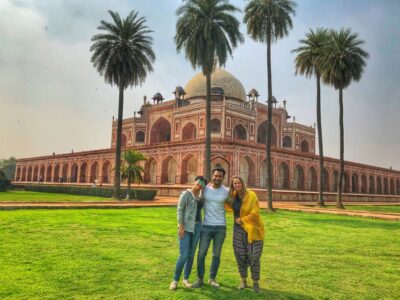
- Humayun’s Tomb is listed as an admission visit (about one hour). The background included here is specific: commissioned by Empress Bega Begum in 1558, with design attributed to Mirak Mirza.
- Lotus Temple is a free admission stop, around 45 minutes. It is dedicated in December 1986 and is famous for its flowerlike shape.
- Qutub Minar is another admission included visit (about one hour). It is described as part of the Qutb complex, and listed as a UNESCO World Heritage Site. The minaret is also described as a victory tower.
The practical benefit: by Day 1’s end you have seen religious architecture, memorial monuments, and a major heritage complex in the same day. It makes the cities feel connected instead of like separate checklists.
Day 2 sunrise Taj Mahal and Agra Fort: where time matters
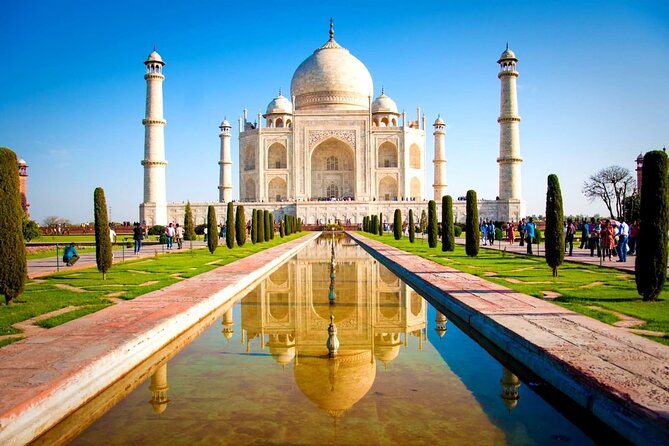
Day 2 is the heart of the Golden Triangle. The itinerary starts with an early pickup from your hotel and a guided Taj Mahal tour at sunrise time, with about 1 hour 30 minutes allocated and admission included.
Taj Mahal at sunrise, with guided help
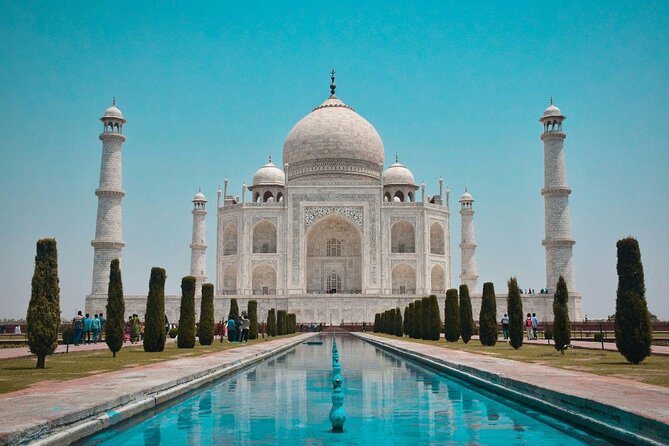
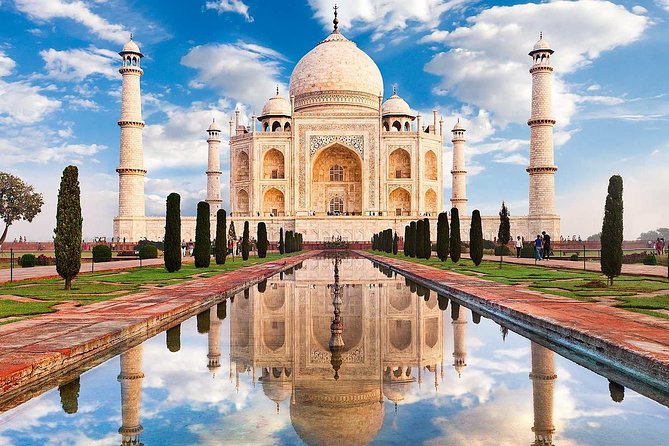
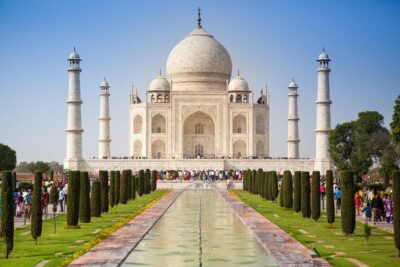
The Taj Mahal is described as an immense mausoleum of white marble and the seventh wonder of the world. The key point for you is not just the monument, it is the timing plus the guidance.
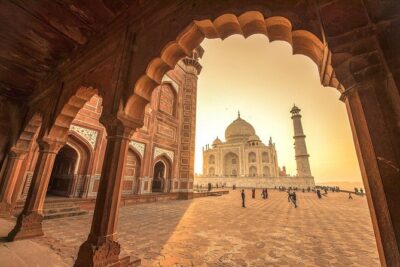
Why sunrise is worth the early start: you are more likely to get a calmer start to the day and better overall viewing conditions, and you are less likely to arrive mid-day when heat and crowds can be exhausting. Even if you are not a “photo person,” the guided structure usually helps you understand what you are looking at.
Agra Fort next, a different kind of Mughal landmark
After Taj Mahal, you move to Agra Fort with about 1 hour 30 minutes and admission included. The details provided focus on Mughal power: it served as the main residence of the Mughal dynasty emperors until 1638, when the capital shifted from Agra to Delhi.
This stop is a good companion to the Taj Mahal. One is a mausoleum, the other is fortress power. If you only saw one, you would miss part of the story.
Fatehpur Sikri as a free add-on
Then there is Fatehpur Sikri, listed as free admission with about one hour. The description highlights it as a small city founded by a 16th-century Mughal emperor. You also get a sense of material and layout: red sandstone buildings clustering in the center, and Buland Darwaza gate described as an entrance to the Jama Masjid mosque area.
How I think about it for value: Fatehpur Sikri is an efficient use of time because it gives you another major site without paying extra admission within the tour format.
A note on the Agra experience and your guide
One of the most positive specifics tied to this route is the quality of guidance in Agra. The name Ali comes up as a guide who is praised for being informative, knowing great spots for pictures, helping navigate the town, and even pointing visitors toward artisans for a more unique stop than a standard monument loop. Even if your exact experience varies, it is a good sign that the operator pays attention to the human side of the day, not just the list of attractions.
Day 3 Jaipur: Amber Fort, City Palace, and the palaces you recognize instantly
Day 3 is where the trip shifts from Mughal monuments to Rajasthan royal-era architecture. You start with Amber Fort and then spend the day inside Jaipur’s historic core.
Amber Fort, the fort-and-setting start
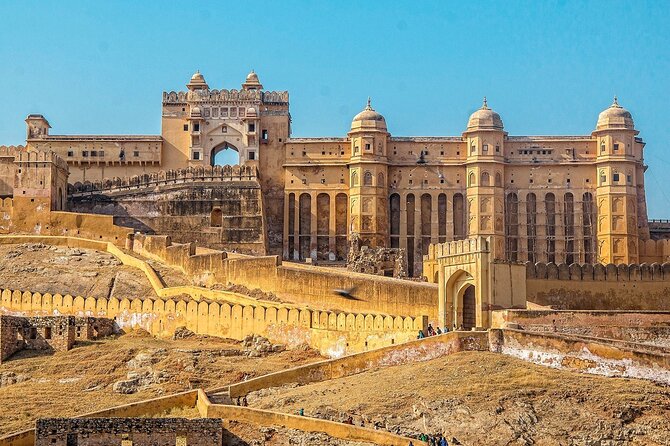
Amber Fort (Amer Fort) is listed with about 1 hour 30 minutes and admission included. The description gives you grounding: Amber is a town about 11 kilometers from Jaipur, and the town’s area is listed as 4 square kilometers.
Why this start matters: forts look and feel different from tombs and gates. Seeing Amber first helps the rest of the Jaipur palaces make sense. You can connect the geometry of a fort with the visual design of nearby palace structures.
City Palace, with the origin story of Jaipur
Next is the City Palace, with about 1 hour 30 minutes and admission included. The details are clear and specific: it was established when Jaipur was founded, by Maharaja Sawai Jai Singh II, after he moved his court from Amber to Jaipur in 1727.
This stop is useful for context. Without it, you might see buildings but not understand why Jaipur looks the way it does.
Hawa Mahal and Jal Mahal, a palace view plus a lake setting
The tour includes Hawa Mahal as a stop, described as built from red and pink sandstone. It sits on the edge of the City Palace and extends to the Zenan areas (the description truncates, but the position is clear). You also have Jal Mahal as a stop, described as a palace in the middle of Man Sagar Lake, with original construction listed as 1699 and later renovations.
Admission is listed as free for Jal Mahal, and the time here is short, around 30 minutes.
A realistic expectation: these are often best when you treat them like quick, sharp visual breaks from the longer interior visits. If you only love one of them, you still get variety without sacrificing the main fort and palace time.
Jantar Mantar, the “objects you can actually use to learn”
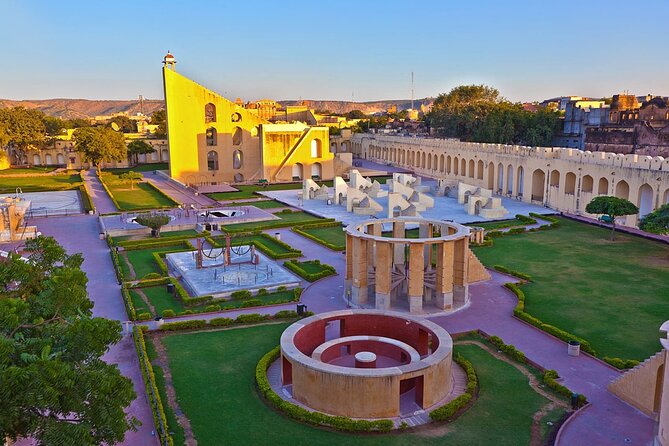
Finally, you visit Jantar Mantar, about 1 hour, with admission included. This one is described as a collection of 19 astronomical instruments built by Sawai Jai Singh II, and completed in 1734. The description also says it features the world’s largest, but it cuts off before the object name, so I would focus on the concept: these are instruments, not just statues.
Why it is a smart ending: you finish with something you can look at and mentally work through, so the day does not end with only passive viewing.
Hotel comfort and pickup: what “private tour” changes for your day

This is a private tour with a professional guide, plus hotel/port pickup and drop-off. You also get an air-conditioned vehicle and bottled water for the duration.
In real life, that changes how tired you feel.
- Pickup and drop-off reduce time spent figuring out where to meet, which is a big deal in cities like Delhi.
- Air-conditioned transfers help on travel days when you are moving between major areas.
- Bottled water included is not glamorous, but it keeps small decisions from becoming big stress.
The overnight part is also a win for value: you sleep in a deluxe five-star hotel. With meals, the tour includes breakfast but does not include other meals, so you’ll still want to plan for lunches and dinners on your own.
Tickets, skip-the-line access, and what you do with it
The tour includes skip-the-line access at key attractions. It also explicitly lists admissions included for several stops, including Jama Masjid, Humayun’s Tomb, Qutub Minar, Taj Mahal, Agra Fort, Amber Fort, City Palace, and Jantar Mantar.
It lists free admission for several others, including Chandni Chowk (as a stop with admission free), Lotus Temple, Fatehpur Sikri, and Jal Mahal.
How to use this info: if you hate long waits, this schedule is designed for you. You get the time-saving benefits at the sites where delays can be most painful. For the stops marked free, you still get guided time, but you are not dependent on ticket hassles.
Price and value: is $350 per person a fair deal
At $350 per person for about three days, you are paying for a bundle: five-star hotel accommodation, private guided sightseeing, air-conditioned transfers, admission where listed, bottled water, and breakfast. You are also paying for time savings via skip-the-line access.
If you attempted the same trip on your own, you would likely spend money in several separate buckets:
- hotel costs
- transport
- guide fees
- entrance tickets
- the “hidden cost” of building the plan and handling timing
The tour takes on those pieces in one package. For people who want the Golden Triangle without turning it into a second job, the value is pretty clear.
Where you should be honest with yourself is the pace. If you love slow travel and spontaneous detours, the structure might feel tight. If you want major sites covered with comfort and guidance, the price starts looking like a convenience fee that you actually use.
Who this Golden Triangle trip suits best
This is a strong match for:
- first-timers who want Delhi, Agra, and Jaipur in one shot
- people who care about sunrise Taj Mahal timing
- anyone who would rather pay for convenience than manage tickets and transport alone
- travelers who like clear daily structure but still want a sense of local neighborhoods in Old Delhi
It might be less ideal for:
- visitors who want long, unplanned wandering time in each city
- people who get overwhelmed by packed schedules and frequent driving
A few small decisions that can make or break your experience
Since meals are not included, think about how you want to handle lunch and dinner. The tour gives you breakfast and handles sightseeing logistics, so you can decide whether to eat close to your routes or make a plan each day.
Also, bring shoes that can handle uneven pavement and busy lanes. Day 1 includes Old Delhi markets. Even if your sightseeing time is shorter in those areas, walking is still part of the experience.
Lastly, if photography matters to you, lean into the guided aspect. The positive feedback connected to Agra highlights that the guide can help with picture angles and navigation, which often saves time and frustration.
Should you book this 3-day Golden Triangle trip from Delhi?
I’d book it if you want a smooth, guided Golden Triangle with a comfortable base, and you like the idea of covering the major sights in a tight window. The mix of private comfort, sunrise Taj Mahal timing, and included admissions for key monuments is the kind of structure that helps you actually enjoy the highlights instead of managing them.
Skip it if you hate early starts or you know you need more unstructured time to feel satisfied. This trip is built for efficiency. If that’s what you want, it is a solid choice. If you want to stretch each city into a slower story, you may prefer a longer itinerary with fewer named stops.
FAQ
What is included in the tour price?
The tour includes 5-star hotel accommodation, hotel/port pickup and drop-off, a private tour with a professional guide, bottled water, breakfast, and all fees and taxes.
Is the tour private or shared?
It is a private tour/activity, and only your group will participate.
Does the tour include pickup from my hotel?
Yes, hotel/port pickup and drop-off are included.
Are tickets included for the main attractions?
Skip-the-line access is included at key attractions, and admission tickets are included for several listed stops. Some stops are listed as free admission.
Does the tour include meals?
Breakfast is included, but meals are not included otherwise.
Is cancellation allowed without penalty?
Yes, free cancellation is offered. You can cancel up to 24 hours in advance for a full refund.
More 3-Day Experiences in New Delhi


More Tour Reviews in New Delhi



Not for you? Here's more nearby things to do in New Delhi we have reviewed









More Delhi City Tours to consider.
 ★ 5.0Old & New Delhi City Tour – Half or Full Day Options AvailableTickets from $384,811 traveller reviews
 ★ 5.0Same Day Taj Mahal, Agra Fort & Baby Taj Tour from Delhi by CarTickets from $624,304 traveller reviews
 ★ 5.0Taj Mahal Day Tour from Delhi by Superfast Train – TOP RATED TOURTickets from $1004,166 traveller reviews
 ★ 4.9Old and New Delhi Private Full or Half-Day TourTickets from $23,776 traveller reviews
 ★ 5.0Full Day Taj Mahal, Agra Fort & Baby Taj Tour from Delhi by CarTickets from $623,647 traveller reviews
 ★ 4.9From Delhi: Taj Mahal & Agra Private Day Trip with TransfersTickets from $43,181 traveller reviews
 ★ 5.0Taj Mahal Tour from Delhi by Express Train (Viator Award Winner)Tickets from $752,849 traveller reviews
 ★ 5.0All Inclusive Private Taj Mahal Luxury Tour from Delhi by CarTickets from $622,564 traveller reviews
More useful Delhi routes