

Review · DELHI CITY TOURS
3-Day Luxury Golden Triangle Tour: New Delhi, Agra & Jaipur
Three days in the Golden Triangle is fast, but worth it. You get a private car with a dressed driver, live guide support, and a route that targets the big names without wasting hours. I especially like the timing for the sunrise Taj Mahal, paired with the battery bus up to the monument so you are not juggling parking chaos.
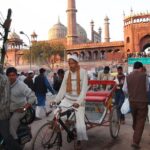
You also get a hands-on taste of Old Delhi, including a rickshaw ride through the lanes around Chandni Chowk. One possible drawback: the pace is tight, and entrance tickets are not included in the base price, so you should plan for those extra costs up front.
Key things I’d circle before booking
- Sunrise Taj Mahal timing with a 6:00 AM start and a included battery bus ride to the monument area
- Old Delhi rickshaw ride plus structured time in Chandni Chowk, Khari Baoli spice market, and major Mughal-era sites
- Local guide coverage across cities, with guidance that can include people like Adin in Delhi, Rajesh Singh in Jaipur, and Faizan Hussain in Agra
- Private, air-conditioned comfort in a dedicated A/C car, with mineral water in the vehicle
- Hotel choice available (3-star, 4-star, or 5-star) with 2 nights and breakfast if you book that option
- Route flexibility for Fridays, since the order can switch if Friday falls on the second day
Why the Golden Triangle tour fits short North India trips
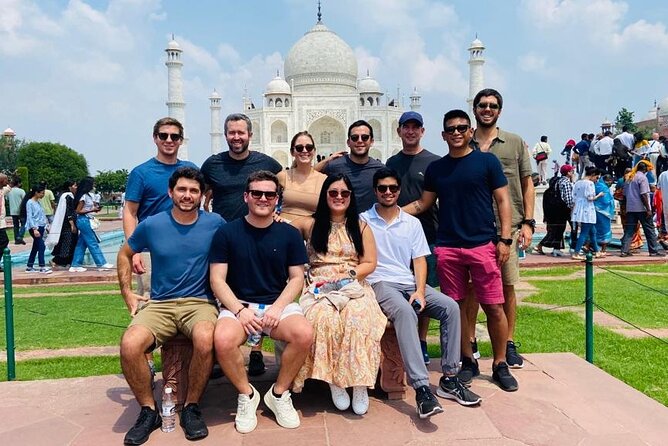
The Golden Triangle, Delhi, Agra, Jaipur, is a classic for a reason. In just 3 days, you can hit the headline monuments and still get enough context to understand what you are seeing. This tour is designed for first-time visitors who want structure, not a “figure it out” scavenger hunt.
I like the way the days are built around “anchor moments.” The sunrise Taj Mahal is the emotional peak, and the rest of the route works as setup, with Mughal landmarks, royal architecture, and famous city planning sites in Delhi and Jaipur. If you are on a tight schedule, this kind of planning can save you from expensive trial-and-error.
The value idea here is simple: you trade free time for fewer logistics headaches. A private car, pickup included, and guides in your preferred language mean you can spend more brainpower on the sights and less on routes and tickets.
More New Delhi tours and experiences for the shortlist



Getting around in comfort, with guides who handle the details
This is not a bus group crawl. It is private, meaning only your group participates, and you travel in a comfortable air-conditioned car with a uniformed, dressed driver. Pickup and drop-off are included from your hotel, airport, or a location of your choice within Delhi, Noida, or Gurugram.
What makes this work better than “just a driver” is the guide layer. You get live tour guide service in your preferred language at the stops, and you are supported in each city. In practice, that matters because these places are not just photogenic, they are also historically specific, like the Mughal timeline behind Jama Masjid and Humayun’s Tomb or the royal planning behind Jaipur’s observatory.
You should also know the tour can be customized. If you want to spend a bit more time somewhere, or skip a stop that is not your priority, the setup is meant to flex. That flexibility can be a big deal when you are tired from travel, or when someone in your group wants a slower walk.
Day 1 in Delhi: from Lutyens’ Delhi to Old Delhi lanes
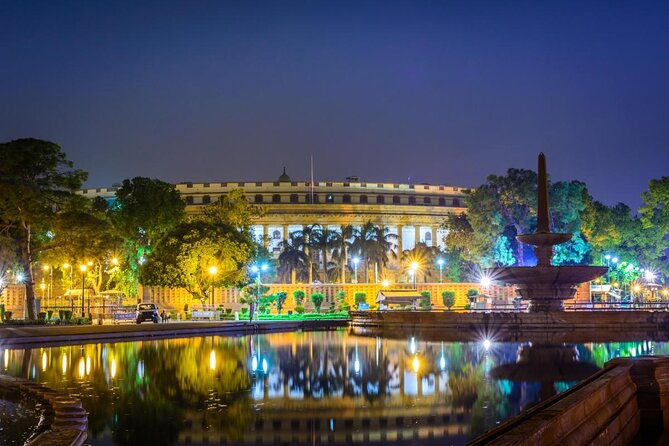
Delhi Day 1 mixes two faces of the city: formal “new” Delhi and the older markets of Shah Jahan’s era. You start with a drive that passes through Lutyens’ Delhi, including India Gate, the war memorial, and Rashtrapati Bhavan. It is a quick way to orient yourself, because these landmarks act like signposts for where power sat, and still sits, in the capital.
Next come the memorial gardens at Raj Ghat, dedicated to Mahatma Gandhi. This stop is short, but it changes the mood. It helps you understand why Delhi is not only about monuments, but also about modern history and remembrance.
Then the tour pulls you into the sensory center: Chandni Chowk. You get time here in the oldest, busiest market area dating back to the 17th century plan commissioned during the Mughal period. A highlight is the included rickshaw ride around Chandni Chowk, which is one of those “you remember it later” moments because you move through the street life instead of watching it from behind a windshield.
After Chandni Chowk, you continue to Khari Baoli, Asia’s largest wholesale spice market. Even if you are not shopping, the market rhythm is part of the experience. It is close by, so you do not lose momentum changing areas.
You round out Old Delhi with Jama Masjid, one of the largest and most striking mosques in India, built by Shah Jahan in the mid-1600s. The focus is on seeing the scale and the architectural details, with built-in time that lets you stand back and take it in instead of rushing through.
UNESCO Mughal landmarks and the Lotus Temple on the same route
Delhi is big, so it is smart that the itinerary clusters major sites. After Old Delhi, you shift to Mughal-era monuments and then to a modern landmark style.
Humayun’s Tomb, a UNESCO World Heritage site, is next on the list. It is known for its grand mausoleum form built in the late 1500s, and it gives you a strong “this is how Mughal rulers wanted their legacy to look” perspective. If you are curious about what later Mughal design would borrow, this stop helps you connect dots before Agra.
Then you visit Qutub Minar, also UNESCO-listed. It is an Indo-Islamic architecture anchor and famous as the tallest brick minaret in the world. You get dedicated time here, which matters because the structure is best understood by looking up and around, not by stepping in for a quick photo.
The last Delhi stop is Lotus Temple, the Baha’i House of Worship known for its lotus-shaped architecture. It is a contrast from the older Mughal stonework, and it often feels calming after the busy markets. If you tend to overload on historic sites, this kind of reset can be useful.
Day 2: Taj Mahal at sunrise, then Agra Fort before Jaipur
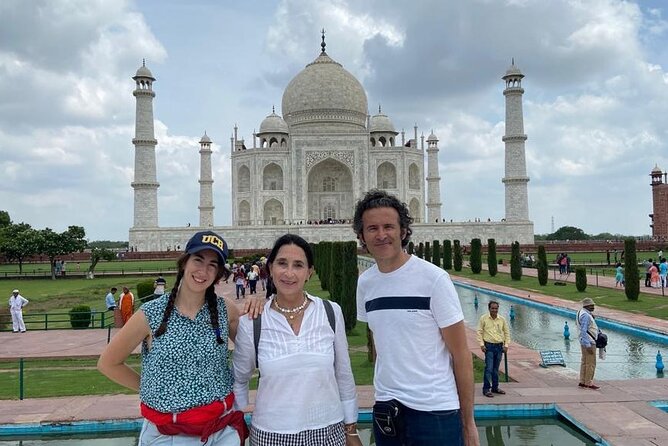
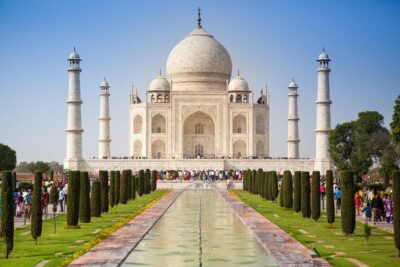
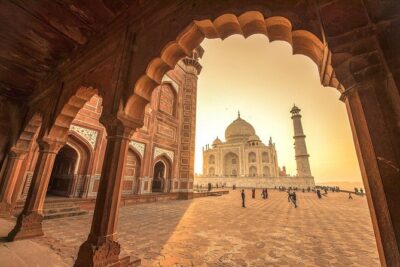
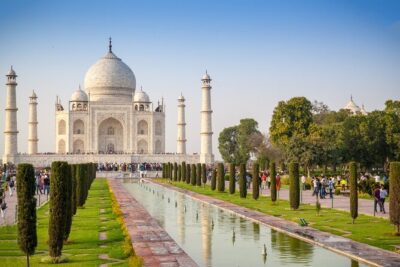
Day 2 is built around the Taj Mahal experience, and the schedule is clear. You get pickup at 6:00 AM for the sunrise visit, then time at the Taj Mahal, with the included battery bus ride to and from the parking area up to the monument zone.
If you care about atmosphere, sunrise is the reason to do this tour. Morning light makes the Taj Mahal feel less like a postcard and more like a real building with shifting surfaces as the day wakes up. Also, being timed tightly helps you avoid wasting time negotiating entry logistics.
After the Taj Mahal, the plan is to return for breakfast and check-out. Then you move to Agra Fort, a UNESCO World Heritage site, with time to explore the fort complex after the big emotional peak.
Agra Fort is a good follow-up because it broadens your understanding. The Taj Mahal is a symbol of love and imperial power, but the fort context helps you see the bigger political and defensive landscape around the Taj.
Then comes the drive to Jaipur, Rajasthan’s Pink City. En route, you may stop at Fatehpur Sikri, the historic Mughal capital. It is a smart insert because it breaks the “drive only” stretch with a major historic site.
More New Delhi tours and experiences for the shortlist



Jaipur highlights: Amber Fort, City Palace, and the observatory
Jaipur is where the tour shifts from Mughal mausoleums and mosques to royal architecture and city planning. Amber Fort is one of the main stops, perched on a hilltop overlooking Maota Lake. It is known for intricate details and dramatic positioning, and the time slot here is long enough to walk around and see why it became the poster image for Jaipur’s forts.
You then visit the City Palace, a blend of Rajput, Mughal, and European influences built in the early 1700s. This stop helps you understand that Jaipur’s royalty were not only warriors and architects, they were also administrators who shaped how the city worked. The design mix is part of that story.
Next is Jantar Mantar, a UNESCO World Heritage site and a major stone astronomical observatory. The tour frames it as the world’s largest stone astronomical observatory, and it is a site that rewards patience. You are looking at tools and measurements, not just monuments, and having guided interpretation is what turns “cool stones” into “oh, I see how they thought.”
You also stop at Hawa Mahal, the famous five-story facade with 953 jharokhas windows. Even if you do not spend all day inside, the exterior is a defining image of Jaipur. It is the kind of stop where looking from different angles helps you understand why it was designed for royal women to observe street life.
Jal Mahal, Gaitore Ki Chhatriyan, and quick photo stops that still matter

Some tours rush these into “passing by,” but this one carves out short, structured time. Jal Mahal is included as a viewpoint stop, but entry is prohibited. The payoff is the exterior view setting on Man Sagar Lake, which is still visually memorable even without walking around inside.
Then you go to Gaitore Ki Chhatriyan, a set of cenotaphs with Rajput and Mughal architectural influences. You also get details like marble chhatri elements associated with Maharaja Sawai Jai Singh II, plus latticework and domed pavilions. This is one of the stops that can feel quietly special, because you are not fighting the biggest crowd magnet sites.
Patrika Gate is the final notable visual on the list. It is known for hand-painted interiors and is located at the entrance of Jawahar Circle Garden. If you like colorful architecture that looks good for photos without needing a long museum-style visit, this is a nice end marker before your return drive.
Hotel options, what breakfast covers, and how to choose your star level
You can add 2 nights of hotel accommodation with breakfast, but only if you choose the hotel option. The hotel standard can be 3-star, 4-star, or 5-star, which means you can match comfort to your budget.
Breakfast is included for 2 mornings, and that matters on this tour because one day is sunrise-heavy. Having breakfast already included takes pressure off planning meals between early starts and long site days.
If you prefer to book your own hotel, you can also do that. Just note the tour may adjust its order if Friday lands on the second day, and the provider asks you to message them if you have your own hotel, so the routing stays workable.
For many people, choosing the higher star level is not about luxury. It is about the ability to actually rest. With a packed itinerary, sleep quality can do more for your trip than one extra shopping stop.
Price and logistics: where the real value shows up
The base price is $105 per person, and the tour is positioned as luxury-style comfort because it includes a private air-conditioned car, pickup and drop, and live guides. That is the big value lever: you are paying for coordination, not just transportation.
However, entrances are not fully included in the base price. Entrance fees are listed as $65 per person, and gratuities to driver and guides are not included. So, for a realistic budget, plan for the entrance fee add-on on top of the $105, plus whatever you choose for tips.
There are also a few operational wins that make the “luxury” label feel real: all tolls, fuel expenses, parking, and taxes are covered, and mineral water is provided in the vehicle. Those small inclusions prevent the budget creep that often happens on multi-day city routes.
One more timing note: this is a lot to pack into 3 days. Even with good guiding, you will still do longer drives and frequent transitions. I suggest you wear comfortable walking shoes, because you will move through many areas rather than only viewing from one platform.
Tips for making this tour feel smooth, not stressful
First, treat this as a highlights tour, not a slow travel circuit. The value is in seeing major sights with guidance, fast enough to keep your trip efficient.
Second, plan around early morning energy. The Taj Mahal sunrise start at 6:00 AM means you should be ready for a colder, earlier start window than a typical sightseeing day.
Third, use the private setup to your advantage. Since the tour can be customized, decide ahead of time what you care about most, then tell the guide if you want more time for those priorities. Flexibility is only helpful if you steer it.
Finally, remember the tour is private, meaning your group sets the pace. If you have someone who hates crowds, you might want to plan how you handle the market areas like Chandni Chowk, since those are naturally busy.
Should you book this 3-day luxury Golden Triangle tour?
Book it if you want a structured Golden Triangle sprint with private A/C comfort, pickup included, and local guide support in your language. It is especially a good fit if you are first-timing North India and you want the big names handled in the right order, including the sunrise Taj Mahal.
Pass or look for a slower option if you hate feeling rushed or you prefer spending half a day in one place instead of moving city to city. Also, if you have a strict budget, factor in the entrance fees of $65 per person and any hotel upgrade you choose.
If your goal is efficiency with quality, this tour is built for that. With guides like Adin, Rajesh Singh, and Faizan Hussain as examples of the kind of support you can get, you are not just seeing monuments, you are learning how they connect.
FAQ
What cities does the 3-day tour cover?
The tour covers New Delhi, Agra, and Jaipur as part of the Golden Triangle route.
How long is the tour?
It runs for approximately 3 days.
Is pickup and drop-off included?
Yes. Pickup and drop-off are included from your hotel or airport, and from any desired location in Delhi, Noida, or Gurugram.
Is this a private tour?
Yes. It is a private tour, and only your group participates.
What transportation is included?
You travel in a comfortable air-conditioned private car with a uniformed, dressed driver. The tour also includes a rickshaw ride in Old Delhi around Chandni Chowk and a battery bus ride to and from the Taj Mahal parking lot up to the monument.
Is the Taj Mahal visit at sunrise?
Yes. On day 2, you get a sunrise visit to the Taj Mahal, with pickup at 6:00 AM.
Are hotels included?
Hotel accommodation is included for 2 nights only if you select the hotel option, and breakfast is included with the accommodation. You can choose 3-star, 4-star, or 5-star hotels, or you can book without the hotel option.
Are entrance fees included in the price?
No. Entrance fees are not included, and they are listed as $65.00 per person.
Does the itinerary change if Friday is on the second day?
Yes. If there is Friday on the second day of the tour, the itinerary switches to Delhi, Jaipur, Agra, and then Delhi. If you booked your own hotel, you should message the provider to get the revised itinerary.
What is the cancellation policy and what about weather?
You can cancel for free up to 24 hours in advance for a full refund. The experience requires good weather, and if it is canceled due to poor weather, you will be offered a different date or a full refund.
More VIP Experiences in New Delhi



More Tours in New Delhi






More Tour Reviews in New Delhi

Not for you? Here's more nearby things to do in New Delhi we have reviewed









More Delhi City Tours to consider.
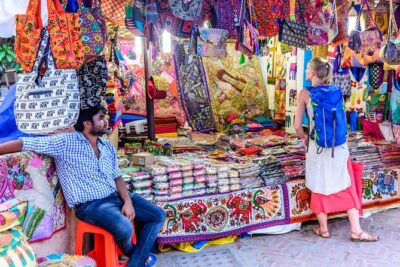 ★ 5.0Old & New Delhi City Tour – Half or Full Day Options AvailableTickets from $384,811 traveller reviews
 ★ 5.0Same Day Taj Mahal, Agra Fort & Baby Taj Tour from Delhi by CarTickets from $624,304 traveller reviews
 ★ 5.0Taj Mahal Day Tour from Delhi by Superfast Train – TOP RATED TOURTickets from $1004,166 traveller reviews
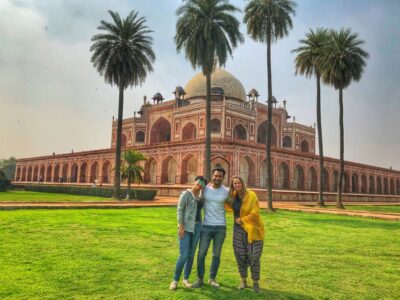 ★ 4.9Old and New Delhi Private Full or Half-Day TourTickets from $23,776 traveller reviews
 ★ 5.0Full Day Taj Mahal, Agra Fort & Baby Taj Tour from Delhi by CarTickets from $623,647 traveller reviews
 ★ 4.9From Delhi: Taj Mahal & Agra Private Day Trip with TransfersTickets from $43,181 traveller reviews
 ★ 5.0Taj Mahal Tour from Delhi by Express Train (Viator Award Winner)Tickets from $752,849 traveller reviews
 ★ 5.0All Inclusive Private Taj Mahal Luxury Tour from Delhi by CarTickets from $622,564 traveller reviews
More useful Delhi routes