
Review · DELHI CITY TOURS
Four-Day Luxury Golden Triangle Tour to Agra & Jaipur From Delhi
Four days, three UNESCO worlds. This private luxury Golden Triangle tour strings Delhi, Agra, and Jaipur into one guided rhythm with a plan that keeps you moving without the usual hassle. You get air-conditioned rides between sights and a local guide setting the pace, so the famous landmarks actually make sense.
I especially like the private group setup, since it feels more like your trip than a timed group shuffle. The Delhi side includes major faith and monument stops, and the guide can guide you through places like Jama Masjid and Chandni Chowk without you getting lost in the crowds.
One thing to watch: entrance fees are not included for many key monuments. Old and New Delhi entrance tickets are listed as $60 per person, while sites like the Taj Mahal and Qutub Minar are marked not included, so you’ll want to budget for tickets plus meals and tips.
Key Things You Should Know Before You Go
- Hotel pickup across Delhi and nearby cities including Gurugram, Noida, Ghaziabad, and Faridabad, plus airport or railway stations
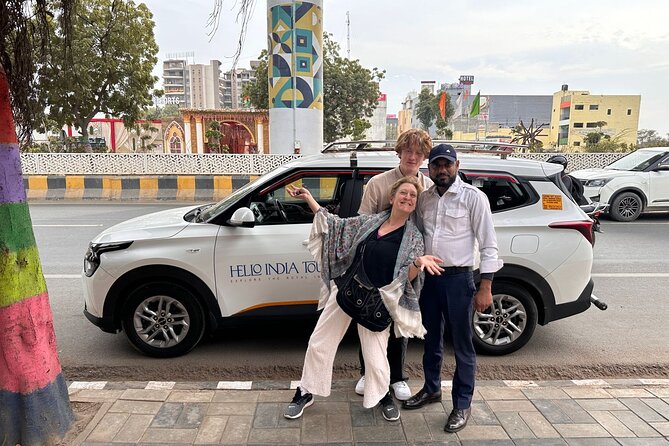
- AC private car for 4 days with vehicle options by group size (sedan, 6-seater SUV, or 10-seater van)
- UNESCO-focused sightseeing such as Qutub Minar and the Taj Mahal experience
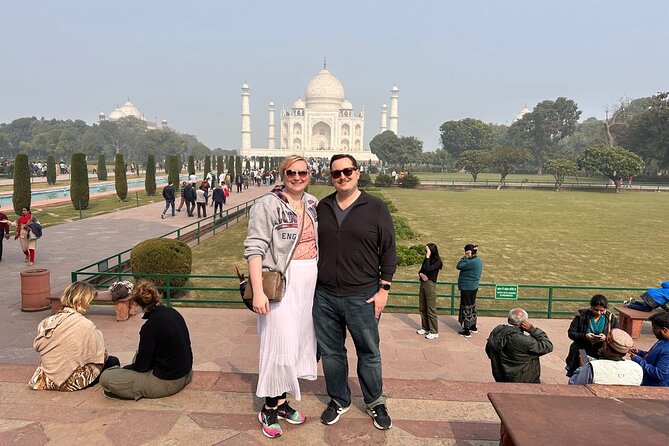
- Taj Mahal sunrise timing on Day 2, set up with driver and guide from your hotel
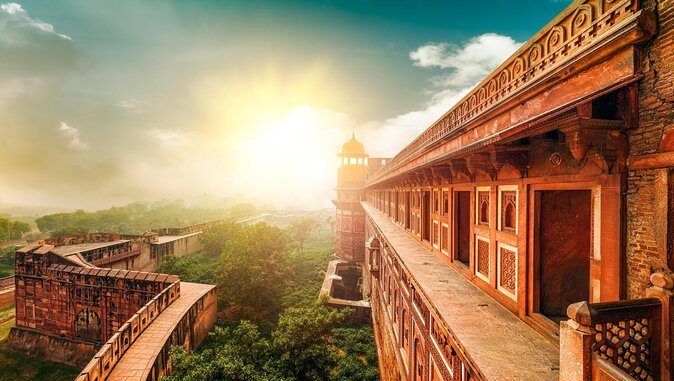
- Jaipur stops that match the classics: Amber Fort, City Palace, Jantar Mantar, and Hawa Mahal
- Jal Mahal interior is not available right now, though you still get a quick lakeside viewpoint
Golden Triangle in Four Days, the Private Luxury Way
The Golden Triangle is the headline route of North India for a reason: it’s compact, iconic, and loaded with sights that are hard to string together on your own without time and stress. This tour leans into that reality by packing major sites into a smooth 4-day loop that starts and ends in Delhi.
What makes this work for real life is the combination of private transportation and local guidance. You’re not just getting driven, you’re getting explanations, pacing, and help with how to experience each place without turning it into a chaotic checklist.
This is also ideal if you want to see more than one city but still keep the trip comfortable. The air-conditioned vehicle between destinations matters in India’s heat, and the daily guiding structure helps you spend your energy on the sights instead of figuring out logistics.
More New Delhi tours and experiences for the shortlist



Delhi Day 1: Jama Masjid, Chandni Chowk Rickshaw, and Monument Photos
Day 1 is all about getting your bearings fast. You start with pickup from basically anywhere in Delhi and nearby areas, and you can even request pickup from a private residence. That matters because the first day can otherwise get eaten up by arranging rides.
Jama Masjid and the courtyard scale
You’ll begin at Jama Masjid, the biggest mosque in India, with time for a leisurely walk through the red sandstone courtyard. The site is known for its monumental construction, including the 1656 effort credited to 5,000 workers. It’s the kind of place where walking slowly helps you understand the layout and why it draws so many worshippers.
Tip for your visit: dress for a mosque setting. That usually means covering shoulders and knees, and wearing shoes that are easy to remove.
Chandni Chowk by rickshaw, plus food street energy
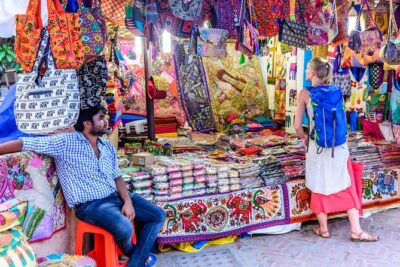
Next comes Chandni Chowk, one of Delhi’s oldest markets. Your guide helps you hire a rickshaw for a stroll through the area, which is perfect for absorbing the chaos at a calmer pace. The route takes you past the shopping streets and the food-stall atmosphere, so you’re seeing the city’s daily rhythm, not just photographing big monuments.
If your Delhi guide is Harsh, you may also experience an extra culture-of-the-day detail like a short spice shop stop in Old Delhi. It’s small, but it’s the kind of practical add-on that makes the markets feel personal.
Red Fort exterior, a quick hit for photo and context
You also get the Red Fort from the outside, with your guide explaining its role in Delhi’s story. This is a good move when your schedule is tight. You get the photo moment and the history cue, without spending extra time on ticketing you may not be ready for on Day 1.






Gurudwara Bangla Sahib and the water-story connection
From there, the itinerary includes Gurudwara Bangla Sahib, tied to a story about relief during smallpox and cholera epidemics. You’ll learn about the belief that the eighth Sikh Guru met the king in 1664 and used distribution from the tank to help people. Even if you’re not religiously connected, it’s a powerful way to understand why this site is so central to local life.
India Gate, Rashtrapati Bhavan, and a New Delhi architecture moment
You’ll pass by India Gate, built as a war memorial honoring soldiers from World War I. Then the route includes Rashtrapati Bhavan, the official residence of the President of India, designed by Sir Edwin Lutyens and Herbert Baker. These stops are mostly exterior views, but they give you a quick architecture and civic-structure foundation for the rest of the trip.
Humayun’s Tomb, Qutub Minar, and the UNESCO anchor sites
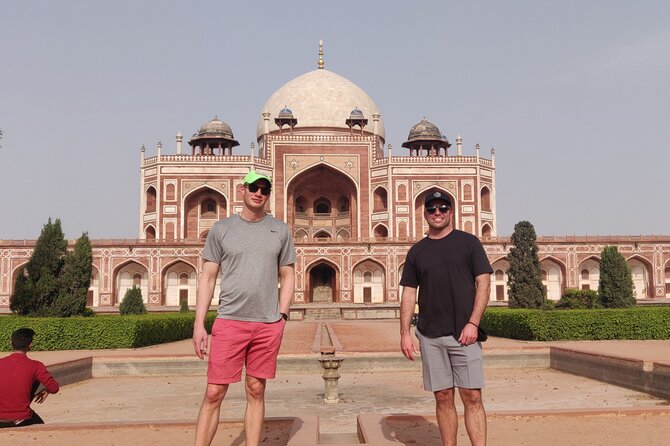
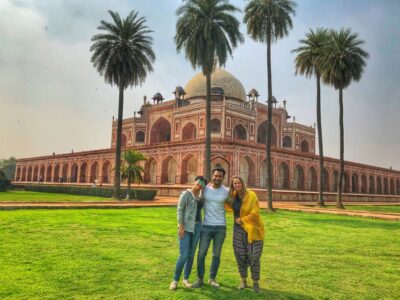
Humayun’s Tomb is next, with time to appreciate its Mughal architectural style. Then you reach Qutub Minar, a UNESCO World Heritage Site and a major highlight: it rises to about 73 meters and is noted as the tallest brick minaret in the world. This is one of those places where the scale hits you in person, and the details reward a slower look.
Lotus Temple and Akshardham, for modern spiritual architecture
You’ll also stop at Lotus Temple, famous for its lotus-flower-inspired design and a focus on unity and peace. Then comes Swaminarayan Akshardham, a large temple complex opened in 2005. The itinerary gives time for a shorter visit at each, so you’re not stuck in one place too long, and you still get variety.
Ending the day with the drive to Agra
After Delhi’s marathon of sights, your driver takes you to Agra. Once there, you check into your hotel and get rest before the early start of Day 2. Long drives are part of the Golden Triangle, but having a hotel base ready when you arrive keeps the day from feeling like nonstop transit.
Agra Overnight: Why the Travel Buffer Helps
Agra is where your trip shifts gears from city sightseeing to Mughal monuments and palace-scale architecture. The tour’s design gives you a proper evening in Agra so you’re not trying to absorb the Taj Mahal when you’re wiped out.
If you’re sensitive to long travel days, this is one of the smartest choices in the schedule. You’re already looking at a packed Day 1, then you get the time to recover before sunrise.
Day 2 in Agra: Taj Mahal Sunrise, Agra Fort, and Itmad-ud-Daula
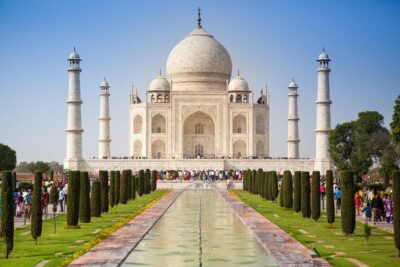
Day 2 starts early, and that’s the whole point. You’ll meet the driver and guide in your hotel lobby, then head out for the Taj Mahal sunrise experience. Sunrise is often considered the best time for seeing its changing light, and this tour is built to get you there before crowds and heat take over.
The Taj Mahal sunrise plan
The Taj Mahal portion is where the tour feels most “big ticket,” even though entrance fees are not included. You spend about 3 hours here, enough time to see the main areas and settle into the experience without racing.
Practical note: start-day energy matters. Eat breakfast if your hotel provides it, and keep water handy.
Agra Fort after the Taj
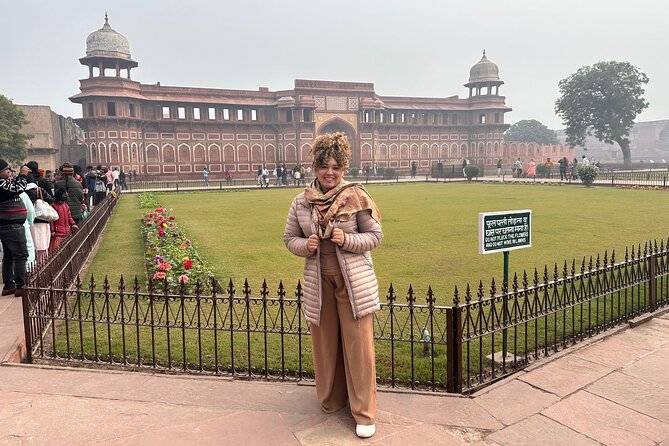
Next, it’s Agra Fort, described as once the primary residence of the Mughal family. This is a different vibe from the Taj: more fortress, more scale, and more sense of power and control. It’s also a place where your guide’s context helps you see it as more than walls and viewpoints.
Itmad-ud-Daula as the calmer stop
Then you visit Itmad-ud-Daula, presented as a more low-key highlight within Agra. The itinerary frames it as a beautiful Mughal-architecture site and gives it a shorter time block. For many people, it’s the moment where the trip becomes less about chasing the biggest name and more about appreciating craftsmanship.
Fatehpur Sikri en route to Jaipur
After Agra, you travel toward Jaipur, with a stop at Panch Mahal and Fatehpur Sikri. This is a 16th-century monument visited with your guide before you continue to Jaipur.
You’ll need this break in the middle, because Delhi to Agra and then Agra to Jaipur is a lot of movement. Fatehpur Sikri gives you a historic reset, and it’s also a smart way to prevent the next day in Jaipur from feeling like too much.
Fatehpur Sikri: A Guided Stop That Breaks Up the Drive
Fatehpur Sikri is included as an en route visit with a guided tour lasting about an hour. Even with limited time, it’s one of the most effective ways to add depth to the Golden Triangle route.
Think of this stop as the tour’s “breathing space with meaning.” You’re still moving, but you’re not just sitting in a car, and your guide helps connect what you see to the wider Mughal world.
Jaipur Day 3: Amber Fort, Jal Mahal View, City Palace, Jantar Mantar, Hawa Mahal
Day 3 is the classic Jaipur sweep, and it’s built around four big sights plus one scenic quick stop. It also includes a bit of flexibility at the end, which helps you enjoy Jaipur beyond photos.
Amber Fort: the big viewpoint and the full focus
The day begins at Amber Fort with about 2 hours allocated. Amber Fort is one of those places where you can feel the planning behind the fort layout and the way visitors move through courtyards and galleries. With a guide, the time tends to fly because you’re learning why different areas matter.
Jal Mahal: a quick lakeside look, with limits
Next is Jal Mahal, the water palace sitting on Man Sagar Lake. The itinerary notes that interior tours are not possible right now, due to disputes, but you still get about 15 minutes and can enjoy the photo opportunity and lakeside setting.
This is one place where expectations matter. If you’re hoping for inside access, it’s not part of the experience at the moment, but the exterior setting still delivers.
City Palace: where Jaipur’s royal story sits
Then comes the City Palace, with about 2 hours here. The tour description explains that Jaipur was founded with Maharaja Sawai Jai Singh II in 1727, and that the court shifted from Amber to Jaipur. It also notes the City Palace function through 1949, which gives you a sense of continuity beyond the old palace walls.
Jantar Mantar: astronomy instruments, not just buildings
Next is Jantar Mantar, a complex of nineteen architectural astronomical instruments designed by Sawai Jai Singh, finalized in 1734. This is a fascinating stop because it’s science in stone, with a guided explanation that makes the structures easier to understand.
Hawa Mahal: the windows and the photo frame
Then comes Hawa Mahal, the Palace of Wind. You get around 30 minutes, with time for photos in front of the iconic façade covered in many windows. It’s one of the best quick-photo stops in Jaipur, and it works well after the more detailed palace and astronomy sites.
Jaipur time after the main sights
Finally, you get about 5 hours in Jaipur after the sightseeing blocks. Your hotel stay includes one more night, so you’re not forced to rush out the same day. This free time is where you can reset, shop, or just take a slower evening stroll.
If your Jaipur guide is Abbas, you may find the day feels especially welcoming. People describe him as both knowledgeable and warm, and that style tends to make the schedule feel less like marching from stop to stop.
Day 4: Back to Delhi, plus a little breathing room
Day 4 is about returning to Delhi. After breakfast, your driver takes you back, and the itinerary suggests about 5 hours available in Delhi once you arrive.
That final block can be handy if you’re not on an immediate flight. It’s also a good time buffer for last-minute shopping or a relaxed meal, as long as your day-end travel plans line up with the return timing.
Price and Logistics: What You Really Get for $167.38
At $167.38 per person, the biggest value point here is not any single attraction. It’s the bundle: private air-conditioned transportation for four days, private local guiding, and (if you choose the hotel-included option) 3 nights with breakfast.
Included features also cover taxes and service charges, which helps you avoid surprise line items during the core tour.
That said, there are clear costs to plan for:
- Meals are not included, so you’ll need lunch and dinner spending each day.
- Tips and gratuities are not included.
- Entrance fees are not included for many monuments, and the itinerary specifically lists Old and New Delhi entrance fees as $60 per person.
- If gala nights apply with your hotel choice, those are not included and are listed as ₹6,000 per person.
So the real budgeting question becomes: do you want to pay for comfort and guidance, or do you want to handle tickets and transport yourself? If you hate coordinating, this package is a strong deal. If you love independence, you might find it pricey once you add meals and tickets.
Why the Tour Feels Like More Than a Shuttle
Yes, there’s a car driver and lots of driving time. But the best part of this kind of tour is when the guides make the sights click.
In practice, this tour includes private local tour guides for all sightseeing blocks, which changes the experience. You’re not just standing in front of famous places, you’re learning how to read them: what you’re seeing, why it matters, and what to notice during your short time window.
You’ll also benefit from how certain guides are reported to operate in a human way. For example, Harsh in Delhi is praised for being very informative and for conversations that go beyond a scripted guidebook. Abbas in Jaipur is described as welcoming and able to cover a lot of sights without making the day feel harsh. Miki is also mentioned for guiding well through Delhi.
Even one less glowing note that this can feel like shuttle service is still compatible with the tour’s structure: the car moves you fast and the guides keep it meaningful once you arrive.
Practical Tips So Your Days Don’t Feel Rushed
A 4-day Golden Triangle schedule is intense by design. Here are the habits that help you enjoy it instead of just enduring it.
Dress for religious and early-morning days
You’ll visit major religious sites and major monuments. Use breathable clothes, carry something to cover your shoulders or knees, and plan for mosque and temple etiquette.
For the Taj Mahal sunrise, wear layers. Even if Delhi and Agra aren’t freezing, early starts can still feel cooler than the mid-day heat.
Wear shoes that handle lots of walking
Even when time blocks are short, you’re moving across courtyards, market areas, and fort viewpoints. Comfortable walking shoes beat anything fancy.
Have a plan for ticket and meal spending
Because entrances and meals are not included, keep a little extra cash or a working card ready. The tour does provide help and guidance, but it does not remove the need to pay for tickets.
Expect short stops, then traffic into the next city
Some stops are designed to be quick hits, and that’s normal on a route like this. Use that to your advantage: take your photos, ask your guide what to look for, then move on without overthinking it.
Should You Book This Delhi to Agra and Jaipur Luxury Tour?
Book it if:
- You want private group comfort with an AC car and local guides
- You’re visiting for the first time and want a smooth, logical Golden Triangle route
- Sunrise at the Taj Mahal matters to you
- You prefer paying for organization rather than building the schedule yourself
Skip it or consider a different option if:
- You’re extremely budget-focused and don’t want to add entrance fees and meals on top
- You hate early mornings, since Day 2 is built around the Taj sunrise timing
- You prefer spending long unstructured hours in one place, since this tour is built for covering multiple major sites in limited time
FAQ
What does pickup cover for this tour?
Pickup is offered from any location in Delhi, Gurugram, Noida, Ghaziabad, and Faridabad, plus from the airport or railway station. Pickup from private residences can also be arranged upon request.
Is this a private tour or will I share it with other groups?
This is listed as a private tour/activity, and only your group participates.
Are hotel stays included in the price?
The tour includes 3 night hotel accommodation with breakfast if you book the package option that includes hotels.
Are monument entrance fees included?
Entrance fees are not included for monuments in general. The tour lists entrance fees for monuments of Old and New Delhi as $60 per person, and the itinerary marks many major stops as admission not included.
What transportation will I use between Delhi, Agra, and Jaipur?
You get a private air-conditioned vehicle for 4 days. Vehicle type depends on group size, with options including a sedan for 1 to 2 people, a 6-seater SUV for 3 to 4 people, or a 10-seater van for 5 to 10 people.
Is free cancellation available?
Yes. You can cancel for a full refund up to 24 hours before the experience’s start time, and cancellations within 24 hours are not refunded.
More VIP Experiences in New Delhi



More Tours in New Delhi

More Tour Reviews in New Delhi
Not for you? Here's more nearby things to do in New Delhi we have reviewed








More Delhi City Tours to consider.
 ★ 5.0Old & New Delhi City Tour – Half or Full Day Options AvailableTickets from $384,811 traveller reviews
 ★ 5.0Same Day Taj Mahal, Agra Fort & Baby Taj Tour from Delhi by CarTickets from $624,304 traveller reviews
 ★ 5.0Taj Mahal Day Tour from Delhi by Superfast Train – TOP RATED TOURTickets from $1004,166 traveller reviews
 ★ 4.9Old and New Delhi Private Full or Half-Day TourTickets from $23,776 traveller reviews
 ★ 5.0Full Day Taj Mahal, Agra Fort & Baby Taj Tour from Delhi by CarTickets from $623,647 traveller reviews
 ★ 4.9From Delhi: Taj Mahal & Agra Private Day Trip with TransfersTickets from $43,181 traveller reviews
 ★ 5.0Taj Mahal Tour from Delhi by Express Train (Viator Award Winner)Tickets from $752,849 traveller reviews
 ★ 5.0All Inclusive Private Taj Mahal Luxury Tour from Delhi by CarTickets from $622,564 traveller reviews
More useful Delhi routes