
Review · DELHI CITY TOURS
5 Nights 6 Days Private Golden Triangle Tour – Delhi Agra Jaipur
If you want India highlights without racing, this route fits. You’ll cover Delhi, Agra, and Jaipur with private local guidance and a comfortable vehicle, so you spend more time seeing and less time figuring out. I like how the pace is set up for lingering at major sights, and how the route keeps big-name stops plus useful extras. One thing to watch, though: paid monument entry fees are not included, and the hotel comfort level can vary depending on the package you choose.
This tour works especially well for first-timers because it strings together the most famous architecture and cultural landmarks, including UNESCO-listed stops like the Taj Mahal. You’ll also get door-to-door pickup inside Delhi, Noida, and Gurugram, which helps you start clean and calm on day one.
Key points before you go
- Private door-to-door pickup across Delhi, Noida, and Gurugram, plus airport or rail station transfers
- Private local guides in every city, so you get explanations at the sites you actually care about
- A car matched to your group size (sedan for 1 to 3, SUV for 4 to 6, minivan for 7 to 10)
- Big sights plus smart add-ons, like Fatehpur Sikri and the Chand Baori stepwell
- Breakfast included for 3 days, with meals outside the tour budget
- Monument entry fees are separate, with set combined fees for Delhi, Agra, and Jaipur
Private Golden Triangle in Comfort: Driver, Vehicle Size, and Local Guides
A Golden Triangle tour is all about logistics. This one leans into the good kind of convenience: a private vehicle plus private local guides for the city sightseeing. That matters because Delhi and Jaipur traffic can turn even a short hop into a long one, and private transport protects your schedule.
Your car size is based on your group:
- 1 to 3 travelers: 4-seater sedan
- 4 to 6 travelers: 7-seater SUV
- 7 to 10 travelers: 12-seater minivan or tempo traveller
That setup helps if you’re traveling as a family, with friends, or with multiple people who want the same pace. It also means fewer compromises on spacing and comfort during road time between cities.
Another detail I appreciate: your sightseeing is done with local guides, not just a driver. A driver gets you there. A guide helps you read what you’re looking at, from Mughal tomb design to Rajasthan’s royal city planning.
You can also read our reviews of more private tours in New Delhi



Day 1 in Delhi: Arrival Day Flexibility and a Slow Start
Day one is simple. You land at New Delhi, get welcomed by a tour representative, and transfer to your hotel. After that, you’re on your own for the day, either relaxing or stepping out nearby.
Why I like this approach: Delhi can hit your senses hard, fast. Having an arrival day where you do not have to rush into major monuments gives you a chance to recover from jet lag, sort out local comfort, and plan your energy level for the sightseeing days ahead.
If you want to make day one useful, you’ll probably do best with something close to your hotel. This keeps your first day from turning into a marathon, which becomes important by day two when you’ll have a lot to cover.
Day 2 Through Delhi: Jama Masjid, Chandni Chowk, Red Fort, and New Delhi Icons
Day two is where Delhi shows off. The route stacks Old Delhi landmarks with major New Delhi government and memorial sites, so you get the full city contrast in one day.
Jama Masjid and Old Delhi sights
You start at Jama Masjid, a huge Mughal mosque commissioned by Emperor Shah Jahan and completed in 1644. It’s one of those places where you can feel the scale right away, and a mosque like this rewards slow looking: arches, courtyard space, and the overall geometry.
From there, you drive through Chandni Chowk, known for dense shopping streets and street-level food stalls. This is less about checking boxes and more about people watching, grabbing a sense of how Old Delhi operates, and seeing what daily life looks like when you’re surrounded by shops instead of temples and museums.
Red Fort, then a memorial shift
Next comes Red Fort, at the end of Old Delhi. It’s described as grand walls, towers, and gardens, and it’s one of those sights where your camera will want to stay busy even when you’d rather sit and absorb details.
Then the itinerary moves to India Gate, a major war memorial. It also notes special significance during Republic Day, when the Prime Minister visits to pay tribute at Amar Jawan Jyoti. Even if you’re not visiting on that day, India Gate helps reset the tone after Old Delhi’s religious and market energy.
More New Delhi tours and experiences for the shortlist





Rashtrapati Bhawan, Parliament House, Humayun’s Tomb, and more
You continue past Rashtrapati Bhawan, with a focus on Lutyens Delhi architecture. After that, you see Parliament House, described as a heritage-I grade legislative center built as part of one of the world’s largest democracies.
Then you shift into Mughal-era and spiritual sites:
- Humayun’s Tomb (constructed 1570), described as the first garden-tomb on the Indian subcontinent, designed to influence later architectural work
- Lotus Temple, a Bahai House of Worship shaped like a floating half-open lotus and framed as a place combining elements from nine major religions
- Qutub Minar, the victory tower and minaret built on the grounds of Lal Kot
- Raj Ghat, the memorial site marking where Mahatma Gandhi’s funeral took place, with a simple tribute aligned with his philosophy of simplicity
This is a long day, and the stop list is heavy. The upside is you get a best-of mix. The tradeoff is you’ll want comfortable shoes, and you’ll benefit from pacing yourself mentally because you cannot linger at every location for long.
Agra Day Plan From Delhi: Taj Mahal, Agra Fort, and Itmad-ud-Daula

On day three, you travel from Delhi to Agra, about 222 km and roughly 4 hours. Then you check into your hotel and start sightseeing.
Taj Mahal: your anchor stop
The big centerpiece is Taj Mahal, the ivory-white marble mausoleum on the Yamuna’s southern bank. It was built in 1632 by Mughal emperor Shah Jahan as a tribute to Mumtaz Mahal.
The best way to enjoy Taj Mahal is to let it be your slow moment. Even with a guide, give yourself time to notice how the structure feels at different angles, and how the setting frames the building. This is the stop people remember years later, so I think it’s worth protecting your energy for it.
Agra Fort: UNESCO-listed and tied to multiple rulers
Next is Agra Fort, also known as the Red Fort of Agra, and it’s noted as a UNESCO World Heritage Site. The description connects it to Mughal emperors like Akbar, Shah Jahan, and Aurangzeb, so your guide can help you connect the fort’s power story to the broader Mughal timeline.
If Taj Mahal is emotion and beauty, Agra Fort is authority and control. Seeing both in the same visit helps the culture make more sense.
Itmad-ud-Daula, often called Baby Taj
Finally, you visit Itmad-ud-Daula, a Mughal mausoleum in Agra. It’s often nicknamed the jewel box, and the text also mentions Bachcha Taj or Baby Taj. This stop is great if you want a lighter, more intimate-feeling mausoleum that still shows serious craft.
Itmad-ud-Daula can be a perfect counterbalance after Taj Mahal, because the scale feels different and the details are easier to study.
Day 4 on the Way to Jaipur: Fatehpur Sikri and Chand Baori Stepwell
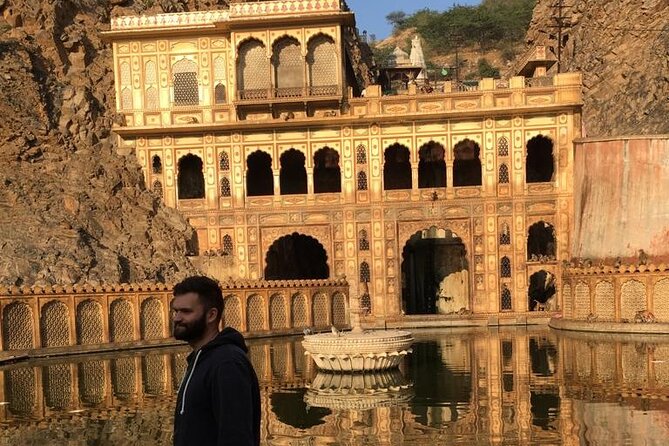
Day four moves you from Agra to Jaipur with planned stops along the route. The day includes travel time plus several high-impact sites.
The Fatehpur Sikri pause
You stop at Fatehpur Sikri, the City of Victory built in the late 16th century by Emperor Akbar. It served as the Mughal capital for about a decade, so it’s not just a random collection of buildings. Your guide can help connect why this city existed and why it mattered, and that context helps the structures feel less like scenery and more like a story.
Chand Baori: a stepwell that draws you in
You also visit Chand Baori, a stepwell in Abhaneri. The tour notes it goes around 30 meters into the ground and is one of the largest and deepest stepwells in India. This is one of those places where geometry is the main attraction, and you can spend time just looking at the patterned steps and the way light plays across them.
If you like architecture that is functional, not just ceremonial, Chand Baori is a strong addition to the Golden Triangle.
One practical note: this is a “drive day with stops,” not a full city day. If you want to take things slower, this is the day to keep your expectations flexible because road time takes a bite out of the schedule.
Jaipur Sightseeing Day 1: Amer Fort, Jal Mahal, Royal Gaitor, and City Palace
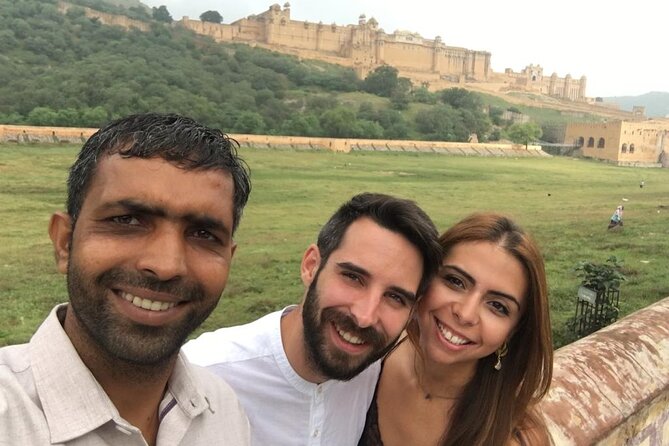
Day five is packed in Jaipur proper. Your guided tour starts in Amer, a historic fort on the outskirts. It’s described as a fort built in 1592, and it matters because Amer is tied to Jaipur’s earlier power base, before the modern city became the center.
Amer is also a good place to learn how Rajasthan fort design changes the way you move through a space. Even if you’ve seen forts elsewhere, Amer’s setting and layout are different enough that it feels worth the effort.
Jal Mahal: the palace in the lake
Next is Jal Mahal, a palace set in the middle of Man Sagar Lake. The tour description notes it was built around 1699 and later renovated and expanded. This is a more scenic stop than many forts, so it helps break up the day and gives you a photo moment that feels different from stone gates and courtyards.
Royal Gaitor Tumbas
Then you visit the Royal Gaitor Tumbas, described as well-preserved cenotaphs of the Kacchhawa dynasty that ruled Jaipur from 1727 AD to 1947 AD. It also mentions the site is especially clean, which is helpful if you are sensitive to how some outdoor monuments can feel.
City Palace: Jaipur’s royal centerpiece
After that, you get The City Palace Complex inside Jaipur’s walled city. It was designed and constructed by Maharaja Sawai Jai Singh II, founder of the city, and the description notes a blend of Mughal and local influences.
City Palace is a good place to focus on scale and planning. You’re not just seeing a building, you’re seeing how power expressed itself in how a royal city was laid out.
Jaipur Sightseeing Day 2: Jantar Mantar, Hawa Mahal, and Albert Hall Museum
Day five continues with the cultural and design highlights that make Jaipur feel distinct from Delhi and Agra.
Jantar Mantar: old science made of stone
You visit Jantar Mantar, described as one of the oldest astronomical observatories in the world, with a focus on the largest stone sundial. This is a great stop if you like the idea of science shaped into public spaces, and your guide can explain how the different instruments relate.
Even if you do not catch every detail, you’ll probably enjoy the feeling of walking through a set of tools designed to measure the sky.
Hawa Mahal: the breeze palace
Then comes Hawa Mahal, the Palace of Breeze. It’s described as five storeys tall, famously the tallest building without a foundation, with a curved design that leans dramatically.
The practical value here is that Hawa Mahal is a quick, high-impact look. It gives you a memorable shape against the street level, so it works well even if your legs are starting to feel the day.
Albert Hall Museum: a slower indoor finish
Finally, you visit Albert Hall Museum, founded in 1887 by Maharaja Sawai Ram Singh II and named after Prince of Wales Albert Edward, who visited Jaipur in 1876. It’s described as having a large collection of artifacts, so it’s a good last stop if you want something indoors after hours of outdoor walking.
This sequence makes sense. It ends with something you can pace and slow down with, instead of finishing with another fort gate scramble.
Day 6 Back to Delhi: Breakfast, Checkout, and Airport Drop-Off
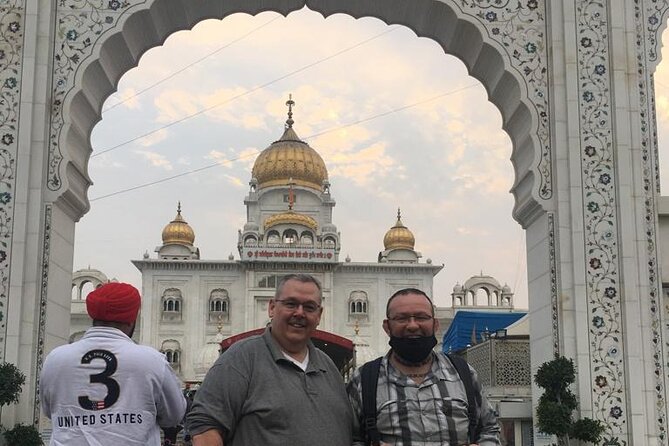
Day six keeps things straightforward. You have breakfast, then checkout, then you drive back to Delhi for drop-off at the airport, your hotel, or another location in the city.
This kind of wrap-up is useful because it protects your last day from last-minute chaos. You get a clean exit plan rather than trying to guess transport timing in a major city on your final morning.
Price and Logistics: What $240 Gets You, and What to Budget For
At $240 per person for a 5-night, 6-day private Golden Triangle tour, the value mostly comes from three things: the private car, private local guides, and door-to-door pickup. If you’ve ever tried to stitch together guides and rides across Delhi, Agra, and Jaipur on your own, you know it adds up fast in time and stress.
Here’s what’s included:
- Pickup offered from airport, railway station, or hotel in Delhi, Noida, Gurugram
- 5 nights accommodation if you book the option that includes hotels
- Private sightseeing with a private local guide in each city
- A vehicle sized to your group
- Breakfast for 3 days
- Mobile ticket, plus group discounts when applicable
Here’s what’s not included, but it’s clearly listed:
- Meals
- Monument entry fees through combined passes, plus a separate Agra monument fee
- Delhi monuments combined entry fee: $30 per person
- Jaipur monuments combined entry fee: $30 per person
- Agra monuments entrance fees: $35 per person
So your “real” cost depends on how you spend on site entry and on hotel category, since the accommodation is only included if you choose that hotel option.
One more practical reality check: hotel descriptions can shift in feel from country to country. I would treat the accommodation as an important part of your research, not a background detail.
Also, this tour is private. That’s great if you want control, but it can change value if your group is small and you were hoping for a big-price split. Still, if private guidance and transport matter to you, it is a very sensible way to do Delhi Agra Jaipur.
Who This Golden Triangle Tour Fits Best (And Who Might Want Another Pace)
This is a strong match if:
- You want history, culture, and architecture without building your own daily game plan
- You care about UNESCO-listed sights and major Mughal-era landmarks
- You want a comfortable private vehicle and a local guide at the sites
- You prefer flexibility, because day-to-day comfort matters more than squeezing in one more stop
It may be less ideal if:
- You hate long sightseeing days. Day two in Delhi includes Old Delhi plus New Delhi government and memorial stops plus additional Mughal and religious sites, so the day is full.
- You are strict about keeping meals inside the tour budget. Meals are not included, so you will pay for lunch and dinner separately.
- You expect a fully guided experience for the entire day. The arrangement includes guided city sightseeing, and you do have free time on arrival day and during breaks, but meals and some downtime are on you.
A huge plus for first-time visitors is that staff involvement can be a big deal. In named examples from past bookings, drivers such as Abhi and Amit, and coordinators or guides such as Manoj and Pintu, come up as key people who keep things on track and adapt when plans shift.
If you’re worried about being stuck, this is where private helps. You can ask questions as you go, and you’re not sharing a guide with strangers who have different priorities.
Should You Book This Private Golden Triangle Tour?
I think you should book if your top goals are simple: see the Golden Triangle highlights, use a private car to reduce friction, and get local guide context at the sites that matter most to you.
This tour makes the “big ticket” sightseeing efficient: Taj Mahal, Agra Fort, Amer, City Palace, Jantar Mantar, Hawa Mahal, plus key Delhi landmarks like Jama Masjid, Red Fort, Humayun’s Tomb, Qutub Minar, and Raj Ghat. It also adds useful stops that are not just monuments, like Chand Baori’s stepwell and Jal Mahal’s palace in the lake.
My straight talk on expectations:
- Plan for monument entry fees since they are separate with set combined prices.
- Confirm what hotel category you are choosing, since comfort standards can vary by package.
- Go in ready for busy days, especially day two in Delhi and the Jaipur sightseeing day.
If you want a more relaxed itinerary, this might still work because day one and day six build in open time. But you will still be walking and sightseeing a lot once the tour starts.
FAQ
What is the duration of the 5 Nights 6 Days Golden Triangle tour?
The tour runs for 6 days total, with 5 nights in between, covering Delhi, Agra, and Jaipur.
Does the tour offer pickup and drop-off?
Yes. Pickup is offered from the airport, railway station, hotel, or another pickup location in Delhi, Noida, and Gurugram. On the final day, you are driven back to Delhi for drop-off at the airport, your hotel, or another desired location.
Are monument entry fees included in the tour price?
No. Entrance fees are not included. The tour lists separate combined monument entry fees for Delhi and Jaipur, and entrance fees for Agra. Meals are also not included.
Which cities and main sights are included?
The itinerary covers New Delhi, Agra, and Jaipur, including major stops such as Jama Masjid, Red Fort, India Gate, Humayun’s Tomb, Lotus Temple, Qutub Minar, Raj Ghat, Taj Mahal, Agra Fort, Itmad-ud-Daula, Fatehpur Sikri, Chand Baori, Amer, Jal Mahal, Royal Gaitor Tumbas, City Palace, Jantar Mantar, Hawa Mahal, and Albert Hall Museum.
What vehicle do you use for different group sizes?
For 1 to 3 travelers, it is a 4-seater sedan car. For 4 to 6 travelers, it is a 7-seater SUV. For 7 to 10 travelers, it is a 12-seater minivan or tempo traveller.
Is the tour private, and is cancellation possible?
The experience is private, so only your group participates. You can cancel up to 24 hours in advance for a full refund, and cancellation may also occur due to weather or minimum passenger requirements, with an alternative date or full refund offered in those cases.
More Private Tours in New Delhi



More Tours in New Delhi





More Tour Reviews in New Delhi
Not for you? Here's more nearby things to do in New Delhi we have reviewed








More Delhi City Tours to consider.
 ★ 5.0Old & New Delhi City Tour – Half or Full Day Options AvailableTickets from $384,811 traveller reviews
 ★ 5.0Same Day Taj Mahal, Agra Fort & Baby Taj Tour from Delhi by CarTickets from $624,304 traveller reviews
 ★ 5.0Taj Mahal Day Tour from Delhi by Superfast Train – TOP RATED TOURTickets from $1004,166 traveller reviews
 ★ 4.9Old and New Delhi Private Full or Half-Day TourTickets from $23,776 traveller reviews
 ★ 5.0Full Day Taj Mahal, Agra Fort & Baby Taj Tour from Delhi by CarTickets from $623,647 traveller reviews
 ★ 4.9From Delhi: Taj Mahal & Agra Private Day Trip with TransfersTickets from $43,181 traveller reviews
 ★ 5.0Taj Mahal Tour from Delhi by Express Train (Viator Award Winner)Tickets from $752,849 traveller reviews
 ★ 5.0All Inclusive Private Taj Mahal Luxury Tour from Delhi by CarTickets from $622,564 traveller reviews
More useful Delhi routes