
Review · DELHI CITY TOURS
Delhi Agra Jaipur 3 Days Golden Triangle Tour
Sunrise at the Taj sets the tone for this trip. You get a tight Golden Triangle loop, plus private transfers and an Old Delhi cycle rickshaw that makes the first day feel like real street India. One key tradeoff: you book your own hotel, and monument entrance costs depend on the option you choose.
I like how the schedule balances big, iconic sights with places that explain how empires worked. With sunrise Taj Mahal timing and skip-the-line entry where offered, you are not just chasing photos, you are seeing the why behind the landmarks. The only caution I’d flag is that it is a full-throttle itinerary, so expect long travel days and early mornings.
Key highlights worth planning around
- Old Delhi on a cycle rickshaw: a fun, low-stress way to experience narrow lanes before your day of major monuments
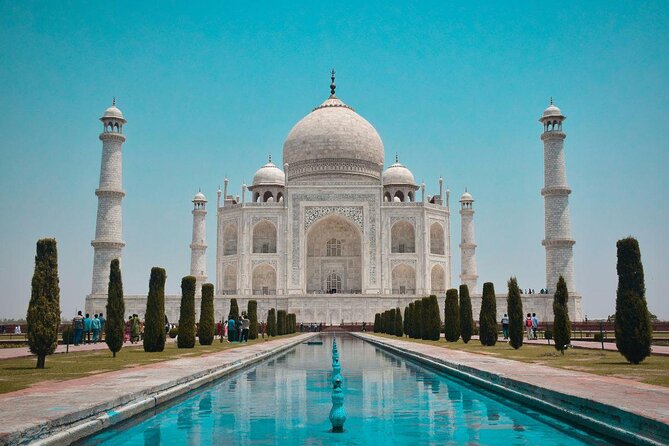
- Sunrise Taj Mahal visit: the most time-efficient way to tackle the crowds and get great light
- Agra Fort plus Baby Taj (Itmad-ud-Daula): two Mughal-era anchors that add depth beyond the Taj
- Fatehpur Sikri stop en route: a smart detour that breaks up the Delhi-to-Jaipur leg
- Jantar Mantar with City Palace and Hawa Mahal: astronomy, royal power, and architecture in one Jaipur circuit
- Driver plus live government-approved guides: easier navigation in traffic, plus on-site context at each stop
Why this 3-day Golden Triangle itinerary works
Golden Triangle tours can feel like a blur. This one stays focused by grouping monuments in a logical flow: Delhi first, then Agra for Mughal highlights, then Jaipur for forts, palaces, and the famous astronomical site. That matters because Delhi, Agra, and Jaipur each have their own rhythm, and jumping randomly between them wastes time.
The other thing I like is the “support layer.” You travel with an air-conditioned vehicle and a chauffeur, and you are not stuck solving logistics between stops. Live government-approved guides are scheduled city by city, so you are not left guessing what you are looking at when the buildings get grand and the details get small.
Value also shows up in the practical stuff: complimentary bottled water, parking and tolls handled, and skip-the-line entry where your package includes monument tickets. Even if you are on a budget, that reduces friction. You can spend your energy on the sights, not the paperwork.
The main drawback is also straightforward: meals and lodging are not included. You will need to plan breakfasts and lunches around the tour timing, and your hotel choice will shape your comfort. If you love a slow morning, this route will feel busy.
More New Delhi tours and experiences for the shortlist



Day 1 in Delhi: Lotus Temple, Humayun’s Tomb, and Old Delhi power moves
Day 1 starts with calmer Delhi landmarks before you surge into the old-city core. Lotus Temple is first, and it is open with free admission for about an hour. It is a striking place visually, but it also sets a tone that is slightly different from the more fortress-and-palace feel of the rest of the trip.
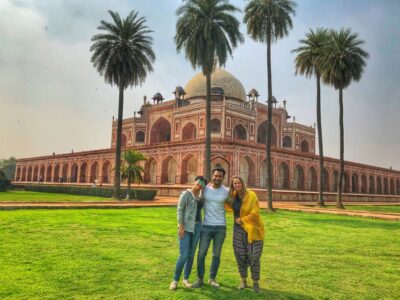
Next comes Humayun’s Tomb. You get around two hours here, and it includes admission. This is a Mughal-era milestone, and the time block matters because the gardens and marble work reward slower looking. If you want to understand why later Mughal architecture became so influential, this is a good place to start.
After that, you shift into political and memorial stops. Gandhi Smriti is about 30 minutes, followed by India Gate, and then quick photo stops at Rashtrapati Bhavan and Parliament House. These breaks are short on purpose. They help you get the skyline and significance without eating the entire day.
Then you hit the big religious and imperial sites in Old Delhi:
- Jama Masjid (about an hour, admission included): a massive 17th-century mosque and a UNESCO World Heritage Site.
- Red Fort (about an hour, free): built between 1639 and 1648 and tied to the Mughal imperial residence.
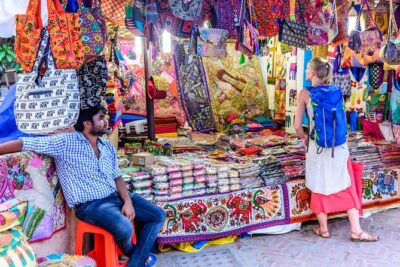
The market moment is also well chosen. Chandni Chowk and the Pasar Chandni Chowk area is included for about 30 minutes, giving you a quick taste of shopping streets. You do not get a long shopping spree, but you do get enough to understand the scale and energy.
One of the most enjoyable elements on Day 1 is the cycle rickshaw ride in Old Delhi. It is included, and it makes sense here because traffic and lanes can be tricky. You also get that street-level perspective you would miss if you only rode in a car the whole time.
At the end of Day 1, you drive to Agra for an overnight stay. That is a smart way to reduce Day 2 stress, especially because Day 2 is built around sunrise Taj Mahal.
Day 2 sunrise Taj Mahal: the timing is the real feature
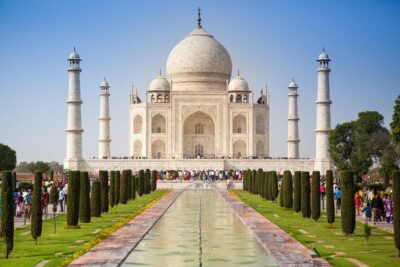
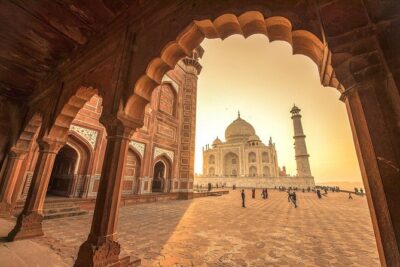
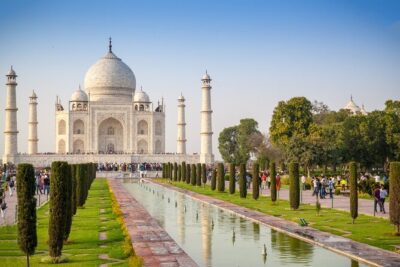
Day 2 begins with the star event: the Taj Mahal at sunrise. Your schedule targets early light, and it includes admission. There is a 3-hour window here, which is important because the Taj is not only a viewpoint. It is a whole composition with paths, courtyards, calligraphy, and changing reflections as the sun climbs.
One practical detail: the Taj Mahal is closed every Friday. If your dates fall on a Friday, your tour timing will need adjustment. The itinerary you have should still guide you, but you may lose that particular sunrise block.
After sunrise, you return for breakfast, then you check out and keep moving. This is a “no downtime wasted” day.
Next is Agra Fort, built in 1565 by Mughal Emperor Akbar. The tour gives about an hour. This stop pairs perfectly with the Taj because you see the political muscle behind the artistry. The fort context helps you connect why the Mughals built with such confidence and control over the Yamuna region.
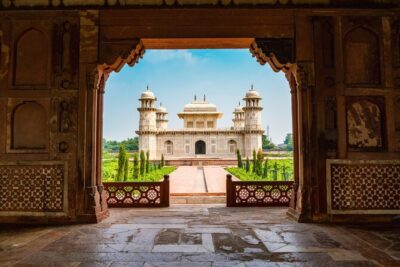
Then you visit Itmad-ud-Daula, often called the Baby Taj. You get around 30 minutes here, and it includes admission. The itinerary gives you an option style element: you can visit inside or focus on photos outside. I like this flexibility because it lets you match your pace to your energy. If you want more detail, go inside. If you want the best viewing angles and less time pressure, focus outside.
Then the tour shifts toward Jaipur with an important break in the travel plan: Fatehpur Sikri. That is the kind of included detour that makes a short trip feel fuller.
Fatehpur Sikri on the way to Jaipur: a smart architectural timeout
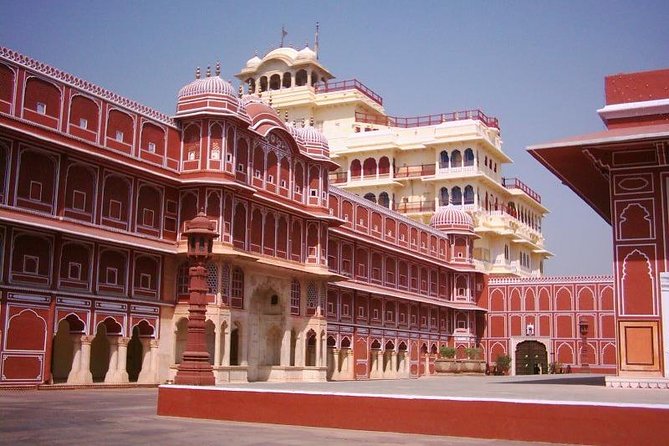
Fatehpur Sikri is scheduled on the way from Agra to Jaipur and takes about an hour. Admission here is listed as free. It is a compact stop, but it can change how you see Mughal rule.
The main idea is that you are stepping into a planned city built with strong visual and architectural intent, using red sandstone buildings around a central cluster. In a Golden Triangle itinerary, time is precious, so you want stops that teach you something, not just stop-and-go photo moments. Fatehpur Sikri helps you see how rulers projected authority through the built environment.
Even if you only have a short window, it is the right kind of “transit enhancement.” It turns the long road into an active learning moment, and it prevents Day 2 from feeling like a straight line between Agra and Jaipur.
Day 3 Jaipur circuit: Amber, City Palace, Hawa Mahal, and Jantar Mantar
Day 3 is a full Jaipur program with multiple big-ticket sites. It starts after breakfast with pickup and a guided circuit. The itinerary groups several landmarks under the morning block, then follows up with dedicated time for the biggest attractions.
Hawa Mahal, the Palace of Breeze, is included, and the route also mentions Jal Mahal and Amber Fort early on. Even though the schedule lists several stops inside one block, the value is that you do not jump around randomly. You see the Jaipur character as a connected story: royal power at the forts and palaces, daily life in the lakefront setting, and scientific thinking at the observatory.






Jantar Mantar: why the visit feels different
Jantar Mantar gets its own dedicated stop, about an hour, with admission included. This is a UNESCO World Heritage Site, known for nineteen astronomical instruments built by Rajput king Sawai Jai Singh. It features the world’s largest stone sundial.
This stop is one of those rare “tourist sites” that is actually fun to understand. If you have ever wondered how people could do serious astronomy without modern tools, this gives you a tangible answer. Even if you do not love science, the structures themselves are visually strong and easy to photograph with guide context.
City Palace and royal power
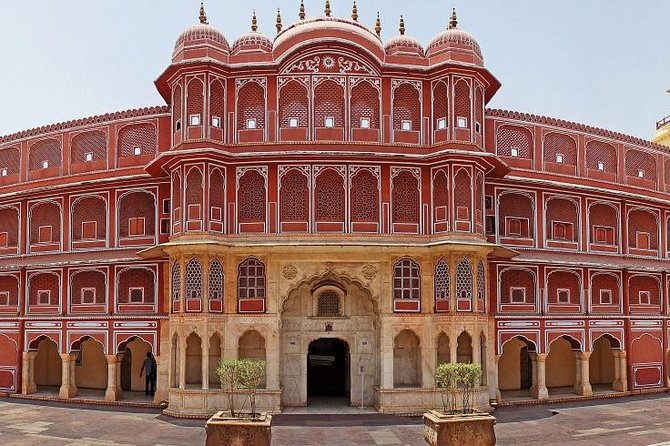
City Palace is next, with about an hour and admission included. It is tied to Maharaja Jai Singh and connects to the home of the erstwhile Royal Family. The time block gives you room to see what is still used as a living center of culture, not only a museum set.
It also pairs well with Hawa Mahal. Together, you see how Jaipur architecture blended public visibility with power. You get a sense that the city was built to be read, not just walked through.
Jal Mahal and the “water palace” moment
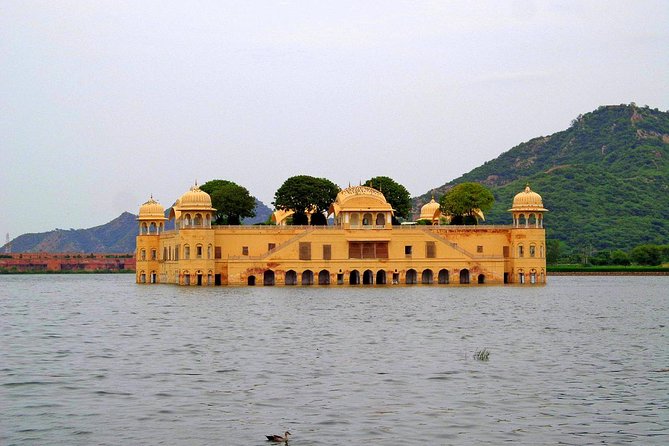
Jal Mahal is listed with free admission and around 30 minutes. It is the water palace in the middle of Man Sagar Lake. This is one of those quick stops that gives visual contrast after hours of fort and palace stone.
It is also a good moment to step back. Jaipur can be intense with crowds near major sites, and a calm lake view helps reset your brain.
Panna Meena ka Kund near Amber Fort
The itinerary includes Panna Meena ka Kund, a three-step stepwell near Amber Fort, for about 30 minutes. Admission is listed as free. This is a heritage water harvesting site, and it is a reminder that these cities were engineered for survival, not just spectacle.
Price and tickets: what $30 really means for your wallet
The listed price is $30 per person, but the tour price depends on your entrance-fee selection. If you choose the option with monument entrance fees, the tour includes entrance fees and skip-the-line access. If you choose without entrance fees, you should budget about $70 per person for monument admission.
That changes the real cost significantly. So here is the practical way to think about it:
- If your plan is to see all the major landmarks on the schedule, paying for the entrance-fee option can save time and reduce hassle.
- If you are comfortable managing ticket lines or you want flexibility, the lower base price can work, but it adds a cash and planning step.
Either way, hotels are not included. Your hotel choice becomes part of the trip value. On a fast 3-day itinerary, a comfortable, well-located room in Agra and Jaipur matters more than people expect.
Transportation and timing: comfort is built in, but you still move a lot
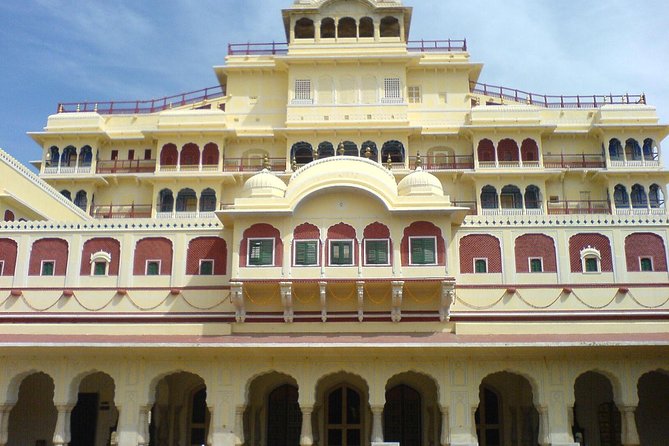
You get an air-conditioned vehicle with chauffeur throughout, plus bottled mineral water. This helps a lot in India’s heat and long drives, especially between Delhi and Agra and again between Agra and Jaipur.
The day-by-day pace is packed. Delhi Day 1 includes a long list: Lotus Temple, Humayun’s Tomb, Gandhi Smriti, India Gate, Rashtrapati Bhavan and Parliament House photo time, then Jama Masjid and Red Fort, plus Chandni Chowk. Even with short stops, the flow adds up.
Then Day 2 starts early for Taj Mahal sunrise and continues through Agra Fort and Itmad-ud-Daula, plus Fatehpur Sikri. Day 3 stacks major Jaipur highlights and then heads back to Delhi.
This is where the driver and on-site guide pairing earns its keep. A professional driver helps you navigate Indian traffic, and the guide keeps you moving efficiently inside each attraction, so you spend less time searching and more time seeing.
If you want downtime, build it yourself outside the tour schedule. Plan for a short recovery meal break or an early night after each city’s big day.
Service quality: the difference is often the guide and the drive
The most consistently praised part of the experience is how smoothly everything runs. The driver is described as punctual, safe, and cooperative, with a modern SUV style of travel. That matters because Golden Triangle days involve real traffic, and calm driving reduces stress.
Guides also come up as strong performers, with the ability to answer questions and provide on-site context. One detail worth noting for language needs: guides in this program can have very good German skills, which is a huge help if that is your group language.
If you are the type who likes to understand what you are looking at, this tour format supports that better than a car-only itinerary.
Should you book this Golden Triangle tour?
Book it if you want a structured 3-day plan that hits the headline sites in Delhi, Agra, and Jaipur without you juggling tickets and transit. This is especially appealing for first-time visitors short on time, or for anyone who prefers a guided explanation at each stop.
Skip or adjust expectations if you want a slow, flexible trip. The schedule is full, hotels are not included, and a Friday date means Taj Mahal closure. Also, confirm which entrance-fee option you are buying so you are not surprised by monument costs.
If you do book, my best advice is simple: choose the entrance-fee option if you want maximum time saved, pick a convenient hotel near your daily starting areas, and treat sunrise Taj Mahal day as your one must-protect morning. The payoff is real, because the timing turns a ticket into an experience.
FAQ
What is included in the tour price?
You get an air-conditioned vehicle with chauffeur, live government-approved city guides, hotel and Delhi airport pickup and drop-off, and bottled mineral water. Monument entrance fees are included only if you booked the option that includes them.
Are hotel stays included?
No. Accommodation is not included. You choose your own hotel for Delhi, Agra, and Jaipur.
Are monument entrance fees included?
They depend on the option you select. If you book with entrance fees, all listed monuments’ admission fees are included and you get skip-the-line access. If you book without entrance fees, the monument entrance fees are not included and you should budget about $70 per person.
What happens on Fridays for the Taj Mahal?
The Taj Mahal is closed every Friday, so that sunrise visit cannot happen on those dates.
Is Lotus Temple always available?
Lotus Temple is closed every Monday. On that day, the tour notes that you can visit Birla Temple instead.
Do I need any documents for the trip?
You need a valid passport photo copy for the traveling days.
More 3-Day Experiences in New Delhi


More Tours in New Delhi



More Tour Reviews in New Delhi
Not for you? Here's more nearby things to do in New Delhi we have reviewed








More Delhi City Tours to consider.
 ★ 5.0Old & New Delhi City Tour – Half or Full Day Options AvailableTickets from $384,811 traveller reviews
 ★ 5.0Same Day Taj Mahal, Agra Fort & Baby Taj Tour from Delhi by CarTickets from $624,304 traveller reviews
 ★ 5.0Taj Mahal Day Tour from Delhi by Superfast Train – TOP RATED TOURTickets from $1004,166 traveller reviews
 ★ 4.9Old and New Delhi Private Full or Half-Day TourTickets from $23,776 traveller reviews
 ★ 5.0Full Day Taj Mahal, Agra Fort & Baby Taj Tour from Delhi by CarTickets from $623,647 traveller reviews
 ★ 4.9From Delhi: Taj Mahal & Agra Private Day Trip with TransfersTickets from $43,181 traveller reviews
 ★ 5.0Taj Mahal Tour from Delhi by Express Train (Viator Award Winner)Tickets from $752,849 traveller reviews
 ★ 5.0All Inclusive Private Taj Mahal Luxury Tour from Delhi by CarTickets from $622,564 traveller reviews
More useful Delhi routes