
Review · DELHI CITY TOURS
Delhi: Qutub Minar UNESCO World Heritage Site Walking Tour
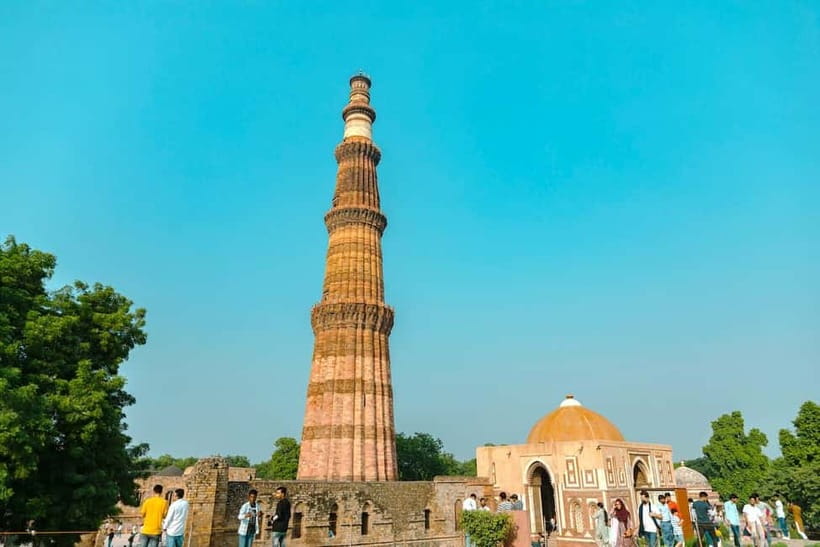
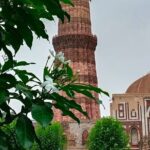
A 73-meter monument changes how you see Delhi. This Qutub Minar walking tour brings you right up to the 73-meter-high tower and its early 13th-century red sandstone and marble details, then continues to the Iron Pillar and the other key monuments inside the UNESCO grounds. What I like most is how the guide helps you spot design changes from storey to storey and read the meaning behind the inscriptions and patterns. My one real caution is simple: it is a 2 to 3 hour outdoor walk, so bring comfy shoes and plan for sun and crowds in the open sections.
You also get a professional live guide in English or Hindi, with a private group setup. In my experience with this type of tour, the guide is where it clicks, and the name that stands out here is Madhuvan, who is praised for making the connections between buildings and their background feel clear. If you choose it, you can add a private car transfer, which helps when you are squeezing this stop into a longer Delhi day.
Key highlights you will actually notice
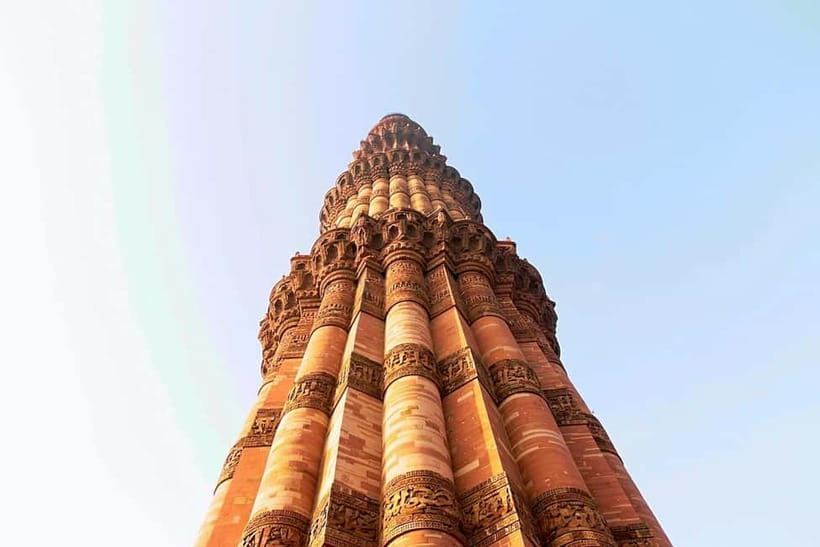
- Qutub Minar’s 73 meters: You start at the base and walk around to catch how the tower’s look shifts by storey.
- Mamluk carvings and patterns: Arabic inscriptions and geometric designs give you something concrete to look for.
- Quwwat-ul-Islam Mosque: You see early Indo-Islamic architecture, plus reused pillars from earlier Hindu and Jain temples.
- Iron Pillar mystery: Its rust-resistant surface is a standout visual clue about ancient Indian metallurgy.
- Alai Darwaza and unfinished Alai Minar: A gorgeous gateway paired with an ambitious project that never got finished.
The real reason Qutub Minar is worth a walk
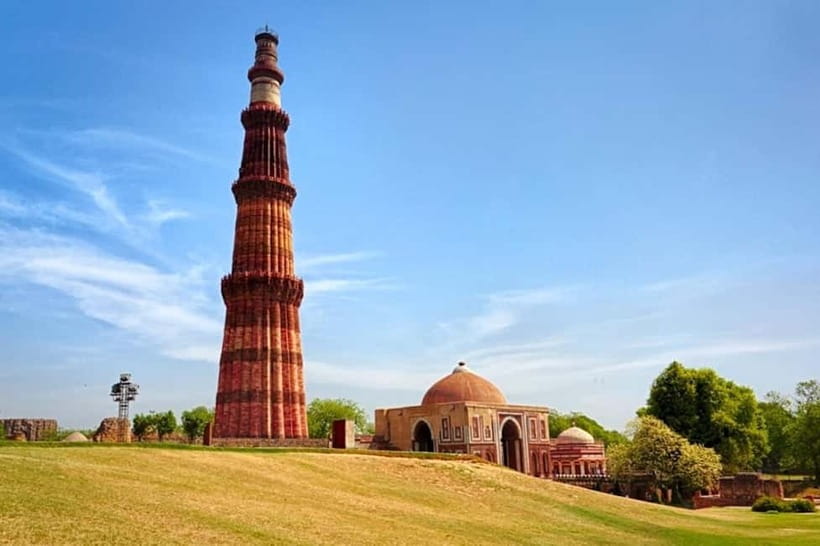
Qutub Minar is the kind of place where “seeing it” is almost too easy. The tower is tall, famous, and impossible to ignore. But what makes this tour worth doing on foot is that it slows you down. Instead of a quick glance from one angle, you get to orbit the base, compare details, and understand what you are looking at while you look at it.
At about 73 meters, Qutub Minar is usually described as towering, but the more useful way to think about it is as a collection of visual decisions. The minaret was built in the early 13th century, and each storey does not look identical. When you walk around it with a guide, you can actually notice how the design changes, which makes the structure feel less like a single monument and more like a sequence of updates by successive rulers.
If you like history that you can point to with your own eyes, this is a strong match. You get architectural close-ups: carvings, patterned bands, and readable design logic at ground level where you can see it.
You can also read our reviews of more walking tours in New Delhi



Price and time: what $9 buys you in practice
At $9 per person for a 2 to 3 hour walking tour, you are paying for two things: a focused route and a professional guide. In most cities, a guided walk for that length would cost more just for the guide time. Here, the value is that you are not paying to sit in a car, you are paying to make sense of a UNESCO site by moving through it in the right order.
Duration matters. With only a couple hours, you do not get lost in the full scope of the entire complex. Instead, you get the main highlights that connect thematically: the minaret, the early mosque, the Iron Pillar, and the Alai Darwaza and Alai Minar story. That makes this a good “anchor stop” for a Delhi day, especially if you want to see more than one area without giving the whole day to one site.
The one practical consideration is the same as any short walking tour. You will cover ground at a steady pace for a focused window. If you are sensitive to heat or you do not like walking around enclosed spaces, plan your timing and pacing.
Starting at the base of Qutub Minar, where details begin
Most people first notice Qutub Minar from afar. On this tour, you start at the base, which is smarter. From ground level, you can connect the scale to what the builders actually worked on: the stone surface, the inscriptions, and the geometric patterns.
The tower is built from red sandstone and marble, and the guide helps you see why those choices matter. Sandstone creates a strong warm color, while marble and contrasting elements highlight decorative work. When you walk around, you are not just taking pictures. You are checking the structure like a puzzle.
A big focus is the Mamluk dynasty styling you can spot in the carvings and patterns. The guide points out Arabic inscriptions and the repeating geometric designs. That makes the site feel less random. Instead of saying “there is detail everywhere,” you learn what kind of detail to look for and what to expect to see on different parts of the tower.
And yes, the storeys matter. You learn to watch for how each level has its own design character, built by successive rulers. That is an easy concept to miss if you only look at one photo angle. On foot, it becomes obvious.
Quwwat-ul-Islam Mosque: the first mosque built in India
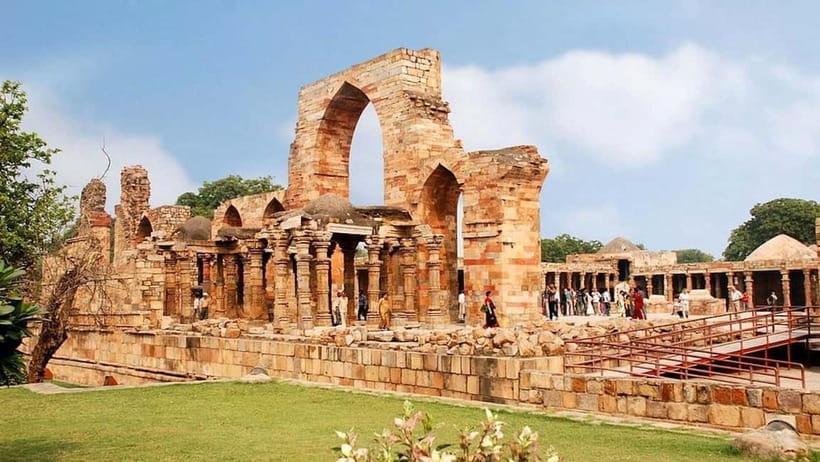
Just nearby, the Quwwat-ul-Islam Mosque changes the mood from vertical to grounded and horizontal. This is described as the first mosque built in India, and the architecture is a big part of why it is memorable.
Look for the arched gateways and the pillars. What the guide emphasizes is the way the builders reused materials from earlier Hindu and Jain temples. That means you are seeing a physical mix of artistic traditions, not just a political slogan. The result is a place where old and new craftsmanship share space.
This stop is valuable because it explains how cultural change can happen through building choices. It also gives you a visual break after the tall minaret walk. You get to slow down, look at shapes and supports, and then connect what you see back to the larger Indo-Islamic architectural evolution happening in the Delhi area.
One small consideration: this is a heritage complex with people moving through it. If you care about standing still long enough to study inscriptions and pillars, arrive with patience and let the guide manage the timing.
The Iron Pillar: rust-resistant and seriously hard to ignore
If Qutub Minar is the star performance, the Iron Pillar is the intriguing side character that steals scenes. The pillar stands proudly in the complex, and the big talking point is its rust-resistant surface. That is not a subtle detail. It is a feature you can see.
When you have a guide, the value shifts from “wow, a pillar” to “why does it look like this after so long?” Ancient Indian metallurgy is referenced as the reason behind the rust resistance, and the guide helps you connect that explanation to what you are actually seeing on the surface.
This stop is great if you are the type who likes science-meets-history. It is also a good break from the heavy architectural staring. You can circle it, pause, and then continue when you feel ready.
The best way to enjoy this part is to slow down for a moment and really look at the texture and condition of the iron surface. Even if you do not know the metallurgy, the visual contrast is the hook.
You can also read our reviews of more historical tours in New Delhi
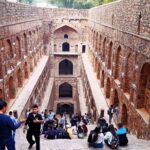



Alai Darwaza and the unfinished Alai Minar: ambition with a twist
Next up is Alai Darwaza, an important gateway with Indo-Islamic architecture. Gateways tend to be decorative because they mark a threshold, and here you can see that design language in the stonework and structure. The tour keeps you moving so you can compare the gateway’s style to what you just saw on the minaret and mosque.
Then the story shifts again with the unfinished Alai Minar. This is described as an ambitious but abandoned project. That unfinished quality matters, because it turns the site from a museum of finished monuments into a record of plans that did not fully reach completion.
I like including this kind of detail on a tour because it makes the place feel human. Buildings get started, resources shift, rulers change, and momentum can stop. Seeing an unfinished structure helps you understand that history is not always a straight line of perfect achievements.
Practical tip: treat the Alai Darwaza and Alai Minar area like a narrative finish. After the minaret and mosque details, you will be more alert to the theme of architectural evolution and political ambition.
Why the guide makes a difference here (and not just for facts)
A walking UNESCO tour lives or dies on interpretation. At Qutub Minar, there are lots of visual elements, but it is easy to end up with a mental pile of “pretty carvings.” What you want is someone who can help you sort what you see.
This is where the praised guides matter. Madhuvan is specifically noted for being engaging and for explaining the complex background in a way that clicks. That kind of guiding is useful because you can then focus on the right details in the right order.
For you, that means the walk becomes more than a sightseeing route. It becomes a way to build a simple mental map:
- what the minaret demonstrates in design and dynastic style
- what the mosque shows in cultural mixing and early construction
- what the Iron Pillar suggests about ancient material knowledge
- how the Alai Darwaza and Alai Minar illustrate ambition and change
When you have that structure, you remember the site longer after you leave.
Transfers and getting your bearings in Delhi
This tour can include a transfer in a private car if you select that option. That matters in Delhi because travel time can be unpredictable, and a short 2 to 3 hour experience makes efficient logistics feel like part of the value.
If you are stacking multiple stops in one day, a private car transfer can help you arrive with less stress. If you are already in the area, you might skip it and keep the plan simple. Either way, the key is not to waste your limited tour time searching for the meeting point.
Also consider the group format. It is set up as a private group, which usually means the guide can keep you together and manage pacing without a big crowd shuffle.
How to plan for comfort during a 2 to 3 hour walking tour
Because this is an outdoor walking tour, you will enjoy it more if you show up prepared for real Delhi weather. Even if you have shade in some places, you still need to manage sun exposure and hydration.
Here are a few practical moves that fit the experience described:
- Wear shoes you can walk in for a couple hours. You will be moving around the complex.
- Bring something for sun protection, especially if your time slot is during hot hours.
- Keep your phone ready, but treat photos as short pauses. The best part is the guide-led looking.
And if you want to maximize what you learn, arrive mentally ready to compare details. The minaret storeys, the mosque reuse elements, and the Iron Pillar surface each reward a slightly different kind of attention.
Wheelchair accessible, but still plan your movement
The tour is listed as wheelchair accessible, which is excellent for planning. That said, a heritage site can still have uneven surfaces and space constraints in parts of the complex, so you will want to keep your own pace flexible.
If you are traveling with mobility needs, ask your provider about how the route is handled on the day. Since the tour highlights multiple monuments within the Qutub Minar complex, the route planning matters for comfortable navigation.
Who this tour is perfect for, and who might want something else
This is a great fit for:
- First-timers to Delhi who want a concentrated UNESCO highlight without a full-day commitment
- People who like architecture and want to understand what they are seeing, not just take photos
- Travelers who want an affordable guided walk, especially at a low $9 per person price point
- Anyone interested in the mix of styles, from the Mamluk-influenced carvings to the reused pillars in the Quwwat-ul-Islam Mosque
It might not be ideal if:
- You want a long, slow, museum-style visit with deep reading time at each monument
- You prefer minimal walking and long sitting breaks
- You dislike guided pacing and want to roam freely without a structured route
Should you book the Qutub Minar walking tour?
I think you should book it if you want the best chance of understanding Qutub Minar in just 2 to 3 hours. The price is low, but the focus is clear: the minaret, the first mosque in India, the Iron Pillar, and the Alai Darwaza plus unfinished Alai Minar. That selection gives you multiple angles on the same UNESCO complex, so you do not leave with only one headline monument in your memory.
If you are choosing between doing this on your own and with a guide, go with the guide. The carvings, the inscriptions, the storey differences, and the story behind reused architectural elements are exactly the sort of details that become easier when someone points them out in real time. And with an engaging guide like Madhuvan mentioned, you get that interpretation piece that turns a quick visit into a “I finally get it” visit.
FAQ
FAQ
How long is the Qutub Minar UNESCO walking tour?
The tour lasts about 2 to 3 hours.
How much does the tour cost?
The price is listed as $9 per person.
What sites will I see during the tour?
You will see Qutub Minar, Quwwat-ul-Islam Mosque, the Iron Pillar, Alai Darwaza, and the unfinished Alai Minar.
Is the tour a private group?
Yes, it is a private group.
What languages are available for the guide?
The live guide is available in English and Hindi.
Is transportation included?
Transfer in a private car is included only if you select that option.
Is the tour wheelchair accessible?
Yes, the tour is listed as wheelchair accessible.
Is there a cancellation policy?
Free cancellation is available up to 24 hours in advance for a full refund.
Can I reserve without paying today?
Yes, there is a reserve now and pay later option.
More Walking Tours in New Delhi


More Tours in New Delhi






More Tour Reviews in New Delhi

Not for you? Here's more nearby things to do in New Delhi we have reviewed










More Delhi City Tours to consider.
 ★ 5.0Old & New Delhi City Tour – Half or Full Day Options AvailableTickets from $384,811 traveller reviews
 ★ 5.0Same Day Taj Mahal, Agra Fort & Baby Taj Tour from Delhi by CarTickets from $624,304 traveller reviews
 ★ 5.0Taj Mahal Day Tour from Delhi by Superfast Train – TOP RATED TOURTickets from $1004,166 traveller reviews
 ★ 4.9Old and New Delhi Private Full or Half-Day TourTickets from $23,776 traveller reviews
 ★ 5.0Full Day Taj Mahal, Agra Fort & Baby Taj Tour from Delhi by CarTickets from $623,647 traveller reviews
 ★ 4.9From Delhi: Taj Mahal & Agra Private Day Trip with TransfersTickets from $43,181 traveller reviews
 ★ 5.0Taj Mahal Tour from Delhi by Express Train (Viator Award Winner)Tickets from $752,849 traveller reviews
 ★ 5.0All Inclusive Private Taj Mahal Luxury Tour from Delhi by CarTickets from $622,564 traveller reviews
More useful Delhi routes