
Review · DELHI CITY TOURS
3-Hour Mehrauli Archaeological Park Ruins Walking Tour Delhi
Mehrauli hides Delhi’s layers in three stops. This 2 to 3 hour ruins walk links Qutub Minar with Jamali Kamali Tomb and Mosque, Balban’s tomb, and Rajon ki Baoli, with time for bird spotting and the kind of haunted-lore people love. I like the small group size (max 15) and how a guide such as Jai Singh brings the places to life, including debating older stories when the facts get fuzzy.
One possible catch: you spend most of the time outdoors, and no meals or transport are included, so plan water and a simple snack strategy before you start.
Key Things You Should Know Before You Go
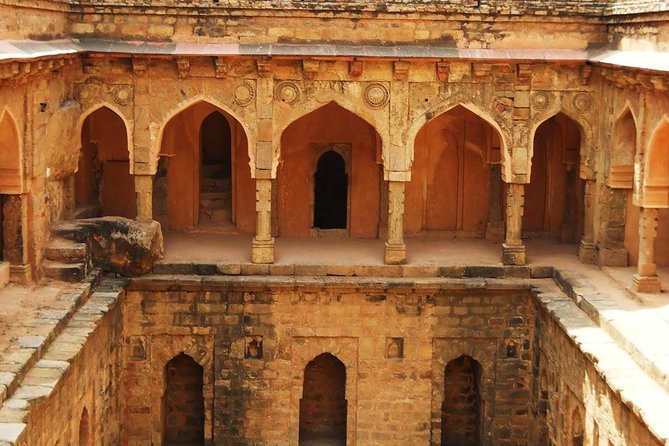
- Three stops that map the past fast: Jamali Kamali Tomb and Mosque, the Tomb of Balban area with Metcalfe Canopy, and Rajon ki Baoli stepwell.
- A tight group pace: maximum 15 people means questions do not get lost in the crowd.
- Guides who explain and discuss: Jai Singh is praised for thorough, detailed history and for engaging in productive debate.
- Free entry for these specific monuments: admission ticket is marked as free at each stop.
- Haunted stories, told in daylight: you get the eerie context without doing a night-only outing.
- Short walking tour, not an all-day slog: expect about 2 to 3 hours total.
Mehrauli Ruins, Where Delhi’s Story Layers in Three Real Places
Mehrauli is one of those Delhi areas where history sits close to the ground. Instead of museums and maps, you get the actual shapes of tombs, mosques, a stepwell, and ruined structures that hint at what came before. The tour is built around short visits that still feel meaningful, because each stop connects to the next through what Delhi was doing at different times.
The best part is how the guide uses those physical clues. You are not only hearing names and dates. You are also learning what to look for, like the way tomb complexes sit in their setting, how a structure can be both functional and theatrical, and how water architecture can be deeply symbolic. Add in the chance to spot birds among greenery, and the whole walk feels less like a chore and more like a slow, curious stroll through a working outdoor heritage space.
The haunted angle also matters, even if you are not walking at night. People talk about these sites as if the past has a mood, and the guide’s stories help you understand why locals associate places with late-night fear. If you like history with a little atmosphere, this is your kind of tour.
You can also read our reviews of more walking tours in New Delhi



From Qutub Minar to Mehrauli: Your 2 to 3 Hour Game Plan
The tour starts near Qutub Minar, at Aam Bagh, Ladha Sarai Village, Mehrauli, New Delhi. You meet there and you end back at the same spot, which makes planning easier. The timing is set for a morning window, around 0800 to 0900, so you are not battling peak midday heat.
This length matters. Two to three hours is long enough to get context and short enough that you can still do other sights the same day. There are three main stops, with about 20 minutes at each. That pacing keeps you from feeling rushed, but it also means the guide will keep moving if you want the full sequence.
Also pay attention to the practical bits that are stated clearly: the tour uses a mobile ticket, and it is near public transportation. So if you are not trying to coordinate taxis for every leg, this format should suit you.
Jamali Kamali Tomb and Mosque: First Glimpse, Best Orientation
The first stop is Jamali Kamali Tomb and Mosque, and it is the easiest place to get your bearings. Starting here helps because it sets the tone for Mehrauli. You begin with a heritage setting where the architecture tells you immediately that Delhi has layers, not chapters. Even before you go into deeper specifics, you learn how the area evolved and why ruins can feel like a puzzle.
You get about 20 minutes at the site. In that time, the guide typically frames what you are seeing, and then gives you a simple lens for the rest of the walk. This is important because Mehrauli can be confusing if you arrive expecting one unified story. The tour is built to help you connect the dots.
One more nice detail: the overview mentions birds tucked among greenery and forests. At this early point in the walk, it can be easier to spot birds because you are not already tired. If you are the type who likes a quick pause for photos or for listening, this stop rewards that instinct.
Potential drawback: because this is an orientation stop, you might want a bit more time if you are obsessed with one specific complex. The tour moves on quickly by design.
Tomb of Balban and Metcalfe Canopy: When Ruins Meet a 19th Century Folly
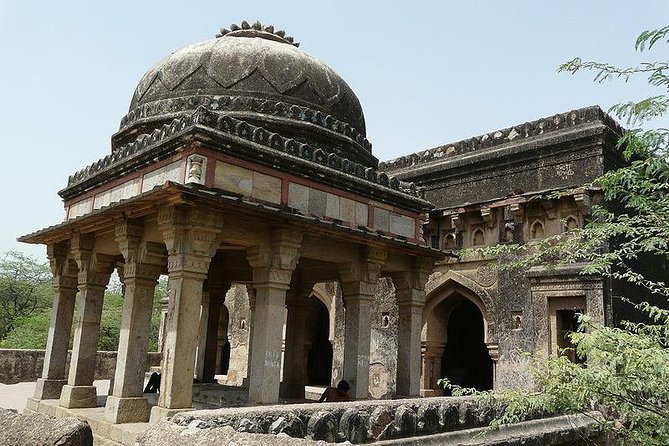
The second stop centers on the Tomb of Balban area, and it also includes a feature called the Metcalf Canopy. The canopy sits on the peak of a mound, and it is described as a folly built in the 1850s by Charles Metcalfe. In plain terms, it is a structure that looks like it belongs in the past, even though it was added later.
This is a great moment for understanding why Mehrauli feels like it does. Delhi did not stop building when a dynasty ended. Later rulers, collectors, and planners kept reshaping the area, sometimes by adding their own interpretation of what the past should look like. A folly sounds like a playful idea, but it actually helps you read the site. It shows you how people tried to create a particular mood and viewpoint, using the same monumental language they saw around them.
You get around 20 minutes here, so the pace stays tight. You will likely spend part of that time noticing the canopy location on the mound and taking in the setting, then shifting back into historical context. If you like photography, this stop is practical because the canopy’s elevation makes it easier to get a clean view and a sense of spatial layout.
Small consideration: because this is a short stop, you may not feel like you fully master the Balban story by the time you leave. The tour helps you get started, not finish every debate.
Rajon Ki Baoli: The Stepwell You Can Read Like a Diagram
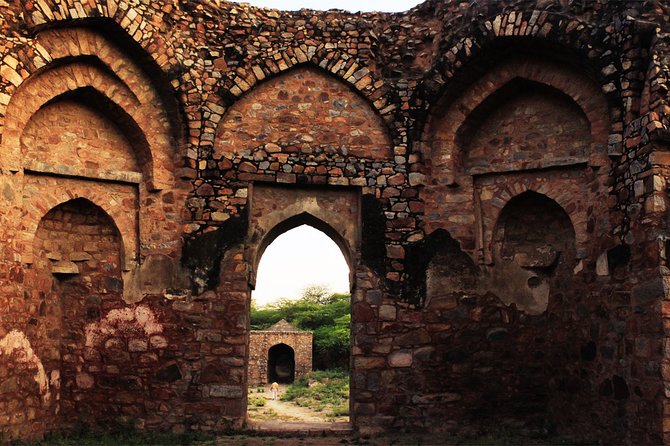
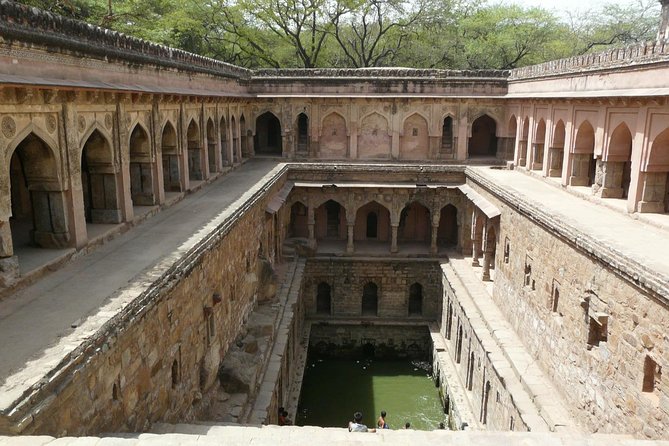
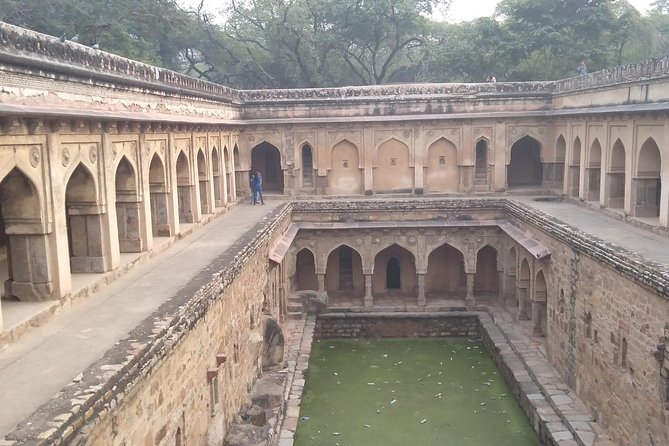
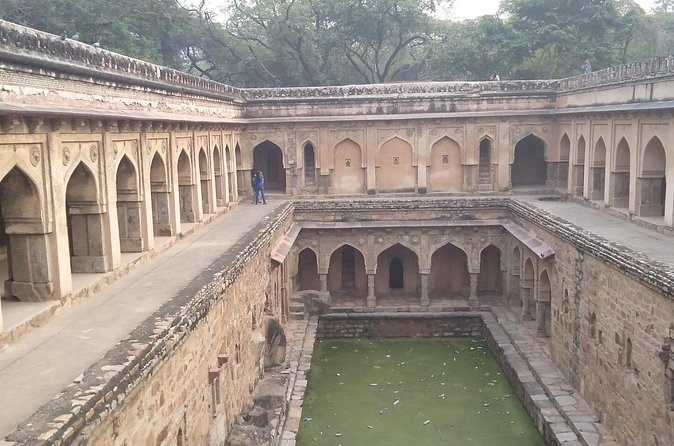
The third stop is Rajon Ki Baoli, a stepwell famous enough to make it into many Mehrauli itineraries, but still special because of the details you can actually see. The name is tied to masons who resided in the chambers, so the site connects the builders to the structure. That makes the stepwell feel less like a relic and more like a place tied to daily work.
The description you get here is very practical: the baoli has a vertical shaft for drawing water and hollow passageways. Even if you are not an architect, those phrases help you visualize how it functioned. Stepwells are not just pretty stone bowls. They are systems for storing and reaching water when surface sources are unreliable.
There is also the spooky layer. Rajon ki Baoli is considered among the most haunted places in Delhi. The tour does not ask you to treat it like a scary movie. Instead, you get the stories as cultural context, the kind of folklore that attaches itself to deep spaces and echoes. If you are into ghost lore, this stop gives you that atmosphere. If you are not, you can still enjoy it as an eerie way to understand how people interpret architecture and darkness.
Like the others, you get about 20 minutes. That is enough time to learn what you are looking at, take a few photos, and leave with a clearer mental picture of how the water architecture worked.
More New Delhi tours and experiences for the shortlist





The Guide Factor: Why Jai Singh’s Storytelling Changes Everything
The difference between a basic walk and a memorable one is the guide’s rhythm. This tour is built around a local expert guide, and the reviews put the emphasis where it belongs: the guide’s explanations are detailed, and the stories are grounded in place.
One named guide, Jai Singh, is repeatedly praised for being thorough with historical details and for being willing to engage in productive debate over certain narratives. That matters because Delhi history can get simplified fast. If you care about accuracy, or if you just like hearing more than one side, that back-and-forth makes the walk feel more honest.
Jai Singh is also noted for sharing information about his life in India. That turns a heritage walk into a human experience. It is not only about stones and dates. You also pick up the way local people think, what they notice, and which parts of history they treat as common knowledge.
Practical tip from this style of guiding: bring your curiosity. If you hear something you want clarified, ask. The tour format supports questions because it is capped at 15 people.
Price and Value: What $28.47 Really Buys You in Mehrauli
At $28.47 per person, this is not a budget-buster, and it also is not trying to be a luxury tour. The value comes from a few specific factors that the tour clearly provides.
First, you get a local knowledgeable expert guide. (In real terms, that means you are paying for interpretation, not just movement between sites.) Second, the tour includes admission ticket free at each of the listed stops. Third, you get a mobile ticket, which can make the start smoother.
What you should plan for: meals and transport are not included. That is normal for short walking tours, but it affects your total day cost. If you budget only for the tour price, you might forget water, snacks, and how you will actually get to the meeting point.
One good way to think about it: you are paying mainly for time with the guide and entry logistics for these sites. If you were to visit alone, you would still need to figure out what you are seeing, and that is the part this tour handles for you.
How Long to Spend, and What to Wear (Because Delhi Has Its Own Opinions)
This is a walking tour, and it is outdoors. Even though each stop is only about 20 minutes, you will still spend time on foot across the heritage area. You should dress for morning walking, with comfortable shoes that handle uneven ground, and bring water.
If you are the type who likes to read inscriptions slowly, keep in mind the tour’s pace is structured. You can still linger, but you will want to do it without pulling the group too far behind. The small group size helps, but time is still time.
If bird spotting is your thing, you might enjoy slowing down during the greener stretches. The tour mentions birds in the greenery, which suggests there is a good chance to see at least a few, especially earlier in the morning.
Who This Walking Tour Is Best For
This walk fits best if you want a short, focused way to understand Mehrauli and Delhi’s layered past. You will enjoy it if:
- You like architecture that tells stories rather than big-ticket sites only.
- You want an easy route that connects Jamali Kamali, Balban’s area, and Rajon ki Baoli in one outing.
- You enjoy guides who explain details and can discuss narratives, including debates.
It is also a good fit for people who prefer small groups, since the tour caps at 15. Most people can participate, and the duration is short enough to avoid turning your whole day into a sightseeing grind.
If you only have time for one Mehrauli experience, this type of three-stop structure is a smart choice because it covers very different monument types, tomb and mosque complex, a canopy feature tied to a later interpretation, and a stepwell that functions as both water system and legend space.
Should You Book the Mehrauli Archaeological Park Ruins Walk?
Book it if you want a guided, efficient way to read Mehrauli. The combination of free entry, a short 2 to 3 hour format, and a guide style praised for detail and discussion makes it a solid value. If you enjoy haunted lore as story context, Rajon ki Baoli will likely be your favorite stop.
Skip or consider a different option if you need transport and meals handled for you, or if you want to spend long, unhurried hours on one single monument. This tour is designed to move, so it will not replace an all-day exploration.
FAQ
FAQ
How long is the Mehrauli Archaeological Park ruins walking tour?
It runs for about 2 to 3 hours.
Where do I meet for the tour?
You start at Qutub Minar area, at Aam Bagh, Ladha Sarai Village, Mehrauli, New Delhi, Delhi 110030, India.
How much does the tour cost?
The price is $28.47 per person.
Is admission included for the monuments?
For the listed stops, admission tickets are marked as free.
How big is the group?
The tour has a maximum of 15 travelers.
What is the cancellation policy?
You can cancel for a full refund up to 24 hours before the experience starts. If you cancel less than 24 hours before, the amount paid is not refunded.
More Walking Tours in New Delhi



More Tours in New Delhi






More Tour Reviews in New Delhi

Not for you? Here's more nearby things to do in New Delhi we have reviewed










More Delhi City Tours to consider.
 ★ 5.0Old & New Delhi City Tour – Half or Full Day Options AvailableTickets from $384,811 traveller reviews
 ★ 5.0Same Day Taj Mahal, Agra Fort & Baby Taj Tour from Delhi by CarTickets from $624,304 traveller reviews
 ★ 5.0Taj Mahal Day Tour from Delhi by Superfast Train – TOP RATED TOURTickets from $1004,166 traveller reviews
 ★ 4.9Old and New Delhi Private Full or Half-Day TourTickets from $23,776 traveller reviews
 ★ 5.0Full Day Taj Mahal, Agra Fort & Baby Taj Tour from Delhi by CarTickets from $623,647 traveller reviews
 ★ 4.9From Delhi: Taj Mahal & Agra Private Day Trip with TransfersTickets from $43,181 traveller reviews
 ★ 5.0Taj Mahal Tour from Delhi by Express Train (Viator Award Winner)Tickets from $752,849 traveller reviews
 ★ 5.0All Inclusive Private Taj Mahal Luxury Tour from Delhi by CarTickets from $622,564 traveller reviews
More useful Delhi routes