
Review · DELHI CITY TOURS
Divine Delhi: Explore Indian Faiths on a Cultural Tour
Six hours, five faiths, zero guesswork. This Delhi tour moves you through major religions with a real English-speaking guide who helps you read what you see, not just where to stand for photos.
I especially love the multi-religious route because it forces you to compare beliefs in one day, side by side. Next, I like how the stops include practical details, like the Jain temple’s bird hospital and the places where worship and community service overlap.
One possible drawback is time pressure. Visits are short, typically 20 to 40 minutes each, so if you want to linger, this tour will feel like a snapshot rather than a slow study.
Key things I’d circle before you go

- Skip-the-line entry via a separate entrance, so you lose less time waiting around.
- Jain Birds Hospital at Sri Digambar Jain Lal Mandir, a rare detail most people never hear about.
- Sarovar at Gurudwara Bangla Sahib, plus a sense of Sikh community life around the pool.
- Laxmi Narayan, also linked to Vishnu and Lakshmi, so you’ll get names and meaning, not just architecture.
- Lotus Temple in the middle of the day, for a different mood after busier streets.
- Nizamuddin Dargah and qawwali culture, with the note that evening music is a big part of the site.
A smart half-day way to map Delhi’s religions
Delhi can overwhelm you fast. One minute you are in a crowded market lane, the next you are at a quiet sanctuary where people pray with complete focus. This tour helps you get your bearings fast by building a route that covers Jain, Sikh, Hindu, Roman Catholic, and Sufi traditions without you needing to figure out logistics between each place.
You also get a comfort upgrade that matters in Delhi. You travel in an air-conditioned vehicle, and that makes the jump between neighborhoods easier on your energy. The day does include walking through busy streets, but it is guided walking, not a free-for-all.
The group style is private, with pickups offered from Noida, Delhi, Gurugram, or New Delhi. That combination is great if you want more straightforward attention from your guide, especially when you are asking questions about rituals, temple rules, or what certain symbols mean.
You can also read our reviews of more historical tours in New Delhi



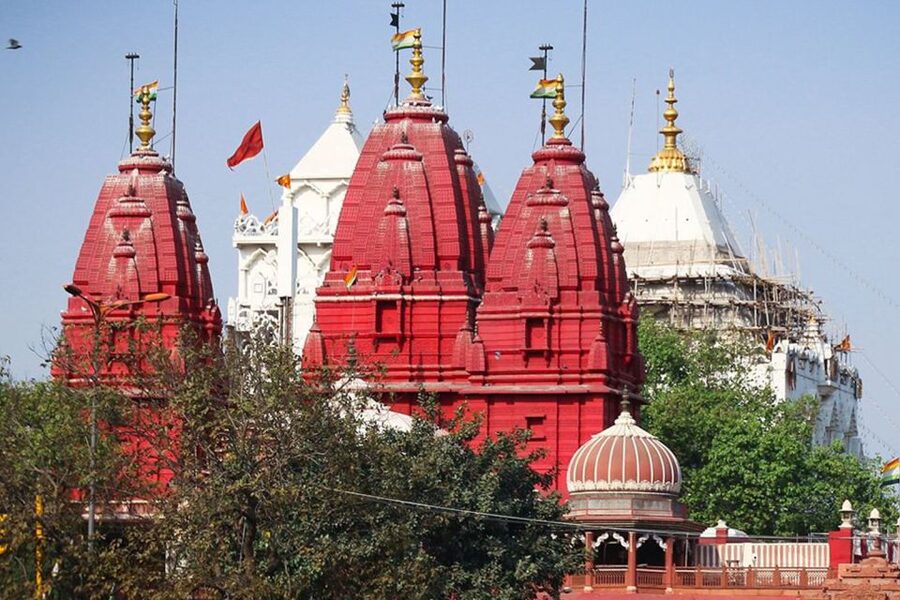
Sri Digambar Jain Lal Mandir and the Jain Birds Hospital
Your first major stop is Sri Digambar Jain Lal Mandir, often described as the oldest and best-known Jain temple in Delhi. It sits right in the historical Chandni Chowk area, and you can literally see why it is such a landmark: it is positioned where visitors naturally flow through the old city.
What makes this stop interesting is not just the temple itself, but what is next to it. Behind the main temple complex is a second building that hosts the Jain Birds Hospital, sometimes described as an avian veterinary hospital. The idea is simple, but powerful: compassion for living beings is part of the spiritual worldview. Even if you do not know Jain terms yet, the hospital focus gives you something concrete to connect to.
Practical tip: dress and behave like you are entering a sacred place. You will be dealing with crowds and close quarters, so plan on being respectful with your pace and your voice. Also, because this is your first stop, you should be ready to absorb basics quickly, before the day becomes a series of impressions.
Visit time is about 40 minutes with a guided tour, which is enough to see the main points and understand the significance of the temple and its compassion-centered side project.
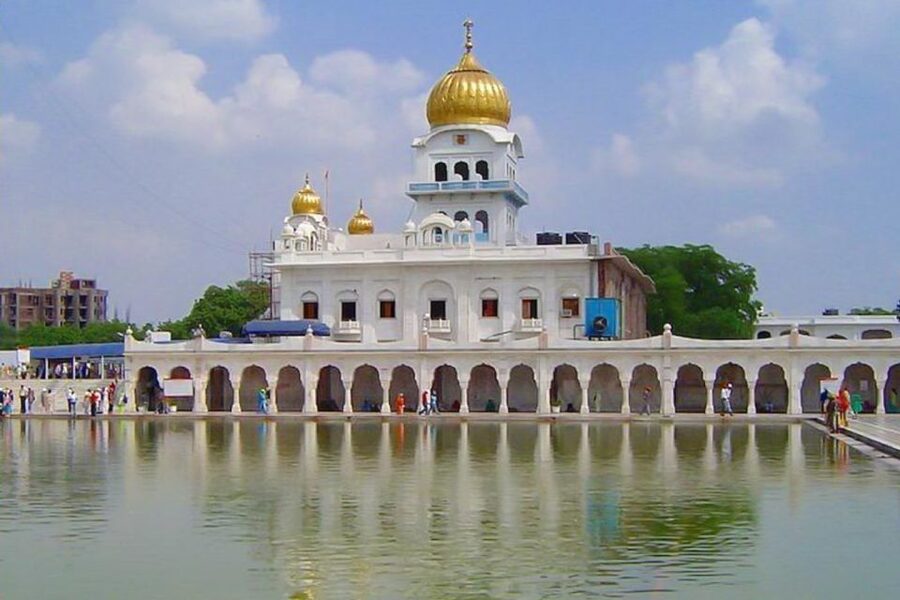
Gurudwara Bangla Sahib, the Sarovar, and Sikh service

Next up is Gurudwara Bangla Sahib, one of Delhi’s most prominent Sikh gurdwaras. This is a place that people remember, not because it is flashy, but because of the sense of shared purpose you feel there. The site is tied to Guru Har Krishan, and inside the complex you will encounter the Sarovar, the pool area people associate with devotional life.
This stop is also where you get a clearer sense of Sikh community service as part of worship. You see how food and hospitality fit into the overall picture, and it helps you understand the gurdwara as more than a building. For many visitors, this is the moment where religion stops feeling abstract and starts feeling like daily practice.
The guided time is about 1 hour, which helps. You are not rushing through. You get time to take in the pool setting, notice how people move through the space, and ask your guide what to look for while you are there.
If you are sensitive to crowds, plan for it. These big gurdwaras draw frequent visitors, and your comfort will depend on how closely you keep to the guidance of your guide.
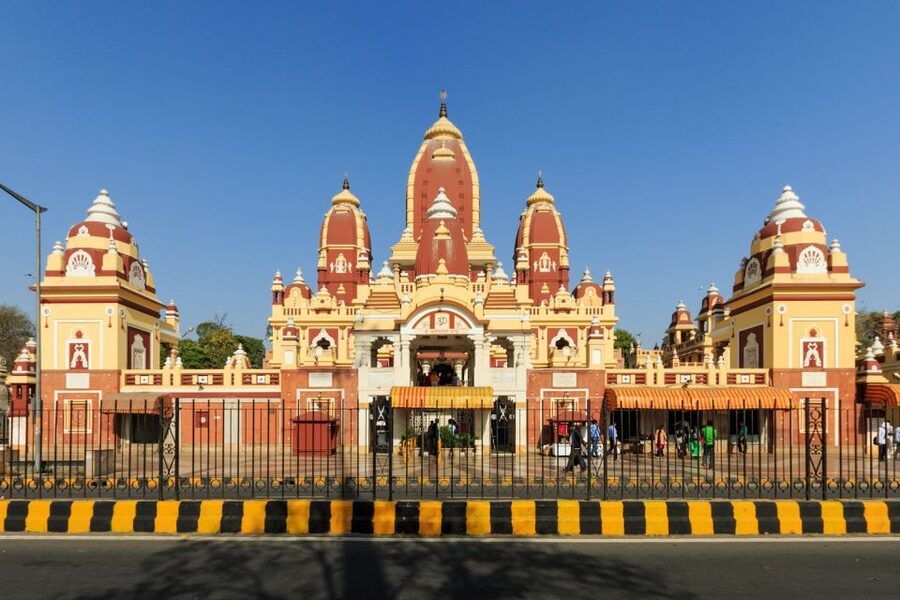
Laxmi Narayan, or why Hindu temples feel full of names
After the Sikh site, you’ll get a light snack with your guide before heading to the next temple. That small reset matters. Delhi heat and walking can drain you quickly, and a short snack keeps the day from turning into decision fatigue.
Your next stop is the Laxminarayan Temple in Delhi, also called the Birla Mandir. This is a Hindu dedication to Laxmi Narayan, where Laxminarayan typically connects with Vishnu as Narayan, along with the consort Lakshmi. The point of bringing up the names is practical: when you hear the right ones, you can connect symbols to meaning instead of treating it as “pretty stone” only.
The guided visit here is about 35 minutes. That is a decent amount of time to understand the theme of the temple and how devotees engage with it, without getting stuck in details that take longer than a half-day tour can offer.
What I’d watch for: Hindu temple etiquette can be specific. Your guide will set the expectations, but you should still keep your eyes open for guidance on where to stand, how to move, and what areas are for worship rather than sightseeing.
Sacred Heart Cathedral, Latin Rite Catholic worship in New Delhi
Then the route shifts to Roman Catholic tradition, and that change of pace is usually refreshing. You visit the Sacred Heart Cathedral, part of the Latin Rite, and noted as one of the oldest church buildings in New Delhi. If you have only seen Catholic architecture in other parts of the world, this stop helps you see how the style and setting take root locally.
The guided time is about 30 minutes. This length is right for orientation: you can grasp what you are looking at, learn the basic context your guide provides, and still have enough time to move onward without your attention fading.
Because this is a church, not a museum, keep your behavior quiet and observant. Even when there is no service happening, the space still functions as active worship. Your guide’s explanations make the difference between passing by and truly understanding.






Lotus Temple for a calmer pause

After the cathedral, the tour includes the Lotus Temple for a short guided visit of about 20 minutes. This stop is strategically placed so the day does not feel like a constant sprint from one monument to another.
The Lotus Temple is famous worldwide for its distinctive flower-like form. On this kind of route, the value is less about turning it into your main sightseeing priority and more about getting a breather between heavier religious contexts. You see a new architectural language and then you can reset your focus before the final stop.
If you care about photo angles, treat the 20 minutes like a working session. Look first, then shoot. Ask your guide the best time to stand so you do not spend your visit scrambling for the perfect spot.
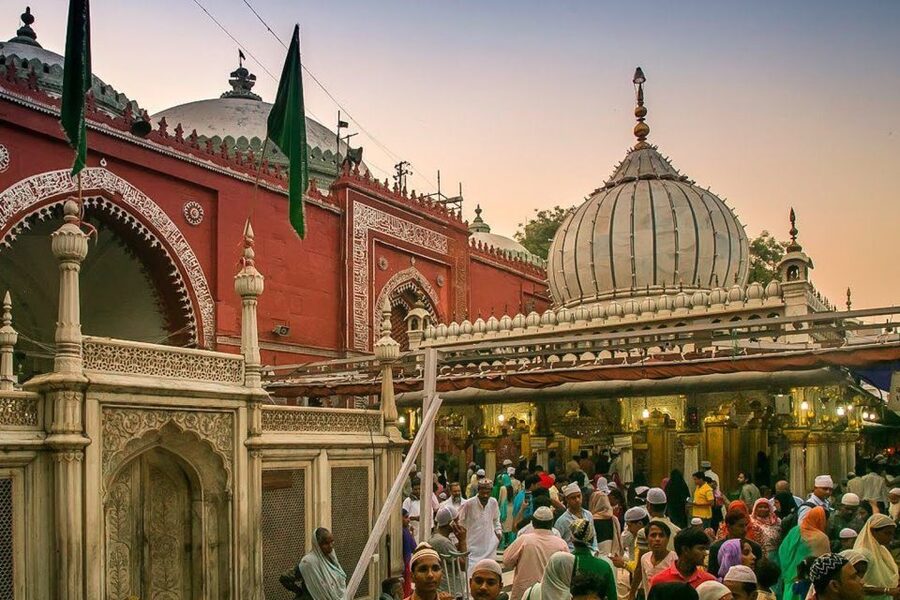
Hazrat Nizamuddin Dargah and qawwali culture
Your last religious stop is Hazrat Nizamuddin Dargah, associated with the Sufi saint Khwaja Nizamuddin Auliya. This is a high-energy spiritual site, and it draws thousands of pilgrims every week.
What makes it memorable is how faith here connects to music culture. The dargah is known for evening qawwali sessions, a kind of Islamic devotional music that people come to experience as part of living religious practice. Your tour ends in this area, so timing matters. Even if you do not catch a full session, you get a clear idea of why qawwali is such an integral part of the site’s identity.
The guided time is about 30 minutes, which is enough to orient yourself, understand the importance of the saint, and see how pilgrims use the space.
Practical advice: Sufi shrines can feel intense in a good way. Keep an easy pace, be respectful, and follow your guide’s cues. If you want a deeper feeling for the evening atmosphere, you can always stay after the tour if your schedule allows.
Getting around: pickups, A/C comfort, and real time on the clock
This is a 6-hour experience, with hotel pickup and drop-off from your lobby in one of four areas. That means the day is designed for convenience, not just sightseeing.
Travel by an air-conditioned vehicle is a big deal in Delhi. It turns the gaps between religious sites into manageable transfers. Without that, this route could feel like a punishment. With it, you get more energy for the actual walking and reading of each place.
One more point: the tour is private group. That changes how long things can take in real life, because your guide can pace you based on questions and comfort level. If your group likes to stop for photos or asks more about symbolism, private pacing is usually a win.
Also note: you get skip-the-line access through a separate entrance. That is one of those small perks that can save your mood. Waiting in a crush can drain patience faster than walking does.
Included basics that actually improve the day
The included package covers the stuff that can ruin a day if it is missing: pickup and drop-off, an English-speaking professional guide, A/C transport, light snacks, and skip-the-line entry.
Light snacks are especially useful because there is no lunch included. You may be tempted to treat the snack as the meal, but it is meant as a quick energy boost so you stay comfortable until the last temple area.
If you know you get hungry quickly, plan on buying something afterward on your own. This keeps the tour experience focused on the places, not hunting down food at the last minute.
Who this tour suits best
This works best if you want a guided route that gives you context across faiths in a single day. It is also ideal if you do not have a lot of time to research religious sites on your own before arriving.
Here is who I think will feel the most satisfied:
- First-time visitors who want a focused multi-religion loop
- Travelers who appreciate a guide explaining what symbols and spaces mean
- People who want a private setup and skip-the-line entry
If you are the type who wants long, quiet time inside just one or two places, you may find the schedule too tight. The short stop windows mean you will see a lot, not settle in deeply.
Watch-outs before you book
The biggest consideration is pacing. With multiple stops and guided segments that range from 20 to 40 minutes, you should go in expecting a structured overview rather than a slow, reflective experience at every site.
The second thing to watch is accuracy of arrangements. A multi-stop tour only works smoothly if the right route is communicated to the guide and the group. If anything feels off at pickup, speak up right away so the day stays on track.
Price and value for a 6-hour, guided religious loop
At about $15 per person for a 6-hour private guided tour, the value comes from what is included, not just the sightseeing.
You are paying for:
- A professional guide in multiple languages
- Hotel pickup and drop-off from key Delhi regions
- A/C transportation
- Light snacks
- Skip-the-line entry
In Delhi, that combination can save you time and friction. Even if you already plan to visit some of these sites on your own, the guided explanations are what turn the day from sightseeing into understanding. And the vehicle and skip-the-line access protect your energy, which is often the real currency in a crowded city.
Should you book Divine Delhi?
I’d book it if you want a simple way to connect Delhi’s major religious worlds in one day, with a guide to explain what matters at each stop. The route is logical, the pacing is manageable for most people, and the included transport plus skip-the-line entry make it feel efficient.
I would skip or reconsider if you know you want lots of quiet time inside sacred spaces, or you prefer a slower day focused on one neighborhood. In that case, you might get more satisfaction building your own itinerary around fewer stops.
If you want a guided “map of faiths” that you can understand quickly, this tour is a strong bet.
FAQ
How long is the Divine Delhi tour?
It runs for 6 hours total. You can check availability to see the starting times.
Where does the pickup happen?
Pickup is included from the lobby of your hotel in Noida, Delhi, Gurugram, or New Delhi.
What religious and cultural sites are visited?
The tour includes Sri Digambar Jain Lal Mandir, Gurudwara Bangla Sahib, Laxmi Narayan Temple (Birla Mandir), Sacred Heart Cathedral, Lotus Temple, and Hazrat Nizamuddin Dargah.
Is lunch included?
No. Lunch is not included, though light snacks are provided during the tour.
Is transportation provided?
Yes. You travel by an air-conditioned vehicle included in the tour.
Do you have to wait in long lines?
You get skip-the-line access through a separate entrance for the stops that use it.
What languages is the live guide available in?
The guide is available in English, Spanish, German, Italian, and French.
Is there wheelchair access?
Yes, the tour is wheelchair accessible.
More Historical Tours in New Delhi


More Tours in New Delhi



More Tour Reviews in New Delhi
Not for you? Here's more nearby things to do in New Delhi we have reviewed










More Delhi City Tours to consider.
 ★ 5.0Old & New Delhi City Tour – Half or Full Day Options AvailableTickets from $384,811 traveller reviews
 ★ 5.0Same Day Taj Mahal, Agra Fort & Baby Taj Tour from Delhi by CarTickets from $624,304 traveller reviews
 ★ 5.0Taj Mahal Day Tour from Delhi by Superfast Train – TOP RATED TOURTickets from $1004,166 traveller reviews
 ★ 4.9Old and New Delhi Private Full or Half-Day TourTickets from $23,776 traveller reviews
 ★ 5.0Full Day Taj Mahal, Agra Fort & Baby Taj Tour from Delhi by CarTickets from $623,647 traveller reviews
 ★ 4.9From Delhi: Taj Mahal & Agra Private Day Trip with TransfersTickets from $43,181 traveller reviews
 ★ 5.0Taj Mahal Tour from Delhi by Express Train (Viator Award Winner)Tickets from $752,849 traveller reviews
 ★ 5.0All Inclusive Private Taj Mahal Luxury Tour from Delhi by CarTickets from $622,564 traveller reviews
More useful Delhi routes