
Review · DELHI CITY TOURS
Golden Triangle 3 days Tour to Delhi Agra and Jaipur
If you want the classic India route, this one is tight and well-run. You get a private Golden Triangle loop from Delhi to Agra to Jaipur, with guided monument time and included sights along the way.
I like the way the plan blends icons with everyday Delhi, especially Old Delhi stops like Jama Masjid and Chandni Chowk. I also like that your package covers the big ticket entries, plus 5-star hotels for 2 nights and comfortable transfers in an air-conditioned car.
The main trade-off is the pace. Day 1 stacks many Old and New Delhi sights into one long run before the 3-hour drive to Agra, so you’ll want to be flexible if you hate tight schedules or crowds.
Key highlights to look for
- Old Delhi plus spices, with stops like Khari Baoli and a rickshaw ride through the area
- Taj Mahal at sunrise, with entry included for an early start
- UNESCO sites included, like Qutub Minar, Taj Mahal, Agra Fort, Jantar Mantar
- Jaipur royal landmarks, including City Palace and Hawa Mahal
- One dinner with a local family in Jaipur, for a real-culture moment beyond monuments
The Golden Triangle in 3 days, without the chaos
The Golden Triangle idea is simple: three cities, three big historical themes, one efficient loop. In 3 days, that means you’ll move fast, but you won’t be doing the hard work of logistics. Your driver handles transfers by comfortable private air-conditioned car, and your private tour leader keeps the day moving from stop to stop.
This style of trip fits you best if you’re visiting India for the first time or you only have a short window. You still get the big names: Jama Masjid, Taj Mahal, Qutub Minar, Agra Fort, City Palace, and more. But you also get the in-between stuff, like Old Delhi markets and a spice stop that’s made for your senses, not just your camera roll.
If you’re the type who likes to linger for an hour in one place, you may find the schedule brisk. Still, the value here is that you’re buying time and stress reduction, not just sightseeing.
More New Delhi tours and experiences for the shortlist



Day 1 in Delhi: Old Delhi sights, then New Delhi icons
Day 1 is built like a two-part day. First you step into Old Delhi’s layers, then you shift to New Delhi’s colonial-era planning and major monuments. The reward is contrast, but the caution is endurance, because the driving day stretches across many stops.
Jama Masjid and the Red Fort-era feel of Old Delhi
Your first major anchor in Old Delhi is Jama Masjid, India’s largest mosque. You get a focused window inside the red sandstone courtyard, with the key context that it was constructed in 1656 with 5,000 workers. The entry ticket is included, so you’re not scrambling for paperwork or timing once you arrive.
Why it matters for your trip: Jama Masjid gives you a sense of how monumental architecture shaped daily life in Shahjahanabad, the historic core founded in 1639. It also sets the tone for the day, because after this, Old Delhi is all about narrow lanes, market energy, and cultural rhythms.
Chandni Chowk: markets and masala chai breaks
From the mosque area, you move into Chandni Chowk, one of the best-known bazaars in Delhi. Your guide explains how these markets matter to locals, not just how they look in photos. You also get a sip of masala chai, which is a small thing that usually helps you reset, especially on a packed day.
The practical upside: this stop is built for watching and tasting without needing to plan. The possible drawback: bazaars can get crowded and loud, so if you need quiet time, keep your expectations realistic.
Gurudwara Sis Ganj Sahib: faith and service you can see
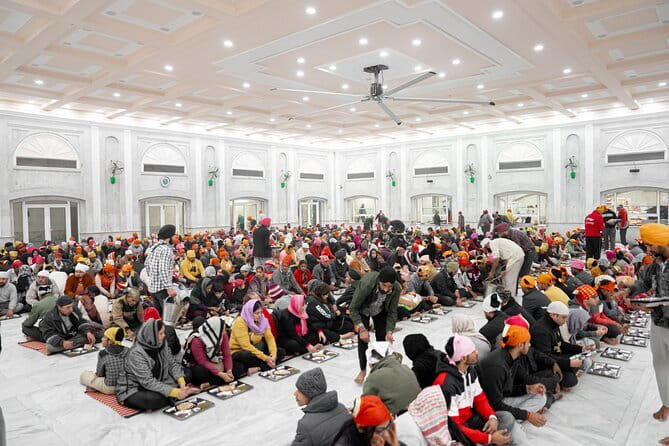
Next comes Gurudwara Sis Ganj Sahib, where you’ll learn about Sikh traditions and values with your guide. The highlights mentioned include principles of equality, selfless service, and community welfare. The entry is included.
This is a nice pivot in the day because it adds a different cultural lens, not just the usual Mughal-and-empire storyline. In practical terms, it also breaks up the “hot and moving” pattern of Old Delhi markets.






Khari Baoli spice market and a rickshaw ride
Then you head to Khari Baoli, described as Asia’s largest spice market. You’ll ride by rickshaw as you pass the spice stalls and take in aromas like cumin, cardamom, and chili. Admission here is free, and the stop is timed so you can experience it without turning it into a half-day shopping trip.
What to expect: this is sensory travel, not museum travel. If you’re sensitive to strong smells, plan accordingly. If you love food culture, this stop is one of the best reasons to do an organized route.
New Delhi, India Gate, Gandhi Smriti, and Qutub Minar
After Old Delhi, the schedule shifts to New Delhi. You’ll pass major planned architecture associated with Lutyens and Baker, including a mention of a 330-acre planned zone from 1929. It’s a good reminder that New Delhi was designed with deliberate imperial layout, not random growth.
Then you hit India Gate, the war memorial built in 1931, designed by Sir Edwin Lutyens. After that, Gandhi Smriti marks the place where Mahatma Gandhi spent his last 144 days and where he was assassinated. Entry is free for these stops in the plan.
Finally, Qutub Minar is a UNESCO World Heritage site, with entry included. The plan notes it’s 73 meters and built in 1193 by Qutb-ud-din Aibak, with Indo-Islamic and Afghan style influences. It’s a strong close to Day 1 because it ties Delhi architecture into a longer timeline.
The drive to Agra, and why timing matters
At the end of Day 1, you drive to Agra after Delhi sightseeing. The time given is 3 hours. This matters because you’re switching from walking-heavy Old Delhi to car time, and your energy will follow your schedule. If you want the Taj Mahal sunrise on Day 2, you’ll be glad the itinerary doesn’t add a bunch of extra stops late at night.
Day 2: Taj Mahal sunrise and Agra Fort
Day 2 is where the trip earns its name. You start early for the sunrise Taj Mahal view, then you add Agra Fort, another UNESCO World Heritage site.
Sunrise Taj Mahal: the payoff stop
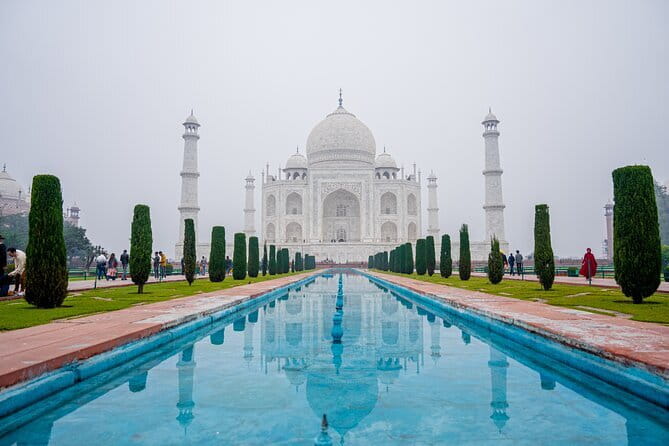
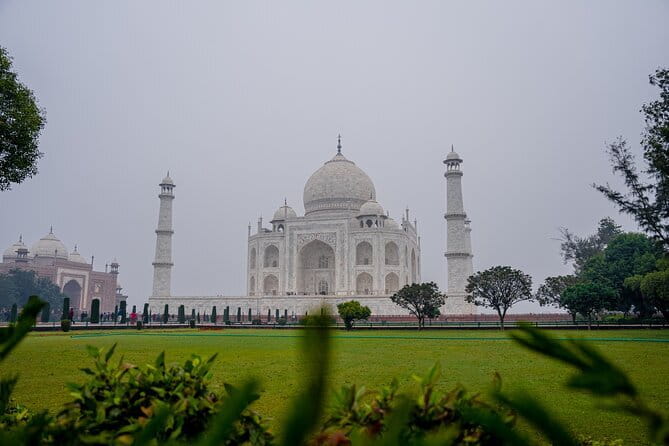
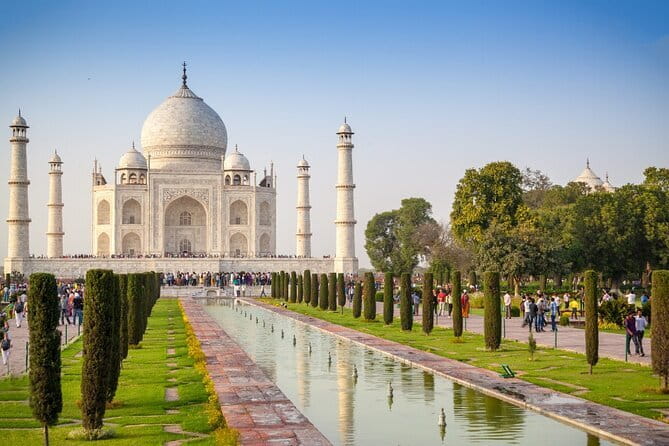
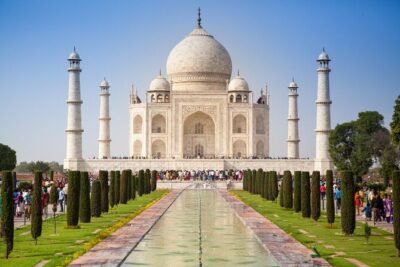
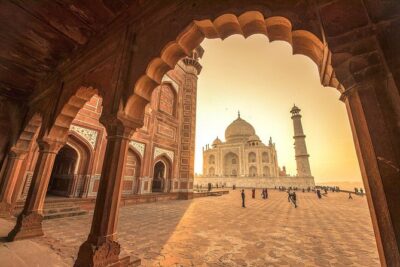
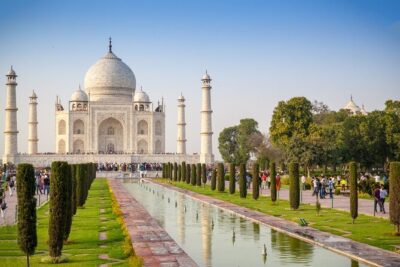
The Taj Mahal stop is built around sunrise. Entry is included, and the plan frames it as a marble mausoleum built by Mughal Emperor Shah Jahan in 1632 for Mumtaz Mahal.
Why sunrise is worth the effort: early light softens the marble and usually makes the experience feel less hectic. Also, if you only do the Taj at midday, you miss the emotional mood shift that comes with early hours. Here, the tour aims for that specific magic window.
Timing note: Taj Mahal is listed for 2 hours. That’s enough time to see it properly, plus get your bearings before you get rushed by other groups.
Agra Fort: the fortress that explains the city
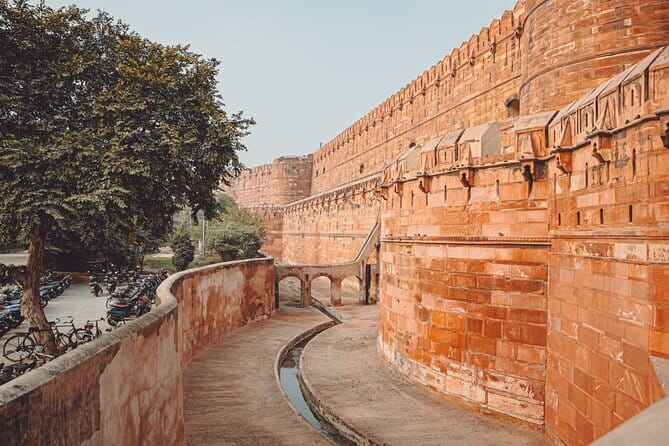
Next is Agra Fort, guided with entry included. The plan calls out its 16th-century origins under Emperor Akbar, and its red sandstone fortress look blending Islamic and Hindu architectural styles. Your visit is shorter, about 45 minutes, but it’s positioned as a “nearby” follow-up right after the Taj.
This stop helps you understand the city beyond the famous monument. If Taj Mahal is the love story, Agra Fort is the power and defense story that made such monuments possible.
Jaipur transfer: a long but useful reset
After Agra Fort, you drive to Jaipur. Lunch happens on the way, and the drive time listed is 4 hours. Then you arrive in Jaipur for City Palace.
A practical point: this is a travel day within the day. You’ll likely feel it, so having lunch included and a clear arrival plan helps.
Jaipur Day 3: palaces, astronomy, and a fort view
Day 3 is packed with architectural landmarks across Jaipur, then you finish with a return to Delhi or an option to drop at Jaipur airport. The overall feel is that you get royal Rajasthan in big visual blocks.
Hawa Mahal: the iconic façade and its purpose
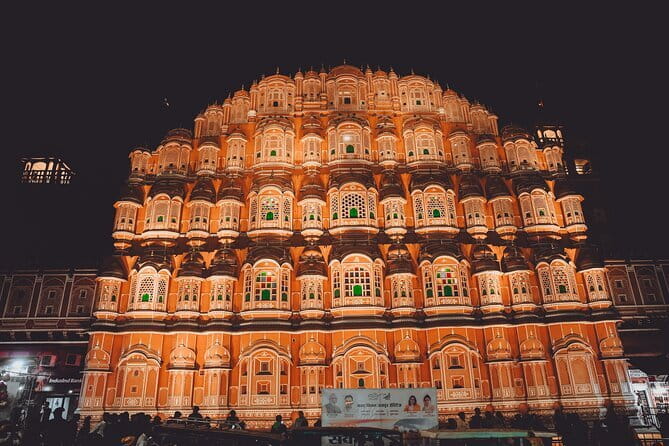
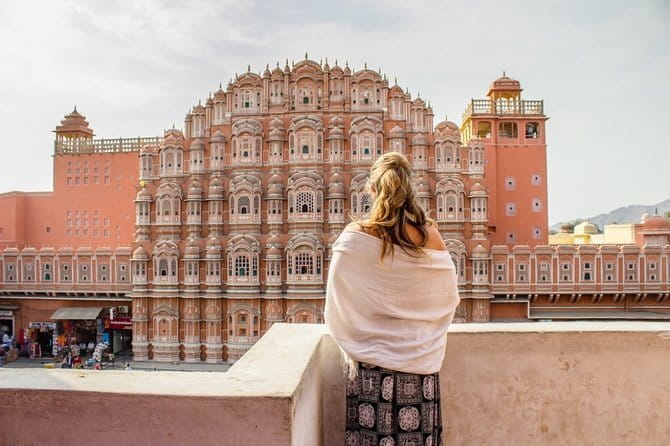
Hawa Mahal, also called Palace of Wind, is first. The tour notes it was built in 1799 by Maharaja Sawai Pratap Singh and includes a five-story façade with 953 latticed windows. The idea was for royal ladies to observe street scenes while staying behind the screens.
The quick lesson here is how architecture can carry social rules and daily life in one structure. The visit time listed is 20 minutes, so it’s meant as a photo-and-overview stop, not a deep dig.
Jantar Mantar: UNESCO astronomy in stone
Next is Jantar Mantar, UNESCO World Heritage site built in 1734. The plan describes nineteen astronomical instruments built by Sawai Jai Singh II, and it links the instruments to observation of astronomy.
If you like “how did they figure this out,” this stop is a great change of pace after palace exteriors. It also makes Jaipur more than just royal branding, because it shows scientific ambition in stone.
Jal Mahal: a calm pause by Man Sagar Lake
Then you see Jal Mahal, the palace in Man Sagar Lake, half-submerged so it looks like it floats. Your stop is only 15 minutes, which suggests this is mainly for a quick scenic break and photos rather than a long hang.
Use this time to rest your feet and reset your eyes. The later fort stop involves more walking and more viewpoints.
Jaigarh Fort: fortress views and Sheesh Mahal
Finally you visit Jaigarh Fort, with entry included. The plan notes its hilltop setting near Jaipur, plus Rajput and Mughal architectural blend. It also highlights the Sheesh Mahal, described as mirror-studded, and mentions expansive courtyards.
This stop tends to work well at the end of a sightseeing run because forts reward you with views and structure. It’s about the bigger shape of the city and the defensive logic behind the placement. Your visit is 40 minutes, which is a reasonable amount of time for a place like this.
Back to Delhi, with a timing buffer
After Jaipur sightseeing, the plan says you start your journey back to Delhi. The drive time listed is 5 hours, and there’s an option to choose drop-off at Jaipur airport if you wish. This is helpful if you’re building your own onward travel.
What the package includes, and what that means for your wallet and your energy
The price for this 3-day Golden Triangle tour is $710, with a package that includes a lot of what usually costs time to coordinate. You get 5-star hotels for 2 nights, private air-conditioned car and driver, and a private expert tour leader.
You also get special experiential lunches and dinners, including two lunches and two dinners listed in the inclusions. One dinner is with a local family in Jaipur, which is the kind of experience that can make the trip feel more personal than just monument-to-monument.
Most monument tickets are included too: Friday Mosque entry (Jama Masjid), Qutub Minar, Taj Mahal, Agra Fort, City Palace of Jaipur, Jantar Mantar, and Jaigarh Fort. That matters because it cuts out the “stand in line, figure out the rules” part on busy days.
Value check: At $710, you’re paying for convenience plus a tight routing. If you like organized pacing and you don’t want to shop for tickets and guides city by city, this can feel like good value. If you’re the DIY type who wants maximum free time to wander alone, you might prefer to piece the trip together yourself.
Who this tour fits best, and who should think twice
This is a strong match if you:
- Want a private Golden Triangle with a driver and guide handling logistics
- Care about major sights plus cultural variety in Old Delhi and Jaipur
- Like the idea of a local-family dinner in Jaipur
- Prefer not to manage entry tickets across multiple UNESCO sites
Think twice if you:
- Hate tight daily schedules, since Day 1 has many stops plus a drive to Agra
- Want lots of unscheduled downtime, since many sights have set time windows
- Prefer very slow travel where you can linger at each viewpoint without pressure
My practical take: how to get the most from the route
You’ll get the best experience if you treat this as a curated circuit, not a choose-your-own-adventure. That means you should:
- Keep your energy for mornings, especially with the sunrise Taj Mahal plan
- Wear comfortable shoes, because several stops are walking-heavy even when entry time is short
- Use included meal moments as reset points, since the sightseeing windows are focused
Also, if safety and ease are your top priorities, the tour’s private setup and guide support are clearly a core selling point. In the feedback, a guide named Ravi is praised for creating a feeling of security for first-time visitors, plus handling navigation smoothly. That’s exactly what you want on a short trip when you don’t have time to learn the system the hard way.
Should you book the Golden Triangle 3-day tour?
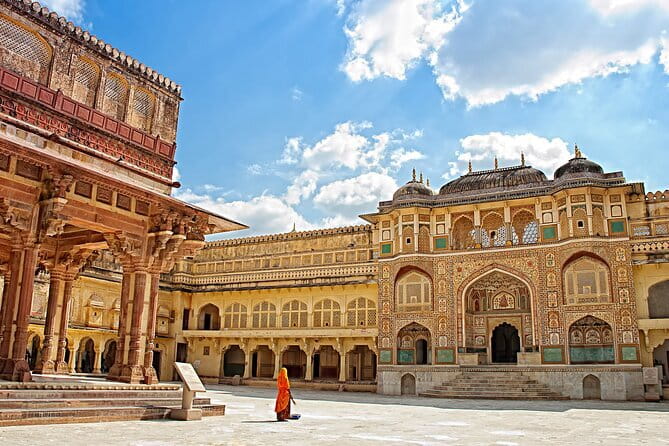
Yes, if you want a smooth first-timer Golden Triangle that balances Delhi street life, Taj Mahal at the right light, and Jaipur architecture. The combination of private transfers, included monument entries, 5-star hotels for 2 nights, and the local-family dinner makes it feel like a complete package rather than a ticket-only add-on.
I’d pass or rethink it if you’re allergic to a packed itinerary. This trip does not leave much breathing room on Day 1, and Day 3 has a long return drive afterward. If you like flexibility and late starts, you’ll likely be happier with a slower plan.
If you can handle a structured rhythm, this is one of the most practical ways to see Delhi, Agra, and Jaipur in just 3 days, without turning your trip into an admin project.
FAQ
What is the duration of the Golden Triangle tour?
The tour lasts about 3 days.
What cities does this Golden Triangle route include?
It covers New Delhi, Agra, and Jaipur.
Is pickup and drop-off included?
Yes. Pick-up and drop are offered from the airport, railway station, hotel, or anywhere you need.
Are hotels included, and what quality level?
Yes. The tour includes 5-star hotels for 2 nights.
What’s included for meals?
The package includes breakfast (2), lunch (2), and dinner (2). It also includes special experiential lunches and dinners, including a dinner with a local family in Jaipur.
Are monument tickets included?
Yes, the tour includes tickets for Jama Masjid (Friday Mosque), Qutub Minar, Taj Mahal, Agra Fort, City Palace of Jaipur, Jantar Mantar of Jaipur, and Jaigarh Fort, as mentioned in the inclusions.
Do you need to specify dietary needs?
Yes. The tour asks you to specify dietary requirements such as vegetarian, vegan, pescatarian, gluten-free, or lactose intolerant at the time of booking.
Is this a private tour?
Yes. It is a private tour, and only your group participates.
What is the cancellation window for a full refund?
You can cancel up to 3 days in advance for a full refund. If you cancel less than 3 full days before the start time, the amount paid will not be refunded.
More 3-Day Experiences in New Delhi


More Tours in New Delhi

More Tour Reviews in New Delhi

Not for you? Here's more nearby things to do in New Delhi we have reviewed









More Delhi City Tours to consider.
 ★ 5.0Old & New Delhi City Tour – Half or Full Day Options AvailableTickets from $384,811 traveller reviews
 ★ 5.0Same Day Taj Mahal, Agra Fort & Baby Taj Tour from Delhi by CarTickets from $624,304 traveller reviews
 ★ 5.0Taj Mahal Day Tour from Delhi by Superfast Train – TOP RATED TOURTickets from $1004,166 traveller reviews
 ★ 4.9Old and New Delhi Private Full or Half-Day TourTickets from $23,776 traveller reviews
 ★ 5.0Full Day Taj Mahal, Agra Fort & Baby Taj Tour from Delhi by CarTickets from $623,647 traveller reviews
 ★ 4.9From Delhi: Taj Mahal & Agra Private Day Trip with TransfersTickets from $43,181 traveller reviews
 ★ 5.0Taj Mahal Tour from Delhi by Express Train (Viator Award Winner)Tickets from $752,849 traveller reviews
 ★ 5.0All Inclusive Private Taj Mahal Luxury Tour from Delhi by CarTickets from $622,564 traveller reviews
More useful Delhi routes