
Review · DELHI CITY TOURS
Golden Triangle Tour: 3 Days, 3 Iconic Cities–Delhi,Agra & Jaipur
Three days, three cities, no wasted hours. This Golden Triangle route is built around big-ticket sights, with Taj Mahal sunrise plus Delhi’s Old City highlights and Jaipur’s royal forts in a smooth, guided flow. You get the context you’d miss on your own, and you also get plenty of time at the key photo stops.
I especially like the mix of private air-conditioned transport and included monument tickets. It means you spend less time negotiating, waiting, or guessing, and more time actually looking closely at what you came to see.
One consideration: the schedule is full, and you’ll start early on Agra day. Also, lunch and dinner are not included, so plan on budgeting for meals between stops.
Key highlights you should care about
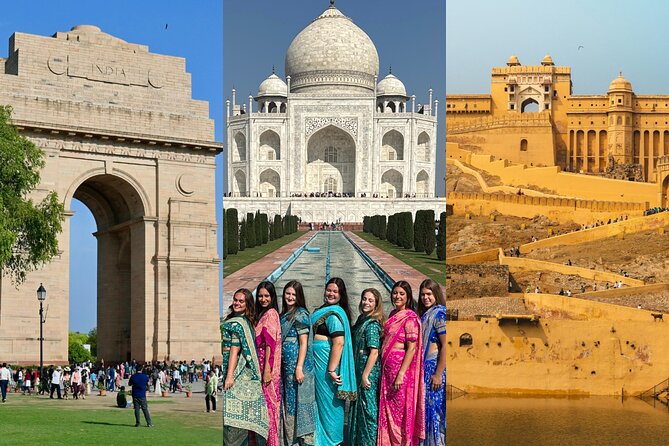
- Taj Mahal at sunrise with the long-awaited view, not just a daytime visit
- Private, air-conditioned vehicle between Delhi, Agra, and Jaipur
- Professional guides in each city who can explain what you’re seeing, not just read signs
- Old Delhi spice market rickshaw ride for a fast, fun sense of the neighborhood
- Amber Fort plus City Palace and Jantar Mantar so you get both forts and ideas (architecture and astronomy)
- 4 to 5-star hotels for 2 nights with daily breakfast and complementary water
Price and what you actually get for $226.68 per person
At $226.68 per person for a 3-day Delhi, Agra, Jaipur tour, the real question is value: what’s included and what isn’t.
Here’s what you do get: 2 nights in 4 or 5-star hotels, daily breakfast, a private air-conditioned vehicle, and professional guides for Delhi, Agra, and Jaipur. On top of that, the tour includes tickets to monuments and complementary water. You also get a mobile ticket, which usually makes check-in days less chaotic.
What you don’t get: lunch and dinner, plus personal expenses and tips. That matters because food costs are part of your daily reality in India, especially when you’re moving city to city. So think of this price as the foundation for sights, transport, and lodging, then budget extra meals accordingly.
If you’re visiting for the first time and you want the “big three” handled without stress, this kind of package pricing often works well. If you’re a strict DIY traveler who loves long, independent wandering with zero structure, you might prefer a less guided setup.
More New Delhi tours and experiences for the shortlist



Getting the most out of a 3-day Delhi, Agra, Jaipur route
A Golden Triangle tour lives or dies by pacing. In this version, the flow makes sense: Delhi first, then Agra with the sunrise focus, then Jaipur for forts, palaces, and an unusual mix of royal and scientific sights.
Because you’re doing sunrise at the Taj Mahal, your day starts early. That’s a tradeoff, but it’s the right one for this route. Also, between cities you’ll be on the road, so the private car helps a lot. You’re not bouncing between different transport options, and you’re not stuck waiting around while someone else sorts out tickets.
This is also set up as a private tour/activity, meaning it’s only your group. That matters more than people expect. It tends to reduce the awkwardness of being rushed by a crowd and makes it easier for the guide to tailor the timing if your group has questions.
Day 1 in Delhi: Old Delhi rickshaws, Qutub Minar, Humayun’s Tomb, and Gandhi at Raj Ghat
Delhi on day one is a lesson in contrasts, with Mughal-era monuments, monumental Islamic architecture, and the modern symbolism of the city’s capital status. The best part of doing this with a guide is that you don’t just see structures, you understand what you’re looking at, like the design thinking behind the buildings.
Jama Masjid, then Old Delhi by rickshaw through the spice market
Your Delhi morning includes a major stop at Jama Masjid, one of the largest mosques built by Mughal Emperor Shah Jahan in the 17th century. The huge courtyard is the star, and it’s easy to see why it could hold thousands.
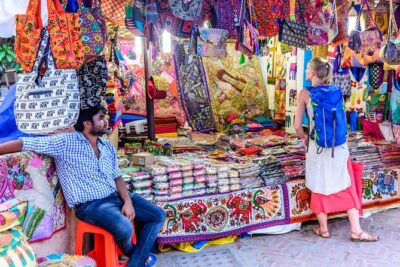
After that, you get an Old Delhi rickshaw ride focused on the spice market. It’s not just scenery. The smells, the colors, and the tight lanes give you a fast sense of how daily life feels in this area. It’s also a practical change of pace from monument walking.
Dress and comfort note: plan for lots of walking and keep your shoulders and knees in mind for mosque-area stops. Comfortable shoes help because the ground can be uneven in older neighborhoods.
Humayun’s Tomb and the Mughal architecture connection
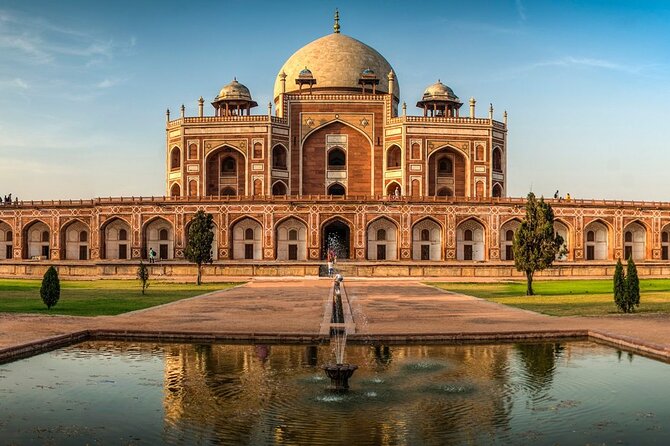
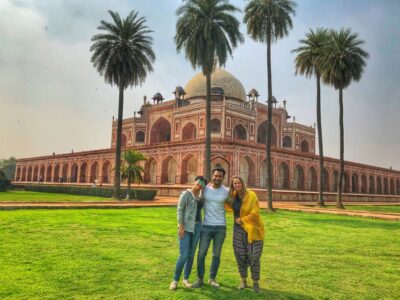
Next is Humayun’s Tomb, a garden tomb built in 1570. This is a key stop because it’s a precursor to the architectural style that later shows up in the Taj Mahal era. Even if you’re not an architecture nerd, you’ll notice the layout and the idea of symmetry and garden space.
If you like photography, this is one of those spots where angles matter. A guide who knows where the best views are can save time and help you avoid awkward crowds near the most popular photo lines.





Rajpath memorials, President’s residence drive-by, and Qutub Minar
You’ll also see a war memorial for Indian soldiers who died in World War I, and you’ll drive past the official residence of the President of India at the western end of Rajpath. You’re not getting a long tour inside those, but the drive-by gives you scale and context: Delhi’s monumental planning is part of the story.
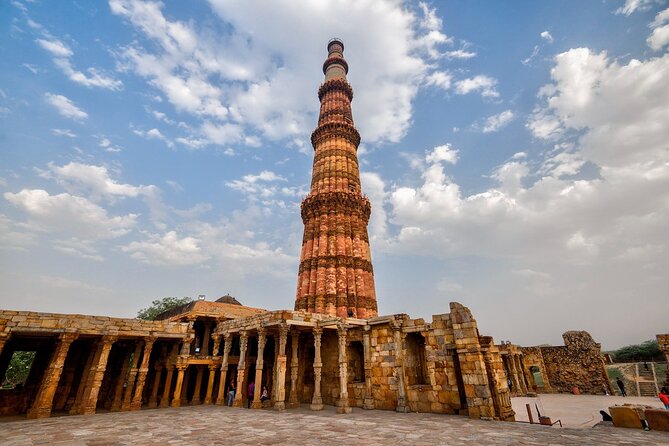
Then comes Qutub Minar, a UNESCO site and a 73-meter-high tower built in the early 13th century. This is one of those landmarks that makes you pause. It’s tall in a way that photographs don’t fully communicate, and the architecture gives you a sense of early Indo-Islamic design.
Raj Ghat, the calm counterpoint
To finish the day, you visit Raj Ghat, the memorial dedicated to Mahatma Gandhi. After the intensity of major historic sites and busy lanes, Raj Ghat gives you a quieter, reflective stop.
Day one ends with your drive to Agra and hotel check-in. You’re in an overnight setup, so you’ll sleep for the early Taj Mahal push.
Day 2 to Agra: Taj Mahal sunrise, Agra Fort, artisan stop, and Fatehpur Sikri on the way
Day two is the payoff day, but it’s also the busiest. The centerpiece is the sunrise visit to the Taj Mahal, then you move into Agra Fort, and later you fit in Fatehpur Sikri before reaching Jaipur.
Taj Mahal at sunrise: the view and the value of doing it early
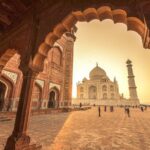
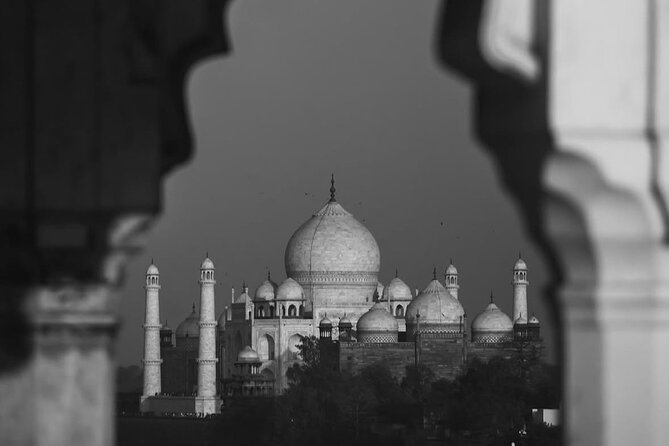
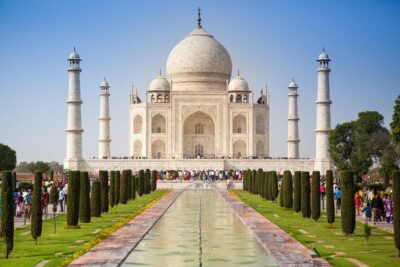
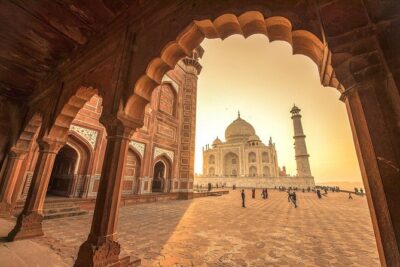
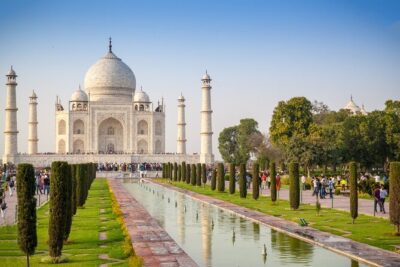
You start with sunrise at the Taj Mahal, with about three hours allocated. This matters. The Taj Mahal has a reputation for being photogenic, but sunrise changes the feel: lighter tones, softer contrast, and that slow build of attention as the sky shifts.
You also get monument tickets included, so there’s less friction when you arrive. Your guide’s job here is to help you get oriented, understand what you’re seeing, and make sure you don’t waste the precious early time wandering without a plan.
Breakfast, then Agra Fort
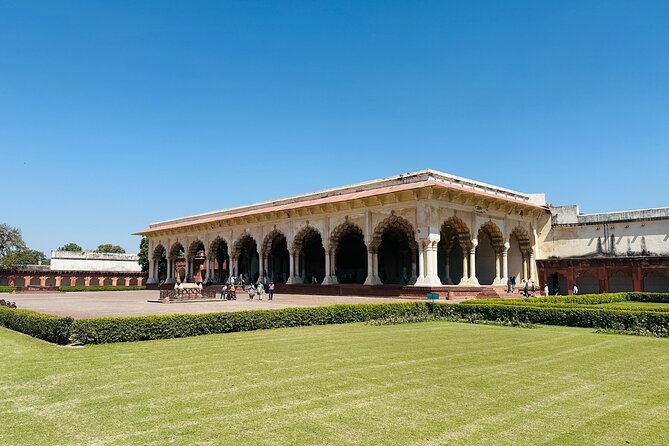
After sunrise, you return to the hotel for breakfast and check out. Then you visit Agra Fort, a UNESCO site and an important Mughal architectural wonder, with about an hour.
Agra Fort works well because it shows the military and administrative side of Mughal power, while the Taj Mahal is about devotion and display. Together, they give a fuller picture of the city’s role.
Arts & Life artisan workshop time
There’s also a stop labeled Arts & Life, with time set aside to visit local artisans, including work like marble inlay and tapestry-style crafts. This is one of the moments where you can learn how traditional making works, but it’s also the part where you should manage expectations. You’re not going to “shop your way through” the whole craft world.
If you’re curious, ask questions and watch the process. If you’re trying to keep your budget controlled, just treat it like a guided look, then decide later if you want to buy.
Fatehpur Sikri on the way to Jaipur
In the afternoon, you stop at Fatehpur Sikri, an abandoned city and UNESCO World Heritage Site. You get about an hour here before continuing to Jaipur.
Fatehpur Sikri is a strong addition because it breaks up the drive and gives you an extra layer of Mughal-era storytelling. You’ll feel like the tour isn’t only built around the famous names, but also the places that explain how empires spread and shifted.
The evening finishes with arrival in Jaipur and an overnight hotel.
Day 3 in Jaipur: Amber Fort mirror work, City Palace artifacts, Hawa Mahal windows, and Jantar Mantar
Jaipur day is all about royal design, then it turns a little left with an astronomy site. That mix is what makes this day fun: fort walls and palace courtyards, then stone instruments you can actually understand.
Amber Fort: big views plus details like mirror work
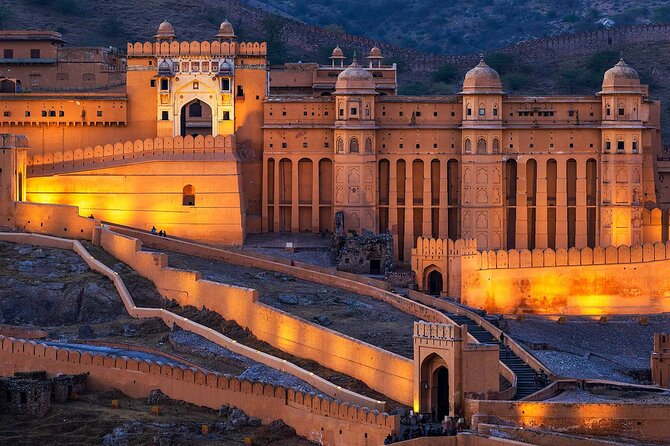
You begin with breakfast, then head to Amber Fort, set on a hilltop and known for artistic Hindu and Rajput architecture. You get around two hours, so it’s not a rushed “look once” stop.
What you should look for: intricate carvings, mirror work, and courtyards. These details matter because Amber Fort isn’t only impressive from a distance. Up close, it’s decorative and carefully made.
Also, because it’s a fort, expect uneven surfaces and more steps. If your group likes photos, this is the day to plan for them.
City Palace and the museum spaces
Next is City Palace of Jaipur, with about two hours. This royal residence blends Mughal and Rajput architecture and includes courtyards, gardens, and a museum showing royal artifacts.
City Palace is valuable because it helps you understand how royal life adapted local design styles. It’s not only stones, it’s a collection of objects and spaces that show taste and power in everyday form.
Hawa Mahal with its 953 windows
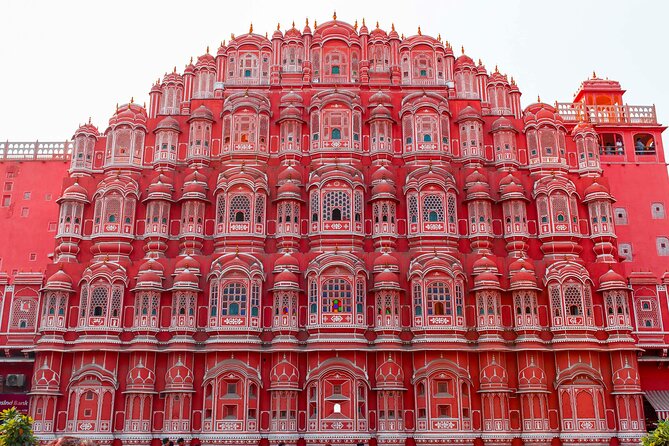
Then you see Hawa Mahal, the Palace of Wind. It’s known for its iconic pink sandstone look and its 953 small windows, designed so royal women could observe street life without being seen. You get about 30 minutes here, so it’s a quick stop, but it’s a memorable one.
Practical tip: keep your eyes up and look at how the façade is structured. Even if you can’t spend long inside, the exterior alone gives you the point.
The water palace on Man Sagar Lake
You also stop at a serene water palace on Man Sagar Lake. The description emphasizes the scenic view and the blend of Rajput and Mughal styles. This is a nice break after fort and city-palace intensity, and it gives you a calmer photo moment.
Jantar Mantar: an 18th-century observatory that still feels logical
Finally, you visit Jantar Mantar, an 18th-century astronomical observatory with stone instruments used to measure time, predict eclipses, and track stars. You get about an hour.
This is one of those stops people sometimes skip because it doesn’t sound as famous. But if you take it as a “how do humans measure the sky” experience, it becomes more rewarding. The stone shapes are big and readable when you’re not trying to figure them out alone.
You wrap up Jaipur, then drive back to Delhi, with a drop-off at your desired location.
Guides, comfort, and the photo-friendly flow that makes it feel easy
What really elevates a tight Golden Triangle itinerary is how the guide handles moments where you’d otherwise feel lost. In this tour, you have professional local guides in Delhi, Agra, and Jaipur.
Two guide names come up from the experience you can learn from: Huzi and Saad. What stands out from their feedback is not just facts, but how they explain architecture clearly and patiently. One comment also highlights how the guide helps with photos during the day, which is honestly a big deal. In India, with crowds and shifting light, getting good shots is often about timing and angles more than it is about the camera.
Comfort matters too. You’re in a clean, comfortable, air-conditioned private car, and you also have complementary water. When you’re doing sunrise and long days, these small things prevent the tour from feeling like a checklist.
And yes, you’re visiting well-known icons. But with a guide, you’re not only hunting for the famous postcard. You’re learning how the monuments connect across time.
What to budget for each day: meals, souvenirs, and a realistic tip plan
The tour includes breakfast daily and complementary water, plus monument tickets. That covers a lot of essentials. But lunch and dinner are not included, and there are also personal expenses and tips to consider.
So I suggest planning for:
- Lunch and dinner on both the Agra and Jaipur driving days
- Snacks or drinks between stops if your guide stops for a quick transfer and you want something in hand
- Any souvenirs at artisan stops, if you decide you want something specific (marble inlay, crafts, and other locally made items)
Keep in mind, the arts and artisan time in the middle of the schedule can become a shopping moment if you’re interested. If not, just use it as an opportunity to watch and ask questions, then continue.
Who this Golden Triangle Tour fits best
This tour is a strong match if you:
- Want a first-time-friendly Delhi, Agra, Jaipur route in just three days
- Prefer having guides handle explanations and timing
- Like the idea of Taj Mahal sunrise rather than a standard daytime visit
- Appreciate private transport so your day moves as one plan
It might be less ideal if you’re the type who wants to spend long, unstructured days in one city without early starts. But if you’re okay with a full schedule and you want to see the highlights, this is built for exactly that.
Should you book this 3-day Golden Triangle Tour with QT India Tours?
I think this is worth considering if your priorities are clear: iconic sights, comfort, included tickets, and guides who can help you understand what you’re seeing. The value is strongest when you’d otherwise pay separately for transport, guides, and entrance fees.
The main reason I’d hesitate is if you hate early mornings or you’re trying to keep the trip ultra-budget with your meals, because lunch and dinner aren’t included. Also, since the days are packed, it’s best if your group is comfortable moving through a list without lingering too long.
If your goal is to leave Delhi, Agra, and Jaipur feeling like you truly understood the big landmarks, this tour format can do that in a short window.
FAQ
What is included in the Golden Triangle Tour price?
The package includes 2 nights in 4 or 5-star hotels (based on your selection), a private air-conditioned vehicle, professional guides in Delhi, Agra, and Jaipur, daily breakfast, complementary water, and tickets to monuments.
Is pickup offered, and is it private?
Pickup is offered, and the tour is private. Only your group participates.
Do we visit the Taj Mahal at sunrise?
Yes. Day 2 includes sunrise at the Taj Mahal, with monument admission included.
Are meals like lunch and dinner included?
No. Lunch and dinner are not included, and you’ll want to plan for personal expenses as well.
Which key sites are covered in Delhi?
Delhi day includes Jama Masjid, Old Delhi rickshaw ride, Humayun’s Tomb, Raj Ghat, Qutub Minar, plus a war memorial along Rajpath and a drive past the President of India’s official residence.
Which sites are covered in Jaipur?
Jaipur day includes Amber Fort, City Palace of Jaipur, Hawa Mahal, a water palace on Man Sagar Lake, and Jantar Mantar.
Is free cancellation available?
Yes. You can cancel up to 24 hours in advance for a full refund. If you cancel less than 24 hours before the start time, the amount paid is not refunded.
More 3-Day Experiences in New Delhi


More Tours in New Delhi



More Tour Reviews in New Delhi
Not for you? Here's more nearby things to do in New Delhi we have reviewed








More Delhi City Tours to consider.
 ★ 5.0Old & New Delhi City Tour – Half or Full Day Options AvailableTickets from $384,811 traveller reviews
 ★ 5.0Same Day Taj Mahal, Agra Fort & Baby Taj Tour from Delhi by CarTickets from $624,304 traveller reviews
 ★ 5.0Taj Mahal Day Tour from Delhi by Superfast Train – TOP RATED TOURTickets from $1004,166 traveller reviews
 ★ 4.9Old and New Delhi Private Full or Half-Day TourTickets from $23,776 traveller reviews
 ★ 5.0Full Day Taj Mahal, Agra Fort & Baby Taj Tour from Delhi by CarTickets from $623,647 traveller reviews
 ★ 4.9From Delhi: Taj Mahal & Agra Private Day Trip with TransfersTickets from $43,181 traveller reviews
 ★ 5.0Taj Mahal Tour from Delhi by Express Train (Viator Award Winner)Tickets from $752,849 traveller reviews
 ★ 5.0All Inclusive Private Taj Mahal Luxury Tour from Delhi by CarTickets from $622,564 traveller reviews
More useful Delhi routes