
Review · DELHI CITY TOURS
3-Day Delhi, Agra and Jaipur Private Tour – India Golden Triangle
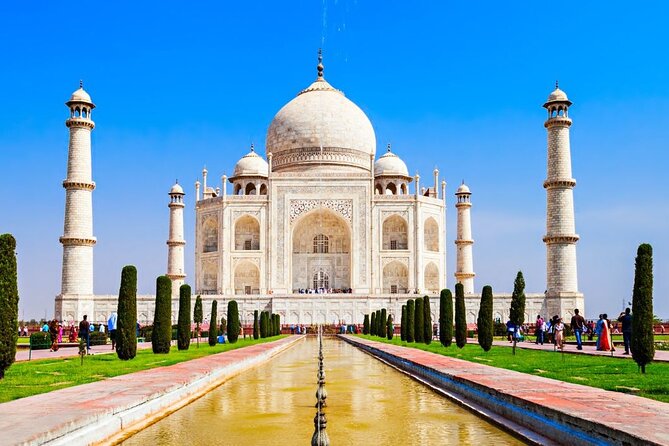
Sunrise at the Taj changes everything. This private 3-day Golden Triangle road trip strings together Delhi, Agra, and Jaipur with a private air-conditioned vehicle and guided visits, so you spend less time figuring things out and more time looking. I like the sunrise Taj Mahal timing, plus the mix of Mughal landmarks and Delhi street energy.
I also really like the “real city” feel on Day 1, especially the rickshaw ride through Chandni Chowk after Jama Masjid. You get big, famous monuments like the Red Fort and Humayun’s Tomb, but you also move through narrow Old Delhi lanes where the experience feels lived-in.
One possible drawback: the schedule is full and some stops are photo-only, so if you want to go inside every single monument, you may feel a bit rushed or slightly blocked (think Red Fort outside, and Jal Mahal or Hawa Mahal where entry is restricted).
Key highlights you should actually care about
- Sunrise Taj Mahal access with an early pick-up so the day starts at the most dramatic moment
- Private local guides throughout, meaning you get explanations (and better photo angles) instead of just tickets
- Chandni Chowk by rickshaw after Jama Masjid, giving you a quick hit of Old Delhi street life
- Agra to Jaipur pacing that includes Fatehpur Sikri on the drive, so the trip doesn’t feel like pure transit
- Photo stops at Jal Mahal and Hawa Mahal for those signature views, even if you cannot enter
- Strong guide and driver track record with names like Varun Gupta, Kamran, Karma, Vipin, Kishor, and drivers such as Zeeshan Ali showing up in past feedback
What This Golden Triangle Private Tour Gets You In 3 Days
This tour is a classic Golden Triangle plan, but the private format matters. You’re not squeezed into a big group with strangers and a chaos-inducing meeting point system. You’re in a private car with AC, with a guide handling the details so you can focus on sights, photos, and learning what you’re looking at.
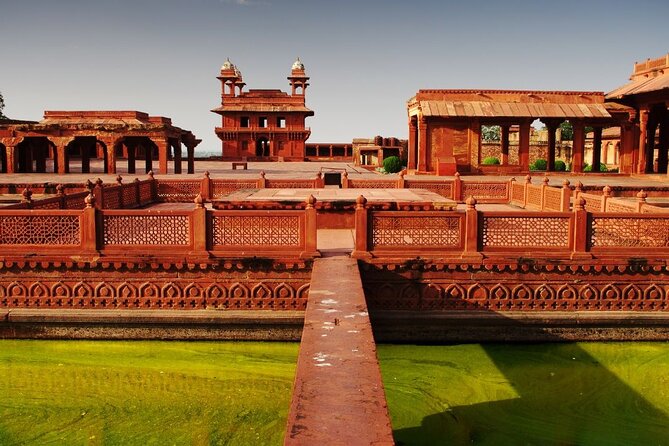
In three days you’ll hit the headline monuments: Delhi’s Red Fort area and Humayun’s Tomb, Agra’s Taj Mahal and Agra Fort, and Jaipur’s City Palace, Jantar Mantar, and the famous wind-and-fortress skyline looks of Hawa Mahal. The route also includes a key mid-trip detour to Fatehpur Sikri, which is an excellent way to break up the Delhi to Jaipur drive with something actually worth slowing down for.
The best part is that timing and transportation do the heavy lifting for you. Delhi starts in the morning. Agra starts even earlier. Jaipur ends mid-afternoon, giving you a clean exit toward Jaipur airport or back to Delhi.
You can also read our reviews of more private tours in New Delhi



Day 1 Delhi by Foot, Rickshaw, and Big Monuments (Jama Masjid to Qutub Minar)
Day 1 is built for contrast: Old Delhi first, then a jump into New Delhi’s monumental geometry. Your day starts with pick-up around 9:00 AM from your chosen location. That matters because Delhi navigation can be a headache, and the easiest way to lose energy is to spend your morning wrestling traffic and finding the right gates.
Jama Masjid to set the tone
You begin at Jama Masjid, and the experience here isn’t just about architecture. It’s about scale and atmosphere. You’ll spend about two hours at the mosque area, which gives you time to take in the courtyard setting and understand why it’s such a central landmark in Old Delhi.
Practical note: this is a place where you’ll want comfortable shoes and to dress with respect. Even if the tour guide keeps things moving, it’s still a working religious site.
Chandni Chowk rickshaw ride for street-level Delhi
Next comes the part people remember: after Jama Masjid, you’ll head to Chandni Chowk for about 1 hour 30 minutes, including a rickshaw ride through the lanes. This is a smart inclusion because it gets you into the narrow market streets without making you push through everything on foot.
The quick lesson your guide can give you here is how Old Delhi markets work, not just what they sell. You’ll pass through spice and everyday goods vibes, and you’ll feel why this area is still the heart of commerce for the city.
Red Fort, but with a realistic limitation
After Chandni Chowk, you’ll move toward the Red Fort. Here’s the catch: you’ll see it from outside and do photos, rather than doing a full interior visit. If your mental picture of the Red Fort includes deep time inside museum-style halls, you might feel like you’re only getting the cover photo of the story.
Still, viewing it from the right angle, with context from your guide, can be very worthwhile. This is also a good moment to reset your legs and keep energy for what comes next.
More New Delhi tours and experiences for the shortlist




Humayun’s Tomb and the Mughal “frame” of New Delhi
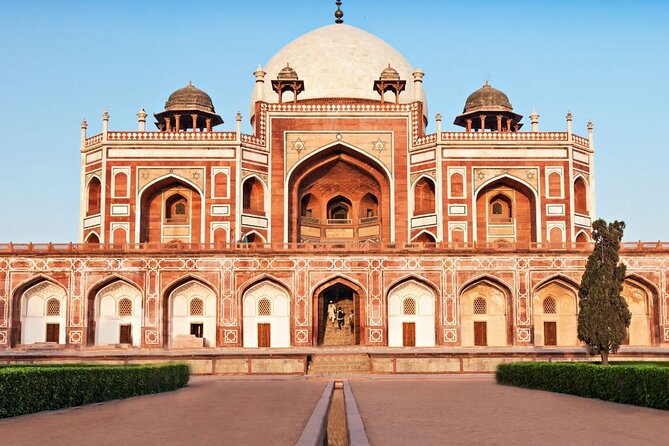
Lunch break follows, then you head to Humayun’s Tomb for about one hour. This is a strong choice for Day 1 because it sets up Mughal design logic, and it makes Agra make more sense later.
You’ll also do drive-by photo time at big symbolic landmarks like India Gate and Parliament House (both mostly outside views). It’s not the same as a guided walk inside, but it helps you connect Delhi as a capital city, not just a museum city.
Qutub Minar and Lotus Temple for the finish
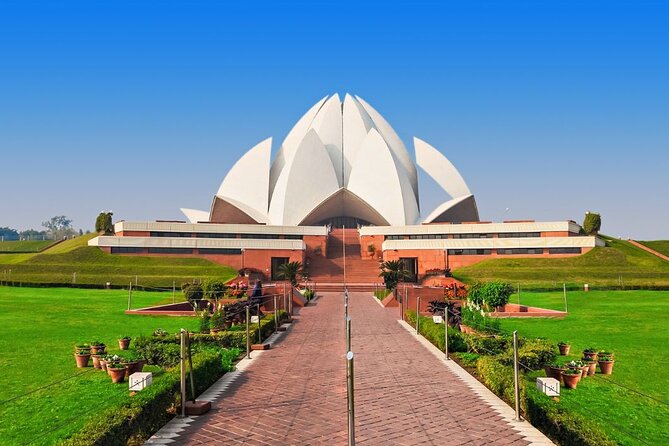
Day 1 ends with Qutub Minar (part of the Qutb complex, a UNESCO World Heritage Site) and then a quick stop at Lotus Temple. Qutub Minar is one of those sights where your brain wants to stare longer, even if you’re on a tight schedule. Lotus Temple is smaller time-wise, but it’s visually calm and offers a nice breathing space after the busiest Old Delhi moments.
Day 2 Sunrise Taj Mahal and Agra Fort, Plus the Long Drive to Jaipur
If Day 1 is about contrasts, Day 2 is about the main event. Your day starts with an early morning pick-up at around 6:00 AM for the Taj Mahal at sunrise. This early start is not a gimmick. It’s the best shot at soft light, fewer crowds, and that classic marble glow that makes people understand why the Taj is an icon.
You’ll spend around two hours at the Taj Mahal area, then you return to the hotel. After breakfast and check-out, you visit Agra Fort for about one hour, which gives you the other side of Mughal power, not just the romantic tomb story.
How Agra Fort balances the Taj
The Taj is about the marble and the emotion. Agra Fort adds defense and scale. It’s a strong pairing because your guide can connect what you see to how the Mughal rulers lived, governed, and controlled the region.
Fatehpur Sikri en route to Jaipur
Then you’re on the road to Jaipur, with a major stop along the way: Fatehpur Sikri Fort. The plan builds in time, about 5 hours, which is important because Fatehpur Sikri feels big even when you’re moving efficiently. It’s not just a quick photo pull-off.
Fatehpur Sikri is also one of the best ways to prevent the trip from feeling like pure driving. You’ll leave Agra with your senses still on Mughal mode, and you’ll arrive in Jaipur primed to notice details you might otherwise miss.
Day 3 Jaipur Icons, Photo Stops, and a Timed Finish Back Toward Delhi
Day 3 stays in Jaipur, but it’s not a “slow sightseeing day.” It’s structured so you get major monuments while energy is still high.
You start after breakfast with a quick visual stop at Jal Mahal. Entry is restricted, so plan on photos only. Still, it’s a very recognizable viewpoint, and the guide can usually point out the best angles so you don’t wander around looking confused.
City Palace for royal context
Next is City Palace, where you’ll spend around two hours with the entrance included. This is the best place on this route to understand how Jaipur’s royal court shaped the city layout you’re walking around.
It’s also a good monument for people who love art details. Even if you’re not a “museum person,” the setting and explanations tend to make it click.
Jantar Mantar, the science angle of Jaipur
Then comes Jantar Mantar, the astronomical observatory. You’ll spend about one hour, and the guide can explain how the instruments work in plain terms. This is one of Jaipur’s most distinctive experiences because it shows a different kind of power: measurement and astronomy, not just royal walls.
Hawa Mahal, built for views not entry
After Jantar Mantar, you’ll stop at Hawa Mahal, often called the Palace of Wind. Again, entry is restricted, so you’ll focus on photos and viewpoints, not inside exploration.
You’ll get time to photograph the famous facade from the best spots available, which is usually what you want anyway. This is one of the places where your camera will do most of the talking.
End time around 2 PM, with a clean exit option
The day winds down at Patrika Gate, a convenient photography spot. Then your Jaipur portion ends around 2:00 PM, and you can depart for Jaipur airport or continue back toward Delhi.
That timing is genuinely practical if you have a next flight. It also helps if you want to do your own evening meal plan without being rushed by a late-day tour finish.
Guides, Drivers, and English-Friendly Sightseeing
The private-guide setup is a big part of the value, and the reviews underline that. Names that show up in past feedback include Varun Gupta for Agra, and Jaipur guides like Kamran, Karma, Vipin, and Kishor. On the driving side, Zeeshan Ali is mentioned as punctual with a comfortable AC-equipped car, and there’s also a mention of a driver named Raja.
Beyond names, the pattern is consistent: guides who explain in clear, easy-to-follow English, and drivers who keep things on time. That combination matters more than people think. In India, a tour can fall apart if the driver is late or if the guide can’t translate meaning into something you actually understand.
One fun note from the feedback: Vipin was described as doing it with passion and even singing, which suggests you might get a more personal, lively style rather than a stiff script.
Price and Value, Including Hotel Choice and Entrance Fees
The listed price is $176.72 per person for about three days, with a private setup and multiple paid elements included. In this kind of route, value comes from what you don’t have to manage yourself.
Here’s what’s included in the tour package details:
- Private transportation in an air-conditioned vehicle with driver
- All sightseeing with private local guides
- All monument entrance fees if the option is booked
- Mineral water and soft drinks during journeys
- Breakfast (2)
- Two nights of 3- or 5-star accommodation in Agra and Jaipur with breakfast
- Hotel or airport pickup and drop-off in Delhi
- Mobile ticket
That hotel line is important. Two nights is exactly what you need for this route without constant check-in chaos. Choosing between 3- and 5-star can change your experience a lot, especially after early mornings. If you’re booking for comfort, you’ll likely want the higher category.
The only “watch this” item is entrance fees. They’re included if your option includes them. Before you pay, confirm what’s covered so you don’t get surprised at gates.
Also, tips are not included. You’ll likely want to budget a bit for your guide and driver since their work directly affects the whole trip.
Practical Stuff You’ll Want to Plan For (Timing, Comfort, Photo Expectations)
This is not a leisurely stroll. Expect long stretches of car time plus a lot of landmark hopping.
A few practical pointers based on how the day plans are built:
- You’ll do early morning starts, including around 6:00 AM for the Taj Mahal. If you hate mornings, this will test your patience, but it’s usually worth it.
- Some monuments are photo-only. Red Fort is outside, and Jal Mahal and Hawa Mahal also have restricted entry in this plan. This is normal on fast itineraries, but it’s good to know upfront.
- Wear comfortable shoes and plan for sun. Even with AC driving, walking time adds up across Delhi and Jaipur.
- Bring a power bank if you’re serious about photos. This trip has several “camera moments” where you’ll want to keep shooting after you think you’re done.
If you’re traveling with family, this private format tends to be easier than public transit chaos. The car and guide reduce friction. If you’re traveling solo, it can be a good way to make the route doable without feeling overwhelmed by logistics.
Should You Book This 3-Day Golden Triangle Tour?
I’d book this if you want a smart, private way to cover Delhi, Agra, and Jaipur with minimal planning stress. The biggest reasons:
- Sunrise Taj Mahal timing, which is the hardest part to replicate on your own
- A genuine mix of experiences, from Delhi mosque and street markets to major Mughal and royal sights
- Strong evidence of guides and drivers who handle language and punctuality well, including names like Varun Gupta in Agra and Kamran, Karma, Vipin, and Kishor in Jaipur
I would hesitate if your top priority is entering every monument. Some stops here are limited to outside views or photography only, and the itinerary is packed enough that you might feel it if you like slow travel.
If you go in with the right expectations, this tour is one of the easiest ways to experience the Golden Triangle at a steady, high-impact pace, without the usual headaches of arranging transport and coordinating multiple tickets.
FAQ
What time does the Delhi pickup start on Day 1?
The tour starts with pick-up at 9:00 AM from your preferred location.
What time is the Taj Mahal visit on Day 2?
You have an early morning pick-up from your hotel at around 6:00 AM for the sunrise Taj Mahal visit.
Is transportation provided for the whole trip?
Yes, the tour includes private air-conditioned transportation with a driver, and it covers the transfers between Delhi, Agra, and Jaipur.
Are monument entrance fees included?
Entrance fees are included if you book the option that includes them, listed as all monument entrance fees if option booked.
How many nights of accommodation are included?
You get two nights of accommodation in Agra and Jaipur, in 3- or 5-star hotels, with breakfast included.
Does the tour include breakfast?
Yes, breakfast is included for 2 days.
Is a rickshaw ride included in Delhi?
Yes, the itinerary includes a rickshaw ride in Chandni Chowk after visiting Jama Masjid.
Are there any photo-only stops?
Yes. Red Fort is viewed from outside in the Delhi portion, and Jal Mahal and Hawa Mahal are described as places where entry is restricted, with photo opportunities instead.
Is free cancellation available?
Yes. There is free cancellation, and you can cancel up to 24 hours in advance for a full refund.
More Private Tours in New Delhi



More Tours in New Delhi





More Tour Reviews in New Delhi
Not for you? Here's more nearby things to do in New Delhi we have reviewed








More Delhi City Tours to consider.
 ★ 5.0Old & New Delhi City Tour – Half or Full Day Options AvailableTickets from $384,811 traveller reviews
 ★ 5.0Same Day Taj Mahal, Agra Fort & Baby Taj Tour from Delhi by CarTickets from $624,304 traveller reviews
 ★ 5.0Taj Mahal Day Tour from Delhi by Superfast Train – TOP RATED TOURTickets from $1004,166 traveller reviews
 ★ 4.9Old and New Delhi Private Full or Half-Day TourTickets from $23,776 traveller reviews
 ★ 5.0Full Day Taj Mahal, Agra Fort & Baby Taj Tour from Delhi by CarTickets from $623,647 traveller reviews
 ★ 4.9From Delhi: Taj Mahal & Agra Private Day Trip with TransfersTickets from $43,181 traveller reviews
 ★ 5.0Taj Mahal Tour from Delhi by Express Train (Viator Award Winner)Tickets from $752,849 traveller reviews
 ★ 5.0All Inclusive Private Taj Mahal Luxury Tour from Delhi by CarTickets from $622,564 traveller reviews
More useful Delhi routes