
Review · DELHI CITY TOURS
3-Day Private Golden Triangle Tour: Delhi, Agra & Jaipur
Delhi, Agra, Jaipur in three days can work. The trick is doing it by private car with a live guide, so you spend less time figuring things out and more time looking up. You also get the high-impact morning highlight with a sunrise Taj Mahal visit, plus plenty of stops that explain the how and why behind the monuments.
I like that the pace feels designed for real sight-seeing, not marathon rushing. You get early starts where they matter, breaks for food, and hotel time built in for sleep before the next drive. The one thing to watch is that monument tickets are not included, and you’ll need a bit extra cash (and time at entrances) once you arrive at each site.
Key Things You’ll Notice on This 3-Day Private Golden Triangle
- Private chauffeur and AC comfort between cities, so traffic stress stays lower than with group buses
- Sunrise Taj Mahal timing that helps you catch soft light before crowds fully take over
- UNESCO-linked Delhi and Agra stops, including Qutub Minar, Humayun’s Tomb, and Agra Fort
- Amer Fort plus Jaipur picture stops like Jal Mahal and Hawa Mahal in one day
- Clear food breaks, including a lunch stop in Delhi and lunch in Jaipur
- Hotel with breakfast included (3 or 5-star, depending on option you choose)
Why This Golden Triangle Works Better With a Private Setup
The Golden Triangle route is famous for a reason: three cities, three different expressions of Indian culture, all within a reasonable overland loop. The value here is the how you travel. With pickup and drop in Delhi, you avoid the daily hassle of trains and transfers. With a private chauffeur, you can also keep your schedule tighter, especially on the days that start before the sun.
You’ll also benefit from a live tour guide with foreign languages. That matters more than people think. When you know what you’re looking at, a minaret is not just tall, a fort is not just old walls, and a palace is not just a pretty facade. You start picking up details you’d normally miss.
One practical note: this is a private group, which usually means your day moves at your group’s pace. Still, you are covering a lot in three days, so you’ll want comfortable footwear and a flexible attitude when traffic changes plans.
You can also read our reviews of more private tours in New Delhi



First Morning in Delhi: Qutub Minar to Lotus Temple Calm
Delhi can throw a lot at you, fast. The plan starts with Qutub Minar, the UNESCO-listed minaret that rises about 73 meters and is tied to the early Delhi Sultanate period. Even if you’ve seen photos, it hits differently in person. Stand back, look up, then walk toward it slowly. The scale is the main experience here.
From there, you’ll head to the Lotus Temple, known for its lotus-petal shape and quiet Bahá’í worship space. This is a nice contrast to the hard edges of stone towers and forts. It’s also a helpful pause if the city arrival day leaves you tired. If you like places where the rules are simple and the mood is calm, you’ll probably appreciate this stop.
Tip for your day flow: bring or plan for water, and expect brief walking at each site. The itinerary gives you generous sightseeing windows, but Delhi distances add up even when you’re in an AC car.
India Gate, Chandni Chowk Lunch, and Humayun’s Tomb
After the UNESCO sites, the route shifts to classic Delhi landmarks. You’ll drive past India Gate, a war memorial with a formal, colonial-era feel and a setting that people actually use, not just admire from a distance. Even when you’re not there for long, it’s a good place to get oriented. You can also pause briefly nearby for photos and a sense of the wider city plan.
Then comes one of the best parts of this style of tour: lunch in Chandni Chowk. You’re given a choice of a local eatery or a fine-dining restaurant, with North Indian staples like butter chicken, biryani, and tandoori roti. If you’re vegetarian, you’ll find options such as paneer tikka and dal makhani mentioned in the plan. This lunch stop is not a side quest. It’s where you fuel up for the next leg.
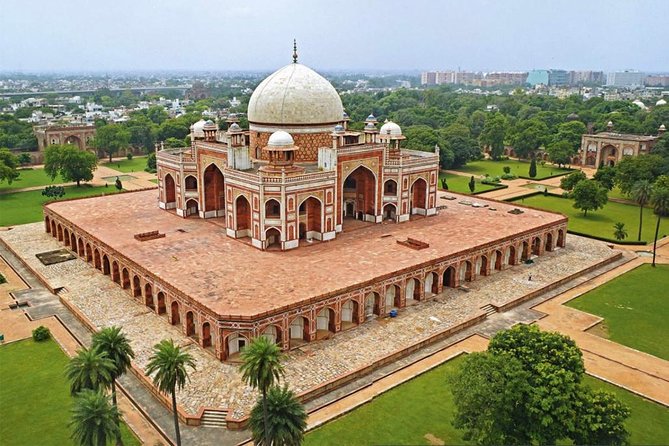
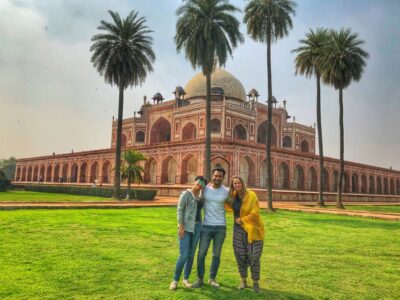
In the afternoon you visit Humayun’s Tomb, another UNESCO highlight and a key link toward what the Taj Mahal later becomes known for. The Persian-style garden layout, the red sandstone domes, and the layered Mughal design ideas give you a more grounded story of how royal architecture evolved. It’s often less frantic than the Taj, and that makes it easier to slow down and look carefully.
The Drive to Agra: Your Sleep Sets Up Your Sunrise
This is where timing matters. You’ll depart Delhi for Agra by car, with a drive noted around 3 hours 30 minutes (depending on traffic and conditions), and then check into your hotel for an overnight stay. This is good planning because sunrise sight-seeing needs rest, not willpower.
Also, notice how the itinerary supports your next day. You’re not left guessing where to go in the dark. You’ll be scheduled to wake up early for the Taj Mahal, and your hotel stay gives you a base for breakfast and getting ready.
If you want to do sunrise well, don’t overpack your morning with extra stops. The value of this tour is that it prioritizes the morning showpiece so the rest of your day can stay realistic.
Taj Mahal at Sunrise: What Makes the Morning Worth It
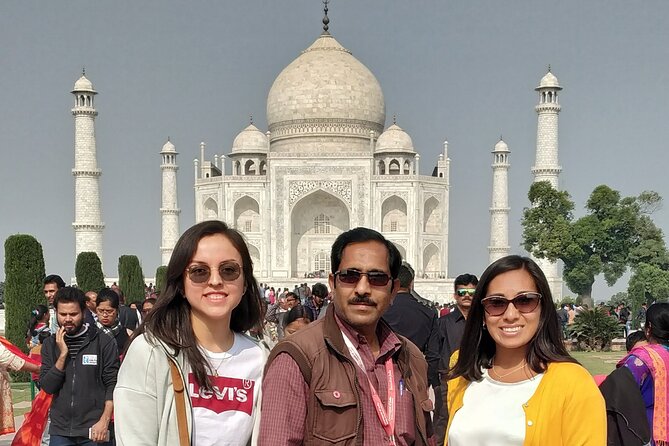
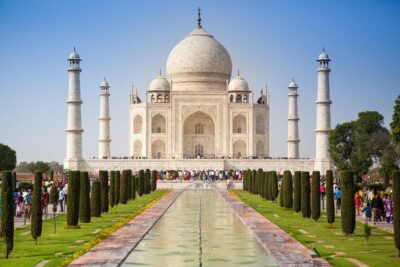
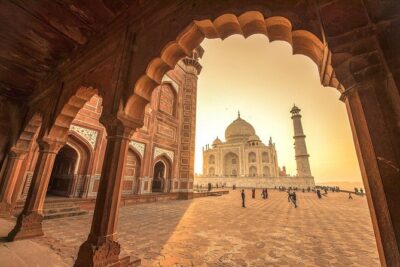
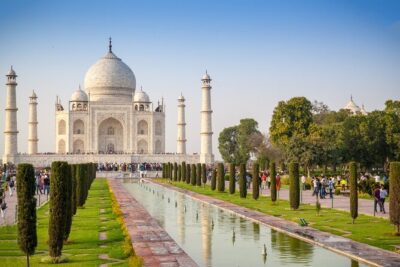
The Taj Mahal is impressive any time. But sunrise changes the whole experience. You’ll be taken for sunrise viewing, and the plan emphasizes how the marble’s tone shifts with morning light. That color change is the reason early starts feel worth it, even when you’re tired.
Here’s the practical reality: you’ll spend the most time looking up close and also scanning the full monument. Sunrise light tends to make the details clearer, and the air often feels cooler, which helps with comfort. It’s also a more respectful way to experience the site, because the energy is quieter and you have a better chance to take photos without feeling rushed every second.
One more tip: keep your plan simple after the sunrise visit. You’ll return for breakfast later, so avoid adding extra activities outside the tour. Your comfort matters because you still have Agra Fort and the “Baby Taj” coming up.
More New Delhi tours and experiences for the shortlist




Agra Beyond the Main Attraction: Fort and Itmad-ud-Daula
After breakfast, you’ll explore Agra Fort, described as once the seat of Mughal emperors, more like a walled city than a single building. This stop is valuable because it explains power and control. The fort is where you can feel how rulers defended and lived.
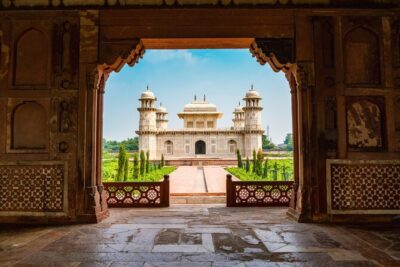
You’ll also visit Itmad-ud-Daula, often called the Baby Taj. The plan highlights it as a tomb built before the Taj Mahal with similar marble inlay style. That comparison is useful. Seeing it in Agra after the Taj helps you spot the design evolution. You also get a calmer feel here, and it’s a great place to slow down with fewer interruptions.
If you’re the type who likes architecture more than crowds, this combo is smart. You get the famous monument, then you see the surrounding works that make it make sense.
Heading to Jaipur: Road Time and the Optional Fatehpur Sikri Detour
The drive from Agra to Jaipur is part of the experience. You’re scheduled for a drive noted around 4 hours, through Rajasthan countryside. That’s enough time to relax, but not so long that you feel stuck for half a day.
The itinerary also lists an optional en route stop at Fatehpur Sikri, described as an abandoned Mughal capital with red sandstone buildings. This can be a strong add-on if you enjoy the idea of seeing a place tied to imperial plans that never fully played out. If you’re short on energy, you might skip it, but it’s there for people who want more than the three city centers.
Either way, your goal in the afternoon is simple: arrive in Jaipur ready for a big sightseeing day.
Amer Fort From the Hill: The “Must See” Jaipur Moment
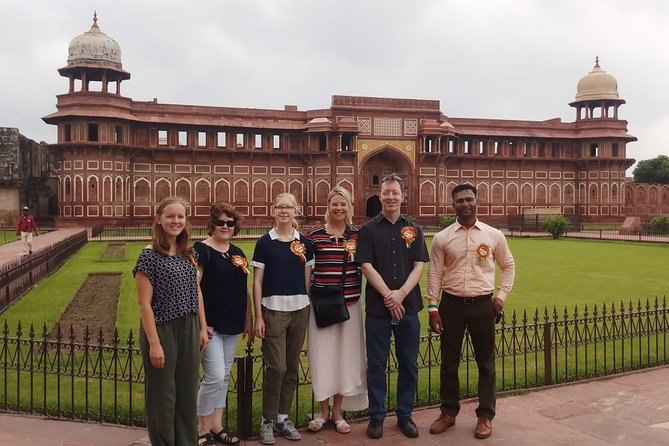
In Jaipur, your day starts with Amer Fort, located about 11 km from the city. It’s built on a hill and has a strong visual presence, which helps explain why so many photo classics are taken from certain viewpoints. The fort is also described as 16th century, tied to the period when Amer became a major center.
Amer Fort is not just walls. It’s a multi-area experience, and you’ll see key parts listed in the plan, including Diwan-i-Khas, Jahangiri Mahal, and Musamman Burj. This matters for your understanding. You’re not visiting one room; you’re stepping through a curated slice of royal life and court space.
Consider this: fort sites involve walking, stairs, and uneven ground. Wear shoes that you can move confidently in. If you tend to get heat fatigue, bring water and take short breaks when your guide offers them.
Jal Mahal, Hawa Mahal, and the Jaipur Photo Strategy
Next up is Jal Mahal, built in the middle of Man Sagar Lake. Even if you’re not an architecture person, a structure sitting like that on water is hard to ignore. It gives Jaipur a softer, more reflective mood compared with the hill fort.
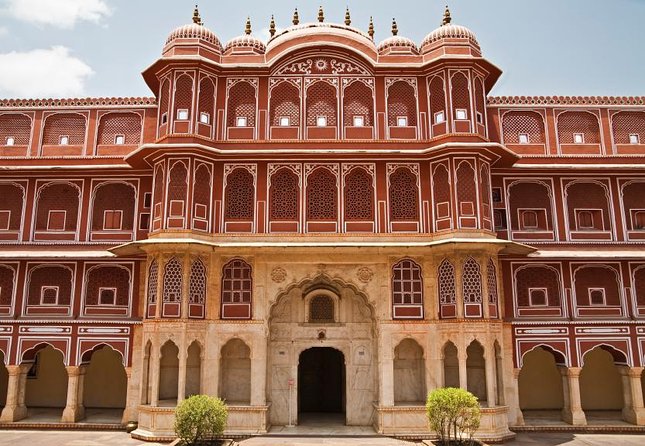
Then comes Hawa Mahal, the Palace of Winds. The plan notes it is made of pink and red stone and built by Maharaja Sawai Pratap Singh in 1799, designed for women of the royal household. Whether or not you read every detail, the exterior is the point. You’ll want your photos here, and the guide can help you connect the facade design to the purpose.
Practical advice: these are mostly exterior-heavy stops. If you want great photos, go in with clear photo targets in mind. Have your phone or camera ready before you step into busy lanes.
City Palace and Jantar Mantar: Jaipur’s Royal and Scientific Sides
After Hawa Mahal, you’ll have lunch in Jaipur at a local restaurant, with the plan mentioning local food choices and options for non-vegetarians. You’ll also get a proper break here, which helps because the day continues.
Then comes City Palace, described as grand and made up of Chandra Mahal and Mubarak Mahal along with other creative elements. This stop is where Jaipur shifts from pure landmark sightseeing to a more complete view of how the royal family shaped the city. If you like buildings with layers and sections that show different eras, City Palace tends to reward you.
Finally, you visit Jantar Mantar, an 18th century astronomical observatory built by Sawai Jai Singh II. This is an important contrast to the rest of the day. You’re not just looking at a palace. You’re looking at tools and designs meant to measure time and sky patterns. If you enjoy explanations, your guide can turn this into something you actually understand, not just something you stand beside.
Price and Logistics: Is $203 Per Person Good Value?
At $203 per person, this tour sits in the “solid value” category if you compare it to the cost of doing the route yourself with private transport plus a guide. You’re paying for:
- A private chauffeur with AC vehicle service between cities
- A live multilingual guide
- Hotel accommodation with breakfast (3 or 5-star, based on your chosen option)
- Pick up and drop in Delhi (airport, railway station, or your desired location)
- Parking fees, tolls, taxes, fuel, and interstate taxes
What you will likely add on top is monuments. The plan estimates monument tickets at about USD 50 per person. That’s normal for a Golden Triangle itinerary, but it’s worth budgeting so you do not get surprised on arrival.
Also note what is not included: drinks with breakfast are not included. Small detail, but when breakfast is included, people often assume tea and water come with everything. Plan to buy what you need.
From a value standpoint, this tour shines if you hate logistical friction. The private car, guided flow, and hotel-based breakfast reduce the mental load. If you already love figuring routes on your own, you could do it cheaper. But if you want the route to feel organized, this is a reasonable price for three cities plus sunrise.
Who This Tour Fits Best, and Who Might Want a Different Plan
This works well if you:
- Want the Golden Triangle highlights without public transport transfers
- Appreciate guided context, not just photo stops
- Prefer a private group so your day timing stays flexible
- Like sunrise experiences and are willing to wake early
It may not be ideal if you:
- Want to avoid buying monument tickets, since those are not included
- Hate early starts, because sunrise at the Taj Mahal is the core highlight
- Want lots of free time, because the itinerary is structured around major sights
If you’re traveling as a couple or family and want comfort and clear planning, this format makes sense. It also fits first-timers who want a smooth entry into India’s big heritage route.
Should You Book This 3-Day Private Golden Triangle?
I’d book it if you want a well-run plan with private transport, a guide, and a priority on the Taj Mahal at sunrise. The added value is not the list of monuments, it’s the scheduling that protects the best moments and avoids turning each day into a puzzle.
Before you book, do two simple checks:
- Confirm you’re okay budgeting around monument tickets on top of the tour price.
- Pack comfortable shoes for places where footwear rules may apply, and bring a valid photo ID for entry checks.
If those points fit your style, this is a strong way to see Delhi, Agra, and Jaipur without wasting half your energy on logistics.
FAQ
Is pickup and drop included in Delhi?
Yes. The tour includes pick up and drop in Delhi from the airport, railway station, or your desired location.
Is this tour private or shared?
It’s private. Only your group participates.
Are hotel rooms included?
Yes. Accommodation in 3 or 5-star hotels is included if you choose the hotel option, with breakfast.
Are monument tickets included?
No. Monument tickets are not included, and the tour estimates them at about USD 50 per person.
Do we visit the Taj Mahal at sunrise?
Yes. There is a sunrise Taj Mahal visit planned, and the monument ticket for entry is not included.
What sightseeing stops are included in Jaipur?
You’ll see Amer Fort, Jal Mahal, Hawa Mahal, City Palace, and Jantar Mantar, with breakfast and lunch breaks built into the day.
How long is the drive back to Delhi?
The plan notes about 240 minutes to reach Delhi on the final day.
Can I cancel for free?
Yes. You can cancel up to 24 hours in advance for a full refund.
More Private Tours in New Delhi



More Tours in New Delhi





More Tour Reviews in New Delhi
Not for you? Here's more nearby things to do in New Delhi we have reviewed








More Delhi City Tours to consider.
 ★ 5.0Old & New Delhi City Tour – Half or Full Day Options AvailableTickets from $384,811 traveller reviews
 ★ 5.0Same Day Taj Mahal, Agra Fort & Baby Taj Tour from Delhi by CarTickets from $624,304 traveller reviews
 ★ 5.0Taj Mahal Day Tour from Delhi by Superfast Train – TOP RATED TOURTickets from $1004,166 traveller reviews
 ★ 4.9Old and New Delhi Private Full or Half-Day TourTickets from $23,776 traveller reviews
 ★ 5.0Full Day Taj Mahal, Agra Fort & Baby Taj Tour from Delhi by CarTickets from $623,647 traveller reviews
 ★ 4.9From Delhi: Taj Mahal & Agra Private Day Trip with TransfersTickets from $43,181 traveller reviews
 ★ 5.0Taj Mahal Tour from Delhi by Express Train (Viator Award Winner)Tickets from $752,849 traveller reviews
 ★ 5.0All Inclusive Private Taj Mahal Luxury Tour from Delhi by CarTickets from $622,564 traveller reviews
More useful Delhi routes