
Review · DELHI CITY TOURS
3-Day Private Golden Triangle Tour: Delhi, Agra & Jaipur
Three days, three cities, zero guesswork. This private Golden Triangle route strings together Delhi, Agra, and Jaipur with guided monument time, and an AC driver to move you without the stress. I like having live tour guides and included entry for many of the highlights.
I especially like the way Day 1 stacks Delhi icons back-to-back, from Humayun’s Tomb to Qutub Minar, then down into Jama Masjid and Chandni Chowk by rickshaw. And Day 2 is built around the sunrise Taj Mahal slot at around 6 AM, which makes a huge difference for light, crowds, and photos.
One consideration: the days feel packed, and the 6 AM start means an early morning no matter what. Also, one past experience mentioned the Delhi guide included extra stops at shops and a restaurant, so decide early if you’re okay with that kind of add-on time.
Key things you will notice on this 3-day private tour
- Sunrise timing at Taj Mahal: you head out early and use the guide’s help for the best photo spots.
- A guided UNESCO hit list in Delhi: Humayun’s Tomb, Qutub Minar, plus major Mughal-era stops like Jama Masjid.
- Chandni Chowk by tuk-tuk or rickshaw: you get market chaos without spending hours figuring out how to move through it.
- Agra Fort and Fatehpur Sikri: you trade only one “big ticket” monument for a broader Mughal context.
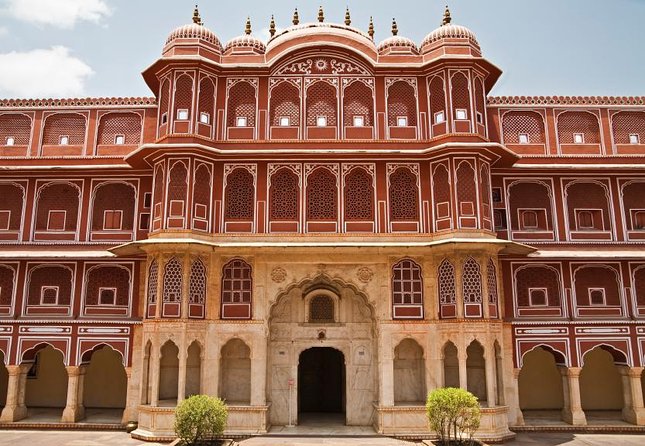
- Jaipur photo-friendly stops: Jal Mahal and Hawa Mahal are picture moments even when entrance is not allowed.
- AC transport plus small comforts: chauffeur service, bottled water, and umbrellas are included.
Why the Golden Triangle loop makes sense for first-timers
If you only have a few days, the Golden Triangle setup is efficient. Delhi gives you power and empire-era monuments. Agra brings you the big icon of Mughal architecture, the Taj Mahal, plus the layers around it. Jaipur then shifts to Rajasthan, with forts, observatories, and the kind of pink-and-red skyline that makes you look up even when you think you already know what to expect.
This tour is private, so you’re not stuck waiting on other people. That matters because these monuments are time-sensitive. Sunrise Taj Mahal only works if you are actually in place early, not “sometime this morning.” Same idea in Delhi and Jaipur, where getting in and out on schedule keeps the day from stretching into exhaustion.
Another value point: the tour does not just “show you famous buildings from the outside.” It includes live tour guides at the sites, and it builds short blocks around each place instead of treating every stop like an open-ended wandering session. You still get freedom, but you also get structure.
You can also read our reviews of more private tours in New Delhi



Day 1 in Delhi: Tombs, minarets, mosques, and Chandni Chowk
Day 1 is a fast-moving highlights day across central Delhi. The stops are chosen because they cover different eras and styles, and the guides use that contrast to explain what you’re seeing.
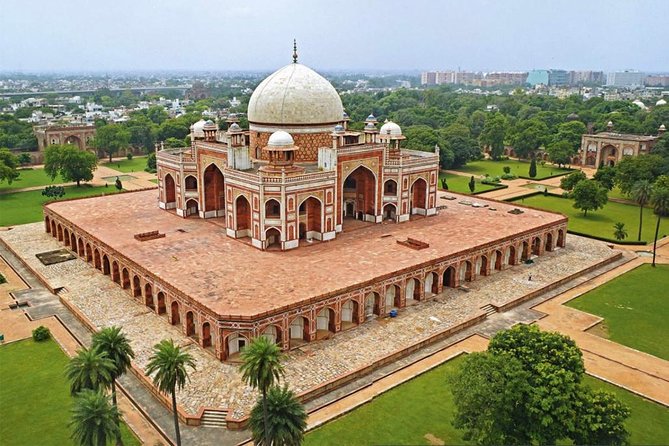
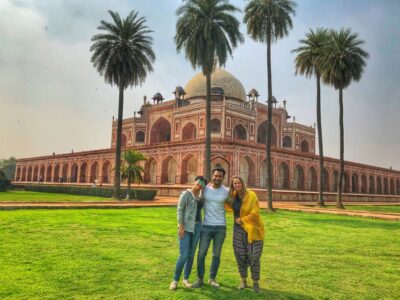
Start with Humayun’s Tomb. It’s a UNESCO World Heritage Site and is often described as the first garden-tomb style in India. The story focus is clear: after Humayun died, his wife commissioned the tomb, and that personal motive helps the architecture feel more human than textbook.
Next is Qutub Minar in the Qutub complex. The minaret is noted as the tallest minaret built with bricks (dating to 1192), and it’s surrounded by the wider UNESCO area. You’ll get more out of Qutub Minar if you pay attention to how the complex feels layered, not like one monument in isolation.
Then the itinerary jumps to Swaminarayan Akshardham. It’s described as one of the biggest Hindu temples constructed in 2005, yet the architecture is designed to feel like it spans centuries. Even if you’re not religious, you’ll likely appreciate the way the site uses design to tell time.
After that, Jama Masjid gives you a huge scale check. Built in 1656 with the help of 5,000 workers, it sits in front of the Red Fort area and anchors the old city feel. The best way to enjoy a massive mosque like this is to slow your eyes down. Look for the symmetry, then look at how people move through it, because that shows how the space works day to day.
From there you transition into the market part of Delhi. You’ll go to Chandni Chowk via Pasar Chandni Chowk, with a tuk-tuk or rickshaw ride included. Chandni Chowk is described as Asia’s biggest and oldest market from the 17th century and as lit all the time. If you’re there on a Sunday, the flea bazaar aspect is called out, so it’s the day to lean into the bargain-hunting energy.
Later in the day you also hit meaningful memorial spots. The 1921 Tomb of the Unknown Soldiers has names of 13,300 Indian army servicemen carved into the walls connected to the First World War. You’ll also see the New Delhi planned-architecture reference tied to Sir Edwin Lutyens and Herbert Baker, described as a 330-acre architecture built starting in 1929.
Finally, there’s Gandhi Smriti, the area where Gandhi spent much of his life and where he was assassinated. The site is linked to the Birla family home before it became a memorial, so the day ends with a strong modern-history note, not just Mughal-era landmarks.
Quick drawback to watch: Day 1 is full. If you hate rushing, you may feel it. If you can stay flexible, this day is a great crash course in how Delhi layers old and new in one tight loop.
Day 2: Sunrise Taj Mahal, Agra Fort, and Fatehpur Sikri’s Akbar-era pause
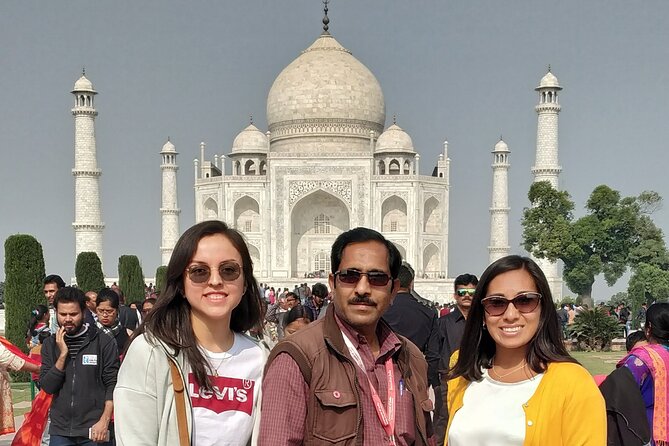
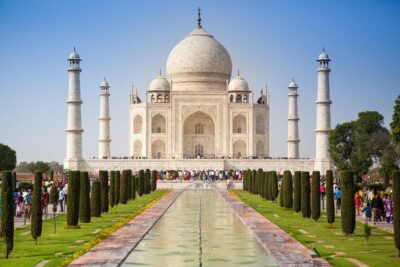
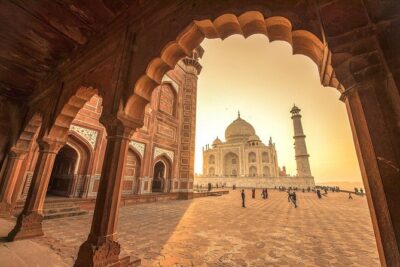
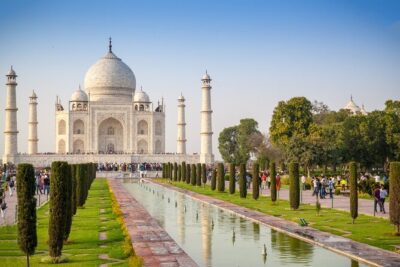
Day 2 is where the tour’s strongest visual payoff lives. The Taj Mahal part begins with an early pick-up around 6 AM for sunrise. That timing is the whole point. You get cooler air, softer light, and the kind of photo conditions that make the Taj look less like a postcard and more like a carefully set stage.
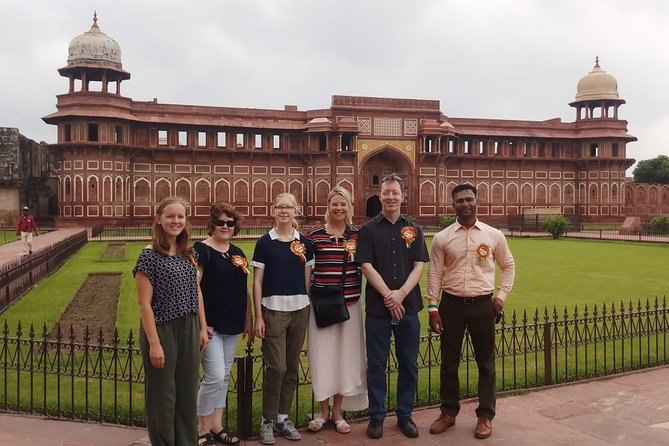
The guide helps with the photo spots, and you’ll get a structured visit window (about 3 hours for the Taj Mahal segment). You can still move at your own pace, but the early start means you’re not constantly negotiating with crowds as the day warms up.
After the Taj, the tour moves to Agra Fort, another UNESCO World Heritage Site. The key context here is that it’s the only fort in India described as housing all early Mughal emperors until 1638, when the capital shifted to Delhi. That story makes the visit more than a wall-and-gate stop. You’re seeing power architecture that connects directly to imperial movement.
Next is Fatehpur Sikri, on the way to Jaipur. You’re given a four-hour block, and it’s described as a small city founded as the Mughal Empire capital in 1571 by Emperor Akbar. If you want one place on this day that feels more like an experience than a checklist, this is it. Fatehpur Sikri’s scale and “built-up-but-remote” feeling makes you slow down and imagine court life, even without getting lost in details.
From a pacing standpoint, Day 2 is a long day. You’re moving, then looking, then moving again. The payoff is that you see more than just the Taj Mahal, and you get a better sense of how Mughal influence was staged across different cities.
Day 3 in Jaipur: Amber Palace, Jal Mahal pictures, Jantar Mantar, Hawa Mahal
Jaipur day is designed around classic fort-and-monument symbolism.
You start with Amber Palace (Amer Fort). The visit is described as about 2 hours, and it’s marked as admission free in the itinerary notes. Amber’s appeal is the fort atmosphere, plus its position relative to Jaipur. Even if you only see it once, you get the sense that Jaipur’s identity is tied to defensive design and royal display.
There’s also Jal Mahal, the Palace on Lake. The itinerary notes entrance is prohibited, but you can still take great pictures from the right viewpoint. This is one of those stops where managing expectations helps. Don’t plan on walking inside, plan on framing the view well and spending a few calm minutes letting the colors and waterline do their work.
Next is Jantar Mantar, the observatory. It’s described as a collection of nineteen architectural astronomical instruments built by Rajput king Sawai Jai Singh II, and completed in 1734. The visit window is about 1 hour. You don’t need a science degree to enjoy it. What you will enjoy is seeing how the instruments are built like architecture, not as modern lab gear. It’s one of the best stops for visitors who like details and explanations.
Then comes Hawa Mahal, the Palace of Winds. Again, entrance is prohibited according to the notes, but you can take strong pictures of the building. This is a perfect final monument type for Jaipur because it’s instantly recognizable from the street, and it rewards a few minutes of careful viewing rather than long indoor time.
Your Jaipur sightseeing finishes around 2 PM, and you can connect to departure plans from New Delhi. If you’re traveling later, the plan described is driving back and arriving around 8 PM, depending on your flight.
Transport, guides, and the comfort details that add up
This is a private tour with AC transportation with a chauffeur, and pickup is offered from anywhere in Delhi, Noida, Gurgaon, Ghaziabad, Faridabad. That matters because Delhi traffic is real, and where you meet affects your whole timing.
You also get practical inclusions like complimentary water bottles and umbrellas. I always think of these as “small, smart,” because weather and hydration can derail a perfect day. Add to that the fact that there are live tour guides at the sites, and you have a clear advantage over a self-guided day where you’re constantly asking, Where do we go next?
One extra point from experience: strong local guiding seems to make the difference between a memorized itinerary and a meaningful visit. In Agra, the guide named Ishaan is specifically called out for doing a good job, and the driver Amit is mentioned for keeping things running smoothly from Delhi to Agra and onward to Jaipur. Even if you don’t get the same pair, it’s a sign that the tour is built around reliable on-the-ground people.
More New Delhi tours and experiences for the shortlist




Price and value: what this $5 listing likely requires you to verify
The listed price is $5.00 per person. On a three-day, multi-city, private, AC-chauffeur tour with guides and multiple included admission tickets, that number is so low it makes you double-check what the final price actually covers.
What you can take from the provided info is this:
- Hotel or airport pickup in Delhi is included.
- AC chauffeur service is included.
- A tuk-tuk or rickshaw ride in Chandni Chowk is included.
- Live guides are included at the sites.
- Monument entrance fees are included depending on the option selected.
- Meals, accommodations, and tips are not included.
So here is my practical advice. Before you book, confirm what option you’re paying for and which monuments have admissions included. The itinerary marks some stops as admission ticket included and some as free, so your exact experience depends on the selected package.
If the final total ends up being reasonable for private transport and guides, this can be good value because you’re getting a lot of world-class monuments without doing the logistics yourself. If it ends up being low by excluding admissions heavily, then the cost savings can evaporate once you add paid entry fees and any optional additions.
Should you book this Delhi, Agra, Jaipur private tour?
Book it if you want:
- A structured Golden Triangle plan across Delhi, Agra, and Jaipur in about 3 days
- A sunrise Taj Mahal experience with guide help for photo spots
- A private AC driver who handles intercity travel
- Live guides for the major monuments, plus market time at Chandni Chowk
Skip it or consider another option if:
- You hate packed days and early starts (6 AM Taj Mahal is part of the plan)
- You prefer zero side stops. In the Delhi portion, there’s a reported concern about extra shop or restaurant stops, so ask how that portion is handled.
If you’re flexible, enjoy guided history, and want the fastest route to the iconic sites, this tour is a strong fit. Just verify the package option so you’re clear on what admission fees are covered.
FAQ
What cities does this 3-day tour include?
It covers three cities on the Golden Triangle route: New Delhi, Agra, and Jaipur.
How long is the tour?
The duration is approximately 3 days.
Is this tour private?
Yes, it is a private tour or activity, and only your group will participate.
Where can you get picked up?
Pickup is offered from anywhere in Delhi, Noida, Gurgaon, Ghaziabad, and Faridabad. Hotel or airport pickup in Delhi is included as well.
Does the tour include monument entrance fees?
Monument entrance fees are included depending on the option selected. The itinerary lists some stops as included and some as free.
Does the tour include meals or accommodation?
No. Accommodations and meals are not included, and tips and gratuities are not included either.
Is Taj Mahal sunrise included?
Yes. The plan includes early morning Taj Mahal at around 6 AM to experience sunrise, with guide help for the best photo spots.
Is there transport inside Delhi for markets?
Yes. Tuk-tuk or rickshaw ride is included at Chandni Chowk in Delhi.
Is free cancellation available?
Yes. You can cancel up to 24 hours in advance for a full refund. If you cancel less than 24 hours before the start time, the amount paid will not be refunded.
More Private Tours in New Delhi



More Tours in New Delhi





More Tour Reviews in New Delhi
Not for you? Here's more nearby things to do in New Delhi we have reviewed








More Delhi City Tours to consider.
 ★ 5.0Old & New Delhi City Tour – Half or Full Day Options AvailableTickets from $384,811 traveller reviews
 ★ 5.0Same Day Taj Mahal, Agra Fort & Baby Taj Tour from Delhi by CarTickets from $624,304 traveller reviews
 ★ 5.0Taj Mahal Day Tour from Delhi by Superfast Train – TOP RATED TOURTickets from $1004,166 traveller reviews
 ★ 4.9Old and New Delhi Private Full or Half-Day TourTickets from $23,776 traveller reviews
 ★ 5.0Full Day Taj Mahal, Agra Fort & Baby Taj Tour from Delhi by CarTickets from $623,647 traveller reviews
 ★ 4.9From Delhi: Taj Mahal & Agra Private Day Trip with TransfersTickets from $43,181 traveller reviews
 ★ 5.0Taj Mahal Tour from Delhi by Express Train (Viator Award Winner)Tickets from $752,849 traveller reviews
 ★ 5.0All Inclusive Private Taj Mahal Luxury Tour from Delhi by CarTickets from $622,564 traveller reviews
More useful Delhi routes