
Review · DELHI CITY TOURS
5-Days Luxury Golden Triangle Tour to Agra and Jaipur From Delhi
Golden Triangle hits hard in five days. This route strings together Delhi icons like Humayun’s Tomb and Qutub Minar, then aims you at sunrise Taj Mahal, and finishes with Jaipur forts and palaces.
Two things I like fast are the timing for the Taj Mahal, plus the way the trip runs on a private air-conditioned vehicle between cities. I also value the human touch you get on the ground, with guides and drivers such as Mr. Ejaz, Brij, and Ali highlighted for being friendly and steady.
One consideration: the schedule moves, so you will be out early and around crowds, and not every add-on is included, like the cycle rickshaw ride in Chandni Chowk, which is at your own expense.
Key highlights worth planning around
- Sunrise Taj Mahal visit with admission ticket included
- Mehtab Bagh evening photo time after Agra Fort
- UNESCO-packed route across Delhi, Agra, and Jaipur
- Private air-conditioned transport plus bottled water for transfers
- Major Delhi sights in one day, from Jama Masjid to Raj Ghat
- Day 5 ends where you want in Delhi area (Delhi, Gurugram, Noida, airport, or hotel)
The Golden Triangle, packed into 5 days that actually work
If you want Delhi, Agra, and Jaipur without building your own logistics, this kind of Golden Triangle tour is made for you. You spend your time on landmarks, not on figuring out routes, ticket lines, and who to call when traffic turns ugly. With a private setup and a planned day-by-day flow, the experience feels built for first-timers who still want the big-ticket India moments.
The pace is the trade-off. You are doing a lot, but you are doing it with guides for each sightseeing day and a vehicle that keeps you moving. You will see major monuments in Delhi, then trade city noise for Agra’s Yamuna-side setting, and finally shift into Jaipur’s forts and palaces.
More New Delhi tours and experiences for the shortlist


Day 1 Delhi: Humayun’s Tomb to Chandni Chowk in one sweep
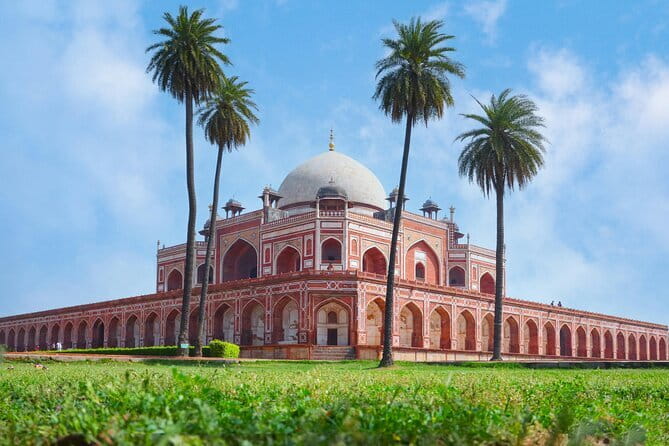
Delhi day is a mix of Mughal-era architecture, British-era civic landmarks, and the energy of Old Delhi. You start with Humayun’s Tomb, a Mughal burial site built in 1570 for the 2nd Mughal emperor Humayun, created by his wife Empress Bega Begum with Persian architects involved. It is one of those sights where the setting matters, since you are looking at a full historic complex rather than a single building.
Next comes Qutub Minar, a UNESCO World Heritage Site and one of the most iconic monuments in India. It dates to the 12th century and is known for Indo-Islamic architecture. If you like monuments that make you stop and look up, this is a solid anchor early in the day.
After that, you get a change of mood at the Lotus Temple, a Bahá’í House of Worship opened in December 1986. It is a quick visit (about 45 minutes), but it can be a nice mental reset from the heavier monument days.
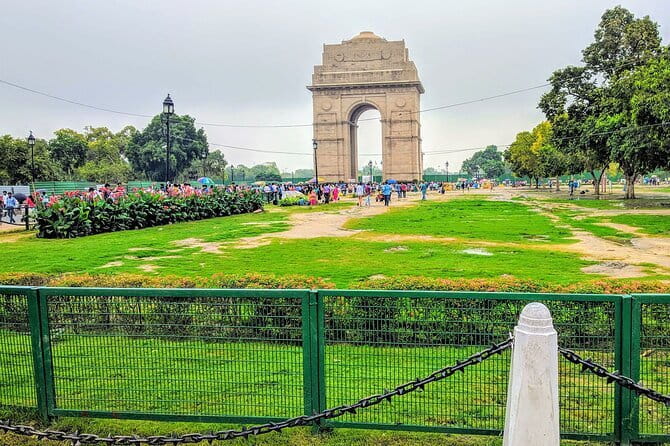
Then you head into the capital’s ceremonial zone with India Gate. Admission is free, and it is a 42-metre-high stone memorial arch designed by Lutyens in 1921, honoring nearly 90,000 Indian Army soldiers who died in World War I and the North-West Frontier Campaigns. This is a good moment to stretch your legs and orient yourself, because you can see the city’s official, planned layout.
You continue with Parliament House (where the transfer of power from Britain to newly independent India took place in 1947, and parliament still sits today) and Rashtrapati Bhavan, the President’s House. The description matters here: it has 340 rooms and about 2.5 km long corridors, since it sets expectations that this is built on a huge scale.
The day pivots sharply into Old Delhi with Jama Masjid, the capital’s largest mosque. It can accommodate up to 25,000 people at a time, so expect that the area can feel big and active even when parts feel calmer. From there, you hit Chandni Chowk with a cycle rickshaw ride. It is marked as at your own expense, so budget a little extra if you want that car-free, street-level perspective. The route through Silver Street is where Delhi becomes sensory, loud, and full of everyday movement.
You finish Day 1 at Raj Ghat, a peaceful park on the Yamuna River with a simple black marble platform marking where Mahatma Gandhi was cremated after his assassination in 1948. It is a quiet landing after a long day, and it gives the trip a human, reflective note.
What Day 2 in Agra really gives you
Agra is the Golden Triangle city most people come for, and your Day 2 is structured to get you there comfortably and start seeing the Mughal power base quickly. After breakfast, you take a 3-hour drive to Agra via expressway. On arrival, your guide meets you at the hotel and helps with check-in, which sounds small, but it saves a lot of time when you are tired.
Your first major stop is Agra Fort, a UNESCO World Heritage Site on the banks of the Yamuna River. It was the main residence of emperors of the Mughal dynasty. This is a great choice in the afternoon because fort walls and courtyards can feel more dramatic when the light shifts, even if the day is long.
Then you end with Mehtab Bagh, described as the garden of moonlit nights. It is positioned for Taj Mahal viewing, and the tour notes a belief that it was designed by Shah Jahan to view the Taj on moonlit nights away from the crowd. Evening photo time here is one of those “small but smart” moments. You get a different angle and a chance to mentally rehearse what you will see at sunrise the next morning.
Day 3 Taj Mahal at sunrise plus Fatehpur Sikri

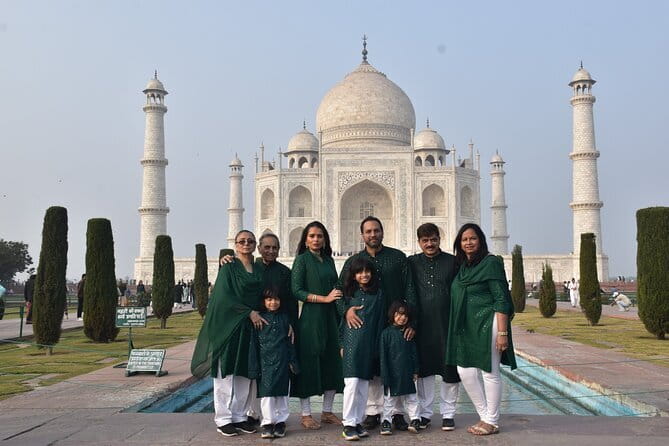
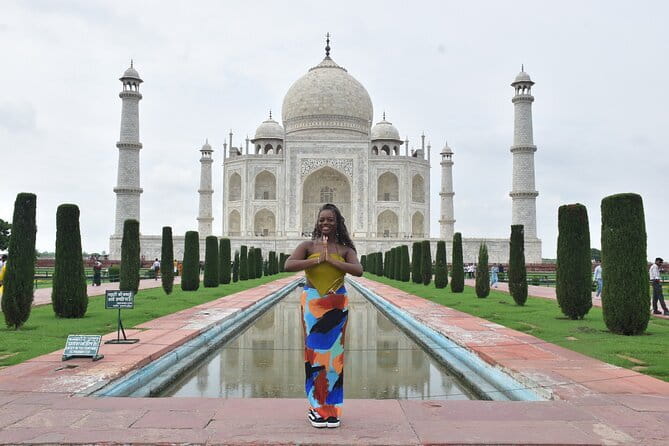
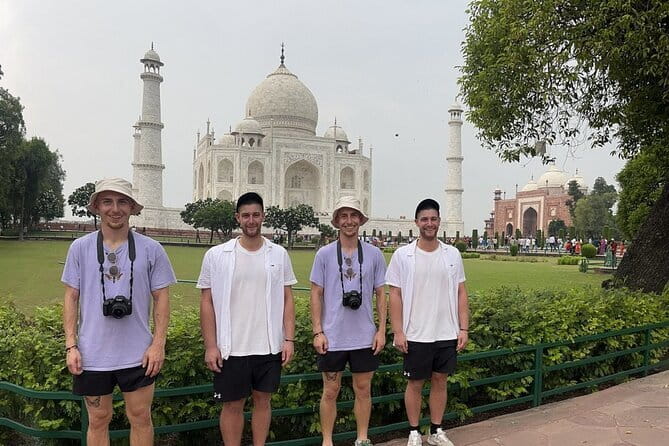
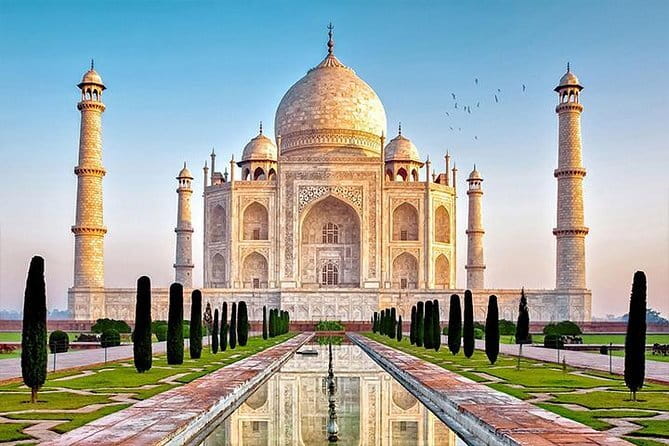
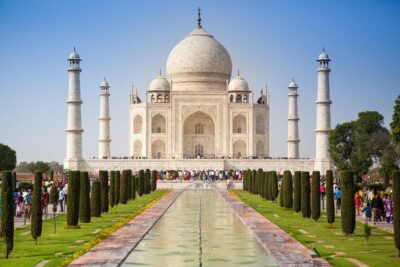
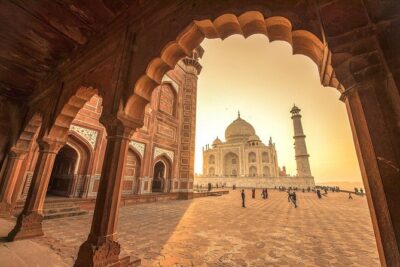
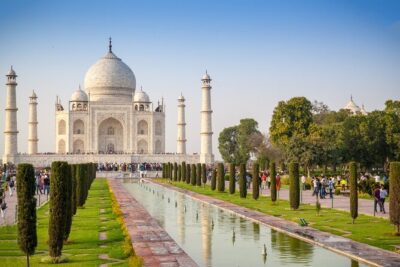
Day 3 is where the Golden Triangle tour earns its name. You go to Taj Mahal at sunrise, with admission ticket included. The Taj Mahal is UNESCO-listed and is described as built by Shah Jahan in memory of his third wife Mumtaz Mahal, who died giving birth. That personal backstory is part of why the building keeps pulling people in.
The sunrise timing matters because it sets the day up for a strong visual payoff before the city crowds fully build. Even if you are not chasing perfect photos, an early start tends to mean better energy levels and less waiting around.
After the Taj, you head to Fatehpur Sikri, another UNESCO World Heritage Site built by Emperor Akbar in the 16th century. It served as the Mughal Empire’s capital for more than 10 years. The site includes the Jama Masjid, noted as one of the largest mosques in India.
Then you continue to Jaipur, check in to your hotel, and settle for the night. This is the kind of transition day that keeps you from feeling like you are constantly on the move without any downtime.
Jaipur Day 4: a fort-and-palace day with real variety
Jaipur is not just one attraction. It is a whole day of different styles, and that’s what makes this tour work.
You begin with a photo stop at Hawa Mahal. It rises five stories, is pink colored, and was built by Maharaja Sawai Pratap Singh. If you have ever seen pictures of the honeycomb facade, this is the moment to match the image to the real building. It is also short enough to keep momentum.
Next is City Palace of Jaipur, described as the residence of the royal family. Expect courtyards, gardens, and buildings from different eras, including palace buildings dating back to the early 20th century. This stop is valuable because it helps you understand how Jaipur mixes royal history with the everyday functioning of a city.
You then get Jantar Mantar, a UNESCO World Heritage Site and an observatory with a collection of curved geometric buildings designed to monitor the movement of stars and planets. If you like science side of travel, this gives your eyes a break from forts and palaces and turns architecture into measurement tools.
After that, the day shifts into viewpoints and fort energy with Nahargarh Fort. It sits on the Aravalli Hills and is an 18th-century fort with scenic views of the city. It is the kind of stop that rewards slow walking and looking back at the skyline.
You continue to Jaigarh Fort, perched on the Cheel ka Teela, Hill of Eagles, in the Aravalli range. It is described as the Fort of Victory, and the site is known for robust architecture and historical significance. The details about what it houses are cut off in the notes, so I would treat this as a fort visit first, and a collection visit second.
You close with a blend of spiritual and everyday heritage: Birla Mandir Temple and Panna Meena ka Kund. Birla Mandir is a modern marble temple dedicated to Lord Vishnu and Goddess Laxmi, set against the backdrop of Moti Dungri Hill. Panna Meena ka Kund is a historic stepwell with symmetrical geometric design, built as water storage and a community space in the 16th century near Amber Fort.
This mix is one of the smartest parts of Day 4. You see the royal and ceremonial side of Jaipur, then you also see structures tied to daily life and belief.
Day 5 back to Delhi area, with time to reset
On Day 5, you get a slower start with time to relax in the morning. Then you drive back toward Delhi, Gurugram, or Noida, with options that include airport drop-off or dropping you at your hotel or other desired location. The drive is listed as around 5 hours.
That end design matters. It means you can connect your Golden Triangle trip into the rest of your India plans without feeling stuck in one exact departure point.
Price and value: what $8.70 per person really means
The price shown is $8.70 per person, which is unusually low for a 5-day private tour. I cannot explain how the math works without seeing the booking options in detail, but I can help you evaluate the value safely.
Here is what the package data says is included:
- Lunch and bottled water
- Private air-conditioned vehicle for all sightseeing and transfers
- Professional private local tour guides for all sightseeing
- Hotel accommodation for 4 nights on twin sharing if you book with an option that includes hotels
- Daily breakfast in your hotel if you book with an option including hotels
You also get admission ticket coverage for many stops. Several highlights are specifically marked as admission ticket included, such as Humayun’s Tomb, Qutub Minar, Lotus Temple, Agra Fort, Mehtab Bagh, Taj Mahal, and major Jaipur sights like City Palace, Jantar Mantar, and the forts and temples.
Now the key caution: the meal information conflicts. Lunch is listed under Included, but the Not Included section says lunches and dinners are not included. That means you should confirm the exact meal inclusions at booking time, especially if you care about having lunch covered every day. This matters for value, because food costs add up quickly in tourist zones.
Also, the cycle rickshaw in Chandni Chowk is at your own expense. That does not ruin the tour, but it is a small budget item you should know about.
Given all that, this tour can be excellent value if:
- you want a private car and guide instead of self-planning
- you want the sunrise Taj Mahal timing
- you are comfortable with a full schedule and some early starts
The guide-and-driver factor, and why it matters on this route
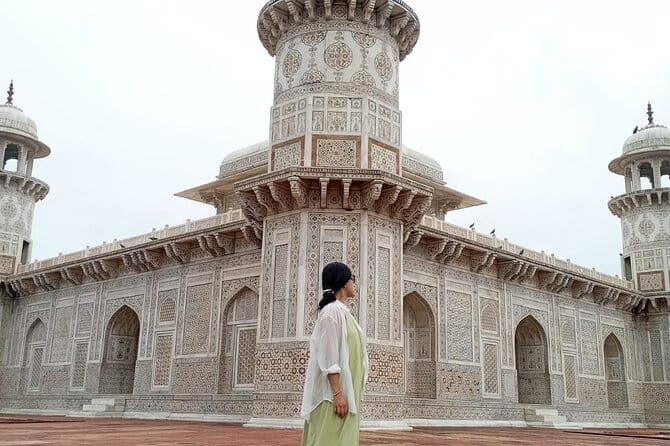
Golden Triangle tours live or die on logistics. You are covering long distances between Delhi and Agra and then again to Jaipur. A good driver keeps the ride calm and predictable, and a good guide helps you avoid common time traps like confusion at gates or unclear meeting points.
The feedback signals that guides such as Mr. Ejaz are praised for being friendly. The same route is also highlighted with drivers like Brij described as exceptional, skilful, and calm, and support from Ali described as professional and kind. Even if every day’s personality differs, the overall pattern is clear: you benefit from a team that treats your time like something worth protecting.
Practical tips so you enjoy every stop more
Crowds are real, especially around the Taj Mahal and in central Delhi markets. I recommend planning for that in a practical way.
- Wear good shoes. You will be walking through tomb grounds, courtyards, and fort slopes.
- Carry water. Bottled water is included, and still, add a little buffer for midday heat.
- Go in with realistic expectations about time. Sunrise Taj Mahal means you will need an early wake-up rhythm.
- Keep small cash ready for add-ons like the Chandni Chowk cycle rickshaw, which is at your own expense.
If you have never visited India’s big monument clusters, this itinerary is a good intro. If you hate being rushed, you will want to slow down mentally, not necessarily physically. That is why you should take breaks where you can, like Raj Ghat after the Delhi monuments, or the hotel reset after Fatehpur Sikri.
Who this 5-day Golden Triangle tour fits best
This is a strong fit for:
- first-time visitors who want Delhi, Agra, and Jaipur highlights without planning
- people who want a private air-conditioned vehicle rather than shared transport
- travelers who care about seeing the Taj Mahal at sunrise
- anyone who wants a guide-led day in Delhi, including both planned monuments and Old Delhi energy
It may be less ideal if you:
- want a slow, flexible pace with lots of free time
- plan to skip early mornings
- need meals fully included with no questions, since lunch wording conflicts across the package details
Should you book the 5-day Golden Triangle from Delhi?
If your goal is the big-name India landmarks in a tight window, I think this tour is worth considering. The structure makes sense: Delhi sights on Day 1, Agra Fort plus Mehtab Bagh on Day 2, Taj Mahal at sunrise plus Fatehpur Sikri on Day 3, then Jaipur’s forts, palaces, and the Jantar Mantar observatory on Day 4. Day 5 gives you a clean exit back to Delhi area.
Before you book, do two quick checks:
- Confirm what hotels and meals are truly included based on your selected option, since hotel inclusion depends on booking with an option that includes hotels, and the meal listing has a contradiction about lunches.
- Confirm entrance ticket coverage for the exact dates you travel, since some stops are marked admission included and some are marked free.
If you like organized days, clear guidance, and sunrise Taj Mahal payoff, book it. If you want lots of unscheduled time, you might prefer a slower style of travel.
FAQ
How long is the Golden Triangle tour?
The tour lasts about 5 days.
Which cities does the tour cover?
It covers New Delhi, Agra, and Jaipur.
Are pickup and transfers included?
Pickup is offered, and the tour includes a private air-conditioned vehicle for all sightseeing and transfers.
Is the Taj Mahal visit at sunrise?
Yes, the Taj Mahal is scheduled for sunrise on Day 3, with admission ticket included.
What’s included for meals?
Breakfast is included (4) and daily breakfast in your hotel is included if you book with an option including hotels. Lunch is listed under Included, but lunches and dinners are also listed under Not Included, so you should confirm what is covered for your booking.
Is the Chandni Chowk cycle rickshaw ride included?
No. The cycle rickshaw ride through Chandni Chowk is at your own expense.
If I cancel, do I get a full refund?
Yes. You can cancel up to 24 hours in advance for a full refund.
If you tell me your travel month and whether you are choosing the option with hotels, I can help you judge how the pace and inclusions will feel for your exact dates.
More VIP Experiences in New Delhi



More Tours in New Delhi



More Tour Reviews in New Delhi
Not for you? Here's more nearby things to do in New Delhi we have reviewed







More Delhi City Tours to consider.
 ★ 5.0Old & New Delhi City Tour – Half or Full Day Options AvailableTickets from $384,811 traveller reviews
 ★ 5.0Same Day Taj Mahal, Agra Fort & Baby Taj Tour from Delhi by CarTickets from $624,304 traveller reviews
 ★ 5.0Taj Mahal Day Tour from Delhi by Superfast Train – TOP RATED TOURTickets from $1004,166 traveller reviews
 ★ 4.9Old and New Delhi Private Full or Half-Day TourTickets from $23,776 traveller reviews
 ★ 5.0Full Day Taj Mahal, Agra Fort & Baby Taj Tour from Delhi by CarTickets from $623,647 traveller reviews
 ★ 4.9From Delhi: Taj Mahal & Agra Private Day Trip with TransfersTickets from $43,181 traveller reviews
 ★ 5.0Taj Mahal Tour from Delhi by Express Train (Viator Award Winner)Tickets from $752,849 traveller reviews
 ★ 5.0All Inclusive Private Taj Mahal Luxury Tour from Delhi by CarTickets from $622,564 traveller reviews
More useful Delhi routes