
Review · GOLDEN TRIANGLE TOURS
6 Days Golden Triangle with Ranthambore & Varanasi Tour
Golden Triangle plus Ranthambore and Varanasi is a lot to fit in. Sunrise time on the Ganges and a real Ranthambore safari turn this route from a sightseeing checklist into a day-by-day story. I also like how the pacing mixes big landmarks with human-scale street life in Delhi, then slows down again for the river rituals in Varanasi. One thing to consider: this is packed, and several days run close to full-day timing, so you’ll want energy and patience for early starts and travel.
The good news is that the tour is set up to handle the hard parts for you: pickup, air-conditioned driving, guide support, and key transport between cities. In particular, I like the idea of having a point person such as Arun keeping communication tight from the start, plus drivers like Ali who are often mentioned as friendly and helpful. Still, keep one practical expectation in mind: monument entrance fees are not included, so you’ll want to budget extra for tickets once you know which sites you want to prioritize.
Key things I’d focus on before you go

- Qutub Minar plus Old Delhi in one day: a fast hit of iconic sights, including Jama Masjid and a rickshaw ride in Chandni Chowk.
- Jaipur with Amber Palace and Jantar Mantar: you get both the royal history and the science-and-geometry angle.
- Ranthambore wildlife safari: one early outing timed for best animal chances, plus a full day of nature viewing.
- Taj Mahal sunrise, plus Agra Fort and Fatehpur Sikri stop: morning timing matters here, and the plan reflects that.
- Varanasi boat ride at sunrise and Dashashwamedh Ganga Aarti: two river experiences that anchor the city visit.
- Final temple circuit including Sarnath and Birla Mandir: you close with spiritual stops before flying back to Delhi.
How this 6-day Golden Triangle + Ranthambore + Varanasi plan actually works
This tour stitches together four distinct worlds. Delhi is loud and historic, Jaipur is royal and planned, Ranthambore is wild and early, and Varanasi is spiritual and sensory. The value is not just that you see famous places. You also get the transitions that make the whole route feel like it has a spine, not random backtracking.
Logistically, the tour leans into convenience. You’re picked up from your Delhi arrival point, you ride in an air-conditioned vehicle between stops, and you have a professional guide for the key city days. You also have the big intercity legs built in, including a train ride from Agra to Varanasi and a flight from Varanasi back to Delhi.
Now, the reality check. Several days are long, and you’ll start early more than once. Taj Mahal sunrise and the Ganges boat ride at dawn mean you’ll be up before your body wants to be. If you like travel that’s light and flexible, this might feel intense. If you like well-structured days that still leave room for genuine moments, you’ll likely enjoy it.
More New Delhi tours and experiences for the shortlist


Entering Delhi the smart way: Old Delhi first, then Qutub Minar
Delhi is usually overwhelming on a first visit. This plan helps because it hits the Old Delhi core early and then pivots to New Delhi icons. You start with a Delhi pickup, then head into Old Delhi for sights that are tied to the city’s old trading and Mughal-era power.
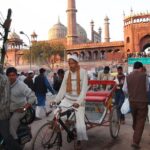
You’ll visit Jama Masjid and spend time around Chandni Chowk, one of the best places in India to feel the city’s motion. The plan includes a rickshaw ride, which is not just fun, it’s also a practical way to cover the tight lanes without turning the whole day into a walking test. Then there’s the Red Fort area, plus Rajghat, which gives a quieter, reflective beat between the busy scenes.
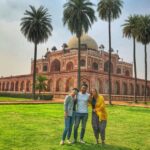
After that, you shift toward New Delhi with major landmarks along the way, including Humayun Tomb and Lotus Temple. You also pass India Gate, Rashtrapati Bhavan, and Parliament House, so you get the government-center layout without needing to plan a separate day.
Finally, you end with Qutub Minar, a tall Indo-Islamic Afghan-influenced landmark started in 1192 AD. The timing and order matter here. Visiting it after the Old Delhi hustle makes it feel calmer and more architectural, not just another photo stop.
Practical note: admissions are not included for monuments, so expect extra ticket costs depending on which sites you personally want to go into in more depth.
Jaipur at a human pace: Amber Palace, City Palace, Hawa Mahal and Jantar Mantar
Jaipur can be done in a hurry, but the best version is when you mix royal-era monuments with the city’s planned geometry. This tour does that. After breakfast, you travel with a local expert guide and focus on the classic Jaipur circuit.
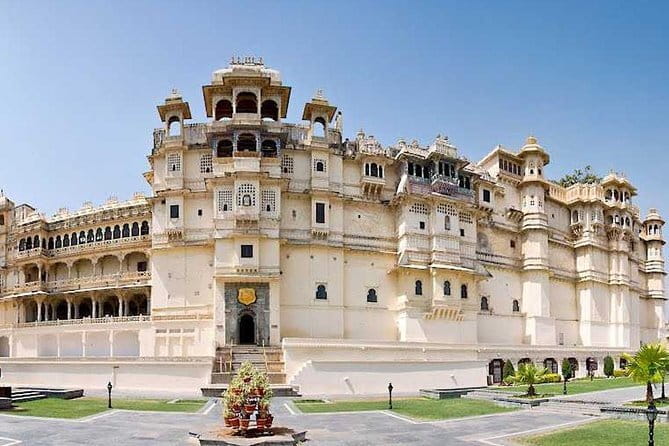
Amber Palace brings you into the fort-palace world, and it’s a strong start because it sets the historical tone fast. From there, you explore the old walled area and hit City Palace, including its lesser-known private rooms. That detail matters. It keeps the visit from feeling like only the main hallway photos.
You’ll also spend time at Jantar Mantar, the observatory with instruments designed to track time and celestial motion. Even if you’re not a science person, you’ll likely appreciate how practical it is, not just decorative.
Then come the signature “postcard” moments. The tour includes a photo stop at Hawa Mahal (Palace of Winds), plus Jal Mahal (Water Palace). Even as a photo stop, Jal Mahal can be worth it because it changes the mood, taking you from forts and courtyards toward something more reflective and photogenic.
One drawback to keep in mind: the day ends with a drive toward Ranthambore. That means you’ll be moving again, not lingering in Jaipur nightlife or long shopping sessions. If you want deep shopping time, you’ll need to treat the free time as just that, a chance to browse rather than a full-on market day.
Ranthambore National Park safari: when early starts pay off

Wildlife days have one job: get you into the park at the right time. The tour schedules an early morning Ranthambore National Park safari, which is exactly when animal activity tends to be strongest and heat is still low. This isn’t presented as a casual ride. It’s built around wildlife viewing, with leopards, jackals, gazelle, boars, and, most importantly, tigers being part of what you’re there to watch.
The plan also mentions that there are around 62 tigers (based on a 2014 census) in the park. I’d treat that as background context, not a promise. Wildlife is wildlife. Still, the route’s focus on being up early and going into the park rather than just driving around outside helps your odds.
The safari is also included as one outing. That’s a solid way to balance time. Two safaris would be ideal for serious wildlife photographers, but then you’d be cutting into Jaipur, Agra, or Varanasi time. For most people, one well-timed safari hits the sweet spot.
Logistics matter in Ranthambore. Expect that this part of the itinerary is more about time management than luxury. You’ll return to the hotel, eat breakfast, and then transition onward.
Agra and Taj Mahal sunrise: the version you should schedule
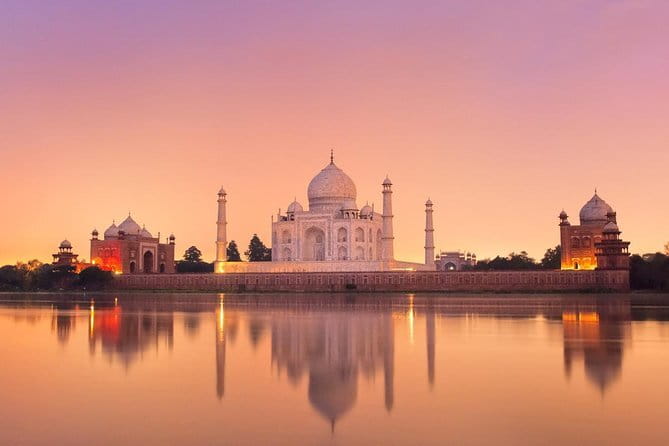
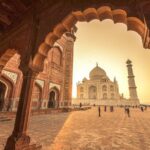
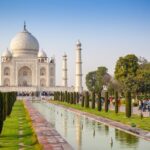
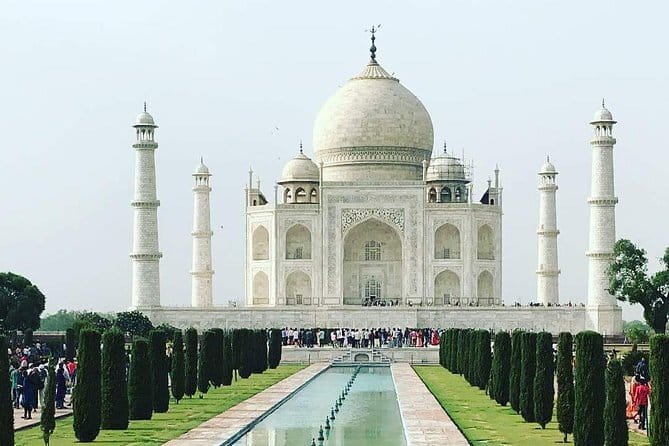
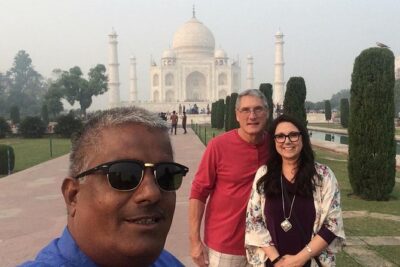
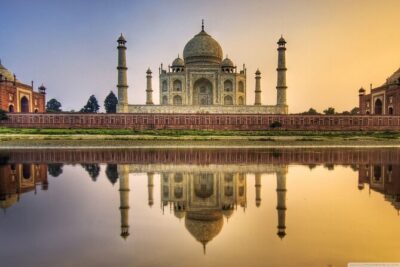
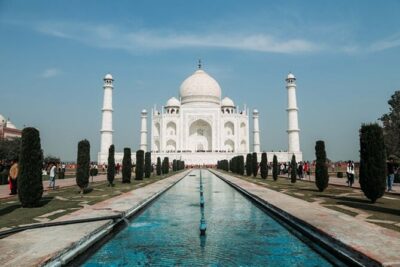
If you’re going to see the Taj Mahal, the best plan is morning. This tour picks you up at 6 AM for a guided visit at sunrise, which is a big deal for two reasons. First, you avoid harsh midday light. Second, the Taj’s atmosphere is different when the world is quieter and the day is just starting.
After returning for breakfast, you’ll visit the Taj Mahal and then continue to Agra Fort, another UNESCO World Heritage Site. The plan also includes free time for shopping in Agra, which is your built-in buffer if you want to pick up small gifts without derailing the main schedule.
There’s one more stop that makes this more than just Taj and Fort. On the way from Ranthambore to Agra, you have a stop at Fatehpur Sikri. It’s a meaningful addition because it expands your view of Mughal-era power and architecture beyond just what’s in Agra.
A practical consideration: the Taj Mahal is noted as closed Fridays. If your travel dates land on Friday, you’ll want to confirm how the plan adapts.
By the end of this day, you transfer to the railway station for your train to Varanasi, with an overnight train ride. That’s a tradeoff. You save a hotel night, but you also give up some comfort and sleep quality you might get in a bed in a hotel. If you’re sensitive to travel interruptions, plan on bringing what helps you sleep on trains.


Varanasi at first light: Ganges boat ride and Ganga Aarti at Dashashwamedh Ghat
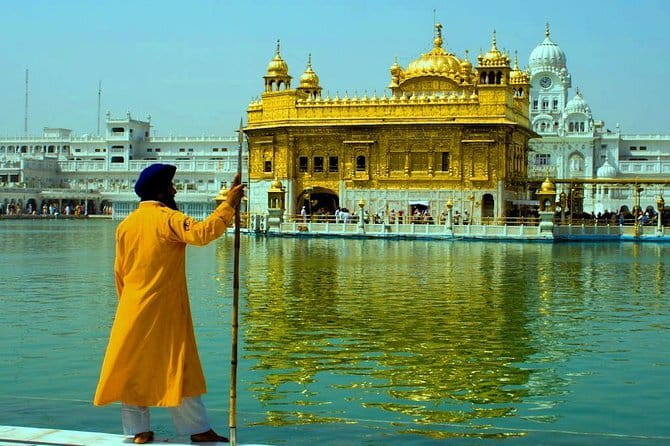
Arriving in Varanasi after the train ride can feel like stepping into a different pace. The tour meets you on arrival and transfers you to the hotel, then sets you up for the most important Varanasi experiences early.
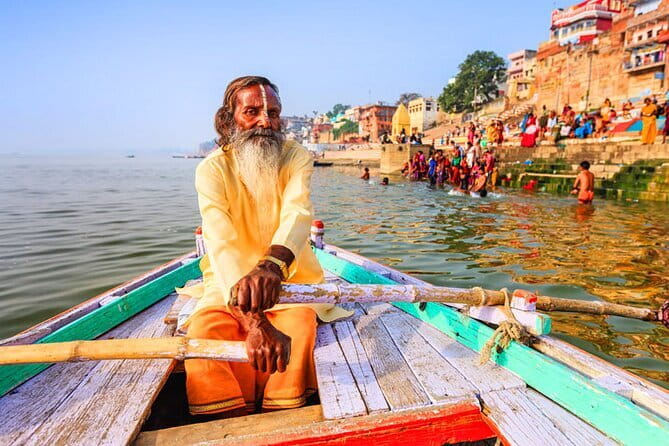
The centerpiece morning is an early boat ride on the River Ganges with sunrise views. This is the kind of activity where timing shapes the whole feeling. The light is gentler, the river looks more alive, and you can often spot the devotional routines that make Varanasi so famous.
Later that day, you have free time. I like this because it lets you manage your own energy. Varanasi is intense. You’ll probably want time to walk at your own speed, find a quiet corner, or just watch people without being rushed.
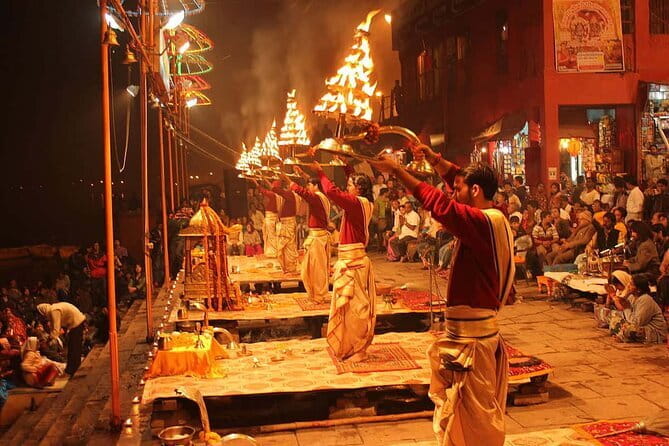
At night, you go to Dashashwamedh Ghat for the Ganga Aarti, a daily evening ceremony that’s been practiced for thousands of years. This is where the city’s spiritual life becomes theatrical and communal. Even if you’re not sure what you’re seeing at first, you’ll feel the rhythm quickly, especially because it’s organized and watched from the ghats.
The tour includes this evening ceremony as a planned highlight, which is useful. It saves you from having to figure out where to go and when to stand.
The Varanasi temple circuit: Vishwanath, Sarnath, Birla Mandir and the Monkey Temple area
Your final day focuses on religious sites beyond the main ghats. This is a good move because it balances Varanasi’s river drama with temple and pilgrimage context.
You start with Shri Kashi Vishwanath Temple, also described as the Golden Temple. From there, you visit Sarnath, an important Buddhist pilgrimage area. It adds a wider religious story to the Varanasi visit, so you’re not locked only into one tradition.
Next comes New Vishwanath Temple, often called Birla Mandir, inside Banaras Hindu University. The tour notes it took around 35 years to build. That background helps you see it as more than a stop, it’s part of a living educational and spiritual setting.
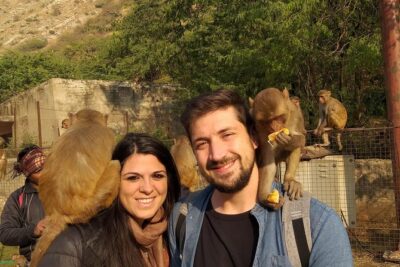
Then you visit Tulsi Manas Temple, connected to the poet Tulsidas, and the plan mentions it was built by the royal family of Banaras in 1964. Near it is the Durga Temple, which the tour calls the Monkey Temple.
This temple clustering works because each site changes the mood. You go from major Shiva devotion to Buddhist heritage, then back to Vishwanath in a different temple setting, and finally into a more specific devotional lane tied to famous writings and local mythology.
You end in the evening with a drive to the Varanasi airport for your flight back to New Delhi, then you can connect home.
Price and value: what $629.10 really includes (and what it doesn’t)
At $629.10 per person for about 6 days, this tour is trying to cover the big-ticket parts that many independent travelers end up piecing together: guide time, intercity transport, and at least one key excursion in each region.
Here’s what the inclusions cover, based on what’s listed:
- 5 nights in 3, 4, or 5-star hotels on twin sharing
- Dinner
- Professional tour guide
- Pickup and drop-off, including airport or railway station connections
- Bottled mineral water during journeys
- 1 early morning Ganges boat ride
- Transfers and sightseeing by air-conditioned vehicle
- 1 Ranthambore safari
- Train ticket Agra to Varanasi
- Flight Varanasi to Delhi
- Breakfast is listed as optional (5), so you should check the final ticket details for exact meals
What to expect to pay extra for:
- Monument entrance fees are not included
- Lunch is not listed as included
- Anything not explicitly mentioned under inclusions
Is the price good value? For many travelers, yes, because the cost is doing the heavy lifting: you’re getting guided time in Delhi, Jaipur, and Agra, plus a safari and the two signature Varanasi moments, and the route saves you from planning the hardest travel links yourself.
The main risk to value is that admissions can add up across multiple UNESCO and major sites. If you hate ticket lines and would rather skip optional entries, budget carefully and prioritize what you care about most.
Also note that this tour is scheduled for about 61 days in advance on average. If you’re booking for peak weeks, you’ll want to lock in earlier rather than later.
Who this tour suits best, and who might not love the pace
This fits best if you:
- Want a first-time India route that combines culture, history, nature, and river life
- Like having drivers, timing, and guides lined up
- Don’t mind early mornings when the payoff is sunrise experiences
It might feel too busy if you:
- Prefer long stays in fewer cities
- Get cranky when an itinerary runs close to full-day timing multiple days in a row
- Hate overnight train segments
Also, the tour is described as private, meaning it’s just your group. That often feels more flexible even when the itinerary is fixed, because guides can answer your questions directly and you are not squeezed into a big group rhythm.
If you enjoy authentic street texture but also want an organized backbone, this plan is a strong match.
Should you book this 6-day Golden Triangle with Ranthambore and Varanasi tour?
If your dream trip includes Delhi street history, Jaipur’s palace and observatory highlights, a real Ranthambore wildlife safari, and Varanasi moments like a sunrise Ganges boat ride plus Ganga Aarti, then yes, this is a smart booking. The route is built around the moments that are hardest to DIY well, especially the sunrise timing and the intercity transport between Agra, Varanasi, and back to Delhi.
Book it if you’re willing to trade some flexibility for smoother logistics and more meaningful highlights. Don’t book it if you want a slow travel pace or if you expect all major entry fees to be included in the price.
FAQ
What cities are included in this 6-day tour?
The tour covers New Delhi, Agra, Ranthambore National Park, Jaipur, and Varanasi.
Does the tour include hotel stays?
Yes. It includes 5 nights of accommodation in 3, 4, or 5-star hotels on a twin-sharing basis.
Is a safari included in Ranthambore?
Yes. The tour includes one safari at Ranthambore National Park.
Are the Taj Mahal sunrise and Agra Fort visits included?
The Taj Mahal sunrise visit and Agra Fort are part of the tour schedule, but monument entrance fees are not included.
Is there a boat ride in Varanasi?
Yes. The tour includes one early morning boat ride on the River Ganges.
How does the tour travel between Agra and Varanasi, and then back to Delhi?
It includes a train ticket from Agra to Varanasi and a flight from Varanasi to Delhi.
What is the cancellation policy?
This experience is non-refundable and cannot be changed for any reason. If you cancel or ask for an amendment, the amount you paid will not be refunded.
More 6-Day Experiences in New Delhi



More Tours in New Delhi



More Tour Reviews in New Delhi
Not for you? Here's more nearby things to do in New Delhi we have reviewed








More Golden Triangle Tours to consider.
 ★ 5.03-Days Private Golden Triangle Tour: Delhi, Agra & Jaipur by CarTickets from $1271,107 traveller reviews
★ 5.03-Days Private Golden Triangle Tour: Delhi, Agra & Jaipur by CarTickets from $1271,098 traveller reviews
★ 5.03-Days Private Golden Triangle Tour: Delhi, Agra & Jaipur by CarTickets from $1271,107 traveller reviews
★ 5.03-Days Private Golden Triangle Tour: Delhi, Agra & Jaipur by CarTickets from $1271,098 traveller reviews
 ★ 5.03-Day Delhi, Agra and Jaipur Private Tour – India Golden TriangleTickets from $110812 traveller reviews
 ★ 5.0Four-Day Private Luxury Golden Triangle Tour to Agra and Jaipur From New DelhiTickets from $160807 traveller reviews
 ★ 5.05 Nights 6 Days Private Golden Triangle Tour – Delhi Agra JaipurTickets from $240574 traveller reviews
 ★ 5.04 Days Golden Triangle TourTickets from $146499 traveller reviews
 ★ 5.0Private Car and Drive for Golden Triangle (4N/5D)Tickets from $167451 traveller reviews
 ★ 5.0Private Golden Triangle Tour Delhi Agra Jaipur ( Top Rated )Tickets from $148436 traveller reviews
More useful Delhi routes