
Review · GOLDEN TRIANGLE TOURS
7 Day Golden Triangle Tour With Holi Colour Festival 4 March 2026
A calendar date like March 4 changes everything. This Golden Triangle tour pairs the big monuments of Delhi, Agra, and Jaipur with time in Jaipur for Holi celebrations, including the Holika Dahan evening.
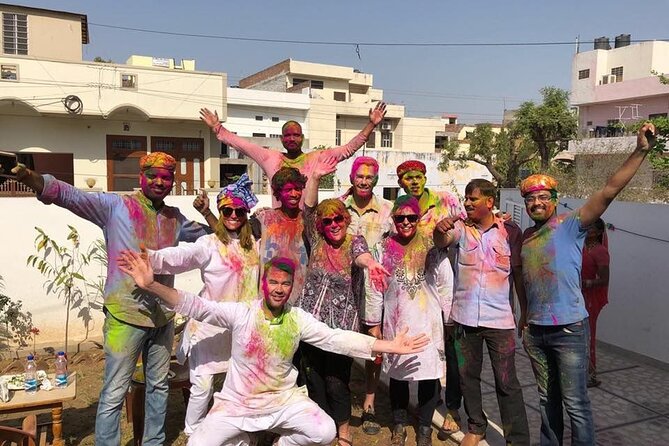
What I really like is the mix of “see the classics” and “see how people actually celebrate.” You get private local guides for the sightseeing blocks, and the Holi day is designed around joining in with local people in the Pink City.
The main thing to weigh is the pace. With several days packed with monuments plus a 4-hour Delhi-to-Agra drive, you will feel the schedule, and you should plan for extra costs since monument entrance fees are listed as not included (even if some stops show ticket inclusion).
Key highlights at a glance

- Private guides, private transport to keep your days efficient
- Holi in Jaipur with Holika Dahan and color play with local people
- Taj Mahal at sunrise and sunset viewpoints for different lighting and crowd vibes
- UNESCO stops across Delhi and Agra like Qutub Minar, Humayun’s Tomb, and Agra Fort
- Jantar Mantar and Hawa Mahal for Jaipur architecture that rewards slow looking
- Drivers named in feedback like Gopal, Surendra, and Vinod, suggesting good coordination during hectic days
Golden Triangle plus Holi in 7 days: what to expect

A Golden Triangle trip is usually about monuments. This one keeps the classic hit list, then adds a second goal: experience Holi in Jaipur as a shared community festival, not just a photo opportunity.
That matters because the tour is built around both kinds of time. The monument days are organized into blocks with guided stops, and the Holi portion is scheduled as a longer, less rushed experience. You should still expect a lot of walking, stairs, and standing in lines at major sights, but the guiding helps you get your bearings fast.
Also, this tour starts and ends in New Delhi, using private, air-conditioned vehicle transport. The driving between cities is not optional here, so you’ll spend time in the car. In exchange, you avoid wasting half-days on public transport logistics.
If you’re coming for March 2026 and you want Holi to feel real, not manufactured, this timing is the whole point.
More New Delhi tours and experiences for the shortlist


How the private setup improves your Delhi days
Delhi can be a challenge: huge distances, traffic that can shift hour to hour, and neighborhoods that move at their own speed. A tour that includes pickup and drop-off and private local guides makes Delhi feel more manageable.
Your transport is sized to your group: a 4-seater sedan for 1-2 people, a 6-seater wagon for 3-4, and a 10-seater minivan for 5-10. That detail matters. Smaller vehicle means fewer “air” problems getting through traffic, and it also keeps you closer to the guide during quick transitions.
Another small but useful thing: mineral water bottles are provided during journeys. On hot days, it saves time, and it helps you stay comfortable during museum and monument gaps.
One more practical note: you’ll see both free-entry sites and paid sites during the same week. Since the tour also states monument entrance fees are not included, you should confirm what is truly covered for your booking option before you arrive. You do not want a last-minute surprise when you reach a gate.
Delhi: Gurudwara Bangla Sahib, Step Wells, Qutub Minar, and Jama Masjid
Delhi on this route is about contrast. You start with spiritual calm and architectural detail, then shift into grand Islamic and Mughal landmarks, and finish in Old Delhi’s market energy.
Gurudwara Bangla Sahib and the tank legend
The first stop is Gurudwara Bangla Sahib. The highlight here is the site’s story: in 1664, the eighth Sikh Guru is said to have visited during a time of smallpox and cholera, curing people by distributing water from the tank. Even if you treat the story as legend, it’s a strong anchor for understanding why people come here and what the place means beyond sightseeing.
This is also the kind of stop where you can slow down. The mood is different from monuments that mostly beg for photos. It’s more about atmosphere and respect.
Agrasen Ki Baoli step wells
Next comes Agrasen Ki Baoli, a protected step well. It’s about 60 meters long and 15 meters wide, and the point is the scale of the stepped structure disappearing down toward the water level. Step wells are visually cool, but the real payoff is learning how people designed for water in India’s changing climate.
You’ll get a good “India isn’t only surface sights” moment early in the trip. It sets you up to notice design choices as you move through Delhi’s later architecture.
Qutub Minar and Lotus Temple
Qutub Minar is a UNESCO World Heritage site and a tall, layered landmark you can spot even before you arrive. It’s described as a 73-meter tower with five storeys, built in 1193 by Qutub-ud-din Aibak, founder of the Delhi Sultanate. If you like architecture that shows how power and technology were expressed in stone, you’ll enjoy how the details reward a careful look.
Then you visit Lotus Temple, built in 1986. It’s open to everyone regardless of religion, and that inclusive element changes the feel of the visit. It’s not about “securing the right ticket,” it’s about entering a space meant for visitors of all backgrounds.
India Gate and Parliament House views
India Gate is a war memorial, and it’s also treated as a picnic spot. That dual use is part of why India Gate matters. It shows how monuments can become public space, not just history with ropes around it.
You’ll also pass Parliament House, described as Sansad Bhavan, with a shape based on the Ashoka Chakra. Even if you only get a short look, it connects modern India to the country’s identity symbol.
Jama Masjid and Humayun’s Tomb
In Old Delhi, Jama Masjid is one of the largest mosques in the city. It was built by Mughal Emperor Shah Jahan between 1650 and 1656. You can feel the scale immediately. This is where Delhi shifts from “monuments on display” to “active religious architecture with real daily life around it.”
Then you head to Humayun’s Tomb, commissioned in 1558 by Empress Bega Begum. Humayun’s Tomb is a UNESCO stop and a major stepping stone to understanding Mughal garden and mausoleum design. The guide’s explanation is usually what turns a fast walkthrough into real learning, so keep your questions handy.
Chandni Chowk, Old Delhi shopping streets
Finally, you spend time in Chandni Chowk, centered on spice markets, dried fruits, silver jewelry, and bright saris, plus narrow streets with tiny shops. Even if you don’t shop, this stop gives you something Delhi does well: sensory context. You see how people live right next to major historic walls.
My practical advice: if you want photos, aim for specific shots and then keep moving. Crowds can make it hard to get clean views, especially during popular hours.
Agra: Agra Fort, Itmad-ud-Daula, and Taj Mahal from two angles
Agra is not subtle. The city is built around Mughal glory, and this tour follows that logic with a series of tombs and fortifications.
The Delhi to Agra drive and hotel check-in rhythm
The transfer is about 222 kilometers and takes around 4 hours. You’ll arrive, check in, and then continue sightseeing. Plan your first evening in Agra as mostly focused on monuments, not “wander for dinner forever.”
You’ll get more Taj time than most quick tours because this schedule includes both sunset and sunrise options. That alone changes the experience.
Agra Fort: the Mughal power base
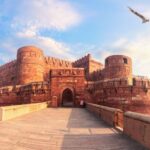
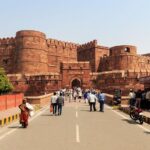
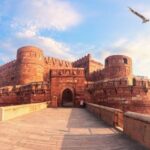
Agra Fort, also described as the Red Fort of Agra, is a UNESCO World Heritage site. The guide will likely connect it to Mughal emperors like Akbar and Shah Jahan, so the fort works as a history lesson in stone, not just walls.
Fort visits can feel long if you rush, so let yourself pause for views and details. This is one of those sites where understanding the layout helps.
Itmad-ud-Daula, often called Baby Taj
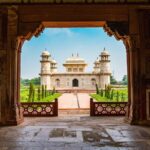
Itmad-ud-Daula is a Mughal mausoleum known as the Baby Taj. It’s presented as a jewel box, and if you like marble and floral patterns, it’s usually a satisfying contrast to the larger Taj Mahal. You’ll likely appreciate it even more after you’ve already seen the fort and before you reach the grand finale.
Taj Mahal Sunset View Point
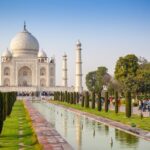
For the Taj, the schedule includes Taj Mahal Sunset View Point. The stated reason is to view Taj Mahal across the river away from heavy crowd pressure during sunset. This is a smart idea because sunset light changes everything, and a less congested viewpoint can mean more time to actually look.
Mehtab Bagh: the Taj garden perspective
Mehtab Bagh is a garden restored for tourists viewing Taj Mahal. It sits like an oasis moment between tombs. If you want the Taj framed by greenery rather than only marble, this stop is the balance.
Taj Mahal sunrise and Fatehpur Sikri: the day beyond Agra
This part of the trip is about stacking iconic sights without losing the sense of place.
Taj Mahal at sunrise
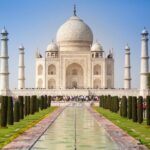
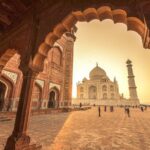
The next morning brings Taj Mahal with sunrise, described as an ivory-white marble mausoleum commissioned in 1632 by Shah Jahan. Sunrise is often less forgiving on time, but it helps you catch a softer look to the marble. It also sets you up to feel like you truly “earned” your Taj moment with a full day of context around it.
A practical note: sunrise typically means you’ll need patience and early energy. If you’re sensitive to morning starts, plan your sleep early.
Fatehpur Sikri: the City of Victory
Fatehpur Sikri, also known as the City of Victory, is built in the late 16th century by Emperor Akbar. It served as the Mughal Empire’s capital for about a decade. That detail gives the place weight. You’re not just visiting a ruin, you’re standing in a former seat of power.
Expect a lot of stone surfaces and courtyard walking. The payoff is how the complex tells a story of an empire trying something big and then moving on.
Chand Baori stepwell in Abhaneri
Then you go to Chand Baori in Abhaneri, described as a remarkable stepwell extending about 30 meters into the ground and one of the largest and deepest in India. Step wells are hard to visualize from a description alone. Once you’re there, you see why they were engineered for water access, and why they look so dramatic in photos.
This stop is also a good break from tomb and fort repetition. It resets your brain with a different architectural “language.”
Jaipur and Holika Dahan: where the festival gets real
Jaipur is the emotional center of this trip because the festival portion is not just “one stop.” It stretches across evening and the following day.
Holika Dahan celebration in Jaipur
After arriving and checking in, you have time at night for Holika Dahan celebration. Holika Dahan is the Hindu occasion celebrating the legend of the burning of Holika. The tour description also frames it as a temple festival style event with cultural ritual elements.
This is the moment where your Golden Triangle day plan stops being purely sightseeing. You shift from looking at history to witnessing living tradition.
Joining the Pink City Holi with local people
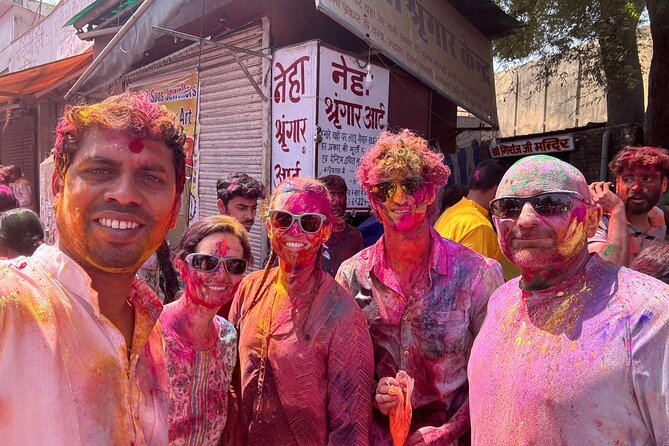
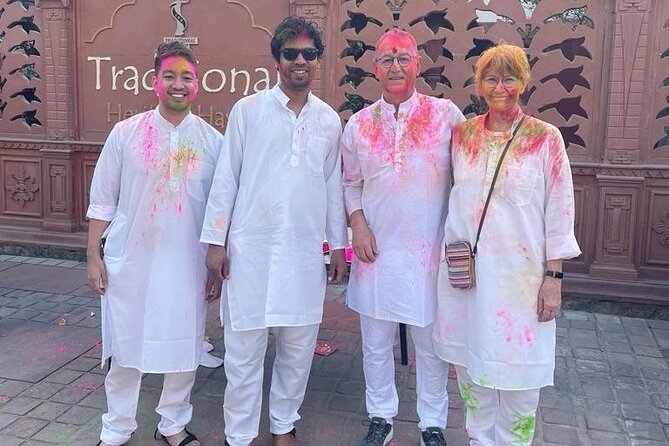
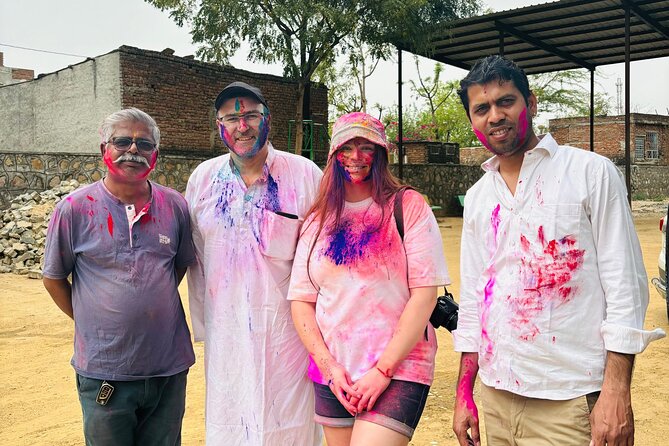
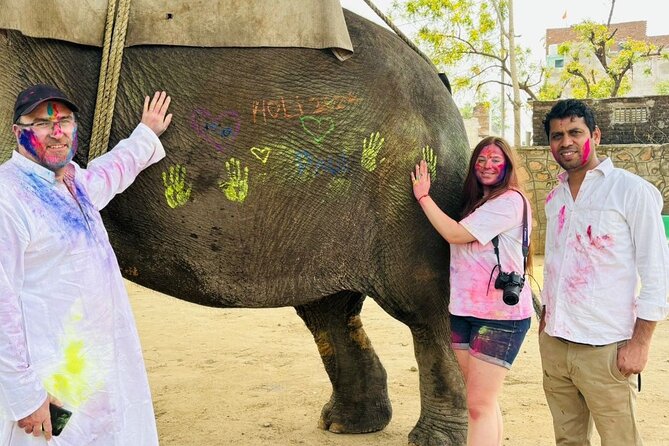
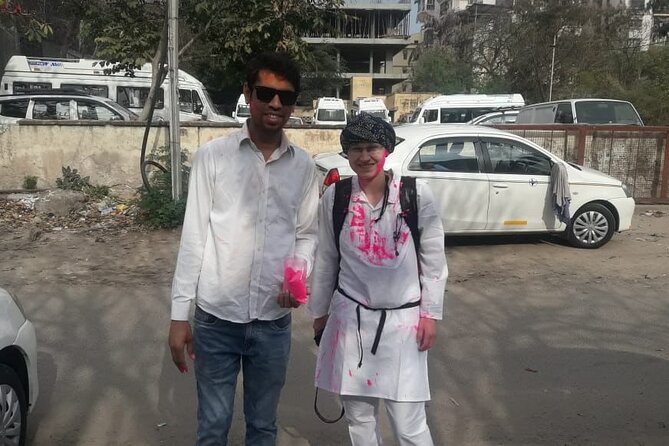
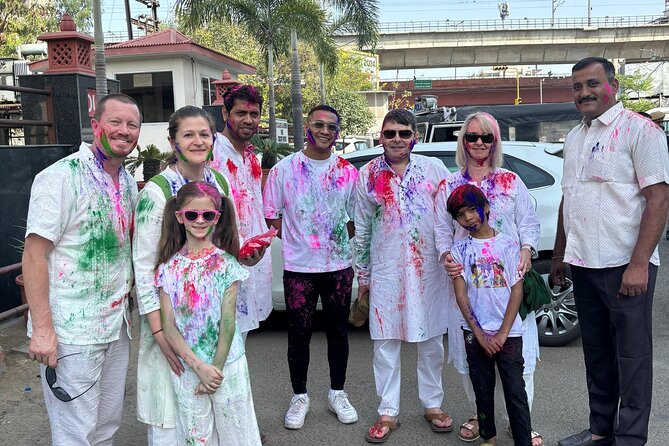
The next day is a longer Holi block in Pink City Jaipur. The schedule mentions calibration with local people, and it describes Holi as a week-long celebration featuring temple festivals, cultural events, and lively street parties with color throwing and traditional music.
You should expect messy, joyful participation if you choose to join in. Holi color is part of the event, so bring the right expectations for your clothes and skin. If you prefer to watch more than participate, you can usually do that too, but this program is designed for joining.
One detail from the trip feedback that I think matters: people have singled out the Govind Dev Ji temple area as special during the Holi experience. That kind of location choice tends to make the day feel more like a shared neighborhood ritual than a staged performance.
Jaipur sightseeing on Day 6: step wells, forts, Jal Mahal, and Jantar Mantar
After the festival energy, you’ll switch back to guided sightseeing. The itinerary here is a good mix: some places you can climb, some places you can view, and some places where you learn something you did not know existed.
Panna Meena ka Kund and the Palace-area step well
Panna Meena ka Kund is a step well near the Palace. Another stepwell helps you see patterns in local water design across Jaipur and Rajasthan. If you liked Agrasen Ki Baoli earlier, you will likely enjoy this as the “second chapter” to the water story.
Jaipur’s famous fort and palace squares tour
Then you visit Jaipur’s most famous fort, described as the capital of Rajasthan until 1728. The tour includes guided time over palaces, squares, and monuments, for about two hours.
This is a good day to take notes in your head. You’ll start seeing how royal power was displayed through walls, courtyards, and vantage points.
Jal Mahal photo stop
Jal Mahal is the palace floating on Man Sagar Lake, with a photo opportunity. Even if you only get a view from the shore, it gives you a calmer visual break between fort architecture and the next concentration of monuments.
Jantar Mantar, UNESCO and built in 1734
Jantar Mantar is listed as UNESCO and built in 1734. It’s described as a collection of nineteen architectural astronomical instruments built by the Rajput king Sawai Jai Singh II.
This is one of the most educational stops in the whole itinerary. If you’re into science, architecture, or measurement, ask the guide what you are seeing and why it looks the way it does. If you are more of a “photos first” person, you can still enjoy it, but taking five minutes to understand the instruments makes the visit stick.
Hawa Mahal and City Palace
Hawa Mahal, or Palace of Wind, is a five-storey pyramidal shaped monument in red and pink sandstone. Then you explore Maharaja’s City Palace for about an hour.
If you like layered details, Hawa Mahal is a treat. And City Palace gives you a sense of administrative and ceremonial life, not only royal drama. Just note: City Palace is listed as admission not included in the provided data, so you might pay there depending on what’s covered.
Day 7 Jaipur finishing touches: Birla Mandir and Galtaji Monkey Temple
On the last day, the tour keeps Jaipur calm and light, then sends you back to New Delhi.
Birla Mandir’s white marble latticework
Birla Mandir is noted for intricate latticework in white marble. The temple is dedicated to Lord Vishnu. It’s a fitting final spiritual stop, especially after the Holi days, because it changes the tone from festival noise to quieter devotion.
Galtaji Monkey Temple
Monkey Temple, also called Galtaji Temple, is famous for its complex structure and three sacred pools. It’s described as a buzzing tourist place. This is where you should be alert to animals and keep your valuables secure, but the big win is the setting and the unique water feature design.
Return drive to New Delhi
After Jaipur, you drive back to Delhi for about 5 hours, then drop you at the airport, hotel, or another desired location within the city. The ending is designed to feel flexible, not like you have to figure everything out yourself.
Price and what value you actually get for $335.72
At $335.72 per person, the big question is value. This package is not just a list of sites. It includes private, air-conditioned transport, hotel or airport pickup and drop-off, and guided sightseeing throughout.
Also included are 6 nights accommodations with breakfast if you book the option that includes hotels. If you select that hotel option, your “daily cost” effectively drops because you are folding lodging into the trip rather than buying it separately.
However, the tour data also says monument entrance fees are not included. At the same time, the itinerary labels some stops as admission ticket included. That conflict usually means coverage depends on how the operator bundles tickets, or what they consider part of their service.
So here is the practical approach I recommend: before you pay your final amount, ask them to confirm which sites have tickets already included for your exact booking. With a trip that includes Qutub Minar, Humayun’s Tomb, Taj-related viewpoints, and UNESCO stops, even a modest entrance cost adds up.
The other value factor is coordination around Holi. The feedback you have on hand calls out the coordinator Gopal and drivers like Surendra and Vinod for making the experience feel well organized. That matters in a festival week, because the logistics around color celebrations and crowded areas can get messy if nobody is steering.
Who this Golden Triangle with Holi festival suits best
This tour fits best if you want two things at once:
- Major monuments in Delhi, Agra, and Jaipur
- Holi in Jaipur where you can join local festivities and not just watch from behind glass
It may not be your best fit if you prefer slow travel and lots of free time. The days are structured, and you’re moving between cities. You should be comfortable with long drives and guided schedules.
If you’re traveling as a couple, a small group, or with family, the private vehicle setup helps. The group size matching to the vehicle also suggests it won’t feel overcrowded. And since rooms are provided on twin-sharing basis by default, it can work smoothly for most standard room setups.
Should you book this Holi Golden Triangle tour?
I think you should book it if March Holi in Jaipur is a top priority and you also want the Golden Triangle landmarks handled with guides and private transport. The Taj Mahal, the UNESCO stops in Delhi and Agra, and the Jaipur Holika Dahan and Holi participation are the kind of combo that turns one “India trip” into a specific memory you will talk about for years.
I would hesitate if you want a totally flexible itinerary, low-stress mornings, or you hate paying separate entrance fees on top of your tour price. The schedule is monument-heavy, and the entrance-fee situation needs confirmation for your booking.
If you do book, my advice is simple: pack for Holi color days, confirm what tickets are included, and treat the festival portion as the main event, not a side quest.
FAQ
Where does this tour start and how do I get picked up?
The tour start point is Indira Gandhi Intl Airport, New Delhi, India. The tour also includes hotel or airport pick-up and drop-off.
How long is the tour, and where does it end?
The tour is approximately 7 days. It ends with a drive back to New Delhi and drop-off at the airport, hotel, or another desired location in the city.
What is the price per person?
The listed price is $335.72 per person.
Does the price include hotels?
The inclusions say 6-nights accommodations with breakfast are included if you book the option including hotels.
Are monument entrance fees included?
The tour data lists monument entrance fees as not included. Some itinerary stops are marked as admission ticket included, so you should confirm what applies to your exact booking.
Is there free cancellation, and how far in advance can I cancel?
Yes, there is free cancellation. You can cancel up to 24 hours in advance for a full refund, but not if you cancel less than 24 hours before the experience starts.
More 7-Day Experiences in New Delhi
More Tours in New Delhi



More Tour Reviews in New Delhi
Not for you? Here's more nearby things to do in New Delhi we have reviewed







More Golden Triangle Tours to consider.
 ★ 5.03-Days Private Golden Triangle Tour: Delhi, Agra & Jaipur by CarTickets from $1271,107 traveller reviews
★ 5.03-Days Private Golden Triangle Tour: Delhi, Agra & Jaipur by CarTickets from $1271,098 traveller reviews
★ 5.03-Days Private Golden Triangle Tour: Delhi, Agra & Jaipur by CarTickets from $1271,107 traveller reviews
★ 5.03-Days Private Golden Triangle Tour: Delhi, Agra & Jaipur by CarTickets from $1271,098 traveller reviews
 ★ 5.03-Day Delhi, Agra and Jaipur Private Tour – India Golden TriangleTickets from $110812 traveller reviews
 ★ 5.0Four-Day Private Luxury Golden Triangle Tour to Agra and Jaipur From New DelhiTickets from $160807 traveller reviews
 ★ 5.05 Nights 6 Days Private Golden Triangle Tour – Delhi Agra JaipurTickets from $240574 traveller reviews
 ★ 5.04 Days Golden Triangle TourTickets from $146499 traveller reviews
 ★ 5.0Private Car and Drive for Golden Triangle (4N/5D)Tickets from $167451 traveller reviews
 ★ 5.0Private Golden Triangle Tour Delhi Agra Jaipur ( Top Rated )Tickets from $148436 traveller reviews
More useful Delhi routes