

Review · GOLDEN TRIANGLE TOURS
7 Day Golden Triangle Tour with Ranthambore Tiger Tour
Tigers and the Taj in one week is a big promise. The two best parts for me are the sunrise Taj Mahal visit with a guide and the two Ranthambore safaris that give you repeat chances to spot wildlife. The main catch to plan for is that monument entrance fees are extra, and the early starts can feel intense.
This tour is the kind of plan that runs on coordination and comfort. You travel by air-conditioned vehicle, you get professional city guides, and you have hotels lined up in the 3, 4, or 5-star range. In the feedback I saw, people praised clear communication from the team (including Ms. Sonia) and careful driving by chauffeur Mr. Raju, with one mention of an upgrade from a standard saloon to a roomier SUV when available. One more consideration: the Ranthambore game drives are in shared jeep/canter, so it is not a private wildlife ride.
Key highlights that make this Golden Triangle plus Ranthambore work
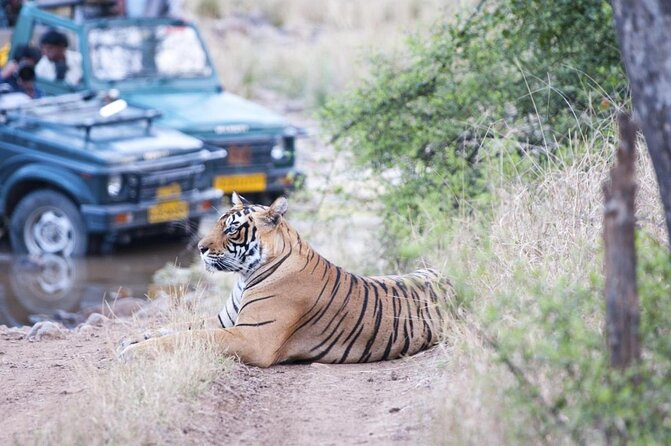
- Sunrise Taj Mahal at 5:45 AM, timed for softer light and a memorable start
- Two Ranthambore safaris (morning and evening) to improve your odds
- Old Delhi hits in one day: Jama Masjid, Chandni Chowk rickshaw ride, and Qutub Minar
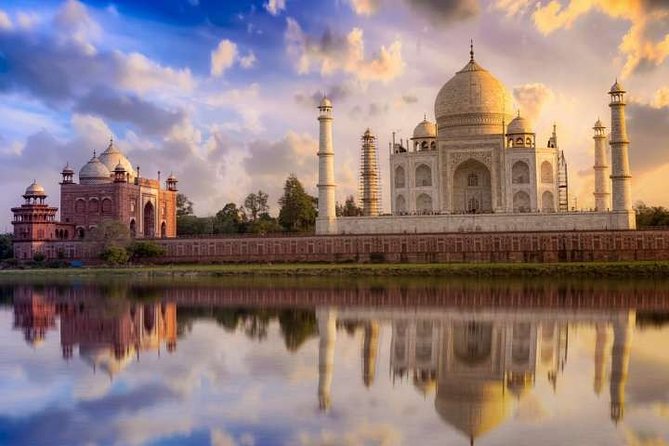
- Agra sunset views from Mehtab Bagh, a classic way to see the Taj from across the Yamuna
- Jaipur at a human pace with fort sights, observatory stops, and optional temple choice
- Tour team communication that has been specifically called out as responsive, including Ms. Sonia
First day in Delhi: Old Delhi icons plus Qutub Minar in one long block
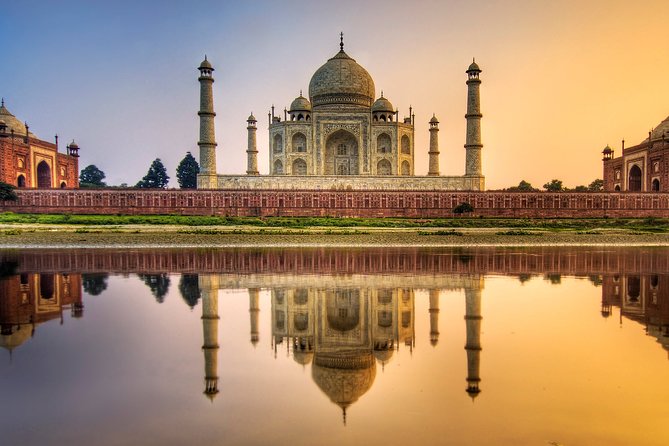
Delhi Day 1 is designed like a greatest-hits playlist. You start with pickup at 8:00 AM (or a specified time) from Delhi Airport, your hotel, a railway station, or another chosen location in Delhi, Noida, or Gurgaon. Then your guided sightseeing tour moves into Old Delhi and keeps going toward New Delhi landmarks.
You begin at Jama Masjid, built by Emperor Shah Jahan in 1656. This is India’s largest mosque and can hold around 25,000 worshippers. Even if you only spend about 30 minutes, it helps to look up at the red sandstone and white marble domes and minarets, because the scale is part of the experience.
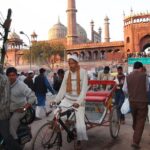
Next is Chandni Chowk, where you take a rickshaw ride. This is one of those moments that makes you slow down mentally. The streets feel like they were built for browsing, not rushing. You get a short ride window (about 30 minutes), so it is more about getting the flow of the area than shopping for a whole day.
Then you hit Red Fort from the outside. Here is the practical twist: around 70 percent of the fort is occupied by the Indian Army, so you see it externally and take photos rather than touring inside. If your goal is interior Mughal rooms, plan for that expectation now and save your full fort energy for Agra Fort later.
The day continues with Raj Ghat, the memorial marking Mahatma Gandhi’s cremation site. It is a simple black marble platform with an eternal flame, and it is worth the stop if you want a quieter, reflective pause between busy sights.
You also get India Gate, a war memorial designed by Sir Edwin Lutyens. It honors 74,187 Indian soldiers who died in World War I and the Third Anglo-Afghan War. The exact details matter less than the feeling of a long, formal memorial avenue, especially in the daylight.
Photo stops round out the New Delhi architecture side: Rashtrapati Bhavan (the President’s residence) and Parliament House. You finish the day at Qutub Minar, a UNESCO site. It was started by Qutb-ud-din Aibak in 1199 AD and completed by Iltutmish, and it is known as the tallest brick minaret in the world at about 73 meters. The admission for Qutub Minar is not included, so make sure you budget for that part.
Practical consideration: Day 1 is packed with short stops. If you hate tight timing, you might feel like you are always heading to the next photo point. If you like momentum and variety, this day will feel like a win.
More New Delhi tours and experiences for the shortlist
Agra Day 2: Fort and a sunset viewing spot for the Taj Mahal
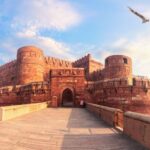
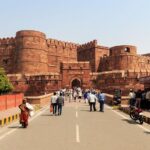
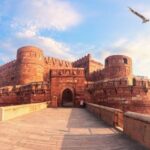
On Day 2, you drive from Delhi to Agra, about 4 hours, then check into your pre-booked hotel. After that reset, you start sightseeing with Agra Fort. This UNESCO World Heritage site was built by Emperor Akbar in 1565 and later modified by Shah Jahan. The tour timing is about 1 hour, but even in that time you get a sense of why this was a Mughal power center.
Admission is not included for Agra Fort, and the Taj fee is also not included later, so it is smart to treat entrances as a separate budget line from the start.
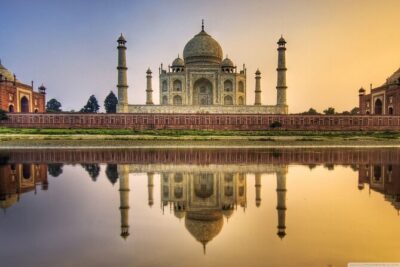
The highlight in the second half is Mehtab Bagh, often called the Moonlight Garden. You come here for sunset views, with the idea that the Taj looks especially cinematic from across the Yamuna. The garden was started by Emperor Babur in the 16th century and expanded by Shah Jahan, and it works well as a “watch the light change” experience rather than a “read every plaque” experience. Your time is short, around 40 minutes, but it is a good use of the evening.
Practical consideration: You are not touring everything. Red Fort is outside only, and Mehtab Bagh is a view-focused stop. That is not bad. It just means you are choosing a theme: classic monuments plus the best photo timing.
Sunrise Taj Mahal on Day 3: why the early start matters
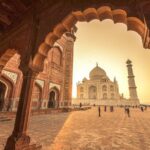
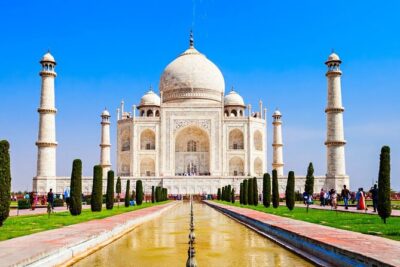
Day 3 starts with a true bucket-list moment: a 5:45 AM sunrise visit to the Taj Mahal. You meet your private guide in the hotel lobby, then head out. This part matters because the Taj Mahal is built to look different throughout the day, and sunrise is when the ivory-white marble can glow rather than reflect. You get about 2 hours there, and admission is not included.
You might be thinking: does sunrise really change the Taj experience? Yes, because it changes the mood. You are there before the day turns hot and before the main crowd energy fully ramps up. Even if you are not chasing “empty photos,” the soft light gives you a calmer feel, and that is often what people remember.
After the Taj, you return to your hotel for breakfast and then check out. The day then becomes a travel day with a meaningful stop: Fatehpur Sikri.
Fatehpur Sikri is the abandoned Mughal capital, about 35 km west of Agra, and it is UNESCO World Heritage. Emperor Akbar built it in 1571, and even though the city is no longer active, the ruins give you a real sense of how big the Mughal vision was. Your time is about 1 hour, so focus on the overall layout and the monumental scale rather than trying to “finish” the site.
Then you continue toward Ranthambore, arriving in Sawai Madhopur and checking into your hotel for the night.
Practical consideration: Day 3 is long. You have a very early start, a major monument, and then a transfer with another UNESCO site. This is not a slow, recovery day. If you like fast variety, you will be happy here.
Getting to Ranthambore: the road split that keeps you from feeling stuck
The drive segment is built to break up the long journey from Agra to wildlife time. You are not just sitting in a vehicle for hours and hours. Fatehpur Sikri acts as a “stretch stop,” with history you can look at and feel.
This is also where you’ll start shifting your mindset. Delhi and Agra are about human-made grandeur. Ranthambore is about patience. The scenery along the way may not be the point, but the timing is. By the time you reach Sawai Madhopur, you are already primed to switch from towers and tombs to spotting motion in the trees.
Ranthambore National Park safaris: two chances, morning and evening rhythm
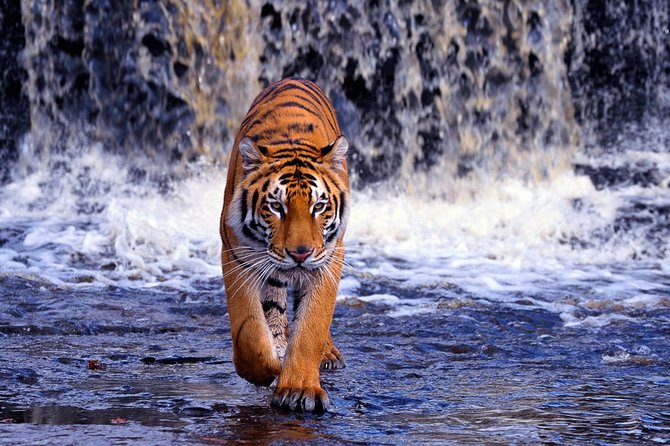
Day 4 and Day 5 are the wildlife core. You start Day 4 with pickup at 6:00 AM for the morning safari. The game drive runs about 2 to 3 hours and takes place in Ranthambore National Park, one of India’s famous tiger reserves. In terms of what you might spot, the tour description specifically mentions Bengal tigers as the main attraction, along with leopards, deer, and exotic birds.
The key point is: you are not guaranteed a tiger. But you are getting two separate field runs, which is the best practical way to improve your odds without making your whole week one long “wait and hope” day.
You return to the hotel for breakfast, then have lunch plus downtime midday. That break matters because safari fatigue is real. Later, you head back out at 2:30 PM for an evening safari lasting about 3 to 4 hours. After that, you return for your overnight stay.
So your wildlife schedule is: morning session, long midday recovery, evening session. It is a good balance for most people because it keeps you from burning out before you even get the second chance.
Practical consideration: These safaris are in shared jeep/canter, and that means you follow the vehicle flow and timing of a group. If you are traveling with a strict plan for photos or want total control of where you sit, shared vehicles can feel limiting. If you care most about being on the ground and out there, it is usually the best value way to do Ranthambore.


Jaipur on Day 5: one free evening, two temple options
On Day 5 you drive to Jaipur, about 3 hours. You check in and you keep the evening flexible. You can visit either Galtaji Monkey Temple or Birla Mandir based on your preference.
Galtaji is known for its seven sacred water tanks (kunds). It also has a big community of rhesus macaques and langurs, which is why it is nicknamed the Monkey Temple. Your visit time is about 40 minutes, and it is the kind of stop where you might spend extra attention watching how the animals behave around people.
Birla Mandir is a modern Hindu temple made entirely of white marble, dedicated to Lord Vishnu and Goddess Lakshmi. It typically feels more “manicured” than the older temple vibe, with detailed carvings and mythological scenes. Your time there is about 30 minutes.
Practical consideration: This is a genuine choice, not just a menu. If you prefer fewer animals around, choose Birla Mandir. If you like being close to everyday religious life and local character, Galtaji can be fun.
Jaipur Day 6: fort complex, observatory, and royal photo stops
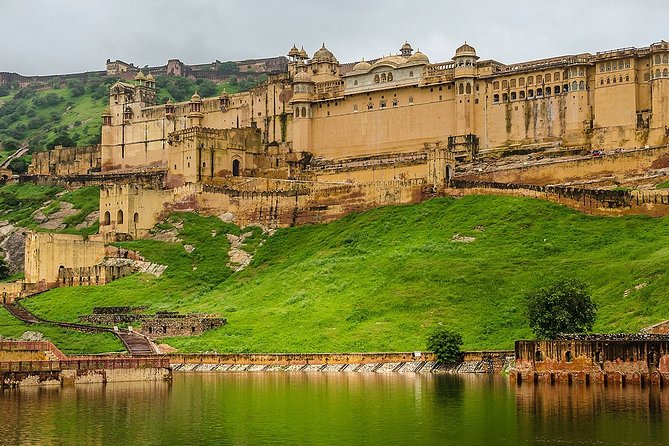
Day 6 is your full Jaipur sights day. You begin at the Jaipur Fort area, a UNESCO World Heritage site built from pale yellow and pink sandstone with white marble. Raja Man Singh I built it in 1592 and Jai Singh I expanded it later. Your time is about 2 hours, which is enough to take in the palace complex scale even if you do not feel like you can read every wall.
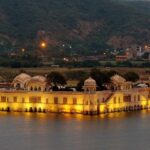
A short photo stop follows at Jal Mahal, the Water Palace in Man Sagar Lake. The palace has a five-story design, and when the lake is full, it appears like it is floating because lower floors are submerged. Your stop is only about 10 minutes, so it is for photos and a quick look, not a long walk.
Next is City Palace of Jaipur, a royal residence built by Maharaja Sawai Jai Singh II in 1729, serving as the seat of the Maharaja of Jaipur. Your time is about 1 hour. It combines Rajput, Mughal, and European influences, so it tends to satisfy people who like architecture as much as people who like stories of rulers.
Then you go to Jantar Mantar, an astronomical observatory and UNESCO site built in 1734 by Sawai Jai Singh II. It includes 19 astronomical instruments, including the world’s largest stone sundial. The time is about 40 minutes. This stop is a great reminder that the “science” of the past was visible and public, not hidden in labs.
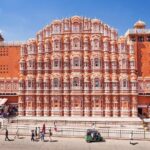
Finally, you get a photo stop at Hawa Mahal, the Palace of Winds. Built in 1799, it was designed for royal women to observe street life without being seen. The five-story honeycomb-like facade with windows is the main show. Your stop is about 10 minutes, so treat it like a view moment and move on.
The day ends with Jaipur local markets for about 1 hour. The tour description highlights handicrafts, jewelry, textiles, and traditional Rajasthani souvenirs. I like this timing because you still have enough daylight to compare items, and you are not forced to shop at your last stop of the day.
Practical consideration: This day is packed again with short windows. You can still have meaningful moments, but you cannot expect deep dives into every site.
Day 7 options: how you finish in Delhi or Jaipur
On Day 7, you have a choice based on what your onward travel looks like.
Option 1 is depart from Jaipur International Airport, with driver drop off at the airport or your hotel. Option 2 is depart from Delhi, with driver drop off at Delhi International Airport or your preferred location in Delhi.
This flexibility is useful if you want to add extra days in Rajasthan, or if your international flight routes work better out of one city than the other.
Price and value: what $599 buys, and what to budget for entrances
The listed price is $599 per person for about 7 days. The value case is pretty clear because the tour includes a lot of built-in structure:
- hotel stays in the 3, 4, or 5-star range (based on option chosen)
- air-conditioned transport
- professional city tour guides
- packaged drinking water in the car
- 2 jungle safaris in shared jeep/canter
- breakfast included for 6 mornings
The big thing not included is entrance fees for monuments, listed as $79 per person. Since the Taj Mahal and multiple UNESCO sites are specifically marked as not included, you should plan for that cost so it does not surprise you later.
My advice: treat the total as “base tour price plus monument entries,” then add a little for snacks and personal spending. If you are the kind of traveler who likes guides and prefers having transportation organized, this is one of the more cost-efficient ways to cover four major destinations in a week while still getting tiger safari time.
One more value note: this tour is often booked about 72 days in advance on average. If you are traveling in a peak window, you will want to book sooner rather than later.
Should you book this Golden Triangle plus Ranthambore tour?
I would book it if you want a classic India lineup with a real wildlife component, not just a sightseeing checklist. The strongest reason is the combination of sunrise Taj Mahal plus two Ranthambore safaris. That pair hits “wow” moments on both ends of the spectrum: human-made wonder and real animals in the wild.
It might not be your best fit if you hate early mornings, because sunrise Taj and the 6:00 AM safari start both demand energy. It also might feel tight if you want slower, longer site visits, because many landmarks are timed as quick stops with guided highlights.
If you like organized travel with professional guides, and you want to make the most of a short week, this tour is a solid choice.
FAQ
Where does the tour start and end?
The tour starts and ends in New Delhi.
How long is the Golden Triangle with Ranthambore tour?
It is listed as 7 days (approx.).
Do I get pickup included?
Yes. Pickup is offered from Delhi Airport, hotels, railway stations, or your chosen location in Delhi, Noida, or Gurgaon, at 8:00 AM or your specified time.
What is included for Ranthambore tiger viewing?
You get 2 jungle safaris in Ranthambore in shared jeep/canter, plus Ranthambore National Park safari time during those drives.
Is the Taj Mahal sunrise visit included?
Yes. The schedule includes a sunrise visit to the Taj Mahal at 5:45 AM.
Are hotel stays and meals included?
Hotels are included (3, 4, 5-star options depending on what you choose) and breakfast is included for 6 mornings.
Are monument entrance fees included?
No. Monument entrance fees are listed as $79.00 per person and are not included in the tour price.
What is the cancellation rule for a full refund?
You can cancel up to 6 days in advance for a full refund. For a full refund, you must cancel at least 6 full days before the experience start time.
More 7-Day Experiences in New Delhi
More Tours in New Delhi



More Tour Reviews in New Delhi
Not for you? Here's more nearby things to do in New Delhi we have reviewed







More Golden Triangle Tours to consider.
 ★ 5.03-Days Private Golden Triangle Tour: Delhi, Agra & Jaipur by CarTickets from $1271,107 traveller reviews
★ 5.03-Days Private Golden Triangle Tour: Delhi, Agra & Jaipur by CarTickets from $1271,098 traveller reviews
★ 5.03-Days Private Golden Triangle Tour: Delhi, Agra & Jaipur by CarTickets from $1271,107 traveller reviews
★ 5.03-Days Private Golden Triangle Tour: Delhi, Agra & Jaipur by CarTickets from $1271,098 traveller reviews
 ★ 5.03-Day Delhi, Agra and Jaipur Private Tour – India Golden TriangleTickets from $110812 traveller reviews
 ★ 5.0Four-Day Private Luxury Golden Triangle Tour to Agra and Jaipur From New DelhiTickets from $160807 traveller reviews
 ★ 5.05 Nights 6 Days Private Golden Triangle Tour – Delhi Agra JaipurTickets from $240574 traveller reviews
 ★ 5.04 Days Golden Triangle TourTickets from $146499 traveller reviews
 ★ 5.0Private Car and Drive for Golden Triangle (4N/5D)Tickets from $167451 traveller reviews
 ★ 5.0Private Golden Triangle Tour Delhi Agra Jaipur ( Top Rated )Tickets from $148436 traveller reviews
More useful Delhi routes