
Review · GOLDEN TRIANGLE TOURS
6 Days: Golden Triangle With Ranthambore Tour With 5 Star Hotels
A tiger day plus the Taj Mahal in one trip sounds like a lot, and this route is built for exactly that mix. I like the private, guided flow that keeps you moving without the stress of arranging transport and tickets day by day. I also like that you get a true wildlife block at Ranthambore National Park, not just a quick drive-by. One thing to consider: many major monuments list tickets as not included, so what you pay can change based on whether you choose the 4-star or 5-star hotel option.
This is a round-trip style trip based out of Delhi, covering Delhi, Jaipur, Ranthambore (near Sawai Madhopur), Fatehpur Sikri, and Agra. Expect an efficient pace with short guided stops, which is great if you want highlights fast, but it does mean you will spend less time lingering in one place.
I also appreciate the human side of the planning. The tour includes hotel breakfasts throughout, plus dinners, including a traditional meal with an Indian family in Jaipur, which is a nice break from the usual sightseeing routine.
Key points to know before you go
- Private AC vehicle with an experienced driver means fewer logistics headaches across Delhi, Jaipur, and Agra.
- City-specific guiding is included for Delhi, Jaipur, Fatehpur Sikri, and Agra, helping you make sense of what you are seeing.
- Ranthambore tiger chances come with a dedicated park visit window, and the wildlife setting is what you are paying for.
- 4-star vs 5-star option changes costs since monument entry fees are listed as only included with the 5-star option.
- Short, efficient sightseeing blocks (often around 30 to 40 minutes per stop in Delhi and Jaipur) keep the trip moving.
- Two kinds of dinners are included, including one traditional family dinner in Jaipur.
Private 6-day Golden Triangle with Ranthambore: what this deal really gives you
This tour is built around the classic Golden Triangle route, then adds Ranthambore so your trip includes both big-city Mughal landmarks and a real shot at Bengal tigers. You travel in a private air-conditioned vehicle with an experienced driver, which matters in North India. Traffic, heat, and long distances can wear you down fast, and having one consistent driver helps the day feel smoother.
The other value piece is that your time is not spent on the back-and-forth of planning. You have local guidance for several key cities, and the itinerary is organized so you hit the marquee sights: Red Fort, Jama Masjid, Qutub Minar, Humayun’s Tomb in Delhi, then Amer Fort, City Palace, Jantar Mantar, and the Jaipur photo stops, and then Fatehpur Sikri plus the Taj Mahal and Agra Fort.
Price-wise, $387 per person is not the high end, especially considering that it includes 5 nights of 4-star or 5-star hotels with breakfast, plus transportation and multiple guided days. You still need to budget for what is not included, like lunch and monument entry fees when you choose the 4-star option.
If you are a first-timer to North India, the setup is especially practical. You get the highlights, but you do not feel like you are doing everything alone. If you are a repeat visitor who wants long museum time or deep neighborhood wandering, the pace might feel a bit fast.
More New Delhi tours and experiences for the shortlist


Day 1 in Delhi: Red Fort, Jama Masjid, Qutub Minar, Humayun’s Tomb
Your Delhi day is a classic “Old Delhi meets South Delhi” starter pack. The schedule is tight, with about 30 minutes listed for each major stop, which tells you the goal is to orient you and get the big visuals done early.
Red Fort (Lal Qila) is the Mughal power symbol of Old Delhi. It is listed as a 30-minute stop, with the note that the admission ticket is not included. Even if you only spend a short amount of time, having a guide helps you connect the fort’s role in Mughal rule and the Shah Jahan era to what you see on the ground.
Next is Jama Masjid, one of Delhi’s biggest mosques. Same deal: about 30 minutes, and tickets are not listed as included. A good guide here matters because mosques have rules, routines, and architecture details that you might miss if you just wander in with no context.
Then you head to Qutub Minar in the Qutb complex. It is UNESCO-listed, and it is described as Delhi’s victory tower. Again, it is a short stop, so think of it as a guided “see the landmark, understand what you are looking at” moment.
Finally, Humayun’s Tomb rounds out the day with a Mughal tomb complex that is both visually striking and historically important. It is also shown as a 30-minute stop with tickets not included.
One small extra: you will pass Parliament House in New Delhi, noted as being around 750 meters from Rashtrapati Bhavan. It is not the main event, but it gives a quick sense of the capital’s modern core before you return to heritage sites.
The drawback to plan for in Delhi: the stop lengths are brief. If a site pulls you in, you may wish you had longer. Still, if you want to cover a lot without exhausting yourself, this is a sensible first day.
Day 2 in Jaipur: Albert Hall, Birla Mandir, Patrika Gate
Jaipur day starts with culture that is easier on your legs than forts. Albert Hall Museum is listed as a 1-hour visit. It is described as the oldest museum of Rajasthan and an example of Indo-Saracenic architecture, which is exactly the kind of detail a guide can translate into something you actually notice while walking around.
Then you visit Birla Mandir, a white marble Hindu temple. It is listed as a 30-minute stop and marked as free. This matters for value because it adds a memorable stop without extra ticket costs.
Next is Patrika Gate, connected to Jahawar Circle Park. It is also listed as a 30-minute free stop. Even if you are not a “shopping gate and photo spot” person, this is a nice reset from temple and fort touring.
Why this day works: you start Jaipur with a mix of indoor culture and low-stress walking. It helps you adjust to the city and to the pace of guided stops. It also spaces out the heavy hitters (like Amer Fort) until the next day.
Day 3 in Jaipur: Amer Fort, City Palace, Jantar Mantar, Hawa Mahal
This is the day where Jaipur turns into landmarks on landmarks. Amer Fort is first, listed for 1 hour 30 minutes. The description puts it in Amer, about 11 kilometers from Jaipur, built by Raja Man Singh with additions later by Sawai Jai Singh. If you go into the fort with that context, you will notice how the place evolved instead of seeing it as one random big wall.
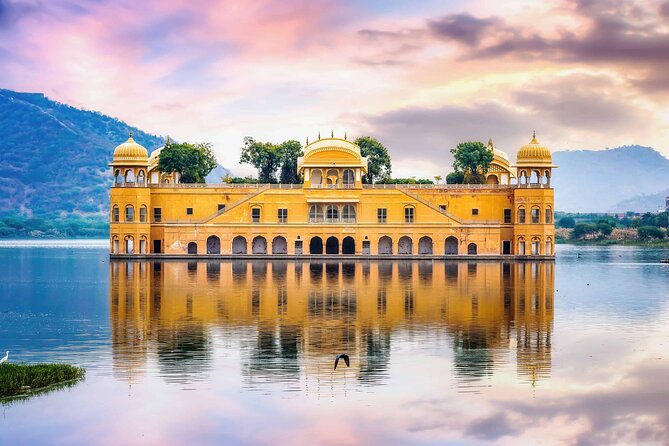
There is also Jal Mahal, the palace in the middle of Man Sagar Lake. It is listed as part of the stop set, so you will likely get a viewpoint and a quick appreciation of how the palace design uses the lake as a visual frame. If you are hoping to linger and take tons of photos from multiple angles, remember the schedule is built for efficiency.
Then you head to City Palace of Jaipur, listed at 40 minutes. It is the seat of the Maharaja’s court history, starting when Maharaja Sawai Jai Singh II moved from Amber to Jaipur in 1727. A guide helps you connect the palace with the broader story of Jaipur’s rulers, rather than treating it like one more courtyard.
Next is Jantar Mantar, another UNESCO site and listed for 40 minutes. It is known for astronomical instruments, including the world’s largest stone sundial. Jantar Mantar can feel confusing if you do not know what you are looking at, so this is one of those stops where you really benefit from a guide.
Finally comes Hawa Mahal, the palace with red and pink sandstone, extending into the women’s chambers, listed as part of the stop set. Even if you cannot see every angle due to crowds and time, understanding why it was built the way it was helps you appreciate the facade design beyond the postcard look.
Practical consideration: by the end of Day 3, you have gone from fort to palace to science to facade. If you tend to get “museum fatigue,” you will want to keep your water bottle handy and take shade breaks when you can. The structure is efficient, but the sites are still outdoors.
Day 4 in Ranthambore: tiger territory and a focused park visit
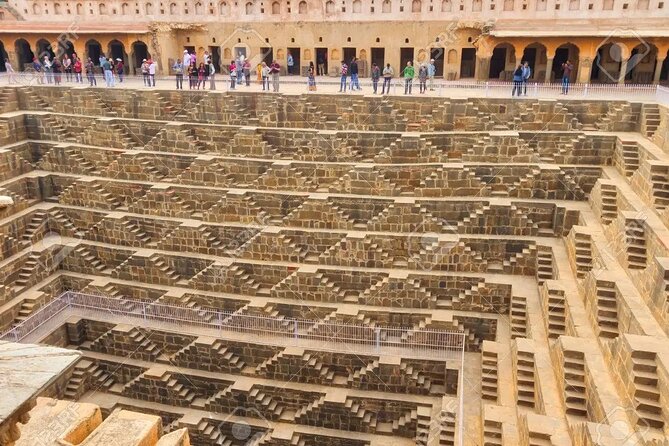
Day 4 is the wildlife anchor of the whole trip: Ranthambore National Park, near Sawai Madhopur. It is described as a former royal hunting ground and home to tigers, leopards, and marsh crocodiles. You also get key landmarks like Ranthambore Fort on a hilltop and Ganesh Mandir inside the park area.
The schedule lists around 3 hours for the park visit. The listing also notes admission ticket free for this stop, so the big cost driver here is more about getting the safari experience right than paying entrance fees. Still, you should treat tiger sightings as chance-based. The park is what matters: the dry landscape, the water features, and the fact that the animals are actually living there.
There is also Padam Talao Lake, described as known for water lilies. This kind of detail matters because it gives you a sense of where animals may be drawn to water. When you know there is a lake and that lily areas exist, you pay more attention to how habitats shape sightings.
One more important note for how this feels: there is a sharing safari mentioned as only available with the hotel options. That means you should expect to be part of a group safari set-up rather than a fully private vehicle for the tiger drive.
How to get the most out of this day: dress for early and late sun, bring water, and stay patient. Your schedule gives a dedicated wildlife block, and that is the right way to do Ranthambore on a short trip.


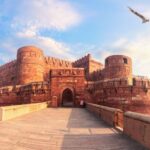
Day 5 in Agra area: Fatehpur Sikri, Taj Mahal, and Agra Fort
Day 5 is your Mughal showcase day, and it is built around two UNESCO-heavy hits: Fatehpur Sikri and the Taj Mahal, plus Agra Fort.
Start with Fatehpur Sikri, listed for 1 hour 30 minutes. It is described as founded by a 16th-century Mughal emperor, with red sandstone buildings clustered at its center. You get key sights like Buland Darwaza gate, the nearby Jama Masjid, the marble tomb of Salim Chishti, and the Diwan-E-Khas hall with its carved central pillar. There is also mention of Jodha Bai’s Palace mixing Hindu and Mughal styles, and the Panch Mahal with views over the site.
This is a place where a guide can keep you from getting lost in names and rooms. Even when the time is limited, it helps you understand what each structure is and why it was placed there.
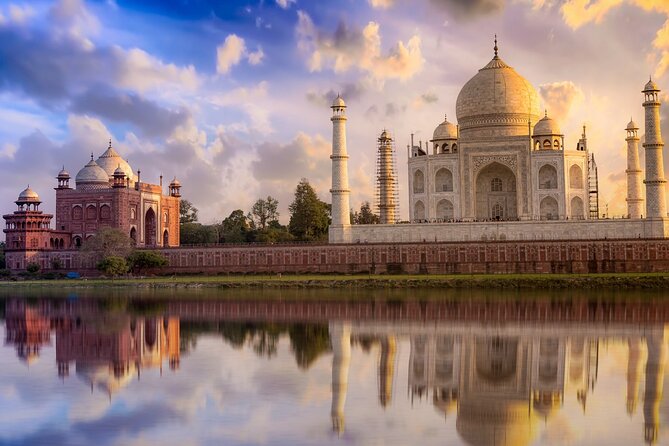
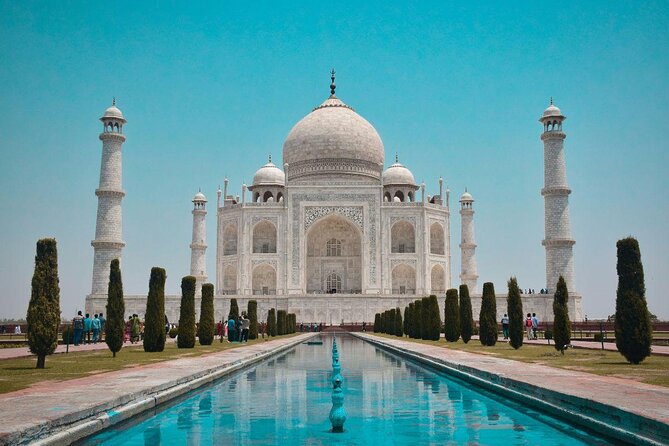
Then you go to the Taj Mahal, listed at 1 hour 30 minutes. The note here says admission ticket is not included, so plan for that extra cost unless you chose the 5-star option that includes monument entry fees. The Taj Mahal is described as the ivory-white marble mausoleum commissioned by Shah Jahan in 1632 for Mumtaz Mahal, plus Shah Jahan’s own tomb. If you walk in with that context, you start noticing symmetry, layout, and why the marble looks the way it does in different light.
Finally, Agra Fort is a 40-minute stop. It is described as built during 1565 to 1573 for Akbar and served as residence for rulers from the Sikarwar clan until Mughal occupation. It also notes the capital shift from Agra to Delhi in 1638. Agra Fort is not as famous as the Taj, but it can feel more grounded because it ties the Mughal story to daily rule and power.
Watch the pacing: this day packs three big historical sites. You might feel you want more time, especially at the Taj Mahal, but the schedule is designed to fit it all within a short window.
Included dinners and the “not just sightseeing” cultural touch
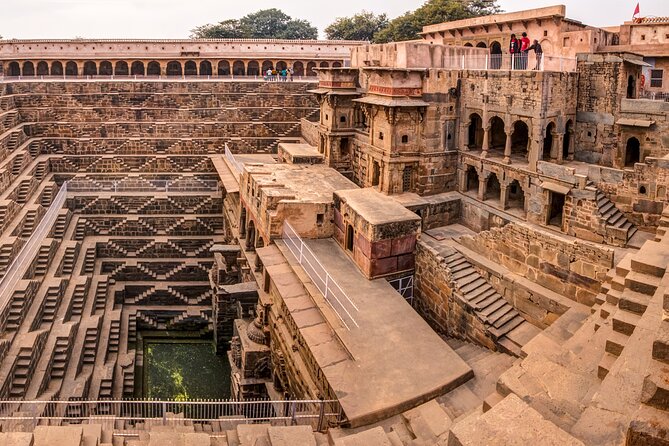
Food on this trip is not a full festival, but it is structured in a way that prevents your day from falling apart.
Breakfast is included for the days noted across your stay. There is also one dinner at the hotel in Ranthambore. That is a smart inclusion because after a safari day, you typically do not want a long search for food.
In Jaipur, there is a bigger cultural highlight: a traditional dinner with an Indian family. This is the type of experience that can make the trip feel personal rather than purely checklist tourism. It is also the one dinner on the schedule that is explicitly framed as family-hosted, which usually means you will learn a few things you would not pick up from a standard restaurant meal.
One small caution: lunch is not listed as included, and additional dinners outside the plan are also not included unless specified. So you should expect some out-of-pocket daily meals while you sightsee.
Price, hotel level, and what you should budget for
Let’s talk value plainly. At $387 per person for about 6 days, you are paying for a bundle: private AC transportation, 5 nights of hotels, breakfast, guides in several cities, and multiple major stops across Delhi, Jaipur, Fatehpur Sikri, and Agra, plus the park visit time in Ranthambore.
Where the price can shift for you is in two areas:
- Hotel level (4-star vs 5-star): the data says monument entry fees are only included with the 5-star option. Many of the listed stops show admission tickets not included.
- Meals outside the plan: lunch and most extra meals are not included.
So, if you choose 4-star, you should mentally plan for monument ticket costs in Delhi and Agra sites like Red Fort, Jama Masjid, Qutub Minar, Humayun’s Tomb, and the Taj Mahal, since those are marked as admission not included in the stop notes. With 5-star, monument entry fees are included, which can make the trip feel simpler and more predictable.
My tip for decision-making: figure out which option reduces your stress more. If you hate ticket math and want a smoother day, the 5-star option might be worth it for the included entry fees alone. If you are comfortable paying tickets yourself, 4-star can keep the package closer to the headline price.
What you gain from having guides in multiple cities
One of the most praised aspects is the personal attention and the way the tour is organized city by city. I like how the guidance is not just a lecture. The structure supports the idea that you are not trapped in rigid timing. Guides can explain monuments clearly, and you can often adjust site entry choices based on what you care about most.
In the same spirit, the tour uses a consistent approach: you are greeted by your driver, and you get a new guide in each city. That can be a big advantage. Each guide can focus on local context, and they are not trying to guess what you already know.
That said, the pace is still “highlights fast.” The stops are often listed around 30 to 40 minutes. You will get the key sights, but if you want slow travel, you will need to choose your must-sees and let the rest be quick hits.
Who this tour suits best
This is a great fit if you want:
- A lot of major sights in a short time, without planning transport and hotel transfers.
- One organized wildlife day at Ranthambore, so you can keep your trip efficient.
- Guided context for the big Mughal-era and Jaipur landmark stops.
It is less ideal if you want:
- Long, unhurried museum time or deep neighborhood exploring.
- A fully private safari experience in Ranthambore, since the safari is described as sharing with the hotel options.
If you are traveling as a solo person, the personal-service angle is a clear advantage. Also, the tour is private in the sense that only your group participates, so you are not getting mixed into random schedules with strangers.
Should you book this Golden Triangle with Ranthambore tour?
I would book it if you want a clean, organized way to cover Delhi, Jaipur, Fatehpur Sikri, Agra, and Ranthambore in one go, and you like having guides help you make sense of the landmarks. The combination of Taj Mahal time, a dedicated Ranthambore park visit, and included dinners (including the family dinner in Jaipur) gives you more than the usual “drive and photo” version of the Golden Triangle.
I would pause if you strongly prefer to travel at your own pace, or if you know you will want lots of extra ticketed time at places like the Taj Mahal and Red Fort. With the stop lengths set and tickets sometimes not included in the 4-star option, you may end up feeling rushed unless you pick the 5-star package for more inclusions.
FAQ
How long is the Golden Triangle with Ranthambore tour?
It runs for 6 days (approximately), starting and ending in New Delhi.
Is pickup included?
Yes, pickup is offered.
Is this a private tour or a group tour?
It is described as private, meaning only your group participates.
What meals are included?
The package includes daily breakfasts, one dinner with an Indian family in Jaipur, and one dinner at the hotel in Ranthambore.
Are monument entry fees included?
Monument entry fees are included only with the 5-star hotel option. For other options, monument tickets are listed as not included on several stops like Red Fort and the Taj Mahal.
Is the Ranthambore safari private?
The safari is described as sharing, and it is only mentioned as being offered with the hotel options.
What is the cancellation window for a full refund?
You can cancel up to 6 days in advance for a full refund.
How does the itinerary end?
After breakfast on the last day, you are dropped at your desired destination in New Delhi.
More 6-Day Experiences in New Delhi



More Tours in New Delhi



More Tour Reviews in New Delhi
Not for you? Here's more nearby things to do in New Delhi we have reviewed








More Golden Triangle Tours to consider.
 ★ 5.03-Days Private Golden Triangle Tour: Delhi, Agra & Jaipur by CarTickets from $1271,107 traveller reviews
★ 5.03-Days Private Golden Triangle Tour: Delhi, Agra & Jaipur by CarTickets from $1271,098 traveller reviews
★ 5.03-Days Private Golden Triangle Tour: Delhi, Agra & Jaipur by CarTickets from $1271,107 traveller reviews
★ 5.03-Days Private Golden Triangle Tour: Delhi, Agra & Jaipur by CarTickets from $1271,098 traveller reviews
 ★ 5.03-Day Delhi, Agra and Jaipur Private Tour – India Golden TriangleTickets from $110812 traveller reviews
 ★ 5.0Four-Day Private Luxury Golden Triangle Tour to Agra and Jaipur From New DelhiTickets from $160807 traveller reviews
 ★ 5.05 Nights 6 Days Private Golden Triangle Tour – Delhi Agra JaipurTickets from $240574 traveller reviews
 ★ 5.04 Days Golden Triangle TourTickets from $146499 traveller reviews
 ★ 5.0Private Car and Drive for Golden Triangle (4N/5D)Tickets from $167451 traveller reviews
 ★ 5.0Private Golden Triangle Tour Delhi Agra Jaipur ( Top Rated )Tickets from $148436 traveller reviews
More useful Delhi routes