

Review · GOLDEN TRIANGLE TOURS
8 Days Golden Triangle Tour with Ranthambore Tiger Tour
A sunrise Taj is the start you will remember. This 8-day loop pairs Golden Triangle landmarks with Ranthambore tiger-country drives, plus guided city time and private hotel pickup so your days feel organized even when the schedule is packed. I especially like the way the trip targets the big, high-impact moments, not just check-the-box stops.
Two things I like a lot: you get a sunrise Taj Mahal with a private guide, and you get two game drives in Ranthambore (morning and evening) to improve your odds for tiger sightings and other wildlife. The only real drawback is that most major monument entry fees are not included, so you should budget an extra $79 per person for admissions.
Quick hits: what makes this tour a strong choice
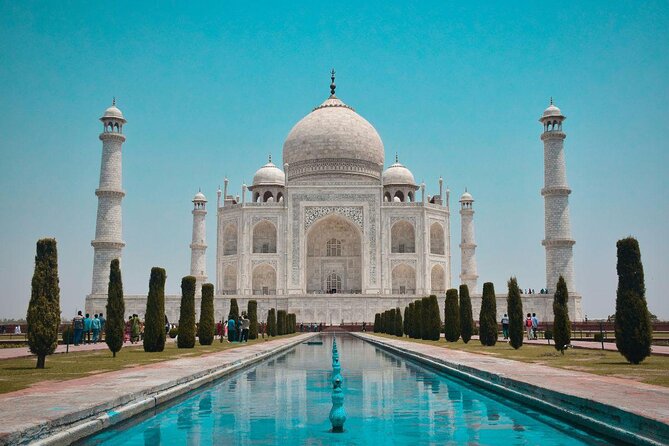
- Sunrise Taj Mahal with a private guide for the best light and fewer crowds than later in the day.
- Two Ranthambore safaris with morning and evening game drives, both with included safari time.
- Pro guides in each city plus an A/C vehicle with water to keep moving days manageable.
- Built-in structure for Old Delhi including a rickshaw ride in Chandni Chowk.
- Photo-focused stops in Delhi and Jaipur, so you spend time where it matters and skip the long detours.
- Name-on-the-ground service, including guides like Sonia and Vivek, and drivers such as Ajay and Rajendra Sharma.
Why this Golden Triangle plus Ranthambore combo works
This is one of those rare trips that gives you two different kinds of India in the same week. You start with Mughal and Rajput monuments in Delhi, Agra, and Jaipur, then shift gears to the big drama of the wild in Ranthambore National Park.
What makes the pairing work is pacing and logic. The Golden Triangle part stacks major landmarks efficiently, while Ranthambore comes at the point where you are ready for something completely different. You also get guided time in every city, which helps a lot when you are dealing with complex sites like Qutub Minar and Jantar Mantar.
You should also note how the trip is designed around timing. The sunrise Taj is early for a reason, and the safaris happen twice in the day. If you prefer slow travel, this may feel busy, but if you like a clear plan and strong highlights, it fits well.
You can also read our reviews of more tours and experiences in New Delhi.



Day 1 arrival in Delhi, then a full sights day on Day 2

Day 1 is the gentle landing. You meet your chauffeur and get transferred to your booked hotel, then you can reset after arrival. It is a small thing, but it matters because Delhi traffic can turn a simple transfer into a stress test.
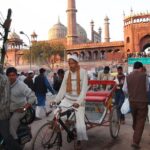
Day 2 is the big city day. You start with Jama Masjid in Old Delhi, built by Shah Jahan in 1656. It is known as one of India’s largest mosques, and the scale is the point here, even if you do not plan to go inside. Then you hit Chandni Chowk with a rickshaw ride, which is one of the easiest ways to get your bearings in the old-market maze.
From there, you keep the momentum. You go to Raj Ghat for the Gandhi memorial, then India Gate as the war memorial designed by Edwin Lutyens. The tour also includes photo stops at Parliament House and Rashtrapati Bhavan, which are fast, but useful for orientation and photos. Later you move to standout heritage sites including Humayun’s Tomb and Qutub Minar.
Two practical notes for you:
- Some major admissions are not included, so plan to cover entries like Jama Masjid and the UNESCO sites.
- Day 2 is long and involves a lot of stops, so build in water breaks and do not try to see everything with the same energy you would use on a museum crawl.
Entering Old Delhi: Jama Masjid, Chandni Chowk, and the Gandhi and Mughal stops
If you only knew Delhi from photos, this is the part that fixes that. Old Delhi gives you the contrast of scale and sound, then the day slows down for deeper meaning.
Jama Masjid is one of the anchors of the area, and even if you only spend part of your time on-site, the architecture and sheer size do the work. Chandni Chowk is your “feel the city” segment, and the rickshaw ride is the practical way to do it without walking yourself into a sore-knee situation.
Then you pivot to reflection at Raj Ghat, where the black marble memorial marks Mahatma Gandhi’s cremation site. After that, India Gate brings you back to history through war memorial design, and it is one of those landmarks that reads best when you stand close and notice the details.
Finally, the day shifts from modern Delhi edges back into the Mughal era with Humayun’s Tomb and Qutub Minar. That arc is smart: it keeps you from jumping randomly between eras. It also helps you remember what you saw when you later compare the Taj Mahal and Agra Fort.
Agra Fort, Mehtab Bagh sunset views, and the big finish at the Taj Mahal sunrise
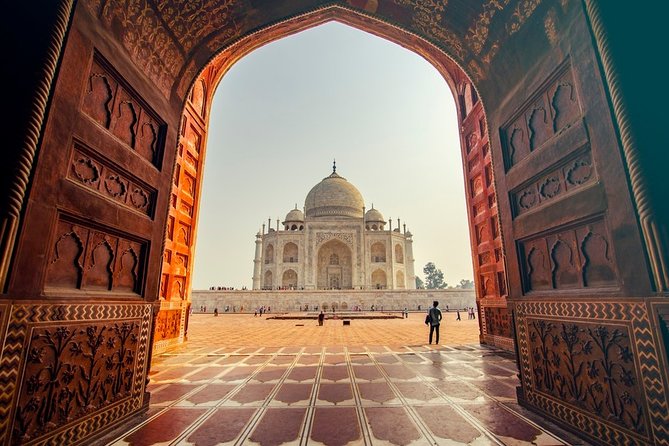
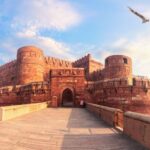
Agra starts on Day 3 with a drive from Delhi and a hotel check-in, then a guided exploration. You get time for Agra Fort, a UNESCO site and former residence of Mughal emperors. Even if you choose not to spend all your time inside, it gives context for the monumental scale you will see at the Taj.
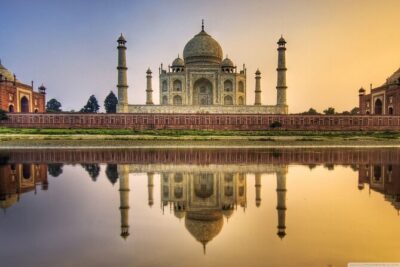
Later, you get one of the more useful additions to a Taj trip: Mehtab Bagh, the Moonlight Garden. This stop is aimed at sunset views of the Taj Mahal across the Yamuna. It is one of the best ways to see the Taj as part of a larger setting, not just as a front-facing postcard.
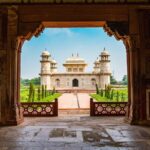
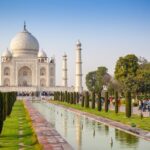
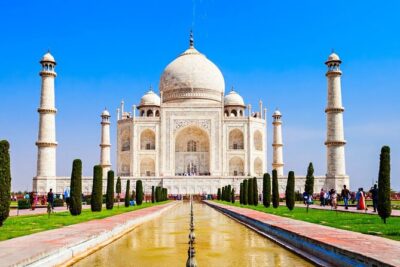
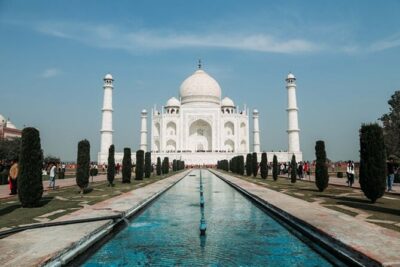
Day 4 is the highlight. You meet your guide at the hotel for a 5:45 AM sunrise visit to the Taj Mahal. The goal is simple: watch the light change on the white marble. The marble turning golden is the kind of moment that sticks, even for people who normally do not chase “early morning experiences.”
After the sunrise visit, you return for breakfast, then you check out and start the road leg to Ranthambore. That transition is intentional. It keeps the Taj from becoming the only peak moment of the trip, because you carry that emotion into the next phase.
Fatehpur Sikri on the way to Ranthambore: a Mughal detour before tiger country
Once you leave Agra on Day 4, you head toward Sawai Madhopur, the base for Ranthambore. The drive is not just transportation. You also stop at Fatehpur Sikri, a UNESCO-listed abandoned Mughal capital about 35 km west of Agra.
This is a helpful pause because it breaks up long road time with a site that tells a story about the empire that built India’s most famous monuments. Even when a place is “abandoned” in practice, the surviving architecture still gives you a sense of ambition and scale.
Then it is on to Ranthambore. You arrive, check into your pre-booked hotel in the Sawai Madhopur area, and get ready for the safari routine that starts early the next morning.
If you prefer nonstop travel, this detour might feel like extra time on the road. But if you like context, it turns the transit day into something you will remember.

Ranthambore safaris: two game drives that maximize your odds
Ranthambore is where the schedule gets real. You do two safari days, and on each day you use different time windows to improve your chances of seeing wildlife.
On Day 5, you are picked up early at 6:00 AM for the first game drive. Safari time is about 2 to 3 hours, and the main attraction is Bengal tigers, with potential for other wildlife you might spot in the reserve like leopards, deer, and exotic birds.
After you return, you get a midday break with lunch at the hotel. Then the second drive hits again at 2:30 PM for another 3 to 4 hours. The afternoon slot matters because animal behavior changes with the light and temperature.
Two practical truths for you:
- You are traveling in shared jeeps or canters, not a private vehicle. That can affect how close you get, but it is also the more common way to run safaris at this level.
- Wildlife viewing is never guaranteed. The value here is that you get two chances in a short span.
The result is a tour that does not treat Ranthambore like a one-and-done stop. It gives you time to look, regroup, and try again.
Day 6 transfer to Jaipur, then temples in the evening
After Ranthambore, Day 6 starts with a road day to Jaipur, with about 3 hours of driving after breakfast. Then Jaipur arrives fast: you check in and get evening time for either Galta Ji (Monkey Temple) or Birla Mandir, depending on your preference.
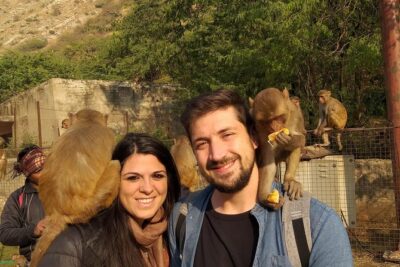
Galta Ji is known for its sacred water tanks, the kunds, and for the large populations of monkeys such as rhesus macaques and langurs. Birla Mandir is a white marble temple dedicated to Vishnu and Lakshmi, with detailed carvings.
This is a smart evening setup. It gives you a local-feeling cultural option without forcing you into a late-night event. And it offers a choice, so you do not end up doing a temple stop you would rather skip.
Jaipur day of forts, palaces, and the City Palace plus Jantar Mantar combo
Day 7 is your guided Jaipur highlights day. Jaipur is the first planned city in India and is known for its pink color history. The tour then moves you into the big landmarks.
You start with Jaipur Fort, a UNESCO-listed palace complex built from pale yellow and pink sandstone with white marble. Then you get a photo stop at Jal Mahal, the Water Palace in the middle of Man Sagar Lake. It is designed to look like it is floating when the lake is full, and the time here is intentionally short because the goal is photos, not a long detour.
Next is City Palace, the royal residence that has served as the seat of the Maharaja of Jaipur. It is a fusion of Rajput, Mughal, and European styles, and that mix helps explain why Jaipur feels different from Delhi and Agra.
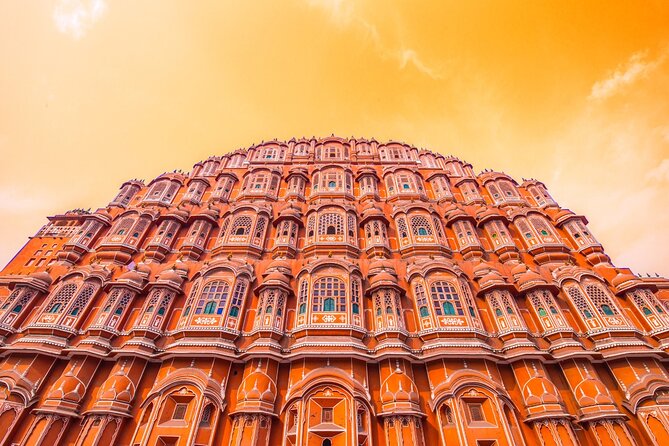
After that, you hit Jantar Mantar, an astronomical observatory built by Maharaja Sawai Jai Singh II. It includes 19 instruments, including the world’s largest stone sundial. Then you end with Hawa Mahal, the Palace of Wind. You get a photo stop, and it is designed for royal women to observe street life without being directly seen.
Finally, you have time to explore local markets. This is where handicrafts, jewelry, textiles, and souvenirs can fit into your schedule, without turning the day into a pure shopping sprint.
Hotels, A/C vehicle, and guides: where the comfort and quality come from
This tour is built around guided time and transport that reduces decision-making. You get a private air conditioned vehicle with water, plus hotel, airport, or railway station pickup and drop-off.
In each city, you have professional tour guides, and that can make a big difference. One of the strongest review signals was how accommodating the guide team was, including guides named Sonia and Vivek who adjusted for a father’s pace and added extra sights so he could see more. The driver service also came through strongly. People highlighted Ajay for comfort and safety during the trip, and Mr. Rajendra Sharma for being professional and making the group feel safe.
You also get 3, 4, or 5-star hotels, depending on the option you choose. That matters because you are spending a lot of time on the move. Having a comfortable base after a sunrise or safari day improves your whole attitude the next day.
One more nuance: the tour says it is private for your group, but the safaris are shared. That is normal for wildlife reserves and keeps safari operations efficient, but it is good to know up front.
Price, value, and the real budget math for monument fees
At $749 per person, you are paying for several things that add up quickly if you booked them separately: multi-city guided sightseeing, the A/C vehicle with water, hotel transfers, hotel nights in the Golden Triangle, and the big-ticket activity of Ranthambore safaris.
Your biggest extra cost is monument entrance fees. The tour states monument entrance fees are $79 per person and are not included. That is the budget piece you must plan for if you want to avoid last-minute sticker shock.
So what is the value? For me, it is the combination of:
- Guided city time across Delhi, Agra, and Jaipur
- A sunrise Taj day with structured timing
- Two Ranthambore game drives in a short window
Then there is the less visible value: since pickup and drop-off are handled, you spend less energy figuring out logistics. And with a route that mixes photo stops and longer guided segments, you get a strong highlight density without trying to do everything alone.
Also keep in mind that this type of itinerary benefits from planning. The tour is often booked about 167 days in advance on average, which suggests you should reserve early if you have specific hotel or date preferences.
Who should book this tour, and who should consider a different pace
This is a good fit if you like a clear plan and you want the big landmarks with professional context. It is also a solid match for wildlife enthusiasts because the safari portion is not token. You get two drives with real time allocated.
It is especially appealing for history and culture lovers who still want action. Delhi gives you Mughal and memorial sites plus market energy. Agra gives you fort context and the Taj at sunrise. Jaipur brings palaces, observatories, and temple choices. Then Ranthambore gives you the shift into tiger-country routine.
Who might pause before booking? If you dislike early starts, the timeline will challenge you. You have a sunrise Taj and a 6:00 AM safari pickup. And if you want total flexibility, a set route with scheduled photo stops may feel structured.
If your ideal trip is slow and long lunches and lots of free time, you might prefer a more open-format tour. If your ideal trip is to see the essentials and make them count, this one works.
Should you book this 8-day Golden Triangle plus Ranthambore tour?
Yes, if you want one trip that covers the headline sights of Delhi, Agra, and Jaipur, then backs it up with two Ranthambore safaris and guided time in each city. The sunrise Taj and the two safari windows are the two parts that most strongly justify the schedule, and the added driver and guide service seems to be a real strength.
Before you decide, I’d do two quick checks:
- Confirm you are comfortable budgeting $79 per person for monument entrance fees that are not included.
- Be honest about energy level for early mornings. The trip uses the early hours on purpose, and it pays off when you are ready for it.
If that sounds like your style, this is a strong way to get both the iconic monuments and real wildlife time in a single, well-run week.
FAQ
What is included in the tour price?
The price includes 3, 4, or 5-star hotels (based on your option), a private air conditioned vehicle with water, two jungle safaris in Ranthambore in shared jeep or canter, professional tour guides in each city, hotel or airport or railway station pickup and drop-off, and breakfast for 7 days.
Are monument entrance fees included?
No. Monument entrance fees are not included and are listed as $79.00 per person.
Do I get a sunrise visit to the Taj Mahal?
Yes. The itinerary includes a sunrise visit to the Taj Mahal with a private guide, with the visit scheduled for 5:45 AM.
How many Ranthambore safaris are included?
Two safaris are included in Ranthambore: an early morning game drive and an afternoon or evening game drive. Pickup and safari timing are provided in the itinerary.
What kind of vehicle do the Ranthambore safaris use?
The safaris use shared jeep or canter for the game drives.
Does the Day 8 departure come from Jaipur or Delhi?
Yes. On Day 8, you can depart from Jaipur or from Delhi, depending on your preference, with driver drop-off to your onward location or airport.
How far in advance can I cancel for a full refund?
You can cancel up to 6 days in advance of the experience for a full refund, as long as you cancel at least 6 full days before the experience start time.
More Tours in New Delhi
More Tour Reviews in New Delhi
Not for you? Here's more nearby things to do in New Delhi we have reviewed








More Golden Triangle Tours to consider.
 ★ 5.03-Days Private Golden Triangle Tour: Delhi, Agra & Jaipur by CarTickets from $1271,107 traveller reviews
★ 5.03-Days Private Golden Triangle Tour: Delhi, Agra & Jaipur by CarTickets from $1271,098 traveller reviews
★ 5.03-Days Private Golden Triangle Tour: Delhi, Agra & Jaipur by CarTickets from $1271,107 traveller reviews
★ 5.03-Days Private Golden Triangle Tour: Delhi, Agra & Jaipur by CarTickets from $1271,098 traveller reviews
 ★ 5.03-Day Delhi, Agra and Jaipur Private Tour – India Golden TriangleTickets from $110812 traveller reviews
 ★ 5.0Four-Day Private Luxury Golden Triangle Tour to Agra and Jaipur From New DelhiTickets from $160807 traveller reviews
 ★ 5.05 Nights 6 Days Private Golden Triangle Tour – Delhi Agra JaipurTickets from $240574 traveller reviews
 ★ 5.04 Days Golden Triangle TourTickets from $146499 traveller reviews
 ★ 5.0Private Car and Drive for Golden Triangle (4N/5D)Tickets from $167451 traveller reviews
 ★ 5.0Private Golden Triangle Tour Delhi Agra Jaipur ( Top Rated )Tickets from $148436 traveller reviews
More useful Delhi routes