
Review · GOLDEN TRIANGLE TOURS
8 Days Tour of Essential India & Classic Nepal – Golden Triangle with Kathmandu
Taj Mahal, then Kathmandu temples, same trip. This Golden Triangle plus Kathmandu plan strings together Delhi, Agra, Jaipur, and the UNESCO-packed Kathmandu Valley with guides and a smooth internal flight. I especially like how the pacing stays friendly because you fly from Jaipur to Kathmandu, so you are not doing a long return drive.
I also like the way practical costs are handled up front. Entrance fees are included for the named sights, and key visits like Taj Mahal and Fatehpur Sikri get you a battery bus or golf cart return ride, which saves energy for the walking.
One thing to keep in mind is the schedule is naturally full. You will have long travel days between cities, and closures can shift timing, like Taj Mahal being closed on Fridays and the Taj Mahal sunrise visit depending on weather.
Key things I’d plan around on this India and Nepal combo
- Golden Triangle core plus Kathmandu UNESCO days, so you see big must dos without starting from scratch
- Private touring for your group, with a chauffeur-driven air-conditioned vehicle and guided stops
- Taj Mahal help with transport, thanks to battery bus or golf cart return
- A real Jaipur day, built around Amber Fort, City Palace, Jantar Mantar, and classic photo stops
- Kathmandu Valley in a logical order, including Swayambhunath, Kathmandu Durbar Square, and Boudhanath
- Two optional add-ons are not automatically included, like Singing Bowl in Nepal and the Bhaktapur Durbar Square admission
Delhi to Agra to Jaipur to Kathmandu, in one readable flow
This is an 8-day, guided loop that mixes India’s imperial monuments with Nepal’s religious architecture. You start in Delhi with a classic Old and New Delhi day, then swing to Agra for the Taj Mahal, and land in Jaipur for fort-and-palace sightseeing. After that, you fly to Kathmandu and spend the last days on Kathmandu Valley highlights.
What makes it feel manageable is the way the plan groups sights by area and builds in guided time on foot where it matters. You get a chauffeur driven car for the ground moves, and that matters in places where crossing traffic or finding parking can eat your day.
And yes, you will be up early on at least one major day. That is the price of seeing the Taj Mahal when the light is best.
You can also read our reviews of more tours and experiences in New Delhi.



Day 1 in Delhi: Old Delhi markets, big mosques, and Qutub Minar
Your Delhi day starts with a guided pickup at your location in Delhi, Gurugram, or Noida around 8 AM. From there, the itinerary focuses on Old Delhi power and bustle, then switches to iconic New Delhi landmarks and UNESCO sites.
Humayun’s Tomb is a strong first stop because it sets the Mughal tone early. It is followed by the Red Fort area, then Jama Masjid, one of the largest mosques in India, built by Mughal Emperor Shah Jahan between 1644 and 1656. If you are into architecture, you’ll appreciate how the guide ties these buildings to the same imperial story.
Next comes Chandni Chowk, a busy market that has been around for centuries, famous for spices, dried fruits, silver jewelry, and saris. The practical win here is guidance, because you get context fast, and you are not wandering hungry with no plan.
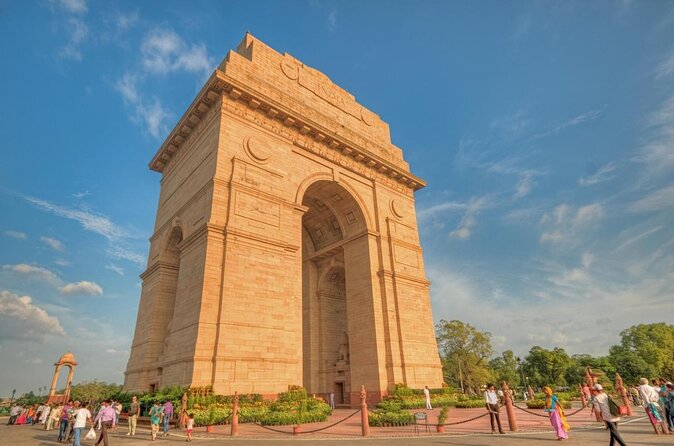
Then you shift from Muslim Mughal landmarks to Sikh heritage at Gurudwara Bangla Sahib, a major Sikh worship place. After lunch time, the route includes India Gate as a quick photo and then finishes with Qutub Minar in the Qutub Complex. Qutub Minar is UNESCO listed and rises 73 meters, known as the tallest brick minaret in the world.
One consideration: Old Delhi and markets mean lots of foot traffic and crowd flow. Wear comfortable shoes and keep your water handy, because Delhi can feel faster than you expect.
Day 2 in Delhi to Agra: Akshardham, Agra Fort, and Mehtab Bagh views
After breakfast, you head to Akshardham Temple in Delhi, one of the largest Hindu temples in the world. This stop can feel like a reset from the historical chaos of Old Delhi because it is organized, grand, and designed for long looks.
Then you move to Agra and visit Agra Fort on the banks of the Yamuna. Agra is built around the Mughal legacy, and Agra Fort helps you understand why the Taj Mahal is not a random one-off. You also get the chance to see Mehtab Bagh, the Moonlit gardens, directly across from the Taj Mahal.
Mehtab Bagh is a great “quiet view” stop. It is also aligned with the Taj Mahal for the kind of framing photographers love, and it is a nice way to see the Taj from a different angle than you will later at the main entrance.
Practical takeaway: This is the day to rest up for the big early start coming next. If you can, pace your shopping time, because Agra tomorrow is going to be the real headline.
Taj Mahal day: sunrise timing, Fatehpur Sikri, and the stepwell detour
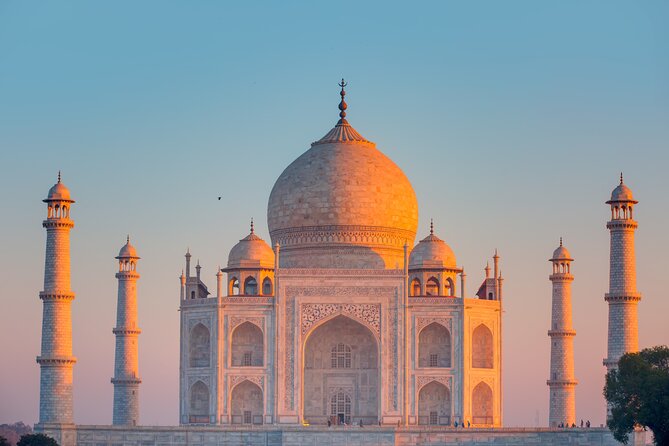
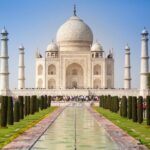
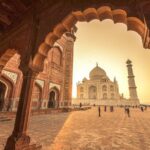
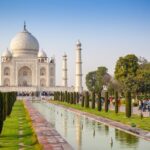
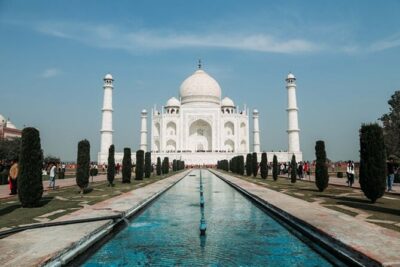
Day 3 is built around the Taj Mahal visit, and the plan schedules an early start with tea or coffee before meeting your guide. You get entry to the Taj Mahal, a UNESCO World Heritage Site and one of the most photographed monuments on earth. The point of going early is not just crowd control, it is light, shadows, and a calmer experience.
Just as important, Taj Mahal has a known schedule issue: it is closed every Friday for visitors. If your timing hits Friday, the plan swaps it so you see it the day before instead. Also, sunrise timing is weather dependent, so be ready for a plan that flexes.
After the Taj Mahal, you head to Fatehpur Sikri, a UNESCO World Heritage Site. This is one of those places where the ruins and courtyards feel like a whole city story. The tour also includes a battery bus or golf cart return ride here, which is a real help if your legs want an earlier bedtime.
Then comes Chand Baori, a famous stepwell in the village of Abhaneri. Stepwells are cool in an ancient way, but what you will likely love is the optical pattern, geometry, and the way it makes heat look dramatic instead of miserable.
That evening, you roll into Jaipur and do Birla Mandir, a white marble temple built at the base of Moti Dungri hill. It is a clean, low-stress finish to a long day.
Jaipur in full mode: Amber Fort, City Palace, Hawa Mahal photos, and Jantar Mantar
Jaipur days are where the tour really leans into Rajasthan style. The big focus is Amber Fort, plus classic stops that most people come for.
Amber Fort is a highlight and also one of the longest on-foot stretches. The tour includes a jeep ride to and from Amer Fort if you do not want to walk up. That is a smart inclusion, because hills plus crowds can turn “historic fort” into “leg workout” fast.
Jal Mahal is next as a photo stop. It sits in Man Sagar lake, and even if you just get quick photos from the right angles, it is one of Jaipur’s instantly recognizable visuals.
Then Hawa Mahal, the Palace of Breeze, shows up as another iconic photo stop. It was constructed in 1799 and is famous for its 953 small windows. Even from outside, you can see why it is the poster child for Jaipur.
City Palace follows, a fusion of Rajasthani and Mughal architecture. It is still tied to the royal family of Jaipur, and it was constructed in 1727 by Maharajah Sawai Jai Singh II. This is the place where your guide’s explanations can help you connect the dots between royal power and artistic design.
Jantar Mantar, the stone astronomical observatory, is another UNESCO site and a favorite if you like science history. It has nineteen instruments built in stone meant to calculate time and position.
Finally, Patrika Gate lands as a modern photo location with painted arches showing Rajasthani monuments and culture.
One consideration: This is a lot of stops, and Jaipur heat can be real. Plan to take shade breaks when you can, and do not underestimate the walking between forts, gates, and courtyards.
The big pivot: from Jaipur to Kathmandu, then settling into Thamel
On Day 5, after Galtaji Temple, you shift from Rajasthan to Nepal. Galtaji is in a hilly terrain area and feels like a local spiritual circuit rather than a cookie-cutter photo spot.
Then you go to Jaipur airport and fly to Kathmandu via Delhi on scheduled commercial airlines. This flight routing is one of the smartest choices in the whole program because it keeps the itinerary from turning into a two-day road trip.
In Kathmandu, you arrive at Kathmandu International Airport and transfer to your hotel. After brief rest and orientation, you head out toward Thamel, a neighborhood that is built for travelers and easy evening strolling.
Practical note: Your flight baggage allowance is listed as 20 kg as allowed by scheduled commercial airlines. If you pack light, you will feel less stressed.
Kathmandu Valley day: Swayambhunath, Durbar Square, and Boudhanath

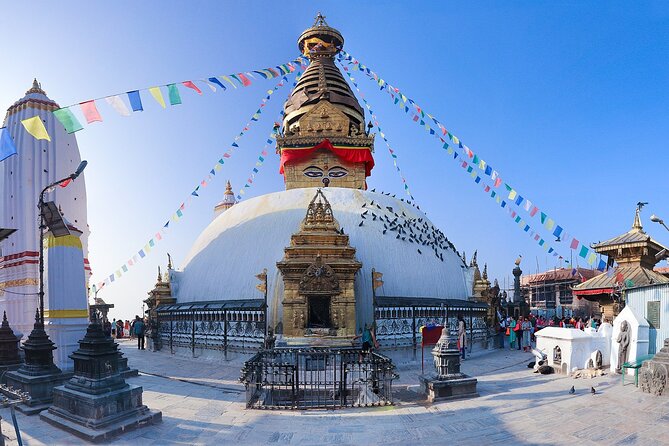
Day 6 is the first full Kathmandu Valley circuit. You start at Swayambhunath, one of the holiest Buddhist stupas in Nepal. This is a place where you feel the age in the way pilgrims move through the space, and the viewpoints help you understand the valley layout.
Then Kathmandu Durbar Square comes next. It is UNESCO listed and a key Durbar Square, where rituals for both Buddhist and Hindu communities happen. The meaning of durbar, palace or court held by a prince, is a big clue to what you are seeing.
Boudhanath Stupa is the next anchor. It is one of the most impressive structures in Kathmandu and is visible as soon as you arrive at the airport area. The tour notes it as the largest stupa not only in the Kathmandu Valley, but also in South Asia.
After that, there is a Singing Bowl in Nepal session. It is listed as not included, so if you want it, you will need to pay separately or accept an optional add-on. The plan also includes Nepali Chulo, a Nepalese food experience framed as a fusion of local flavors.
Why this day works: You get three major sacred sites, each with a different vibe, within one guided flow. It keeps your orientation simple so you are not trying to match maps to monuments on your own.
Patan, Bhaktapur, and Pashupatinath: the deeper spiritual layer
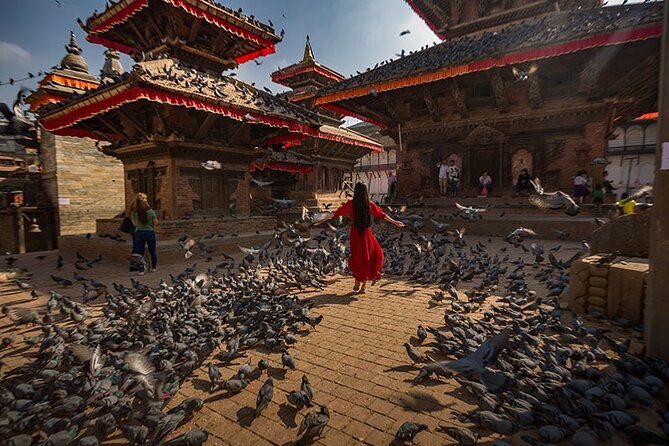
Day 7 keeps building that layered feeling of Kathmandu Valley. Patan, also called Lalitpur, is next at Patan Durbar Square, UNESCO listed and described as home to the valley’s finest craftsmen. If you notice the details in metalwork, woodwork, and stone carving, this is one of the better days to do it.
Then you head toward Bhaktapur Durbar Square, known as the City of Devotees. The tour notes it as one of the three main Durbar Squares in the valley, and it is presented as a living representation of the valley’s way of life.
One practical heads up: Bhaktapur Durbar Square is listed with admission ticket not included. So budget for that extra entrance if you want it covered during your visit.
Finally, Pashupatinath Temple is on the schedule. It is a Hindu temple dedicated to Shiva and is one of Nepal’s seven UNESCO World Heritage Sites. This is the spot that often gives people the strongest sense of Nepal as a living religion, not just a cultural stop.
Dhulikhel views and a clean ending to the trip
Day 8 is your wrap-up day. You head to Dhulikhel, a small village outside the Kathmandu Valley, known for Himalayan views. The tour notes it is about 30 km from Kathmandu Durbar Square and about 15 km from Bhaktapur Durbar Square, so you get a change of scenery without losing the Kathmandu context.
After enjoying the mountain views, you return to your hotel and the trip ends with a drop off at Kathmandu Airport or your hotel in Kathmandu. It is a calm ending after days of monuments and staircases.
One consideration: Mountain views depend on weather and cloud cover. If the skies do not cooperate, you still get the town vibe, but plan flexibility.
Price and value: does $1,796 make sense for this mix?
At $1,796 per person for an 8-day private guided trip, the value really comes down to what is included. You are not only paying for the car and guides. The tour includes entrance fees for the named monuments, breakfast for 7 mornings, and a included dinner. It also includes a flight from Jaipur to Kathmandu via Delhi, plus hotel accommodation for 7 nights on twin sharing if you choose the option with hotels.
On top of that, you get small but meaningful transport perks like the jeep ride to and from Amber Fort if you do not want to walk up, and battery bus or golf cart return at Taj Mahal and Fatehpur Sikri. Those are not flashy inclusions, but they reduce fatigue and keep you from feeling like you must power through.
The main “value tradeoff” is density. You are seeing a lot in a short time, so if you want slow travel, you might feel rushed. Also, a couple of experiences are not included, like the Singing Bowl session in Nepal, and Bhaktapur Durbar Square admission.
So for the right traveler, this price can feel fair. For someone who hates early starts and packed days, it might feel like too much.
Who should book this India and Nepal combo
This tour suits you if you want:
- A guided Golden Triangle with the big monuments, plus Kathmandu Valley UNESCO sites
- A trip where you do not have to coordinate tickets, guides, and intercity travel day by day
- A private setup for just your group with a chauffeur-driven vehicle
It might not fit as well if you:
- Want deep time at one place, like only Jaipur forts or only Kathmandu temples
- Hate long days on the move or expect lots of free time each afternoon
- Need everything fully included, since some items like certain admission tickets and the Singing Bowl session are not included
Should you book this tour?
If your bucket list includes the Taj Mahal, Jaipur forts and palaces, and Kathmandu’s UNESCO sites, I think this is a practical way to make it happen in one trip. The best part is the combination of included entrances, guided structure, and the flight that saves you from repeating road travel.
Book it if you are comfortable with early starts and a full schedule, and if you like guided pacing. Skip it if you want a slow, self-paced adventure with lots of unstructured time.
FAQ
Is this a private tour or a shared group tour?
The tour is private, meaning only your group participates and you do not share the experience with other tourists.
What is included in the tour price of $1,796 per person?
The package includes services of tour guides for the sights listed, entrance fees at the mentioned monuments, a chauffeur-driven air-conditioned vehicle for the trip, unlimited bottled mineral water in the vehicle, breakfast for 7 days, dinner, and an included flight from Jaipur to Kathmandu with a connection in Delhi. Hotel accommodation for 7 nights on twin sharing is included if you book with the option including hotels.
Are hotel nights included?
Yes, hotel accommodation for 7 nights on twin sharing is included if you select the option that includes hotels.
Do I need a visa for India and Nepal?
You need a valid visa prior to arrival in India. Nepal visa can be obtained upon arrival at Kathmandu airport, and the visa fee is not included.
What happens if my Taj Mahal visit falls on a Friday?
Taj Mahal remains closed every Friday. If your scheduled visit day is a Friday, you will visit Taj Mahal the day prior.
Is Akshardham Temple in Delhi always open during this trip?
Akshardham Temple in Delhi remains closed every Monday. If your scheduled day falls on a Monday, you will visit Akshardham Temple a day prior.
Is everything fully included in Kathmandu, like the Singing Bowl session and Bhaktapur admission?
No. The Singing Bowl in Nepal is listed as not included, and the Bhaktapur Durbar Square admission ticket is listed as not included. The Mount Everest flight experience is also not included.
More Tours in New Delhi
More Tour Reviews in New Delhi
Not for you? Here's more nearby things to do in New Delhi we have reviewed



More Golden Triangle Tours to consider.
 ★ 5.03-Days Private Golden Triangle Tour: Delhi, Agra & Jaipur by CarTickets from $1271,107 traveller reviews
★ 5.03-Days Private Golden Triangle Tour: Delhi, Agra & Jaipur by CarTickets from $1271,098 traveller reviews
★ 5.03-Days Private Golden Triangle Tour: Delhi, Agra & Jaipur by CarTickets from $1271,107 traveller reviews
★ 5.03-Days Private Golden Triangle Tour: Delhi, Agra & Jaipur by CarTickets from $1271,098 traveller reviews
 ★ 5.03-Day Delhi, Agra and Jaipur Private Tour – India Golden TriangleTickets from $110812 traveller reviews
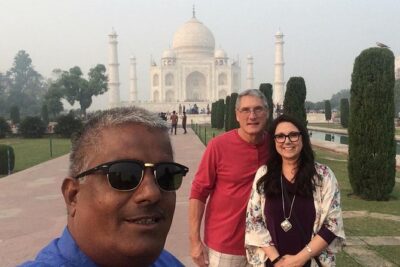 ★ 5.0Four-Day Private Luxury Golden Triangle Tour to Agra and Jaipur From New DelhiTickets from $160807 traveller reviews
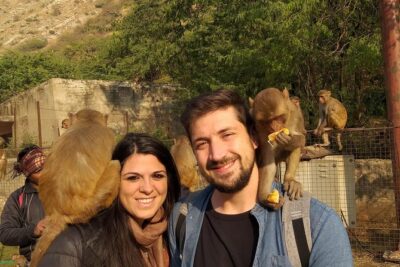 ★ 5.05 Nights 6 Days Private Golden Triangle Tour – Delhi Agra JaipurTickets from $240574 traveller reviews
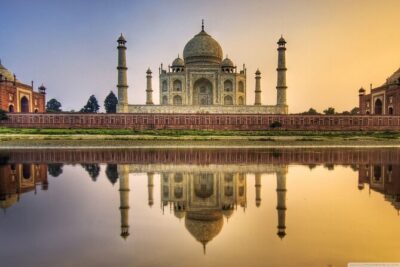 ★ 5.04 Days Golden Triangle TourTickets from $146499 traveller reviews
 ★ 5.0Private Car and Drive for Golden Triangle (4N/5D)Tickets from $167451 traveller reviews
 ★ 5.0Private Golden Triangle Tour Delhi Agra Jaipur ( Top Rated )Tickets from $148436 traveller reviews
More useful Delhi routes